
三星

Search documents
国内外AI年报分析展望



2026-02-04 02:27
Summary of the Conference Call on AI Annual Report Analysis Industry Overview - The conference focused on the analysis and outlook of AI annual reports, particularly in the TMT (Technology, Media, and Telecommunications) sector, with a specific emphasis on domestic and international AI companies [1][2][4]. Key Points and Arguments General Market Sentiment - The period from October 31 to March is characterized as a performance vacuum, where the focus is on thematic investments rather than immediate earnings results [2][3]. - The spring market is expected to see a resurgence, with significant activity anticipated around March [3][4]. North American Companies - North American companies, particularly those involved in AI and cloud computing, have reported earnings that exceeded expectations, indicating strong capital expenditure in AI [4][6]. - Companies like Microsoft and Meta have shown robust spending on AI infrastructure, reflecting a positive outlook for the sector [4][6]. - Despite some domestic companies underperforming, their stock prices have rebounded, suggesting that market sentiment is more focused on thematic trends rather than immediate earnings [5][6]. Domestic AI Companies - Domestic AI companies are experiencing a supply-demand imbalance, with strong demand for AI-related products and services, despite some companies reporting earnings below expectations [6][7]. - The industry is characterized by a shortage of materials and components, which is driving prices up and creating a favorable environment for growth [6][7][10]. Future Growth Projections - There is a consensus that the growth trajectory for AI companies will continue to be strong, with expectations for significant growth in 2026 and beyond [8][9]. - Many companies are currently undervalued, trading at price-to-earnings (P/E) ratios between 15x to 20x, which presents a potential investment opportunity [8][9]. Specific Company Insights - Companies like Wan, Tianfu Communication, and others are highlighted for their potential despite recent earnings misses, as the overall industry outlook remains positive [4][6][7]. - The demand for GPUs and AI chips is expected to remain high, with domestic companies like Cambrian facing challenges but still showing potential for recovery [9][10]. Application and Innovation - The conference emphasized the importance of AI applications, particularly in gaming and media, with companies like Tencent and ByteDance leading the charge [14][15]. - The emergence of AI-driven applications is seen as a significant growth area, with expectations for increased investment and innovation in this space [14][15]. Regulatory and Market Concerns - There are concerns regarding potential regulatory impacts on the gaming industry, but these are largely viewed as unfounded and not likely to affect the overall market significantly [15][16]. - The market is currently experiencing volatility, but analysts suggest that this presents buying opportunities for fundamentally strong companies [21][22]. Additional Important Insights - The conference highlighted the importance of monitoring capital expenditure trends among major tech companies, as this will influence the demand for AI infrastructure and services [36][37]. - The potential for new technologies, such as diamond-based cooling materials for semiconductors, was discussed as a future growth area [24][25]. - Analysts recommend focusing on companies with strong fundamentals and growth potential, particularly in the AI and semiconductor sectors, as the market continues to evolve [22][23][39].
半导体设备厂商,卖爆了
3 6 Ke· 2026-02-04 02:11
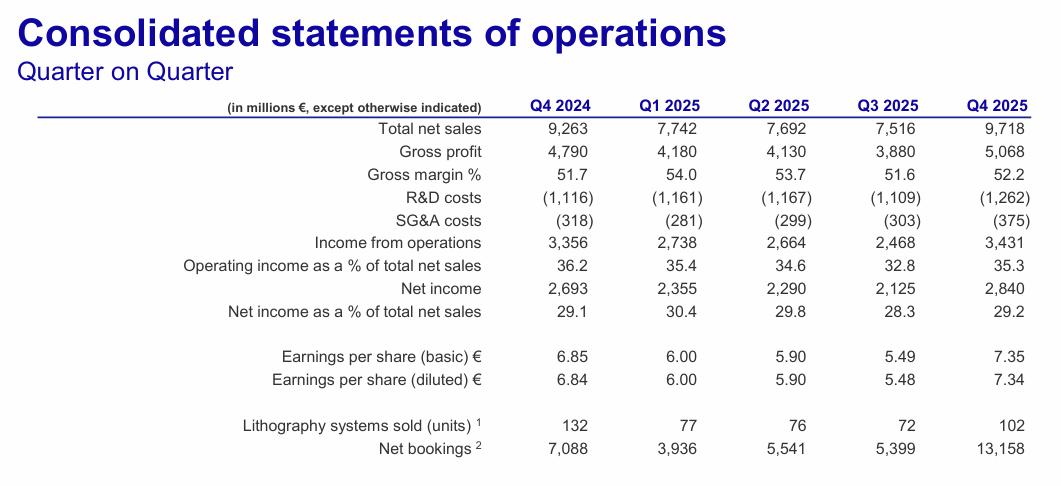
Core Insights - The Japanese semiconductor manufacturing equipment market is projected to grow by 14% to 5.59 trillion yen in 2025, marking the first time sales exceed 5 trillion yen and reflecting a robust growth trend in the global semiconductor equipment industry [1] - The growth is driven by two main factors: the explosion of AI chip demand and the recovery of the storage supercycle [2] Group 1: Semiconductor Equipment Market Growth - Japan's semiconductor equipment market is the second largest globally, with a market share of approximately 30% [1] - The sales forecast for 2025 significantly surpasses the 2024 figure of 4.44 trillion yen, indicating strong momentum in the sector [1] - Major semiconductor equipment manufacturers like ASML, Lam Research, KLA, and DISCO have reported strong financial results, highlighting the industry's growth potential [1] Group 2: AI and Storage Demand - The demand for semiconductor equipment is primarily driven by advancements in AI chips and a resurgence in storage technology [2] - The performance enhancement of chips relies on two main technological paths: advancing process technology (e.g., 3nm, 2nm) and adopting complex packaging techniques [3] - The competition among industry giants like TSMC, Intel, and Samsung for advanced nodes is translating into a rigid demand for high-end semiconductor equipment [3] Group 3: Financial Performance of Key Players - ASML reported a net sales increase of 4.92% year-on-year for Q4 2025, with logic orders reaching 5.8 billion euros, reflecting seasonal demand fluctuations [4] - Lam Research achieved record revenue of $20.6 billion in 2025, a 27% increase year-on-year, driven by strong market demand [6] - KLA's revenue for Q2 FY2026 reached $3.3 billion, exceeding market expectations, supported by robust demand for inspection equipment [13] Group 4: Equipment Demand Dynamics - The demand for advanced semiconductor equipment is expected to continue growing, driven by AI technology and the ongoing evolution of storage technologies [18][19] - The structure of orders is shifting, with storage orders now accounting for 56% of ASML's new orders, surpassing logic orders for the first time [19] - The transition to advanced DRAM architectures and NAND stacking technologies is expected to further increase the demand for high-end equipment [21][22] Group 5: Capital Expenditure Trends - Major semiconductor manufacturers are significantly increasing their capital expenditures, with TSMC planning to invest $52-56 billion in 2026, a 28-37% increase year-on-year [26] - Micron and SK Hynix are also ramping up their capital expenditures, focusing on HBM and advanced DRAM production lines [27] - The overall capital expenditure growth for storage manufacturers is projected to be around 40% in 2026, indicating a strong demand for semiconductor equipment [27] Group 6: Future Outlook - The semiconductor equipment market is expected to maintain high growth rates, with ASML projecting revenues between €34 billion and €39 billion for FY 2026 [29] - The introduction of High-NA EUV technology is anticipated to drive significant growth in the coming years, particularly as the industry moves towards 2nm and below processes [32] - The ongoing AI-driven demand and technological advancements are expected to support a long-term growth cycle in the semiconductor equipment industry [33]


未知机构:海外AICAPEX高景气持续看好洁净室龙头亚翔集成圣晖集成近-20260204
未知机构· 2026-02-04 02:05
Summary of Conference Call Records Industry Overview - The focus is on the cleanroom industry, particularly companies like Yaxing Integration and Shenghui Integration, which are leaders in this sector [1][2]. Key Insights and Arguments - **AI Demand and Capital Expenditure**: Recent financial reports from several overseas leaders have exceeded expectations, confirming the robust demand for AI and indicating that AI capital expenditures are entering an expansion phase. Cleanrooms, as a front-end infrastructure segment, are expected to see a corresponding increase in demand [1]. - **U.S. Semiconductor Investments**: The U.S. has significantly increased investments in the semiconductor manufacturing chain, attracting major companies like TSMC and Samsung to establish factories in the U.S. By the end of 2024, TSMC is expected to have invested $65 billion in the U.S. and announced an additional $100 billion investment in March 2025. Recent "tariff-for-investment" policies have led TSMC and other Taiwanese companies to commit to at least $250 billion in direct investments in the U.S., which is likely to drive rapid growth in regional cleanroom demand [1]. - **Southeast Asia Developments**: - **Singapore**: The RIE2030 initiative plans to invest SGD 37 billion over the next five years in key economic sectors like semiconductors, aiming to double the output of the semiconductor and related manufacturing industries by 2030. This initiative is attracting major players such as UMC, World Advanced, and Micron to establish factories [2]. - **Vietnam and Thailand**: These countries are leveraging labor cost advantages and industrial cluster benefits to accelerate the transfer of precision manufacturing (PCB) and other supply chains, leading to robust regional capital expenditures [2]. Supply Side Dynamics - Cleanroom production capacity is primarily concentrated in mainland China and Taiwan, with the top five companies holding nearly 40% of the market share. Mainland leaders like Shenzhen Sanda A are actively pursuing overseas expansion. However, there are potential restrictions on mainland capacity moving to the U.S., leading to a significant mismatch in supply and demand in the U.S. market. It is anticipated that there will be an accelerated introduction of Taiwanese cleanroom leaders to the U.S. market, with project profit margins expected to exceed expectations, contributing significantly to performance growth. Continuous recommendations are made for Yaxing Integration (a Taiwanese cleanroom leader securing multiple large contracts in Singapore) and Shenghui Integration (which has established a U.S. subsidiary and is expected to benefit from TSMC's orders) [2]. Risk Factors - Potential risks include a downturn in semiconductor capital expenditures, increased competition within the industry, and the possibility that expansion efforts in the U.S. may not meet expectations [3].

未知机构:重大推荐博迁新材下游大客户铜浆产品大规模扩产全部产能转铜浆-20260204
未知机构· 2026-02-04 02:00
Company and Industry Summary Company: 博迁新材 (Bojian New Materials) Key Points - **Industry Context**: The company operates in the battery materials industry, specifically focusing on copper paste products as a substitute for silver paste in battery manufacturing. The rising silver prices and advancements in copper paste technology are driving industry changes [1]. - **Core Catalyst**: The company is set to benefit from a significant expansion of its downstream client's production capacity for pure copper paste batteries, with plans to finalize an expansion of over 65GW. This expansion is a direct response to high silver prices and improved copper paste technology [1]. - **Major Contracts**: A notable contract with Samsung worth 5 billion is expected to contribute to the company's revenue growth. Additionally, the demand for AI computing power is anticipated to further drive sales, leading to a stable revenue base in 2026 [1]. - **Cost Reduction**: The company has achieved a breakthrough in technology, resulting in a cost reduction of over 0.15 yuan/W for copper-based batteries compared to silver-based alternatives. This positions the company favorably in terms of pricing competitiveness [1]. - **Market Expansion**: The client plans to establish over 100GW of battery production lines by 2026, indicating a substantial market opportunity for the company [1]. - **Financial Projections**: The projected net profit attributable to the parent company is estimated to be between 1.2 billion to 1.4 billion yuan in 2026 and between 1.8 billion to 2 billion yuan in 2027. This suggests a significant growth trajectory for the company [1]. - **Valuation Outlook**: The short-term market capitalization is projected at 60 billion yuan, with a long-term outlook suggesting a potential market cap of 120 billion yuan [1].

电子行业周报:AI 应用爆点频出,算力链重回主线-20260204
Guoxin Securities· 2026-02-04 01:56
Investment Rating - The report maintains an "Outperform" rating for the electronic industry [1][11]. Core Insights - AI applications are rapidly emerging, with the computing power chain returning to the main investment focus. The market is witnessing a "seller's market" for computing resources, driven by the increasing demand for AI applications [1]. - The storage cycle is on an upward trend, with strong performance from overseas manufacturers. Companies like SanDisk and Samsung have reported significant revenue growth, driven by AI demand [2]. - Texas Instruments (TI) anticipates a median revenue increase in Q1 2026, supported by a continuous rise in order volume, particularly in the industrial and data center markets [3]. - Apple reported record quarterly performance, with revenues exceeding market expectations, particularly in the iPhone segment, which saw a 23% year-over-year increase [4]. - Global wafer expansion is entering an upward cycle, with ASML and LAM Research exceeding expectations in their quarterly performances, indicating a strong demand driven by AI [5]. Summary by Sections Electronic Industry Overview - The electronic industry experienced a decline of 2.51% in the past week, with semiconductors down 0.90% and electronic chemicals down 5.87% [12]. Semiconductor Sector - Companies such as Zhongxin International, Aojie Technology, and Demingli are recommended for investment due to their strong performance and growth potential in the semiconductor sector [11]. Storage Industry - The storage cycle is strengthening, with companies like Demingli and Jiangbolong showing significant revenue growth, driven by AI and data center demands [2]. Consumer Electronics - Apple’s revenue reached $143.76 billion in Q4 2025, with a 16% year-over-year increase, driven by strong iPhone sales and services [4]. Equipment and Materials - ASML and LAM Research reported strong quarterly results, indicating a robust demand for advanced logic and storage equipment, suggesting a positive outlook for the equipment sector [5].

未知机构:海外持续景气叠加国产替代提速继续看多洁净室260118-20260204
未知机构· 2026-02-04 01:50
Summary of Conference Call Notes Industry and Company Involved - **Industry**: Semiconductor and Construction - **Key Companies**: TSMC (Taiwan Semiconductor Manufacturing Company), Micron, Samsung, Intel, Longxing Technology, SMIC (Semiconductor Manufacturing International Corporation), and others Core Points and Arguments 1. **Impact of AI on Semiconductor Capital Expenditure**: The rise of AI is driving increased capital expenditure in the semiconductor industry, which in turn affects the construction sector, particularly in cleanroom construction and IDC (Internet Data Center) bidding areas. This demand surge is attributed to the global tech industry's growth, especially in AI [1][2] 2. **Significant Capital Expenditure by TSMC**: TSMC's capital expenditure is projected to reach $40.9 billion in 2025 and $56 billion in 2026, marking a historical high. This reflects a broader trend of increased capital spending among major semiconductor firms [4][12] 3. **Global Semiconductor Investment Trends**: The semiconductor industry is experiencing a significant increase in capital expenditure, with major players like TSMC, Samsung, and Intel leading the charge. The U.S. and Taiwan have reached trade agreements that will facilitate a $250 billion investment in the semiconductor supply chain [4][12] 4. **Cleanroom and IDC Construction Opportunities**: Analysts recommend focusing on cleanroom construction and IDC bidding as these areas are expected to see high demand due to the tech industry's growth. Companies like China Energy Construction and Sensen Da A are highlighted for their advantages in IDC construction and cloud computing services [2][19] 5. **Challenges in the Construction Industry**: The construction sector faces challenges such as labor shortages, trade tensions, and the need for overseas subsidiaries. However, the industry is expected to benefit from increased demand driven by global manufacturing trends and resource security capital expenditure [3][11] 6. **Investment in IDC and Cloud Infrastructure**: Major internet companies and telecom operators in China are accelerating investments in IDC and cloud infrastructure, with Alibaba planning to invest 380 billion RMB in AI over the next three years. This trend is expected to continue into 2026 [19][20] 7. **Market Dynamics and Valuation Trends**: The cleanroom industry is viewed as a significant investment opportunity, with a focus on stock price positions, order expectations, and customer bidding forecasts rather than just performance metrics. The current market dynamics suggest a potential for valuation increases driven by industry trends [8][16] 8. **Domestic Semiconductor Companies' Growth**: Domestic semiconductor firms like Longxing Technology and SMIC are in a critical phase of expansion and technological upgrades, with capital expenditures expected to grow. The market is increasingly focusing on these companies due to their growth potential [14][15] Other Important but Possibly Overlooked Content - **Trade Agreements and Tariffs**: The U.S. has reduced tariffs on Taiwanese semiconductor products from 20% to 15% as part of a trade agreement, which is expected to facilitate investment in the semiconductor sector [12] - **Focus on Cleanroom and IDC Construction**: The emphasis on cleanroom and IDC construction reflects a broader trend in the construction industry, where demand is increasingly driven by technological advancements rather than traditional construction metrics [8][10] - **Emerging Companies in the IDC Space**: Companies like China Telecom's subsidiary and Sensen Da A are positioned as key players in the IDC construction and cloud computing sectors, indicating a shift in investment focus towards these emerging firms [17][18]

半导体设备厂商,卖爆了
半导体行业观察· 2026-02-04 01:38
Core Viewpoint - The semiconductor equipment market in Japan is projected to grow significantly, with sales expected to reach 5.59 trillion yen in 2025, marking a 14% increase and surpassing the 5 trillion yen threshold for the first time, driven by strong demand from AI and storage sectors [2][25]. Group 1: Semiconductor Equipment Market Growth - Japan's semiconductor equipment market holds a global market share of approximately 30%, indicating robust growth and reflecting the vitality of the global semiconductor equipment industry [2][25]. - The growth is primarily fueled by two key drivers: the explosion of AI chip demand and the recovery of the storage supercycle [4][25]. Group 2: AI Chip Demand - The rapid development of AI technology serves as a core engine for growth, with AI chips requiring advanced manufacturing processes such as 3nm and 2nm nodes, leading to increased demand for sophisticated semiconductor equipment [5][6]. - Major players like TSMC, Intel, and Samsung are engaged in intense competition around advanced nodes, translating into a rigid demand for high-end semiconductor equipment [6][9]. Group 3: Financial Performance of Equipment Manufacturers - ASML reported a net sales increase to €9.72 billion in Q4 2025, with logic orders reaching €5.8 billion, reflecting seasonal demand fluctuations due to chip process upgrades [7][8]. - Lam Research achieved a record revenue of $20.6 billion in 2025, a 27% year-over-year increase, driven by strong market demand and a gross margin of 49.9%, the highest since its merger in 2012 [9][11]. - KLA's revenue for Q2 FY2026 reached $3.3 billion, exceeding market expectations, supported by the strong demand for inspection equipment driven by AI chip production [21][24]. Group 4: Storage Supercycle - The storage chip industry is experiencing a supercycle characterized by explosive demand and deep technological changes, driven by AI servers' need for HBM, advanced DRAM, and NAND flash [25][26]. - The shift in order structure indicates that storage orders now account for 56% of ASML's new orders, surpassing logic orders for the first time, highlighting storage's role as a core driver of equipment demand [25][26]. Group 5: Capital Expenditure Trends - Major semiconductor manufacturers are significantly increasing their capital expenditures, with TSMC planning to invest $52-56 billion in 2026, focusing on advanced processes and packaging capacity [33][34]. - Micron and SK Hynix are also ramping up their capital expenditures, with Micron increasing its 2026 spending to $20 billion, reflecting a strong focus on HBM and advanced DRAM production [35][36]. Group 6: Future Outlook - The semiconductor equipment market is expected to maintain high growth rates, with projections indicating that the current supercycle will last until at least 2027, driven by AI and storage technology advancements [27][41]. - ASML's CEO has reiterated a long-term vision of achieving annual revenues of €44-60 billion by 2030, supported by sustained demand for AI-driven semiconductor solutions [43][51].
日本神秘厂商,要替代HBM?
半导体行业观察· 2026-02-04 01:38
另一方面,ZAM 的命名源于 Z 轴,这意味着芯片是垂直堆叠的。与传统 DRAM 相比,这种设计可 以实现更低的功耗、更大的容量和更宽的带宽。通过垂直堆叠芯片,每个芯片产生的热量可以均匀地 向上扩散,从而有望解决传统平面堆叠方式中存在的散热问题。 公众号记得加星标⭐️,第一时间看推送不会错过。 日本内存制造商 SAIMEMORY 于 2 月 3 日在英特尔举办的"Intel Connection Japan 2026"活动上 首次公开亮相,介绍了其业务详情以及目前正在开发的新内存结构"ZAM"的概述。 SAIMEMORY 是 一 家 由 软 银 、 英 特 尔 和 东 京 大 学 共 同 成 立 的 存 储 器 制 造 商 , 成 立 于 2024 年 12 月,并于 2025 年 6 月开始全面运营。其主要业务是存储器及相关产品的研发、制造和销售。 然而,此前从未公开宣布过此事,相关业务细节也一直不为人知。在本次英特尔活动上,一种面向人 工智能市场的新型内存结构——ZAM(Z字形内存)——正式亮相。 到目前为止,存储器的结构都是堆叠在平面上的,但由于功率和散热的限制,目前这种结构的 16 层 已经接近其极限 ...


三星5月量产8.6代OLED面板 有望用于年末发布的苹果MacBook Pro
Xin Lang Cai Jing· 2026-02-04 00:57
Core Viewpoint - Samsung Display is set to begin mass production of 8.6-generation OLED panels starting in May 2023, which will be used in Apple's upcoming OLED MacBook Pro models [1] Group 1: Production Plans - Samsung Display has shared its plans with partners to start mass production of glass substrates for the A6 production line in May [1] - The introduction of glass substrates indicates that the production line is officially entering the mass production phase [1] Group 2: Product Applications - The OLED panels produced from the A6 production line will be utilized in Apple's first OLED MacBook Pro, expected to be released at the end of this year [1] - The new MacBook Pro will offer two model sizes: 14 inches and 16 inches [1]

中信证券:电子元件涨价浪潮有望不断蔓延 推荐关注存储等在涨价趋势中受益确定性最高的环节
智通财经网· 2026-02-04 00:33
Core Viewpoint - The electronic components industry is experiencing a price increase across various segments, driven by strong downstream demand and rising upstream metal prices, with a recommendation to focus on segments like storage, CCL, BT substrates, wafer foundry, and packaging that are likely to benefit from this trend [1][2]. Downstream Demand - Downstream customer inventory replenishment is stronger than expected, with AI and automotive sectors driving demand despite pressures on automotive sales. The localization of upstream components is accelerating, and low inventory levels among downstream customers are contributing to strong replenishment motivation [2][3]. - Advanced packaging and storage expansions are occupying mature process capacities, leading to increased demand for replenishment from downstream customers [2]. Upstream Costs - Key raw materials for electronic manufacturing, including gold, silver, and copper, are experiencing significant price increases, with futures prices expected to rise by over 50% for gold, 150% for silver, and 50% for copper by 2025 [2]. Midstream Components - Since the downturn in 2022, many segments within the electronic components industry have maintained relatively low profit margins, creating a strong demand for price increases amid tight supply and rising costs [3]. - Price increase notices have been observed across various segments, including storage, CCL, BT substrates, wafer foundry, packaging testing, LED, power devices, analog chips, and passive components, with some segments experiencing multiple rounds of price hikes [3]. Specific Segment Insights - **Storage**: The AI supercycle is causing ongoing shortages, with TrendForce predicting a 55%-60% increase in traditional DRAM contract prices and a 33%-38% increase in NAND Flash contract prices by Q1 2026, with some NAND modules already increasing by over 40% this year [4]. - **CCL**: The latest round of price increases is expected to take effect by December 2025, supported by low industry inventory levels [4]. - **Wafer Foundry**: High utilization rates are reported, with some categories already seeing price increases, and the trend of advanced packaging and storage expansions affecting mature process capacities is beneficial for domestic supply-demand dynamics [4]. - **Packaging Testing**: High utilization rates (80%-90%) are noted among major companies, with some clients actively requesting price increases to secure capacity [4]. - **Analog Chips**: Strong demand from automotive and industrial sectors is driving price increases, with domestic design companies also showing willingness to raise prices [5]. - **Power Devices**: Strong price increase momentum is observed for mid-low voltage products, with extended delivery times reported [5]. - **SoC**: Initial price increases for internal storage SoC products are expected to enhance market share and profitability for leading manufacturers [5]. - **MCU**: A price increase of 15%-50% for MCU and Nor Flash products is set to take effect on January 27, 2026 [5].
