比亚迪股份

Search documents
汽车行业政策落地与新品周期成热点,板块表现分化
Jing Ji Guan Cha Wang· 2026-02-16 21:35
Core Viewpoint - The automotive industry is currently focused on policy implementation and new product cycles, with significant developments expected in 2026, including the listing of Lantu Automotive and the introduction of new models [1] Group 1: Policy Developments - The 2026 vehicle trade-in subsidy details have been released, with an average subsidy reduction of 30% compared to 2025, but the policy rollout is earlier than in previous years [1] - Cities like Shanghai and Jiangxi are offering up to 20,000 yuan in subsidies for individual consumers to stimulate consumption during the Spring Festival [1] Group 2: New Product Launches - Lantu Automotive plans to launch four new models within the year, including the L3-level SUV Lantu Taishan Ultra [1] - New models from AITO and Li Auto are being prepped for the mid-to-high-end market, while BYD's new sub-brand "Linghui" focuses on B-end mobility solutions [1] Group 3: Market Performance - The automotive sector index reported a decline of 0.48% on February 13, with a 5-day cumulative increase of 1.56% [2] - The main funds in the automotive sector saw a net inflow of 181 million yuan on February 11, although individual stock performances varied significantly [2] Group 4: Institutional Insights - Analysts suggest that the automotive industry's driving force is shifting towards product innovation, with expectations of a rapid sales rebound post-Spring Festival [3] - The focus on smart technology and globalization presents structural opportunities, particularly for leading manufacturers benefiting from premium pricing [3] Group 5: Financial Analysis - January production and sales data reveal a significant decline of 25.7% and 28.3% month-on-month, with domestic sales of new energy passenger vehicles down 22.9% year-on-year, while exports increased by 100% [4] - Mercedes-Benz reported a revenue forecast of 132.2 billion euros for 2025, indicating resilience in the high-end market [4]

Great Wall Motor plans Europe relaunch with hybrids and local plant
Yahoo Finance· 2026-02-16 17:01
Group 1 - Great Wall Motor (GWM) is planning a European relaunch focused on hybrid and combustion vehicles, with a goal to establish a local factory by 2030 that will have an annual capacity of 300,000 vehicles [1][2] - The company aims to double its overseas sales to one million units by 2030, with Europe being a critical market for achieving this target [1][4] - GWM's initial attempt to enter the European market was unsuccessful, with sales dropping 25.4% in 2024 and nearly 30% in 2025, leading to the closure of its Munich office and a shift to the Netherlands [2][4] Group 2 - The first new launch in Europe will be the Ora 5 city car available in electric and hybrid variants, followed by two petrol-powered SUVs under the Haval brand [3] - GWM has introduced a new global vehicle platform designed to support over 50 upcoming electric, hybrid, and internal-combustion models [3] - The competitive landscape in Europe has changed since GWM's previous entry, necessitating a broader dealer network and diversified powertrain offerings beyond electric vehicles [2][3] Group 3 - BYD's European sales have significantly increased, tripling to 187,657 vehicles in 2025 from 50,912 in 2024, highlighting the competitive environment GWM is entering [4] - Globally, GWM delivered 1.32 million vehicles, marking a 7.3% year-on-year increase, with overseas sales rising 11.7% to 506,066 units, driven by markets in Australia, Latin America, South Africa, and Southeast Asia [4] - Limited access to markets like the US, India, and Japan means GWM must strengthen its European presence to meet its 2030 overseas sales target [4]

从马斯克到冯德莱恩!2025年车圈大佬还有谁?
电动车公社· 2026-02-16 16:14
Core Viewpoint - The article highlights key figures in the automotive industry who are driving the rapid development of the new energy vehicle sector and shaping its future direction. Group 1: Zhu Jiangming - The Low-Key Leader - Zhu Jiangming is recognized as one of the most low-profile leaders among new energy vehicle companies, focusing on practical results rather than publicity [4][5]. - Under his leadership, Leap Motor has achieved impressive sales, breaking delivery records with over 70,000 units delivered in consecutive months [7][9]. - Zhu emphasizes the importance of sustained effort and warns against complacency, stating that achieving sales leadership is just a step in a long journey [10][12]. Group 2: He Xiaopeng - The Persistent Engineer - He Xiaopeng's company, XPeng, is no longer seen merely as a follower of Tesla, having made significant advancements in areas like flying cars [16][19]. - The competition in the automotive sector is intensifying, particularly in autonomous driving and humanoid robots, where both XPeng and Tesla are focusing their efforts [21][22]. Group 3: Li Bin - Striving for Profitability - Li Bin faces ongoing scrutiny regarding NIO's profitability, yet he remains focused on ensuring the company's survival and success [25][26]. - The launch of the new ES8 model has led to record deliveries, with NIO achieving a historic monthly delivery high of 48,134 vehicles in December 2025 [30][32]. - NIO's financial performance is improving, with expectations of a quarterly profit for the first time [32][34]. Group 4: Wei Jianjun - The Engaged Leader - Wei Jianjun of Great Wall Motors has stepped into the spotlight, actively promoting the company's technologies and participating in public events [36][40]. - His approach has helped enhance the brand's visibility and influence in the market [40]. Group 5: Lei Jun - The Marketing Controversy - Lei Jun's reputation has fluctuated dramatically, with early successes in product launches followed by negative press related to marketing strategies [42][44]. - He defends his focus on technology and product quality, asserting that marketing should not overshadow the core value of the products [45][47]. Group 6: Elon Musk - Transitioning from Politics to Business - Elon Musk's year was marked by significant challenges for Tesla, including backlash from political actions that affected sales [50][52]. - He has since refocused on business, pushing forward with advancements in autonomous driving and robotics [56][57]. Group 7: Li Xiang - The Silent Strategist - Li Xiang has adopted a more restrained public presence, focusing on the company's future direction and management style [59][63]. - He emphasizes the importance of embodied intelligence in future developments, aiming for substantial revenue growth [63]. Group 8: Zhu Huarong - Ambitious Independence - Zhu Huarong's leadership marks a new chapter for Changan Automobile, which has gained independence and is poised for significant growth [64][70]. - The company is expected to leverage its new status to access more resources and enhance its market position [70][72]. Group 9: Zeng Yuqun - The Steady Force - Zeng Yuqun of CATL maintains a strong position in the new energy vehicle market, continuing to innovate with new battery technologies [73][75]. - The company is actively expanding its international presence, particularly in Europe, to solidify its role in the global market [78][80]. Group 10: Ursula von der Leyen - Influential Policy Maker - Ursula von der Leyen's policies significantly impact the automotive industry, affecting both European and Chinese manufacturers [81][84]. - Her decisions regarding emissions regulations and tariffs on Chinese electric vehicles will shape the competitive landscape in the coming years [84][86].




今日新闻丨比亚迪2025年海外销量破100万辆!新国标拟增加汽车实体操纵件相关要求!
电动车公社· 2026-02-16 16:14
Group 1 - BYD aims to achieve overseas sales of over 1 million vehicles by 2025, with a projected export volume of 1.0496 million units, marking a year-on-year increase of 145% [2][5] - The achievement of 1 million vehicle exports signifies a shift in the Chinese automotive industry from being followers to leaders, with BYD becoming a top-selling new energy brand in several European countries [5] - The Chinese automotive industry is expected to see more companies following BYD's lead and achieving global success [5] Group 2 - The Ministry of Industry and Information Technology is revising the mandatory national standard for automotive control components, which includes requirements for physical control elements [6] - The draft standard emphasizes the necessity of physical buttons for certain functions, which are crucial for driving safety, and aims to ensure passenger safety [8] - The new regulations will be implemented gradually rather than abruptly, allowing for a smooth transition in product improvements [8]

小鹏为什么这么“烦”L3
虎嗅APP· 2026-02-16 13:01
Core Viewpoint - Xiaopeng Motors is shifting focus from L3 to L4 autonomous driving technology, arguing that L3 is a transitional technology that hinders progress due to regulatory constraints and safety concerns [12][20]. Group 1: Industry Context - The Chinese autonomous driving sector is projected to see total investments of 700-750 billion yuan by 2025, a 40% increase year-on-year, while the overall automotive industry's profit margin is only 4.1%, indicating a mismatch between profit growth and R&D investment [3]. - Many automakers are constrained by current regulations, with L3 technology being limited in its operational design domain (ODD), primarily restricted to urban and highway scenarios [8][24]. Group 2: Technological Development - Xiaopeng's GX model is currently undergoing L4 road tests, utilizing a high computing power of 3000 TOPS, which surpasses competitors like Li Auto's new L9 [5][7]. - The L4 technology is being validated through successful commercial trials, with companies like Pony.ai and RoboTaxi demonstrating profitability in specific applications [17][19]. Group 3: Challenges and Considerations - Transitioning directly to L4 from L2 requires substantial data accumulation, as L4 relies on insights gained from L3 operations [23]. - Regulatory frameworks pose significant challenges, as L3's operational limitations are defined by legal and liability considerations, which differ from L4's clearer responsibility structure [24]. - The current L4 implementations face hurdles, including the need for advanced perception systems that can handle diverse environmental conditions, which may not be achievable with a purely vision-based approach [28][30].


GGII:2025年中国储能锂电池出货量榜单
高工锂电· 2026-02-16 12:09
Core Viewpoint - The article emphasizes that 2025 will be a significant growth year for China's energy storage lithium battery market, with a substantial increase in shipment volume and a shift in industry competition dynamics towards stable delivery and capacity expansion [4][5]. Group 1: Industry Overview - The energy storage lithium battery market in China is expected to see a shipment volume of 630 GWh in 2025, representing an 85% year-on-year increase [5]. - The growth is driven by three main factors: the gradual implementation of new application scenarios like data centers, the transition from passive to active investment in energy storage projects, and strong demand from overseas markets [6][9]. Group 2: Market Dynamics - The competition in the energy storage battery sector is increasingly focused on production capacity, delivery capability, and customer structure, with shipment volume serving as a key indicator of a company's overall strength [5][12]. - By 2025, China's energy storage battery shipments will account for over 90% of the global market, with the top 10 companies including CATL, BYD, and others leading the global rankings [7][8]. Group 3: Future Trends - The global household energy storage lithium battery market is projected to enter a new growth cycle in 2025, with shipments expected to reach 55 GWh, more than doubling from 26 GWh in 2024 [9]. - In 2026, the market will see a shift towards larger capacity and higher integration batteries, with a focus on overcoming thermal runaway protection challenges [11][16]. Group 4: Capacity and Pricing - The total shipment of energy storage cells is expected to exceed 850 GWh in 2026, with a capacity utilization rate of over 75% [20]. - Prices for energy storage cells are anticipated to increase by approximately 3-6 cents per Wh due to rising costs of key raw materials like lithium carbonate and electrolytes [22].



首批625亿元国补到位,车市火爆,有车型价格6万送2万权益
21世纪经济报道· 2026-02-16 12:00
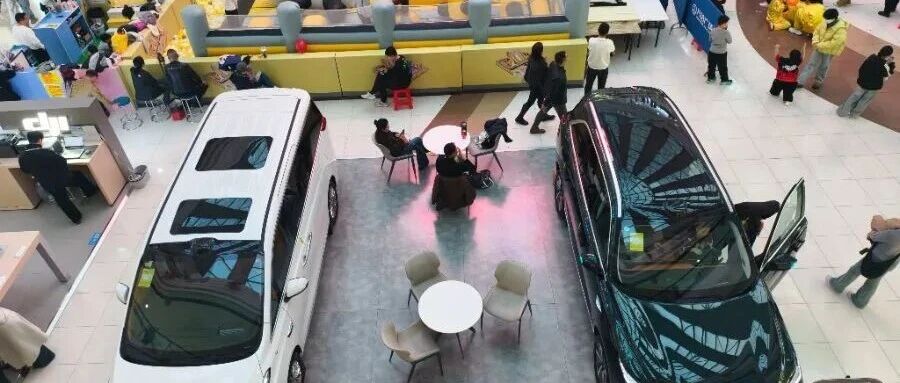
Core Viewpoint - The article highlights the significant boost in the automotive market, particularly in the electric vehicle (EV) sector, driven by government subsidies and the traditional consumption peak during the Spring Festival, showcasing the growing potential in lower-tier cities and rural areas [1][9]. Group 1: Government Initiatives and Market Response - The "Lego New Year" special event launched by the Ministry of Commerce and nine other departments has allocated 625 billion yuan in national subsidies, with local consumer red envelopes and corporate discounts being actively distributed [1]. - The continuation of national subsidies has led to increased foot traffic and sales in automotive showrooms, particularly for vehicles priced between 60,000 to 100,000 yuan [1]. Group 2: Competitive Landscape - Automotive brands are increasingly opening stores in prime locations such as shopping malls, indicating heightened competition and a strategic shift to capture consumer attention [4]. - Price remains the decisive factor for consumers in lower-tier cities, with brands like Extreme Fox promoting models under 100,000 yuan and offering significant incentives [5]. Group 3: Consumer Preferences and Trends - There is a growing acceptance of EVs in rural areas, with sales of EVs in these markets expected to outpace urban areas, driven by government initiatives and consumer demand [9]. - Consumers express a preference for EVs, particularly in the 100,000 to 200,000 yuan range, while also showing concerns about battery range and charging infrastructure [6][10]. Group 4: Charging Infrastructure Development - The construction of charging facilities is rapidly increasing, with projections indicating that by the end of 2025, there will be approximately 20.09 million charging points in China, marking a 49.7% year-on-year growth [11]. - The government of Henan province plans to build 29,000 new public charging points by 2025, significantly enhancing the charging network and alleviating range anxiety for EV owners [11]. Group 5: Future Market Outlook - The Chinese automotive market is expected to peak at around 40 million units, with future growth primarily occurring in lower-tier cities and rural areas, driven by favorable policies and infrastructure improvements [12].

美国汽车行业焦虑:如果中国车企进入美国市场,美欧日韩都将受到冲击
Xin Lang Cai Jing· 2026-02-16 11:53
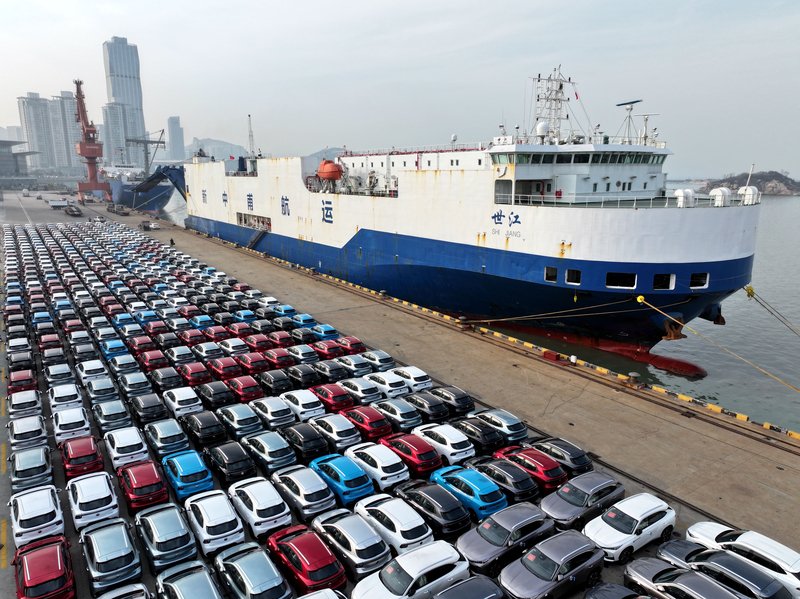
【文/观察者网 陈思佳】上个月,美国总统特朗普在底特律经济俱乐部发表演讲称,如果中国汽车制造商在美国 建厂并雇佣美国人,他愿意允许他们进入美国。据英国《金融时报》2月16日报道,这一表态让美国汽车行业感 到"震惊",他们担心,极具竞争力的中国车企可能抢走美国车企的市场份额。 近年来,中国车企凭借先进、高质量且价格低廉的电动汽车,迅速在全球范围内抢占市场份额,让西方传统汽车 巨头难以招架。但美国设置了贸易壁垒,一直通过100%关税等手段阻止中国汽车进入美国市场。不过,特朗普的 最新表态似乎意味着,情况有可能发生变化。 报道称,美国汽车企业担心,特朗普可能改变对中国汽车的政策。美国咨询公司中国汽车洞察的创始人涂乐透 露,近期来自北美汽车制造商的咨询业务显著增长,这些企业想知道,他们是应该防范中国车企的竞争,还是与 中国车企开展合作。 咨询公司AlixPartners的全球汽车市场负责任马克·韦克菲尔德也表示,对于中国车企可能进入美国市场的前景,美 国车企的高管们"相当紧张和担忧"。 2月13日,江苏省连云港港东方港务分公司码头,滚装轮在装载出口车辆 IC photo 些份额。" 然而,美国汽车行业也担心,中国已具 ...
新春走基层|政策暖风频吹,新能源车加速“下沉”
2 1 Shi Ji Jing Ji Bao Dao· 2026-02-16 07:35
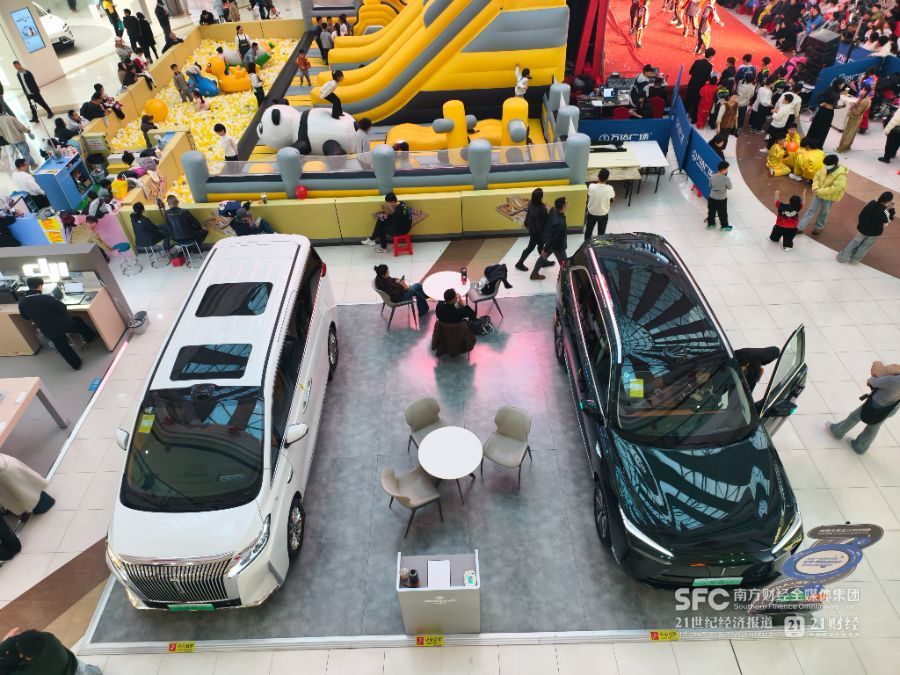
Core Insights - The Chinese automotive market is experiencing a surge in consumer interest, particularly in the context of the Spring Festival and the implementation of new national subsidy policies for electric vehicles [1][5][9] - There is a notable shift in the location of car dealerships, with brands moving into shopping malls to enhance visibility and compete more effectively for consumer attention [3][4] - The acceptance of electric vehicles (EVs) is increasing in rural areas, driven by government initiatives and the growing availability of charging infrastructure [7][8][9] Group 1: Market Trends - The implementation of the new national subsidy policy has led to increased foot traffic and sales in car dealerships, especially for models priced between 60,000 to 100,000 yuan [1] - The competition among automotive brands is intensifying, with companies like Li Auto and BYD adopting innovative marketing strategies, including the use of social media to reach younger consumers [3][4] - The demand for electric vehicles is rising, particularly in lower-tier cities, as evidenced by the increasing presence of brands like BYD and Wuling in these markets [7][9] Group 2: Consumer Behavior - Price remains a decisive factor for consumers in third and fourth-tier cities, with dealerships focusing on highlighting discounts and pricing to attract buyers [3][5] - There is a growing trend of consumers upgrading to electric vehicles, with many expressing interest in models that offer spacious interiors and advanced features [5][8] - Concerns about charging infrastructure persist, with consumers indicating a preference for electric vehicles if charging facilities are adequate; otherwise, they may opt for hybrid models [8] Group 3: Infrastructure Development - The construction of charging facilities is accelerating, with projections indicating that by the end of 2025, there will be approximately 20.09 million charging points in China, marking a 49.7% year-on-year increase [8][9] - The government of Henan province plans to build 29,000 new public charging stations by 2025, significantly exceeding its annual target and addressing range anxiety for EV owners [9] - The market for electric vehicles in rural areas is expected to grow substantially, with predictions indicating that by 2030, the number of vehicles per thousand people in rural regions could reach 160, resulting in a market size of approximately 500 billion yuan [7][9]
新春走基层|政策暖风频吹,新能源车加速"下沉"
2 1 Shi Ji Jing Ji Bao Dao· 2026-02-16 07:33
Group 1 - The Chinese automotive market is experiencing a surge in consumer interest, particularly in the lower price range of 60,000 to 100,000 yuan, driven by the continuation of the "National Subsidy" policy and the traditional peak consumption period around the Spring Festival [1][2] - The competition among automotive brands is intensifying, with many companies relocating their dealerships to high-traffic areas such as shopping malls to capture consumer attention and enhance brand visibility [2][3] - Price remains a decisive factor for consumers in third- and fourth-tier cities, leading brands to emphasize pricing and promotional offers in their marketing strategies [2][3] Group 2 - The acceptance of electric vehicles (EVs) is increasing in rural areas, with a notable rise in the number of brands like BYD and Wuling appearing on the streets, indicating a growing market for EVs outside urban centers [6][7] - The sales of new energy vehicles (NEVs) in rural areas are projected to grow significantly, with total sales expected to rise from 397,000 units in 2020 to nearly 7.6 million units by 2024, outpacing urban market growth [7] - The construction of charging infrastructure is crucial for the adoption of EVs, with a projected total of 20.09 million charging points by the end of 2025, reflecting a 49.7% year-on-year increase [8][9]