中国核电

Search documents
公用环保202511第2期:《生态环境监测条例》公布,25Q3公用环保基金持股情况梳理-20251111
Guoxin Securities· 2025-11-11 08:51
Investment Rating - The report maintains an "Outperform" rating for the public utility and environmental sectors [5][11]. Core Views - The report highlights the introduction of the "Ecological Environment Monitoring Regulations," which will enhance the automation, digitalization, and intelligence of ecological monitoring systems starting January 1, 2026 [15][17]. - The public utility and environmental sectors have seen a decrease in fund holdings, with a total market value of 49.695 billion yuan, down 29.64% from the previous quarter [2][17]. - The report emphasizes investment opportunities in the renewable energy sector and comprehensive energy management, particularly in the context of carbon neutrality [27]. Summary by Sections Market Review - The Shanghai Composite Index rose by 0.82%, while the public utility index increased by 2.42% and the environmental index by 2.71% [14][29]. - Within the electricity sector, coal-fired power increased by 2.09%, hydropower by 2.00%, and renewable energy generation by 3.08% [30]. Important Policies and Events - The "Ecological Environment Monitoring Regulations" were signed into law, aiming to establish a modern ecological monitoring system [15][17]. - A significant achievement in nuclear fuel conversion was reported, marking a milestone in thorium-uranium fuel technology [16]. Investment Strategy - Recommendations include major coal-fired power companies like Huadian International and regional electricity companies such as Shanghai Electric due to stable profitability [3][27]. - The report suggests investing in leading renewable energy firms like Longyuan Power and Three Gorges Energy, as well as high-quality offshore wind power companies [3][27]. - Nuclear power companies like China National Nuclear Power and China General Nuclear Power are expected to maintain stable profitability [3][27]. - High-dividend hydropower stocks like Yangtze Power are recommended for their defensive attributes [3][27]. - In the environmental sector, companies like China Science Instruments and Shandong High Energy are highlighted for their growth potential [27]. Key Company Earnings Forecasts and Investment Ratings - Huadian International (600027.SH) is rated "Outperform" with an expected EPS of 0.49 yuan for 2024 and 0.62 yuan for 2025 [5]. - Longyuan Power (001289.SZ) is also rated "Outperform" with an expected EPS of 0.76 yuan for 2024 and 0.81 yuan for 2025 [9]. Fund Holdings Analysis - As of Q3 2025, the public utility and environmental sectors had 122 stocks heavily held by funds, a decrease of 4 from the previous quarter [2][17]. - The electricity sector accounted for 55 of these stocks, with a total market value of 42.276 billion yuan, down 30.82% from the previous quarter [17]. Environmental Sector Insights - The water and waste incineration industries are entering a mature phase, with improved free cash flow and declining risk-free rates [27]. - The domestic waste oil recycling industry is expected to benefit from the EU's SAF blending policy [27].




浙能电力(600023):2025 年三季报点评:参股核电平滑火电业绩波动,上市以来累计分红接近305亿元
Zhongyuan Securities· 2025-11-11 08:20
Investment Rating - The report assigns an "Accumulate" rating for the company, indicating a potential increase of 5% to 15% relative to the CSI 300 index over the next six months [10][32]. Core Views - The company reported a revenue of 23.342 billion yuan in Q3 2025, a year-on-year decrease of 10.68%, with a net profit attributable to shareholders of 2.718 billion yuan, down 1.87% year-on-year [4][5]. - For the first three quarters of 2025, the company achieved a total revenue of 58.814 billion yuan, a decline of 11.29% year-on-year, and a net profit of 6.230 billion yuan, down 6.96% year-on-year [4][5]. - The company has managed to generate a net cash flow from operating activities of 10.959 billion yuan, which is an increase of 11.31% year-on-year [4]. Summary by Sections Financial Performance - The company’s gross profit margin stands at 13.03%, with a diluted return on equity of 8.30% [4]. - The company’s total assets are valued at 147.241 billion yuan, with a debt-to-asset ratio of 43.93% [4][30]. Operational Highlights - The company completed a power generation of 1,352.34 billion kWh in the first three quarters of 2025, reflecting a growth of 4.7% year-on-year [5]. - The company’s coal-fired power generation accounted for 99.2% of its total output, with significant contributions from various power plants [5]. Cost Management - The company has effectively reduced financial expenses by 12.84% to 745 million yuan, and R&D expenses decreased by 37.34% to 199 million yuan [6]. - Sales and management expenses also saw reductions of 25.93% and 7.86%, respectively, indicating effective cost control measures [6]. Future Outlook - The company is expected to achieve net profits of 7.215 billion yuan, 7.546 billion yuan, and 7.942 billion yuan for the years 2025, 2026, and 2027, respectively [10]. - The projected earnings per share for the same years are 0.54 yuan, 0.56 yuan, and 0.59 yuan, with corresponding price-to-earnings ratios of 9.96X, 9.52X, and 9.05X [10].

正式投用!我国建成国际先进量子放射性计量实验室
中国能源报· 2025-11-11 04:38
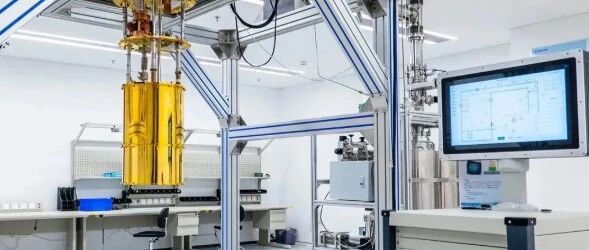
Core Viewpoint - The establishment of the quantum radioactive metrology laboratory marks a significant advancement in China's quantum metrology technology, achieving international standards and filling a gap in low-temperature quantum magnetic calorimetry [1][3]. Group 1: Importance of Metrology - Metrology is a crucial foundation for technological innovation, industrial development, and public welfare, serving as an essential support for building an integrated national strategic system and capabilities [3]. - Quantum metrology is likened to a high-precision "fiber laser ruler," focusing on the measurement of microscopic particles in the quantum realm to achieve precise measurements [3]. Group 2: Laboratory and Platform Details - The quantum radioactive metrology laboratory, led by the China National Nuclear Corporation's China Institute of Atomic Energy, is the first domestic platform based on magnetic calorimetry to achieve low-energy γ-ray single-photon pulse detection [5]. - The laboratory significantly enhances the energy resolution of γ-ray detection to the order of hundreds of electron volts (eV), improving the analysis capabilities of key radionuclides [5]. - The research team has successfully developed core components such as the quantum magnetic calorimeter sensor chip, marking a breakthrough in domestic signal detection based on magnetic calorimetry [5]. Group 3: Ionizing Radiation Metrology Platform - The ionizing radiation metrology equipment "one line, multiple uses" research and development platform aims to address the "bottleneck" technology challenges in high-end instruments [8]. - This platform integrates innovative research and development, precision manufacturing, strict validation, and reliable assurance, forming a complete chain from material storage to product testing [8]. - It establishes a closed-loop system covering "design-development-manufacturing-assembly-testing-optimization," accelerating the transformation of innovative results into mature products to meet high-end application and market demands [8].


十月行业动态报告-Q3火电业绩增长,核电、绿电业绩承压 | 投研报告
Zhong Guo Neng Yuan Wang· 2025-11-11 03:35
Core Insights - The report indicates that the performance of nuclear and wind power sectors is under pressure, while thermal power shows growth [1][2] Group 1: Financial Performance - In the first three quarters of 2025, the net profits for SW thermal, hydro, nuclear, wind, and solar power sectors were 69.69 billion, 51.32 billion, 16.58 billion, 12.91 billion, and 2.57 billion yuan respectively, with year-on-year growth rates of 16.8%, 3.3%, -12.4%, -16.4%, and 86.0% [1][2] - In Q3 2025, the net profits for SW thermal, hydro, nuclear, wind, and solar power sectors were 36.01 billion, 28.29 billion, 8.45 billion, 2.45 billion, and 1.35 billion yuan respectively, with year-on-year growth rates of 34.3%, -1.6%, -16.5%, -35.6%, and 169.5% [1][2] Group 2: Electricity Generation - In September, the total industrial electricity generation was 826.2 billion kWh, showing a year-on-year increase of 1.5%, with a slight deceleration compared to August [3] - The generation from thermal, hydro, nuclear, wind, and solar power in September changed by -5.4%, 31.9%, 1.6%, -7.6%, and 21.1% year-on-year, with respective changes in growth rates compared to August of -7.1 percentage points, +43.0 percentage points, -5.9 percentage points, -27.8 percentage points, and +5.2 percentage points [3] Group 3: Electricity Consumption - In September, the total electricity consumption was 888.6 billion kWh, with a year-on-year growth of 4.5%, showing a slowdown compared to August [4] - The electricity consumption for primary, secondary, tertiary industries, and residential use was 12.9 billion, 570.5 billion, 176.5 billion, and 128.7 billion kWh respectively, with year-on-year changes of 7.3%, 5.7%, 6.3%, and -2.6% [4] Group 4: Investment Strategy - The report suggests that the demand for green electricity is expected to be catalyzed by energy consumption targets for the 14th Five-Year Plan, and the establishment of a sustainable pricing mechanism for new energy will clarify future revenue expectations [5] - For thermal power, coal production has declined year-on-year from July to September, and the market price for coal has rebounded, indicating a potential opportunity for investment [5][6] - The report highlights the long-term value of hydropower and nuclear power during a declining interest rate cycle, with specific stock recommendations for leading companies in these sectors [6]
“十四五”时期我国核电总体规模跃居世界第一
Ren Min Ri Bao Hai Wai Ban· 2025-11-11 03:31
Core Viewpoint - Nuclear power is a high-quality and efficient clean energy source, with China prioritizing nuclear safety and adopting advanced technologies and strict standards for its development [1][3]. Group 1: Development and Achievements - During the 14th Five-Year Plan period, China has successfully launched several landmark nuclear power projects, including the domestically developed third-generation nuclear power technologies "Hualong One" and "Guohe One," contributing significantly to energy security and low-carbon transition [1][2]. - The "Hualong One" technology has achieved over 1,000 days of continuous safe operation at the Fuqing Nuclear Power Plant Unit 5, delivering more than 37 billion kilowatt-hours of clean electricity [2]. - The domestic equipment localization rate for "Hualong One" has exceeded 88%, with over 700 patents and 120 software copyrights obtained [2]. Group 2: Technical Innovations - "Hualong One" is based on over 30 years of Chinese nuclear research and development, featuring advanced pressurized water reactor technology with complete independent intellectual property rights [3]. - The design incorporates the highest international safety standards, including a seismic resistance requirement of 0.3g, allowing it to withstand earthquakes of magnitude 9 or higher [3]. - The equipment localization rate for "Hualong One" has reached over 95%, with key components designed and manufactured domestically [4]. Group 3: Industry Growth and Capacity - During the 14th Five-Year Plan, China has approved the construction of 46 new nuclear power units, adding 54.5 million kilowatts of capacity, with operational capacity and annual electricity generation both increasing by approximately 30% [6]. - As of now, China has 59 operational nuclear power units with a total capacity of 62.48 million kilowatts, and 53 units under construction with a capacity of 62.93 million kilowatts, maintaining the world's largest nuclear power scale [6]. Group 4: Safety and Environmental Impact - China's operational nuclear power units have accumulated over 600 reactor years of safe and stable operation, achieving the highest score in the World Association of Nuclear Operators (WANO) comprehensive index for nine consecutive years [10]. - In 2024, nuclear power generation in China is expected to reach 446.9 billion kilowatt-hours, accounting for 4.5% of the national total, equivalent to a reduction of approximately 370 million tons of carbon dioxide emissions [12].
自主核电点亮千家万户
Huan Qiu Wang· 2025-11-11 02:38
Core Viewpoint - Nuclear power is recognized as a high-quality and efficient clean energy source, with China prioritizing nuclear safety as a lifeline for its development, employing advanced technology and strict standards [1] Summary by Sections Nuclear Power Development in China - During the 14th Five-Year Plan, China has successfully launched several landmark projects, including the domestically developed third-generation nuclear power technologies "Hualong One" and "Guohe One," contributing significantly to energy security and low-carbon transition [1][11] - China's nuclear power capacity has become the largest in the world, with 59 operational nuclear reactors and a total installed capacity of 62.48 million kilowatts [11][18] Hualong One Technology - "Hualong One" is based on over 30 years of Chinese nuclear research and development, designed to meet the highest international safety standards, and has achieved over 88% localization in its first unit [8][9] - The technology has demonstrated significant safety enhancements, including a seismic resistance standard of 0.3g, allowing it to withstand earthquakes of magnitude 9 or higher [9] - The equipment localization rate for "Hualong One" has reached over 95%, showcasing China's industrial capabilities in manufacturing key components [9] Achievements and Innovations - The first unit of "Hualong One" has operated safely for over 1,000 days, generating over 37 billion kilowatt-hours of clean electricity, and has established international cooperation with over 20 countries [8][11] - The "Linglong One" project represents another significant achievement, being the world's first modular small reactor to pass international safety reviews, emphasizing China's innovative capabilities in nuclear technology [13] Safety and Environmental Impact - China's operational nuclear reactors have accumulated over 600 reactor years of safe operation, consistently ranking first in global safety performance according to the World Association of Nuclear Operators (WANO) [14] - In 2024, nuclear power generation is expected to account for 4.5% of China's total electricity output, equivalent to a reduction of approximately 370 million tons of CO2 emissions [17] Investment and Future Prospects - The 14th Five-Year Plan has seen the approval of 46 new nuclear units, with an additional installed capacity of 54.5 million kilowatts, indicating a robust growth trajectory for the nuclear sector [18] - Major nuclear equipment manufacturers in China have significantly enhanced their research and manufacturing capabilities, contributing to a comprehensive nuclear supply chain [11][18]
研判2025!中国便携式辐射巡测仪行业产业链、市场规模及重点企业分析:技术赋能国产化加速,政策护航核能环保双驱动行业未来增长新空间[图]
Chan Ye Xin Xi Wang· 2025-11-11 01:16
Core Insights - The portable radiation survey meter industry in China is experiencing steady growth, with a market size projected to reach 484 million yuan in 2024, reflecting a year-on-year increase of 6.84% [1][4][5] - The industry is supported by strong demand in key sectors such as nuclear energy and environmental safety, bolstered by favorable national policies [1][4] Industry Overview - Portable radiation survey meters are handheld devices used for rapid detection of radioactive material concentrations or radiation intensity, suitable for various applications including nuclear facilities, research institutions, and environmental monitoring [2] - The industry is characterized by a concentrated market structure, with leading companies holding significant market shares [5] Industry Value Chain - The upstream of the industry includes essential raw materials and components such as GM counting tubes, NaI(Tl) scintillators, and microprocessors [2] - The midstream involves the manufacturing of portable radiation survey meters, while the downstream applications span nuclear industry, healthcare, and environmental monitoring [2] Market Size - The market for portable radiation survey meters is projected to grow to 484 million yuan in 2024, indicating a robust demand and strong industry momentum [4][5] Key Companies - Major players in the industry include China Nuclear Control Systems Engineering Co., Ltd., which has achieved significant technological breakthroughs and holds over 35% market share in domestic markets [6] - Other notable companies include West China Nuclear Instrument Co., Ltd., which focuses on radiation monitoring systems and has developed advanced detection technologies [8] Industry Development Trends 1. **Technological Innovation**: The industry is expected to integrate AI, IoT, and quantum dot detector technologies, enhancing precision and intelligence in devices [9] 2. **Policy and Demand Drivers**: The dual push from policies and increasing demand in nuclear energy and healthcare sectors is anticipated to expand market opportunities [9] 3. **Accelerated Domestic Replacement**: The self-sufficiency of core materials is expected to rise, reshaping the global competitive landscape [10]

25家高利润公司首次中期分红,平均每家分近28亿元
21世纪经济报道· 2025-11-10 15:24
Core Viewpoint - The A-share market is experiencing an unprecedented wave of dividend reform, with a significant increase in companies announcing mid-term dividends for the first time, driven by regulatory policies and market ecology [1][3]. Group 1: Dividend Trends - As of November 10, 2025, 25 companies with net profits exceeding 3 billion yuan have announced their first mid-term dividend plans, distributing a total of 69.387 billion yuan, averaging 2.775 billion yuan per company [1][5]. - The trend of mid-term dividends is becoming a new standard for high-quality companies, with over half of the 207 companies reporting net profits over 3 billion yuan in 2025 implementing mid-term dividends, a nearly sixfold increase from three years ago [1][4]. Group 2: Industry Leaders - Leading companies in sectors such as energy, manufacturing, and finance are at the forefront of this dividend reform, with China Shenhua leading the way with a dividend of 19.471 billion yuan, followed by Industrial Fulian and Industrial Bank [1][6]. - The banking sector is a major contributor to dividends, with Industrial Bank also announcing its first mid-term dividend of 11.957 billion yuan, highlighting the significant role of industry leaders in setting a positive example for the market [6]. Group 3: Regulatory Influence - Regulatory bodies are encouraging companies to increase mid-term dividend frequency, shifting from primarily annual dividends to more frequent distributions [3][11]. - New policies introduced in 2024 and 2025 are tightening dividend requirements, compelling companies with low or no dividends to enhance their dividend policies, thereby improving shareholder returns [11][12]. Group 4: Future Outlook - The ongoing reforms in the A-share market are expected to inject new vitality into the dividend ecosystem, with differentiated guidance for technology innovation companies and mature enterprises to balance reinvestment and dividend payouts [12]. - The evolution of the dividend system from soft constraints to hard indicators and now to precise policies indicates a shift towards a more mature and rational dividend ecosystem in the A-share market [12].




高利润公司分红“破冰”:25家季利超30亿企业首派中期红包
2 1 Shi Ji Jing Ji Bao Dao· 2025-11-10 13:25
Core Insights - The A-share market is experiencing an unprecedented wave of dividend reform, with 25 companies announcing their first interim dividend plans since listing, distributing a total of 69.39 billion yuan, averaging 2.78 billion yuan per company [1][3][4] Group 1: Dividend Trends - The trend of interim dividends is becoming a new standard for high-quality companies, with over half of the 207 companies reporting profits exceeding 3 billion yuan in Q3 2025 implementing interim dividends, a significant increase from three years ago [1][3] - The number of companies choosing to implement interim dividends has seen exponential growth, with 72.5% of companies with profits over 10 billion yuan in 2025 participating in interim dividends, compared to only 10% in 2023 [2][3] Group 2: Leading Companies - China Shenhua leads the way with a dividend payout of 19.47 billion yuan, followed by Industrial Fulian and Industrial Bank, with these three companies accounting for 54.73% of the total dividends distributed [4][5] - Notable companies like China Shenhua and Industrial Fulian have significant market capitalizations, with China Shenhua's market cap reaching 852.86 billion yuan and Industrial Fulian's rising from 427.16 billion yuan to 1.44 trillion yuan [3][4] Group 3: Regulatory Influence - Regulatory policies are significantly driving the change in the dividend landscape, with new rules imposing stricter requirements on companies that have not paid dividends for years, thereby encouraging higher dividend payouts [6][7] - The 2025 financial forum introduced policies aimed at promoting long-term investment, emphasizing the importance of companies' long-term dividend capabilities [7][8]
推进煤炭与新能源融合发展,碳中和碳达峰的中国行动白皮书发布 | 投研报告
Zhong Guo Neng Yuan Wang· 2025-11-10 06:49
Group 1 - The core viewpoint of the report emphasizes the integration of coal and new energy development, with significant progress expected by the end of the 14th Five-Year Plan [2] - The report outlines key tasks for coal and new energy integration, including the development of photovoltaic and wind power in mining areas, clean energy substitution, and innovation in green energy utilization [2] - The "China's Action on Carbon Peak and Carbon Neutrality" white paper highlights the importance of green and low-carbon energy transformation to achieve carbon neutrality goals [2] Group 2 - The weekly performance of various indices shows significant increases, with the lithium battery index rising by 8.00% and the energy storage index by 4.60% [1] - Lithium prices have increased, with carbonate lithium priced at 80,600 yuan/ton, up 6.8% from the previous week, and hydroxide lithium at 75,800 yuan/ton, up 2.9% [1] - The average national electricity purchase price is projected to decrease by 1% year-on-year by June 2025, while coal prices have increased by 47 yuan/ton week-on-week [3] Group 3 - Investment recommendations include focusing on undervalued thermal power assets and opportunities in charging pile and photovoltaic infrastructure [4] - Specific companies recommended for investment in thermal power include Jingtian Energy, Jingneng Power, and Datang Power [4] - The report suggests that the growth potential of green electricity is re-emerging, with historical issues regarding national subsidies expected to be resolved [4]