
开立医疗

Search documents
脑机接口再迎重磅利好,有公司股价离奇暴涨82000%
Feng Huang Wang Cai Jing· 2025-06-30 12:24
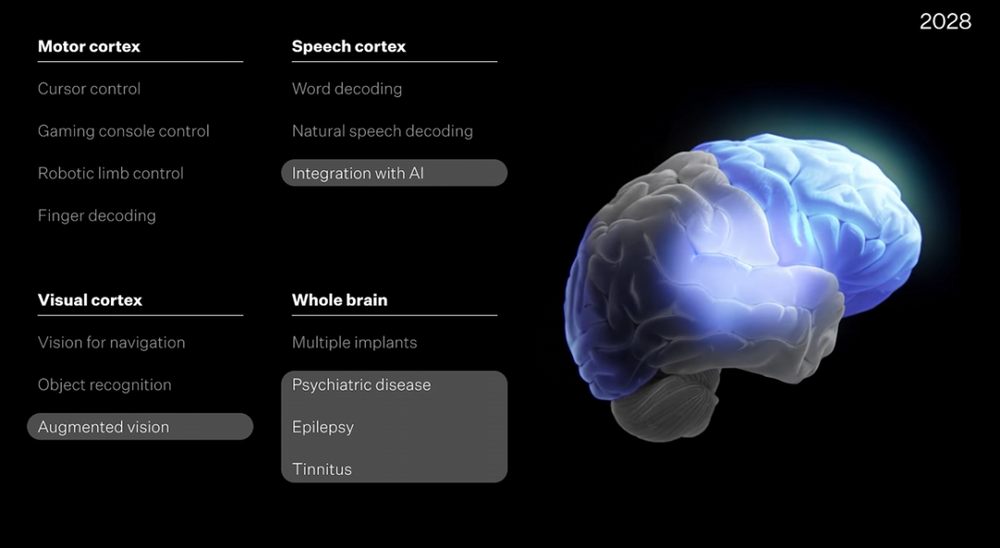
Market Overview - On June 30, A-shares experienced a volatile rise, with the ChiNext Index increasing by over 1% and more than 4,000 stocks rising. The trading volume was 1.52 trillion, down from 1.58 trillion the previous day [1] - The military industry stocks led the gains, with over ten stocks including Hengyu Xintong and Chenxi Aviation hitting the daily limit [1] - Gaming stocks also saw fluctuations, with companies like Giant Network and Kaiying Network reaching the daily limit [1] - The photovoltaic industry chain strengthened, particularly in the BC battery sector, with Guangxin Materials hitting the daily limit [1] - Stocks related to lithography machines were active, with companies like Blue Eagle Equipment and Kaimite Gas also hitting the daily limit [1] Banking and Securities Sector - Bank and brokerage stocks continued to adjust, with companies such as Qilu Bank and Zhengzhou Bank experiencing varying degrees of decline [2] Brain-Computer Interface (BCI) Sector - The brain-computer interface concept showed strong performance, with companies like Xiangyu Medical hitting the daily limit and Botao Bio rising over 8% [3] - Recent positive developments in the BCI sector have attracted global investor interest, with 2025 being highlighted as a critical year for BCI technology [4] - Neuralink, a company owned by Elon Musk, announced that seven individuals have implanted their N1 devices, allowing paralyzed individuals to control computers using their thoughts [5] - Neuralink's ambitious plans include a roadmap to develop a full-brain interface by 2028, enabling high-bandwidth connections between biological brains and external machines [7][9] Stock Performance and Market Reactions - The stock of Brain Regeneration Technology, a previously obscure company, surged by 13,192.24% this year after announcing FDA approval for its new neural modulation chip [11] - However, the stock price subsequently plummeted, leading to a loss of $33 billion in paper wealth, raising concerns among market observers [13] - Regulatory bodies may scrutinize the volatility in low-priced small-cap stocks, which are often susceptible to fraud [14] Future Prospects in BCI - The BCI market is expected to grow, with applications primarily in healthcare, and gradually expanding into education, gaming, and smart home sectors [14] - The development of higher precision sensors and lighter, more compatible devices is anticipated to enhance the BCI industry [14] - A list of BCI concept stocks shows several companies with strong institutional ratings and projected profit growth for 2025 and 2026, including Mindray Medical and Kailing Medical [16]

医药生物行业周报:全球首个双靶点减重药上市,持续关注GLP-1赛道机会-20250630
Donghai Securities· 2025-06-30 10:50
Investment Rating - The report assigns an "Overweight" rating to the pharmaceutical and biotechnology industry, indicating that the industry index is expected to outperform the CSI 300 index by 10% or more over the next six months [1]. Core Insights - The pharmaceutical and biotechnology sector saw an overall increase of 1.60% in the week from June 23 to June 27, ranking 24th among 31 industries, underperforming the CSI 300 index by 0.35 percentage points. The current PE valuation for the sector is 27.67 times, which is at a historically low level, with a valuation premium of 124% compared to the CSI 300 [3][13][23]. - The top-performing sub-sectors during this period were medical services (2.92%), medical devices (2.10%), and pharmaceutical commerce (2.08%) [3][13]. - A significant event in the industry was the approval of the dual-target weight loss drug, Ma Shidu, by the National Medical Products Administration (NMPA) on June 27, 2025. This drug is aimed at long-term weight control for adults with obesity or overweight conditions and is the first of its kind globally [4][35][37]. Summary by Sections Market Performance - The pharmaceutical and biotechnology sector increased by 1.60% in the week of June 23-27, 2025, ranking 24th among 31 industries and lagging behind the CSI 300 index by 0.35 percentage points. The PE valuation for the sector is currently 27.67 times, with a 124% premium over the CSI 300 [3][13][23]. Industry News - The approval of Ma Shidu (Mastride Injection) by the NMPA is a key highlight, showing significant weight loss and metabolic benefits based on clinical trial results. The drug demonstrated a mean percentage change in body weight of -12.0% and -14.8% for the 4mg and 6mg doses, respectively, compared to a placebo [4][36][37]. - Other notable developments include ongoing clinical trials and advancements in GLP-1 class weight loss drugs, with several companies reporting promising results at the American Diabetes Association conference [34][37]. Investment Recommendations - The report suggests focusing on the GLP-1 class weight loss drugs and related commercial opportunities, highlighting the potential for long-acting/oral formulations and multi-target molecules. It recommends quality stocks in medical devices, traditional Chinese medicine, chain pharmacies, and medical services [6][38][39]. - Recommended stocks include Beida Pharmaceutical, Teabo Bio, Laobaixing Pharmacy, Huaxia Eye Hospital, and Nuotai Bio, with additional stocks to watch such as Kelun Pharmaceutical, Rongchang Bio, and Lijun Group [6][39].
肠镜是结直肠癌筛查“金标准”但仍会漏诊,国产技术寻找突破口
第一财经· 2025-06-27 09:24
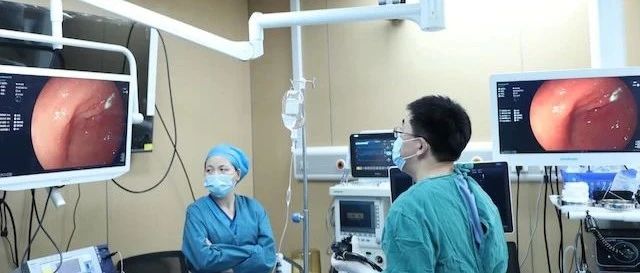
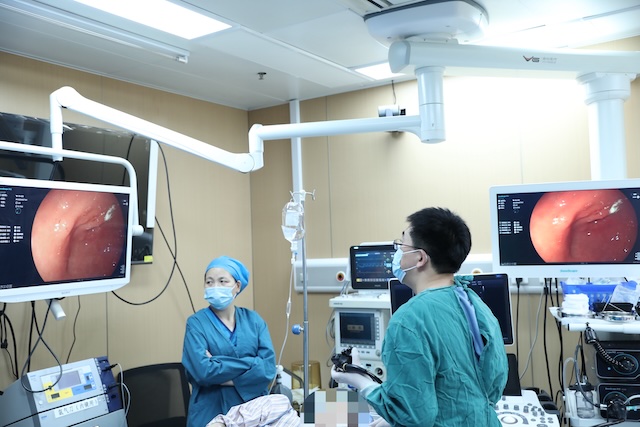
Core Viewpoint - The article discusses the advancements in endoscopic technology, specifically the introduction of spectral imaging technology, which aims to improve the detection rates of colorectal adenomas, thereby enhancing early diagnosis and treatment of colorectal cancer, which is a significant health concern in China [1][3]. Group 1: Colorectal Cancer Statistics and Challenges - Colorectal cancer is the second most common cancer in terms of incidence and the fourth in terms of mortality in China [1]. - The standard method for screening colorectal cancer is colonoscopy, but there are still challenges with missed diagnoses [1][4]. - Approximately 90% of colorectal cancers arise from adenomas, and early removal can increase the five-year survival rate to over 90% [4]. Group 2: Endoscopic Technology and Study Overview - The study led by Shanghai Jiao Tong University School of Medicine involved over 10 medical institutions and focused on comparing the detection rates of adenomas using spectral imaging technology (SFI) versus traditional white light endoscopy [3]. - The study included 698 patients and was designed as a randomized controlled trial, marking the first large-scale multi-center research on this technology in China [3]. Group 3: Results of the Study - The adenoma detection rate (ADR) for spectral imaging technology was 38.29%, significantly higher than the 30.46% ADR for white light endoscopy, with statistical significance [6]. - Secondary outcomes showed that the polyp detection rate, flat serrated lesions detection rate, and advanced adenoma detection rate for spectral imaging were 56.29%, 3.14%, and 6.57% respectively, all higher than the corresponding rates for white light endoscopy [6]. Group 4: Implications and Future Prospects - Spectral imaging technology enhances the distinction between lesions and normal mucosa, improving the detection of flat lesions and serrated lesions that are often missed with white light endoscopy [7]. - This technology is user-friendly, requiring only a button press to switch imaging modes, which could facilitate its adoption in rural hospitals and improve diagnostic capabilities across varying levels of clinical experience [7].

肠镜是结直肠癌筛查“金标准”但仍会漏诊,国产技术寻找突破口
Di Yi Cai Jing· 2025-06-27 04:55
Core Viewpoint - The study led by Shanghai Jiao Tong University Affiliated Renji Hospital demonstrates that the novel spectral imaging technology significantly improves the detection rate of colorectal adenomas compared to traditional white light endoscopy, addressing the challenge of missed diagnoses in flat lesions [1][4]. Group 1: Colorectal Cancer Context - Colorectal cancer is the second most prevalent and the fourth leading cause of cancer-related deaths in China [1]. - Approximately 90% of colorectal cancers arise from adenomas, and early removal can increase the five-year survival rate to over 90% [3]. Group 2: Study Overview - The multi-center randomized controlled trial involved over 698 patients across various regions in China, comparing the adenoma detection rates (ADR) of spectral imaging technology (SFI) and traditional white light endoscopy [1][4]. - The study is the first large-scale investigation of domestic spectral imaging technology in China, lasting nearly one year [1]. Group 3: Results of the Study - The adenoma detection rate for spectral imaging technology was 38.29%, significantly higher than the 30.46% rate for white light endoscopy, with statistical significance [4]. - Secondary outcomes showed that the polyp detection rate, flat serrated lesions detection rate, and advanced adenoma detection rate for spectral imaging were 56.29%, 3.14%, and 6.57%, respectively, all higher than the corresponding rates for white light endoscopy [4]. Group 4: Technological Advantages - Spectral imaging technology enhances the contrast between lesions and normal mucosa, making it easier to identify flat lesions and flat serrated lesions that are often missed with white light endoscopy [4]. - The technology is designed to be user-friendly, allowing for easy switching between imaging modes without the need for dye application, thus reducing the reliance on clinical experience [5].
6月26日广发医疗保健股票A净值下跌0.89%,近1个月累计上涨3.13%
Sou Hu Cai Jing· 2025-06-26 12:04
Group 1 - The core viewpoint of the article highlights the performance and holdings of the GF Healthcare Stock A fund, which has a recent net value of 1.8514 yuan and a decline of 0.89% [1] - The fund's performance over the past month shows a return of 3.13%, ranking 594 out of 1027 in its category; over the past six months, it has returned 13.87%, ranking 139 out of 995; and since the beginning of the year, it has achieved a return of 14.54%, ranking 139 out of 997 [1] - The top ten holdings of the GF Healthcare Stock A fund account for a total of 48.15%, with significant positions in companies such as Zai Lab (10.52%), Kelun Pharmaceutical (8.39%), and others [1] Group 2 - The GF Healthcare Stock A fund was established on August 10, 2017, and as of March 31, 2025, it has a total scale of 5.237 billion yuan [1] - The fund manager, Wu Xingwu, has extensive experience in the investment management field, having held various positions in different funds and companies since 2015 [2]
开立医疗收盘下跌2.12%,滚动市盈率254.73倍,总市值128.08亿元
Sou Hu Cai Jing· 2025-06-26 10:29
Company Overview - The company, Shenzhen Kaili Biomedical Technology Co., Ltd., specializes in the independent research, production, and sales of medical diagnostic and treatment equipment [1] - The main products include medical ultrasound diagnostic equipment, digestive and respiratory endoscopes, minimally invasive surgical products, and cardiovascular interventional products [1] - The company has over 20 years of experience in the ultrasound industry and is recognized as a high-tech enterprise with leading core technologies in color Doppler ultrasound [1] Financial Performance - For Q1 2025, the company reported a revenue of 430 million yuan, a year-on-year decrease of 10.29% [2] - The net profit for the same period was 8.07 million yuan, reflecting a significant year-on-year decline of 91.94% [2] - The gross profit margin stood at 63.19% [2] Market Position - The company's rolling price-to-earnings (PE) ratio is 254.73, significantly higher than the industry average of 49.45 and the median of 35.92 [2] - The total market capitalization of the company is 12.808 billion yuan [1] - Among 38 institutions holding shares, there are 35 funds, 1 brokerage, 1 social security fund, and 1 other entity, with a total holding of 52.883 million shares valued at 1.539 billion yuan [1] Competitive Landscape - The company ranks second in market share among domestic manufacturers in the ultrasound sector and tenth globally, indicating strong brand influence and competitiveness [1]
平安证券晨会纪要-20250623
Ping An Securities· 2025-06-23 00:35
Group 1: Non-Bank Financial Sector - The China Securities Regulatory Commission (CSRC) is seeking public opinion on the revised "Securities Company Classification Evaluation Regulations," aiming to optimize the classification and regulatory system for securities companies, enhancing their functional roles and professional capabilities [6][7][8] - The revised regulations will integrate business scoring indicators to support the differentiated development of small and medium-sized institutions, promoting a more efficient operational direction [7][8] - Investment recommendations focus on leading securities firms such as CITIC Securities, Huatai Securities, China Galaxy, and CICC, which are expected to benefit from the ongoing reforms in the capital market and securities industry [6][8] Group 2: Bond Market - The new special bond uses include addressing local government arrears to enterprises, with an estimated scale of 760 billion yuan for this year, indicating a shift in the focus of special bonds towards debt repayment [9][11] - The total issuance of special bonds for stabilizing growth is expected to be 5.08 trillion yuan in the second half of the year, reflecting a year-on-year decrease of 0.7 trillion yuan [9][11] Group 3: Medical Equipment Sector - The medical equipment update is deepening, with county-level medical communities actively engaging in procurement projects, leading to significant orders for various medical devices [12][13] - The procurement scale for new medical equipment has shown a month-on-month improvement, with January to May 2025 procurement amounts reaching 174 billion yuan, 113 billion yuan, 140 billion yuan, 153 billion yuan, and 134 billion yuan, respectively, indicating a strong recovery trend [13][14] - Investment suggestions include focusing on leading domestic companies in high-end and intelligent medical equipment, such as Mindray Medical, United Imaging, and others [15] Group 4: Real Estate Sector - The real estate sector is expected to maintain a volatile trend, with a recent decline of 1.69% in the sector, underperforming the CSI 300 index [17][18] - Recommendations emphasize focusing on companies with strong inventory structures, land acquisition capabilities, and product strength, which are likely to benefit from market stabilization [18] Group 5: Commodities Sector - Gold prices are expected to maintain a strong trend due to ongoing geopolitical issues, with the COMEX gold futures price recently at 3384.4 USD/oz [20] - Copper and aluminum inventories are at low levels, suggesting potential price increases, with LME copper and aluminum prices at 9660.5 USD/ton and 2561.5 USD/ton, respectively [21][22] - Investment recommendations include focusing on gold, copper, and aluminum sectors, with specific companies highlighted for their strong market positions [22][24]
研判2025!中国超声设备行业政策汇总、产业链图谱、市场规模及发展趋势分析:GE、飞利浦等国际品牌仍主导高端市场[图]
Chan Ye Xin Xi Wang· 2025-06-22 02:00
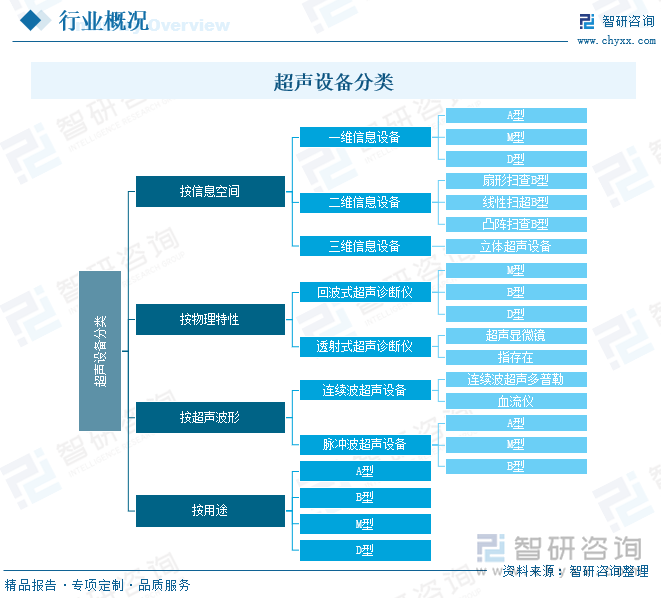
Overview - The demand for ultrasound equipment is increasing due to rising healthcare investments and growing public health awareness, with a projected demand of 57,260 units and a market size of 14.45 billion yuan in China by 2024, averaging 252,400 yuan per unit [1][11]. Market Policies - The Chinese government has implemented various policies to support the development of the medical device industry, including regulations on medical device classification, procurement mechanisms, and quality management, creating a favorable environment for the ultrasound equipment sector [4][6]. Industry Chain - The ultrasound equipment industry consists of upstream suppliers of electronic components and software systems, while the downstream market includes public and private hospitals, health centers, and primary healthcare institutions, with hospitals being the main demanders [7]. Development Status - The growth of healthcare institutions in China, which reached 1.092 million by the end of 2024, has provided significant growth opportunities for the ultrasound equipment industry, with a 2% year-on-year increase in the number of healthcare facilities [9]. Competitive Landscape - The domestic ultrasound equipment brands have penetrated the mid-to-low-end market, while international brands like GE and Philips dominate the high-end market. In Q3 2024, the market share of leading brands included Mindray (26.19%), GE Healthcare (23.29%), and Philips (21.22%), collectively accounting for over 70% of the market [13]. Company Analysis - Mindray Medical's revenue for 2024 reached 36.73 billion yuan, with the medical imaging segment contributing 7.498 billion yuan, representing 20.41% of total revenue [15]. - KAILI Medical achieved a revenue of 2.014 billion yuan in 2024, with its ultrasound business generating 1.183 billion yuan, accounting for 58.74% of total revenue [17]. Development Trends - Emerging technologies like quantum ultrasound imaging are expected to enhance diagnostic precision, while domestic companies are advancing towards high-end markets, improving their global competitiveness [19].

国家药监局通过《关于优化全生命周期监管支持高端医疗器械创新发展的举措》,加速高端器械发展
Soochow Securities· 2025-06-21 08:34
Investment Rating - The report maintains an "Overweight" investment rating for the pharmaceutical and biotechnology industry [1]. Core Insights - The National Medical Products Administration (NMPA) has accelerated the development of high-end medical devices through measures aimed at optimizing lifecycle regulation, which is expected to significantly support innovation in this sector [6]. - The report highlights the importance of high-end medical devices, including medical robots, advanced medical imaging equipment, artificial intelligence medical devices, and new biological materials, as key products that will shape the future of medical device production [6]. - Specific measures outlined in the report include optimizing special approval processes, improving classification and naming principles, and enhancing post-market supervision, which are crucial for fostering innovation and meeting public health needs [6]. Industry Trends - The report notes a significant focus from the central government on the innovation and development of high-end medical devices, with a clear mandate for regulatory reforms to promote high-quality growth in the pharmaceutical industry [6]. - The NMPA's initiatives are expected to lead to the application of more new technologies, materials, and methods in healthcare, thereby addressing the health needs of the population [6].
医疗设备招投标数据跟踪:设备更新不断深化,县域医共体持续发力
Ping An Securities· 2025-06-20 07:10
Investment Rating - Industry investment rating: Outperform the market (expected to outperform the CSI 300 index by more than 5% in the next 6 months) [23] Core Insights - The medical device sector is experiencing a significant recovery in bidding activities, driven by ongoing equipment updates and the active participation of county-level medical communities [3][5] - The overall scale of new equipment bidding in China has shown a month-on-month improvement since January 2025, with procurement amounts reaching 174 billion, 113 billion, 140 billion, 153 billion, and 134 billion yuan from January to May, respectively, reflecting year-on-year growth rates of +41%, +77%, +113%, +85%, and +69% [3][10] - Major companies in the industry are benefiting significantly from the recovery in bidding activities, with notable increases in procurement amounts for ultrasound, CT, MRI, and other imaging devices [4][11] Summary by Sections Equipment Update and County Medical Community Efforts - Since March 2025, numerous county medical communities have initiated medical equipment update projects, leading to large-scale procurement orders worth billions of yuan [3][10] - The procurement scope includes various imaging devices such as CTs, ultrasound diagnostic equipment, and MRIs, with significant activity reported in several provinces [3][10] Procurement Scale and Growth - In May 2025, procurement amounts for various devices were as follows: ultrasound 16.63 billion yuan (yoy +103%), CT 18.54 billion yuan (yoy +108%), MRI 15.06 billion yuan (yoy +102%), DR 4.12 billion yuan (yoy +236%), DSA 6.96 billion yuan (yoy +79%), and gastrointestinal endoscopes 3.81 billion yuan (yoy +58%) [4][11][14] Domestic Company Trends - Domestic companies are showing a bidding trend that aligns with the overall industry, with notable performances in May 2025: Mindray 8.19 billion yuan (yoy +56%), United Imaging 7.83 billion yuan (yoy +11%), Kaili 1.10 billion yuan (yoy +137%), and Aohua 0.35 billion yuan (yoy +242%) [4][17] Investment Recommendations - The report suggests focusing on leading domestic companies that are enhancing their high-end and intelligent medical device offerings, such as Mindray, United Imaging, Kaili, and Aohua [5][21]

