OPPO

Search documents
新股消息 | 全球独立存储巨头宏芯宇冲刺港交所 深挖AI存储万亿蓝海
智通财经网· 2026-01-02 09:48
Core Viewpoint - Shenzhen Hongxin Yu Electronics Co., Ltd. (referred to as Hongxin Yu) has submitted a listing application to the Hong Kong Stock Exchange, with CITIC Securities International as its sole sponsor [1]. Company Overview - Since its establishment in December 2018, Hongxin Yu has focused on storage products, including embedded storage, solid-state drives (SSDs), DRAM, and mobile storage [3]. - The company has developed a full-stack platform covering four core technologies: main control chip design and development, firmware algorithm development, testing system development, and storage medium characteristic analysis, enabling it to offer customized storage products [3]. - According to Frost & Sullivan, based on 2024 revenue, Hongxin Yu ranks as the fifth largest independent memory manufacturer globally and the second largest in mainland China [3]. Product Offerings - Embedded storage is the core product, with a diverse product line including eMMC, UFS, ePOP, and uMCP, applicable in smartphones, tablets, and AI cameras [3]. - The SSD product line supports multiple generations of interface specifications, including SATA 3.0, PCIe 3.0, and PCIe 4.0, expanding from consumer-grade to automotive and enterprise applications [3]. - The DRAM product portfolio includes various categories such as DDR4, DDR5, LPDDR4X, and LPDDR5X low-power memory [3]. Market Trends - The semiconductor market is experiencing rapid growth driven by the surge in global data volume and the commercialization of AI technology [4]. - The global storage products market is projected to grow from USD 263.3 billion in 2025 to USD 407.1 billion by 2029, with a compound annual growth rate (CAGR) of 11.5% [4]. - The semiconductor industry is entering a strong upward cycle, with the storage chip market exhibiting "super cycle" characteristics, particularly for DRAM and embedded storage, with monthly price increases exceeding 30% for some DRAM products [4]. Competitive Position - Hongxin Yu is the largest independent memory manufacturer in the smartphone sector globally, maintaining strong partnerships with well-known companies in the consumer application space, including Xiaomi, Transsion, OPPO, Vivo, TCL, and Baidu [5]. - The company has begun supplying storage products for automotive applications and has successfully entered the Tier 1 supplier chain for automotive manufacturers [5]. - Hongxin Yu anticipates mass production of storage products for enterprise applications by 2026 [5]. Financial Performance - Hongxin Yu's revenue for 2023 and 2024 is projected to be approximately RMB 8.78 billion and RMB 8.72 billion, respectively [6]. - For the nine months ending September 30, 2025, the company reported a year-on-year revenue growth of 14.6%, reaching approximately RMB 7.74 billion [5]. - The company is expected to achieve profitability in 2024, with an estimated annual profit of approximately RMB 480 million, driven by significant revenue increases in product lines such as DRAM [5].

锐石创芯冲刺科创板:年入6.7亿连亏三年 OPPO为第四大股东
Zhong Guo Jing Ying Bao· 2026-01-01 12:29
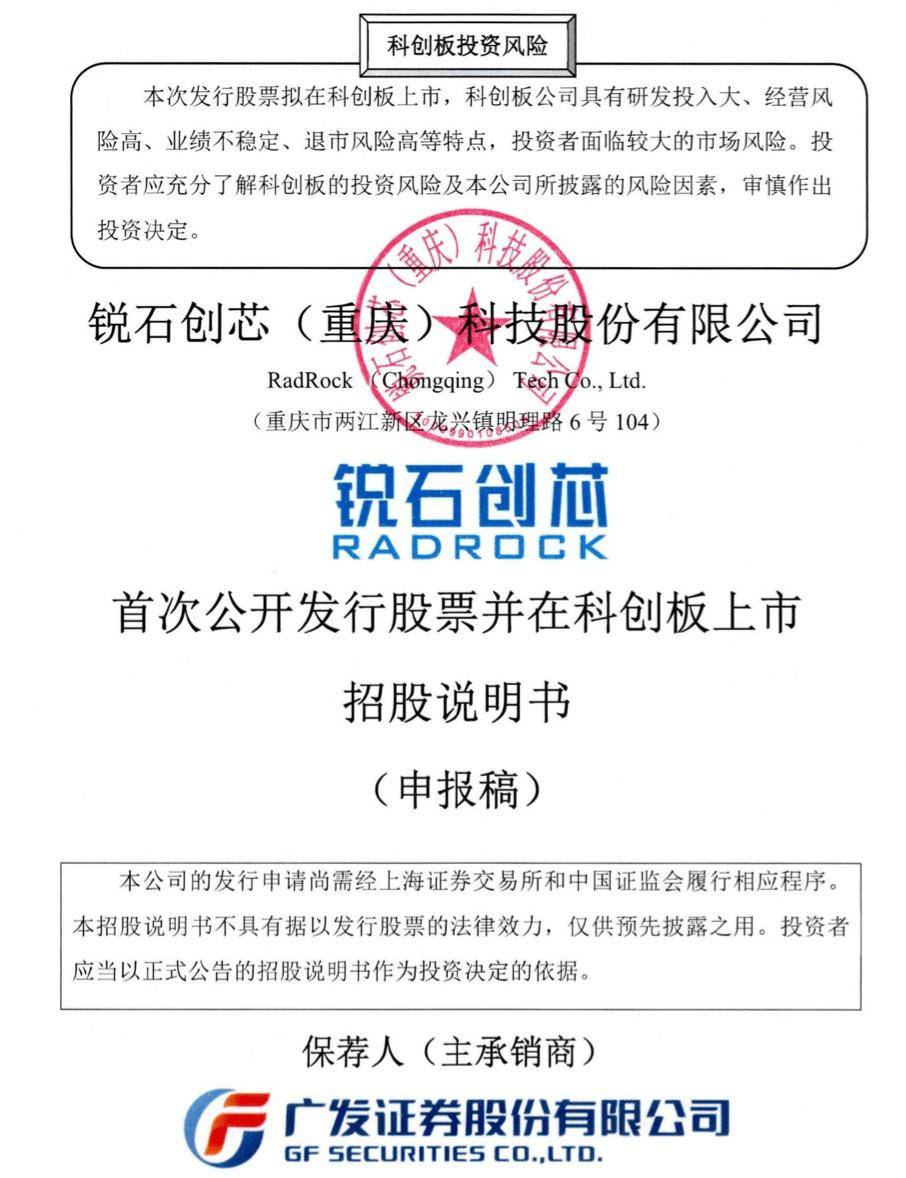
Core Viewpoint - The IPO application of domestic RF chip manufacturer Ruishi Chuangxin has been accepted, aiming to raise approximately 809 million yuan for various projects, including the construction of a MEMS device production base and a research and development center [2]. Company Overview - Ruishi Chuangxin, established in April 2017, focuses on the research, design, manufacturing, and sales of RF front-end chips and modules, with products used in smartphones, drones, IoT, and satellite communications [2][5]. - The company has successfully entered the supply chains of major smartphone brands such as OPPO, Xiaomi, vivo, Honor, Samsung, and Transsion [2][5]. Business Model and Production Capabilities - Initially adopting a fabless model, the company has transitioned to a fab-lite model, establishing its own filter wafer manufacturing base in Chongqing, which is expected to commence production in 2024 [3]. - Ruishi Chuangxin is one of the few domestic RF front-end companies capable of independently designing and manufacturing key components like SAW, TC-SAW, and MLSAW filters [3]. Financial Performance - Revenue has shown an upward trend from 370 million yuan in 2022 to 377 million yuan in the first half of 2025, primarily driven by sales of 5G and 4G RF front-end modules [6]. - Despite revenue growth, the company has faced continuous losses, with net profits of -328 million yuan in 2022 and -148 million yuan in the first half of 2025, leading to cumulative losses of 1.68 billion yuan by mid-2025 [6][7]. Market Position and Challenges - The company operates in a highly competitive market where over 70% of the RF front-end market is dominated by international giants like Qualcomm and Broadcom, particularly in high-end integrated modules and filters [7][8]. - The gross margin for Ruishi Chuangxin's main business has fluctuated between 7.95% and 13.90%, with a notable decline in the gross margin of 5G RF modules from 23.55% in 2022 to 11.49% in the first half of 2025 due to price competition [8]. Strategic Insights - The company aims to leverage its IPO to enhance its capabilities in filter autonomy and high-integration module development, which are critical for achieving profitability and sustainable growth [9]. - Analysts suggest that while the RF chip market is becoming increasingly competitive, there remains potential for companies like Ruishi Chuangxin to carve out a niche and grow [9].
雷军提前公布福利,小米交付创新高,vivo、OPPO在祝福
Sou Hu Cai Jing· 2026-01-01 05:50
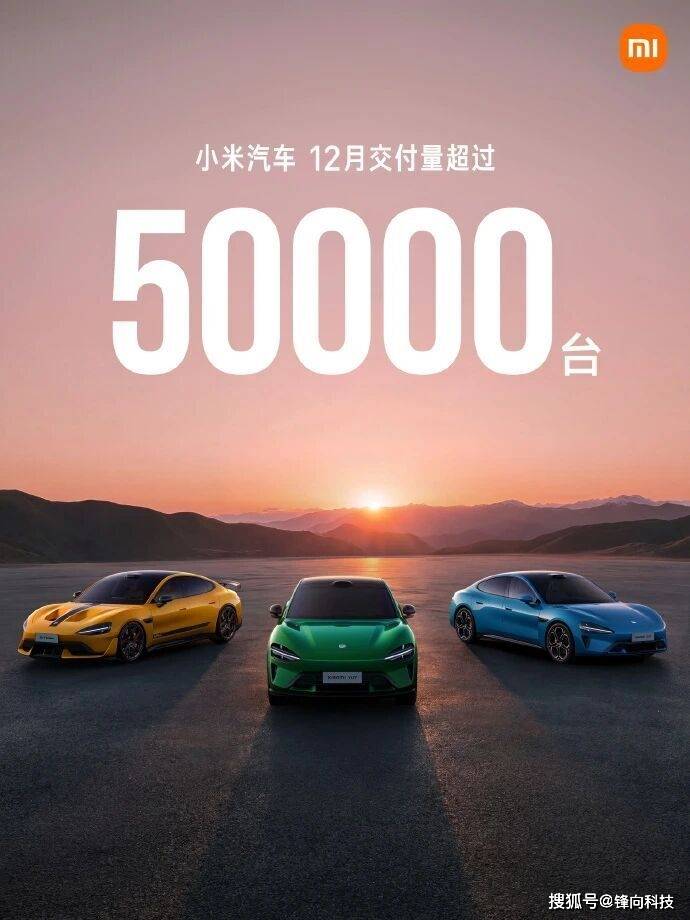
Group 1 - Xiaomi's car deliveries reached a record high in December 2025, surpassing 50,000 units for the first time in a single month, with hidden data suggesting an additional 3,000 units [3] - Lei Jun announced a New Year promotion for the Xiaomi YU7, offering 3 years of 0% interest and a low monthly payment option, along with additional benefits for previous orders [3] - Xiaomi has delivered over 500,000 vehicles in total, with the SU7 being the top-selling model in the 200,000+ price range for 2025, and the YU7 leading in the mid-size SUV category for four consecutive months [3] Group 2 - Vivo launched a New Year promotion offering exclusive discounts for students and educators on various products, emphasizing their commitment to education [5] - OPPO also announced New Year discounts, providing up to 500 yuan off on products priced below 6,000 yuan, highlighting their competitive position in the market [5] - Both Vivo and OPPO are recognized as leading players in offline sales within the domestic market, capitalizing on promotional opportunities during the New Year [5] Group 3 - Honor is using the New Year to promote its upcoming Honor Power2, which is set to be the first new phone released in 2026, with detailed specifications already leaked [7] - The anticipation surrounding the pricing of the Honor Power2 is notable, especially in light of potential storage price increases [7] - The activity from various brands on New Year's Day indicates a vibrant and competitive technology sector for 2026 [7]

华为/OPPO/小米站台,8亿募资剑指 6G 射频前沿
是说芯语· 2026-01-01 00:40
Core Viewpoint - Chongqing Ruishi Chuangxin Microelectronics Co., Ltd. has officially been accepted for IPO on the Sci-Tech Innovation Board, marking its significant progress in the capital market as a leading domestic RF front-end chip and module enterprise [1] Industry Overview - The RF front-end chip is a core component of wireless communication devices, significantly impacting signal quality and communication performance. The market has long been dominated by international giants such as Broadcom, Skyworks, and Qorvo, particularly in the critical components like filters, where domestic companies have faced supply chain constraints [3] - Among domestic listed companies in the RF front-end chip and module sector, there are established leaders and emerging players, showcasing diverse market positions, technological characteristics, and recent performance trends [3] Company Development - Ruishi Chuangxin's breakthrough began in 2024 with the launch of its high-performance filter wafer manufacturing base, marking a strategic shift from a Fabless to a Fab-lite model. This transition enables the company to achieve independent R&D and mass production of filters, reducing reliance on external supply chains [5] - The company's shareholder structure includes major mobile manufacturers and investment institutions, such as OPPO (5.9431%), Huawei's Hubble Investment (5.7187%), and Lei Jun's Shunwei Capital (5.3964%), indicating strong recognition of its technological capabilities [5] - Ruishi Chuangxin's products have been successfully integrated into major mobile manufacturers like OPPO, Xiaomi, and ZTE, as well as various consumer electronics and IoT companies, demonstrating a diversified application of its products [5] Financial and Market Position - The company plans to raise 809 million yuan through its IPO, focusing on three main areas: the second phase of the MEMS device production base, the establishment of a research and development center, and supplementing working capital [6] - The second phase of the MEMS device production base will enhance the manufacturing capacity of filters and solidify its leading position in the domestic filter market [6] - The R&D center will focus on advanced 5G and 6G technologies, as well as RF module integration technologies, positioning the company for future communication advancements [6] Market Demand and Growth - The global RF front-end market is projected to grow from approximately $22 billion in 2023 to $30 billion by 2028, with a compound annual growth rate of about 6.4% [7] - Domestic companies are poised to benefit from dual opportunities: the significant increase in RF front-end demand due to 5G smartphones (which require about 50% more RF front-end chips than 4G smartphones) and the supply chain restructuring driven by domestic substitution policies [7] - Ruishi Chuangxin's vertical integration from chip design to filter manufacturing and module packaging allows for better cost control, capacity assurance, and rapid response to customer needs [7] - With a registered capital of 434 million yuan and nearly 500 employees, the company has achieved rapid revenue growth in just seven years, positioning itself favorably for resource support and accelerated technological development following its IPO [7]
芯片设备行业的爆发点在哪
2025-12-31 16:02
Summary of Semiconductor Industry Conference Call Industry Overview - The semiconductor industry is recovering from a down cycle that began in 2021 and is entering a new up cycle driven primarily by AI computing demand rather than traditional consumer electronics demand [1][5] - AI computing demand remains strong, with high GPU rental prices and utilization rates, contrasting with the low utilization rates seen during the internet bubble, indicating that AI development is not a bubble and will continue to drive demand for semiconductor equipment and materials for an extended period [1][7] Key Insights - Significant price increases for DRAM and NAND storage chips are expected in Q3 2025, with a further rise anticipated in Q1 2026 due to overseas cloud providers' aggressive purchasing and slow upstream capacity increases, presenting market share opportunities for domestic storage manufacturers [1][8] - China's domestic production rates for mobile chips, computer chips, and advanced GPU computing chips are currently low, but increasing domestic production rates will create substantial market expansion opportunities, especially in processes of 14nm and below [1][10] - New technology applications, such as advanced packaging, are expected to bring incremental opportunities for semiconductor equipment and materials, with TSMC's capital expenditures indicating significant demand for related equipment [1][11] Market Dynamics - The semiconductor industry typically experiences cycles approximately every five years, with the current phase indicating an expansion stage as evidenced by the performance and sales data of many listed companies [4][5] - AI computing demand is driving the semiconductor equipment market, with core companies like NVIDIA playing a crucial role in this process. The demand for advanced GPUs and storage is filling up wafer fab capacities, leading to a substantial increase in equipment orders [6][12] Future Projections - The AI computing demand is expected to remain in a state of supply shortage, with GPU rental prices high and utilization rates robust, suggesting that this demand will continue to drive the market for a considerable time [7][12] - The expansion of the storage cycle and advancements in autonomous control in advanced processes are anticipated to create significant investment opportunities in the equipment sector for 2026 [2][14] Investment Opportunities - The listing of domestic storage giants is accelerating, primarily aimed at financing for capacity expansion, which will drive the development of the entire equipment sector [15] - The increasing complexity of processes is expected to significantly increase the demand for equipment, potentially doubling or tripling in some areas, thereby supporting revenue and performance growth for related equipment manufacturers [16] Policy and Domestic Production - Government support for domestic equipment replacement is evident, with incentives for purchasing domestic equipment and strategic focus on self-sufficiency in the semiconductor industry [17][18] - Domestic equipment manufacturers have reached mainstream standards in mature processes and are making strides in advanced processes, indicating a significant shift towards domestic production capabilities [13][18] Valuation and Investment Strategy - The current valuation of semiconductor equipment is relatively high compared to traditional industries, but the growth momentum is clear, supported by commercial validation and government policies [19] - Historical data shows that from 2019 to 2021, company performance grew significantly, and future growth is expected to continue, suggesting that current price-to-earnings and price-to-book ratios are below historical medians, presenting investment opportunities [20] Direct Investment Products - The CSI Semiconductor Materials and Equipment Theme Index is a highly focused tool for investors looking to capitalize on the semiconductor industry's upstream, with over 80% concentrated in equipment and materials, making it an ideal choice for direct investment in the semiconductor sector [21]
希荻微拟3.1亿元收购诚芯微100%股份
Zhi Tong Cai Jing· 2025-12-31 12:52
Core Viewpoint - The company, Xidiwei (688173.SH), plans to acquire 100% of Shenzhen Chengxin Micro Technology Co., Ltd. for a cash price of 310 million yuan, enhancing its capabilities in the integrated circuit design sector [1] Group 1: Acquisition Details - The acquisition involves the purchase of shares from Cao Jianlin, Cao Songlin, and two management consulting partnerships, Chain Zhi Chuangxin and Hui Zhi Chuangxin [1] - The transaction price is set at 310 million yuan [1] Group 2: Company and Target Company Overview - Both the acquiring company and the target company are engaged in integrated circuit design, with the acquirer focusing on consumer electronics and automotive electronics [1] - The target company has strong technical capabilities in integrated circuit R&D, design, packaging, and testing, along with a robust sales team and extensive customer resources in various fields [1] Group 3: Strategic Benefits - The acquisition will allow the company to quickly absorb the target's mature patent technologies, R&D resources, sales channels, and customer base [1] - This strategic move is expected to expand the company's product categories, particularly in power management chips, motor chips, MOSFETs, and battery management chips, thereby providing more comprehensive solutions to downstream clients [1]

雷军投的芯片公司要IPO了!华为OPPO均持股,拟募资8亿
Sou Hu Cai Jing· 2025-12-31 12:40
Core Viewpoint - Ruishi Chuangxin, a company specializing in RF front-end chips and modules, has been accepted for IPO on the Sci-Tech Innovation Board, aiming to raise 8.09 billion yuan for expansion and R&D [2][4]. Company Overview - Established in April 2017 with a registered capital of 434 million yuan, Ruishi Chuangxin focuses on key technologies in RF communication and has developed a complete industrial chain covering chip design, filter manufacturing, and module packaging and testing [2]. - The company has become a mainstream supplier in the domestic RF front-end chip and module market, with clients including major smartphone manufacturers like OPPO, Xiaomi, and ZTE [2]. Financial Performance - Ruishi Chuangxin reported revenues of 370 million yuan, 649 million yuan, 669 million yuan, and 377 million yuan for the years 2022, 2023, 2024, and the first half of 2025, respectively [6][11]. - The company incurred net losses of 328 million yuan, 328 million yuan, 353 million yuan, and 148 million yuan during the same periods [7]. - The gross profit margins for its main products remain low, with 5G RF front-end modules experiencing a decline in profitability [10][14]. Product and Market Dynamics - The sales proportion of 5G RF front-end modules increased from 8.5% in 2022 to 47.23% in the first half of 2025, while 4G modules decreased from 91.43% to 43.5% [10][11]. - The company has established stable partnerships with leading IoT module manufacturers, enhancing its market presence [18]. R&D and Innovation - Ruishi Chuangxin has a strong R&D team, with 59.36% of its employees dedicated to research, and has been recognized as a national-level "specialized and innovative" key enterprise [15][16]. - The company has completed or is undertaking several significant research projects, contributing to its technological advancements [15]. Supply Chain and Clientele - The company employs a combination of direct sales and distribution, supplying products to major brands such as OPPO, Xiaomi, and Samsung, as well as ODM manufacturers [17][19]. - Ruishi Chuangxin's procurement strategy includes sourcing materials from both domestic and international suppliers, ensuring a diversified supply chain [20][21]. Shareholding Structure - The largest shareholders include OPPO, Huawei's Hubble Technology, and Lei Jun's Shunwei Capital, indicating strong backing from prominent industry players [22][25]. Strategic Importance - The RF front-end modules and discrete devices produced by Ruishi Chuangxin are critical components in various applications, including smartphones and IoT devices, contributing to the national strategic emerging industries [29].
AI赋能八桂兴,砥砺同心砥砺拓宏图 中国移动广西公司广西移动举办2025年合作伙伴大会暨泛终端订货会成功举行
Huan Qiu Wang Zi Xun· 2025-12-31 12:01
Core Insights - The conference held by China Mobile Guangxi Company focused on digital transformation and ecosystem development, emphasizing collaboration with partners to enhance network foundations and smart application projects [1][3] Group 1: Company Achievements - In the past year, China Mobile Guangxi has strengthened its cooperation ecosystem, optimizing channel layouts and achieving simultaneous improvements in business capacity and user satisfaction [3] - The company has established a robust rights ecosystem with over 2,800 partner merchants and more than 10,000 covered stores, laying a solid foundation for the launch of the "Mobile Love Purchase" digital life mall ecosystem alliance [4] - The company has seen rapid growth in key sectors such as education and cloud computing, with steady increases in revenue from visual internet services and a leading position in the DICT market [4] Group 2: Product Innovations - The conference showcased various new terminal products and smart solutions, including AI phones, eSIM devices, and cloud computers, which are designed to meet diverse consumer needs [7] - The AI phone features the "Lingxi" intelligent system for smart interaction and proactive services, while eSIM products enable convenient connectivity across multiple devices [7] - The cloud computer is tailored to support the HarmonyOS and various industry-specific applications, providing integrated high-performance solutions for digital transformation [7] Group 3: Future Directions - China Mobile Guangxi plans to align with the regional "Artificial Intelligence +" strategy, focusing on enhancing cooperation mechanisms and improving service response quality [9] - The company aims to contribute to the establishment of the China-ASEAN Artificial Intelligence Innovation Cooperation Center through collaborative efforts with partners [9]

OPPO华为小米联手投出一个IPO,锐石创芯年入6.7亿、尚未盈利
Sou Hu Cai Jing· 2025-12-31 10:37
Core Viewpoint - Ruishi Chuangxin (Chongqing) Technology Co., Ltd. has received acceptance for its IPO on the Sci-Tech Innovation Board, aiming to raise funds for its focus on RF front-end chips and modules [4] Financial Performance - Revenue projections for Ruishi Chuangxin are as follows: CNY 370 million for 2022, CNY 649 million for 2023, CNY 669 million for 2024, and CNY 377 million for the first half of 2025 [4] - Net profit forecasts indicate losses of CNY 328 million for 2022, CNY 328 million for 2023, CNY 353 million for 2024, and CNY 148 million for the first half of 2025 [4] Financial Indicators - Total assets as of June 30, 2025, are projected to be CNY 1.539 billion, with total liabilities leading to a debt ratio of 47.58% [5] - The company has consistently reported negative net profits, with a projected net loss of CNY 148.37 million for the first half of 2025 [5] - R&D expenses as a percentage of revenue are expected to be 26.51% for the first half of 2025, down from 68.52% in 2022 [6] Shareholder Information - Major shareholders include OPPO, Hubble Investment, and Wuhan Shunying, with OPPO holding 5.94% of shares [7][8] - The top ten shareholders collectively own 62.17% of the company, indicating a concentrated ownership structure [8]
二次元潮流文化激活千年商都 OPPO“年轻人的城市公园”解锁跨年新玩法
Zhong Guo Jing Ji Wang· 2025-12-31 09:30
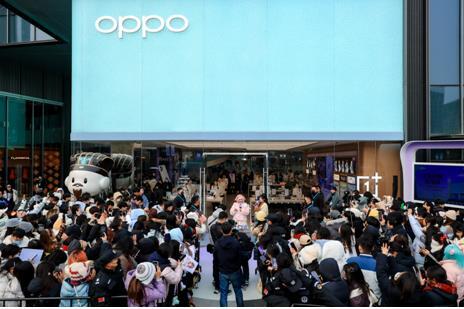
Core Insights - OPPO has officially opened its first flagship store in Zhengzhou, Central China, on December 31, 2025, marking a significant step in integrating technology trends with urban culture [1][3] - The store aims to create an immersive and engaging space for young users, blending elements of gaming, animation, and cultural experiences [3][6] Group 1: Store Concept and Design - The flagship store embodies the concept of a "city park for young people," incorporating elements of Henan culture and the popular two-dimensional trend [3][6] - Design inspirations include the representative Ru porcelain of Henan, featuring a unique glass craftsmanship that reflects the aesthetic qualities of the glaze [3][6] - A central installation showcases the evolution of Chinese characters, from oracle bone script to simplified characters, enhancing cultural expression [5][6] Group 2: User Experience and Engagement - The store features various interactive areas, including a coffee section with custom drinks inspired by local flavors and a second-floor activity area collaborating with virtual idol groups [6][10] - The opening day included a celebration with a popular two-dimensional KOL acting as a guest store manager, fostering community engagement and social interaction among young users [8][10] - OPPO aims to establish flagship stores as cultural and trend hubs for youth, with plans to open 50 more stores in key Chinese cities over the next three years [10]