万代

Search documents
朱啸虎:当年投资小红书时,创始人连模式都没想清楚
Sou Hu Cai Jing· 2025-08-06 07:18
Core Insights - The article discusses the evolution of Xiaohongshu (Little Red Book) from its initial concept to a successful community shopping app, highlighting the founder's adaptability and market understanding [1][6][8]. Group 1: Company Evolution - Xiaohongshu started with a focus on travel shopping sharing, initially launching two PDF guides that received positive feedback despite their rough quality [3][4]. - The transition from PDF guides to a community app was necessary for long-term sustainability and funding opportunities [5][6]. - Early skepticism from investors regarding the app's competitive barriers reflects a broader trend in the startup ecosystem where many innovative ideas face initial rejection [7][8]. Group 2: Market Insights - The article emphasizes the importance of understanding consumer needs and market dynamics, particularly in the context of Japan's consumer market, which serves as a model for future trends in China [17][19]. - Japanese brands are highlighted for their ability to adapt and thrive through innovative supply chain management and product development strategies [19][21]. - The concept of "emotional resonance" in product development is discussed, showcasing how brands like Muji and Bandai connect with consumers on a deeper level [21][33]. Group 3: Learning Opportunities - The article outlines a learning trip to Japan aimed at exploring successful business models and strategies that can be applied to the Chinese market [11][12]. - Participants will engage with industry leaders and visit key companies to gain insights into effective retail strategies and product development [26][30]. - The program focuses on understanding the evolution of consumer behavior and the importance of emotional engagement in product offerings [31][33].


“地派”创业者,一定要主动找钱
创业家· 2025-08-05 10:28
Core Viewpoint - Entrepreneurs in the "Di Pai" sector should actively seek investment to enhance business growth, as competitors will pursue funding, and appropriate capital can significantly accelerate development [1]. Group 1: Japanese Market Insights - The Japanese consumer market serves as a "future laboratory" for Chinese brands, providing predictive insights into the evolution of consumption over the next decade [6]. - Understanding the product survival wisdom derived from Japan's "lost thirty years" is crucial for Chinese brands to win over consumers [6]. - Key strategies from successful Japanese brands include supply chain-driven private label (PB) products, continuous iteration of major products, and defining lifestyles that resonate emotionally with consumers [7][8]. Group 2: Successful Japanese Brands - Kobe Bussan utilizes a supply chain-driven model with over 350 factories globally, achieving a sales scale of 200 billion RMB through its PB products [7][13]. - 7-11 leverages data from its extensive network of stores to develop PB products that meet latent consumer needs, enhancing store performance by 120% through single product development [7][11]. - Nitori, known as the "king of furniture" in Japan, applies automotive supply chain standards to achieve continuous revenue growth for 36 years [7][15]. - Kikkoman has expanded from soy sauce to over 2000 SKUs, demonstrating successful product diversification [7][16]. Group 3: Emotional Engagement and Lifestyle Definition - Brands like Bandai focus on developing products that tap into fundamental human desires, creating items that are both entertaining and addictive [9]. - Muji redefines user experience with its no-logo, affordable products, reflecting a shift in consumer lifestyle post-economic bubble [9]. - The concept of "loneliness economy" is explored, emphasizing the importance of emotional resonance in product development [9]. Group 4: Learning and Networking Opportunities - The event features prominent figures from the consumer sector, providing insights into retail strategies and product development [10][11]. - Participants will engage in hands-on learning experiences, including visits to successful Japanese retail stores and discussions on innovative supply chain practices [10][12]. Group 5: Event Details - The study tour is scheduled from September 21 to 26, 2025, in Tokyo, with a focus on understanding the evolution of Japanese consumer brands [20]. - The program is limited to 35 participants, specifically targeting company founders, with a fee of ¥ 59,800 per person [20].

朱啸虎:中国的财富密码,变了
创业家· 2025-08-04 10:11
Core Viewpoint - The article emphasizes the importance of recognizing market trends and the concept of "beta" (market-driven returns) over "alpha" (excess returns), suggesting that success in investment and entrepreneurship is largely driven by the prevailing market conditions and demographic shifts in China [5][6][9]. Group 1: Market Trends and Opportunities - The article identifies the aging population in China as a significant market opportunity, with 20 million new retirees each year who are willing to spend [12]. - It highlights that the current generation of retirees differs from previous ones, as they have both the financial means and the willingness to consume [13]. - The article suggests that the future market opportunities lie in sectors that cater to the elderly, indicating a shift in focus from previously popular sectors like maternal and infant products, which are now seen as negative "beta" [10][11]. Group 2: Learning from Japan's Market - The article discusses an upcoming study trip to Japan, aimed at understanding how Japanese brands thrive in a low-growth, aging society, which can provide insights for Chinese entrepreneurs [16][21]. - It outlines three core principles of successful Japanese brands: supply chain-driven private label products, continuous iteration of key products, and creating emotional resonance with consumers [22][23]. - The article emphasizes the need for Chinese brands to learn from Japan's experience in navigating economic challenges and consumer behavior changes, particularly in the context of the "loneliness economy" [24][30]. Group 3: Strategic Insights for Entrepreneurs - The article stresses the importance of controlling scale and enhancing safety margins as a key strategy for the next 5 to 10 years [14][15]. - It encourages entrepreneurs to focus on understanding market demands and consumer insights rather than solely pursuing innovative ideas that may not align with market realities [7][8]. - The article also highlights the significance of emotional value creation in products, as seen in successful Japanese brands, which can be a crucial factor for Chinese brands to win over consumers [23][30].

排队几百米的PTS展有多顶?迪士尼、万代巨头齐聚,玩心野起来
Mei Ri Jing Ji Xin Wen· 2025-08-01 14:56
Core Insights - The PTS (International Trend Toy Exhibition) is themed "Return to Playfulness, Seek the Wilderness of the Heart" and features major global IP giants like Disney, Universal, and Bandai, attracting hundreds of designers [1] - The event serves as a significant platform for global IP enthusiasts, showcasing the popularity and demand for trendy toys in China, evidenced by long queues outside the venue [1] - The organizer, Pop Mart, aims to leverage the exhibition to discover and support emerging artists, facilitating cultural exchange among various IPs and enhancing interactive experiences for fans [1]

朱啸虎:现在只有两类人能融到资
创业家· 2025-08-01 10:13
Core Viewpoint - The article emphasizes that only two types of individuals can secure funding in the current market: "White Horses" who have impressive resumes and align with trending sectors, and "Black Horses" who focus on solid business practices and product validation [2][4][6]. Group 1: Types of Entrepreneurs - "White Horses" are characterized by their strong backgrounds and ability to present compelling narratives [2][3]. - "Black Horses" are those who build their companies steadily, proving their products and market viability before seeking investment [4][5]. Group 2: Learning Opportunity in Japan - A learning trip to Japan is scheduled from September 21 to September 26, focusing on the operational secrets behind enduring Japanese brands [7]. - The program aims to explore how Japan has nurtured leading companies despite low growth, aging population, and other challenges [8]. Group 3: Insights on Japanese Brands - The article outlines three core philosophies of resilient Japanese brands: supply chain-driven private label (PB) products, continuous iteration of key products, and defining lifestyles that resonate emotionally with consumers [14]. - Examples include Kobe Bussan's integration of supply chain and product development, and Nitori's application of automotive supply chain standards to furniture [16][26]. Group 4: Consumer Behavior and Market Trends - The article discusses the shift in consumer behavior towards rational and emotional purchasing, highlighting the importance of understanding Japanese market evolution as a predictive model for China's future consumer landscape [12][18]. - It notes that the failure of traditional traffic-driven strategies will lead to missed opportunities in engaging with new consumer generations [12]. Group 5: Event Details and Structure - The event includes various expert sessions and company visits, featuring insights from industry leaders such as 7-11 and Shiseido, focusing on their successful strategies in the current market [23][28]. - The program is designed for 35 participants, specifically targeting company founders, with a comprehensive itinerary that includes lectures, company visits, and practical learning experiences [31].

如何成为独角兽公司?
创业家· 2025-08-01 10:13
Core Viewpoint - Companies that become unicorns must adhere to the "3S" principle: significant market, scalable growth, and sustainable competitive advantages [1] Group 1: Insights on Japanese Brands - Japanese brands have developed strategies to thrive in low-growth, aging, and declining birthrate environments, providing valuable lessons for Chinese consumer brands [7][8] - The concept of "loneliness economy" is highlighted, where emotional value creation becomes crucial for brands to resonate with consumers [10] Group 2: Key Strategies of Successful Japanese Companies - Supply chain-driven private brand (PB) products are emphasized, showcasing companies like Kobe Bussan, which operates over 1,000 stores with a scale of 20 billion RMB through integrated supply chains [8][16] - Continuous iteration of major products is a strategy used by companies like Kikkoman, which evolves from merely producing soy sauce to creating a soy sauce culture [8][19] - Defining lifestyles and evoking emotional resonance are critical, as seen in brands like Muji, which redefines user experience with no-logo affordable products [10][20] Group 3: Learning Opportunities - The article promotes a study trip to Japan, focusing on understanding the operational secrets behind successful Japanese brands and their adaptability in changing markets [3][4][21] - Participants will engage with industry leaders and explore innovative business models that can be applied to the Chinese market [12][14]

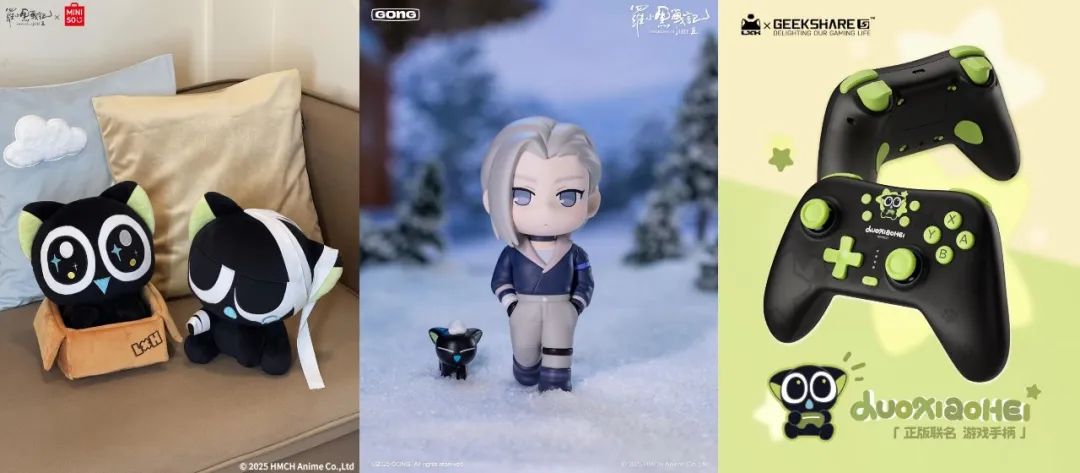
Switch配件卖4w件,二次元撑起罗小黑IP
3 6 Ke· 2025-08-01 10:01
Core Insights - The film "The King's Avatar: For the Glory" has achieved a high rating of 8.7 on Douban, making it the highest-rated theatrical release of 2025 so far, indicating its strong reception among audiences [1] - The IP "The King's Avatar" has successfully maintained a clear positioning, focusing on niche markets while still generating significant revenue through merchandise and collaborations [3][25] - The audience demographics for "The King's Avatar" have evolved, with a notable increase in younger viewers, particularly those born after 2000, indicating a successful retention and expansion of its fanbase [11][14] Audience Engagement - The film's release has led to a surge in user-generated content and discussions on social media, particularly among the core fanbase, showcasing the strong community engagement surrounding the IP [8][39] - The primary audience remains female, with a gender ratio of 34:66, and the film has seen a more balanced distribution of viewers across different city tiers compared to its predecessor [17][22] Merchandise and Collaborations - The film has launched 15 collaborative merchandise lines, with a significant focus on toys and collectibles, which have proven to be the best-selling categories [25][26] - The most successful products are low-priced items, such as blind boxes and plush toys, which cater to the high-frequency purchasing behavior of the core audience [31][32] Market Positioning - Despite its success, "The King's Avatar" has not achieved a broad mainstream appeal akin to other popular IPs, remaining primarily within the niche of its dedicated fanbase [36][39] - The unique storytelling and aesthetic of "The King's Avatar" may limit its accessibility to a wider audience, as it requires a deeper understanding of its themes and characters [37][40]
估值超10亿,量子之歌全资收购Letsvan
3 6 Ke· 2025-08-01 03:09
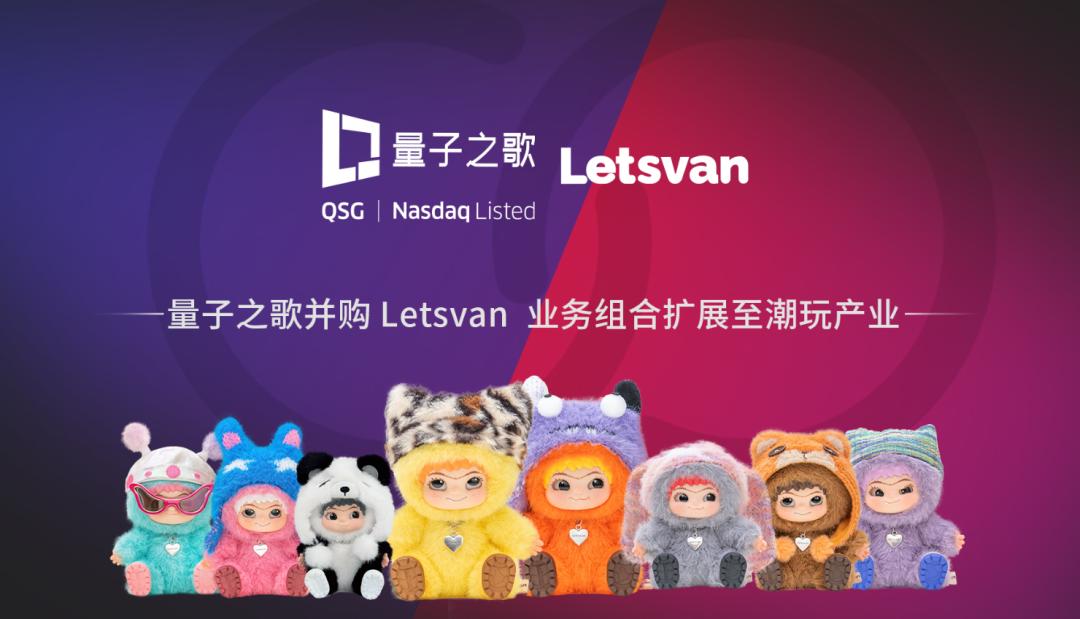
Core Viewpoint - Quantum Song Group (NASDAQ: QSG) announced the acquisition of the remaining equity of its subsidiary, Shenzhen Yiqi Culture Co., Ltd. (Letsvan), through a cash and stock combination, with a total transaction value of 235 million yuan, corresponding to an estimated valuation of approximately 385 million yuan for Letsvan [1][3]. Group 1: Acquisition Details - Quantum Song will issue a total of 18,219,330 shares of Class A common stock to Letsvan's founder and CEO, Zhan Huiyu, as consideration for the remaining equity [1]. - The acquisition will be completed in three phases, with vesting and lock-up terms attached [3]. - As of March 2025, Quantum Song will hold a 61% stake in Letsvan after multiple rounds of transactions [1]. Group 2: Strategic Integration - Zhan Huiyu will be appointed as a director of Quantum Song on August 1, 2025, to accelerate the integration of the trendy toy business and strategic synergy [3]. - The integration will focus on five key dimensions: IP incubation, product development, influence dissemination, supply chain optimization, and channel network expansion [3]. Group 3: Business Performance and IP Development - Letsvan has successfully incubated and owns 10 IP images as of March 2025, including the newly released IP "SIINONO" [7]. - The WAKUKU series has achieved significant popularity, with products ranking among the top in the cultural and creative sector for the first half of 2025 [5]. - The strategic investment from Quantum Song is expected to elevate Letsvan to new heights in the trendy toy market [5]. Group 4: Industry Context - Recent trends in the industry show a surge in mergers and acquisitions related to IP, with companies like Giant Star Legend and Sony forming strategic alliances and making significant investments [9][12]. - The competitive landscape is evolving, with companies focusing on expanding retail channels and enhancing IP-related offerings [9][12].

LISA代言PS、猎魔女团“闯美”,K-POP跨界ACG上瘾了
3 6 Ke· 2025-07-29 10:53
Group 1 - The core concept of the article revolves around the successful integration of K-POP culture into the animation film "K-POP Demon Hunter Girl Group," which has gained significant popularity on Netflix, topping charts in 41 countries shortly after its release [3][10]. - The film showcases a blend of K-POP elements and storytelling, despite criticisms regarding its narrative structure and logic, highlighting the appeal of its characters and high-quality audiovisual presentation [3][6]. - The K-POP industry has contributed 7% to the global music market revenue, with 17 out of the top 20 best-selling albums in 2024 being from K-POP artists, indicating the genre's strong commercial presence [11][12]. Group 2 - The K-POP market is experiencing a decline, with a 5.7% drop in 2024, marking the first decrease in nearly a decade, despite overall growth in the global music market [12][13]. - The article discusses the challenges faced by the K-POP industry, including fan fatigue from continuous consumption and the need for innovative products and experiences to sustain interest [12][26]. - The fusion of K-POP and ACG (Anime, Comic, and Games) cultures is accelerating, with various collaborations and cross-promotions emerging, reflecting a growing trend of cultural exchange and audience overlap [5][25]. Group 3 - The film "K-POP Demon Hunter Girl Group" features original songs produced by notable K-POP producers, enhancing its authenticity and appeal to fans [8][10]. - The animation medium allows for a visually stunning representation of K-POP performances, contributing to a high-quality viewing experience that compensates for narrative flaws [10][26]. - The collaboration between K-POP and ACG is not one-sided; both industries are engaging in resource exchange to expand their influence and reach a broader audience [25][26].

单IP火爆周期2-3年,高盛总结IP公司股价反应模式
Hua Er Jie Jian Wen· 2025-07-29 07:21
Core Insights - Goldman Sachs' latest report analyzes the cyclical patterns of IP companies, stating that the typical popularity cycle for a single IP lasts 2-3 years, with platformization being a viable solution for sustainability [1][2] - The report identifies three typical stock price response patterns for IP companies based on their development stages: rapid growth, maturity, and diversification [1][5] Group 1: IP Cycle and Market Potential - The popularity cycle of single IPs generally lasts 2-3 years, as evidenced by examples like Lingna Belle and Kuromi in the Chinese market [2] - Companies with continuous content generation capabilities can extend their IP cycles beyond the typical duration [2] - The Chinese IP toy market shows significant potential, with per capita spending at 124 RMB (17 USD), which is only 1/17 of North America's and 1/4 of Japan's spending [12] Group 2: Stock Price Response Patterns - In the high-growth phase, stock price turning points often occur when high-frequency data shows signs of weakness, regardless of optimistic profit expectations [5] - In the maturity phase, stock price turning points align with downward revisions in profit expectations [5] - Companies with diversified business models are less affected by single IP cycles, demonstrating more resilient stock price performance [5] Group 3: Factors Influencing Sustainable Growth - Five key drivers for sustainable growth in IP companies include diverse product offerings, resource investment, monetization capabilities, customer interaction, and IP portfolio expansion [4][10] - Disney and Bandai are highlighted as exemplary companies in building comprehensive IP ecosystems, showcasing strong profitability resilience [4] Group 4: Bubble Mart Analysis - Goldman Sachs conducted a scenario analysis for Bubble Mart, suggesting that in the most optimistic scenario, long-term revenue potential could reach 81 billion RMB (11 billion USD), comparable to Lego's level [1][8] - The report maintains a neutral rating for Bubble Mart with a target price of 260 HKD, based on a 25x expected P/E ratio for 2027 [11] - Bubble Mart's growth is driven by both internal factors (product development, category expansion) and external factors (celebrity endorsements, rising emotional value demand) [8] Group 5: Market Dynamics - The rise of short video platforms and reduced content supply has created opportunities for non-content IPs [3] - The report emphasizes that establishing an IP platform is crucial for unlocking growth potential and achieving long-term success [11]