Figure AI

Search documents
POS机快刷爆了,200亿、50亿、10亿,黄仁勋用美金“爆买”一切
3 6 Ke· 2025-12-25 08:17
Core Insights - Nvidia is aggressively expanding its influence in the AI sector through strategic acquisitions and investments, including a $20 billion licensing agreement with Groq, which allows Nvidia to integrate Groq's core team and technology while Groq maintains operational independence [1][3][5] - The acquisition of Groq is seen as a strategic defense and capability enhancement, as Groq's LPU architecture poses a significant threat to Nvidia's dominance in AI inference markets [5][6] - Nvidia's investments in companies like Intel and Nokia, along with its commitment to OpenAI, illustrate a comprehensive strategy to control key nodes in the AI computing value chain [10][13][17] Group 1: Strategic Acquisitions - The $20 billion deal with Groq not only secures key technology but also eliminates a major competitor in the AI inference space [3][5] - Nvidia's investment in Synopsys for $2 billion aims to embed its accelerated computing capabilities into future chip design tools, shortening design cycles across various applications [10][12] - The $5 billion investment in Intel is intended to create a strategic alliance, allowing Nvidia to integrate its GPU technology into Intel's next-generation chips [13][15] Group 2: Financial Strength and Investment Strategy - Nvidia's cash reserves have surged to $606 billion, a 4.5-fold increase from early 2023, enabling significant strategic investments [24] - The company is expected to generate $968.5 billion in free cash flow in 2025, with total cash flow over the next three years potentially exceeding $5.76 trillion [24] - Nvidia prioritizes strategic investments over stock buybacks, viewing them as essential for building competitive barriers and securing key partnerships [24] Group 3: Long-term Vision and Ecosystem Development - Nvidia's investment strategy is designed to create a comprehensive network across the AI industry, ensuring that its hardware and software are integral to future AI applications [18][19] - The company is focusing on high-potential areas such as autonomous driving, robotics, and fusion energy, aiming to embed its standards and software ecosystem in these sectors [21][22] - Nvidia's approach reflects a shift from open ecosystems to internal capabilities that can be controlled and accumulated over time [8][18]


深扒了具身的数据路线,四小龙的格局已经形成......
具身智能之心· 2025-12-24 10:04
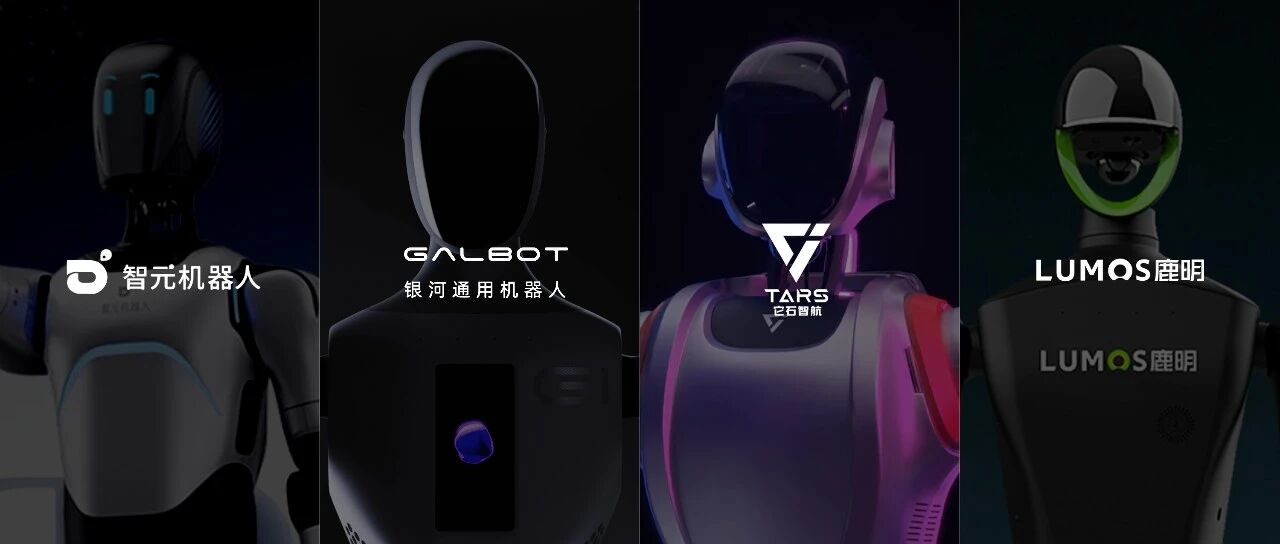
Core Viewpoint - The development of embodied intelligence over the past 25 years has focused on a closed-loop process of data collection, model training, data scaling, and model optimization, with data remaining a key focus for future advancements [1][5]. Group 1: Data Routes - The industry is not selecting a single optimal solution but is progressing along four distinct data routes simultaneously, each addressing different constraints and stages [3]. - The four data routes have led to the emergence of a competitive landscape termed the "Four Little Dragons of Embodied Data," with key players including Zhiyuan, Galaxy, Tashi, and Luming [4][34]. Group 2: Data Route Descriptions - **Remote Control Real Machine**: This route provides the most authentic data but is also the most expensive and slow, requiring real robots and specialized operators, making it difficult to scale [8][12][14]. - **Simulation Data**: Offers high efficiency and scalability, but faces challenges due to the domain gap, limiting its effectiveness in real-world applications [16][18][20]. - **Human Video**: This route is cost-effective and covers a wide range of scenarios but lacks critical feedback mechanisms and is not a primary data source for initial capabilities [22][25]. - **UMI Data**: This approach decouples real interaction data from specific robots, allowing for more versatile and scalable data collection, thus becoming a foundational infrastructure for embodied data [27][30][31]. Group 3: Industry Practices - In the remote control real machine data direction, Tesla is advancing its remote operation system, while Zhiyuan Robotics is deepening its focus on real bodies and task loops [35]. - In the simulation data route, Galaxy General is expanding synthetic data scale through computational power and simulation engines [35]. - In the human video data direction, Tashi is developing large-scale human behavior video datasets to enhance semantic coverage [35]. - The UMI route is represented by Luming Robotics, which has made significant strides in scaling and engineering UMI data collection systems [35][39]. Group 4: Future Implications - As the industry transitions from proving feasibility to continuous evolution, the ability to consistently produce high-quality real data will become increasingly critical [37]. - The four data routes are not mutually exclusive; they each play distinct roles in the overall ecosystem, contributing to a clearer path forward for embodied intelligence [38][40]. - The importance of time accumulation is emphasized, particularly for the UMI route, which relies heavily on early choices and sustained investment [41][42]. - The current landscape of the "Four Little Dragons" serves as a structural description of the industry, with future success dependent on which routes and teams can maintain operational continuity and data advantages [44][45].
对话:“扎堆上市”后,具身智能还值得投资吗?
3 6 Ke· 2025-12-23 10:29
Core Insights - The field of embodied intelligence has become one of the hottest areas for innovation and entrepreneurship globally, with many startups quickly reaching "unicorn" status (valued over $1 billion) [1] - In the first half of this year, funding in the embodied intelligence sector surpassed the total amount raised in the previous year [1] - On December 19, the humanoid robot company Galaxy General announced a new funding round of over $300 million, setting a record for single-round financing in the embodied intelligence sector, with a valuation exceeding 20 billion yuan [1] - As of November 2025, nearly 30 companies in the robotics industry chain have submitted listing applications to the Hong Kong Stock Exchange [1] - The rapid growth has raised concerns about potential market overheating, with the National Development and Reform Commission warning of risks associated with the proliferation of humanoid robot companies [1] Investment Perspectives - Investors are debating whether embodied intelligence is still a worthwhile investment, with discussions highlighting the need for patience and further investment in the sector [2][4] - One investor emphasized that the vision of embodied intelligence is to "liberate human productivity," allowing individuals to afford services like caregiving and driving [2][7] - Another investor noted that while China lags behind the U.S. in algorithm originality, it has advantages in hardware reserves and engineering talent [4] Market Dynamics - The current investment landscape is characterized by a mix of excitement and caution, with discussions around the potential for a bubble in the market [9][11] - Investors believe that the industry is still in its early stages and requires more talent and funding to realize its full potential [10][11] - The conversation around "crowded listings" suggests a need for regulatory oversight to differentiate between genuine innovation and companies merely adopting new labels [10] Technological Advancements - The industry is witnessing significant advancements in both hardware and software, with some companies making rapid progress in industrial applications [16][17] - The complexity of integrating software, algorithms, and hardware poses challenges, but there are expectations for clearer commercial viability in the near future [16][17] - The emergence of "along the way" models indicates that as technology matures, it will unlock new applications and provide value [17] Future Outlook - The consensus among investors is that the next decade will be crucial for the development of embodied intelligence, with expectations for substantial advancements [11][20] - The industry is expected to see a growing number of successful entrepreneurs and innovative companies, driven by a new generation of founders [18] - The potential for embodied intelligence to achieve significant breakthroughs in various sectors is viewed as promising, with ongoing investments and interest from both the public and private sectors [11][19]
VLA模型走不通,机器人的下一步该怎么走?
Tai Mei Ti A P P· 2025-12-22 12:58
Core Insights - The VLA (Visual-Language-Action) model faces challenges in training due to the scarcity and complexity of physical world data, which is essential for enhancing its capabilities [2] - The shift from a machine-centered to a human-centered AI research paradigm is necessary for training embodied intelligence models [2] Group 1: ACE Paradigm - The ACE (Action-Centric Embodiment) paradigm focuses on human interaction with the physical world as the starting point for research, utilizing environmental data collection as a core engine [3] - The ACE framework integrates first-person and third-person video, haptic information, motion trajectories, and voice data to create a physics-based 3D asset library [3] Group 2: Open Source Model - The "Awakening World Model 3.0" has been released as an open-source and commercially applicable model, aiming to unify understanding across different domains by integrating physical laws, human behavior, and real machine actions [5] - The platform supports 11 major categories and 54 subcategories, covering 115 types of embodied scenarios, allowing developers to quickly generate visual task simulations with simple commands [5] Group 3: Industry Collaboration - The company collaborates with various robotics firms to integrate the ACE paradigm and world model with hardware solutions tailored for different scenarios [6] - Partnerships with domestic chip manufacturers enhance the computational capabilities of the Awakening World Model 3.0 [6] Group 4: Market Applications - In the short term, the focus will be on deploying quadruped robots with autonomous navigation capabilities in security and inspection sectors [6] - The medium-term strategy includes addressing labor-intensive logistics scenarios, while long-term goals involve exploring applications in home environments, contingent on resolving safety and liability issues [6] Group 5: Industry Trends - The ACE paradigm aligns with trends observed in companies like Tesla and Figure AI, indicating a significant opportunity in the sector over the next one to two years [7]

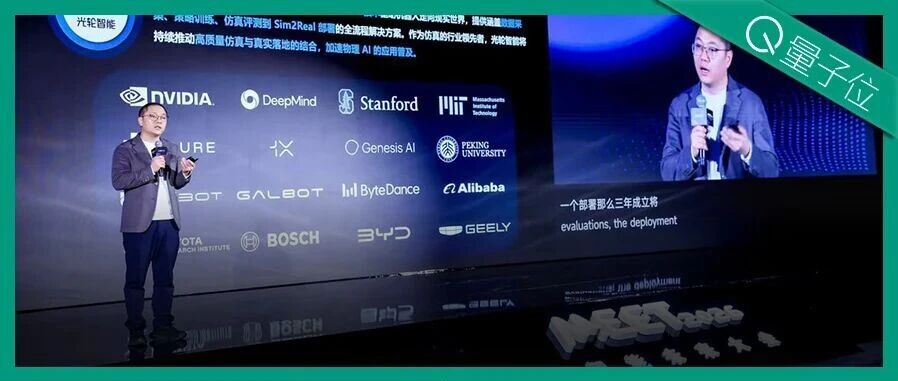
全自研仿真GPU求解器x虚实对标物理测量工厂,打造具身合成数据SuperApp,加速具身仿真生态丨光轮智能@MEET2026
量子位· 2025-12-22 08:01
编辑部 整理自 MEET2026 量子位 | 公众号 QbitAI 从大模型智能的"语言世界"迈向具身智能的"物理世界",仿真正在成为连接落地的底层基础设施。 在本次量子位MEET2026智能未来大会上,光轮智能联合创始人兼总裁 杨海波 给出了他的观察: 具身智能的规模远大于文本与视觉模型,因为数据维度更真实、更复杂。 这也就意味着,具身智能时代的核心,不是算法本身,而是它所依赖的数据是否有效、可扩展——仿真是唯一能够解决数据问题的方案。 在仿真策略的路上,会遇到仿真不真实、Sim2Real不可靠等行业痛点, 光轮智能正在通过自研的一整套"测量、生成、求解"仿真基础设施来 解决这些问题 ,为具身智能提供数据、训练、评测的全流程解决方案。 △ 杨海波指出光轮智能深耕合成数据领域 另外杨海波还进一步指出, 仿真不是孤立的技术工具,需要以真实产业需求为锚点,通过应用场景构建生态。 其中, 具身仿真资产制作是生态的源头活水 ,依托自动化物理测量与生成技术,产出高物理真实的规范化数据资产,为具身训练提供核心燃 料; 大规模RL训练则通过并行的虚拟场景让智能体高效试错学习,将数据价值转化为具身实际技能 ,同时反向打磨仿真 ...
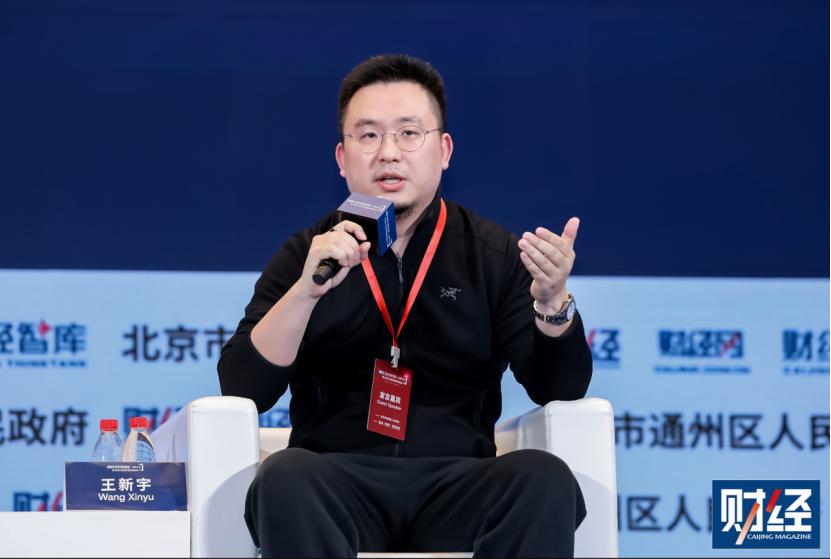
美团龙珠合伙人王新宇:技术路线不是辩论出来的,是在不断试错中论证出来的
Cai Jing Wang· 2025-12-21 02:14
Core Insights - The conference "2026 Annual Dialogue and Global Wealth Management Forum" focuses on the theme "China's Determination in Changing Circumstances" and highlights the advancements in embodied intelligence as a means to liberate productivity and improve living standards [1][3] Group 1: Industry Trends - The embodied intelligence sector is rapidly evolving, transitioning from experimental phases to real-world applications in various settings such as hotels and factories [3] - There is a competitive dynamic between China and the U.S. in the field of embodied intelligence, with China aiming to lead rather than follow in technological advancements [5] - Concerns about potential market bubbles and overvaluation in the embodied intelligence sector have been raised, prompting discussions on regulatory measures [4][6] Group 2: Investment Perspectives - Investment in embodied intelligence is driven by the belief in human capital, with varying opinions on the timelines for technological advancements [2][9] - The importance of storytelling and imagination in technology development is emphasized, as successful companies often need to present compelling narratives to attract investment [7][8] - The investment strategy focuses on identifying companies that genuinely contribute to embodied intelligence rather than those merely adopting trendy labels [6][10] Group 3: Future Outlook - The development of embodied intelligence is viewed as a long-term journey, requiring patience and sustained investment in talent and resources [5][10] - The industry is expected to see significant advancements over the next decade, with the potential for China to emerge as a leader in various technological fields, including embodied intelligence [5][10]

“车而优则机器人” 商汤开源开悟世界模型3.0进军具身智能
Xin Jing Bao· 2025-12-18 16:07
Core Insights - The AI company SenseTime has launched its industry-first ACE embodied research paradigm and the first open-source commercial application of the Kairos 3.0 world model, along with the A1 embodied super brain module, marking its entry into the embodied intelligence field [2] - The Kairos 3.0 model generates AI-created training videos for robots, which can be used by robotics and automotive companies, providing a more convenient alternative to real-life video footage and allowing for the simulation of dangerous scenarios to mitigate real-world risks [2] - SenseTime's co-founder and chairman of the robotics division, Wang Xiaogang, emphasized a human-centric approach in the ACE paradigm, which enables the collection of millions of hours of environmental data, significantly enhancing the value of real data to over hundreds of millions of hours [2] Technology and Research - The ACE research paradigm revolutionizes traditional logic by focusing on the interaction between humans and the physical world, utilizing environmental data collection as a core engine to build a comprehensive technology system from data collection to embodied interaction [3] - The robotics division has attracted leading AI scientists from prestigious institutions, including Nanyang Technological University and the University of Hong Kong, with notable figures such as Chief Scientist Tao Dacheng, an academician of the Australian Academy of Science and recipient of the IEEE Computer Society Technical Achievement Award [3]
智驾人才涌入具身智能,热钱有了新叙事
晚点LatePost· 2025-12-18 11:56
Core Viewpoint - The article discusses the current state and investment trends in the field of embodied intelligence, highlighting the influx of venture capital into this sector and the challenges faced by startups in delivering viable products and technology [4][5][12]. Investment Trends - In September, a venture capitalist visited a startup in Shenzhen focused on embodied intelligence, amidst a storm that caused citywide disruptions, indicating the high interest in this sector [4]. - The investment landscape for embodied intelligence has seen over a hundred active investment firms in China, with early-stage funding exceeding $10 billion [5]. - Investors are optimistic about startups with backgrounds in intelligent driving, as they are believed to have practical experience in solving real-world problems [6]. Entrepreneurial Backgrounds - The article notes a shift in investor preferences towards entrepreneurs with experience in intelligent driving, moving away from traditional robotics backgrounds [7]. - Notable entrepreneurs in the field include graduates from prestigious universities like UC Berkeley, CMU, and MIT, who are now leading startups in embodied intelligence [6][7]. Startup Financing - Several startups have recently secured significant funding, such as "It Stone Intelligent Navigation" raising over 1.22 billion yuan and "Zhi Jian Power" receiving approximately $5 million in angel funding [8]. - The article lists various startups, their founders, backgrounds, and recent financing rounds, showcasing the active investment environment [8]. Technical Challenges - The transition from intelligent driving to embodied intelligence faces challenges, particularly in the need for high-quality interaction data and the cost of developing viable products [11]. - The article highlights the limitations of current models in executing complex tasks and the need for advancements in algorithms to improve performance [11]. Market Sentiment - There is a growing pessimism in the secondary market regarding embodied intelligence startups, with some analysts suggesting that the best opportunities may have passed [12]. - The National Development and Reform Commission has issued warnings about the risks associated with the rapid growth of humanoid robot companies, emphasizing the need for balance between speed and potential market saturation [12]. Investment Logic - Investors are focusing on projects that prioritize the development of embodied intelligence systems, including decision-making models and robotic components, but caution is advised regarding the prevalence of similar investment strategies [13][14]. - The article concludes that while venture capital is flowing into the sector, the sustainability of these investments remains uncertain, with a need for substantial funding to ensure long-term success [14].

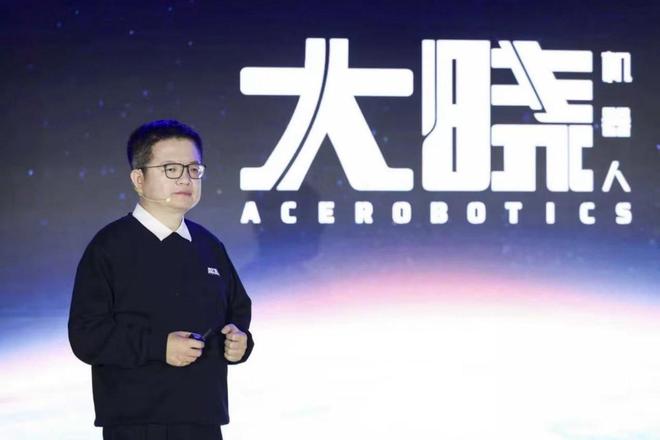
硬氪专访|商汤联创王晓刚带队具身智能新业务,要帮机器人重新理解真实世界
3 6 Ke· 2025-12-15 01:32
Core Insights - SenseTime has transitioned from visual AI to generative AI, with its revenue from generative AI expected to reach 2.4 billion yuan in 2024, increasing its share from 34.8% in 2023 to 63.7% [1] - The establishment of Daxiao Robotics, led by co-founder Wang Xiaogang, aims to address the practical challenges of AI in the physical world through a human-centric approach [2][4] - The AI industry is evolving from "digital intelligence" to "physical intelligence," necessitating a significant transformation for established AI companies [3] Company Developments - SenseTime reported a net loss of 1.162 billion yuan in the first half of 2025, a 50% decrease year-on-year, while continuing to increase R&D investment [4] - Daxiao Robotics aims to create integrated soft and hard products that address real-world needs, moving beyond merely developing models [10][12] - The company is focusing on the robotics sector as a critical breakthrough point for expanding its business and achieving vertical integration [5] Technological Innovations - Daxiao Robotics proposes a human-centric paradigm that emphasizes understanding human interactions with the physical world, utilizing diverse data sources [7][24] - The new "Kairos 3.0" world model integrates multi-modal understanding and behavior prediction, allowing for a comprehensive understanding of physical interactions [19][21] - The model's architecture includes multi-modal understanding, synthesis networks, and predictive capabilities, enabling robots to execute complex tasks in dynamic environments [22][23] Market Trends - The Chinese embodied intelligence market is projected to exceed 800 billion yuan in 2024, with hundreds of startups entering the field [10] - Daxiao Robotics aims to leverage its understanding of user pain points and needs to accelerate the industrialization of embodied intelligence [5][24] - The company anticipates that the logistics sector will be a key area for scaling its solutions, while household applications will require longer development cycles due to safety concerns [28]

具身智能,风起青萍,已成巨浪
Xin Lang Cai Jing· 2025-12-15 01:21
文 | 李秉浩 2025年,注定是科技史上的一个「分水岭时刻」。当春天的信号在北京发出,一股不可逆转的巨浪,开 始席卷神州大地——「具身智能」四个字,首次被郑重写入《政府工作报告》。 这不仅仅是一个词汇的收录,更是一声发令枪,宣告了人工智能从「云端炫技」正式走向「落地干活」 的战略转折。 市场是最敏锐的捕猎者,在政策的惊雷炸响之前,资本的嗅觉早已灵敏地捕捉到了腥味之外的钱味。银 河证券具身智能指数年初至今涨幅飙升33.99%,狠狠跑赢大盘;上海更是立下军令状,要在2027年实 现具身智能核心产业规模突破500亿元。这背后,是全球投资界对于2030年万亿级市场规模的狂热押 注。这不再是PPT上的画饼,而是实打实的工业革命前夜的躁动。 过去十年,习惯了互联网的「离身智能」,习惯了字节与像素的狂欢;而现在,摆在面前的是一场更宏 大的叙事——将灵魂注入钢铁,让算法拥有触觉。这不仅仅是产业的升级,这是智能生命,向智能生命 伸出的握手之约。 李秉浩频道认为:「这种爆发并非偶然,而是技术压强积累到了,极限后的必然喷发。当大模型的智力 水平,突破了图灵测试的藩篱,当传感器的精度触及了物理感知的极限,当「新质生产力」成为国家发 ...