
Zara

Search documents
百万就业背后的“按需时尚”革命,SHEIN如何重塑产业供应链基因
21世纪经济报道· 2025-06-25 02:45
Core Viewpoint - The article emphasizes the irreplaceability of China's supply chain in the new global landscape, rooted in its strong industrial cluster effect, flexible customization capabilities, and deep reserves of technology and talent [1] Group 1: SHEIN's Role in Supply Chain Transformation - SHEIN exemplifies how to leverage China's vast supply chain to create platform-level competitive advantages, transforming traditional manufacturing into a tech-driven, demand-responsive agile supply chain [2][3] - The digitalization and flexibility introduced by SHEIN have significantly improved efficiency in traditional factories, enabling them to adapt to modern production demands [2][3] - SHEIN's empowerment system, which integrates digitalization, greening, and differentiation, fosters greater industrial collaboration and resilience across the supply chain [3] Group 2: Employment and Economic Impact - SHEIN's development has stimulated job creation across various sectors, with estimates indicating that it has contributed to the employment of millions in related industries [3][6] - The company’s initiatives in digitalization and green transformation are central to China's ascent in the global value chain, with significant growth in exports of textiles and apparel [6][7] - The training programs initiated by SHEIN have resulted in a substantial increase in the skill level of workers, enhancing the overall quality and efficiency of the workforce [6][7] Group 3: Green Transformation and Sustainability - SHEIN's commitment to sustainability is evident in its goal for net-zero emissions by 2050 and its ongoing projects aimed at reducing waste and carbon footprint across the supply chain [14][15] - The implementation of energy-efficient practices and renewable energy sources in supplier factories has led to significant reductions in water and energy consumption [15][16] - The green transformation initiatives not only lower costs but also improve environmental conditions and worker welfare, contributing to sustainable competitive advantages for Chinese manufacturing [16] Group 4: Talent Development and Education - SHEIN is actively reshaping the talent landscape in the apparel industry by establishing partnerships with educational institutions to create training programs that align with market needs [22][24] - The company has developed a comprehensive talent cultivation system that includes on-the-job training and skill enhancement for workers, addressing the industry's labor shortages [22][23] - SHEIN's initiatives have made the apparel manufacturing sector more attractive to younger generations, fostering a new wave of skilled workers [19][20] Group 5: Replicable Business Model - SHEIN's "on-demand fashion" model has proven to be a successful template that can be replicated across various industries, demonstrating the potential for digital transformation in traditional sectors [26][28] - The company's agile supply chain reduces inventory risks and enhances profitability for suppliers, creating a win-win situation for all stakeholders involved [26][27] - SHEIN's approach illustrates that traditional industries can achieve both efficiency and sustainability, setting a precedent for future industrial practices [28][29]


聊聊4个出海中最常见误解
3 6 Ke· 2025-06-20 03:08
Core Insights - The traditional cost strategy for Chinese companies going global is becoming less effective as labor and raw material costs rise, necessitating a shift towards automation and smarter technologies [1] - Structural opportunities arise from supply-demand mismatches in foreign markets, which can be addressed by leveraging domestic capabilities to fill gaps in those markets [2][3] Group 1: Supply-Demand Mismatch - Supply-demand mismatch refers to a market situation where there is a clear supply shortage or unmet demand, allowing efficient solutions to gain market share [3] - Successful examples include Insta360, which identified a niche in the action camera market by addressing specific user needs rather than competing on price [2] - DeepSeek capitalized on the need for low-cost AI solutions in the developer community, filling a gap left by higher-cost competitors [5] Group 2: Technology and Differentiation - Companies like Shein have succeeded by integrating technology, user understanding, and ecosystem development to meet the fast-paced consumption needs of Gen Z [10][12] - The combination of technology, market understanding, and a robust operational ecosystem creates a differentiated advantage that goes beyond mere product offerings [15] Group 3: Localization and Cultural Understanding - Effective localization involves understanding local consumer preferences and cultural nuances rather than simply translating products or marketing strategies [16][24] - Shein's experience in Brazil illustrates the importance of adapting product offerings to local tastes, leading to significant sales growth [18][20] - Xiaomi's strategy in India, which includes local manufacturing and cultural adaptation, demonstrates the benefits of a tailored approach to market entry [25] Group 4: Compliance and Regulatory Understanding - Compliance with local regulations can become a competitive advantage, as seen with CATL's proactive approach in Germany, which helped secure production permits and government support [29] - Transsion's focus on data privacy compliance in Africa has built consumer trust and expanded its market presence [31] - Understanding and leveraging local policies can enhance operational efficiency, as demonstrated by Shenzhen's streamlined services for businesses [32] Group 5: Strategic Recommendations - Companies must recognize that succeeding in international markets requires a multifaceted approach that includes addressing supply-demand mismatches, leveraging technology, understanding local cultures, and ensuring compliance with regulations [33][34]
英国零售业:截至4月27日的12周英敏特数据显示服装销售额同比增长1.4%;玛莎增长11.5%,Primark增长3.1%,Next增长2%
Goldman Sachs· 2025-05-28 05:15
Investment Rating - The report does not explicitly state an investment rating for the industry or specific companies [1]. Core Insights - The UK clothing market experienced a year-over-year growth of +1.4% for the 12 weeks ending April 27, compared to +0.9% in the previous period [1]. - Notable performers include M&S with +11.5% growth, Primark at +3.1%, and Next at +2% [1]. - Zara led with a remarkable +16.1% growth year-over-year, while H&M reported +8.9% [1][4]. Summary by Relevant Sections Market Performance - The UK clothing market's growth of +1.4% year-over-year is an improvement from +0.9% in the prior 12 weeks [1]. - Pre-COVID comparisons show a +3.3% growth stack versus +4.5% previously [1]. Company-Specific Performance - **Primark**: Achieved +3.1% year-over-year growth, a recovery from -0.2% in the previous period. Market share increased by +11 basis points to 6.7% [4]. - **M&S**: Reported +11.5% growth, up from +8.8% in the previous period. Market share rose by +99 basis points to 11% [4]. - **Next**: Recorded +2% growth, with market share increasing by +6 basis points to 9.3% [4]. - **Zara**: Achieved +16.1% growth year-over-year, with a pre-COVID growth of +78.9% [4]. - **H&M**: Reported +8.9% growth year-over-year, with a pre-COVID growth of +4.4% [4]. Future Projections - Forecasts for Inditex suggest a +5.1% growth in 1Q26E, while H&M is expected to see +1% growth in 2Q25E [4].
从按需供应链到全球时尚领军:SHEIN如何改写产业格局?
Sou Hu Cai Jing· 2025-05-28 01:12
Core Viewpoint - The article discusses the rise of SHEIN as a leading player in the global fashion e-commerce market, highlighting its innovative supply chain model and the impact of digital transformation on the traditional fashion industry [1][2][5]. Group 1: SHEIN's Market Position - SHEIN has surpassed major brands like Walmart and Nike to become a leader in global fashion e-commerce, with projections indicating it will be the fastest-growing fashion retailer in 2024, outpacing established giants like Zara and H&M [2]. - The influx of American creators to platforms like Xiaohongshu indicates a significant cultural exchange and the growing influence of Chinese brands like SHEIN in the global market [1]. Group 2: Supply Chain Innovation - SHEIN's success is attributed to a complete digital transformation of its supply chain, enabling a "demand-driven fashion" model that allows for rapid production and market responsiveness [5][6]. - The company employs a flexible supply chain that minimizes inventory waste and enhances price competitiveness by producing small batches based on real-time market feedback [5][6]. Group 3: Technological Advancements - SHEIN has invested over 170 million yuan in technology innovation, establishing a garment manufacturing innovation research center to standardize and expand its flexible supply chain model [10]. - The company actively collaborates with various enterprises to develop new textile technologies and sustainable practices, reinforcing its commitment to innovation and sustainability in the fashion industry [11][12]. Group 4: Industry Impact - The emergence of SHEIN's model challenges traditional fashion retail norms, suggesting that new players can disrupt established industries by redefining operational rules [4][12]. - The ongoing evolution of SHEIN's supply chain and its emphasis on continuous innovation are seen as critical for the future of the fashion industry, influencing how other participants adapt to globalization and technological changes [13].
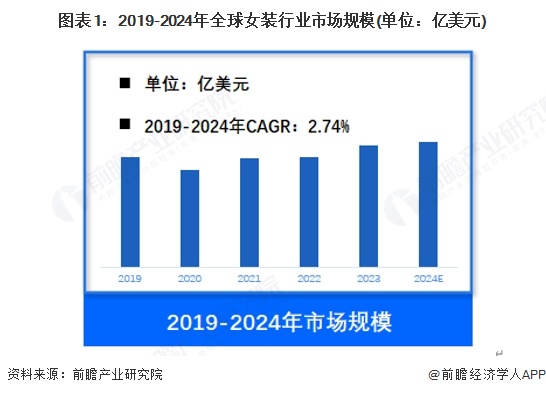
【女装】行业市场规模:2024年全球女装行业市场规模约9400亿美元 女性睡衣、内衣市场占比约25%
Qian Zhan Wang· 2025-05-13 04:09
转自:前瞻产业研究院 行业主要上市公司:安奈儿(002875)、森马服饰(002563)、朗姿股份(002612)、泰慕士(001234)等; 本文核心数据:全球女装行业市场规模 2024年全球女装行业市场规模约9400亿美元 女装是女士服装的简称,适合女士身形穿着的衣物统称为女装。女装是服装产业的重要组成部分,不同 时代的女装在颜色、样式、造型、风格上不同,女装服饰的变迁跟其他品类的服装一样,是特定时代发 展的缩影。2024年全球女装行业市场规模约9400亿美元,近五年行业复合增速2.74%。 细分产品市场 女装是服装行业中市场最活跃、需求最复杂、容量最大的子行业,涵盖了连衣裙、衬衫、外套、裤子、 裙装等多个细分领域。Statista数据显示,2024年女性睡衣、内衣市场和女式T恤市场是全球女装行业最 大的两个细分产品市场,占比分别达到25%和24%。 产业竞争 全球女装领先企业主要有Zara、Gucci、LVMH等,企业具体布局情况如下: | 企业名称 | 所属国家 | 布局情况 | | --- | --- | --- | | Zara41 | 西班牙( | Zara 是西班牙的快时尚品牌,以快速更新的款 ...



中国品牌在印尼,越不过“九条龙”
阿尔法工场研究院· 2025-05-12 12:47
Core Viewpoint - The article discusses the opportunities and challenges for Chinese companies entering the Indonesian market, emphasizing the unique characteristics of the market and the importance of understanding local dynamics and competition [2]. Group 1: Market Dynamics - The Indonesian market is characterized by a significant potential for growth, particularly as the GDP per capita approaches $10,000, which indicates a transition to a "middle-upper income" stage [4]. - The consumption patterns in Indonesia are similar to those in China during its early economic development, with a strong demand for various consumer goods and services [4]. - The rise of the middle class in Indonesia is leading to a diversification of consumption, with sectors such as healthcare, entertainment, education, automotive, and tourism becoming new engines of domestic demand [4]. Group 2: Competitive Landscape - The presence of established competitors in Indonesia poses a challenge for new entrants, but there are still opportunities due to the relatively low density of retail outlets compared to China [6]. - The article highlights the "Nine Dragons," a term used to describe nine influential Chinese business tycoons in Indonesia who dominate key industries, indicating a competitive landscape that is difficult to penetrate without local partnerships [11]. - Major local players, such as the Salim Group and Lippo Group, have significant market shares in sectors like instant noodles and retail, making collaboration with these entities essential for success [11][12]. Group 3: Cultural and Historical Context - The article emphasizes the historical context of Chinese businesses in Indonesia, noting the complex relationships between local Chinese and Indonesian communities, which can impact market entry strategies [9]. - The older generation of Chinese entrepreneurs in Indonesia has experienced both success and setbacks, providing valuable insights for newcomers about the importance of timing and strategy in the market [9][10]. - There is a call for newer generations of Chinese entrepreneurs to engage with local businesses and learn from their experiences to navigate the market effectively [10]. Group 4: Strategic Recommendations - New entrants are advised to consider partnerships with established local businesses to mitigate risks and enhance market entry strategies [11][12]. - The importance of understanding local consumer behavior and preferences is highlighted, as Indonesian consumers tend to have a strong desire for consumption, often willing to take loans for purchases [6]. - The article suggests that rapid expansion in key urban areas is crucial for establishing a foothold in the Indonesian market, with a focus on first and second-tier cities [6][7].

武汉大学王昵泥:普通玩家月入超过当地平均工资,中国跨境电商平台风靡全球
Huan Qiu Wang Zi Xun· 2025-05-12 11:58
Core Insights - The global retail landscape is undergoing a significant transformation led by Chinese e-commerce platforms such as SHEIN, Temu, and AliExpress, which are reshaping consumer behavior and industry standards [2][4]. Group 1: Company Performance - SHEIN, founded in 2008, has become a global fast-fashion leader with a revenue of $38 billion in 2023, projected to exceed $50 billion in 2024 [2]. - Temu, launched in 2022, achieved $6 billion in revenue in 2023, making it one of the fastest-growing platforms in the U.S. and globally [2]. - AliExpress, under Alibaba, generated $1.8 billion in revenue in the U.S. in 2023, focusing on a wide range of products [2]. Group 2: Key Factors for Success - Chinese shopping apps have gained global popularity due to four main factors: affordability, data-driven models, social e-commerce, and operational efficiency [3]. - These platforms offer high-quality products at prices significantly lower than traditional retailers, enhancing consumer purchasing power [3]. - SHEIN utilizes real-time data to predict trends and quickly adapt to consumer demands, exemplifying scalable fast fashion [3]. - Temu leverages social sharing and innovative referral programs to turn ordinary users into brand ambassadors [3]. - Efficient operations have drastically reduced the time from design to delivery, contributing to their competitive edge [3]. Group 3: Market Challenges and Strategies - The rise in tariffs has increased costs, and competition from traditional retailers like Zara and Amazon is intensifying [4]. - Chinese e-commerce platforms are focusing on investing in regional warehouses to reduce tariffs and improve logistics efficiency while expanding product variety and maintaining low prices [4]. - Long-term growth strategies include optimizing business models through data to enhance customer experience, ensuring survival and growth in a competitive global market [4]. Group 4: Broader Impact - Chinese cross-border e-commerce platforms are not only changing shopping habits but also transforming the global business landscape [4]. - By leveraging data, price advantages, and innovative business models, these platforms are rewriting the rules of retail [4]. - The democratization of business opportunities allows individuals to earn income through affiliate marketing and reselling, with some achieving monthly incomes exceeding local averages [3].



时髦年轻人怎么都爱一只脚系两副鞋带?
3 6 Ke· 2025-05-12 09:39
Miu Miu风吹得到处都是。继芭蕾舞鞋、灰袜子、蓝格衬衫、百褶裙后,"双鞋带"又火出圈了。 在最近北京早高峰的地铁上,双鞋带运动鞋的浓度极高——一排座椅,能撞鞋的程度。 准确地说,是撞了鞋带。虽然鞋子品牌、风格都不一样,但鞋带的系法,如出一辙。 图源:有意思报告 这样的搭配并非偶然。在程潇、林允、周也、赵露思等明星的日常穿搭中,"双鞋带"早已成为"时尚"标配。 在小红书,"双鞋带"相关笔记已超过33万篇,热门笔记点赞量甚至破万。 映射到品牌,从Miu Miu、New Balance,到阿迪达斯、彪马、斐乐、鬼塚虎,再到热风、百丽、达芙妮,甚至连UGG都搞起了双鞋带。毫不夸张地说, 如今鞋类品牌要是没推出几款双鞋带的鞋,都不好意思说自己站在潮流前沿。 所以,双鞋带是怎么火起来的? 双鞋带,时髦了 要说"双鞋带"风潮的"始作俑者",绕不开Miu Miu与New Balance的联名合作。 在Miu Miu 2024春夏秀场上,Miu Miu x New Balance 530 SL联名款凭借薄底、麂皮、双鞋带的设计让人眼前一亮。尤其是双鞋带,不同色彩、质地组合在 一起,搭配美拉德复古棕、超薄鞋底,内敛又新奇。 ...


解锁南京“春日消费指南”!80多家首店承包你的打卡清单
Sou Hu Cai Jing· 2025-05-02 02:28
Core Insights - Nanjing's first-store economy is thriving, with over 80 new brand stores introduced in the first quarter of this year, indicating a positive trend in the city's economic development [12][14] - The emergence of various first stores, including national, East China, and Jiangsu first stores, is enhancing consumer experiences and driving consumption upgrades in Nanjing [12][14] Group 1: First Store Economy - The first-store economy in Nanjing is gaining momentum, with nearly 30 stores being firsts for Jiangsu and above, contributing to a robust consumer market [14] - The introduction of first stores is seen as a strategy to tap into the vast potential of the consumer market, driving innovation and upgrading industries [14] Group 2: Consumer Experience - Nanjing's new retail landscape features unique experiences, such as the Zara flagship store with innovative elements like a self-service vending machine and a coffee concept store [3] - The JD Mall in Nanjing offers over 30 themed areas and 200 well-known brands, creating diverse consumer experiences [12] Group 3: Commercial Development - Major commercial centers in Nanjing, such as Deji Plaza and Golden Eagle Center, are witnessing a surge in first stores, indicating a revitalization of old shopping districts and the emergence of new ones [13] - Upcoming commercial projects are expected to further enhance the first-store effect, contributing to the city's economic growth [14]

逆全球化时代下制造业生产的新趋势
Cai Jing Wang· 2025-04-11 07:19
Core Insights - The manufacturing landscape is evolving from OEM/ODM models to vertical integration due to increasing supply chain uncertainties and rapid market changes [1][4][5] Group 1: OEM/ODM Models - OEM and ODM models have been widely adopted in the context of globalization, allowing manufacturers to outsource production to specialized suppliers, thus optimizing efficiency [1] - These models have led to significant cost savings by establishing production bases in low-labor-cost countries, particularly after China's entry into the WTO [1] - However, the reliance on outsourcing has exposed vulnerabilities, such as quality control issues and instability due to production delays and geopolitical tensions [4] Group 2: Vertical Integration - Companies like Tesla and SpaceX have shifted towards vertical integration, controlling key supply chain elements to enhance quality, accelerate innovation, and scale production without external constraints [2] - Apple transitioned from relying on Intel for processors to producing its own M-series chips, gaining unprecedented control over hardware and software integration [3] - Amazon has invested heavily in building its logistics and distribution infrastructure, moving away from third-party carriers to create a self-sufficient network [3] Group 3: Industry Trends - The trend towards vertical integration is evident across various sectors, including traditional manufacturing, where companies like BYD and major automakers are developing their own critical components [3] - The COVID-19 pandemic highlighted the importance of supply chain security, leading to a fragmented global trade environment that further exposed the weaknesses of the OEM/ODM model [4] - The semiconductor shortage during the pandemic resulted in over 10 million vehicles being cut from production in the automotive industry, illustrating the risks associated with over-reliance on external suppliers [4] Group 4: Future Outlook - Vertical integration, while requiring significant investment and management capabilities, positions companies to thrive in competitive markets by ensuring quality and fostering innovation [5] - The shift from OEM/ODM to vertical integration is seen as a necessary evolution in response to market demands for speed, precision, and supply chain stability [5] - Embracing vertical integration is viewed as a key strategy for companies aiming to lead their industries in the future [5]



