工商银行

Search documents
金价可能大跌开始了,26年2月6日黄金跌价
Sou Hu Cai Jing· 2026-02-06 19:15
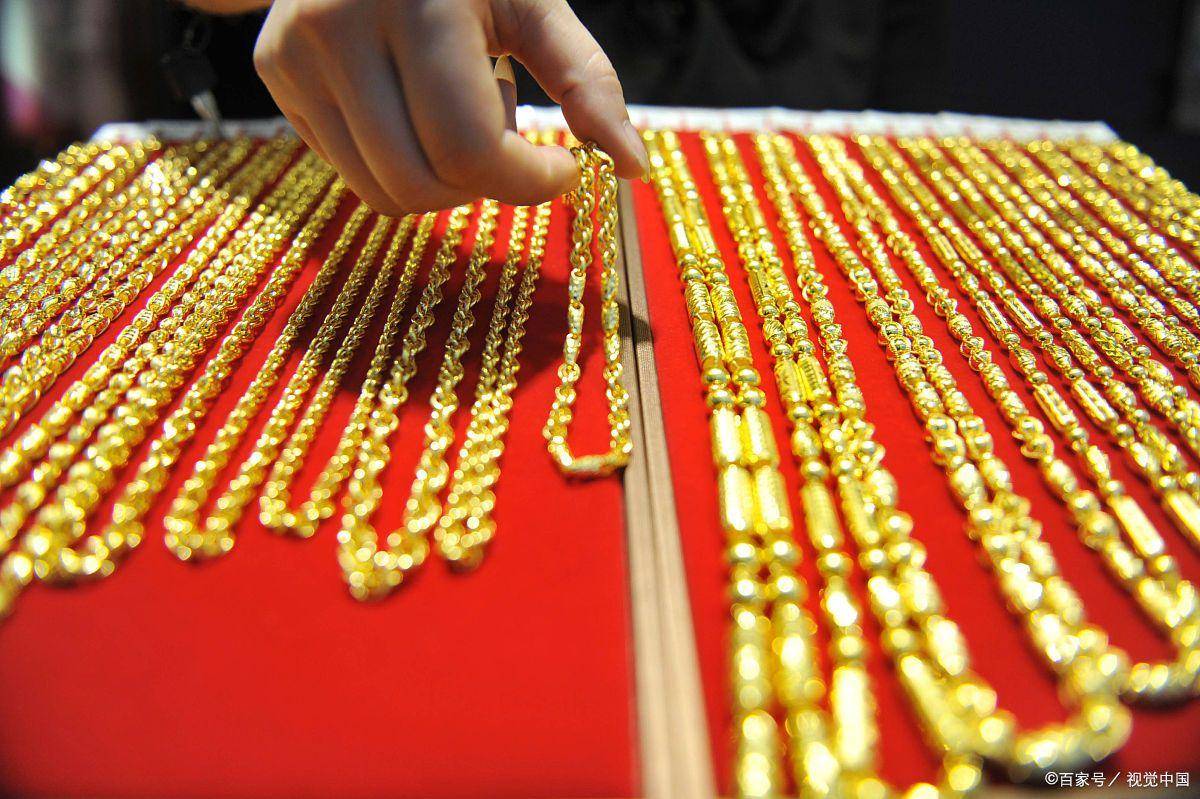
2026年2月6日,国内黄金价格降至1093.5元/克,国际金价跌至4884.3美元/盎司,黄金回收价格维持在1070元/克,市场整体呈现下跌趋势。周大福和六福的 黄金价格均降至1555元/克,周生生的金价也降至1558元/克,表明市场对黄金的需求减少,投资者信心不足。 一、市场价格与金饰报价 2月6日,贵金属市场呈现分化态势,上海现货黄金9999报1107元/克,沪金期货主力报1106元/克,白银现货价格为22.5元/克,铂金、钯金分别报503元/克和 392元/克。 国内品牌金饰价格维持高位稳定,六福、周大生等品牌足金报价1555元/克,周生生为1558元/克,老凤祥报1568元/克。 星光达珠宝金店的黄金饰品价格为1555.00元/克,铂金首饰价格为960.00元/克。 金兰首饰金店的黄金饰品价格为1555.00元/克,铂金首饰价格为960.00元/克。 金银街投资金条价格为1530.00元/克,工艺金条价格为1545.00元/克,千足金首饰价格为1535.00元/克。 从各地区具体成交看,如常州水贝黄金1261元/克、嘉兴周大福1555元/克等,实际购买总价因克重不同有差异。 上海黄金交易所主要合约延 ...

从流量到增量 银行赋能体育消费生态
Xin Lang Cai Jing· 2026-02-06 18:56
金融作为现代经济的血脉,正通过创新模式深度嵌入体育赛事发展进程,将赛场内外的澎湃激情,转化 为实实在在的消费动能与经济增量。 从传统的冠名赞助到多元的场景共建,从支付方式的迭代创新到产业生态的协同联动,金融机构的角色 已实现转变,从单纯的资金提供者,升级为体育消费生态的构建者和价值放大者。 业内人士指出,金融与体育消费的深度融合,不仅需要政策引导和金融机构的积极布局,更需要找准二 者的结合点。 金融护航赛事IP 撬动区域消费升级 随着居民消费升级和全民健身理念深入人心,体育赛事已从单纯的竞技活动,转变为带动文旅、商贸、 餐饮等多领域消费的"超级IP"。 转自:中国经营报 中经记者 张漫游 北京报道 日前,国务院办公厅印发《加快培育服务消费新增长点工作方案》并对外发布,提出12条政策举措。其 中提到"培育潜力领域发展动能,要做好体育赛事服务"。 如在2025年召开的第十五届全国运动会期间,多家银行提供了支付便利,为促消费打好基础。工商银行 (601398.SH)广东省分行在官方指定接待酒店、特许零售商店、比赛场馆周边及旅游消费旺区,密集 布放支持外卡取现的ATM、外币兑换机、商户POS机等,为参赛人员、观众、市 ...

金店一夜涨价70元!2月5日全国金店最新价出炉,现在是时候入手吗
Sou Hu Cai Jing· 2026-02-06 18:00
这还不是最魔幻的。 当你觉得金价全面暴涨时,转头去看银行的实物投资金条,工行的"如意金"报价 1114.57元/克,建行"建行金"1136.8元/克。 金店首饰和银行金条,每克价差竟然高达450元以上! 这金 价,到底在玩什么"双面游戏"? 我们普通人是该跟风"追涨",还是该冷静"看戏"? 2026年2月5日,走进任何一家大商场的金店柜台,你都会感受到一种火热又焦灼的气氛。 周大福的足 金首饰价格牌标着1566元/克,比前一天直接涨了71元。 老凤祥的牌子更"亮眼",1576元/克。 周生生是 1570元/克。 六福、金至尊等品牌也全部跟涨,单日涨幅普遍超过4.7%。 如果你昨晚睡前看到金价暴跌,还在偷偷高兴想着"抄底",那今早(2月5日)的金店报价可能会让你瞬 间清醒。 仅仅一夜之间,周大福、老凤祥这些头部品牌的足金999价格,每克跳涨了70多元。 周生生的 报价直接摸到了1570元/克。 前一天还在为每克1490多元纠结要不要下手,一转眼,买10克首饰就要多 掏七百多块。 与金店人声鼎沸的"零售价"形成鲜明对比的,是银行里相对"冷静"的投资金条价格。 中国银行的自有 品牌"中银金"标价1143.65元/克 ...
金银大跳水!市场突发巨震,接下来金价更可能这样走
Sou Hu Cai Jing· 2026-02-06 17:41
Core Viewpoint - The global precious metals market experienced a significant drop on February 5, with spot gold falling below $4800 per ounce and silver plummeting over 16%, erasing previous gains [1][3]. Market Dynamics - The immediate trigger for the drop was the nomination of hawkish Kevin Warsh as the next Federal Reserve Chairman by Trump on January 30, which shook market confidence in interest rate cuts and strengthened the US dollar, thereby suppressing precious metal prices [3]. - The Chicago Mercantile Exchange and the Shanghai Futures Exchange raised silver futures margin requirements, leading to forced liquidations among high-leverage investors and exacerbating the price decline through automated trading stop-loss triggers [3][7]. Volatility and Market Reactions - The February 5 drop continued a trend of high volatility in the precious metals market, with gold and silver experiencing daily fluctuations exceeding historical averages of 1%-2%, reaching over 5% [4]. - Domestic gold jewelry prices adjusted accordingly, with brands like Chow Sang Sang and Chow Tai Fook reducing their gold prices from 1713 RMB per gram to a range of 1668-1685 RMB per gram, prompting some consumers to adopt a wait-and-see approach [4]. Institutional Responses - Several banks issued urgent risk warnings, advising clients to reassess their risk tolerance and implementing measures such as "quota management" for gold accumulation products [6]. - Analysts noted that the market has entered a phase characterized by high volatility, weak fundamentals, and strong narratives, with significant geopolitical risks and fragile market structures contributing to increased fluctuations [6]. Leverage and Liquidity Issues - High-leverage trading amplified the market downturn, with silver futures net long positions near historical highs before margin increases forced investors to either add funds or liquidate positions [7]. - The thin liquidity in the off-exchange market intensified volatility, with automated trading triggering further sell-offs as prices breached key technical levels [7]. Geopolitical Factors and Market Sentiment - A temporary easing of geopolitical tensions reduced safe-haven demand, as negotiations between Iran and the US were scheduled, shifting market sentiment from exuberance to caution [10]. - Despite a projected increase in gold investment demand by 2025, central bank purchases were reported to be below 2024 levels, indicating a potential decline in market support [10]. Challenges for Retail Investors - Retail investors faced difficulties during the market crash, with some banks imposing redemption restrictions on gold accumulation and paper gold products, preventing timely loss mitigation [11]. - Recommendations for investors included setting strict stop-loss limits and maintaining gold exposure at no more than 10% of their portfolio, especially considering seasonal market trends [11].
金价过山车!一天暴跌12%,大家做好准备,明后两天或迎大行情
Sou Hu Cai Jing· 2026-02-06 17:08
Group 1 - The core event was a significant drop in gold prices on January 30, 2026, with London gold prices falling from a historical high of $5598 per ounce to a low of $4682, marking the largest single-day drop since 1983, with a peak decline of 12% [1][3] - The immediate trigger for the drop was the nomination of Kevin Warsh, known for his hawkish stance, to replace Jerome Powell as the Federal Reserve Chair, leading to a 1.01% increase in the US dollar index and subsequent selling pressure on gold [3] - Prior to the drop, gold prices had surged approximately 30% since the beginning of 2026, with speculative long positions reaching historical highs, indicating that the market was overbought and vulnerable to profit-taking [3] Group 2 - Following the extreme market conditions, major Chinese banks quickly adjusted gold contract margin requirements and trading limits to curb speculative trading, which inadvertently increased short-term market liquidity tension [5] - Despite the volatility, institutional interest in gold remained strong, with significant inflows into gold ETFs prior to the drop, indicating sustained long-term demand [5] - On February 3, gold prices rebounded with a single-day increase of over 6%, returning to the $5000 mark, although market sentiment had not fully recovered by February 5, as domestic gold prices fell again [5] Group 3 - The fluctuations in gold prices reflect a clash between short-term speculative sentiment and long-term investment logic, with central banks globally increasing their gold purchases, indicating ongoing macroeconomic support for gold [7] - In 2025, global central banks purchased a total of 863 tons of gold, with January 2026 alone seeing a surge to 1200 tons, highlighting a strong demand for gold amid geopolitical risks and a trend towards de-dollarization [7]
金银市场遭遇黑色星期三,白银价格暴跌近15%,黄金也跌超3%,黄金股多股跌停,一些投资者却开始疯狂扫货
Sou Hu Cai Jing· 2026-02-06 17:08
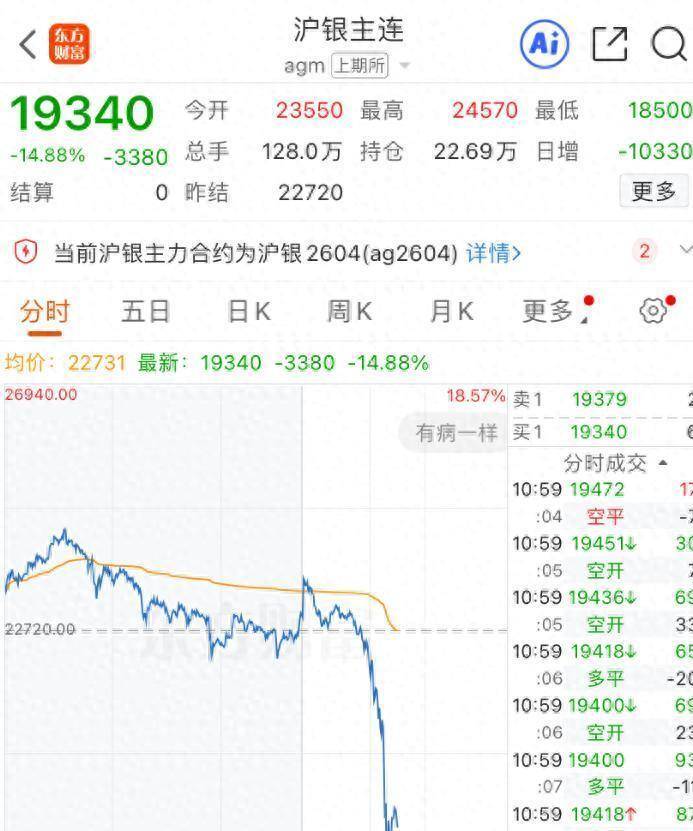
Core Viewpoint - The precious metals market experienced a dramatic decline on February 5, 2026, with silver prices plummeting over 14% and gold dropping more than 3%, leading to significant losses in related stocks and a stark contrast between capital market panic and physical market demand [1][3][4]. Market Performance - On February 5, silver prices fell to a low of $75.83 per ounce, while the Shanghai Futures Exchange saw silver contracts drop nearly 15% to 19,340 yuan per kilogram. Gold prices fell below the critical psychological level of $4,800 [1][4]. - A significant number of stocks related to gold and silver, such as Hunan Gold and Sichuan Gold, hit their daily limit down, reflecting a widespread sell-off in the sector [1][4][5]. Market Dynamics - The decline was preceded by a strong performance in January, where gold prices reached nearly $5,600 per ounce and silver exceeded $120 per ounce, resulting in gains of over 25% for gold and 60% for silver in just a month [3][4]. - The sell-off on February 5 was characterized by a lack of liquidity and a surge in stop-loss orders, creating a downward spiral in prices [4][6]. Regulatory Changes - Prior to the crash, exchanges raised margin requirements for silver contracts, which forced leveraged traders to either add funds or face forced liquidation, exacerbating the price decline [6][12]. - Major banks issued risk warnings to clients regarding the heightened volatility in the precious metals market, advising caution and stricter trading rules [12]. Institutional Behavior - Large investment institutions began to adjust their portfolios, with noticeable outflows from major gold ETFs during the price drop, indicating a shift in institutional sentiment [7][12]. - Analysts noted that the market's reaction was influenced by macroeconomic factors, including potential changes in U.S. Federal Reserve leadership and interest rate expectations, which could strengthen the dollar and negatively impact gold and silver prices [6][12]. Physical Market Response - Despite the turmoil in the capital markets, physical gold and silver demand surged in places like Shenzhen, where customers flocked to purchase gold bars, viewing the price drop as an opportunity [9][10]. - Retail gold prices adjusted downward in response to falling wholesale prices, making gold jewelry more attractive to consumers [10]. Analyst Perspectives - Analysts from various firms expressed differing views on the causes of the market decline, with some attributing it to technical adjustments and profit-taking, while others pointed to macroeconomic uncertainties stemming from U.S. Federal Reserve personnel changes [12][13]. - The overall sentiment in the market shifted from extreme optimism to fear, with many investors now closely monitoring support levels and physical demand to gauge future price stability [13].




天海防务(300008)披露为子公司及控股孙公司提供担保的公告,2月6日股价下跌2.92%
Sou Hu Cai Jing· 2026-02-06 14:25
Core Viewpoint - Tianhai Defense (300008) has reported a decline in stock price and has announced guarantees for its subsidiaries, indicating ongoing financial activities and commitments [1]. Financial Performance - As of February 6, 2026, Tianhai Defense's stock closed at 8.63 yuan, down 2.92% from the previous trading day, with a total market capitalization of 14.913 billion yuan [1]. - The stock opened at 8.81 yuan, reached a high of 8.84 yuan, and a low of 8.48 yuan, with a trading volume of 1.016 billion yuan and a turnover rate of 7.11% [1]. Guarantee Announcements - The company plans to provide guarantees for its wholly-owned subsidiary, Jiamei Ocean, for a credit application of up to 10 million yuan from the Industrial and Commercial Bank of China, with a maximum guarantee of 12 million yuan [1]. - Additionally, the company will guarantee up to 8.3 million yuan for its holding subsidiary, Jiangsu Jiuduo, for a credit application of up to 10 million yuan from Jiangsu Bank, with Jiangsu Green Energy providing a 3 million yuan guarantee [1]. - These guarantees are within the company's approved annual guarantee limit of 4.6 billion yuan and do not require additional board or shareholder meetings for approval [1]. Current Liabilities - As of the announcement date, the total amount of external guarantees provided by the company is approximately 4.1885884 billion yuan, which accounts for 200.08% of the audited net assets as of the end of 2024, with no overdue guarantees reported [1].

“散户交易所”菜百,为回购黄金设限
Jing Ji Guan Cha Wang· 2026-02-06 13:45
Core Viewpoint - The adjustment of gold buyback rules by Caibai Jewelry is a proactive risk management measure in response to increased transaction volume and market volatility, aiming to control risks associated with gold price fluctuations [6][10]. Group 1: Business Adjustments - Caibai Jewelry has moved its gold buyback operations from the fourth floor to the third floor due to a surge in sellers, indicating a significant increase in gold buyback demand [2]. - The new buyback rules include a suspension of buyback services on weekends and public holidays, as well as limits on daily buyback amounts and individual transaction caps [3][4]. - The daily buyback limit has been set to a maximum of 100 kilograms for gold and 200 kilograms for silver, with a total daily buyback cap of 100 million yuan [4]. Group 2: Market Response - Following the announcement of the new buyback rules, Caibai's stock price rose for four consecutive days, reaching a peak of 28.35 yuan per share and a market capitalization exceeding 21.8 billion yuan [3]. - The recent fluctuations in international gold prices have led to increased activity in gold buybacks, with significant daily price movements observed [5]. Group 3: Risk Management - The adjustments in buyback rules are part of a broader trend among financial institutions, including banks, to enhance risk management in response to market conditions [7]. - Caibai employs "T+D" contracts to hedge against gold price volatility, allowing the company to lock in prices while managing delivery timing [8][9]. - The company faces potential risks associated with the "T+D" model, including the need for additional margin payments during price fluctuations and increased operational costs due to deferred compensation fees [9].


Is Invesco Global ex-US High Yield Corporate Bond ETF (PGHY) a Strong ETF Right Now?
ZACKS· 2026-02-06 12:21
Core Viewpoint - The Invesco Global ex-US High Yield Corporate Bond ETF (PGHY) is designed to provide broad exposure to the High-Yield/Junk Bond ETFs category, with a focus on non-U.S. issuers and a smart beta strategy [1][5]. Fund Overview - PGHY was launched on June 20, 2013, and has accumulated over $201.3 million in assets, categorizing it as an average-sized ETF in its segment [1][5]. - The fund is managed by Invesco and aims to match the performance of the DB Global Short Maturity High Yield Bond Index [5]. Cost and Expenses - PGHY has an annual operating expense ratio of 0.35%, making it one of the more cost-effective options in the high-yield space [7]. - The ETF offers a 12-month trailing dividend yield of 7.18% [7]. Holdings and Sector Exposure - The ETF's top holdings include Industrial & Commercial Bank Of China Ltd (1.4% of total assets), Samarco Mineracao Sa, and Invesco Government & Agency Portfolio [9]. - The top 10 holdings account for approximately 6.73% of PGHY's total assets under management [9]. Performance Metrics - Year-to-date, PGHY has gained about 0.87% and is up approximately 7.02% over the last 12 months as of February 6, 2026 [11]. - The ETF has traded between $18.92 and $20.26 in the past 52 weeks, with a beta of 0.19 and a standard deviation of 5.22% over the trailing three-year period, indicating a high-risk profile [11]. Alternatives - Other ETFs in the high-yield space include iShares iBoxx $ High Yield Corporate Bond ETF (HYG) and iShares Broad USD High Yield Corporate Bond ETF (USHY), with assets of $17.64 billion and $25.79 billion respectively [13]. - HYG has an expense ratio of 0.49%, while USHY has a lower expense ratio of 0.08% [13].
【财闻联播】快手回应被处罚!2家A股公司,被证监会立案!
券商中国· 2026-02-06 11:49
★ 宏观动态 ★ 预制菜国家标准征求意见:中央厨房制作的菜肴等或不属于预制菜 2月6日,国家卫生健康委发布了《食品安全国家标准 预制菜》(征求意见稿),面向社会公开征求意见。标 准明确:①预制菜是以一种或多种食用农产品及其制品为原料,使用或不使用调味料等辅料,不添加防腐剂, 经工业化预加工(如搅拌,腌制,滚揉,成型,炒,炸,烤,煮,蒸等)制成,配以或不配以调味料包,加热或 熟制后方可食用的预包装菜肴产品。②预制菜不包括主食类食品、净菜类食品、即食食品和中央厨房制作的菜 肴。③尽量缩短预制菜的产品保质期,最长不应超过12个月。③不得使用防腐剂,尽可能减少食品添加剂的使 用。 大商所2026年春节期间交易时间安排:2月15日至2月23日休市,24日起照常开市 大连商品交易所2026年春节期间交易时间安排通知如下:2月15日(周日)至2月23日(周一)休市,2月24日 (周二)起照常开市。2月14日(周六)、2月28日(周六)为周末休市。2月13日(周五)晚上不进行夜盘交 易。2月24日(周二)所有合约集合竞价时间为上午08:55-09:00。2月24日(周二)当晚恢复夜盘交易。 上海黄金交易所:调整部分合约保证金 ...