
国家电网

Search documents
一个月1万亿度电破纪录!网友算账:这电都用在哪了,竟比十年前翻一番
Sou Hu Cai Jing· 2025-08-24 22:52
Core Insights - The article highlights the significant increase in electricity consumption in China, with a record monthly usage of 1,022.6 billion kilowatt-hours in July 2025, equivalent to the annual electricity consumption of the ten ASEAN countries combined [3] Group 1: Agriculture - The agricultural sector is increasingly relying on technology, such as drones for pesticide spraying, which consume only 5 kilowatt-hours per hour, marking a shift from traditional farming methods [6] - Smart greenhouses in Shandong have seen a 50% increase in yield despite higher electricity consumption per acre, showcasing the benefits of electricity in modern agriculture [6] Group 2: Manufacturing - The manufacturing sector, particularly high-tech equipment manufacturing, is a major driver of electricity demand, with a single electric motor production line consuming 20,000 kilowatt-hours daily, equivalent to the monthly consumption of 300 households [8] - Chip packaging facilities in Hefei consume significant electricity, with one facility accounting for 10% of global storage chip production, emphasizing the critical role of electricity in advanced manufacturing [8] Group 3: Tertiary Sector - The tertiary sector's electricity consumption reached 208.1 billion kilowatt-hours in 2024, growing by 10.7%, driven by the internet and related services, as well as electric vehicle charging stations [10] - Data centers, such as one in Beijing, consume over 1 billion kilowatt-hours annually, supporting 30% of the national short video traffic, highlighting the hidden electricity costs behind digital consumption [10] Group 4: Residential Use - Residential electricity consumption surged by over 30% in regions like Henan and Shandong during high temperatures, with individual bills increasing significantly due to air conditioning usage [13] Group 5: Power Grid Challenges - China's power grid has demonstrated its capability to handle increased demand, with cross-regional transmission capacity reaching 142 million kilowatts, equivalent to half of the Three Gorges Dam's output [16] - The grid's advanced AI systems can process power dispatch commands in 5 seconds, ensuring rapid adjustments to maintain stability during peak demand [18] Group 6: Renewable Energy - In 2024, China's renewable energy installed capacity surpassed 2,159 million kilowatts, accounting for 59.2% of total capacity, indicating a shift towards cleaner energy sources [20] - Renewable energy projects, such as solar panels in Inner Mongolia and offshore wind farms in Guangdong, are contributing to a more sustainable energy supply [20] Group 7: Conclusion - The article emphasizes the importance of human effort and technological innovation behind electricity consumption, framing it as part of an "energy revolution" towards a smarter, more efficient, and greener future [21]

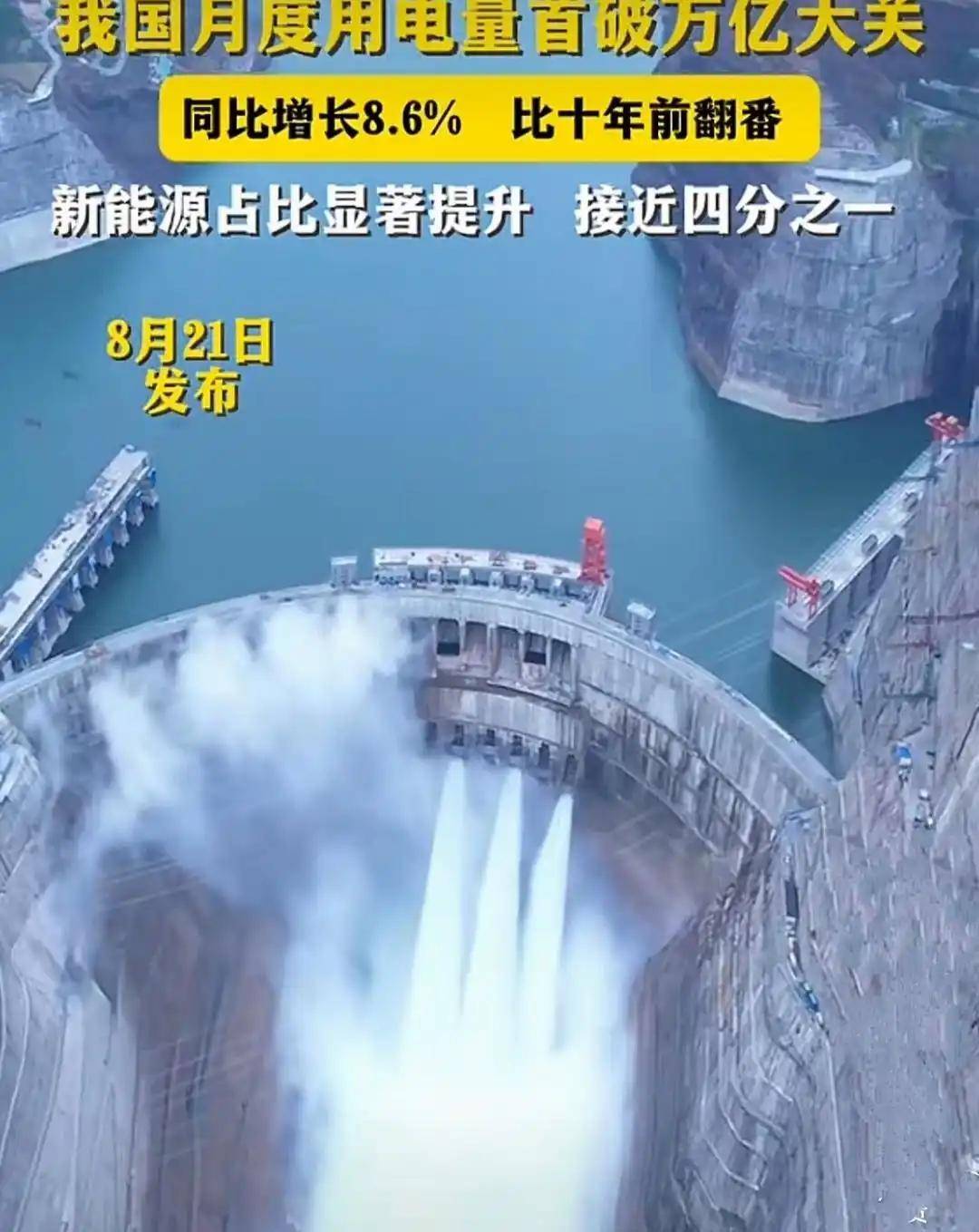
一个月全国用了1万亿度电,破人类记录!网友自豪算账:比十年前翻一番,这些电都用在哪了?
Sou Hu Cai Jing· 2025-08-24 04:06
Core Insights - The article highlights the significant increase in electricity consumption in China over the past decade, reflecting both the country's economic growth and the transformation of the global energy landscape [2][5][34] Electricity Consumption Growth - In 2024, China's total electricity consumption is projected to reach 98,521 billion kilowatt-hours, marking a 6.8% year-on-year increase, with a peak of 10,226 billion kilowatt-hours in July [5][34] - The electricity index for all industries is expected to grow by 29.5% from 2020, with an average annual growth rate of 6.7% [5][7] Sectoral Electricity Usage Primary Industry - The primary industry is expected to consume 170 billion kilowatt-hours in 2024, a 20.2% increase year-on-year, driven by smart agriculture and related technologies [9][10] Secondary Industry - The secondary industry accounts for nearly 60% of total electricity consumption, with 593.6 billion kilowatt-hours in 2024. High-tech and equipment manufacturing lead the growth, with new energy vehicle manufacturing increasing by 25.7% [10][12] Tertiary Industry - The tertiary industry is projected to consume 2,081 billion kilowatt-hours, a 10.7% increase, with internet services and charging services growing by 28.2% and 42.6%, respectively [12][14] Residential Consumption - In July 2024, residential electricity consumption surged by over 30% in several provinces, reaching 2,039 billion kilowatt-hours, a year-on-year increase of 18% [14][15] Power Supply and Infrastructure - China's power grid demonstrated resilience during peak demand periods, with a maximum cross-regional transmission capacity of 142 million kilowatts, equivalent to half of the Three Gorges Dam's output [14][18] - By mid-2024, the total installed renewable energy capacity is expected to reach 2.159 billion kilowatts, accounting for 59.2% of total capacity, surpassing coal power for the first time [25][27] Technological Advancements - The State Grid's real-time monitoring system allows for rapid load forecasting and management, achieving a "zero blackout" status even during peak loads exceeding 1.5 billion kilowatts [24][34] - The implementation of time-of-use pricing in regions like Zhejiang and Sichuan has successfully reduced peak demand by 1 million kilowatts [24] Conclusion - The article concludes that the dramatic increase in electricity consumption not only reflects the aspirations of 1.4 billion people for a better life but also positions China as a leader in the global renewable energy market, with significant contributions to solar and wind energy [34][35]
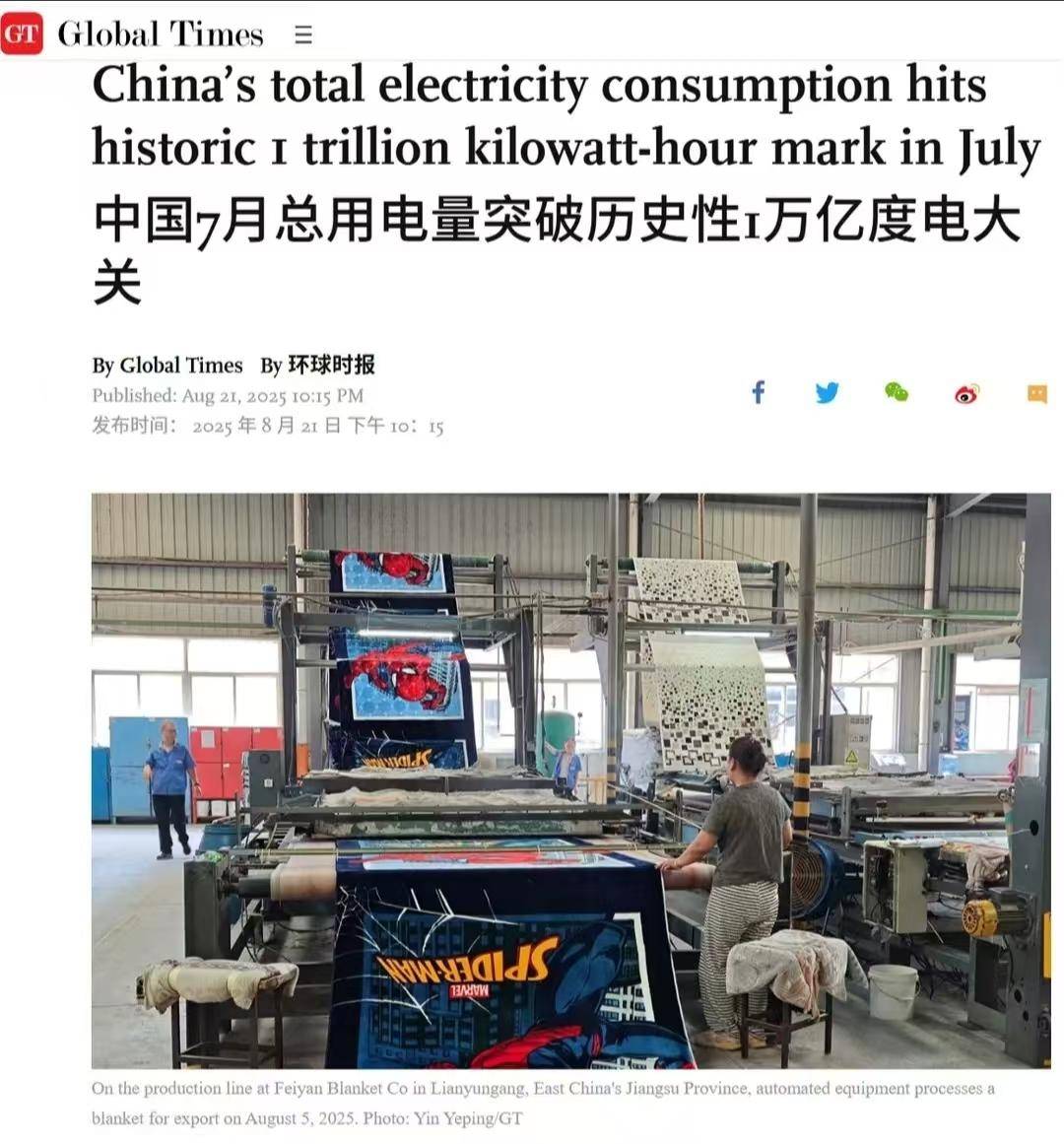
融科银行:万亿千瓦时用电量背后的中国能源转型密码
Sou Hu Cai Jing· 2025-08-23 15:46
Core Insights - In July 2025, China's total electricity consumption surpassed 1 trillion kilowatt-hours for the first time, reaching 1.02 trillion kilowatt-hours, a year-on-year increase of 8.6%, marking a significant milestone in global energy consumption [1] - The increase in electricity consumption is attributed to both extreme high temperatures and industrial production, showcasing the resilience of the Chinese economy [2] - The share of renewable energy in total electricity generation has reached nearly 25%, indicating a rapid transformation towards green energy [4] Group 1: Electricity Consumption - China's electricity consumption exceeded 1 trillion kilowatt-hours in July 2025, a historic record and the first country to achieve this milestone [1] - The growth in electricity consumption was driven by a combination of high temperatures and a 4.7% increase in electricity usage in the secondary industry [2] Group 2: Renewable Energy Growth - Renewable energy generation now accounts for approximately 25% of total electricity consumption, with wind and solar power installations leading globally [4] - As of July 2025, installed capacity for wind power reached 404 million kilowatts, and solar power reached 536 million kilowatts [4] Group 3: Systemic Innovations in Energy - The increase in renewable energy share is supported by systemic innovations across the energy sector, including diversified power production and advanced transmission networks [5] - The establishment of a comprehensive clean energy transmission network and significant advancements in energy storage have positioned China as a leader in large-scale renewable energy development [5] Group 4: Economic Implications - The record electricity consumption and the significant share of renewable energy highlight the potential for green development to coexist with economic growth, reshaping global energy dynamics [6]
“透视”救灾捐助:企业“各尽所能”,精准和社会信任成关键
Hua Xia Shi Bao· 2025-08-23 12:57
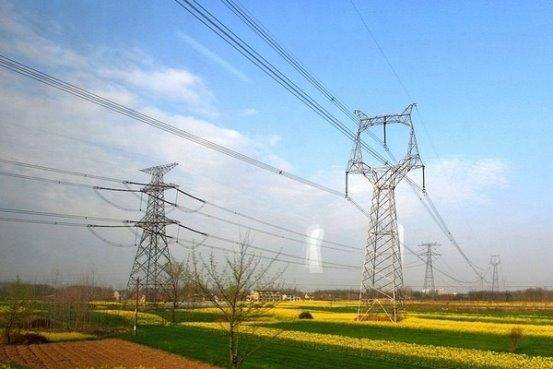
Core Viewpoint - The article highlights the significant role of enterprises in disaster relief donations, emphasizing the correlation between donation behavior and industry characteristics, as well as the impact of social trust and economic vitality on donation patterns [1][2][8]. Group 1: Enterprise Donations - Enterprises have become the main force in disaster relief donations, with their contributions reflecting distinct industry characteristics [2]. - New-type entities, defined by their technological innovation and digital capabilities, have shown remarkable performance in donations, with notable contributions from companies like State Grid (50 million yuan), China Petroleum (20 million yuan), and others during recent disasters [2]. - Internet companies leverage their platform advantages to create donation networks, with Tencent's online charity platform facilitating significant fundraising efforts [3]. Group 2: Material and Cash Donations - Many companies align their donations with their business, providing essential goods such as food, medicine, and clothing to disaster-stricken areas [4]. - The combination of material and cash donations enhances the coverage of diverse needs in disaster areas, with material donations addressing immediate requirements and cash donations supporting long-term recovery [5][7]. Group 3: Response Levels and Donation Scale - The scale of donations is closely linked to the severity of disasters and the corresponding response levels, with higher response levels typically leading to larger social donations [6]. - Observations indicate that donation types adapt dynamically to the nature of disasters, with specific materials being prioritized based on the disaster's characteristics [7]. Group 4: Challenges in Donation Engagement - There is a noticeable decline in public enthusiasm for disaster donations, attributed to the frequency of disasters and the division of attention among multiple fundraising projects [8][9]. - Companies' donation behaviors are increasingly influenced by public sentiment, with some facing criticism for their contributions, which may deter future donations [10]. Group 5: Trust and Transparency in Donations - Social trust in charitable organizations has been affected by past incidents, leading to increased public scrutiny over donation efficiency and transparency [11]. - The demand for clear and transparent reporting on the use of donated funds is rising, with a significant portion of donations being directed towards specific causes to ensure accountability [11][12].
马斯克裁掉的超充天团,在欧洲引发行业地震!却和中国差了十万八千里?
电动车公社· 2025-08-22 15:56
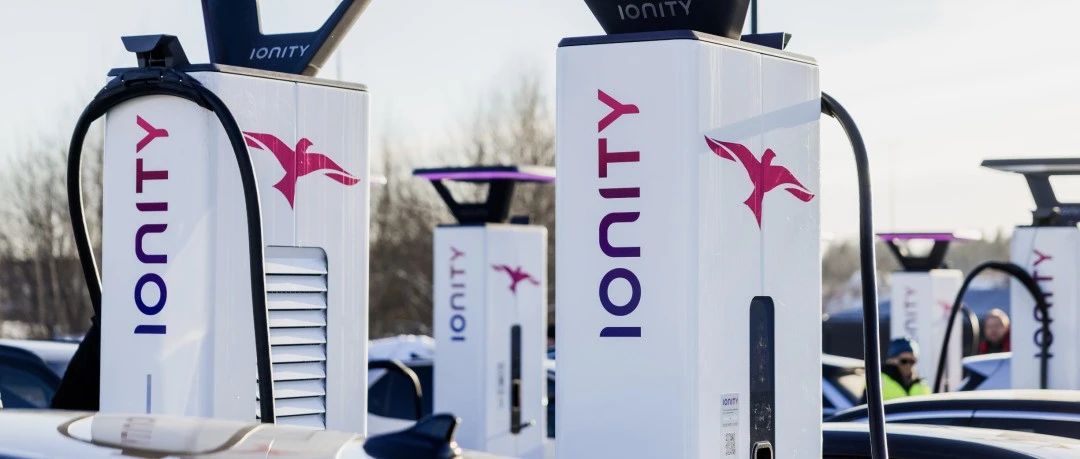
Core Viewpoint - The article discusses the rapid development of charging infrastructure for electric vehicles (EVs) in China, highlighting the significant increase in the number of charging stations and the advancements in charging technology, while contrasting this with the challenges faced in the US and Europe regarding EV charging infrastructure. Group 1: Charging Infrastructure Development in China - The number of public charging stations in China has dramatically increased, with a total of 14.77 million charging piles expected by June 2025, up from 5.21 million at the end of 2022, representing a twofold increase [7] - The average charging power of public charging stations has improved, with many upgraded from 60kW to 120kW, and the overall charging experience has become more convenient, reducing the need for "charging pile snatching" during peak travel times [4][5][8] - Data shows that by December 2023, the total number of public charging piles reached approximately 2.73 million, with a monthly average charging power of 1,388 kWh [6] Group 2: Comparison with International Markets - In contrast to China's rapid development, the US and Europe face significant challenges in EV charging infrastructure, with the US relying heavily on Tesla's Supercharger network and Europe struggling with a shortage of charging stations and slow charging speeds [10][12][17] - The EU aims to install 8.8 million charging stations by 2030, but current projections suggest only 1.6 million will be built, leading to a potential "charging pile crisis" [71] Group 3: Hubber's Business Model in the UK - Hubber, a startup founded by former Tesla Supercharger team members, aims to address urban charging gaps in the UK by repurposing underutilized spaces into high-throughput charging stations [20][30] - The first Hubber charging station opened in August 2023, offering 150kW and 300kW charging options, but the charging power is considered insufficient compared to advancements in China [31][34] - Hubber's approach focuses on site development rather than building charging stations, positioning itself more as a real estate platform than a traditional charging company [57] Group 4: Future Challenges and Considerations - The article emphasizes that while charging infrastructure is crucial, the stability and capacity of the electrical grid are equally important for supporting the growing demand for EV charging [75] - China's electricity consumption has reached unprecedented levels, surpassing the total consumption of the US, EU, and India combined last year, highlighting the country's robust energy supply capabilities [68][70] - The article concludes that the challenges faced by Europe in building sufficient charging infrastructure and ensuring grid stability will be long-term issues that need to be addressed for the future of electric vehicles [75]
机械ETF(516960)收涨超过1.4%,行业技术迭代引关注
Mei Ri Jing Ji Xin Wen· 2025-08-22 08:27
Group 1 - The core viewpoint indicates that the global top ten component suppliers are expected to ship 247.9 GW in the first half of 2025, representing a 10% year-on-year growth, with a domestic market share of 58% and an overseas market share of 42% [1] - TOPCon components have become the mainstream technology route, accounting for over 94% of the market [1] - The photovoltaic industry is currently in a low point reversal period, where companies need to balance scale and profitability while enhancing long-term competitiveness through differentiated competition [1] Group 2 - In the power battery sector, global installed capacity is projected to reach 504.4 GWh in the first half of 2025, marking a 37.3% year-on-year increase, with CATL and BYD together holding a market share of 55.7%, indicating a "stronger stronger" market trend [1] - Hive Energy's installed capacity has surged by 208% year-on-year, leading in growth rate [1] - In the electric equipment sector, the demand for electric meters in the State Grid's 53rd procurement batch in 2025 is expected to increase by 12% year-on-year, while the demand for collection terminals is projected to rise by 80.8%, reflecting ongoing investment in the power grid [1] Group 3 - The Mechanical ETF (516960) tracks a specific mechanical index (000812), which selects listed companies involved in industrial automation and engineering machinery from the Shanghai and Shenzhen markets to reflect the overall performance of the mechanical equipment industry [1] - The index constituents typically possess strong technological innovation capabilities and market competitiveness, focusing on leading companies with growth potential [1]
特高压建设火热 带动相关上市公司业绩增长
Zheng Quan Ri Bao· 2025-08-21 16:37
Core Viewpoint - The launch of the Ningxia-Hunan ±800 kV UHVDC project marks a significant milestone in China's renewable energy transmission, capable of delivering over 36 billion kWh annually, with more than 50% from renewable sources. This development is expected to drive substantial growth in the related industrial chain, benefiting multiple listed companies in the sector [1]. Industry Overview - The UHV construction in China is experiencing a boom, leading to high growth in the performance of companies involved in the supply chain, including cable, transformer, converter station, insulation, and control systems [1]. - China's UHV construction capabilities are globally leading, covering everything from original technology to complete equipment, engineering design, and operational maintenance [1][4]. Company Performance - Baoding Tianwei Baobian Electric Co., Ltd. reported a revenue of 2.995 billion yuan, a year-on-year increase of 60.89%, and a net profit of 75.37 million yuan, up 230.76% [2]. - Henan Tongda Cable Co., Ltd. achieved a revenue of 3.618 billion yuan, a 37.28% increase, and a net profit of 61.87 million yuan, growing by 68.42%. The company saw an 80.17% increase in new orders for its cable business [2]. - Pinggao Group Co., Ltd. reported a revenue of 5.696 billion yuan, a 12.96% increase, and a net profit of 666 million yuan, up 24.59% [3]. Market Trends - The industry is entering a prosperous cycle, with high demands for materials and technology in UHV projects. China has completed several high-difficulty and high-technology projects, solidifying its global leadership in this field [4]. - The ongoing construction of several UHV projects, including the world's highest UHVDC project, is expected to enhance the integration of clean energy into the national grid [4]. - Future investments in the UHV sector are anticipated to continue increasing, driving high demand for high-end equipment, key materials, and construction services [5].
AI超级储充网,度电潜能被激活
2 1 Shi Ji Jing Ji Bao Dao· 2025-08-21 12:44
Group 1: AI and Energy Integration - AI is not only a "power-hungry monster" but also a core tool for energy transition and efficiency improvement, creating a symbiotic relationship between energy and AI [1] - The recent launch of the AI Super Storage and Charging Network by Envision Group integrates energy storage, charging, AI scheduling, and electricity trading, forming a smart energy ecosystem [1] - The integration of AI technology is expected to redefine the value of electricity, enabling real-time services such as power response and frequency regulation, thus activating the potential of every kilowatt-hour [1][8] Group 2: AI's Role in Renewable Energy - The increasing share of renewable energy sources like wind and solar in China's energy structure presents challenges due to their intermittent and volatile nature [2] - AI plays a crucial role in data processing, forecasting, and decision support, optimizing site selection for wind and solar farms by analyzing historical weather data and geographical information [2] - AI systems can predict equipment failures through real-time monitoring of operational data, significantly reducing unplanned downtime and improving equipment availability [2] Group 3: AI in Extreme Weather and Data Integration - AI can enhance the response to extreme weather conditions, with the ECMWF launching an AI forecasting system that runs parallel to traditional models for improved accuracy and speed [3] - The integration of vast heterogeneous data in real-time is a challenge for AI applications in the energy sector, particularly under extreme weather conditions [3][6] Group 4: Efficiency and Cost Reduction - Large energy companies are leveraging AI language models to enhance operational efficiency, with applications in intelligent writing, meeting minutes, and precise information retrieval [4][5] - The AI assistant "iGuoNet" has shown significant improvements in semantic understanding and task execution efficiency, providing a more intelligent user experience [5] Group 5: Challenges in AI Application - The energy sector's reliance on time-series data modeling presents challenges for AI, necessitating the development of specialized models to meet the industry's high demands for accuracy and reliability [6] - The need for collaboration between language models and time-series models is emphasized to effectively predict electricity prices and integrate various data sources [6] Group 6: Activating the Value of Electricity - AI enhances the reliability, safety, economy, efficiency, and environmental friendliness of power grid operations through deep data analysis and intelligent decision-making [7] - The Southern Power Grid has developed an AI load forecasting ecosystem that achieved short-term forecasting accuracy rates of 85% for wind power and 91% for solar power in 2023 [7] Group 7: Intelligent Scheduling and Market Optimization - AI empowers intelligent scheduling and optimization of power transmission and generation, reducing losses and improving economic efficiency [8] - AI's role in real-time optimization and value reconstruction is crucial, as it helps redefine the value of electricity beyond traditional energy pricing to include new services like power response and frequency regulation [8]
AI超级储充网 度电潜能被激活
2 1 Shi Ji Jing Ji Bao Dao· 2025-08-21 12:33
Core Insights - The integration of artificial intelligence (AI) with the energy sector is transforming the operational logic of the electricity industry, enhancing efficiency and redefining the value of electricity [1][7] - AI technologies are being utilized to optimize energy generation and consumption, particularly in the context of renewable energy sources like wind and solar, which present challenges due to their intermittent nature [2][3] Group 1: AI and Energy Integration - The recent launch of the AI Super Storage and Charging Network by Envision Group combines energy storage, charging, AI scheduling, and electricity trading, forming a smart energy ecosystem [1] - AI's role in the energy sector includes improving operational efficiency through data processing, predictive analytics, and decision support, particularly in site selection and maintenance of renewable energy facilities [2][3] Group 2: AI Applications in Power Generation - In China's northwest region, the application of intelligent algorithms has successfully reduced wind abandonment rates to below 3% [3] - AI models are being developed to enhance load forecasting systems, analyzing diverse data sources to optimize grid scheduling and minimize energy waste [3] Group 3: Challenges and Innovations in AI - The energy sector faces challenges in real-time integration of vast heterogeneous data, especially under extreme weather conditions, necessitating advanced AI capabilities [3][5] - The development of specialized time-series models is essential for accurately predicting energy loads and prices, as traditional language models may not meet the precision and reliability required in energy applications [5][6] Group 4: Enhancing Grid Efficiency - AI is crucial for optimizing grid operations, enabling self-regulation and self-optimization, which enhances the grid's ability to handle complexity and uncertainty [7] - The Southern Power Grid has implemented an AI load forecasting ecosystem that achieved short-term prediction accuracies of 85% for wind power and 91% for solar power in 2023, supporting a significant increase in non-fossil energy usage [7] Group 5: Value Maximization through AI - AI enhances intelligent scheduling and optimization of electricity transmission and generation, contributing to economic efficiency in grid operations [8] - The future value of electricity will encompass not only energy pricing but also services like power response and frequency regulation, necessitating real-time optimization through algorithms [8]
我的亲人是英雄!从家史故事,读懂14年抗战→
Bei Jing Ri Bao Ke Hu Duan· 2025-08-21 00:12
转自:北京日报客户端 抗战14年, 给你的家族留下了怎样的痕迹? 你的家里, 还能找到他们的故事吗? 日前, "国资小新"联合光明日报 在知乎平台真诚发问, 收到了多位国资央企在职或退休职工和 上百位网友的家史分享。 80年了,"抗战胜利"四个字, 于历史是庄重的句点, 于民族是重生的里程碑。 于家庭, 则是亲人血和泪的过往、 荣誉和担当的传承。 "你若记得,我便活过。" 抗战 14年,给你的家族 下了怎样的痕迹? "父亲和伯父没留下一张照片, 我至今也不知道他们的样子" 1939年,我的父亲王克和、伯父王克俭、叔叔王凯琦 一同加入八路军,投身抗日。 1941年父亲牺牲,年仅22岁。在弹尽粮绝、战友牺 牲、阵地被围的绝境下,他摔碎步枪,拉响最后一颗 手榴弹,与冲上来的日军同归于尽。第二年,伯父也 牺牲了。 他们的家人, 是冲锋陷阵的战斗英雄。 草鞋踏碎泥泞,步枪刺破烽烟。 他们用血肉之躯,筑起民族不屈的长城。 "弟兄们,身后就是家园!" 父亲和伯父没留下一张照片,我至今也不知道他们长 什么样子。只剩叔叔历经抗日战争、解放战争,在抗 美援朝长津湖战役中幸存,带着满身伤痕归国,继续 参加新中国的建设。 后来,我成 ...
