
嘉能可

Search documents
纽铜大涨4%!全球第二大铜矿Grasberg遭遇矿难停产,预计2026年铜金产量或骤降35%
美股IPO· 2025-09-24 23:36
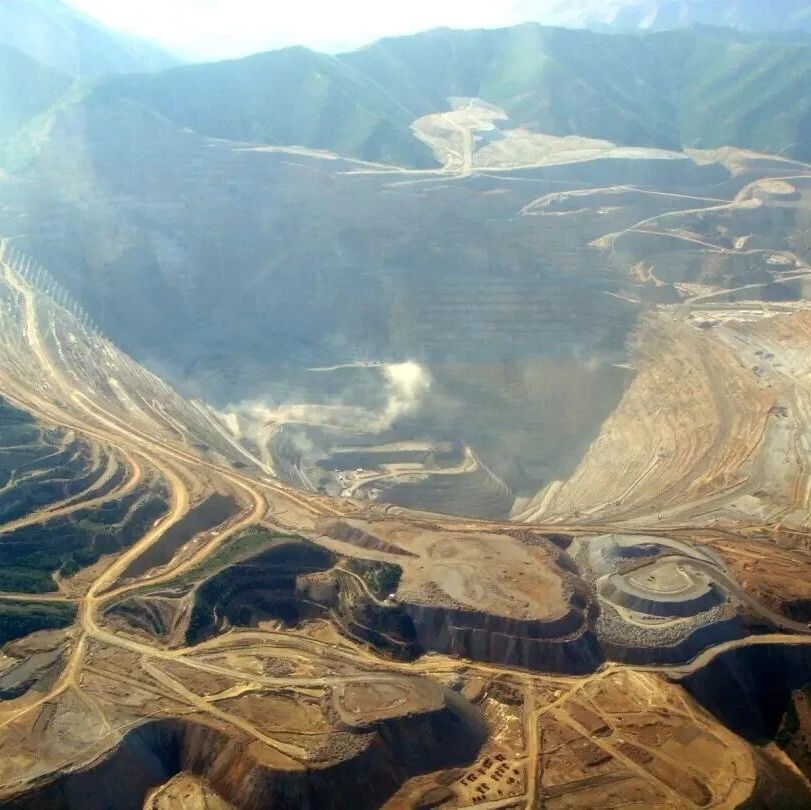
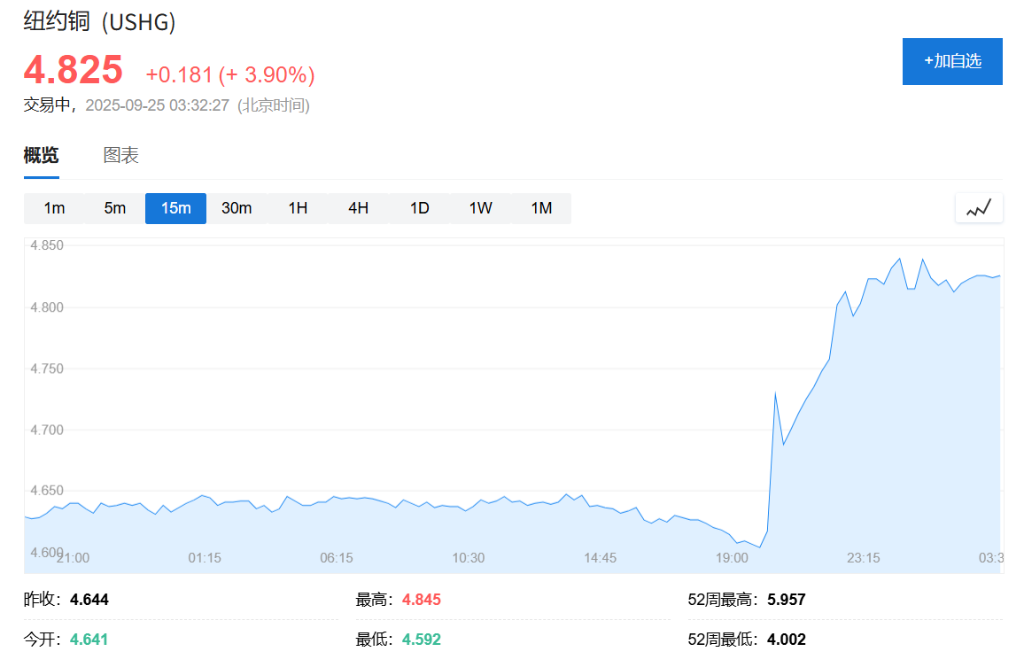
Freeport预计最早要到2027年才能恢复事故前的生产水平,2026年铜金产量较此前预期下降约35%。受供应中断预期推动,截至周三纽约尾盘时段, COMEX铜期货上涨近4%、报4.825美元/磅,嘉能可和Boliden等铜业公司股价均出现上涨。 美国矿业巨头Freeport McMoRan印尼子公司Grasberg矿山发生致命泥石流事故,推动全球铜价大幅上涨并引发供应链担忧。这座全球第二大铜矿因事 故暂停生产,公司已启动不可抗力条款。 Freeport确认,其位于印尼的Grasberg Block Cave矿9月8日发生的泥石流事故已造成两名工人死亡,另有五名工人仍下落不明。约80万公吨湿润物质 突然涌入矿井,波及多个作业层面,在该公司数十年开采历史中史无前例。 受供应中断预期推动,伦敦金属交易所三个月期铜价一度跳涨2%至每吨10172美元。Freeport股价盘前重挫9.6%,而其他铜业公司则因供应预期收紧 而大涨。欧洲市场上,Antofagasta、KGHM、英美公司、嘉能可和Boliden等铜业公司股价均出现上涨。 截至周三纽约尾盘时段,COMEX铜期货上涨近4%,报4.825美元/磅,逼近7月30 ...


纽铜大涨4%!全球第二大铜矿Grasberg遭遇矿难停产,预计2026年铜金产量或骤降35%
Hua Er Jie Jian Wen· 2025-09-24 23:12
美国矿业巨头Freeport McMoRan印尼子公司Grasberg矿山发生致命泥石流事故,推动全球铜价大幅上涨并引发供应链担忧。这座全球第二大铜矿 因事故暂停生产,公司已启动不可抗力条款。 Freeport确认,其位于印尼的Grasberg Block Cave矿9月8日发生的泥石流事故已造成两名工人死亡,另有五名工人仍下落不明。约80万公吨湿润物 质突然涌入矿井,波及多个作业层面,在该公司数十年开采历史中史无前例。 受供应中断预期推动,伦敦金属交易所三个月期铜价一度跳涨2%至每吨10172美元。Freeport股价盘前重挫9.6%,而其他铜业公司则因供应预期收 紧而大涨。欧洲市场上,Antofagasta、KGHM、英美公司、嘉能可和Boliden等铜业公司股价均出现上涨。 截至周三纽约尾盘时段,COMEX铜期货上涨近4%,报4.825美元/磅,逼近7月30日顶部5.830美元和7月24日顶部5.957美元。 约80万公吨湿润物质的突然涌入波及了矿井的多个层面,包括失踪员工当时进行开发作业的服务层。这一规模的地质事故在PT Freeport Indonesia 数十年块状崩落开采历史中史无前例。 公司已 ...
【环球财经】伦敦股市24日上涨 矿业资源股领涨
Xin Hua Cai Jing· 2025-09-24 17:19
Market Performance - The FTSE 100 index in London closed at 9250.43 points, up by 27.11 points, representing a gain of 0.29% compared to the previous trading day [1] - The performance of major European indices was mixed, with the CAC40 index in Paris closing at 7827.45 points, down by 44.57 points or 0.57%, while the DAX index in Frankfurt closed at 23666.81 points, up by 55.48 points or 0.23% [1] Top Gainers - The top five gainers in the London stock market included: - Antofagasta, a mining company, with a stock price increase of 9.26% - Anglo American, with a stock price increase of 4.70% - Babcock International, a business services outsourcing company, with a stock price increase of 4.33% - Glencore, with a stock price increase of 2.95% - BAE Systems, with a stock price increase of 2.18% [1] Top Losers - The top five losers in the London stock market included: - Ashtead Group, an international equipment rental company, with a stock price decrease of 2.33% - Amey, an engineering company, with a stock price decrease of 2.00% - Convatec, a medical technology company, with a stock price decrease of 1.84% - Fresnillo, a precious metals producer, with a stock price decrease of 1.79% - Burberry, a luxury goods group, with a stock price decrease of 1.71% [1]
绿色转型背景下关键矿产发展新特征及未来前景|宏观经济
清华金融评论· 2025-09-24 09:08
Core Viewpoint - The article emphasizes the accelerating global carbon neutrality process and the increasing demand for critical minerals driven by the transition to clean energy technologies, highlighting the complex geopolitical competition among major countries in securing these resources [2][3]. Group 1: Importance of Critical Minerals - Critical minerals play an irreplaceable role in high-tech industries, clean energy technologies, and national defense, making supply security a key strategic consideration for countries [5]. - The global energy transition heavily relies on critical minerals, which are essential for ensuring energy security and supporting economic development [6]. Group 2: Demand and Supply Dynamics - The demand for critical minerals is surging, with lithium demand projected to grow nearly 30% in 2024, significantly exceeding the 10% annual growth rate seen in the 2010s [3]. - The demand for nickel, cobalt, graphite, and rare earth elements is expected to increase by 6% to 8% in 2024, primarily driven by applications in electric vehicles, battery storage, renewable energy, and power grids [3]. - The rapid expansion of investments in electric grids in China has been a major factor in the recent growth of copper demand [15]. Group 3: Geopolitical Strategies - Countries are increasingly focusing on critical mineral supply chain security as a core policy issue, employing legislation, policy guidance, and international cooperation to ensure stable supplies [10]. - The U.S. has implemented several legislative actions to enhance domestic supply chain resilience, including the establishment of the Critical Minerals Security Strategy [10]. - The European Union has introduced the Critical Raw Materials Act to ensure the security and sustainability of critical mineral supplies [10]. Group 4: Geographic Distribution and Market Characteristics - The geographical distribution of critical mineral reserves is highly concentrated, with significant shares located in specific regions, such as lithium in the "Lithium Triangle" of South America [13]. - The production of certain critical minerals, like cobalt, is dominated by a few countries, with the Democratic Republic of Congo accounting for 86% of cobalt production [13]. - Western multinational mining companies dominate the ownership of critical mineral resources, leveraging their technological and experiential advantages over developing countries [14]. Group 5: Price Trends - Despite the rapid increase in demand, the supply of critical minerals has also surged, leading to downward pressure on prices, particularly for battery metals [15]. - Lithium prices soared eightfold between 2021 and 2022 but have since dropped by over 80% in 2023 [15]. - Prices for graphite, cobalt, and nickel are expected to decline by 10% to 20% in 2024 [15].

10月16日起刚果(金)以出口配额制解除钴出口禁令
Shang Wu Bu Wang Zhan· 2025-09-23 15:52
Group 1 - The Democratic Republic of Congo (DRC) will lift its cobalt export ban starting October 16, transitioning to an annual export quota management system to regulate global supply [1][2] - The export cap for the remainder of 2025 is set at 18,125 tons, while the quotas for 2026 and 2027 are established at 96,600 tons per year [1][2] - DRC is the largest cobalt producer globally, accounting for approximately 70% of the world's supply last year [2] Group 2 - The export ban was initially implemented due to a significant drop in cobalt prices, which fell to a nine-year low, leading to major producers like Glencore and China Molybdenum facing force majeure [2] - The new quota policy aims to reduce inventory backlog and stabilize international cobalt prices, receiving support from Glencore but facing opposition from China Molybdenum [2] - 10% of cobalt production will be reserved for national strategic projects, and quotas may be adjusted based on market prices or local smelting capacity [3]
DRC to lift cobalt export ban and launch quotas from October 2025
Yahoo Finance· 2025-09-23 09:37
Core Points - The Democratic Republic of Congo (DRC) will replace its cobalt export ban with an annual quota system starting from October 16, 2025 [1] - The DRC accounted for approximately 70% of global cobalt production last year, and the export ban was initially imposed in February 2023 due to falling cobalt prices [1][2] - The new quota system will allow miners to export up to 18,125 tonnes of cobalt for the remainder of 2025, followed by annual quotas of 96,600 tonnes for both 2026 and 2027 [1] Industry Impact - The shift to a quota system aims to address rising conflicts in eastern Congo, where illegal mining is linked to violence involving M23 rebels [3] - The quota system is intended to manage inventories and stabilize cobalt prices, receiving support from Glencore but facing opposition from CMOC [3] - Traders emphasize the need for stable prices before lifting the export ban, highlighting the necessity for cobalt-producing countries like the DRC and Indonesia to manage oversupply [4] Regulatory Framework - The DRC's mining regulator will allocate 10% of future export volumes for national strategic projects, with quotas adjustable based on market conditions and local refining capabilities [5] - The regulator has the authority to repurchase cobalt stocks that exceed the quarterly quotas assigned to individual companies [5] Company Developments - Glencore is reportedly in discussions to sell a majority stake in the Kamoto Copper Company (KCC), which operates a significant copper and cobalt project in the DRC [6] - KCC has faced operational challenges and a royalty-related dispute with the Congolese Government amid declining cobalt prices [6]
刚果金禁令+配额政策已出,未来钴价判断?
2025-09-23 02:34
Summary of Cobalt Market Conference Call Industry Overview - The conference call discusses the cobalt industry, specifically focusing on the new export policies implemented by the Democratic Republic of the Congo (DRC) regarding cobalt mining and exportation [1][2][3]. Key Points and Arguments New Export Policies - The DRC has introduced a quota system for cobalt exports, which allows limited exports but is unlikely to alleviate the domestic supply tightness in the short term [1]. - From September to December, there will be an import gap, necessitating the consumption of existing inventory [1]. - The new policy significantly impacts small to medium-sized cobalt smelting companies, particularly those lacking the technology for producing cobalt sulfate or chloride [1][5]. Supply and Demand Dynamics - The DRC's quota policy will lead to continuous consumption of domestic cobalt inventory, making it difficult to balance supply and demand in the short term [1][6]. - The expected cobalt export volume for 2025 is 18,200 tons, which, combined with previous imports, totals approximately 103,000 tons, still insufficient to meet demand [4]. - Monthly consumption in China is between 13,000 to 14,000 tons, indicating a persistent supply gap [4]. Market Price Impact - The quota policy's effect on market prices is limited, with expectations that cobalt prices will stabilize around 300,000 yuan per ton due to rising raw material costs [12]. - The market is anticipated to transition from a fast bull market to a slow bull market, with a bullish trend expected to last for one to two years [8][17]. ESG Compliance and International Supply Chain - The international supply chain is adjusting to higher ESG compliance requirements, including a ban on child labor, which may increase battery costs for large mining companies if they are acquired by foreign firms [10][11]. - The DRC aims to establish a closed-loop cobalt industry chain, but current developments are limited [11]. Future Market Predictions - The cobalt market is expected to face a tight supply situation, with potential shortages projected for 2026 [16][18]. - The domestic visible inventory of cobalt is approximately 80,000 to 90,000 tons, with a monthly consumption rate that could reach up to 170,000 tons when considering exports [16]. Additional Important Insights - The quota distribution process may be susceptible to corruption, as the governing body has significant power over allocation [7]. - Pure smelting companies face challenges in obtaining cobalt mining quotas, as the regulations primarily target mining operations [13][15]. - The development of alternative materials, particularly lithium iron phosphate, is gaining traction, although high stock prices may hinder innovation in battery technology [9]. This summary encapsulates the critical insights from the conference call regarding the cobalt market, highlighting the implications of new policies, supply-demand dynamics, pricing trends, and future market outlooks.
随着全球需求激增,阿根廷关注铜开发机会
Wen Hua Cai Jing· 2025-09-23 01:55
Core Insights - Argentina is seeking to exploit its significant copper reserves, estimated at 75 million tons, as global copper demand is projected to increase by 70% by 2050, reaching over 50 million tons per year [1][2] - The country currently produces about 4,000 tons of copper annually, compared to Chile's 5.5 million tons, indicating a substantial gap in production potential [1] - The International Energy Agency (IEA) warns that by 2025, copper supply may fall 30% short of global demand if current project development rates continue [1][2] Industry Potential - Argentina's mining sector has a historical investment portfolio of approximately $30 billion, with over 100 projects, half of which are copper-related [1] - The government analysis suggests that eight copper projects could collectively contribute $15.4 billion in mining export value by 2030, more than tripling the export value expected in 2024 [2] - Major mining companies like Glencore are planning significant investments, with Glencore aiming to produce nearly 1 million tons of copper annually from its El Pachon and Agua Rica projects over the next 10-15 years [3][4] Government Initiatives - The introduction of the RIGI program offers investors substantial tax, trade, and foreign exchange benefits over 30 years, attracting over $30 billion in investments, primarily in mining [4] - The Argentine government is focusing on expanding the mining sector, particularly copper and lithium, as part of broader economic reforms [3][5] - However, the success of these initiatives depends on consistent policies and social acceptance, as past policy fluctuations have hindered investment levels [5]

【环球财经】伦敦股市22日上涨 矿业股领涨
Xin Hua Cai Jing· 2025-09-22 17:15
Core Points - The London Stock Exchange's FTSE 100 index closed at 9226.68 points on September 22, marking an increase of 10.01 points or 0.11% from the previous trading day [1] Group 1: Stock Performance - The top five gainers in the London stock market included: - Endeavour Mining, with a stock price increase of 6.86% - Fresnillo, a precious metals producer, with a rise of 4.57% - St. James's Place, a financial investment company, up by 2.92% - Rio Tinto, with a gain of 2.05% - Glencore, increasing by 1.97% [1] - The top five losers in the London stock market included: - Diageo, a beverage company, with a decline of 1.96% - Haleon, a consumer health company, down by 1.71% - Coca-Cola Europacific Partners, decreasing by 1.65% - M&G, down by 1.62% - Unilever, with a drop of 1.60% [1] Group 2: European Market Overview - The CAC 40 index in Paris closed at 7830.11 points, down by 23.48 points or 0.30% from the previous trading day [1] - The DAX index in Frankfurt closed at 23527.05 points, decreasing by 112.36 points or 0.48% from the previous trading day [1]
锌周报:美元反弹施压锌价去库限制调整空间-20250922
Tong Guan Jin Yuan Qi Huo· 2025-09-22 01:29
Report Summary 1. Report Industry Investment Rating No investment rating information is provided in the report. 2. Core Viewpoints - Last week, the main contract price of Shanghai zinc futures declined. The Fed cut interest rates by 25BP, but Powell's speech was more hawkish than expected. The US retail data exceeded expectations, and the employment market improved, leading to a rebound in the US dollar and pressure on risk assets. In China, economic indicators in August generally declined, increasing the need for timely policy reinforcement [3][11]. - Fundamentally, the processing fees for domestic and imported zinc ores continued to diverge. The processing fee for domestic ores remained stable, while that for imported ores increased rapidly. In September, there were more regular maintenance activities in smelters, and the monthly output of refined zinc was expected to remain above 600,000 tons. On the demand side, the improvement in the prices of black - series products drove the sales of galvanized pipes. The operating rates of some end - user enterprises increased, but there were still differences in orders among different industries. Social inventories decreased slightly due to the decline in zinc prices and pre - holiday stocking demand [4][11]. - Overall, the Fed's interest - rate cut was in line with expectations, and the rebound of the US dollar pressured zinc prices. However, the increase in the operating rates of end - user enterprises, the enthusiasm for downstream price - fixing after the decline in zinc prices, and the pre - holiday stocking plans would limit the downward space of zinc prices [4][12]. 3. Summary by Directory Transaction Data | Contract | 9/12 Price | 9/19 Price | Change | Unit | | --- | --- | --- | --- | --- | | SHFE Zinc | 22,305 | 22,045 | - 260 | Yuan/ton | | LME Zinc | 2,956 | 2,898.5 | - 57.5 | US dollars/ton | | Shanghai - London Ratio | 7.55 | 7.61 | 0.06 | - | | SHFE Inventory | 94,649 | 99,315 | 4,666 | Tons | | LME Inventory | 50,525 | 47,825 | - 2,700 | Tons | | Social Inventory | 154,200 | 158,500 | 4,300 | Tons | | Spot Premium | - 60 | - 50 | 10 | Yuan/ton | [5] Market Review - The main contract of Shanghai zinc futures changed to ZN2511 last week, with the price oscillating downward and breaking below 22,000 Yuan/ton. The Fed's interest - rate cut was in line with expectations, but the rebound of the US dollar led to a withdrawal of long - position funds and a significant decline in zinc prices. The weekly decline was 1.28%. LME zinc first rose and then fell, with a weekly decline of 1.95% [6]. - In the spot market, as the zinc price declined, downstream customers increased price - fixing, and traders also increased shipments. However, in the second half of the week, downstream purchasing weakened, and the spot premium remained at a small discount [7]. - In terms of inventory, as of September 19, LME zinc inventory decreased by 2,700 tons to 47,825 tons, and SHFE inventory increased by 4,666 tons to 99,315 tons. As of September 18, social inventory was 158,500 tons [8]. - In the macro aspect, the Fed cut interest rates by 25 basis points, emphasizing the downward risk of employment and expecting two more cuts within the year. The US retail sales in August increased by 0.6% month - on - month, and the number of initial jobless claims decreased. The Bank of England maintained the interest rate at 4% and adjusted the quantitative tightening scale. The Bank of Japan maintained the benchmark interest rate at 0.5% [8][9]. - In China, the industrial added value in August increased by 5.2% year - on - year, and the total retail sales of consumer goods increased by 3.4% year - on - year. The fixed - asset investment from January to August increased by 0.5% year - on - year, and the real - estate investment decreased by 12.9% year - on - year [10]. Industry News - SMM data showed that the average processing fee for domestic zinc concentrates in the week of September 19 remained unchanged at 3,850 Yuan/metal ton, while the average processing fee for imported zinc concentrates increased by 12.5 US dollars/dry ton to 111.25 US dollars/dry ton [13]. - On September 17, Orion Minerals' subsidiary signed an agreement with a subsidiary of Glencore, obtaining a financing of 200 million - 250 million US dollars and a concentrate purchase agreement for the Prieska project. The company plans to start production at the PCZM project by the end of 2026 or early 2027 and aims to increase copper production to over 30,000 tons/year and zinc production to 65,000 tons/year after the two projects reach stable production [13]. Related Charts The report provides multiple charts, including the price trends of Shanghai and LME zinc, the ratio of the two markets, inventory changes, processing fees for zinc ores, and the operating rates of downstream enterprises, which visually present the market situation [15][17][19][20].