
三星

Search documents
这家国产电源芯片公司,涨价!
芯世相· 2026-01-29 06:38
Core Viewpoint - Shenzhen Injoinic Technology Co., Ltd. has announced a price increase for certain chip products due to rising upstream semiconductor costs, which has garnered industry attention [2][4]. Group 1: Company Overview - Shenzhen Injoinic Technology Co., Ltd. was established on November 20, 2014, and specializes in the research and sales of high-performance, high-quality analog-digital mixed integrated circuit chips [8]. - The company is recognized as the first domestic designer of power analog mixed SoC ICs and successfully went public on the Sci-Tech Innovation Board in 2022 [8]. - Its main business includes the development of power management chips, fast charging protocol chips, data transmission processing chips, wireless signal processing chips, and smart audio-video chips, which are widely used in various electronic devices [8]. Group 2: Price Adjustment Announcement - The company has decided to implement a price increase for certain product models after careful consideration, aiming to ensure long-term supply chain stability [4]. - The specific IC models and new prices will be communicated to partners by the sales team, and all new orders will be executed at the updated price standards [4]. - The company expresses regret for any inconvenience caused by this price adjustment and emphasizes the importance of collaboration with partners to navigate the short-term impacts of this change [5].


“碎碎冰”话题隔年又火,折叠屏手机耐寒短板会拖累全年出货吗?
第一财经· 2026-01-29 06:07
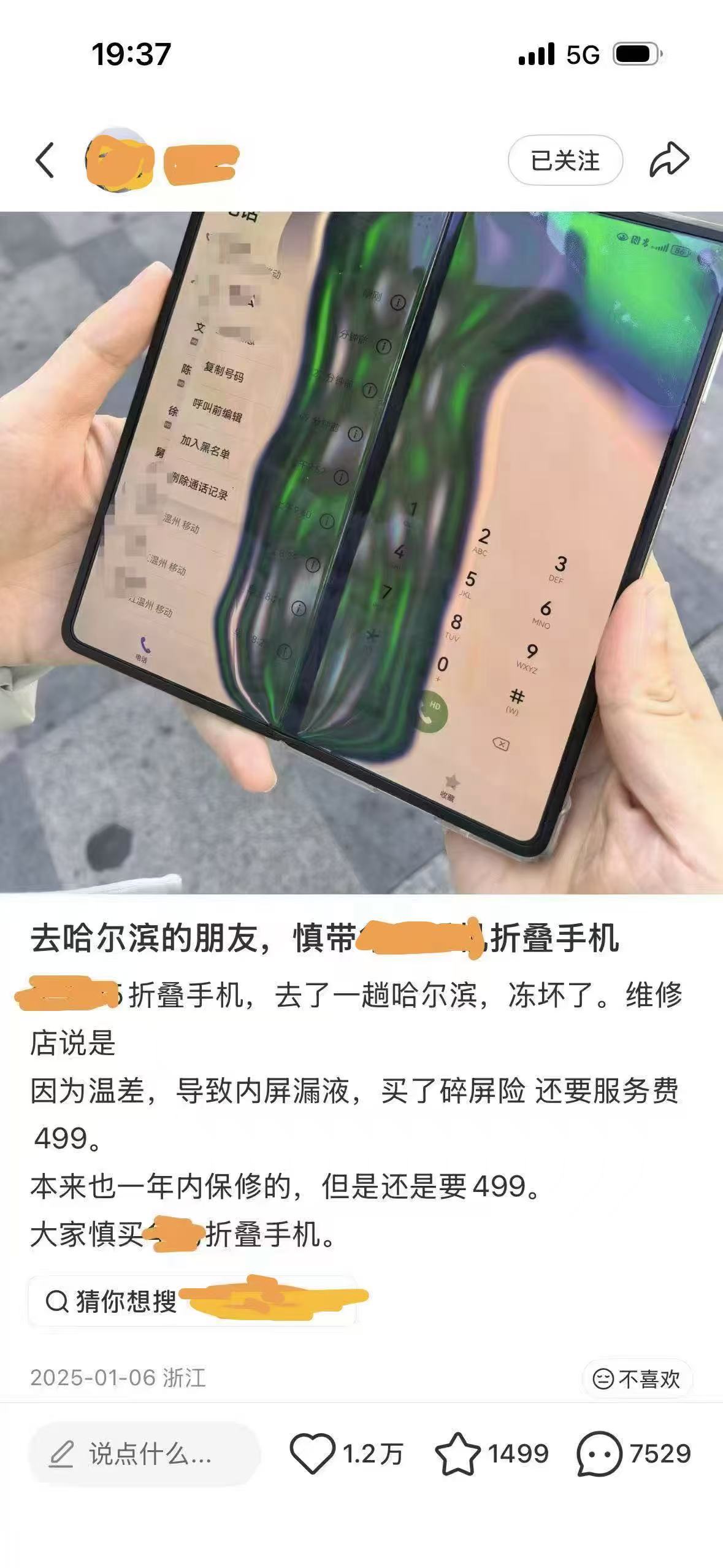
2026.01. 29 本文字数:1716,阅读时长大约3分钟 作者 | 第一 财经 王珍 19:37 .Il 5G ■ ]折叠手机 去哈尔滨的朋友,慎带 - 5折叠手机,去了一趟哈尔滨,冻坏了。维修 店说是 8 外语用文 合致力学院 27 座席 不要服务费 折叠屏手机东北变"碎碎冰"的话题隔了一年又火了起来。此图来自网络截图。 近日,折叠屏在东北变成"碎碎冰"的话题登上热搜榜。第一财经记者发现,其中一张热图是来自一位 小红书博主一年前的分享。 尽管折叠屏不抗冻的话题隔了一年"又火了",调研机构预测,受苹果将入市等因素影响,折叠屏手机 今年出货量仍将增长,全球、中国出货量有望分别达2500万台和1300万台左右。而折叠屏手机在极 低温下的耐久问题仍有待超薄玻璃等材料的进步。 折叠屏冻坏话题隔年"又火" 2025年1月6日,上述博主在小红书上配图提醒说,去哈尔滨的朋友慎带折叠手机。她透露,其折叠 手机冻坏了;维修店说是因为温差,导致内屏漏液,买了碎屏险,还要服务费499元。当时这条内容 分享引发了上万网友关注、7000多条评论。 已关注 "折叠屏器件在低温下变硬、变脆而不耐折,这是物理特性问题,折叠屏在极端低温 ...

存储芯片:进入新一轮涨价周期
Xi Niu Cai Jing· 2026-01-29 05:49
全球存储产业迎来历史性转折。招商证券研报指出,截至2026年1月,全球存储产业(以SSD/NANDFlash为主,兼顾DRAM)正处在一轮明显的涨价上行 期。 本轮涨价周期是AI驱动的结构性需求重构。AI训练和推理对算力需求增长快,高带宽、低延迟存储可降低算力与训练成本,数据中心、服务器对大容量 DDR5、HBM及企业级SSD需求大增,供给端短期内增长有限,供需偏紧推高价格。2025Q4以来,闪迪、三星等海外存储原厂纷纷涨价,进一步凸显供应紧 张。 存储芯片涨价趋势有望延续。DRAM方面,受原厂减产影响供给紧缺,DDR4持续上涨,AI训练与推理加大大容量DDR5、HBM需求,预计2026年DDR5涨 价趋势延续;NAND方面,下游需求强劲,NANDWafer、颗粒价格上行,AI驱动数据结构变化,存储从HDD转向SSD/DRAM,叠加HDD扩产有限、交付周 期延长,进一步推动SSD加速渗透。 布鲁姆斯伯里情报与安全研究所指出:"存储器价格可能在2027-2028年期间保持高位,只有当新的制造设施实现量产时,价格才有可能部分恢复正常;如果 随着产能的扩张,人工智能需求放缓,那么2028-2029年出现供应过剩的情 ...
上市8个月再获资本青睐!Mirxes觅瑞超7亿港元融资落地,配售价较上市价溢价近40%
Sou Hu Cai Jing· 2026-01-29 05:37
Group 1: Company Overview - Mirxes, a Singapore-based RNA biotechnology company, is the only listed early screening enterprise in Asia, focusing on the development and commercialization of non-invasive blood miRNA tests for early cancer detection [3] - The company has a rich product pipeline, including products for gastric, lung, colorectal, and breast cancer screening, with the colorectal cancer screening product expected to launch soon [3] - Mirxes has received regulatory approval for its core product, the miRNA-based gastric cancer screening test, marking a significant milestone in its commercialization journey [3] Group 2: Recent Developments - On January 29, Mirxes announced the completion of a new share placement, issuing 21.88 million shares, which represents approximately 7.34% of the expanded share capital, raising about HKD 711 million at a price of HKD 32.5 per share, a nearly 40% premium over its IPO price [1] - The funds raised will focus on core strategic development areas, including investment and acquisition activities, continuous R&D upgrades, accelerated global commercialization, and optimization of the technology innovation platform [1] - Mirxes signed a strategic cooperation memorandum with Jingtai Technology to create an AI-enabled integrated diagnosis and treatment platform, leveraging its advantages in cancer data and early detection [4] Group 3: Industry Context - The global cancer early screening sector is entering a phase of deep integration between capital and industry, with significant growth potential, as evidenced by major investments and acquisitions from international healthcare giants [2] - Policies and payment systems worldwide are increasingly favoring early screening, with the U.S. pushing for multi-cancer early detection products to be included in federal insurance reimbursements, and China incorporating various tumor screenings into its healthcare insurance [2] - The commercialization potential of global cancer early screening products is entering a concentrated release phase, supported by both clinical and market recognition [2] Group 4: Competitive Position - Mirxes has established a strong competitive edge in the Hong Kong biopharmaceutical sector, characterized by its unique regulatory approval for molecular gastric cancer screening and a clear technological barrier [4] - The company is well-positioned in the rapidly growing cancer early screening and precision medicine market, supported by its solid technical foundation, diverse product pipeline, and strategic industry collaborations [4]
“碎碎冰”话题隔年又火,折叠屏手机耐寒短板会拖累全年出货吗?
Di Yi Cai Jing· 2026-01-29 05:14
折叠屏手机的全球出货量今年预计将达到2500万台左右,其在极端低温下的耐久问题仍有待超薄玻璃等材料的进步。 近日,折叠屏在东北变成"碎碎冰"的话题登上热搜榜。第一财经记者发现,其中一张热图是来自一位小红书博主一年前的分享。 "(这个话题)又火了",这位博主2026年1月28日向第一财经记者说,她的折叠屏手机已修好,正常用没问题。她是浙江人,去年到东北参加别人的婚礼。 她建议,折叠屏手机不要在那么低温的环境下拿出来,回屋以后,暖和一下,再掰开用。 至于多少度以下不能用,这位博主说,其实也有个概率问题。她后来在评论区看到,说明书上是有写的。对于说明书是否有写0摄氏度或者多少摄氏度以下 不能用,她说没注意看。 随着冬季东北冰雪旅游旺季到来,今年类似情况又再发生。在抖音平台,第一财经记者看到一位网友今年1月21日留言说,三折叠到了长白山千万不要打 开,并问长白山哪里可以修屏幕。其配图显示,折叠屏手机的屏幕在折叠处已有多条裂痕。这位网友告诉记者,她在长白山时的天气温度是-30摄氏度。 极低温下的耐用问题待解 群智咨询(Sigmaintell)副总经理兼首席分析师陈军向第一财经记者分析说,折叠屏手机在寒冷地区冬季使用时屏 ...

NAND闪存需求爆棚,“二线联盟”铠侠和闪迪的崛起
Hua Er Jie Jian Wen· 2026-01-29 04:04
Core Insights - NAND is transitioning from a cyclical commodity to a critical component of AI infrastructure, with structural changes in demand elevating prices and valuations, bringing companies like Kioxia and SanDisk into the spotlight [1][2] - The shift in AI workloads from training to inference is expanding the deployment of SSDs in AI data centers, significantly increasing the procurement scale of NAND flash memory [2] Group 1: Market Dynamics - The demand for NAND is no longer solely dependent on traditional consumer electronics but is increasingly tied to capital expenditures and architectural evolution on the data center side [2] - The rapid expansion of AI infrastructure has created a significant supply gap, prompting data center operators to actively seek a diversified supplier base [2] - According to TrendForce, by Q3 2025, Samsung leads the market with a 32.3% share, followed by SK Hynix at 19.3%, Kioxia at 15.3%, and SanDisk at 12.4%, indicating a rise in influence for Kioxia and SanDisk [2] Group 2: Strategic Alliances - Kioxia and SanDisk have maintained a deep collaboration for over 25 years, operating major NAND production sites in Japan, which are among the largest globally [3] - The companies jointly develop BiCS FLASH 3D NAND technology, currently at its 8th generation, with plans for the 10th generation, featuring over 300 layers, to begin production in 2026 [3] Group 3: Technological Focus - Kioxia primarily supplies large electronic manufacturers in Japan and globally, while SanDisk dominates the consumer storage market and has a strong presence in the enterprise SSD sector in North America and overseas [4] - SanDisk aims to integrate HBF (High Bandwidth Flash) into products from NVIDIA, AMD, and Google by late 2027 to early 2028, offering larger capacities at lower costs compared to HBM [4][5] - Kioxia is focusing on a performance leap in SSDs, planning to launch a new type of hard drive by 2027 that approaches 100 times the speed of current products, in collaboration with NVIDIA for generative AI servers [5] Group 4: Market Expectations - The ongoing demand for NAND driven by AI inference is a central narrative, with Kioxia's market capitalization surpassing 10 trillion yen and SanDisk's aggressive price increase plans reinforcing expectations for NAND's recovery in profitability [6] - Key variables for the next phase include the sustainability of price increases translating into profit improvements, the timely realization of technological advancements like BiCS10 and HBF, and the management of competitive boundaries between Kioxia and SanDisk to avoid internal conflicts [6]
锂价冲上每吨18万!铜铝及DRAM都涨价!新能源汽车利润堪忧?
Zhong Guo Qi Che Bao Wang· 2026-01-29 04:03
Core Viewpoint - The significant rise in prices of raw materials such as lithium, copper, and aluminum, along with DRAM storage chips, is expected to impact the electric vehicle (EV) industry, leading to increased production costs and potential profit erosion for manufacturers [2][3][4]. Group 1: Raw Material Price Increases - Lithium carbonate prices have surged, with futures reaching 182,000 yuan/ton, marking a two-year high, and spot prices increasing from 75,700 yuan/ton to 175,000 yuan/ton over a year [2]. - The cost of aluminum for a typical mid-sized electric vehicle has increased by 600 yuan, while copper costs have risen by 1,200 yuan in the last three months [3]. - The price of automotive DRAM storage chips has skyrocketed by 180% in three months, with costs per vehicle rising from approximately $100 to 2,000 yuan, an increase of 1,300 yuan [3][5]. Group 2: Impact on Electric Vehicle Costs - For a pure electric vehicle with an 80 kWh battery, the increase in lithium costs alone could add approximately 3,800 yuan to the vehicle's production cost [3]. - Range-extended electric vehicles and plug-in hybrids are also facing cost increases, with lithium costs rising by about 1,900 yuan and 1,000 yuan respectively [4]. - The overall cost pressures from rising prices of lithium, copper, and aluminum are significant for all types of electric vehicles [4]. Group 3: Challenges for Automotive Manufacturers - Major automotive manufacturers may struggle to pass on increased costs to consumers due to intense market competition, potentially leading to profit margins approaching zero [6][7]. - Smaller manufacturers, already at a disadvantage, face heightened cash flow pressures and may be forced out of the market due to their inability to absorb rising costs [7]. - The competitive landscape is forcing all manufacturers, regardless of size, to confront unprecedented challenges due to the rising costs of raw materials [7]. Group 4: Strategic Responses - Companies are focusing on enhancing product value through advanced features like high-level intelligent driving and smart cockpit systems to offset rising costs [9]. - The shift towards value enhancement rather than mere scale expansion is becoming a new industry trend, emphasizing technological innovation and quality improvement [10]. - Many companies are exploring overseas markets to mitigate risks associated with rising costs, taking advantage of favorable trade policies in regions like Canada [9][10].

行业聚焦:全球智能运动追踪器行业头部生产商市场份额及排名调查(附核心企业名单)
QYResearch· 2026-01-29 03:47
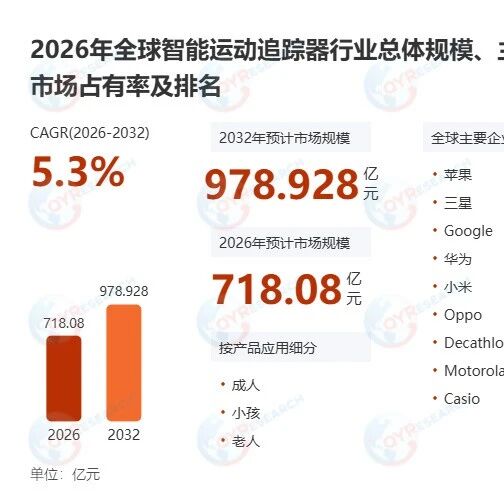
Core Viewpoint - The global smart fitness tracker market is projected to reach $14.4 billion by 2032, with a compound annual growth rate (CAGR) of 5.3% from 2026 to 2032 [3][19]. Global Market Overview - The smart fitness tracker market is expected to grow significantly, with a forecasted market size of $14.4 billion by 2032, reflecting a CAGR of 5.3% [3][19]. - Major manufacturers in the global market include Apple, Samsung, Google, Huawei, Xiaomi, Oppo, Decathlon, Motorola, and Casio, with a concentration of manufacturing in East Asia due to its robust supply chain and cost-effective production capabilities [5]. Industry Chain Analysis - The industry chain consists of upstream components such as sensors and core electronic parts, midstream brand owners and product engineering, and downstream consumers and enterprise applications [7]. - Upstream components include PPG optical heart rate modules, accelerometers, GPS, and various electronic parts [7]. - Midstream activities involve industrial design, firmware development, and product management [7]. - Downstream, consumers utilize fitness trackers for monitoring health metrics, while enterprises leverage aggregated data for health programs [7]. Regulatory Environment - The EU's AI Act classifies fitness trackers with clinical-grade monitoring functions as "high-risk AI systems," requiring third-party audits and transparency reports [8]. - The FDA is reclassifying fitness trackers with ECG or continuous blood pressure monitoring capabilities as Class II medical devices, necessitating pre-market approval [8]. - The EU Digital Product Passport initiative mandates manufacturers to provide lifecycle data for devices to enhance supply chain transparency [8]. Industry Development Trends - There is a shift towards clinical-grade health functionalities and medical validation, with manufacturers integrating advanced biometric sensors and seeking regulatory certifications [9]. - AI-driven personalized services are being embedded in trackers to provide tailored health insights and proactive health guidance [9]. - The industry is moving towards sustainable manufacturing practices, including the use of recyclable materials and modular designs [9]. - Fitness trackers are increasingly integrating into broader smart ecosystems, enhancing user experience through seamless data flow across devices [9]. Development Opportunities - Emerging markets in Southeast Asia, Africa, and Latin America present significant opportunities for localized innovations in affordable fitness trackers [10]. - The integration of clinical-grade fitness trackers into formal healthcare systems offers growth potential, particularly for chronic disease monitoring [10]. - B2B opportunities are expanding as companies invest in employee health management programs, creating demand for customized fitness tracker solutions [10]. - There is a notable unmet demand for inclusive products targeting underserved populations, such as the elderly and individuals with disabilities [10]. Industry Challenges - The industry faces regulatory complexities and fragmentation, with varying regional regulations impacting compliance costs and market entry [11]. - Data privacy and cybersecurity concerns are heightened as fitness trackers collect sensitive biometric data, necessitating robust security measures [11]. - Market saturation and commoditization pressures are leading to intense price competition and challenges in product differentiation [11]. - Limitations in accuracy and user trust regarding biometric tracking can hinder the adoption of fitness trackers in clinical applications [11].
美联储暂缓降息,科创半导体ETF、半导体设备ETF华夏回调,存储基本面仍扎实
Sou Hu Cai Jing· 2026-01-29 03:44
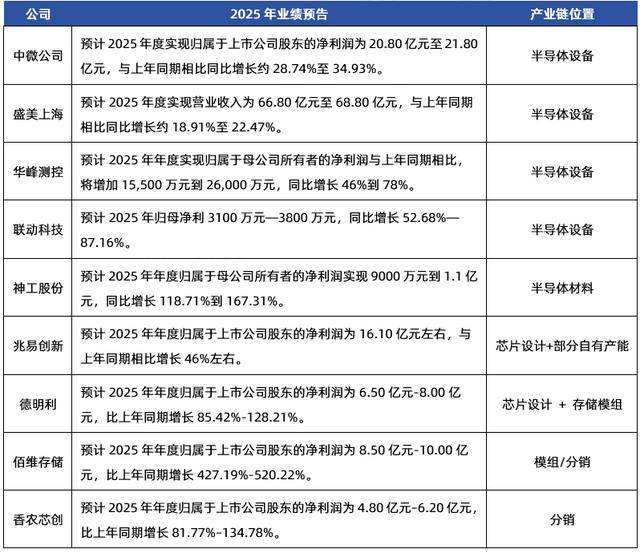
Group 1 - The core viewpoint of the articles highlights the impact of the Federal Reserve's interest rate decisions on the semiconductor industry, indicating that high rates lead to cautious capital expenditure among companies, while lower rates stimulate investment in technology and equipment [2][3] - The semiconductor sector is experiencing a mixed performance, with some stocks rising while others fall, but the trend of domestic substitution remains a key trading logic in the market [1] - Historical data shows that during past interest rate cuts, global semiconductor sales have significantly increased, suggesting a strong correlation between monetary policy and semiconductor demand [3] Group 2 - The fundamentals of the memory chip market remain solid, with companies like SK Hynix and Samsung reporting record revenues and profits in the fourth quarter, indicating robust performance in the sector [4][5] - Several companies in the semiconductor supply chain are expected to achieve substantial profit growth in 2025, with projections indicating increases in net profits ranging from approximately 28.74% to over 520% for various firms [6] - For investors, a strategy of index-based investment in semiconductor ETFs is recommended to mitigate risks associated with individual stocks, with several ETFs available that cover the entire semiconductor industry chain [7]

巩固霸主地位!传SK海力士拿下英伟达Vera Rubin平台七成HBM订单
Zhi Tong Cai Jing· 2026-01-29 03:33
Core Viewpoint - SK Hynix has secured approximately 70% of NVIDIA's latest AI and high-performance computing platform Vera Rubin's high bandwidth memory (HBM) orders, significantly exceeding market expectations of 50% [1] Group 1: Market Position - SK Hynix's share of the global HBM4 market is projected to reach 54% by 2026, with Samsung and Micron following at 28% and 18% respectively [1] - NVIDIA and AMD have completed quality testing for Samsung's HBM4 products, indicating competitive dynamics in the market [1] Group 2: Financial Performance - SK Hynix reported record high revenue and operating profit for Q4 2025, driven by the rapid growth in demand for storage chips due to AI infrastructure development [1] Group 3: Strategic Initiatives - SK Hynix plans to establish an AI solutions company in the U.S. to explore new growth opportunities in the AI sector [1] - The company is set to become the exclusive supplier of advanced storage chips for Microsoft's new AI chip Maia 200 [1]

