华为技术有限公司

Search documents
网络安全标准实践指南:人工智能应用安全指引 总则(征求意见稿)
全国网络安全标准化技术委员会秘书处· 2026-01-22 01:40
TC260-PG-2026NA 网络安全标准实践指南 ——人工智能应用安全指引 总则 (征求意见稿 v1.0-202601) 前 言 《网络安全标准实践指南》(以下简称《实践指南》)是全 国网络安全标准化技术委员会(以下简称"网安标委")秘书处 组织制定和发布的标准相关技术文件,旨在围绕网络安全法律法 规政策、标准、网络安全热点和事件等主题,宣传网络安全相关 标准及知识,提供标准化实践指引。 本文件起草单位:中国电子技术标准化研究院、国家广播电 视总局广播电视科学研究院、中国交通通信信息中心、国家卫生 健康委统计信息中心、教育部教育管理信息中心、应急管理部大 数据中心、中国工商银行、中国农业银行、北京中关村实验室、 上海人工智能创新中心、国家工业信息安全发展研究中心、国家 计算机网络应急技术处理协调中心、中央网信办数据与技术保障 中心、工业和信息化部电子第五研究所、中国信息安全测评中心、 国家信息技术安全研究中心、北京火山引擎科技有限公司、北京 快手科技有限公司、阿里云计算有限公司、华为技术有限公司、 小米科技有限责任公司、蚂蚁科技集团股份有限公司等。 全国网络安全标准化技术委员会秘书处 2026 年 01 ...
广联航空(300900.SZ):未向华为技术有限公司产品供货
Ge Long Hui· 2026-01-21 13:03
Group 1 - The core point of the article is that Guanglian Aviation (300900.SZ) has confirmed it does not supply products to Huawei Technologies Co., Ltd. and currently has no technical cooperation arrangements with the company [1] Group 2 - The company has made this clarification on its interactive platform, indicating a clear separation from Huawei in terms of product supply and technical collaboration [1]

智能化迈出“破冰”行动 汽车产销再创历史新高
Jing Ji Ri Bao· 2026-01-20 19:59
Core Insights - In 2025, China's automotive industry demonstrated remarkable resilience and vitality, achieving record production and sales figures of 34.53 million and 34.40 million vehicles, respectively, marking year-on-year growth of 10.4% and 9.4% [1] - The year marked a significant shift in the market, with new energy vehicles (NEVs) surpassing 50% of domestic new car sales, establishing themselves as the mainstream product in the automotive market [2][3] - The automotive export volume exceeded 7 million units, with NEV exports reaching 2.615 million units, reflecting a strong competitive edge in international markets [11] NEV Market Dominance - NEVs accounted for 50.8% of domestic new car sales in 2025, indicating that for every two new cars sold, one was an NEV [3] - NEV production and sales reached 16.626 million and 16.49 million units, respectively, with year-on-year growth of 29% and 28.2%, maintaining a global leadership position for 11 consecutive years [3] - The competitive landscape has shifted, with domestic brands capturing nearly 70% of the passenger car market share, reversing the dominance of joint venture brands [3][4] Technological and Policy Support - The growth of NEVs is attributed to supportive policies, technological advancements, and a robust supply chain, with over 11.5 million vehicles replaced under the trade-in policy, generating sales exceeding 1.6 trillion yuan [5] - Technological innovations have led to significant improvements in vehicle performance, such as a 30% reduction in battery costs and a 40% increase in battery lifespan [6] - The establishment of a comprehensive supply chain has positioned China as a leading supplier of battery materials and power batteries globally, with 70% and 60% market shares, respectively [6] Smart Driving Developments - The approval of the first L3-level conditional autonomous driving models in December 2025 marked a pivotal moment in China's autonomous driving industry, transitioning from technology validation to mass production [7] - The penetration rate of vehicles equipped with L2-level driving assistance features reached 64%, with a year-on-year growth of 21.2% in the first three quarters of 2025 [9] - The integration of AI technologies into smart driving systems has accelerated advancements, with new models emerging that enhance driving experiences and product forms [9][10] International Expansion and Localization - In response to intensified domestic competition, Chinese automakers are accelerating their international expansion, with exports reaching 7.098 million units in 2025, a 21.1% increase [11] - Localization strategies are being implemented in key markets such as Southeast Asia and Europe, with several Chinese brands establishing manufacturing bases to enhance competitiveness [12] - Collaborations with multinational companies are facilitating the entry of Chinese automotive supply chains into global markets, strengthening China's position in the global automotive value chain [12] Market Competition Restructuring - The introduction of compliance guidelines aims to curb price wars and establish a more orderly competitive environment in the automotive industry [13] - Measures to address "involution" in the market have begun to take effect, with a shift from price competition to a focus on technology, quality, and service [13][14] - The automotive industry is transitioning from a phase of scale expansion to one of quality enhancement, necessitating a comprehensive approach to market regulation and competition [15]

河南最大独角兽要IPO了
3 6 Ke· 2026-01-20 08:31
Core Viewpoint - Chaopujian Digital Technology Co., Ltd. is preparing for an IPO, marking its emergence as a significant player in the computing power industry, particularly in the context of AI development in China [1][2]. Company Background - Chaopujian was established in September 2021 after Huawei spun off its X86 server business amid international pressures, with the company now controlled by Henan state-owned enterprises [2]. - The company retained key personnel from Huawei's server division and has quickly developed a product line that includes general servers, AI servers, and critical business servers [2][3]. Business Evolution - Chaopujian has transformed from a hardware supplier to a full-stack solution provider in the AI and data era, with strategic focuses on computing power, smart city solutions, and energy intelligence [3]. - The company has established a global presence with 10 R&D centers, 6 supply centers, and 6 global technical service centers, serving over 100 countries and regions [3]. Market Position and Financial Performance - Chaopujian ranks second in China's server market and sixth globally, with a compound annual growth rate of over 50% in overseas markets [5]. - The company reported sales revenue exceeding 10 billion yuan in 2022 and projected revenues of over 28 billion yuan in 2023 and over 40 billion yuan in 2024, with a target of 50 billion yuan for 2025 [5][6]. Investment and Valuation - Since its inception, Chaopujian has completed at least 8 rounds of financing, attracting over 30 VC/PE investors, with China Mobile's investment making it the second-largest shareholder [6][7]. - The company was valued at approximately 89.2 billion USD (about 620 billion yuan) in 2024, ranking 47th among global unicorns, with current estimates suggesting a valuation between 80 billion to 100 billion yuan [7][8]. Regional Development and Strategic Importance - Henan province has positioned itself as a key player in the AI and computing power sectors, transitioning from traditional agriculture to advanced computing capabilities [9][10]. - The establishment of infrastructure such as the Zhengzhou Supercomputing Center and the "Central Plains Computing Valley" reflects the region's commitment to developing a comprehensive computing power ecosystem [10][11]. Future Outlook - The province aims to enhance its computing power supply capabilities, with plans to build national supercomputing internet core nodes and achieve a computing power scale of over 94 EFlops by 2025 [11][12]. - The launch of the Henan Computing Power Industry Fund, with a total scale of 10 billion yuan, is expected to drive investments in digital infrastructure and advanced technologies [11].


河南最大独角兽要IPO了
投资界· 2026-01-20 08:21
Core Viewpoint - The article discusses the upcoming IPO of Chaoguhuan Digital Technology Co., Ltd., a company that has rapidly evolved from a Huawei spinoff into a significant player in the global computing power market, highlighting its growth trajectory and strategic importance in the AI sector [5][6][11]. Company Background - Chaoguhuan was established in September 2021 after Huawei spun off its X86 server business due to external pressures, with the company now being controlled by Henan state-owned assets [6][7]. - The company has retained key personnel from Huawei and has continued to develop its product lines, including the Fusion Server and Kunlun series, quickly entering the market with a focus on general servers, AI servers, and critical business servers [7][8]. Growth and Market Position - Chaoguhuan has become the second-largest player in China's server market, with a compound annual growth rate of over 50% in overseas markets, and ranks sixth globally in server market share [11]. - The company reported sales revenue exceeding 10 billion yuan in 2022 and projected revenues of over 28 billion yuan in 2023 and over 40 billion yuan in 2024, with a target of surpassing 50 billion yuan in 2025 [11][12]. Investment and Financial Backing - Since its inception, Chaoguhuan has completed at least eight rounds of equity financing, attracting over 30 venture capital and private equity firms, with China Mobile's investment being significant at 15.14% [12][13]. - The company is valued at approximately 89.2 billion USD (around 620 billion yuan), ranking 47th among global unicorns, with current estimates suggesting a valuation between 800 billion to 1 trillion yuan [14]. Strategic Importance of Henan - Henan has positioned itself as a key player in the AI and computing power sectors, transitioning from a traditional agricultural base to a hub for advanced computing technologies [16]. - The region has established significant infrastructure, including the Zhengzhou Supercomputing Center and various AI application projects, enhancing its role in the national computing power landscape [16][19]. Future Prospects - The article emphasizes the rapid development of computing power in Henan, with plans to enhance infrastructure and capabilities, aiming to exceed 94 EFLOPS by the end of 2025 [19]. - The establishment of the Henan Computing Power Industry Fund, with a total scale of 10 billion yuan, aims to invest in digital infrastructure and cutting-edge technologies, indicating strong future growth potential for the sector [19].

河南最大独角兽超聚变,要IPO了
Sou Hu Cai Jing· 2026-01-20 08:06
Core Viewpoint - Chaojuvian Digital Technology Co., Ltd. has submitted its IPO guidance, marking its official entry into the public market as a leading player in the computing power sector, emerging from its origins as a spinoff from Huawei's X86 server business [1][2]. Company Background - Chaojuvian was established in September 2021 after Huawei divested its X86 server business due to external pressures, with Henan Guozhi taking control and the company quickly achieving mass production of its first server within 55 days [2]. - The company retained key personnel from Huawei's original server division and has continued to develop products under the FusionServer and KunLun series, focusing on general servers, AI servers, and critical business servers [2]. Business Evolution - Chaojuvian has transformed from a hardware supplier to a full-stack solution provider in the AI and data era, expanding its strategic focus to include computing power, smart city solutions, and energy intelligence [3]. - The company has established 10 R&D centers and 6 supply centers globally, serving over 100 countries and regions with more than 24,000 partners and holding over 2,000 core patents [3]. Market Position and Financial Performance - Chaojuvian ranks second in China's server market and sixth globally, with a compound annual growth rate of over 50% in overseas markets [5]. - The company reported sales revenue exceeding 10 billion yuan in 2022, over 28 billion yuan in 2023, and projected to surpass 40 billion yuan in 2024, with a target of over 50 billion yuan in 2025 [5]. Investment and Valuation - Since its inception, Chaojuvian has completed at least 8 rounds of financing, attracting over 30 VC/PE investors, with China Mobile's subsidiary holding a 15.14% stake [6][7]. - The company was valued at approximately 89.2 billion USD (around 620 billion yuan) in 2024, ranking 47th among global unicorns, with current estimates suggesting a valuation between 80 billion to 100 billion yuan [7]. Regional Development and Strategic Importance - Henan province has positioned itself as a key player in the computing power industry, transitioning from traditional agriculture to advanced computing, with significant investments in AI and computing infrastructure [9][10]. - The establishment of the Zhengzhou Aviation Port as a logistics hub has enabled Chaojuvian to maintain a global inventory, ensuring rapid delivery capabilities [8]. - The province's strategic initiatives include the development of major platforms like "Central Plains Computing Valley" and "Central Plains Data Lake," fostering a complete industrial chain from chip adaptation to server manufacturing [10][11].

“十五五”全域智能无人体系新场景培育与发展战略趋势预判专项报告
Xin Lang Cai Jing· 2026-01-19 13:16
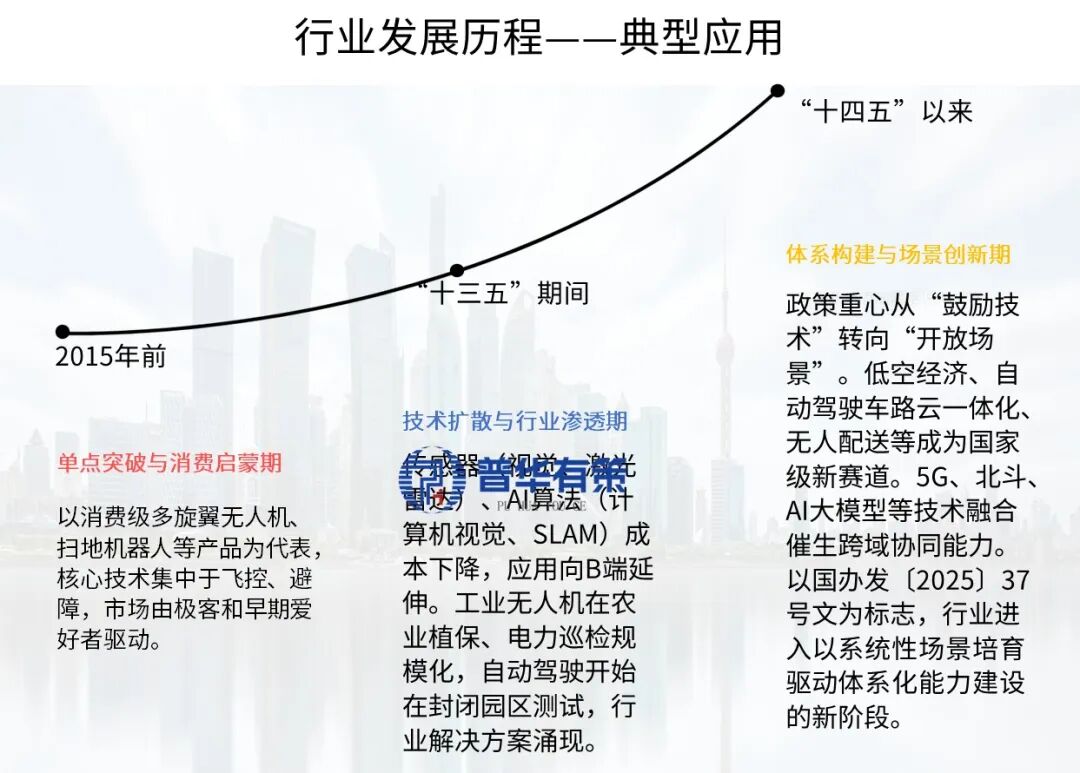
Industry Overview - The all-domain intelligent unmanned system is a complex system integration based on AI, IoT, big data, and cloud computing, encompassing unmanned equipment, supporting infrastructure, data platforms, standards, and business models [1][18] - It serves as a strategic industrial ecosystem that drives the large-scale commercialization of new technologies and products, essential for cultivating new productive forces [1] Policy Environment Analysis - Since the "14th Five-Year Plan," especially by 2025, there has been a strategic shift in the policy environment, emphasizing "new productive forces" and promoting innovation driven by application scenarios [3][20] - The policy focus has transitioned from merely encouraging technology R&D to a systematic deployment that includes technology breakthroughs, scenario opening, standard formulation, infrastructure construction, and safety regulation [3][20] Key Policies - Various policies have been introduced, such as the "Artificial Intelligence + Manufacturing" action plan, which aims to integrate AI technology into major equipment and promote the development of unmanned systems [5][21] - The 2025 Central Economic Work Conference emphasized the importance of technological innovation in leading the modernization of the industrial system, injecting strong policy momentum into strategic emerging industries, including all-domain unmanned systems [5][21] Industry Chain Analysis - China has established the most complete and active all-domain unmanned system industry chain globally, with core upstream components like high-end chips and precision sensors still being a vulnerability [6][22] - The midstream sector is highly competitive, with companies transitioning from hardware manufacturers to comprehensive solution providers that integrate hardware, software, services, and data [6][22] Competitive Landscape - The current competitive landscape features a dominant player, DJI, leading the consumer and industrial drone markets, supported by strong technology, brand, and supply chain advantages [7][23] - Major tech giants like Baidu and Huawei form a strong competitive group, leveraging their foundational technology advantages in AI, cloud computing, and communication [7][23] Key Drivers of Industry Development - The national strategy of developing new productive forces is a significant driver, with government support for scenario opening and project trials acting as catalysts for industry growth [8][24] - The integration of AI large models has reached a critical point, enhancing the cognitive and decision-making capabilities of unmanned systems [9][25] - There is a strong macroeconomic and social demand for automation and intelligent solutions due to changes in population structure and rising labor costs [10][26] - The capital market shows long-term interest in hard technology and future industries, providing essential funding for R&D and accelerating industry consolidation [11][27] - New market spaces created by innovative scenarios, such as low-altitude economy and eVTOL, are expected to drive significant growth [12][28]
2025手机大战:华为赢销量,苹果守利润,米OV被夹击
首席商业评论· 2026-01-19 05:09
Core Viewpoint - The smartphone market in 2025 is characterized by intense competition and differentiation, with Apple and Samsung maintaining their dominance while other brands like Huawei, Xiaomi, vivo, and OPPO face significant challenges [5][9]. Global Market Summary - The global smartphone market saw a 1.9% growth in 2025, with total shipments reaching 1.26 billion units. Apple and Samsung accounted for nearly 40% of the market share, with shipments of 247.8 million (up 6.3%) and 241.2 million (up 7.9%) respectively [6][7]. - Xiaomi, vivo, and OPPO experienced mixed results, with Xiaomi's shipments declining by 1.9% to 165.3 million, while vivo and OPPO saw slight increases and decreases in their market positions [6][7]. Chinese Market Summary - In China, the smartphone market saw a slight decline of 0.6% in 2025, with total shipments of 28.46 million units. Huawei reclaimed the top position with 46.7 million units (16.4% market share), narrowly surpassing Apple at 46.2 million units (16.2% market share) [8][10]. - The competition among the top five brands in China is fierce, with Huawei, Apple, and vivo closely contesting for market share, while Xiaomi and OPPO lag behind [8][10]. Competitive Dynamics - Huawei's success is attributed to its self-developed Kirin chips and the growing maturity of its HarmonyOS ecosystem, which enhances user experience across devices [15][19]. - Apple, despite losing the annual championship, demonstrated strong brand loyalty and market presence, particularly in the high-end segment, achieving a 21.1% market share in Q4 2025 [12][17]. - The competition among Xiaomi, vivo, and OPPO is marked by varying strategies, with Xiaomi focusing on global expansion and automotive ventures, while vivo maintains a stable domestic presence and OPPO struggles with market share [21][24]. Future Outlook - The smartphone market is expected to face challenges in 2026, with predictions of a 3-4% decline in overall shipments. However, the high-end market is projected to grow, leading to increased competition and differentiation based on cost and technology [26][28]. - Key trends for 2026 include the rise of foldable phones and AI integration, with companies like Apple and Huawei preparing to enhance their product offerings in these areas [29][32]. - The market will likely see a consolidation of power among leading brands, with those possessing strong brand equity and technological capabilities gaining a competitive edge [33].


上汽通用五菱赵奕凡透露华境现在是宝骏的一个系列,但必将成为新品牌
Xin Lang Cai Jing· 2026-01-19 01:21
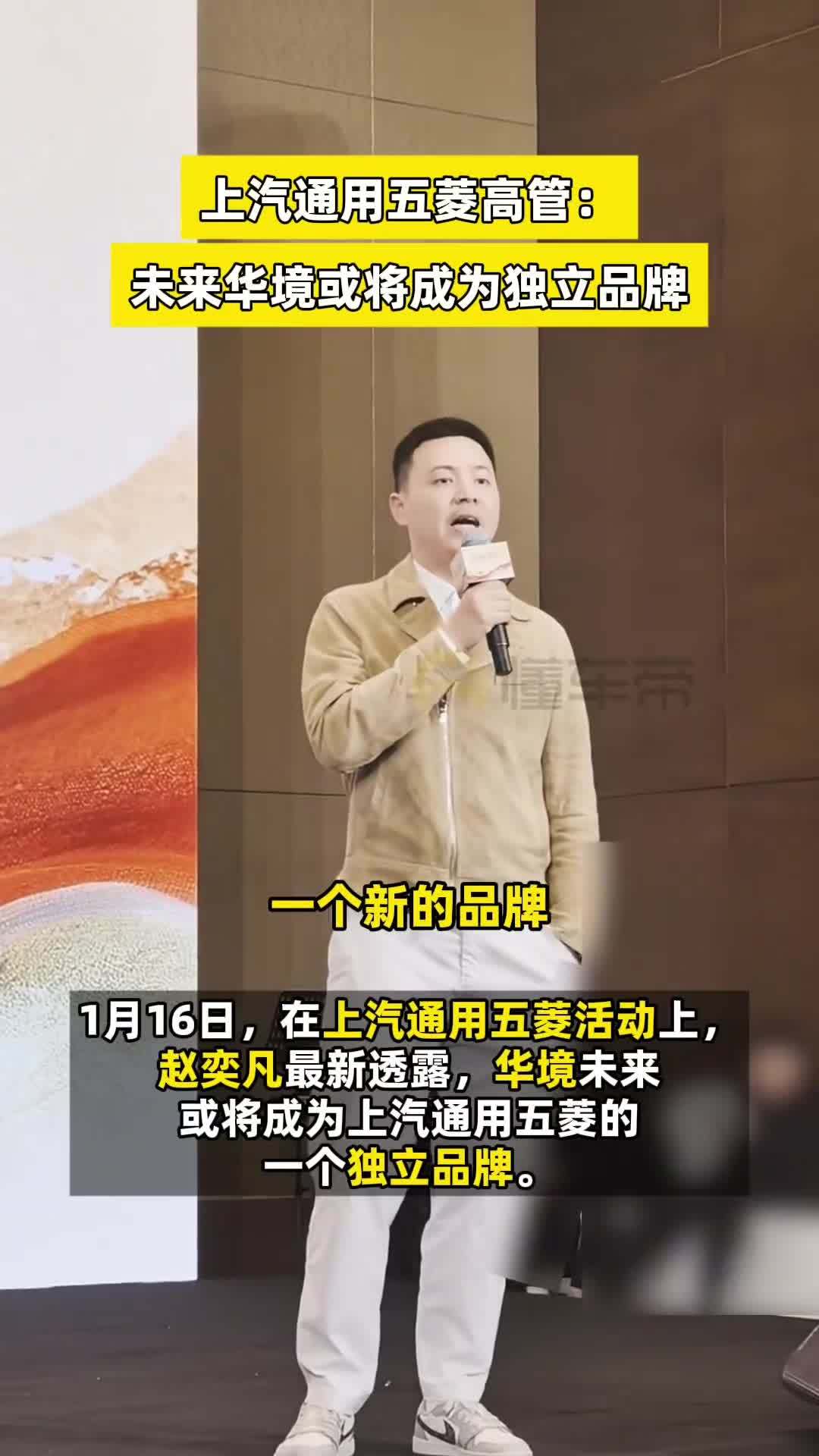
Core Viewpoint - SAIC-GM-Wuling is launching a new brand "Hua Jing" with its flagship model "Hua Jing S," which is set to be released in the first half of 2026 in collaboration with Huawei [5][14]. Group 1 - The "Hua Jing S" is currently part of the Baojun series but will evolve into a new brand under SAIC-GM-Wuling [9]. - The vehicle will be a large six-seat SUV equipped with Huawei's advanced technology, specifically the "Hua Wei Qian Kun" system [5][14]. - The "Hua Jing S" is produced in a national leading intelligent factory, marking it as the first product of the collaboration between SAIC-GM-Wuling and Huawei's "Three Intelligence" initiative, which includes intelligent manufacturing, assisted driving, and intelligent cockpit [12][14]. Group 2 - The "Hua Jing S" will feature standard Huawei Qian Kun technology, including Qian Kun Intelligent Driving ADS 4 Pro and Hongmeng cockpit [6][14]. - The manufacturing process utilizes a national leading intelligent factory's smart island manufacturing system [6][14]. - The vehicle incorporates the "Tian-Ling-Shen" technology system, which consists of Tian Yu architecture, Lingxi power, and Shen Lian battery [6].
信创再迎变局!鸿蒙通过国家安全可靠测评
Guan Cha Zhe Wang· 2026-01-19 00:52
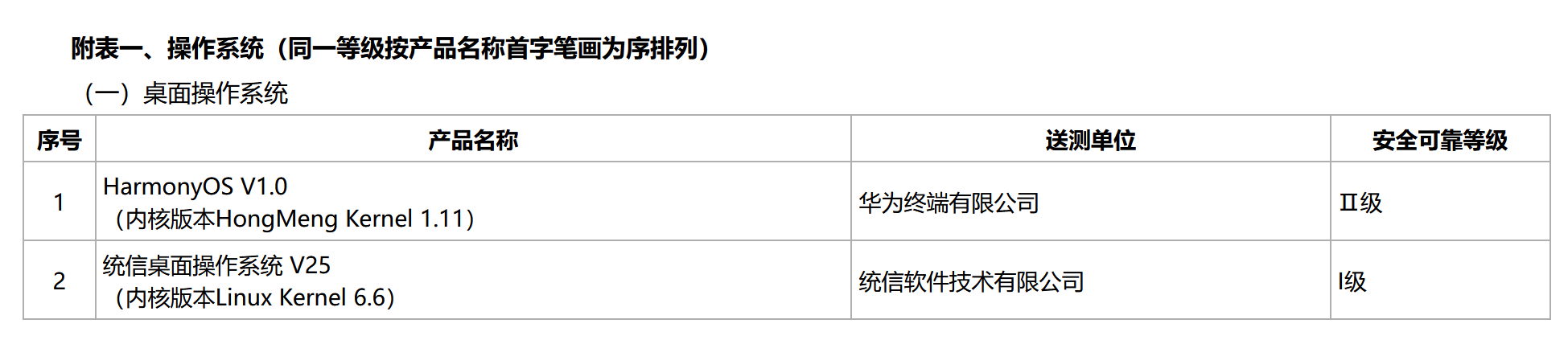
Core Insights - HarmonyOS V1.0 has passed the national security reliability assessment, marking its entry into critical industry procurement lists, which is essential for its adoption in sectors like government, finance, and energy [1][5] - HarmonyOS V1.0 is the first operating system to achieve a security reliability level of II, indicating a higher standard in core technology, security assurance, and sustainable development compared to other systems that achieved level I [2][6] - The Chinese "信创" (Xinchuang) industry is experiencing rapid growth, with market size expected to reach 26,559 billion yuan by 2026, driven by key sectors [3] Company Developments - Huawei has previously entered the Xinchuang market with Linux-based operating systems but has now launched the HarmonyOS for its professional computers, which is positioned as a core operating system for government and enterprise markets [4][5] - The competitive landscape in the domestic Xinchuang market is characterized by multiple strong players, but HarmonyOS is expected to leverage its superior application ecosystem and developer appeal to gain an advantage over established systems like Kirin and Tongxin [5][6] Industry Trends - The Xinchuang industry is in a phase of comprehensive promotion, with a predicted market growth rate of 17.84% in 2025 and 26.82% in 2026 [3] - The security reliability assessment results indicate that HarmonyOS is the only operating system with a level II certification, while other server operating systems tested, including those from Huawei and Alibaba, achieved level I [2][6]