戴德梁行

Search documents
理念创新见实效 解决商办困局 MFG创始人朱元坤揭示商办资产运营不二法门
Sou Hu Wang· 2025-09-30 09:09
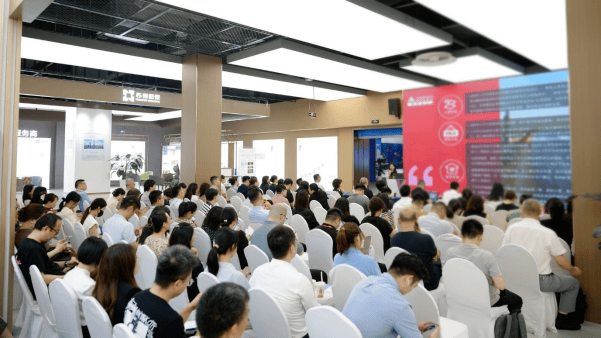
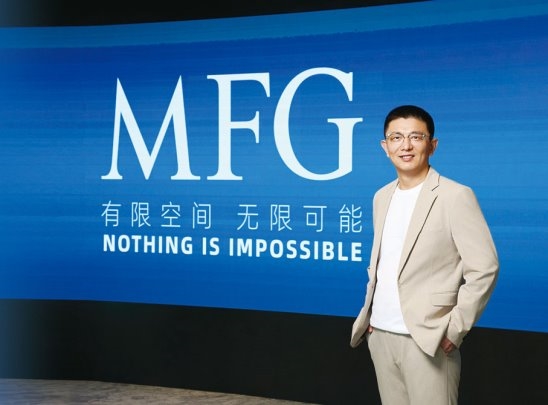
Core Insights - The report by Colliers International highlights the increasing competition in the Grade A office market in Greater China, with supply rapidly rising and the need for space optimization and project differentiation becoming crucial [3][5] - MFG, founded by Zhu Yuankun, has seen a growing demand from office owners since 2020, seeking MFG's expertise in refined leasing and industrial operation to attract high-quality tenants [3][5] - MFG's innovative operational model and collaboration with major Hong Kong enterprises have proven effective in enhancing asset management and driving economic development in Hong Kong [5][6] Industry Trends - The Grade A office market in Greater China is experiencing a significant increase in supply, leading to a shift from scarcity to a more commoditized market [3][5] - The traditional office market is facing challenges such as oversupply and intense competition, prompting a need for innovative approaches to asset management and tenant engagement [5][7] - MFG's approach includes a focus on value co-creation and resource sharing, which is becoming a trend in the industry as companies seek to enhance operational efficiency and tenant satisfaction [6][8] Company Strategies - MFG has shifted from a purely leasing model to a collaborative approach that integrates its interests with those of developers and local governments, achieving a unique annual growth rate exceeding 100% [5][6] - The company emphasizes a comprehensive service model that includes positioning, design, construction, leasing, and operations, aiming to provide a full-chain solution for asset management [5][6] - MFG's partnerships with major Hong Kong firms have led to the successful development of landmark projects in high-activity cities, showcasing the effectiveness of their operational capabilities [5][6] Innovations and Offerings - MFG offers flexible office solutions that cater to various business needs, including mini-offices and large headquarters spaces, along with innovative services like "Rent One Suite, Enjoy Ten Cities" [7][8] - The company has introduced the "City Reception Hall" project to facilitate high-value industry clustering and enhance communication between enterprises and local governments [7][8] - MFG's commitment to ESG principles is evident in its operational practices, focusing on creating a quality office environment and supporting sustainable business growth [7][8] Market Outlook - The Grade A office market is expected to face continued challenges, with significant new projects entering the market in the coming years, necessitating innovative strategies to stimulate demand [8] - MFG aims to leverage its experience in mainland China to replicate its success in the Hong Kong market, aligning with the evolving needs of global enterprises [8]

地产经纬丨IWG胡懋:品牌输出 专业赋能 灵活办公空间破解写字楼困局
Xin Hua Cai Jing· 2025-09-11 14:00
Core Viewpoint - The current consensus in the industry is that the market is in a challenging "L-shaped" phase, with no clear turning point in sight, and the most pressured period has yet to pass [1] Group 1: Market Conditions - The commercial office market is facing dual challenges of development and investment obstacles, with rising vacancy rates and rental pressures [1] - Major cities in China are experiencing high vacancy rates in office buildings, with Shanghai's Grade A office market seeing a vacancy rate rise to 23.6% and average rental prices dropping to 212.6 yuan per square meter per month [2] - The net absorption of Grade A office space in major cities in Greater China recorded approximately 764,000 square meters in the first half of 2025, a year-on-year increase of 5.5% [2] Group 2: Demand Shifts - There is a structural change in demand as companies shift from centralized to distributed office models, establishing "satellite offices" to reduce rental costs and enhance employee convenience [3] - The demand for "small and refined" flexible office spaces is becoming a necessity, but many traditional office owners lack the experience and resources to operate such spaces [3] Group 3: IWG's Business Model - IWG positions itself as a "hotel management group" in the office sector, focusing on light-asset operations to address the challenges of existing assets [4] - IWG's operational model emphasizes flexibility in lease terms, with the shortest lease available on a daily basis and an average lease duration of about 12 months [5] - IWG's pricing model is based on workstations rather than square meters, offering an all-inclusive pricing structure that covers utilities and office supplies [5] Group 4: Financial Performance and Expansion - IWG has achieved profitability in China, operating approximately 150 office centers across 45 cities, with plans to expand further [7] - The company's system revenue reached $2.162 billion (approximately 15.5 billion yuan) in the first half of 2025, marking a historical high with a year-on-year growth of 2% [8] - IWG's adjusted EBITDA grew by 6% year-on-year to $262 million (approximately 1.88 billion yuan) [8] Group 5: Localization Strategy - IWG is focusing on localizing its services to better meet the needs of Chinese enterprises and is expanding into lower-tier cities, with about 70% of new projects involving state-owned platforms [8] - Collaborations with state-owned platforms are helping IWG secure stable and high-quality property resources for further expansion [8]
戴德梁行:料香港2025年整体写字楼租金将跌约7-9%
Zhi Tong Cai Jing· 2025-08-28 10:06
Group 1 - The core viewpoint of the reports indicates that the Grade A office market in Greater China remains full of opportunities for tenants, with vacancy rates and rents expected to stay at favorable levels as the economy gradually recovers [1] - By the second quarter of 2025, the total stock of Grade A office space in 20 major cities in Greater China is projected to reach approximately 72.13 million square meters, with a net absorption of about 764,000 square meters in the first half of 2025, representing a year-on-year increase of 5.5% [1] - In major cities, Taipei's core area is expected to have a low vacancy rate of around 7.9% by the second quarter of 2025, while in second-tier cities, Qingdao is projected to have the lowest vacancy rate at 24.7% [1] Group 2 - The anticipated new supply of office space in Hong Kong for the first half of 2024-2025 is over 194,000 square meters, with the core and non-core areas each accounting for half [2] - The average new leasing area recorded in the first half of 2024-2025 is approximately 84,900 square meters per quarter, which is 19% higher than the average from 2020-2023 [2] - Despite signs of recovery in Hong Kong's IPO market, the substantial future supply and high vacancy rates may exert pressure on rental performance, with an expected overall decline in office rents of about 7-9% for the entire year of 2025 [2]
戴德梁行谈上海“十五五”规划:聚焦国际化、新质生产力等领域持续发力
Xin Hua Cai Jing· 2025-08-26 14:52
Group 1 - The core viewpoint emphasizes the challenges and breakthroughs during the "14th Five-Year Plan" period, particularly in the context of Shanghai's economic development and the role of key industries like integrated circuits, biomedicine, and artificial intelligence [2][4] - The GDP of Pudong New Area is projected to grow from 1.32 trillion yuan to 1.78 trillion yuan from 2020 to 2024, highlighting significant economic growth [2] - The establishment of national laboratories in Zhangjiang, Lingang, and Pujiang marks a substantial step in building Shanghai as an international technology innovation center, indicating a shift towards new productivity drivers [2][4] Group 2 - The urban development logic is shifting from "construction" to "operation," focusing on sustainable content management rather than just physical infrastructure [5][6] - The introduction of policies like "commercial to residential" aims to revitalize existing commercial properties and enhance social asset value, providing a model for urban renewal [3][4] - The successful implementation of the carbon emissions trading market positions Shanghai as a leader in low-carbon development, aligning with the city's goal of becoming an international consumption center [3][4] Group 3 - Recommendations for the "15th Five-Year Plan" include enhancing international resource allocation capabilities and focusing on new productivity through infrastructure investment [4][5] - The importance of regional collaboration is emphasized, suggesting that Shanghai should work closely with neighboring provinces to optimize industrial chain interactions [4][5] - The need for a balanced approach to urban renewal is highlighted, advocating for the integration of cultural and technological industries into urban spaces to enhance economic and functional value [6]
杭州一线江景商场人去楼空,开业不到一年!商家:生意很好,突然断水断电,只能关店
Mei Ri Jing Ji Xin Wen· 2025-08-21 14:33
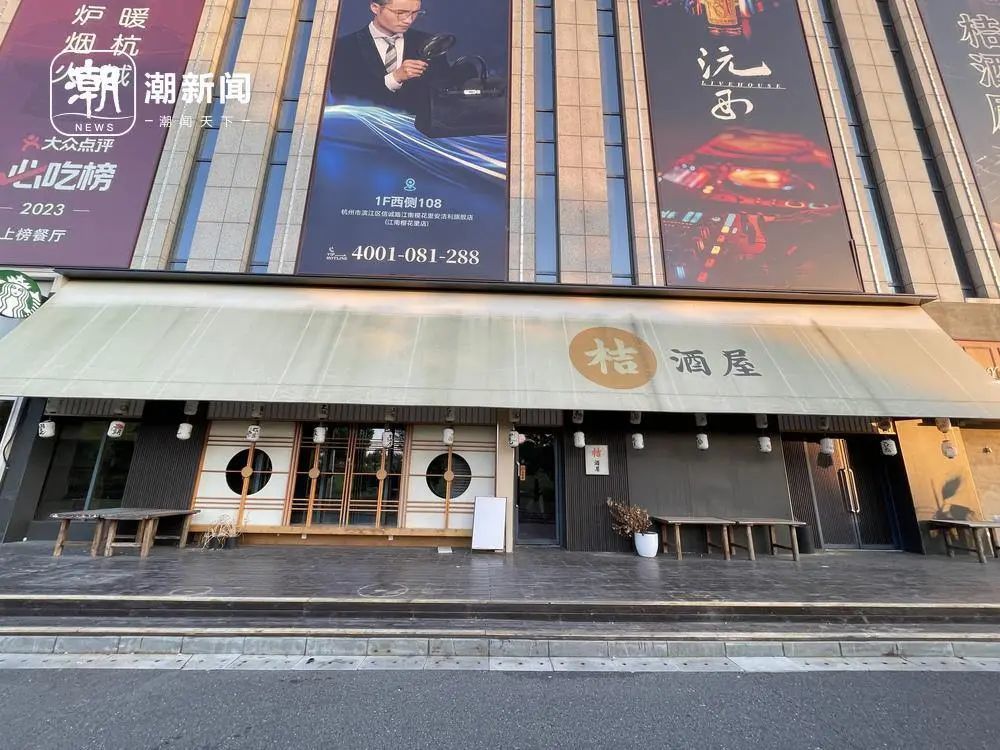
Core Insights - The original izakaya, located in a prime commercial area, had to close due to sudden water and electricity outages, leading the chef to start a street stall business while searching for a new location [1] - The commercial complex "Sakura Lane" has been operational for less than a year despite being in development for 17 years, raising questions about its viability [3][6] Location and Development - Sakura Lane is situated at the intersection of Bingsheng Road and Xincheng Road, approximately 700 meters from the subway station, surrounded by residential areas and amenities, indicating a dense population [4] - The site was acquired in 2008 for 1.586 billion yuan, with the commercial complex developed by Shimao and China Overseas [6][10] Operational Challenges - The complex struggled with tenant acquisition, with significant portions of the second and third floors remaining vacant, attributed to complex ownership structures involving over 200 small property owners [7][8] - The management transition to Yuanhang Group in 2021 did not resolve the issues, as small owners reported receiving only a fraction of the promised rental income [10] Future Prospects - There are indications that Sakura Lane may undergo a restructuring of its business model, but financial constraints on the current operator could delay any new leasing efforts until late 2023 [10] - The overall commercial environment has shifted, with many successful projects now being integrated with transit-oriented developments, posing additional challenges for Sakura Lane to attract foot traffic [10]
济南市历下区投促局多维发力推动招商引资量质提升
Qi Lu Wan Bao Wang· 2025-08-20 07:04
Group 1 - The core viewpoint emphasizes the importance of high-quality investment attraction to support the high-quality development of Lixia District in Jinan City, focusing on a new urban development pattern of "one axis, three districts, and multiple parks" [1] - The district has identified 344 target enterprises for investment attraction based on the analysis of 12 key industrial chains and the presence of 106 leading enterprises, aiming to attract high-growth companies in sectors like biomedicine and high-end software [1] - The district has held six investment promotion meetings this year to facilitate the landing of key projects, including those from Shandong Agricultural Group and Shandong Hanke Semiconductor Technology [1] Group 2 - The district is committed to creating a better business environment by providing personalized support and resource matching for enterprises, ensuring a responsive and supportive government-business relationship [2] - Collaboration with financial institutions and intermediary service agencies has been strengthened to enhance service capabilities, including the establishment of government-enterprise-bank matchmaking events [2] - A mechanism for publishing application scenario opportunity lists has been implemented, with 152 opportunities released in two batches to provide market opportunities for projects [2]
运河关注|C-REITs:新模式·新趋势·新机遇
Sou Hu Cai Jing· 2025-08-01 13:26
Core Insights - The forum on C-REITs highlighted their critical role in China's real estate industry transformation, emphasizing their value in revitalizing existing assets, optimizing financing, and enhancing asset management capabilities [1][3][6] - The future of the C-REITs market is expected to see continued expansion in market size and underlying asset types, with a multi-tiered REITs system and regulatory framework gradually improving [3][6] - Collaboration among industry stakeholders is essential for sustainable development in the C-REITs sector, leveraging international best practices while exploring a unique Chinese model [3][6] Group 1: Industry Transformation - The Chinese real estate sector is undergoing a significant transition from large-scale expansion to enhancing existing stock quality, driven by changes in demand, supply, and financing [6][11] - C-REITs are positioned as a foundational institutional arrangement that can activate trillions of yuan in dormant assets and promote structural reforms in the industry [6][11] Group 2: C-REITs Market Dynamics - C-REITs are transforming illiquid real estate into publicly traded standardized financial products, enhancing asset liquidity and providing new investment channels for both institutional and individual investors [11][12] - The pricing dynamics between domestic C-REITs and international markets show significant discrepancies, with domestic assets often trading at a premium compared to their international counterparts [13][12] Group 3: Expert Perspectives - Experts from various sectors discussed the current state and future opportunities of C-REITs, emphasizing the need for regulatory support and innovative product development to enhance market participation [8][10] - The discussion highlighted the importance of asset characteristics such as stability, sustainability, and moderate growth potential for successful REITs [10][11] Group 4: Future Recommendations - Recommendations for the C-REITs market include simplifying the structure of public offerings, expanding asset types, and addressing land use rights to facilitate smoother operations [11][12] - The need for a more inclusive market ecosystem was emphasized, suggesting the introduction of international issuers and investors to enhance market depth and resilience [13][12]

消费第一城易主:重庆超上海,武汉又拿了个第一
Sou Hu Cai Jing· 2025-07-31 15:26
Core Insights - The consumption landscape in China has shifted, with Wuhan leading in growth and Chongqing surpassing Shanghai to become the top consumption city [3][10][11] - The report highlights the significant rise of western cities like Chengdu and Chongqing, indicating a new consumption potential in these regions [10][12] - The government aims to enhance international consumption center cities, with Wuhan targeting a retail sales total of 900 billion yuan by the end of the year [9][10] Group 1: Wuhan's Consumption Growth - Wuhan recorded the highest growth rate among the top ten cities, achieving a 7.3% increase in consumption [5][9] - The opening of new retail spaces, such as Sam's Club and WS Dolphin membership store, reflects the strong consumer demand in Wuhan [5][7] - Wuhan's retail market is expected to see an additional 333,000 square meters of quality retail space in the second half of the year [7][9] Group 2: Rise of Western Cities - Chongqing's retail sales reached 830 billion yuan, surpassing Shanghai's 826 billion yuan, marking it as the new consumption leader [11] - Chengdu's retail sales totaled 562.23 billion yuan, overtaking both Shenzhen and Guangzhou to become the fourth-largest consumption city [10][12] - The population growth and rising disposable income in these cities are driving their consumption potential [12][14] Group 3: Competitive Landscape in the Yangtze River Delta - Hangzhou's retail sales growth of 6% places it third among the top ten cities, with a significant increase in total retail sales [18][19] - The competition between Hangzhou and Nanjing has intensified, with Hangzhou now leading by over 200 billion yuan in retail sales [20][24] - Hangzhou's proactive consumption policies have contributed to its growth, particularly in electronics and automotive sectors [28][33]

戴德梁行:长沙写字楼租金下调,刺激租赁活跃度
Sou Hu Cai Jing· 2025-07-31 09:52
Core Insights - The report by JLL indicates that the rental prices for Grade A office spaces in Changsha have decreased, which has stimulated leasing activity in the market [1][2] Group 1: Market Overview - In the first half of 2025, there was no new supply of Grade A office buildings in Changsha, maintaining a total stock of 2.398 million square meters [1] - The average rental price for Grade A office spaces decreased by 4.51% to 74.6 yuan per square meter per month compared to the end of the previous year [1] - The net absorption of Grade A office spaces reached 32,902 square meters, a 59.4% increase year-on-year, while the vacancy rate decreased by 1.37 percentage points to 31.5% [1] Group 2: Leasing Activity - New leases accounted for 38.6% of the leasing transactions, surpassing the 37.2% from relocations, indicating that reduced rental costs are attractive to companies seeking quality office spaces [2] - Many landlords have proactively reduced rents for expiring leases to meet the demand for cost reduction and efficiency [2] Group 3: Industry Demand - The top three industries driving leasing demand were finance (22.2%), retail trade (16.1%), and professional services (15.8%) [6] - Traditional financial sectors, such as life insurance and pension insurance, showed active demand with multiple large-scale lease agreements [6] - The retail sector, including clothing brands, liquor companies, and e-commerce, is also experiencing a trend of quality upgrades and expansion [6] Group 4: Future Outlook - The supply of Grade A office spaces in Changsha is expected to slow down in the second half of the year, leading to a gradual decrease in the vacancy rate [6] - The average rental prices are anticipated to continue declining due to cautious leasing decisions influenced by macroeconomic conditions [6] - Approximately 200,000 square meters of new supply is projected to enter the market in 2026, which may continue to exert pressure on rental prices and vacancy rates [6]
戴德梁行:苏州上半年写字楼市场持续承压,多元路径谋求破局
Sou Hu Cai Jing· 2025-07-30 07:07
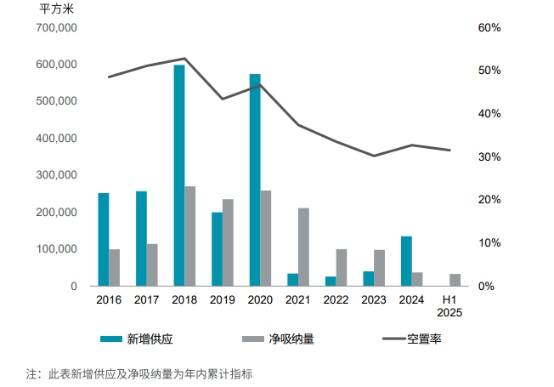
Market Overview - The Suzhou office market is under significant pressure in the first half of 2025 due to the aftermath of a supply peak in 2024, with multiple projects delayed and only one new project, Nissin Center, launched in Q2 [3][4] - The overall net absorption in the first half of 2025 was 33,900 square meters, with a vacancy rate reaching 29.7%, the highest in five years [4][6] Rental Market Dynamics - Rental prices have decreased, with the average rent recorded at 69.30 yuan per square meter per month, the lowest in nearly three years [6] - Landlords are offering various incentives such as rent discounts and extended rent-free periods to retain existing tenants and attract new ones [6][11] Demand and Supply Trends - The demand side remains weak, with some companies downsizing or vacating spaces, leading to a contraction in overall transaction volume compared to the previous year [4][8] - The supply of new office space has slowed, with only 37,000 square meters of quality commercial space added in Q2 [4] Sector-Specific Insights - The electronics and technology sectors, along with professional services, have shown active transaction volumes, while emerging manufacturing companies have also seen a year-on-year increase in transactions [8] - Large transactions over 1,000 square meters have been limited, with professional services and finance being the main sources of demand [8] Future Outlook - The second half of 2025 is expected to see the introduction of over 1.7 million square meters of high-quality office projects, intensifying market competition [11] - The focus for office operators will shift from price competition to enhancing the value of office spaces through integration of industry resources and creating a supportive ecosystem for tenants [11][12] Policy and Economic Development - Suzhou has introduced multiple industry policies targeting advanced fields such as AI and biomedicine, aiming to create an attractive industrial development ecosystem [12] - The city signed 417 key projects with a total investment exceeding 341.57 billion yuan, indicating strong industrial aggregation effects [12]