
Momenta

Search documents
华为吃高端,Momenta占中端:智驾的“圈地运动”谁能终结?
3 6 Ke· 2026-01-22 09:39
Core Insights - In 2025, the adoption of intelligent driving in China is expected to experience explosive growth, with L2 level vehicles' sales projected to reach a penetration rate of 66.1% by the end of the year, indicating that intelligent driving has become a standard feature in vehicles [1][2][3] Group 1: Market Trends - The intelligent driving industry is facing a significant downturn despite the growth in adoption, leading to a "survival of the fittest" scenario [2][3] - The competition is shifting focus from high-speed NOA (Navigation on Autopilot) to urban NOA, with over 3.129 million vehicles equipped with urban NOA sold from January to November 2025 [12][13] - Mainstream models priced below 300,000 yuan contributed 68.9% of urban NOA sales, indicating a move towards mass-market adoption [14][15] Group 2: Technological Pathways - Two main technological pathways are emerging: the "Vision-Language-Action" (VLA) route, which emphasizes rapid iteration and compatibility with existing hardware, and the "World Model" route, which focuses on deeper cognitive paradigms [5][7][10] - Companies like XPeng and Li Auto are strong proponents of the VLA route, while Huawei represents the World Model approach [6][9] Group 3: Competitive Landscape - The market is characterized by a trend of "self-research dominance" with a high concentration of third-party suppliers, where domestic brands accounted for 81.1% of urban NOA vehicle sales [18][19] - The collapse of companies like Haomo and the shift towards third-party suppliers highlight the challenges faced by automakers in self-research capabilities [20][21] - Leading third-party suppliers, such as Huawei and Momenta, dominate the market, with Momenta holding approximately 61.06% market share [25][26] Group 4: Future Outlook - The competition is expected to intensify, with predictions that only two or three intelligent driving companies may survive by 2026 [32] - The integration of software and hardware is becoming crucial for companies to build competitive advantages, with a focus on deep collaboration between chip design and software development [35][39] - Companies like Horizon Robotics are positioning themselves as challengers to the dominant players by targeting cost-sensitive markets and offering integrated solutions [44][47]

智驾行业的话语权,究竟掌握在哪些公司手中?
Jing Ji Guan Cha Bao· 2026-01-22 07:36
Core Insights - The smart driving industry is transitioning from a romantic phase focused on L4 technology to a commercial phase where survival is the primary challenge for participants [2][3] - Data is identified as the future fuel of the industry, with vehicle delivery volume equating to market influence and competitive advantage [3][4] Industry Trends - The consensus in the smart driving industry has shifted post-2019, with investors focusing on production orders and revenue sources rather than distant L4 aspirations [3] - The penetration rate of urban NOA (Navigation Assisted Driving) systems is expected to exceed 10% by the end of 2025, marking a critical point for scaling [3][4] Company Strategy - Yuanrong Qixing has achieved a nearly 40% market share in the urban NOA supplier market as of October 2025, with a cumulative delivery of over 200,000 systems [3][4] - The company employs a "car sea strategy," partnering with mainstream brands like Great Wall and Geely to ensure widespread adoption rather than focusing solely on luxury brands [3][4] Data and Technology - Accumulating large-scale data through mass-produced vehicles is essential for the evolution of smart driving algorithms, as more vehicles generate richer scenario data [4][5] - The industry is entering an "AI model-driven phase," where the ability to create a data feedback loop is more critical than the algorithms themselves [6][7] Competitive Landscape - The competition has evolved into a comprehensive battle between third-party suppliers and in-house development by automakers, focusing on technology, production, cost, and data capabilities [8][9] - Leading players like Yuanrong Qixing, Huawei, and Momenta are forming a triad in the market, with vehicle delivery volume being a key differentiator [8][9] Business Model Evolution - The industry is moving from a one-time hardware sales model to a subscription-based software and service model, which requires a substantial user base to be sustainable [10][11] - Yuanrong Qixing's strategy emphasizes the importance of achieving a critical mass of vehicle deliveries to support a subscription model and reduce costs [10][11] Characteristics of Survivors - Successful companies in the smart driving sector are characterized by their ability to create a closed-loop data flow and iterative capabilities [13][14] - A strong alignment between technology choices and business paths is crucial for market validation and operational success [14][15] - Companies must demonstrate healthy cash flow or a clear path to profitability, with vehicle delivery volume being essential for cost distribution and subscription service viability [15][16] - Finding a unique ecological niche within the industry is vital for survival, allowing companies to collaborate effectively with major automakers [16] - The ability to deliver products at scale is critical, as demonstrated by Yuanrong Qixing's successful mass delivery of urban NOA systems [16]

智能化迈出“破冰”行动 汽车产销再创历史新高
Jing Ji Ri Bao· 2026-01-20 19:59
Core Insights - In 2025, China's automotive industry demonstrated remarkable resilience and vitality, achieving record production and sales figures of 34.53 million and 34.40 million vehicles, respectively, marking year-on-year growth of 10.4% and 9.4% [1] - The year marked a significant shift in the market, with new energy vehicles (NEVs) surpassing 50% of domestic new car sales, establishing themselves as the mainstream product in the automotive market [2][3] - The automotive export volume exceeded 7 million units, with NEV exports reaching 2.615 million units, reflecting a strong competitive edge in international markets [11] NEV Market Dominance - NEVs accounted for 50.8% of domestic new car sales in 2025, indicating that for every two new cars sold, one was an NEV [3] - NEV production and sales reached 16.626 million and 16.49 million units, respectively, with year-on-year growth of 29% and 28.2%, maintaining a global leadership position for 11 consecutive years [3] - The competitive landscape has shifted, with domestic brands capturing nearly 70% of the passenger car market share, reversing the dominance of joint venture brands [3][4] Technological and Policy Support - The growth of NEVs is attributed to supportive policies, technological advancements, and a robust supply chain, with over 11.5 million vehicles replaced under the trade-in policy, generating sales exceeding 1.6 trillion yuan [5] - Technological innovations have led to significant improvements in vehicle performance, such as a 30% reduction in battery costs and a 40% increase in battery lifespan [6] - The establishment of a comprehensive supply chain has positioned China as a leading supplier of battery materials and power batteries globally, with 70% and 60% market shares, respectively [6] Smart Driving Developments - The approval of the first L3-level conditional autonomous driving models in December 2025 marked a pivotal moment in China's autonomous driving industry, transitioning from technology validation to mass production [7] - The penetration rate of vehicles equipped with L2-level driving assistance features reached 64%, with a year-on-year growth of 21.2% in the first three quarters of 2025 [9] - The integration of AI technologies into smart driving systems has accelerated advancements, with new models emerging that enhance driving experiences and product forms [9][10] International Expansion and Localization - In response to intensified domestic competition, Chinese automakers are accelerating their international expansion, with exports reaching 7.098 million units in 2025, a 21.1% increase [11] - Localization strategies are being implemented in key markets such as Southeast Asia and Europe, with several Chinese brands establishing manufacturing bases to enhance competitiveness [12] - Collaborations with multinational companies are facilitating the entry of Chinese automotive supply chains into global markets, strengthening China's position in the global automotive value chain [12] Market Competition Restructuring - The introduction of compliance guidelines aims to curb price wars and establish a more orderly competitive environment in the automotive industry [13] - Measures to address "involution" in the market have begun to take effect, with a shift from price competition to a focus on technology, quality, and service [13][14] - The automotive industry is transitioning from a phase of scale expansion to one of quality enhancement, necessitating a comprehensive approach to market regulation and competition [15]

2025年超300万辆,城市NOA规模化加速,华为、Momenta成「双强格局」
3 6 Ke· 2026-01-20 02:46
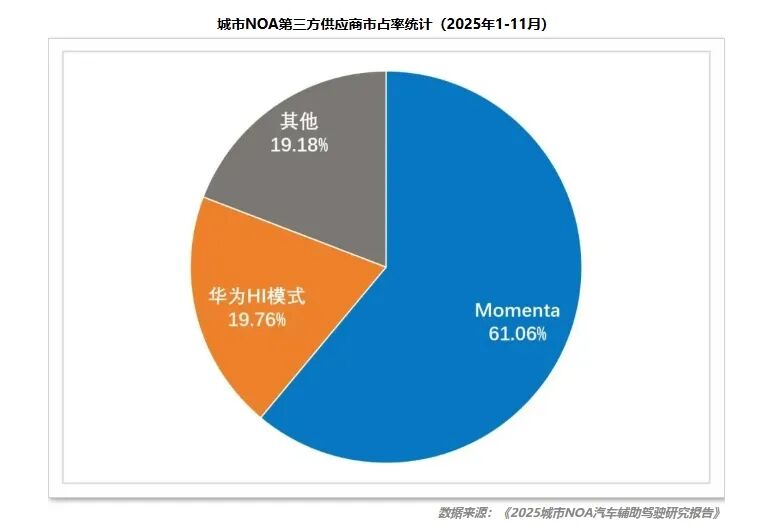
Core Insights - The report indicates that the cumulative sales of passenger cars equipped with urban NOA functions in China reached 3.129 million units from January to November 2025, marking a significant expansion in the industry [1][2] - The urban NOA market is characterized by a "dual strong" pattern dominated by Huawei and Momenta, which together hold approximately 80% of the third-party supplier market share [1][3] Group 1: Market Overview - The penetration rate of urban NOA-equipped passenger cars in China was 15.1% of the insured passenger car volume from January to November 2025, an increase of 5.6 percentage points compared to 2024 [2] - The report highlights that the urban NOA market has entered a phase of large-scale popularization, with profound changes in market structure and competitive factors [1][3] Group 2: Competitive Landscape - The market is driven by both self-research by car manufacturers and partnerships with third-party suppliers, with domestic brands accounting for 81.1% of the sales of urban NOA-equipped passenger cars [3] - Momenta leads the third-party supplier market with a total of 414,400 units equipped with urban NOA, representing about 61.06% of the third-party supplier share, while Huawei's HI model has approximately 134,100 units, accounting for about 19.76% [3][4] Group 3: Technological Advancements - The report emphasizes that algorithm, data loop capability, and mass production experience are critical factors determining the market position and development speed of auxiliary driving suppliers [6][8] - Momenta's R6 reinforcement learning model is noted as the first in China to achieve mass production based on an end-to-end architecture, enhancing safety and efficiency [8] Group 4: Future Trends - The urban NOA is expected to accelerate systemic changes in intelligent driving technology routes, core architectures, and industrial ecosystems, extending applications from highway NOA to urban NOA [9] - The competitive landscape is evolving with a focus on end-to-end models, pushing for integrated system architecture and the maturation of vehicle-road-cloud collaboration and regulatory standards [9]
地平线再下一城......
自动驾驶之心· 2026-01-20 00:39
Core Viewpoint - The article discusses the collaboration models between automotive manufacturers and suppliers in the autonomous driving sector, highlighting the establishment of joint ventures as a strategic approach to enhance product development and brand positioning [4][6][14]. Group 1: Joint Venture Formation - Beijing Zhiyu Technology Co., Ltd. was established as a joint venture between BAIC and Horizon Robotics, with BAIC holding a 65% stake and Horizon 35%, focusing on intelligent assisted driving products [4]. - The joint venture model allows manufacturers to maintain brand identity while leveraging supplier expertise, enhancing the overall value proposition [7]. - This model also enables manufacturers to have greater control over the development process, ensuring alignment with their strategic goals [8]. Group 2: Product Ownership and Development Models - There are primarily two models for product ownership: a one-time buyout where the manufacturer owns the developed product, and a licensing model where the supplier retains ownership and charges per unit sold [9][10]. - The licensing model is becoming more prevalent due to its efficiency and adaptability in a rapidly changing market [11]. - Products developed through joint ventures are typically owned by the joint venture itself, allowing manufacturers to exert more influence over the development process [12]. Group 3: Industry Trends and Challenges - Many traditional manufacturers struggle with in-house development of autonomous driving technologies, often leading to partnerships with suppliers or the formation of joint ventures [18][19]. - The article suggests that as the industry evolves, the trend of forming joint ventures will likely increase, with manufacturers potentially abandoning in-house development in favor of supplier solutions [21]. - The challenges faced by manufacturers include limited technical capabilities and the need for substantial data to effectively develop and iterate autonomous driving models [20].
八成市场,两家瓜分:智能驾驶第三方赛道马太效应显现,Momenta、华为占据头部
Di Yi Cai Jing Zi Xun· 2026-01-19 02:34
Core Insights - The report indicates that by November 2025, the cumulative sales of passenger cars equipped with urban NOA (Navigation Assisted Driving) in China reached 3.129 million units, marking a shift from high-end differentiation to mainstream adoption [1][3] Group 1: Market Dynamics - Urban NOA has transitioned from niche to mainstream, impacting vehicle delivery schedules, user experience, and brand risks [3] - The market is maturing rapidly, leading to a clear "Matthew Effect," where leading players dominate the market [6][16] - Momenta and Huawei's HI model together hold over 80% of the urban NOA third-party supplier market, with Momenta leading at approximately 61.06% market share [3][12] Group 2: Competitive Landscape - The industry is witnessing a dual-leader scenario, with Momenta and Huawei establishing a strong competitive position [13][16] - Momenta's urban NOA deployment reached 414,400 units from January to November 2025, reinforcing its leadership in the third-party supplier market [12][22] - Collaborations with major automotive brands like BMW and Mercedes-Benz highlight the importance of ongoing technological iteration and reliability in the competitive landscape [15][20] Group 3: Technological Advancements - The evolution of urban NOA is driven by three mechanisms: algorithmic advancement, data feedback loops, and accumulated trust through reliability [9][10][12] - Momenta's R6 reinforcement learning model exemplifies the shift towards advanced algorithms that enhance decision-making capabilities beyond human replication [9] - The data advantage gained through large-scale deployment leads to exponential growth in algorithm training effectiveness, making it difficult for latecomers to catch up [11] Group 4: Global Expansion - Momenta is actively expanding its global footprint, partnering with Southeast Asian platforms and international automotive brands to promote Chinese smart driving technology [18][20] - The adaptability of Chinese smart driving solutions to various global markets is attributed to the complex urban traffic conditions in China, which serve as a robust training environment [19] Group 5: Future Outlook - The Ministry of Industry and Information Technology predicts that by 2030, the integration of advanced driving assistance and connected features will create a trillion-level value increment for the automotive industry [21] - Urban NOA is expected to evolve from a high-end feature to a fundamental capability in new vehicles, influencing user experience and brand trust [21][22] - The competition in urban NOA is likened to a marathon, with Momenta's comprehensive capabilities making it difficult for competitors to replicate [22][23]
2026,车企反攻智能硬件
3 6 Ke· 2026-01-18 23:37
Core Viewpoint - The rise of smart glasses, particularly from automotive companies, signifies a shift in the automotive industry towards integrating AI and smart hardware, transforming traditional business models from one-time vehicle sales to ongoing subscription-based services [1][3][9]. Group 1: Transition from Hardware to Smart Hardware - The transition from hardware to automotive manufacturing began in 2019, driven by a peak in smartphone sales and a surge in electric vehicle sales, leading hardware manufacturers to explore automotive opportunities [3][5]. - Companies like Xiaomi and Huawei have either entered the automotive market directly or partnered with automakers to develop smart driving and vehicle integration solutions [3][5]. - The evolution of smart hardware in vehicles is seen as a natural progression, with the automotive industry now embracing AI to create a unified smart ecosystem [1][3]. Group 2: New Profit Models for Automotive Companies - The introduction of smart glasses, such as Li Auto's Livis, illustrates a shift towards products that enhance brand loyalty and provide continuous data collection, which can improve AI model capabilities [10][11]. - The automotive industry is moving towards a model where vehicle sales become part of a broader consumer lifestyle platform, focusing on software services that offer higher profit margins compared to traditional vehicle manufacturing [13][14]. - The integration of AI into both vehicles and smart hardware allows for shared components and reduced costs, enhancing overall efficiency and profitability [14][16]. Group 3: Challenges in the AI Transition - The transition to AI-driven models presents significant challenges, including high costs associated with data, algorithms, and computational power, which create barriers to entry for new players [17][19]. - Successful companies in this space must have substantial financial resources, technical expertise, and the ability to scale operations to effectively compete [18][19]. - The competitive landscape is likely to solidify around a few leading brands capable of leveraging their existing consumer base and data to enhance their AI capabilities [19].


回眸2025年,看见中国汽车业的向上力量
Bei Jing Ri Bao Ke Hu Duan· 2026-01-18 00:25
Core Insights - In 2025, China's automotive industry achieved record production and sales figures, with 34.53 million vehicles produced and 34.40 million sold, marking year-on-year growth of 10.4% and 9.4% respectively, showcasing resilience and vitality in the sector [1] - The year marked a significant shift in the market, with new energy vehicles (NEVs) surpassing 50% of domestic new car sales, indicating their transition from niche products to mainstream market leaders [2][3] - The automotive export volume exceeded 7 million units, with NEV exports reaching 2.615 million units, reflecting a robust growth trajectory and the establishment of overseas markets as new growth drivers [2][11] New Energy Vehicles (NEVs) as Market Leaders - NEVs accounted for 50.8% of domestic new car sales in 2025, with production and sales reaching 16.626 million and 16.49 million units respectively, representing year-on-year growth of 29% and 28.2% [3] - The competitive landscape has shifted, with domestic brands capturing nearly 70% of the passenger car market share, marking a significant reversal against joint venture brands [3][4] Technological and Policy Support - The growth of NEVs is attributed to supportive policies, technological advancements, and a well-structured supply chain, with over 11.5 million vehicles replaced under the trade-in policy, contributing to a sales boost of over 1.6 trillion yuan [5] - Innovations in technology have led to improved vehicle performance, with average electric vehicle ranges reaching around 500 kilometers and significant reductions in battery costs and charging times [6] Smart Driving Developments - The approval of the first L3-level conditional autonomous driving vehicles in December 2025 marks a pivotal moment in China's autonomous driving sector, transitioning from technology validation to mass production [7][9] - The penetration rate of vehicles equipped with L2-level driving assistance features reached 64% in the first three quarters of 2025, driven by decreasing costs and increased availability in lower-priced models [9] Global Expansion and Localization - China's automotive exports reached 7.098 million units in 2025, with a year-on-year increase of 21.1%, highlighting the importance of overseas markets for growth [11] - Localization efforts are intensifying, with over 20 Chinese automotive brands establishing manufacturing facilities in Thailand and Brazil, enhancing local production capabilities and supply chain integration [12] Market Competition Restructuring - The introduction of compliance guidelines aims to curb price wars and establish a more orderly competitive environment, shifting focus from price competition to quality and service [13][15] - The automotive industry is transitioning from a phase of scale expansion to one of quality enhancement, necessitating a comprehensive approach to governance and market regulation [15][16]
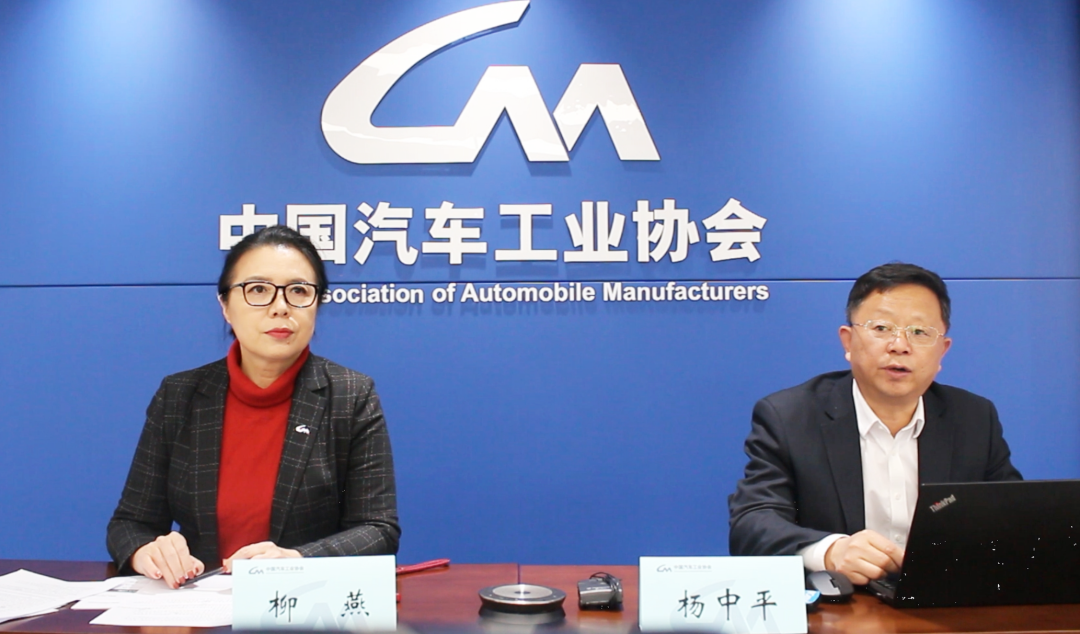
中汽协发布《2025城市NOA汽车辅助驾驶研究报告》
Yang Shi Wang· 2026-01-16 15:27
Core Insights - The report highlights the significant development of urban Navigation Assisted Driving (NOA) as a new competitive frontier for China's automotive industry, driving a transformation in the global industrial ecosystem [1] Market Overview - From January to November 2025, the cumulative sales of passenger cars equipped with urban NOA reached 3.129 million units, with a market penetration rate of 15.1%, an increase of 5.6 percentage points compared to the entire year of 2024 [2] - Domestic brands led the smart driving wave, contributing 2.5373 million units, accounting for 81.1% of total sales, while global brands like Mercedes-Benz, BMW, Audi, and Toyota are collaborating with leading Chinese technology suppliers [2] Competitive Landscape - The market is characterized by a "dual-driven" model of "in-house development" by car manufacturers and "third-party collaboration" [4] - In the third-party supplier market, Momenta and Huawei dominate, holding approximately 80% of the market share, with Momenta leading at about 61.06% and Huawei at 19.76% [4] Technological Advancements - The report emphasizes that technological iteration is the fundamental driving force of industry development, with end-to-end large models leading the transformation of smart driving system architecture [6] - Companies like Tesla and Li Auto have achieved mass production of "one-piece" end-to-end models, while Huawei's architecture enhances complex scenario processing through cloud-vehicle collaboration [7] Future Outlook - The report anticipates that by 2030, high-level autonomous driving functions will achieve large-scale market application, with urban NOA expected to become a mainstream configuration, potentially generating trillions in industry growth [8] - It identifies challenges such as the need for breakthroughs in core technologies, data security, and the establishment of a regulatory framework, proposing five key development recommendations [8]
城市NOA销量突破300万辆:智驾竞争进入体验决胜期
3 6 Ke· 2026-01-16 13:22
Group 1 - The report indicates that from January to November 2025, the cumulative sales of passenger cars equipped with urban NOA (Navigation Assisted Driving) in China reached 3.129 million units, accounting for 15.1% of the total passenger car insurance volume, an increase of 5.6 percentage points compared to the entire year of 2024 [1] - Notably, mainstream models priced below 300,000 yuan accounted for 68.9% of the sales, indicating that urban NOA, once a feature exclusive to high-end vehicles, is moving towards the mainstream consumer market [1] - The report highlights that domestic brands are actively innovating in the smart connected vehicle sector, capturing a dominant market position with an 81.1% share of urban NOA model sales [1][4] Group 2 - The market for third-party suppliers is becoming concentrated, with Momenta and Huawei together holding approximately 80% of the market share, with Momenta at about 61.06% and Huawei's HI model at approximately 19.76% [2][4] - The report anticipates that by 2030, urban NOA will become the mainstream function of assisted driving, with the Ministry of Industry and Information Technology predicting that high-level automated driving will create a trillion-yuan value increment for the automotive industry [2][7] - The report emphasizes that the current focus of industry competition has shifted from high-speed NOA to urban NOA, with the development level of NOA technology being crucial for China's competitive position in the global automotive industry [1][2] Group 3 - The report outlines a dual-driven market structure of "in-house development by car manufacturers + collaboration with third-party suppliers," with self-developed urban NOA models accounting for approximately 78.3% of total urban NOA sales from January to November 2025 [3] - New car manufacturers are leveraging software development and ecosystem capabilities to drive the development of NOA, with brands like Tesla, NIO, and Xpeng leading the market [3] - The report also notes that traditional brands are increasingly collaborating with local intelligent driving suppliers to accelerate the implementation of urban NOA features, indicating a shift in strategy among established automotive players [4] Group 4 - The report identifies the core elements of supplier competitiveness in the scaling phase as algorithm capability, data closure, and experience in large-scale production [5] - The end-to-end architecture is being restructured, with safety and user experience becoming focal points for upgrades, driven by the integration of end-to-end large models [6] - The ultimate goal of technological iteration is to enhance safety and user experience, with expectations that urban NOA's functionality and reliability will continue to expand as multi-modal large models and end-to-end technologies evolve [6][7]
