ZARA

Search documents
中国创业者的信心从哪里来?首先是9亿人的刚需升级机会
创业家· 2025-06-29 10:09
Core Viewpoint - The article emphasizes the structural opportunities in China's consumer market, particularly focusing on the 900 million people in lower-tier cities as the main consumer base for future growth [5][12]. Group 1: Market Dynamics - The consumer landscape in China has shifted, with the previous focus on high-end brands in first-tier cities evolving to include a broader range of products catering to lower-tier markets [5][6]. - The connection between high-tier and low-tier markets has been established, allowing for a more integrated consumer experience [7]. - The article highlights the emergence of new business models based on China's new infrastructure and production relationships, which enhance efficiency in information flow and supply chains [11][12]. Group 2: Consumer Segmentation - The consumer market is segmented into three layers: the affluent class, the middle class under economic pressure, and the 900 million people in lower-tier cities who represent the main market [9]. - The affluent class consumes globally, while the middle class faces challenges due to economic adjustments, and the lower-tier market shows potential for growth as purchasing power is released [9][12]. Group 3: Investment Opportunities - The article identifies two structural opportunities in the consumer market: the rise of new national brands and the development of new nationwide chains [13]. - The "启承消费时钟" (Qicheng Consumption Clock) is introduced, categorizing consumer goods into four phases: essential needs, optional purchases, alternatives, and upgrades, reflecting the changing economic conditions [12][13]. - The growth of discount brands and alternative products is noted, with examples such as "鸣鸣很忙" in the snack sector, indicating a shift towards more affordable options [13].



“纺织业”项目破冰?HM面料商福恩股份IPO获受理,年分红超3亿藏争议
Hua Er Jie Jian Wen· 2025-06-28 03:41
Core Viewpoint - The IPO application of Hangzhou Fuen Co., Ltd. marks the first textile industry IPO in the A-share market after a two-year hiatus, indicating a potential recovery in the sector [2][6]. Company Summary - Fuen Co. specializes in regenerated fabrics, serving major clothing brands like HM and Uniqlo [2][10]. - The company's revenue and net profit for 2024 are projected to be 1.813 billion and 275 million respectively, remaining stable compared to 2022 [2][19]. - Fuen plans to raise 1.25 billion for expanding fabric production capacity [2]. Financial Performance - Fuen's 2022 cash dividend of 381 million was 138% of its net profit, raising concerns about compliance with IPO regulations [3][15]. - The company’s revenue from regenerated fabrics was 1.317 billion, 1.206 billion, and 1.5 billion from 2022 to 2024, accounting for 70-80% of total revenue [9]. - Compared to 47 A-share textile companies, Fuen's 2024 revenue and net profit rank 21st and 13th respectively [7]. Market Context - The textile sector faced challenges in 2023, with previous IPO applications from companies like Beijiang Zhili and Zhejiang Zhongding being withdrawn [5][6]. - Major clients like HM and Zara are reducing store numbers, which may impact Fuen's future performance [12][13][20]. - The global trend towards sustainable materials presents growth opportunities for Fuen, as major brands aim for eco-friendly sourcing by 2030 [12][13]. Regulatory Environment - Recent regulatory changes have scrutinized "clearance-style" dividends before IPOs, which could affect Fuen's application due to its high dividend payout relative to net profit [15][18].
释放首发新动能,为消费创新发展贡献“南京样本”
Sou Hu Cai Jing· 2025-06-24 11:53
Core Viewpoint - Nanjing is positioning itself as a leader in the "first launch economy," focusing on creating a vibrant city through optimal policies, strong ecosystems, and sincere engagement, aiming to make every first launch a driving force for urban development [1]. Group 1: Economic Development - The 2025 First Launch Economic Development Conference will take place on June 25 in Nanjing, organized by the Nanjing Municipal Bureau of Commerce and the Gulou District People's Government, showcasing Nanjing's efforts to build an international consumer center city [1]. - Nanjing has successfully introduced 500 first stores since last year, including 2 global first stores, 1 Asian first store, 32 Chinese first stores, and 16 East China first stores, featuring major brands like Valentino Beauty and ZARA [3]. Group 2: Cultural and Innovative Integration - The city has hosted various cultural events, including the world premiere of the original Chinese musical "Baoyu" and the "Beeple Global Exhibition," highlighting the integration of culture, commerce, and tourism [3]. - Nanjing is witnessing advancements in emerging industries, with the launch of the world's first integrated coffee delivery robot and the commercialization of humanoid robots, showcasing its strength in technology and innovation [3]. Group 3: Conference Highlights - The conference will gather over 600 guests from authoritative industry organizations, key cities, and top commercial brands to discuss new trends and opportunities in the first launch economy [5]. - The concurrent "New Consumption Forum" will provide a platform for deep industry engagement and collaboration, enhancing Nanjing's role as a testing ground for brands in the Yangtze River Delta region [7].

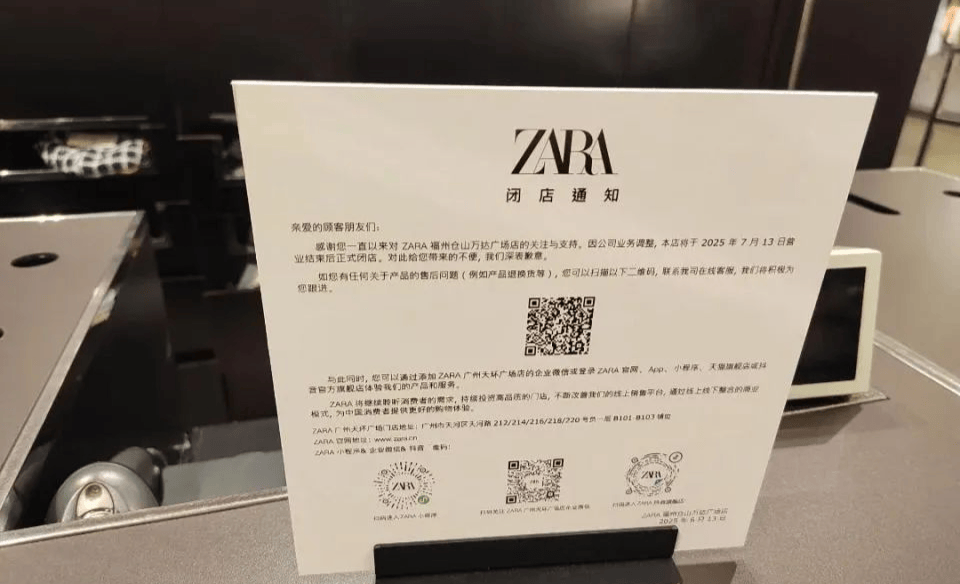
Zara关闭福州店,彻底退出福建市场
Sou Hu Cai Jing· 2025-06-24 09:16
Core Insights - ZARA is closing its last store in Fuzhou, marking its complete exit from the Fujian market due to changing consumer preferences and increased competition from domestic brands [1][3] - The fast fashion sector, once thriving in Fuzhou with multiple brands, is now facing significant challenges, leading to a reduction in the number of stores [3][4] - Domestic brands are gaining popularity, offering stylish designs at competitive prices, which is attracting consumers away from traditional fast fashion retailers [4] Group 1: ZARA's Market Exit - ZARA's Fuzhou store at Wanda Plaza will close on July 13, indicating a strategic retreat from the region [1] - The closure is part of a broader trend where ZARA has been shutting down stores across China since 2024 due to declining sales [3] - The brand's initial success in Fuzhou included three stores, but it has now dwindled to just one [3] Group 2: Changing Consumer Preferences - Young consumers are shifting towards brands that offer more individuality and local cultural relevance, leading to a decline in fast fashion's appeal [1][4] - The rise of e-commerce has also contributed to changing shopping habits, with consumers favoring online platforms for their purchases [4] Group 3: Rise of Domestic Brands - Domestic brands like Wassup, ROARINGWILD, and RANDOMEVENT are increasingly occupying prime retail spaces, showcasing a blend of fashion and lifestyle offerings [4] - These brands are leveraging local insights and competitive pricing to challenge established fast fashion players [4] - The shift towards these brands reflects a broader trend of consumers seeking unique and personalized shopping experiences [4]
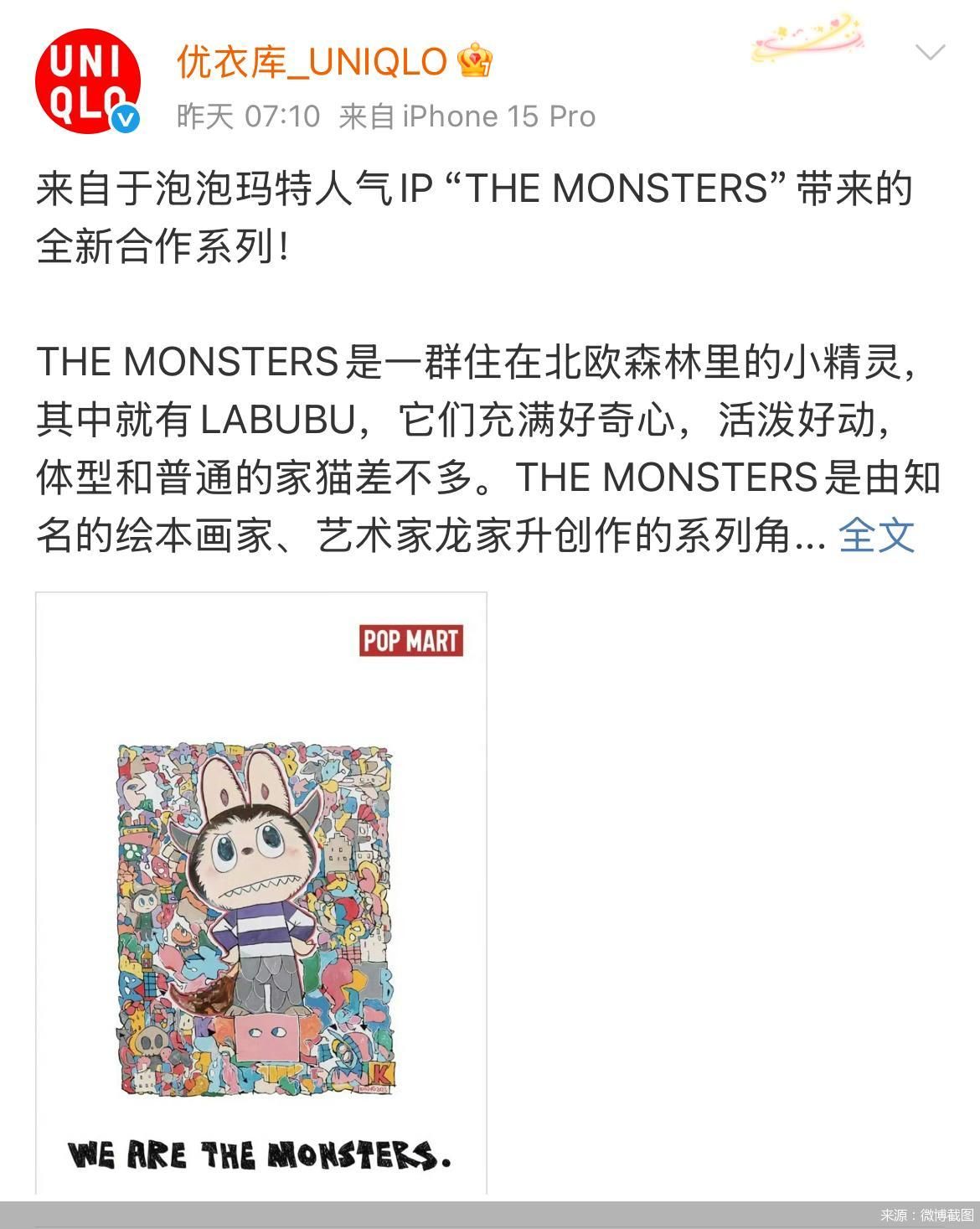
合作“LABUBU”,优衣库为何热衷联名
Bei Jing Shang Bao· 2025-06-17 13:21
Core Viewpoint - Uniqlo's collaboration with the popular IP "THE MONSTERS" from Pop Mart, particularly featuring the character Labubu, is expected to generate significant consumer interest and sales, although the sustainability of this strategy for long-term growth remains uncertain [3][5]. Collaboration and Product Launch - The new product line from the "THE MONSTERS" collaboration will be available for sale starting August 29, featuring adult and children's items such as T-shirts and sweatshirts priced between 79 to 199 yuan [4]. - The popularity of Labubu is highlighted by a record sale of an original Labubu figure for 1.08 million yuan, indicating strong consumer demand and interest in the collaboration [5]. - Uniqlo has a history of successful collaborations with various well-known IPs, including previous partnerships with Pop Mart in April 2022, which saw significant resale price increases for collaborative products [5][6]. Market Performance and Strategy - Uniqlo's collaboration strategy has proven effective in driving traffic and sales, with past collaborations resulting in products selling out quickly and achieving high resale values [6]. - The company has engaged in numerous collaborations this year, including with brands like Ghibli, Pokémon, and others, showcasing its commitment to leveraging popular culture for brand enhancement [5][7]. - Analysts suggest that Uniqlo's collaboration strategy not only boosts sales but also elevates its brand image, allowing it to maintain a fashionable appeal despite being a mass-market brand [7]. Competitive Landscape - Uniqlo faces increasing competition in the Chinese market, which is crucial for its revenue, contributing over 20% to its total income [9]. - Recent financial data indicates a decline in revenue and profit in the Greater China region, with a 3% drop in revenue and a 9% drop in profit projected for the 2025 fiscal year [9]. - Competitors like Zara and H&M are intensifying their strategies in the fast fashion sector, posing additional challenges for Uniqlo [9][10]. Financial Performance - Uniqlo's overall revenue growth has been slowing, with a 20.2% increase in the 2023 fiscal year, followed by a projected 12.2% increase in 2024 [10]. - The company is experiencing pressure from the shift towards online shopping and increased operational costs, which are common challenges faced by many fast fashion brands today [10].
北京市消协抽检78件样品 ZARA、UNDER ARMOUR等11件样品存在问题
Xi Niu Cai Jing· 2025-06-10 03:57
Core Viewpoint - The Beijing Consumer Association conducted a comparative test on children's clothing, revealing that approximately 14.1% of the 78 samples tested were found to be non-compliant with safety standards [2] Group 1: Test Results - A total of 78 samples from various brands, including FILA, LEE, and Jordan, were tested, with 11 samples from brands like ZARA and Dickies identified as problematic [5] - Four samples were noted for non-compliance in product usage instructions, including discrepancies in durability labels and missing safety category numbers [8] - Issues related to fiber content were highlighted, with certain products exceeding allowable deviation limits and lacking proper labeling, potentially misleading consumers and posing health risks [8] Group 2: Safety Concerns - Specific products, such as those from JELLYBABY and GMIFAMILY, were found to have safety hazards due to improper cord lengths and protruding cords, which could directly endanger children [8] - Color fastness issues were also reported, with nine samples failing to meet standards for wet rubbing fastness, raising concerns about potential health risks from dye absorption through the skin [9] Group 3: Regulatory Standards - The comparative test was conducted based on multiple standards, including GB 31701-2015 and GB/T 5296.4-2012, which outline safety technical requirements and labeling for children's textile products [9]


《寻找消费力》报告解析商业画像:价值当先,情感驱动
Bei Jing Shang Bao· 2025-06-02 06:38
Core Insights - The Chinese consumer market is undergoing structural adjustments, with traditional consumption growth engines under pressure while new generation consumers are emerging, leading to a focus on "finding consumption power" [1] - The report from Beijing Business Daily outlines consumer trends, emphasizing that value concepts dominate, emotional drivers outweigh price drivers, and scenario innovation is reshaping consumption patterns [1] Consumer Attitudes - Domestic consumers are becoming more cautious in their spending, necessitating brands to seek growth within a stagnant market, although overall consumption willingness remains stable [3] - Consumers prioritize product quality over brand loyalty, as evidenced by a significant portion of restaurant consumers indicating they do not care about brand as long as the product is good [4] Value Sensitivity - The balance between quality and price is becoming crucial as consumers seek optimal solutions in product quality, performance, and pricing, particularly in the live-streaming e-commerce sector [6] - Consumers are willing to pay a premium for unique flavors in craft beer and higher-priced items in the trendy toy sector, indicating a shift towards value recognition over price temptation [6] Emotional Value - Emotional connections with brands can reduce price sensitivity, with brands focusing on emotional value seeing a 42% higher repurchase rate compared to traditional brands [9] - Examples include limited edition collaborations that create a sense of collectibility and storytelling in luxury brands that enhance perceived value [9][11] Scenario Innovation - High quality-to-price ratios combined with scenario-based operations are key to retaining consumers, with brands creating immersive experiences in flagship stores and restaurants adapting to diverse dining scenarios [12] - The craft beer market is evolving towards a multi-scenario approach, combining traditional bars with home consumption and outdoor activities to meet diverse consumer needs [12] Conclusion - Different sectors are redefining consumption scenarios, emphasizing the importance of refined operations and customer retention as a sustainable competitive advantage in the market [13]
天猫618第一波战报出炉,服饰行业实现强劲增长
Sou Hu Cai Jing· 2025-05-29 04:09
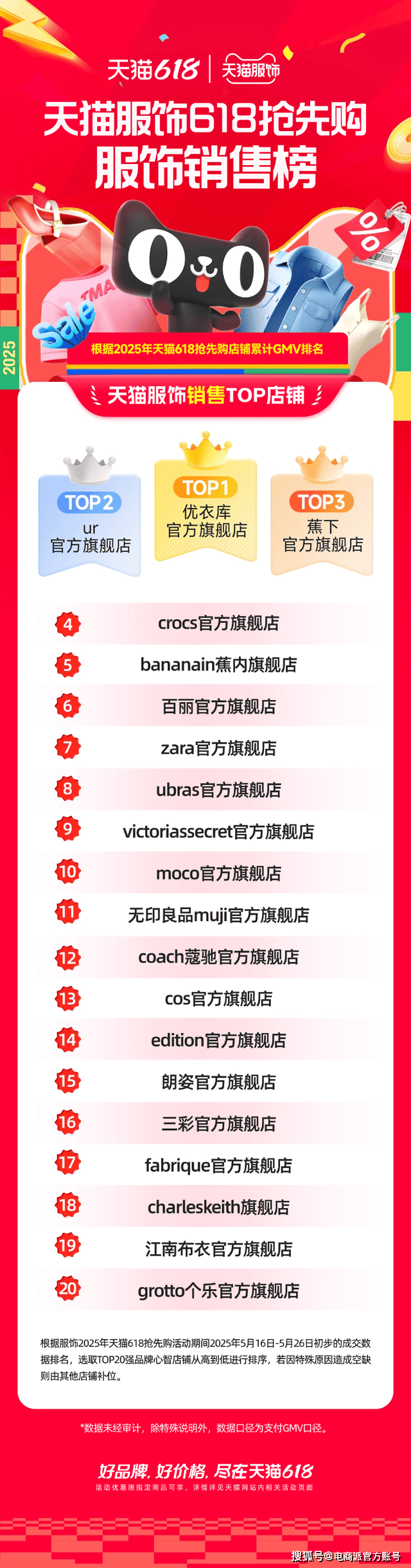
Core Insights - Tmall's 618 pre-sale event showed strong growth in the apparel sector, with significant sales figures reported from May 16 to May 26, 2025 [1][32] - Major brands like Uniqlo, UR, and Bananain achieved remarkable sales, with nearly 345 brands surpassing 10 million in sales and around 1,088 brands seeing over 500% year-on-year growth [1][32] Sales Performance - Uniqlo, UR, and Bananain topped the overall sales rankings during the event [1][68] - Specific categories such as men's wear, women's wear, and footwear saw brands like Crocs, Ubras, and Coach leading their respective segments [1][68] Brand Strategies - Brands focused on user engagement, product strategies, and content upgrades, which provided strong growth drivers [32][62] - Bananain capitalized on the rising demand for summer sun protection products, successfully launching a range of sun hats that topped the outdoor category [32][62] Membership and Promotions - Brand membership contributed over 60% to the sales of well-known brands, with 88VIP members accounting for nearly 60% of transactions, reflecting a 40% growth [62][63] - Tmall offered a record number of consumer coupons during the event, enhancing the purchasing experience for high-value consumers [63][62] New Brands and Market Dynamics - The event also highlighted the success of smaller brands, with Holdoumen, Mmlg, and UNICA emerging as top new sellers [92][94] - New brands in various categories, including footwear and accessories, achieved significant sales, indicating a thriving platform ecosystem [92][94]


Shein 产业链全景:产业升级的飞轮是怎么转起来的?
晚点LatePost· 2025-05-28 14:41
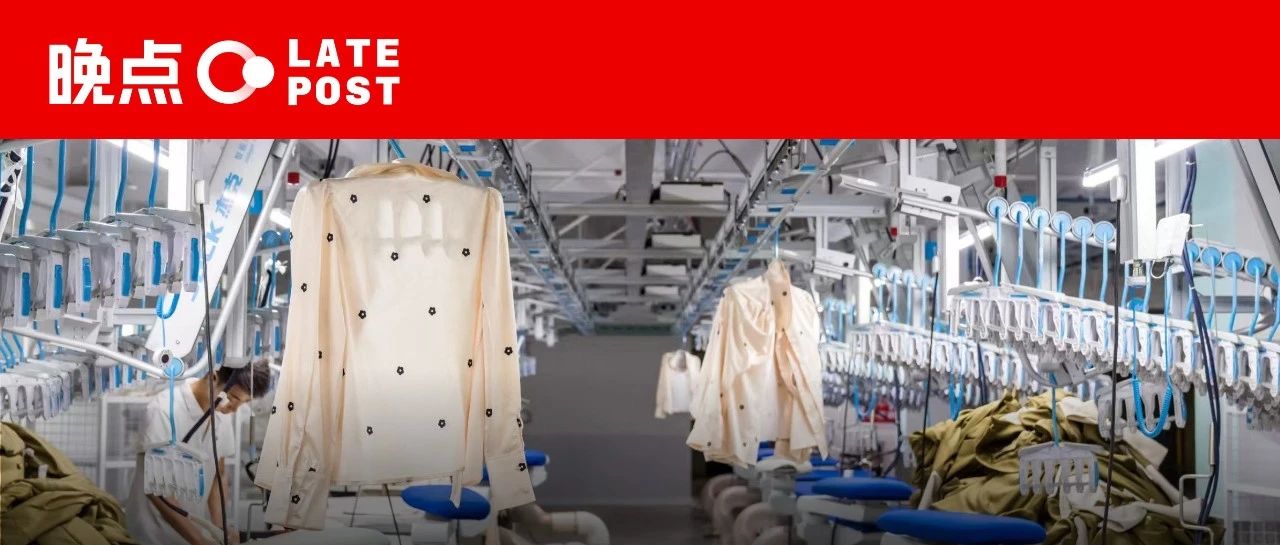
Core Viewpoint - Shein is transforming the garment manufacturing industry through digitalization, lean production methods, and sustainability initiatives, significantly enhancing efficiency and reducing waste across its supply chain [1][2][3]. Group 1: Factory Transformation - Shein has invested 500 million yuan over five years to empower suppliers, aiding over 200 factories and improving more than 500,000 square meters of production space [2]. - The company utilizes digital tools to streamline production processes, reducing reliance on manual tracking and improving inventory management [8][9]. - Shein's digitalization efforts have helped maintain a low inventory rate of single digits, compared to the industry average of 30% [8]. Group 2: Technological Innovation - Shein has adopted digital heat transfer printing technology, which is water-efficient and has saved 1.13 million tons of water, equivalent to 2.26 billion 500ml bottles [3][15]. - The company is promoting the use of renewable energy solutions, such as rooftop solar panels, and has plans to reduce carbon emissions significantly by 2050 [4][18]. Group 3: Employee Welfare and Training - Shein has established "Children's Homes" to provide free childcare for employees' children, serving nearly 55,000 visits [12]. - The company has conducted over 485 training sessions, covering more than 20,000 participants, to enhance skills and knowledge in the supply chain [14]. Group 4: Supply Chain Expansion - Shein's supply chain investments in Guangdong are aimed at supporting global sales and enhancing competitiveness, with significant projects underway in Zhaoqing and Guangzhou [20]. - The company is facilitating international market access for local products through its platform, covering over 300 cities and planning more than 150 industry connection activities by 2025 [19]. Group 5: Industry Impact - Shein's approach to factory upgrades and employee welfare is changing perceptions among factory owners, leading to a willingness to invest in improvements based on Shein's standards [13]. - The company's influence is expected to extend throughout the industry, promoting cost reduction, efficiency, and sustainability practices [20].
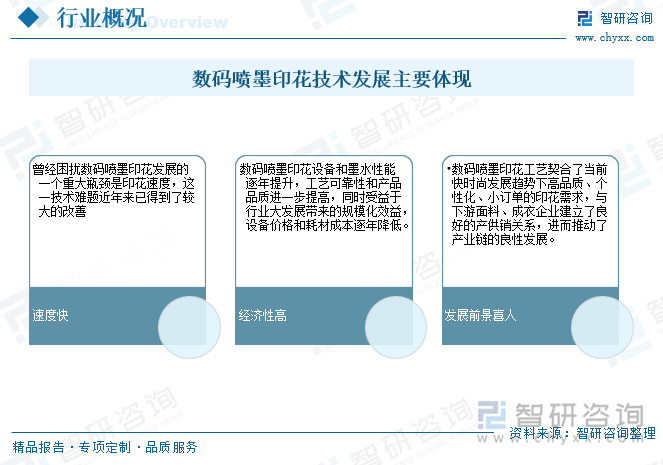
2025年中国数码喷墨印花行业工艺流程、发展规模、产业链、竞争格局及发展趋势研判:行业加快数字化、绿色化转型升级[图]
Chan Ye Xin Xi Wang· 2025-05-22 01:35
Core Viewpoint - Digital inkjet printing technology is rapidly developing in the textile industry, driven by advancements in technology, increasing demand for customized textiles, and the growth of the green and internet economies [1][8]. Group 1: Industry Definition and Characteristics - Digital inkjet printing technology combines textile printing with digital inkjet printing, showing significant improvements in printing quality, speed, economic efficiency, and reliability [2][4]. - The technology is characterized by fast speed, high economic efficiency, and promising development prospects, particularly in emerging markets like China and India [2][6]. Group 2: Current Industry Status - The production of digital inkjet printed textiles in China increased from 400 million meters in 2015 to 3.7 billion meters in 2023, with direct printing accounting for 25.68% and transfer printing for 74.32% of the total [1][6]. - The projected production for 2024 is approximately 4.5 billion meters, with direct printing at 25.56% and transfer printing at 74.44% [1][6]. Group 3: Market Size and Growth - The market size for digital inkjet printing in textiles is expected to reach approximately 12.49 billion yuan in 2024, an increase of 1.5 billion yuan from 2023 [8]. - The market is projected to grow to 14.23 billion yuan by 2025 [8]. Group 4: Industry Chain - The upstream of the digital inkjet printing industry includes raw materials and core components like ink and printing heads, while the downstream applications span clothing, home decor, and industrial sectors [10]. Group 5: Competitive Landscape - The digital transfer printing technology is primarily operated by small production enterprises and textile trading companies due to its shorter process and lower investment requirements [12]. - The digital direct printing technology, although more complex and requiring more investment, is increasingly being adopted by dyeing enterprises as they transition to digital production lines [12]. Group 6: Future Development Trends - Continuous innovation in digital inkjet printing technology is expected to lead to more personalized, differentiated, and high-value-added products [15]. - The integration of digital printing with information technology and the ongoing shift towards small-batch, multi-batch order models will further enhance the industry's efficiency and sustainability [15].