小米

Search documents
手机之后,字节AI眼镜或跟上
财联社· 2025-12-05 04:52
Core Viewpoint - The competition in the AI industry is shifting from large model parameters to the hardware applications of AI, with major companies vying for the next generation of hardware entry points, particularly AI glasses and smartphones [5][6]. Group 1: AI Hardware Competition - Major companies like Alibaba, ByteDance, and Baidu are rapidly developing AI glasses to establish a foothold in the AI hardware ecosystem [4][6]. - The AI glasses are seen as the next critical terminal after smartphones, with both startups and major internet companies entering the market [6][7]. - The integration of AI capabilities into smartphones and AI glasses aims to create a closed-loop hardware ecosystem, with ByteDance's ambitions being particularly notable [7][13]. Group 2: User Interaction and Functionality - The "Doubao AI Assistant" on the Nubia M153 smartphone can perform tasks such as gaming and controlling smart devices, showcasing the potential of AI in enhancing user experience [8][11]. - AI assistants from various companies, including Alibaba's Qianwen Assistant, are being integrated into AI glasses to enable voice-controlled operations [12]. - The future of smartphones may involve AI generating interfaces and operations based on user intent, reducing reliance on traditional input methods [13]. Group 3: Regulatory Challenges - The integration of AI assistants with third-party applications like WeChat faces significant regulatory hurdles, leading to the suspension of certain functionalities due to compliance issues [15][17]. - Major apps, particularly WeChat, have strict regulations against automated operations, which complicates the deployment of AI assistants [17][22]. - Previous attempts by other smartphone manufacturers to integrate AI functionalities with WeChat have also been halted, indicating a broader trend of resistance from app developers [18][20]. Group 4: Hardware Development Challenges - Internet companies lacking hardware expertise face significant challenges in developing smart terminals, as evidenced by past struggles of companies like Google and ByteDance in the smartphone market [23][24]. - Despite skepticism about the sustainability of hardware ventures, some experts believe that companies like ByteDance can leverage their existing user base to support hardware initiatives [25]. - Alibaba's strength lies in its stable B2B customer base, while Baidu's advantage is its search capabilities, which can enhance the functionality of AI glasses [25].


东吴证券晨会纪要-20251205
Soochow Securities· 2025-12-05 02:26
Group 1: Macro Strategy - The macro environment is influenced by both domestic and overseas factors, with improved domestic demand data but a decline in manufacturing PMI in October affecting market confidence [1][13] - The dual uncertainties in the macro environment have led to a strong risk-averse sentiment among investors, causing the index to shift downward and enter a phase of low-volume consolidation [1][13] - Policy support through liquidity measures and industry guidance has provided a stabilizing effect on the market, with fiscal issuance and monetary continuation effectively countering funding disturbances [1][13] Group 2: Industry Analysis - The consumer technology sector has shown structural divergence in earnings reports, with companies like Meituan, JD, and Alibaba facing profit declines due to intensified competition, while Tencent and Xiaomi have improved profitability through international expansion and premiumization [1][13] - AI technology breakthroughs are opening new paths for commercialization, with differences in corporate profitability becoming a key variable affecting market expectations [1][13] Group 3: Index Outlook - The Hang Seng Technology Index is expected to maintain a bottom consolidation and upward bias in December 2025, influenced by macroeconomic conditions and policy expectations [1][13] - The Nasdaq 100 Index is projected to experience a volatile upward trend in December 2025, driven by AI industry developments and commercial validation [4][15] - The gold market is anticipated to remain supported by expectations of interest rate cuts, with geopolitical risks and inflation data influencing price movements [5][17] Group 4: Company-Specific Insights - Andy Su has reported a revenue increase of 13.67% year-on-year for the first three quarters of 2025, although net profit has slightly declined due to rising raw material costs and competitive pressures [10][11] - Yutong Bus has seen an increase in sales in November, with expectations for a year-end tail effect, maintaining a "buy" rating with projected revenue growth of 17% for 2025 [12]
每日投资策略-20251205
Zhao Yin Guo Ji· 2025-12-05 02:26
Industry Overview - The wide bandgap semiconductor industry, driven by Silicon Carbide (SiC) and Gallium Nitride (GaN), is entering a new phase of sustained growth, primarily fueled by the electrification of vehicles and the restructuring of power architecture in AI data centers [2][3] - The industry is transitioning from traditional 54V DC power supply to 800V High Voltage Direct Current (HVDC) architecture, which is crucial for the next generation of high-power AI racks, relying heavily on the application of SiC and GaN [2][7] Market Growth - According to TrendForce, the global SiC power device market is expected to reach approximately $3.4 billion in 2024, representing a year-on-year growth of 12%, with automotive applications accounting for over 70% of this market [3] - The GaN device market is projected to grow by 43% year-on-year, reaching about $388 million, with continued expansion expected due to increasing penetration in automotive and renewable energy sectors, as well as emerging applications in AI data centers [3] Investment Opportunities - Companies with scale advantages, leading technology on 8-inch wafers, automotive-grade certified product lines, and system-level solution capabilities are expected to be the main beneficiaries of this trend [2] - In particular, InnoPhase (2577 HK) is highlighted as a leading player in the pure GaN sector, with an anticipated market share of around 30% in 2024 and a projected compound annual growth rate (CAGR) of approximately 55.2% from 2024 to 2027, benefiting from industry tailwinds and strategic partnerships with global players like NVIDIA [7]
大厂抢占硬件入口?继手机之后,字节AI眼镜或将跟上
Feng Huang Wang· 2025-12-05 02:00
Core Insights - The competition in the AI sector is shifting from large model parameters to the application of AI in hardware, with major companies vying for the next generation of hardware entry points [2][6] - AI glasses are emerging as a key terminal following smartphones, attracting interest from both startups and major internet companies [2][6] - The integration of AI capabilities into hardware is seen as essential for creating a closed-loop ecosystem, with companies like ByteDance and ZTE collaborating on AI assistant-enabled devices [2][6] Group 1: Industry Dynamics - Major internet companies are racing to establish their presence in the AI hardware market, with the "entry point" being a critical competitive advantage [2][12] - The AI assistant capabilities are being tested in various applications, but face challenges due to strict regulations from major apps like WeChat, which restrict automated operations [10][12] - The integration of AI with hardware is expected to redefine user interaction, potentially leading to a future where devices operate based on user intent without traditional interfaces [6][12] Group 2: Company Strategies - ByteDance's collaboration with ZTE on the "Doubao AI Assistant" smartphone aims to enhance user experience by enabling advanced functionalities like game automation and smart device control [2][7] - Alibaba's launch of the Quark AI glasses, featuring the Qianwen assistant, marks its entry into the AI hardware space, emphasizing voice control capabilities [6][14] - Baidu leverages its search capabilities to enhance the functionality of AI glasses, allowing for voice-activated information retrieval, positioning itself uniquely in the market [15] Group 3: Challenges and Opportunities - The lack of hardware expertise among internet giants poses significant challenges in developing competitive AI hardware products [13][14] - Despite the challenges, companies like ByteDance and Alibaba have unique advantages, such as user traffic and established B2B relationships, which could facilitate their success in the hardware market [14][15] - The ongoing competition and regulatory hurdles highlight the need for companies to navigate the complex landscape of app permissions and user privacy while developing AI-enabled devices [11][12]
豆包不造手机,“华米OV”也不会交出“灵魂”
阿尔法工场研究院· 2025-12-05 00:07
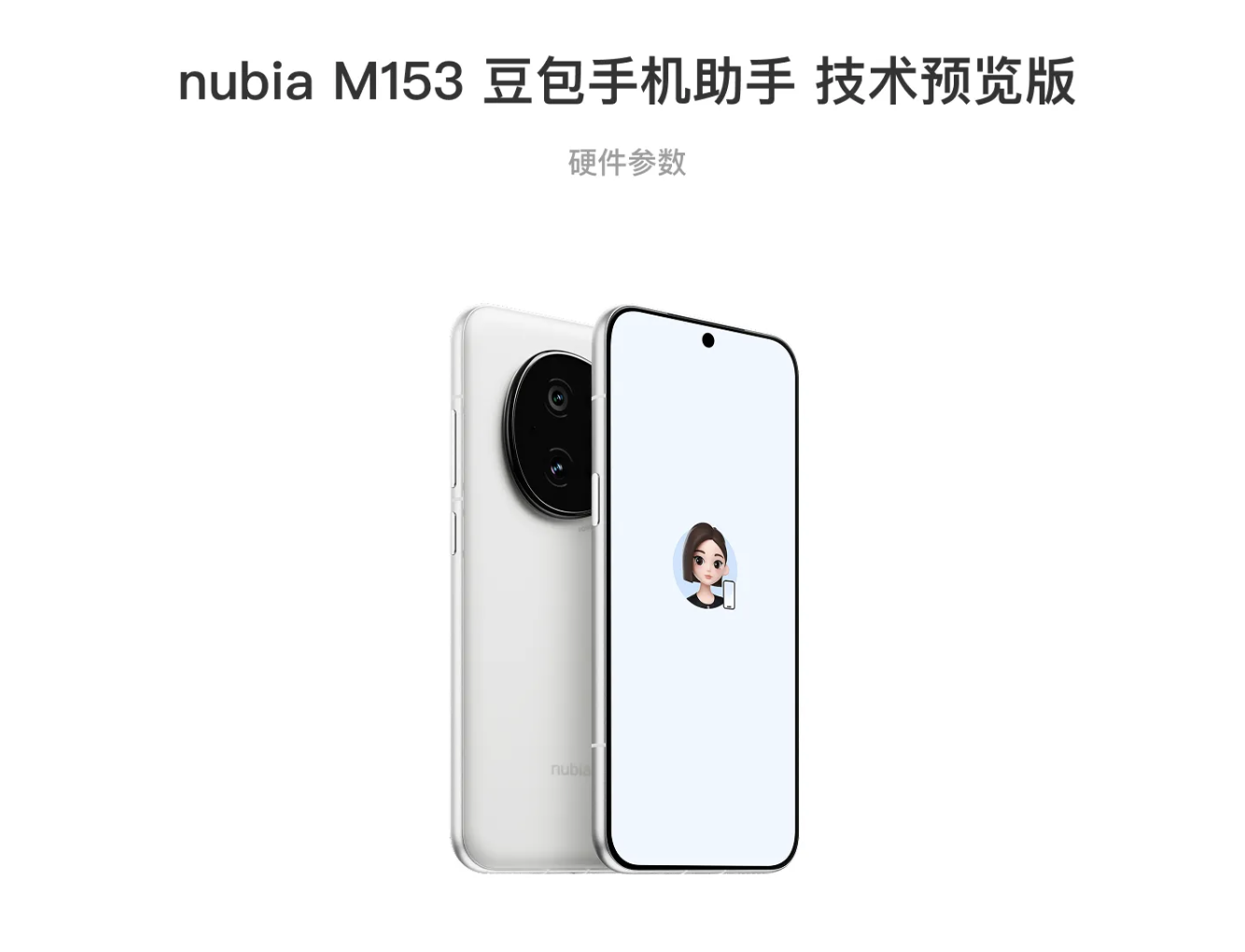
Core Viewpoint - The launch of the "Doubao Phone Assistant" by ByteDance marks the beginning of a transformative era in the consumer electronics industry driven by AI capabilities, significantly impacting the market and technology landscape [3][4]. Product Overview - The "Doubao Phone Assistant" is built on the Doubao app and collaborates with smartphone manufacturers at the operating system level, offering enhanced user interaction and experience through advanced AI capabilities [5]. - The first device featuring this technology, the Nubia M153, is priced starting at 3499 yuan and is positioned as a limited release for developers and tech enthusiasts, with an initial stock of 500,000 units [11][14]. User Interaction Redefined - The Doubao Phone Assistant redefines human-computer interaction by enabling complex task execution across applications autonomously, moving beyond traditional passive AI assistants [5][9]. - It features a unique Pro mode that utilizes personalized memory to generate solutions based on user preferences, evolving from mere command execution to proactive need anticipation [7]. Market Dynamics - The introduction of the Doubao Phone Assistant shifts the user interface paradigm from a matrix of apps to a centralized AI-driven service hub, enhancing operational efficiency [9][10]. - This innovation blurs the lines between an assistant and an operating system, positioning the Doubao Assistant as a potential core component in the AI-driven future of mobile technology [10][25]. Industry Implications - The collaboration between Doubao and Nubia represents a new model of cooperation between AI algorithm developers and hardware manufacturers, potentially accelerating the development of AI smartphones [20]. - The entry of Doubao into the AI smartphone market challenges existing players like Apple and Google, who are also integrating AI capabilities into their operating systems to maintain their market dominance [21][26]. Competitive Landscape - The Doubao Phone Assistant's launch allows smaller manufacturers like Nubia to leverage AI technology for competitive advantage, while larger firms may need to enhance their own AI capabilities to avoid becoming mere hardware providers [22]. - The evolving landscape suggests that traditional operating system providers will need to adapt by embedding AI functionalities deeply into their systems to counter the rise of third-party AI assistants like Doubao [26].

「理想汽车」智驾高管联手入局具身智能机器人赛道创业,已完成两轮融资!
Robot猎场备忘录· 2025-12-05 00:03
Core Insights - The article discusses the recent developments in the field of embodied intelligence, particularly focusing on the establishment of Hangzhou Zhijian Power Technology Co., Ltd. by former executives from Li Auto, which has attracted significant investment from top venture capital firms [2][4]. Financing and Investment - Hangzhou Zhijian Power has completed two rounds of financing, with a total amount of approximately $50 million, involving investors such as Sequoia Capital and BlueRun Ventures [2][6]. - The company was founded in July 2025 and has quickly gained attention from major investment firms, indicating a strong interest in the embodied intelligence sector [4][6]. Company Background and Team - The founding team includes Wang Kai, former CTO of Li Auto, and Jia Peng, former head of intelligent driving technology at Li Auto, both of whom have extensive experience in the automotive and technology sectors [8][4]. - The company is currently in the process of building its team and has posted job openings related to deep reinforcement learning algorithms, motion control algorithms, and embedded hardware [5][6]. Industry Trends - The article highlights a trend where many professionals from the autonomous driving sector are transitioning to the embodied intelligence field, leading to a surge in startup activity and investment [6][10]. - There are currently 15 well-known automotive companies entering the humanoid robot sector, with 11 based in China, indicating a competitive landscape [6][10]. Product Development - Xiaopeng Motors has launched the new generation IRON robot, which is described as the most humanoid robot to date, showcasing advanced features such as a Turing AI chip and solid-state batteries [7][10]. - The article suggests that the overlap between autonomous driving and humanoid robot technology could lead to significant advancements, although commercial viability remains a challenge [10][11].

理想汽车发布首款AI眼镜
Zheng Quan Ri Bao· 2025-12-04 16:35
Core Insights - Li Auto has officially launched its first AI glasses, Livis, marking a significant crossover from the smart automotive sector to smart wearable devices [2][3] - Livis features a lightweight design at 36 grams, with a continuous operational time of 18.8 hours, and includes advanced functionalities such as a 12-megapixel camera and electronic image stabilization [2] - The launch aligns with Li Auto's "All-in-AI" strategy, aiming to position the company as a leading player in the global AI sector, with a projected R&D expenditure of 12 billion yuan by 2025, of which over 6 billion yuan will be dedicated to AI [3] Industry Trends - The smart glasses market is heating up, with major players like Meta and Xiaomi expected to release new products, leading to a predicted shipment volume of 2.846 million units in China by 2025, representing a 116.4% year-on-year growth [4] - The move by automotive companies into the AI glasses space signifies a shift towards becoming "full-scenario lifestyle service providers," extending the mobility ecosystem beyond just transportation [4] - Industry experts suggest that Li Auto's foray into AI glasses is a strategic step to enhance its product matrix and tap into the growing demand for integrated smart experiences among consumers [3][4]

摩尔线程明日上市,中一签最高或赚超15万元
21世纪经济报道· 2025-12-04 12:08
Core Viewpoint - Moer Thread (code 688795) is set to debut on the STAR Market on December 5, with an issue price of 114.28 yuan per share, marking the highest IPO price for new stocks in A-shares in the past year. The total market capitalization at listing will reach 53.7 billion yuan, with a net fundraising amount of 7.576 billion yuan, making it the highest fundraising IPO on the STAR Market this year [1][6]. Group 1 - The company will issue 70 million new shares, with no existing shares being transferred, resulting in a total share capital of 470 million shares post-IPO [1]. - The average first-day performance of new stocks listed on the STAR Market this year has been strong, with price increases ranging from 143.96% to 571.3%, averaging a 270.39% increase [2][3]. - If Moer Thread achieves the average first-day increase, its highest price could reach 422.84 yuan per share, resulting in a profit of over 150,000 yuan for investors holding one lot [2]. Group 2 - Moer Thread has shown rapid growth in recent years, with revenues projected to increase from 0.46 billion yuan in 2022 to 1.24 billion yuan in 2023 and 4.38 billion yuan in 2024, representing growth rates of 169.01% and 253.65% respectively [5]. - For the first three quarters of 2023, the company reported revenues of 7.85 billion yuan, a year-on-year increase of 181.99% [6]. - Despite revenue growth, the company has been operating at a loss, with cumulative losses of 5.939 billion yuan over the past three years and nine months, and it is expected to achieve profitability by 2027 [6]. Group 3 - Several companies have direct or indirect stakes in Moer Thread, including Heertai, which holds 1.244% of shares, and Century Huatong, which owns approximately 4.34% [4]. - Other companies involved in partnerships or investments with Moer Thread include Chunling Information, Unicom Holdings, and Runxin Technology, which play various roles in the supply chain and technology development [4].

浙商证券浙商早知道-20251204
ZHESHANG SECURITIES· 2025-12-04 12:05
Market Overview - The Shanghai Composite Index decreased by 0.1%, while the CSI 300 increased by 0.3%, and the STAR Market 50 rose by 1.4% on Thursday [5][7] - The best-performing sectors included machinery (+0.9%), electronics (+0.8%), defense and military (+0.6%), communication (+0.5%), and non-ferrous metals (+0.3%). The worst-performing sectors were comprehensive (-2.1%), beauty and personal care (-1.9%), social services (-1.6%), retail (-1.6%), and textiles and apparel (-1.4%) [5][7] - The total trading volume in the Shanghai and Shenzhen markets was 15,490 billion, with a net inflow of 1.48 billion Hong Kong dollars from southbound funds [5][7] Important Recommendations - The report highlights Chaojie Co., Ltd. (301005) as a hidden champion in automotive fasteners, with growth potential in commercial aerospace [3][8] - The company supplies fasteners for multiple modules in new energy vehicles and has become a supplier for major domestic and international automakers such as Xiaomi, NIO, BYD, and Tesla [8] - Revenue projections for 2025-2027 are 808.11 million, 1,085.33 million, and 1,448.97 million yuan, with growth rates of 28.23%, 34.30%, and 33.51% respectively. Net profit is expected to be 48.27 million, 60.99 million, and 92.42 million yuan, with growth rates of 354.73%, 26.35%, and 51.53% respectively [8] Important Insights - The annual industry strategy report on batteries indicates an accelerated supply-demand balance, with a focus on cyclical growth [6][9] - There is strong demand for energy storage batteries, although growth in power batteries may face pressure. Capital expenditure in the lithium battery and main material sectors has rapidly declined since 2024, limiting effective supply increases [9] - The report anticipates that the electric vehicle electrification rate for commercial vehicles will exceed market expectations, driving demand for power batteries [9] Important Commentary - The automotive parts industry is experiencing a similar macroeconomic backdrop and industrial phase as seen in previous years, which may create investment opportunities [4][11] - Key investment opportunities include core components of humanoid robots, which are expected to have significant price appreciation potential, similar to the rise seen in new energy vehicle components from 2019 to 2021 [11] - Catalysts for investment include Tesla's production milestones, domestic robot orders, and unexpected advancements in robot technology [11]
理想造AI眼镜:做人工智能附件,而不是消费电子产品
经济观察报· 2025-12-04 11:30
Core Viewpoint - The article discusses the launch of Li Auto's AI glasses, Livis, which aims to integrate AI technology into wearable devices, positioning itself as a significant player in the emerging AI glasses market [2][3]. Group 1: Product Launch and Market Context - Li Auto officially launched its AI glasses, Livis, on December 3, with a starting price of 1999 yuan, offering a 15% government subsidy until December 31, bringing the price down to 1699 yuan [2]. - The global AI glasses market is projected to see significant growth, with IDC forecasting a shipment of 4.065 million units by mid-2025, a year-on-year increase of 64.2%, and a compound annual growth rate of 55.6% from 2024 to 2029 [2]. - Major tech companies, including Meta, Baidu, Alibaba, Huawei, Xiaomi, and Meizu, have also entered the AI glasses market, indicating a competitive landscape [2]. Group 2: Strategic Shift and Company Vision - Li Auto's entry into the AI glasses market aligns with its strategic shift towards becoming a leading artificial intelligence terminal company, as stated by CEO Li Xiang [3]. - The company has established two robotics departments focused on wearable and spatial robots, with Livis being the first product from the wearable robotics division [3][5]. - Li Auto aims to cater to two primary user groups: its car owners and technology enthusiasts, providing features that enhance both driving and daily life [3]. Group 3: Product Features and Innovations - Livis is designed with high-quality components for lightweight, battery life, and AI responsiveness, featuring a frame weight of 36 grams and a battery life of 18.8 hours [5]. - The glasses utilize a self-developed embedded operating system, Livis OS, and the Mind GPT semantic model, enhancing energy efficiency and response speed [6][7]. - Livis offers unique functionalities, including vehicle control and various lifestyle applications, with plans for future OTA updates to expand its capabilities [8]. Group 4: Market Positioning and Collaboration - Li Auto positions Livis as a reliable AI accessory rather than just a trendy consumer electronic product, emphasizing its practical applications [8]. - The company has partnered with Zeiss, a global optical leader, for product development and lens optimization, ensuring high-quality lens integration with the glasses [9][10]. - Li Auto is focused on product quality and user experience rather than immediate market share goals, indicating a long-term commitment to excellence in the AI glasses sector [10].