浦发银行

Search documents
复旦张江(01349)向浦发银行认购总金额为2.1亿元的结构性存款产品
智通财经网· 2026-01-04 10:48
智通财经APP讯,复旦张江(01349)发布公告,近日,公司与浦发银行订立浦发银行结构性存款产品协 议,同意以日常营运产生的自有闲置资金向浦发银行认购总金额为人民币2.1亿元的结构性存款产品。 ...

复旦张江向浦发银行认购总金额为2.1亿元的结构性存款产品
Zhi Tong Cai Jing· 2026-01-04 10:46
复旦张江(01349)发布公告,近日,公司与浦发银行订立浦发银行结构性存款产品协议,同意以日常营 运产生的自有闲置资金向浦发银行认购总金额为人民币2.1亿元的结构性存款产品。 ...
每经品牌100指数2025年报收1145点,成分股百度集团2026年“首秀”大涨9%
Sou Hu Cai Jing· 2026-01-04 07:34
Group 1: Market Overview - The A-share market ended 2025 with all major indices in the green, supported by multiple favorable factors such as the "15th Five-Year Plan" industrial guidance and loose overseas liquidity [1][3] - The "Everyday Brand 100 Index" achieved a 15.21% annual increase in 2025, closing at 1145.49 points, marking two consecutive years of gains [2][3] Group 2: Baidu Group Performance - Baidu Group's stock surged by 9.35% on January 2, 2026, with a weekly increase of 20.33%, following the announcement of its subsidiary Kunlun Chip's application for a Hong Kong IPO [4][5] - The Kunlun Chip, focused on AI chip development, is expected to enhance Baidu's asset value significantly if it achieves a high valuation upon listing [5] Group 3: AI Cloud and Smart Driving Growth - Baidu's AI cloud revenue grew by 21% year-on-year in Q3 2025, with AI infrastructure revenue increasing by 33% and AI accelerator infrastructure subscription revenue soaring by 128% [7][8] - The company's "萝卜快跑" (Roborun) service saw a significant increase in order volume, exceeding 310,000 orders in Q3 2025, reflecting a more than 200% year-on-year growth [6][8] Group 4: Economic Environment and Policy Support - The domestic economic environment showed resilience in exports, while the CPI continued to recover, although consumer and investment indicators remained weak [3] - The Central Economic Work Conference emphasized expanding domestic demand and fostering new growth drivers as key tasks for 2026, aiming for a strong start to the "15th Five-Year Plan" [3]

浦发银行(600000):新动能,新浦发
ZHESHANG SECURITIES· 2026-01-04 06:47
新动能,新浦发 ——浦发银行推荐报告 投资要点 ❑ 2026 年银行股重启业绩增长周期,首推增长动能强的浦发银行,空间 35%。 分验证这一管理优势,展望未来,我们认为浦发银行经营向好态势有望延续。 ③新弹药。25Q3 末浦发银行核充率 8.87%,2025 年 10 月转债转股后,静态测算 核充率有望提升 32bp 至 9.19%。新的资本弹药为浦发银行后续扩表打开空间, 也有助于其夯实业绩改善基础、保持经营向好态势的可持续性。 ④新生态。张为忠董事长在 2024 年年报中表示,将以"数智化"推动转型。我 们在 2025 年 4 月 16 日报告中也指出,数智化驱动经营、风控、效率三大革命, 推动 ROE 向同业平均水平靠拢。从 2025 年经营表现看,这一观点正得到验证。 25Q1~3 浦发银行的年化 ROE 同比提升 0.6pc 至 7.6%,与同业差距收窄 1.5pc。 其中,经营革命驱动 25Q3 负债成本率同比下降 44bp 至 1.62%;风控革命驱动 25Q1~3 信用成本率同比下降 2bp 至 1%;效率革命驱动 25Q1~3 成本收入比同比 下降 0.5pc 至 27.5%。展望未来,浦发 ...
优先股隐退永续债上位!银行业资本补充进入密集冲刺期,年利息至少省3%
Xin Lang Cai Jing· 2026-01-04 05:31
Core Viewpoint - The Chinese banking industry is undergoing a significant transformation, with banks redeeming high-cost preferred shares and issuing perpetual bonds as a more cost-effective financing alternative, driven by declining social financing costs and regulatory changes [2][4][11]. Group 1: Redemption of Preferred Shares - By the end of 2025, a total of 9 banks announced the redemption of preferred shares, amounting to 111.8 billion RMB in domestic preferred shares and 5.72 billion USD in foreign preferred shares [4]. - In December 2025 alone, five banks, including Changsha Bank and Beijing Bank, redeemed a total of 45.8 billion RMB in preferred shares [3]. - The redemption of preferred shares is facilitated by their lack of maturity dates but includes redemption clauses, allowing banks to manage capital flexibly [4]. Group 2: Issuance of Perpetual Bonds - As of December 31, 2025, Chinese commercial banks issued 69 perpetual bonds, raising a total of 821.8 billion RMB, marking a historical high in both issuance quantity and scale [5]. - The interest rates for newly issued perpetual bonds generally ranged from 2.0% to 2.9%, the lowest in nearly three years, with a significant issuance peak occurring in the second half of 2025 [5][6]. - The issuance of perpetual bonds is seen as a response to the urgent need for capital replenishment, especially among small and medium-sized banks facing declining capital adequacy ratios [2][6]. Group 3: Cost Savings and Financial Efficiency - By replacing preferred shares with perpetual bonds, banks can save at least 3% annually on interest expenses, significantly reducing their financing costs [8][10]. - For instance, the interest rate on newly issued perpetual bonds is substantially lower than that of previously issued preferred shares, with examples showing potential annual savings of 12.8 million RMB for banks like Industrial Bank [10]. - The transition from preferred shares to perpetual bonds is viewed as a strategic move to optimize capital structure and reduce interest payment burdens, aligning with regulatory requirements [8][10]. Group 4: Regulatory Environment and Market Dynamics - The shift towards perpetual bonds is influenced by regulatory changes that favor capital instruments with loss absorption capabilities, making traditional preferred shares less attractive [11]. - The approval process for issuing perpetual bonds is simpler and faster compared to preferred shares, which require dual regulatory approvals, thus enhancing their appeal to banks [11]. - The current low-interest-rate environment is expected to persist, allowing banks to lock in low financing costs for the next 5 to 10 years, effectively mitigating the pressure from narrowing net interest margins [10].






北京开展第三代社保卡常态化换发,办理流程公布
Xin Lang Cai Jing· 2026-01-04 02:27
Core Viewpoint - The Beijing Municipal Human Resources and Social Security Bureau has announced the initiation of a regular issuance phase for the third-generation social security card, allowing individuals participating in social insurance to voluntarily apply for or replace their cards starting immediately [1]. Group 1: Issuance Details - The third-generation social security card is available for all individuals legally participating in social insurance within the administrative region of Beijing [1]. - A total of 16 banks are designated as partners for the issuance of the third-generation social security card, including major banks such as ICBC, ABC, BOC, and CCB [2]. Group 2: Application Process - The application process for the third-generation social security card can be completed through both online and offline channels, with specific instructions available on the official website and various mobile platforms [3]. - For employed individuals, there are options for collective applications through their employers or individual applications based on personal preference [4][5]. Group 3: Features and Functions - The third-generation social security card will retain its social security functions, and holders can activate these functions through various online and offline methods [7]. - Financial functions of the card must be activated at the issuing bank, and both social security and financial functions are activated simultaneously [8]. Group 4: Additional Services - Holders can use the card for public transportation and park visits after activating the relevant functions, with specific procedures for loading funds onto the card [9]. - A one-stop service is available at bank service points for activating social security functions, financial functions, and other related services [10]. Group 5: Processing Times - The card can be issued immediately at designated service points, while online applications will be processed within a maximum of 30 calendar days [11][12]. Group 6: Important Notes - From 2026, the issuance of the first and second-generation social security cards will cease, and all new applicants will receive the third-generation card [13]. - In case of loss, holders can report the card lost and apply for a replacement without incurring any fees [14].
回望2025,盘点银行业十大关键词
Xin Lang Cai Jing· 2026-01-04 01:17
Core Viewpoint - In 2025, the Chinese banking industry is entering a transformative phase focused on high-quality development, with a clear strategic direction to accelerate the construction of a financial powerhouse and empower new productive forces [1] Policy Level Summary - The government has implemented targeted measures for risk resolution and transformation of local small and medium financial institutions, emphasizing market-oriented and legal approaches [1] - The Financial Regulatory Bureau has intensified efforts to address "involution" competition, guiding the industry to shift from "scale competition" to "value creation" [1] - The Central Economic Work Conference has set priorities for 2026, focusing on the "reduction and quality improvement" of small and medium financial institutions [1] Industry Practice Summary - State-owned banks are experiencing a new wave of capital replenishment supported by special government bonds, enhancing their risk resistance and credit issuance capabilities [2] - The adjustment of deposit interest rates has deepened, entering the "1 era," with high-interest long-term products gradually being phased out [2] - The governance structure of banks has undergone historic reforms, with many banks abolishing supervisory boards and transferring oversight functions to audit committees [2] - The banking sector has seen a significant revaluation of undervalued bank stocks, with a notable increase in stock prices across the board [2] Financial for the People Summary - Policies aimed at improving financial services for the public have been implemented, such as exempting large cash withdrawals from registration, enhancing service efficiency and safeguarding individual financial autonomy [2] - A personal credit repair policy has been introduced to assist individuals with credit damage due to non-malicious overdue situations, facilitating their reintegration into economic activities [2] Key Terms Summary - **Involution Competition Rectification**: The banking industry has reached a consensus on combating "involution," with associations issuing self-regulatory agreements to promote healthy development [3] - **Reduction and Quality Improvement of Small Financial Institutions**: Over 400 financial institutions have exited the market in 2025, with a focus on optimizing structure and enhancing service capabilities [4] - **Bank Stock Value Revaluation**: The banking sector has seen a significant increase in stock prices, with 35 out of 42 A-share listed banks reporting positive growth [5] - **Declining Deposit Rates**: The net interest margin for commercial banks has decreased to 1.42%, leading to a widespread reduction in deposit rates [6][7] - **Exit of Supervisory Boards**: A wave of governance reforms has led to the abolition of supervisory boards in favor of audit committees, enhancing governance efficiency [8][9] - **Core Capital Supplementation for Major Banks**: Major state-owned banks have initiated a new round of capital replenishment, with plans to raise significant funds through stock issuance [10] - **Expansion of AIC**: The issuance of AIC licenses has resumed, allowing more banks to establish financial asset investment companies [11][12] - **Exemption from Registration for Withdrawals Over 50,000**: New regulations will simplify the process for large withdrawals, balancing financial security and service convenience [13] - **Personal Credit Repair Policy Implementation**: A one-time credit repair policy has been introduced to support individuals with overdue credit issues [14][15] - **Deepening the "Five Major Articles"**: The financial sector has made significant progress in implementing the "Five Major Articles" strategy, with a notable increase in loans to key areas [16][17]

黄金又跌价了,26年1月3日金条降价,国内黄金、金条新价格
Sou Hu Cai Jing· 2026-01-03 23:37
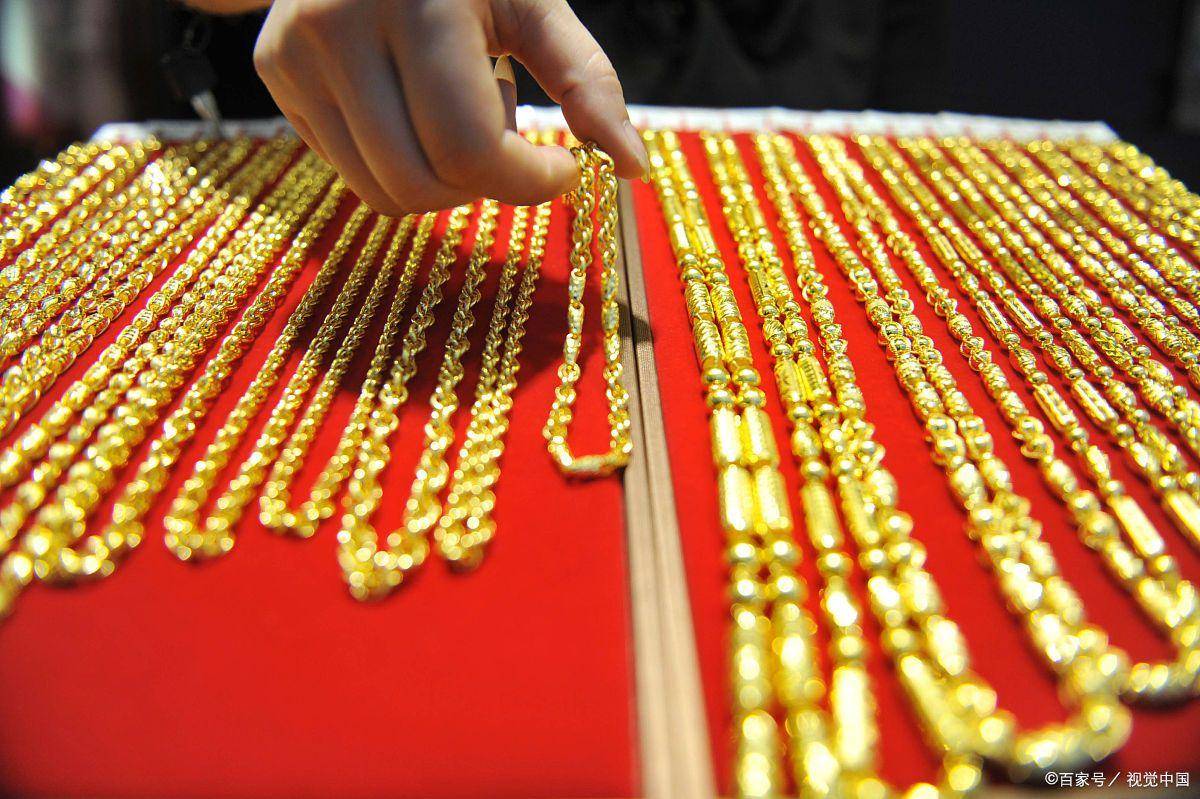
Price Trends - Domestic gold price dropped to 977.7 yuan per gram on January 3, 2026, a decline of over 100 yuan compared to previous days [1] - The selling price for gold is now around 967 yuan per gram, reflecting a significant decrease in market demand [1] - Major brands like Chow Tai Fook and Lao Feng Xiang maintain gold prices above 1350 yuan per gram, but customer traffic has decreased by half [1] Retail Pricing - Various jewelry stores set their gold prices as follows: - Chow Tai Fook and Lao Feng Xiang at 1357 yuan per gram for gold and 823 yuan per gram for platinum [1] - Chenghuang Jewelry at 1355 yuan per gram for gold and 810 yuan per gram for platinum [1] - Xingguangda Jewelry and Jinlan Jewelry both at 1365 yuan per gram for gold and 820 yuan per gram for platinum [1] - Gold bars from JinYinJie Investment priced at 1338 yuan per gram [1] Bank Gold Products - China Construction Bank's "Long Ding Gold Bar" priced at 993.01 yuan per gram [2] - Industrial and Commercial Bank's "Ruyi Gold Bar" priced at 992.36 yuan per gram [2] - Agricultural Bank's "Chuan Shi Zhi Bao Gold Bar" priced at 1010.55 yuan per gram [3] - Ping An Bank's "Harmonious Ping An Gold Bar" priced at 997.5 yuan per gram [4] - Shanghai Pudong Development Bank's "Investment Gold Bar" priced at 1043.5 yuan per gram [5] Market Behavior - The gold market has seen a shift with increased online purchases and DIY gold crafting, as younger consumers prefer to create custom pieces rather than buy from traditional stores [5][7] - The wholesale price in Shui Bei is currently 1136 yuan per gram, significantly lower than retail prices [7] - Many young consumers are opting for DIY gold crafting, utilizing affordable tools and materials, leading to a decline in sales at traditional jewelry stores [7]
今日金价!1月2日最新黄金价格!各大金店、黄金回收价格查询
Sou Hu Cai Jing· 2026-01-03 06:49
Group 1 - Gold prices have dropped significantly, with London gold falling below $4300, leading to lower prices in domestic gold stores, such as Chow Tai Fook at 1357 yuan per gram and Lao Feng Xiang at 1360 yuan per gram [1] - The latest gold price quotes include 1018.00 yuan with an opening price of 1002.83 yuan and a previous closing price of 1003.03 yuan, while the price for 9999 pure gold is at 1017.00 yuan [1] - Platinum prices have also decreased, currently at 602.50 yuan, down 0.74% from the previous day [1] Group 2 - In the Shenzhen Shui Bei market, the price for 999 gold is 1129 yuan per gram, with 999.99 purity only slightly higher, indicating a stable demand for gold [4] - Experts suggest that the current gold price trend may continue for three years, supported by central bank purchases, while the Federal Reserve may have underestimated inflation's impact [4] - The price of gold is seen as a safe haven, with fluctuations expected as it approaches the $5000 mark, raising concerns about consumer purchasing power in the future [4]

2025年银行股结构性上涨跑输大盘 2026年市场叙事逻辑如何?
Xin Hua Cai Jing· 2026-01-03 05:25
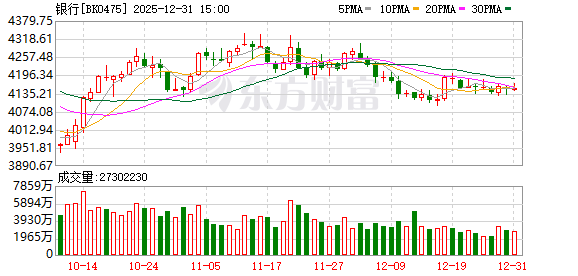
Core Viewpoint - In 2025, A-share bank stocks experienced a "high first, low later" trend, with a total market capitalization exceeding 15 trillion yuan, but overall performance lagged behind the broader market, particularly the CSI 300 index, by over 10 percentage points [2][5][9]. Market Performance - The banking sector's index rose by 7% in 2025, underperforming the CSI 300 index, which reflects a shift from broad-based gains to structural differentiation [2][5]. - The first half of 2025 saw a strong performance, with the banking index increasing by 13.1%, outperforming other major indices, while the second half faced a correction, particularly from July to September, where the index fell by approximately 14% [5][6]. - By the end of 2025, 35 out of 42 bank stocks had risen, with Agricultural Bank of China leading with a 52.66% increase, followed by Xiamen Bank at 35.78% and Shanghai Pudong Development Bank at 24.56% [6][9]. Notable Individual Performances - Agricultural Bank of China emerged as a standout performer, surpassing Industrial and Commercial Bank of China in market capitalization for a brief period, reaching 2.55 trillion yuan [7]. - The overall market capitalization of the banking sector reached 15.7 trillion yuan, with significant contributions from major state-owned banks [5][7]. Valuation and Dividend Appeal - The banking sector's price-to-book ratio (PB) improved to 0.62 by the end of 2025, indicating a marginal recovery from the "broken net" situation, with some banks briefly exceeding a PB of 1 [9][10]. - The average dividend yield for bank stocks was 4.99%, significantly higher than the market average and the yield on 10-year Chinese government bonds, making them attractive for long-term investment [9][10]. Future Outlook - Experts suggest that the banking sector is transitioning from "valuation repair" to "value re-evaluation," with future performance dependent on macroeconomic stability, supportive policies, and confirmation of profit turning points [10]. - Predictions for 2026 indicate a stabilization of net interest margins and overall asset quality, although challenges remain in retail and real estate sectors [10].