福田汽车

Search documents
福田居首 重汽第二 东风险胜长安进前三 11月商用车销39万辆增24%!| 头条
第一商用车网· 2025-12-14 12:49
Core Viewpoint - The commercial vehicle market in China has shown consistent growth since June 2025, with November sales reaching 391,700 units, marking a 24% year-on-year increase and a 9% month-on-month increase, indicating a strong upward trend in the industry [1][4][26]. Sales Performance - In November 2025, the commercial vehicle market sold 391,700 units, achieving a year-on-year growth of 24% and a month-on-month growth of 9%, with the growth rate expanding by 3 percentage points compared to the previous month [4][26]. - The cumulative sales from January to November 2025 reached 3.8704 million units, representing a 10% increase year-on-year, with an additional 365,400 units sold compared to the same period last year [8][18]. Market Trends - The sales trend for November over the past five years has fluctuated, with this year's sales being the highest at 391,700 units, surpassing last year's figures by approximately 77,000 units and the lowest in 2022 by nearly 140,000 units [6][8]. - The market has experienced a competitive landscape, with the top ten companies holding a combined market share of 75.69% in November, and the top five companies accounting for nearly 50% of the market [15][23]. Company Rankings - Foton led the sales in November with 54,800 units sold, followed by China National Heavy Duty Truck Group with 40,500 units, and Dongfeng and Changan both with 35,500 units [10][12]. - The rankings of the top ten companies remained stable, with minor shifts in positions, indicating a highly competitive environment where market shares among neighboring companies are closely contested [16][24]. Cumulative Sales by Company - Foton's cumulative sales reached 585,600 units, while China National Heavy Duty Truck Group, Dongfeng, and Changan all exceeded 350,000 units in cumulative sales [20][23]. - The leading companies in terms of cumulative growth include China National Heavy Duty Truck Group, with a 26% increase, followed by Shaanxi Automobile and SAIC Maxus with 21% and 35% increases, respectively [18][20]. Conclusion - The commercial vehicle market in China is experiencing a robust growth phase, with significant year-on-year increases in both monthly and cumulative sales, alongside intense competition among leading manufacturers [26].






监管部门重拳“反内卷”:严禁不正当价格竞争,比亚迪小鹏北汽等表态
Bei Jing Shang Bao· 2025-12-14 10:41
Core Viewpoint - The National Market Supervision Administration has released a draft guideline aimed at regulating pricing behaviors in the automotive industry, focusing on compliance for manufacturers and sales enterprises to promote lawful and fair competition [1][2]. Group 1: Pricing Behavior Regulations - The draft guideline specifies compliance requirements for pricing behaviors from vehicle production to sales, including the establishment of a comprehensive pricing management system covering all aspects of sales and financial services [2][3]. - It prohibits price collusion among manufacturers and suppliers, and mandates clear communication of pricing strategies and promotional policies to ensure consumer rights are protected [2][3]. Group 2: Sales Practices - The guideline emphasizes the need for transparent pricing in new car sales, requiring accurate price displays and the prohibition of hidden fees or misleading promotions [4][5]. - It mandates that sales enterprises must not engage in predatory pricing practices aimed at eliminating competition, such as selling below cost or using deceptive discounting methods [5][6]. Group 3: Internal Compliance Management - The draft encourages automotive companies to establish internal compliance management systems to prevent pricing violations, including risk identification and emergency response mechanisms [6][7]. - It outlines six core mechanisms for effective pricing behavior management, including decision-making, contract management, and compliance training [6]. Group 4: Industry Response and Market Trends - Major automotive companies like BAIC Group and Xpeng Motors have expressed commitment to adhering to the new guidelines, aiming to enhance their pricing compliance management systems [7]. - The automotive industry has seen a significant increase in production and sales, with a record of over 30 million vehicles sold in 2023, although profit margins have declined from 7.8% in 2017 to 4.3% in 2024 due to intense price competition [8][9].

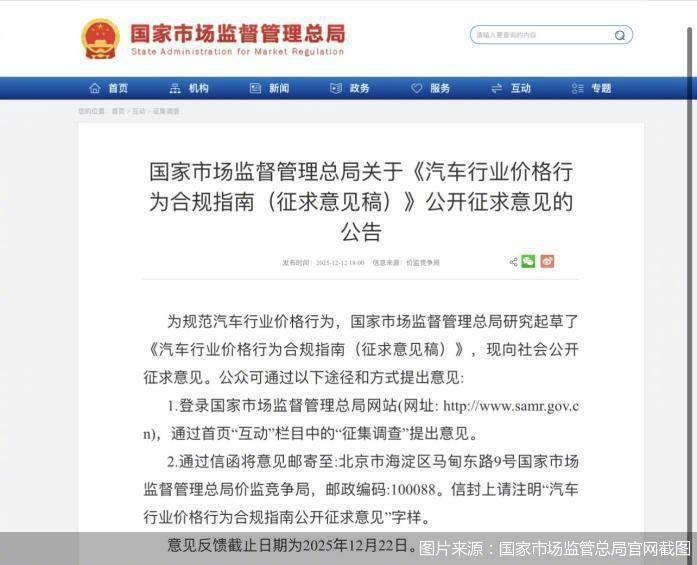
监管部门再出重拳“反内卷”:严禁车企不正当价格竞争,比亚迪小鹏北汽等表态
Bei Jing Shang Bao· 2025-12-14 09:28
Core Viewpoint - The National Market Supervision Administration has released a draft guideline for price behavior compliance in the automotive industry, aiming to regulate pricing practices among manufacturers and sales enterprises, thereby promoting legal and compliant operations within the sector [1][2]. Group 1: Price Behavior Regulations - The draft guideline specifies compliance requirements for price behavior from vehicle production to sales, including the establishment of a comprehensive price management system covering all aspects of sales and financial services [2][3]. - It prohibits price collusion and discrimination among businesses under similar trading conditions, aiming to prevent unfair competition and protect consumer rights [2][3]. - The guideline emphasizes the need for clear pricing strategies based on production costs and market demand, ensuring that pricing practices are transparent and fair [2][3]. Group 2: Sales Practices - The guideline addresses issues in new car sales, mandating accurate price displays and prohibiting misleading promotions and price fraud [4][5]. - It requires that promotional rules and conditions be clearly communicated, and any additional charges must be disclosed to consumers [4][5]. - The guideline aims to enhance price transparency in the automotive market, thereby safeguarding consumer interests and stabilizing the industry [4][5]. Group 3: Internal Compliance Management - The draft encourages automotive enterprises to establish internal price compliance management systems to prevent pricing violations from the source [6][7]. - It outlines six core mechanisms for internal compliance, including price decision-making, contract management, and risk prevention [6][7]. - The guideline promotes a shift from passive compliance to proactive self-discipline within the industry, fostering a cooperative environment among businesses [6][7]. Group 4: Industry Context and Trends - The automotive industry in China has seen record production and sales, yet profit margins have declined from 7.8% in 2017 to 4.3% in 2024, indicating a need for regulatory intervention to combat price wars [8][9]. - The Ministry of Industry and Information Technology is increasing efforts to address "involution" in the automotive sector, which has negatively impacted normal business operations and industry sustainability [9]. - Recent data shows a recovery in the automotive industry's financial performance, with a 7.9% increase in revenue and a 4.4% increase in profit year-on-year, suggesting a stabilization of market conditions [9].
中国燃油车,在海外杀疯了!
商业洞察· 2025-12-14 09:22
Core Viewpoint - The article discusses the significant transformation of Chinese fuel vehicles from being ridiculed to becoming competitive in international markets, highlighting their successful export growth and market penetration in regions where electric vehicles face challenges [5][31]. Group 1: Export Growth of Chinese Fuel Vehicles - Since 2020, for every four cars exported from China, three have been fuel vehicles [8]. - In 2021, China exported 2.015 million cars, with 1.705 million being fuel vehicles, accounting for 84.6% of total exports [9]. - In 2022, the total car export volume reached 3.111 million, with fuel vehicles increasing to 2.342 million, representing 78.2% [10]. - In 2023, the export volume of traditional fuel vehicles was 3.707 million, making up 75.4% of total exports [11]. - Projections for 2024 indicate that fuel vehicle exports will reach 4.574 million, maintaining a share of 78.1% [12]. Group 2: Market Performance and Competitive Advantage - Chinese fuel vehicles have gained significant market share in regions like Eastern Europe, Latin America, and Africa, with Chinese manufacturers capturing nearly 16% of the South African market in the first half of the year, up from 10% the previous year [14]. - In Chile, Chinese fuel vehicles account for nearly one-third of the market, while traditional brands like Chevrolet and Nissan have seen sales declines of 34% to 45% [15]. - The competitive edge of Chinese fuel vehicles lies in their cost-effectiveness and superior configurations compared to traditional brands, allowing consumers to purchase higher-spec models for similar prices [21][22]. Group 3: Strategic Adaptations and Local Production - Chinese automakers are establishing production bases in key markets such as Thailand, Brazil, and Russia to reduce costs and enhance local supply chains [26]. - This strategy not only helps in avoiding tariffs and logistics costs but also allows for better market integration and responsiveness to local demands [26]. - Some joint venture brands are leveraging Chinese manufacturing advantages to create globally competitive vehicles, with exports constituting nearly 70% of their total sales [29]. Group 4: Future Outlook - The narrative of Chinese fuel vehicles represents a quiet yet robust response to the global shift towards electric vehicles, focusing on markets where practical needs outweigh technological aspirations [31]. - Despite challenges in brand recognition and scale compared to established players like Toyota and Volkswagen, Chinese manufacturers are poised to leverage their complete industrial chain and strategic initiatives to enhance global competitiveness [32].


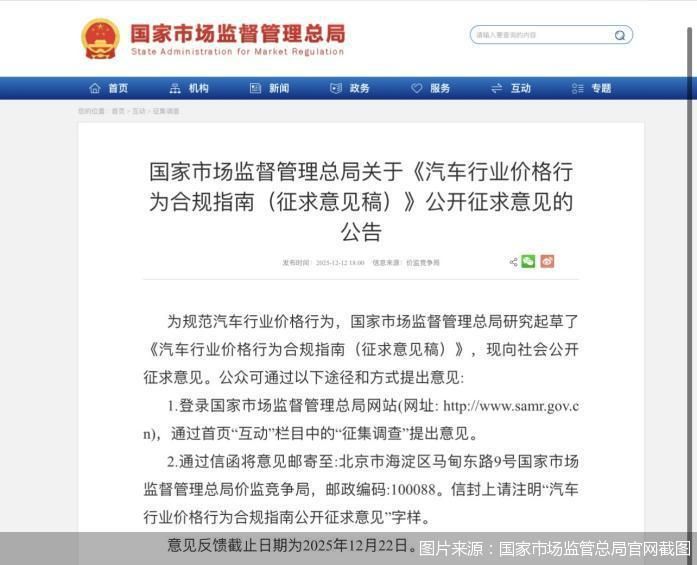
汽车价格“红线”来了!市场监管总局出台重磅政策传递什么信号?
第一商用车网· 2025-12-14 06:14
Core Viewpoint - The National Market Supervision Administration has drafted the "Automobile Industry Price Behavior Compliance Guidelines (Draft for Comments)" to maintain fair competition and protect the rights of consumers and operators, with feedback due by December 22, 2025 [1][4][29]. Group 1: General Principles - The guidelines aim to standardize price behavior in the automobile industry, ensuring fair competition and protecting the legal rights of consumers and operators [6]. - The guidelines apply to all price behaviors occurring during automobile production and new car sales within the People's Republic of China [6]. - Key principles include compliance with laws, transparency, equality, and social responsibility in the automotive sector [6]. Group 2: Price Behavior of Automobile Manufacturers - Automobile manufacturers are required to establish pricing strategies based on production costs and market demand, managing price behavior across the entire sales chain [7]. - Clear and defined rebate policies must be established between manufacturers and dealers, respecting the dealers' right to set prices [8]. - Price collusion among manufacturers or parts producers poses significant legal risks, including fixed pricing and price manipulation [9]. - Manufacturers must avoid pricing below production costs for anti-competitive purposes, as this also carries substantial legal risks [9][10]. Group 3: Price Behavior of Automobile Sales Enterprises - Sales enterprises must clearly display prices and related information, including vehicle specifications and delivery timelines [12]. - Promotional activities must comply with regulations, including clear communication of rules and conditions [14]. - Sales enterprises are prohibited from misleading consumers through deceptive pricing practices, including false comparisons and unfulfilled price commitments [17]. Group 4: Internal Compliance Management - Automobile manufacturers and sales enterprises are encouraged to establish internal price compliance management systems to oversee and coordinate compliance efforts [21]. - The guidelines outline six core mechanisms for internal compliance, including price decision-making and risk prevention [23][24]. - Continuous improvement and timely updates to compliance management systems are mandated to adapt to legal and regulatory changes [24].
吴周涛:未来三年,依托北汽两大平台推出三种车型
汽车商业评论· 2025-12-13 23:06
年末欢聚 , 共启新程! 设计 | 甄 尤 美 作者 | 吴 周 涛 ( 北 京现 代 董 事 长 ) 编辑 | 吴 静 Editor's notes 编者按 " 汽车行业历经百年的发展到今天,新技术、新合作、新生态迭代进步,目前产业合作早已不是简单的能源互补,而是技 术同源、标准同轨、价值共创的深度融合。 " 12 月 5 日,在 2025 第十届新汽车技术合作生态交流会( WNAT-CES 2025 )上,北京现代董事长吴周涛分享了自己对中国汽 车行业未来变化趋势的理解。 他还表示,在当前新能源智能化进入快速发展大格局下,合资车企必须要加快变革调整的步伐,一方面对原研车产品进行 精简优化,并开启油电同智的发展策略; 另一方面,要依托国内成熟的平台融合 ICT 企业智能化的技术,引入新的供应链体系。更为重要的是,现在竞争更多是效 率之战,各个车企在如何提效方面做了巨大努力,包括组织结构的变化、决策流程的变化。 在这样的行业变革和生态趋势下,吴周涛分享了北京现代未来发展的主要路径 —— 本土运营、内需转型、出口基地、运营 高效。 以本土运营为例。吴周涛表示,合资企业过去单一依靠外方导入产品和技术的模式将得到根 ...

【策略报告】商用车&摩托车2026年投资策略:出口向好,拥抱龙头
东吴汽车黄细里团队· 2025-12-13 15:42
Key Points - The core view is that in the heavy truck sector, exports will surpass domestic sales by 2026, with electric and natural gas vehicles outpacing diesel trucks, focusing on export leaders [2][3][12] - For 2025, domestic sales are expected to reach 814,000 units, a year-on-year increase of 35.2%, while exports are projected at 332,000 units, up 14.3%, leading to a total wholesale volume of 1,143,000 units, reflecting a 26.7% increase [2][19] - The natural demand for heavy trucks is stabilizing, with an estimated 646,000 units driven by natural demand in 2025, indicating that policy support is not the sole driver of growth [2][19] - By 2026, the penetration rate of electric heavy trucks is expected to rise to 30%-35%, with natural gas trucks also gaining traction as gas prices decline and oil prices stabilize [3][12] - Investment recommendations include focusing on export leaders such as China National Heavy Duty Truck Group (China National Heavy Duty Truck H), engine leaders like Weichai Power, and companies with potential in both export and domestic sales like China National Heavy Duty Truck A, FAW Jiefang, Foton Motor, and CIMC Vehicles [3][12] Commercial Vehicle Sector - The bus sector is expected to see stronger external demand than internal demand in 2026, with a projected 3% increase in domestic sales and a 30% increase in exports [5][13] - The key players in the bus sector include Yutong and King Long, which are expected to benefit from the dual drivers of domestic recovery and sustained overseas demand [6][13] Motorcycle Sector - The motorcycle market is witnessing a decline in domestic sales but a significant increase in exports, particularly for large-displacement motorcycles, which are expected to grow by 31% year-on-year in 2026 [8][14] - The total motorcycle sales for 2026 are projected to reach 19.38 million units, a 14% increase, with large-displacement motorcycles expected to account for 1.26 million units [8][14] - Investment recommendations in the motorcycle sector favor leading companies such as Chunfeng Power and Longxin General [9][14]


什么情况?延期交付的网红车,被国家敲打了
凤凰网财经· 2025-12-13 13:05
"月底购车直降3万!""限时补贴,福利倒计时!"走进一家汽车销售门店,迎面而来的往往是五花八门的促销标语,和销售人员热情却略带含糊的报 价。 买车套路深,曾是不少消费者的心头痛。 来源|凤凰网财经《公司研究院》 01 新规给谁念"紧箍咒"? 汽车销售领域的定价问题,早已不是新鲜话题。 "一车一价"的现象,既增加了消费者的比价成本,也为各种"价格套路"提供了温床。 意见稿第十四条提到,汽车销售企业销售商品或者提供服务 , 应按规定进行明码标价。有可选配件的,要标明可选配件的名称、价格、规格、产地 等内容。 图片来源:意见稿截图 这种场景即将迎来改变, 12月12日,国家市场监督管理总局就《汽车行业价格行为合规指南(征求意见稿)》(下称"意见稿")公开征求意见,为 汽车行业的定价和销售行为划下清晰红线。 监管还表示,用虚假或者引人误解的价格手段诱骗消费者的行为,存在较大法律风险。比如使用欺骗性、误导性的语言、文字、数字、图片或者视频 等标示价格以及其他价格信息,使用虚假的 "市场价""厂商指导价""市场参考价"等被比较价格进行宣传,虚假标示"限时降价""清仓价"等,以及"以 贷款购车、购买保险等作为交易附加条件的 ...

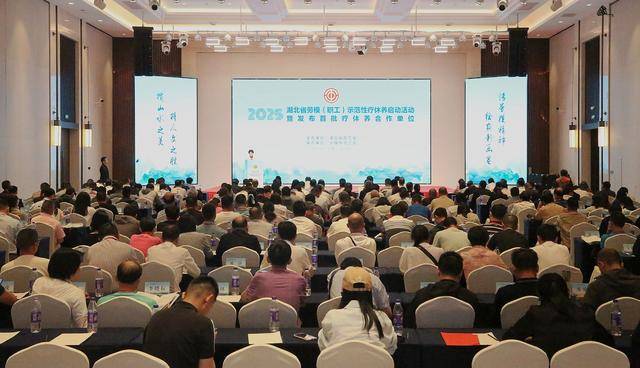
引客入堰 以“工”为媒激活城市文旅消费新动能
Sou Hu Cai Jing· 2025-12-13 08:33
Core Insights - The article highlights the successful implementation of the "Bring Guests to Shiyan" initiative by the Shiyan Municipal Federation of Trade Unions, which has attracted over 25,000 labor model workers from 23 provinces and regions in China this year [1][3]. Group 1: Tourism and Cultural Integration - The Shiyan Municipal Federation of Trade Unions has developed a unique tourism route combining Wudang Dao culture and ecological health, enhancing the experience for labor model workers [3]. - The first group of labor model workers from Tibet visited the Wudang Mountain Health Resort, experiencing both natural and cultural attractions, which received positive feedback [3]. - The initiative aims to create a service system that integrates health care, cultural experiences, and red education, expanding the network of labor model workers [3][4]. Group 2: Economic Impact and Local Engagement - Labor model workers not only engage in tourism but also contribute to local consumption by purchasing local products such as mushrooms, olive oil, and yellow wine [4]. - The Shiyan Municipal Federation of Trade Unions has hosted various national trade union activities, enhancing the city's visibility and attracting more visitors [4]. - Events like the national reading exchange activity have brought together representatives from over 50 trade unions, promoting cultural exchange and showcasing the city's charm [4]. Group 3: Skills Competitions and Talent Engagement - Shiyan has hosted skill competitions and conferences, attracting teams from various provinces and cities, showcasing the city's industrial capabilities [5]. - Educational and technological talents from prestigious universities have visited Shiyan to experience its industrial and cultural landscape, further promoting local development [5]. - The initiatives aim to create a sense of belonging among workers while aligning trade union efforts with urban development [5].
“卖车须明码标价”,市场监管总局征求意见:不得用虚假“市场价”“厂商指导价”等进行宣传!比亚迪小鹏北汽迅速响应
新浪财经· 2025-12-13 07:39
Core Viewpoint - The article discusses the draft of the "Automotive Industry Price Behavior Compliance Guidelines," which aims to standardize pricing practices in the automotive sector and ensure compliance with legal regulations [2][13]. Group 1: Overall Principles and Requirements - The guidelines consist of five chapters and 28 articles, outlining the purpose, basis, and scope of application, while encouraging industry associations to enhance self-discipline [2]. - The guidelines emphasize the need for fair pricing practices and compliance with legal standards, aiming to prevent unlawful pricing behaviors [14]. Group 2: Pricing Behavior Norms for Automotive Manufacturers - Manufacturers are required to implement comprehensive price management covering all aspects from vehicle sales to financial services [3]. - Clear and transparent promotional and pricing behaviors are mandated, including well-defined rebate policies and respect for dealers' pricing autonomy [3][14]. - The guidelines prohibit unfair pricing practices, such as price discrimination among similar trading conditions and collusion between manufacturers [5][14]. Group 3: Requirements for Automotive Sales Enterprises - Sales enterprises must ensure transparent pricing, including clear labeling of prices and services, and must not engage in misleading promotional practices [5][15]. - The guidelines specify that sales enterprises should not use deceptive pricing methods to mislead consumers, including false comparisons and unfulfilled pricing commitments [7][15]. - A risk warning mechanism is encouraged to alert consumers about significant price discrepancies [8]. Group 4: Internal Compliance Management - Automotive companies are advised to establish a systematic internal price compliance management framework to prevent pricing violations [10]. - The guidelines outline six core mechanisms for price management, including decision-making, contract management, and risk prevention [10]. - Continuous improvement and adherence to legal changes are emphasized to ensure effective execution of compliance measures [10]. Group 5: Industry Response - BYD has expressed its commitment to adhere to the guidelines, focusing on optimizing its pricing management and compliance systems [16][17]. - BAIC Group supports the guidelines, aiming to create a unified and competitive market environment while ensuring compliance in pricing practices [18]. - XPeng Motors has also shown strong support for the guidelines, pledging to enhance transparency and compliance in its pricing and sales processes [20].