台积电

Search documents
美国关税手段为何失灵?专家说→
Jin Rong Shi Bao· 2025-09-02 13:37
Core Insights - The trade protectionism policies initiated by the Trump administration have not resulted in the anticipated long-term economic prosperity, instead causing structural impacts on the U.S. economy and the global trade system [1] Group 1: Short-term Gains vs Long-term Costs - The asymmetric tariff design has led to a short-term increase in manufacturing capacity in the U.S., with companies like Samsung and TSMC announcing investments in the U.S. [2] - Long-term, U.S. manufacturers relying on global supply chains face rising cost pressures, with a reported average increase of 37% in total supply chain costs for companies relocating production to Mexico and Vietnam [2] - Tariff policies have raised import prices, eroding consumer purchasing power, with Goldman Sachs indicating that the cost burden on consumers could rise from 22% to 67% if tariffs persist [2] Group 2: Shifts in Trade Relationships - The U.S. is experiencing a weakening of its central position in global trade as countries adjust their trade partnerships to reduce reliance on the U.S. market [3] - The EU has increased its trade share with China while decreasing its trade with the U.S., indicating a structural shift in global trade networks [3] - In key technology sectors, Europe is enhancing its domestic production capabilities to lessen dependence on U.S. technology, which may further diminish the U.S.'s traditional core position in global value chains [3] Group 3: Monetary Policy Challenges - The Federal Reserve faces a difficult balance between maximizing employment and stabilizing prices, with recent data showing a decline in employment indicators [4] - Inflation remains a concern, with the core consumer price index rising to 3.1%, complicating the Fed's monetary policy options [4] - Tariff policies are expected to exacerbate inflationary pressures, and premature interest rate cuts to support employment could intensify inflation risks [4] Group 4: Economic Growth Constraints - Despite short-term resilience in the U.S. economy, factors such as government debt, inflation risks, and tariff impacts are creating multiple constraints on growth [6] - The federal government debt has surpassed $37 trillion, with rising interest payments crowding out public investment and increasing market rates [6] - If tariffs are fully implemented, GDP growth could decline by an average of 0.5 percentage points annually from 2025 to 2026, with significant price increases for consumer goods [6]
莫迪推动芯片自给 阿斯麦(ASML.US)积极拓展印度业务
Zhi Tong Cai Jing· 2025-09-02 11:04
阿斯麦发言人拒绝透露任何有关潜在销售的细节,比如销售的时间表或具体产品型号。 莫迪希望建立可靠的本土芯片产业,并期望首批印度制造的芯片将于年底前上市,这可能为阿斯麦的设 备开辟一个新的市场。这个南亚国家正与美国、日本和中国等国一道,建设其半导体制造能力,部分原 因是为了减少对其他地区的依赖。 据报道,尽管全球大型芯片制造商尚未承诺在印度投资,但ChatGPT制造商OpenAI正在寻找当地合作伙 伴,建立一个至少拥有1吉瓦容量的数据中心。 (原标题:莫迪推动芯片自给 阿斯麦(ASML.US)积极拓展印度业务) 智通财经APP获悉,在印度总理纳伦德拉·莫迪寻求在本地生产芯片并减少关键技术进口之际,半导体 设备制造商阿斯麦(ASML.US)积极拓展印度业务。 阿斯麦首席执行官Christophe Fouquet周二在新德里举行的印度半导体峰会上表示,该公司希望在未来一 年深化与印度公司的合作。这家总部位于荷兰费尔德霍芬的公司是台积电和三星电子的重要供应商。 Fouquet表示:"我们致力于通过合作、知识交流和人才共享支持印度的雄心壮志。我们先进的光刻解决 方案可以帮助印度晶圆厂实现尖端性能。" 阿斯麦生产制造高端芯 ...

台积电市占,首超70%
半导体行业观察· 2025-09-02 01:11
Core Viewpoint - TSMC has achieved a record high global foundry market share of 70.2% in Q2, significantly widening the gap with Samsung, which has seen a decline in its market share [2][14]. Group 1: TSMC's Performance - TSMC's revenue for Q2 reached $30.24 billion, a year-on-year increase of 44.4% and a quarter-on-quarter increase of 17.8% [5][14]. - The net profit for TSMC in Q2 was $12.8 billion, accounting for 42.6% of revenue, marking a 67.2% increase compared to Q2 2024 [5]. - TSMC's wafer shipments increased by 19% in Q2, reaching 3.72 million 12-inch equivalent wafers, with revenue per wafer growing by 21.4% to $8,088 [5][12]. Group 2: Industry Outlook - The global foundry capacity utilization rate is expected to improve in Q3 due to seasonal demand for new products, with TSMC benefiting from high-priced advanced process wafers [2][14]. - SEMI predicts a 69% increase in advanced manufacturing technology capacity from 2024 to 2028, driven by the demand for chips produced using 7nm and smaller nodes [9][11]. Group 3: Competitors' Performance - Samsung's Q2 revenue was approximately $3.16 billion, with a market share of 7.3%, while SMIC's revenue slightly decreased to $2.21 billion, maintaining a 5.1% market share [15][16]. - UMC and GlobalFoundries reported revenue increases of 8.2% and 6.5%, respectively, with UMC's revenue reaching $1.9 billion and GlobalFoundries at $1.69 billion [15][16]. Group 4: Investment and Expansion - TSMC plans to invest $165 billion in the U.S. to build six chip fabs, two advanced packaging plants, and a research center in Phoenix, Arizona [8]. - TSMC is also expanding its production capabilities in Taiwan, with several fabs capable of producing chips from 130nm to 3nm nodes [8]. Group 5: AI and High-Performance Computing - TSMC's sales from high-performance computing (HPC) devices exceeded $18 billion, a 66.6% year-on-year increase, with AI chip manufacturing contributing approximately $8.78 billion in revenue [12][11]. - AI is estimated to account for about one-third of TSMC's total revenue, reflecting the growing demand for advanced chips in various applications [12].

三星美国厂2nm动了
Jing Ji Ri Bao· 2025-09-01 23:27
Core Viewpoint - The competition in the 2nm semiconductor manufacturing process in the United States is intensifying, with Samsung's Texas plant resuming operations under the supervision of Tesla's senior executives, aiming for mass production by 2026 [1] Group 1: Samsung's Texas Plant Developments - Samsung Electronics plans to deploy personnel to establish a 2nm production line at its Texas Taylor plant starting in September, with engineers being deployed in two phases [1] - The company is in the process of ordering equipment necessary for the construction of the foundry production line and has appointed a new head for the Taylor plant [1] - Samsung initially decided to invest in the Texas Taylor plant in 2021, originally planning to use a 4nm process, but delayed the timeline due to difficulties in securing key foundry customers [1] Group 2: Strategic Partnerships and Investments - Samsung announced a long-term chip supply agreement worth 22.8 trillion Korean Won (approximately 16.5 billion USD) with a globally recognized company, which will last until 2033, confirmed by Tesla's CEO Elon Musk [1] - The Taylor plant's 2nm production line is expected to reach a capacity of 16,000 to 17,000 12-inch wafers per month by the end of next year, with an investment of approximately 2.89 billion USD [1] - Mass production is anticipated to begin by the end of next year or early 2027 [1]
AI日报丨取代英伟达?阿里巴巴“芯片备胎”计划曝光!填补英伟达在中国市场的空白
美股研究社· 2025-09-01 10:50
Group 1 - OpenAI is reportedly planning to build a large data center in India, which may mark a significant step for its Stargate AI infrastructure in Asia, with a capacity of at least 1GW [5][6] - Alibaba has developed a new AI chip aimed at filling the gap left by NVIDIA in the Chinese market, leading to a stock surge of over 19%, the largest single-day increase since March 2022, with a market capitalization exceeding HKD 2.61 trillion [5][6] - TSMC is considering a price increase of 5% to 10% for all high-end process technologies by 2026 to offset U.S. tariffs, currency fluctuations, and supply chain pressures, which will impact major clients like NVIDIA and Apple [6][7] Group 2 - Elon Musk's xAI has filed a lawsuit against a former employee for allegedly providing proprietary information to OpenAI, claiming the employee took advanced AI technology superior to ChatGPT when leaving [10][11] - The lawsuit highlights ongoing tensions between Musk and OpenAI, which he co-founded in 2015 but left in 2018, and follows previous legal actions involving Musk against OpenAI and Microsoft [11]

研报 | 2Q25晶圆代工营收季增14.6%创新高,台积电市占达70%
TrendForce集邦· 2025-09-01 06:21
Core Insights - The overall revenue of the top ten foundries reached over $41.7 billion in Q2 2025, marking a record high with a quarter-on-quarter increase of 14.6% driven by pre-stockpiling effects from consumer subsidies in China and new product launches in the second half of the year [2][5]. Group 1: Industry Performance - The second quarter saw a strong recovery in foundry capacity utilization and shipment volume, primarily due to seasonal demand for new products in smartphones, laptops, and servers [2]. - The advanced process technology is expected to boost revenue significantly, with high-priced wafers contributing positively to the industry's overall performance [2]. Group 2: Company Revenue Performance - TSMC reported a revenue of $30.24 billion in Q2 2025, a quarter-on-quarter increase of 18.5%, achieving a market share of 70.2% [5][6]. - Samsung's revenue reached approximately $3.16 billion, with a 9.2% quarter-on-quarter increase, maintaining a market share of 7.3% [5][7]. - SMIC's revenue slightly decreased by 1.7% to around $2.21 billion due to shipment delays and ASP decline, resulting in a market share of 5.1% [5][8]. - UMC's revenue grew by 8.2% to $1.90 billion, with a market share of 4.4% [5][9]. - GlobalFoundries achieved a revenue of nearly $1.69 billion, increasing by 6.5% quarter-on-quarter, with a market share of 3.9% [5][10]. - HuaHong Group's revenue increased by approximately 5% to $1.06 billion, maintaining a market share of 2.5% [5][11]. - Vanguard's revenue was close to $0.38 billion, with a 4.3% increase, ranking seventh [5][12]. - Tower's revenue reached $0.37 billion, growing by 3.9% [5][13]. - Nexchip's revenue was $0.36 billion, with a nearly 3% increase [5][14]. - PSMC's revenue grew by 5.4% to $0.35 billion, ranking tenth [5][15].

这家半导体公司,即将加入2万亿美元俱乐部
半导体行业观察· 2025-08-31 04:36
Core Viewpoint - The article discusses the rapid growth of AI infrastructure investments by large tech companies, with a significant focus on semiconductor manufacturers like Nvidia and Broadcom, highlighting the potential for substantial revenue increases in the coming years [2][3]. Group 1: AI Infrastructure Investment - Large tech companies are expected to invest $375 billion in AI infrastructure this year, increasing to $500 billion next year [2]. - The primary expenditure for building AI data centers is on semiconductors, with Nvidia being the largest beneficiary due to its leading GPU capabilities for AI training and inference [2]. Group 2: Broadcom's Performance - Broadcom's AI revenue grew by 46% year-over-year to $4.4 billion, with expectations for the current quarter's AI semiconductor revenue to reach $5.1 billion, accelerating to approximately 60% growth [3]. - AI-related revenue currently accounts for about 30% of Broadcom's total sales and is projected to continue rising in the coming years [3]. Group 3: Valuation Concerns - Despite rapid growth in AI chip sales and improved profit margins from VMware, Broadcom's stock is considered expensive with a forward P/E ratio of 45 [5]. - The overall revenue growth rate for Broadcom is around 20%, which may not justify its high valuation given the strong growth momentum in its AI accelerator business [5]. Group 4: TSMC's Role - TSMC plays a crucial role in the semiconductor supply chain, responsible for the manufacturing of chips designed by companies like Nvidia and Broadcom, holding over two-thirds of the semiconductor manufacturing market share [6]. - TSMC's advanced process node N2 is expected to be priced 66% higher than the previous generation, reflecting strong demand despite initial lower yields [6]. Group 5: Future Projections - Management anticipates a 40% annual growth rate for AI-related revenue from 2024 to 2029, contributing approximately 20% to TSMC's overall revenue growth [7]. - TSMC's P/E ratio is around 24, which is considered attractive given its potential for 20% profit growth, making it a compelling investment opportunity [7].
帮主郑重:美股芯片一夜蒸发千亿!AI泡沫要破了?
Sou Hu Cai Jing· 2025-08-30 11:43
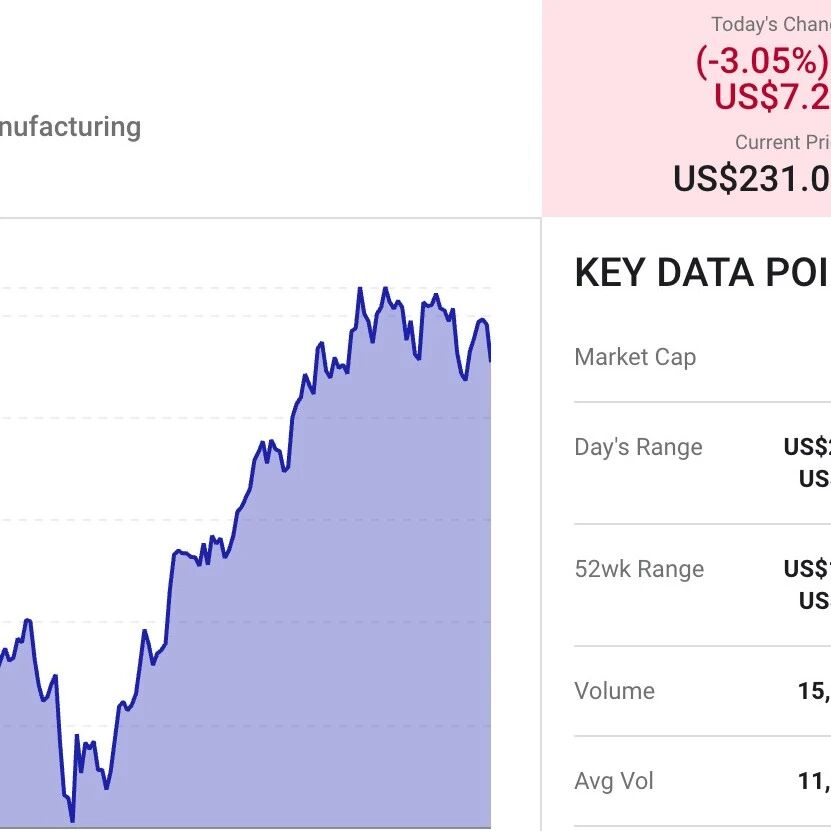
Group 1 - The core issue in the semiconductor sector is the significant drop in stock prices, particularly for AI chip company Marvell Technology, which saw a decline of over 18%, reaching a three-month low [1][3] - The immediate cause of the drop was Marvell's third-quarter revenue forecast of $2.06 billion, slightly below the market expectation of $2.12 billion, with concerns about zero growth in the data center business [3] - The overall semiconductor sector was affected, with the Philadelphia Semiconductor Index falling by 3%, and major companies like Nvidia and Broadcom also experiencing declines of over 3% [1][3] Group 2 - Despite Marvell's second-quarter performance showing a 58% year-over-year revenue increase and meeting adjusted earnings per share expectations, the market's high expectations for AI-related stocks led to a negative reaction when results did not exceed forecasts [3] - Analysts noted that Marvell remains competitive in areas such as ASIC chips for large-scale data centers and optical solutions, with the optical business being undervalued [3] - The sentiment in the global semiconductor market is highly sensitive, as evidenced by the significant drop in stock value for companies like Cambrian, indicating that fluctuations in expectations can lead to drastic market reactions [3]

张坤隐藏股大曝光!
Ge Long Hui A P P· 2025-08-30 09:14
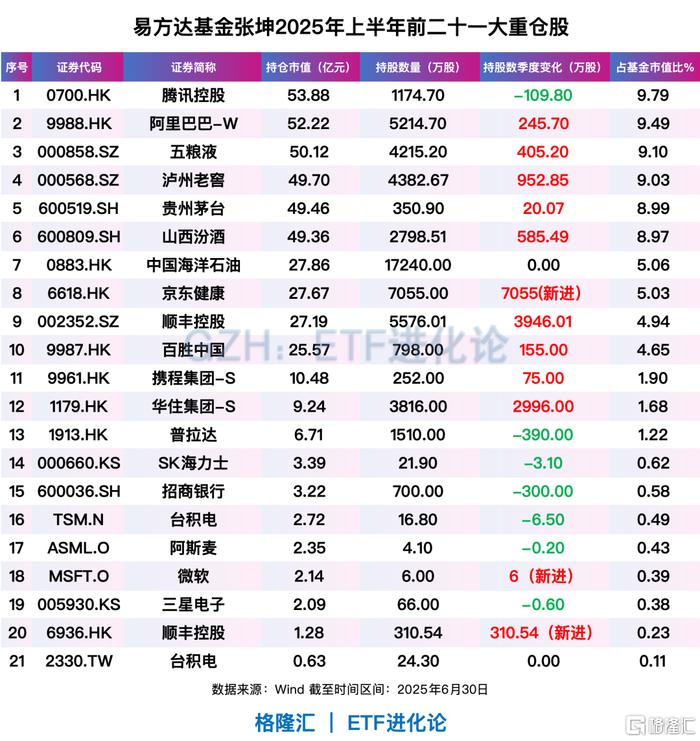
Group 1: Zhang Kun's Half-Year Report Insights - Zhang Kun's half-year report reveals all his holdings and argues against the pessimistic view on domestic consumption, citing data on disposable income and savings growth [1][2] - The report highlights that the per capita disposable income in China is projected to grow from CNY 32,189 in 2020 to CNY 41,314 in 2024, representing a compound annual growth rate (CAGR) of 6.4% [1] - Total household savings are expected to increase from CNY 93 trillion at the end of 2020 to CNY 152 trillion by the end of 2024, with a CAGR of 13%, significantly outpacing income growth [1] Group 2: Investment Strategy and Holdings - Zhang Kun believes that the current pessimistic market sentiment lacks a solid foundation and sees opportunities for long-term investors to acquire high-quality stocks at low valuations [4] - His fund has increased positions in domestic demand-related assets, including significant investments in companies like JD Health, SF Holding, and various liquor stocks [4][5] - The report lists the top holdings, with Tencent Holdings at CNY 53.88 billion, Alibaba at CNY 52.22 billion, and Wuliangye at CNY 50.12 billion, among others [5] Group 3: Alibaba's Q2 Financial Performance - Alibaba's Q2 revenue increased by 1.8% year-on-year, but adjusted net income fell by 18%, leading to initial stock price declines [6][7] - The company's cloud computing revenue grew by 26%, surpassing market expectations, and capital expenditures (Capex) reached CNY 38.7 billion, significantly higher than the anticipated CNY 30 billion [8] - Alibaba's management expressed confidence in their strategy, emphasizing the importance of investing in AI and consumer sectors as key growth opportunities [9] Group 4: Market Reactions and Trends - Following Alibaba's earnings report, the stock surged by nearly 13%, marking its best single-day performance since March 2023, and positively impacting indices like the Nasdaq Golden Dragon China Index [6][7] - Southbound capital continued to flow into Hong Kong stocks, with Alibaba receiving a net inflow of HKD 12.662 billion, leading the market [12][13] - ETFs tracking Hong Kong stocks saw significant inflows, with the top-performing ETF being the Fortune Hong Kong Internet ETF, which attracted HKD 12.824 billion [15][17]
深夜狂飙!阿里巴巴暴涨13%,市值一夜飙升2600亿元!特朗普与美联储的大战,正进入白热化...
雪球· 2025-08-30 03:05
↑点击上面图片 加雪球核心交流群 ↑ 深夜,美股回调,阿里巴巴却带领中国资产大涨,其中阿里巴巴股价大涨近13%, 一夜之间,阿里巴巴市值上涨369亿美元,约合人民币2628亿 元。 盘面上大型科技股多数下跌,拖累了整体走势。个股方面,特斯拉跌超3%,英伟达跌逾3%,Meta跌超1%,亚马逊跌逾1%,微软跌0.58%,苹 果跌0.18%,谷歌涨0.6%。 芯片股同样普遍下跌,费城半导体指数大跌3.15%。个股方面,迈威尔科技跌超18%,博通、超威半导体、台积电等跌超3%。 01 美股三大指数收跌 大型科技股多数下跌 当地时间周五,美股三大股指全线收跌,道指跌0.2%报45544点,标普500指数跌0.64%报6460点,纳指跌1.15%报21455点。 其中,迈威尔科技在最新披露的财报中给出的业绩指引不及市场预期,引发了投资者对其未来业绩增长放缓的担忧。财报显示,该公司预计第三季 度的营收为20.6亿美元,低于分析师一致预期。 | 迈威尔科技 | | | --- | --- | | MRVL 已收盘08-29 16:00:00 美东 | | | 62.86 -14.36 -18.60% | 1.59万人加自选 ...