
中通快递

Search documents
大行评级|大摩:下调中通快递目标价至23.8美元 下调2025至27年盈测
Ge Long Hui· 2025-08-25 06:54
Group 1 - Morgan Stanley has lowered the target price for ZTO Express from $24.6 to $23.8 while maintaining an "Overweight" rating [1] - The earnings estimates for the years 2025 to 2027 have been reduced by 1%, 2%, and 2% respectively [1] - Key factors for the adjustments include a slowdown in industry growth in the second half of 2025 leading to a downward revision in package volume forecasts, an increase in average selling prices due to anti-involution, and the impact of other one-time items [1]
国海证券晨会纪要-20250825
Guohai Securities· 2025-08-25 01:02
Group 1 - The report highlights that XPeng Motors achieved a record high gross margin in Q2 2025, with a revenue of 18.27 billion yuan, representing a year-on-year increase of 125.3% [5][6] - The gross margin for Q2 was 17.3%, up 3.3 percentage points from the same period in 2024, driven by the launch of high-priced models G6 and G9 [5][6] - The company expects to continue improving its overall gross margin in Q4 2025 with the release of new models and an increase in sales of range-extended vehicles [6][7] Group 2 - Shengnong Development reported a revenue of 8.856 billion yuan in H1 2025, a slight increase of 0.22% year-on-year, while net profit surged by 791.93% to 910 million yuan [11][13] - The company achieved growth in both production and sales, with chicken meat sales increasing by 2.5% and processed meat products by 13.21% [13] - The completion of the acquisition of Sun Valley Holdings has further optimized the supply chain and improved operational efficiency [13][14] Group 3 - Muyuan Foods reported a revenue of 76.463 billion yuan in H1 2025, a year-on-year increase of 34.46%, with net profit soaring by 1169.77% to 10.53 billion yuan [15][16] - The company sold 46.91 million pigs in H1 2025, with production costs decreasing to approximately 11.8 yuan/kg by July [16] - The company aims to reduce its overall debt by 10 billion yuan, having already decreased its total liabilities by 5.6 billion yuan by the end of Q2 2025 [15][16] Group 4 - Yanjin Food reported a revenue of 2.941 billion yuan in H1 2025, a year-on-year increase of 19.58%, with net profit rising by 16.70% to 373 million yuan [18][19] - The company’s revenue from konjac products increased by 155% to 790 million yuan, becoming a key growth driver [19][20] - The company is focusing on optimizing its cost structure and improving profitability through better product mix and channel strategies [20][21] Group 5 - Guocer Materials achieved a revenue of 2.154 billion yuan in H1 2025, a year-on-year increase of 10.29%, with net profit slightly up by 0.38% to 332 million yuan [22][24] - The company’s electronic materials segment saw a revenue increase of 23.65%, while the new energy materials segment grew by 26.36% [24][25] - The company is actively developing new materials and expanding its product offerings to meet the growing demand in various sectors [27][28] Group 6 - Yingliu Technology reported a revenue of 1.384 billion yuan in H1 2025, a year-on-year increase of 9.11%, with net profit rising by 23.91% to 188 million yuan [29][30] - The company’s new material and equipment segment experienced significant growth, with a revenue increase of 74.49% [31] - The company has secured multiple strategic partnerships in the nuclear energy sector, enhancing its order backlog [33][34] Group 7 - Shengquan Group reported a revenue of 5.351 billion yuan in H1 2025, a year-on-year increase of 15.67%, with net profit rising by 51.19% to 501 million yuan [37][38] - The company’s advanced electronic materials and battery materials segments achieved significant revenue growth, driven by increased demand [38][39] - The company is focusing on cost control and efficiency improvements to enhance profitability [39][40]





快递费上调,广东浙江电商受影响大,部分商家月增成本3万
Sou Hu Cai Jing· 2025-08-25 00:27
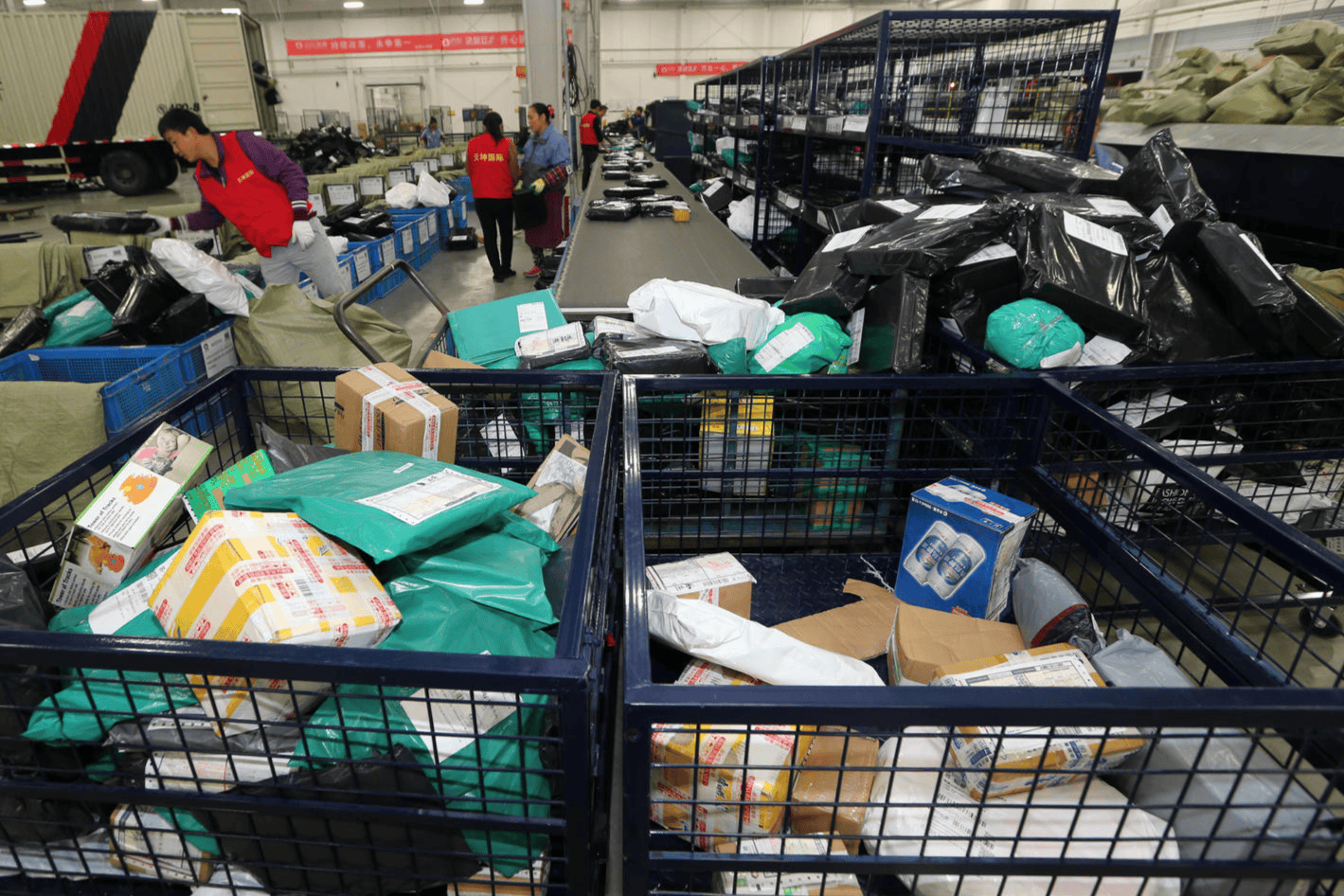
Core Viewpoint - Recent increases in express delivery fees across multiple regions in China, particularly in e-commerce dense areas like Guangdong and Zhejiang, have raised significant attention. This price adjustment is seen as a response to the long-standing issue of cutthroat competition within the industry [1][2]. Group 1: Price Adjustments - In Guangdong, the increase in express delivery fees ranges from 0.3 to 0.7 yuan per package, with a minimum price set at 1.4 yuan per order. This region has historically had low delivery prices, with extreme cases of 0.8 yuan for nationwide delivery [1]. - A YTO Express franchisee in Guangdong noted that prior to the price increase, the shipping cost could be as low as 0.9 yuan, but it has now risen by 0.5 yuan, marking a 55% increase [2]. - On August 5, Jitu Express and Zhongtong Express both announced price hikes of 0.3 yuan and 0.5 yuan respectively, citing the need to respond to the competitive landscape [4]. Group 2: Impact on E-commerce - E-commerce merchants in Guangdong reported that while the price increase may seem minor, it results in substantial additional monthly costs, with some businesses facing increases of tens of thousands of yuan in operational expenses [1]. - Merchants are cautious about raising product prices to offset increased shipping costs due to concerns that it may negatively impact sales volume [4]. Group 3: Industry Response and Future Outlook - The price hikes are part of a broader industry response to combat "involution" in competition, as highlighted in a meeting by the State Post Bureau in July, which aimed to promote healthy and stable development in the express delivery sector [1]. - Industry insiders believe that these price adjustments could help the express delivery sector move away from price wars, leading to improved service quality and competitiveness in the long run [4]. - While Guangdong is currently the focus of these price adjustments, there is uncertainty about whether similar changes will be implemented nationwide. However, ongoing regulatory efforts to address competitive practices suggest a trend towards more rational and stable pricing in the future [4].

广州、义乌多地快递费涨价;阿里更新官网划分四大业务板块|一周未来商业
Mei Ri Jing Ji Xin Wen· 2025-08-24 22:36
E-commerce and New Retail - Dongfang Zhenxuan achieved profitability in FY2025 with total revenue of 4.4 billion yuan and a net profit of 6.2 million yuan, recovering from a net loss of 96.5 million yuan in the first half of FY2025 [1] - The total GMV for Dongfang Zhenxuan in FY2025 was 8.7 billion yuan, down from 14.3 billion yuan in the previous fiscal year, indicating the impact of the departure of key influencer Dong Yuhui [1] - Alibaba restructured its business into four main segments, focusing on core operations to enhance resource allocation efficiency amid a competitive e-commerce landscape [2] - Heytea launched on Taobao Flash Sale, expanding its distribution channels and enhancing brand visibility on the platform [3] Logistics and Supply Chain - Zhongtong Express reported a package volume of 9.85 billion items in Q2 2025, a year-on-year increase of 16.5%, with revenue of 11.83 billion yuan, up 10.3% [4] - Manbang's Q2 2025 revenue reached 3.239 billion yuan, a 17.2% increase year-on-year, with net profit growing by 50.5% to 1.265 billion yuan [5] - Several courier companies in Guangdong and Zhejiang raised delivery fees by 0.3 to 0.7 yuan per item, indicating a shift towards stabilizing service prices in the logistics sector [6] Life Services - Flash Delivery reported Q2 2025 revenue of 1.02 billion yuan, with a net profit increase to 53.5 million yuan, reflecting a focus on high-demand delivery scenarios [7] - Keling AI achieved over 250 million yuan in revenue in Q2 2025, showcasing growth in AI applications within the content creation and recommendation sectors [8] - Meituan's international delivery brand "Keeta" launched in Qatar, marking its expansion in the Middle East and plans for further growth in Brazil [9] Innovation and Investment - Shibite Robot completed a B+ round financing of over 100 million yuan, aimed at advancing industrial intelligent products and expanding into maritime and lithium battery markets [10]
交通运输行业周报:“武鄂”首条低空货运航线开通,上海口岸暑运出入境客流持续高位-20250822
Bank of China Securities· 2025-08-22 11:14
Investment Rating - The transportation industry is rated as "Outperform" [2] Core Insights - The opening of the first low-altitude cargo route between Wuhan and Ezhou, along with high passenger traffic at Shanghai ports during the summer season, indicates growth in logistics and transportation [2][3] - Oil shipping rates remain low and fluctuating, while shipping rates for routes to Europe and the US continue to decline [3][16] - Joby Aviation successfully completed the world's first manned eVTOL flight between airports, showcasing advancements in aviation technology [3][17] - National railway coal shipments reached 1.02 billion tons in the first half of 2025, reflecting strong demand in the transportation sector [3][27] Industry Dynamics Shipping and Logistics - Oil shipping rates are experiencing low-level fluctuations, with the China Import Crude Oil Composite Index at 1064.60 points, up 0.7% from the previous week [15] - The shipping market is showing signs of weakness, with rates for routes to Europe and the US declining by 7.2% and 3.5% respectively [16] - The first low-altitude cargo flight between Ezhou and Wuhan was completed, marking a significant development in regional logistics [25][26] Passenger Transport - Shanghai's passenger traffic has remained high, averaging 129,000 daily entries and exits, a year-on-year increase of over 14% [18] - The peak day recorded 157,000 passengers, indicating a strong recovery in air travel [18] Freight and Rail Transport - In the first half of 2025, national railways transported 1.98 billion tons of goods, with coal shipments accounting for 1.02 billion tons [27] - The average daily loading of coal cars was 182,400, reflecting a 3.0% year-on-year increase [27] High-frequency Data Tracking - Air cargo prices have shown a slight decline, with the Shanghai outbound air freight price index at 4455.00 points, down 4.1% year-on-year [28] - The domestic air cargo flight volume increased by 7.61% year-on-year in July 2025, while international flights rose by 23.31% [37] Investment Recommendations - Focus on the equipment and manufacturing export chain, recommending companies such as COSCO Shipping, China Merchants Energy Shipping, and Huamao Logistics [5] - Consider opportunities in low-altitude economy investments, particularly in companies like CITIC Offshore Helicopter [5] - Explore investment opportunities in the road and rail sectors, with recommendations for Gansu Expressway, Beijing-Shanghai High-Speed Railway, and others [5] - Pay attention to the express delivery sector, recommending companies like SF Express, Jitu Express, and Yunda [5]
国海证券:“反内卷”逐步落地 期待8月快递行业价格修复
智通财经网· 2025-08-22 09:19
Core Viewpoint - The express delivery industry is experiencing a decline in single ticket revenue due to the trend of smaller packages and ongoing price wars, although there may be a recovery in prices in August under the backdrop of reduced competition [1][2]. Industry Overview - In July 2025, the express delivery industry reported a single ticket revenue of 7.36 yuan, reflecting a year-on-year decrease of 5.33% and a month-on-month decrease of 1.76% [1][2]. - The growth rate of express delivery business volume in July 2025 was 15.1%, outpacing the growth of physical online retail sales at 8.3% and social consumer retail sales at 3.7% [2]. Regional Analysis - In July 2025, the year-on-year growth rates of express delivery business volume in different regions were as follows: Class 1 regions at +14.2%, Class 2 regions at +16.8%, and Class 3 regions at +28.0% [2]. - The year-on-year growth rates of single ticket revenue in these regions were: Class 1 at -4.7%, Class 2 at -7.2%, and Class 3 at -12.1% [2]. Company Performance - In July 2025, the year-on-year growth rates of express delivery business volume for major companies were: YTO Express at +20.81%, Yunda Express at +7.56%, Shentong Express at +11.90%, and SF Express at +33.69% [3]. - The year-on-year changes in single ticket revenue for these companies were: YTO Express at -7.14%, Yunda Express at -3.54%, Shentong Express at -1.50%, and SF Express at -14.02% [3].


国泰海通:7月快递单价降幅收窄 反内卷持续扩散
Zhi Tong Cai Jing· 2025-08-22 05:56
国泰海通主要观点如下: 7月价格降幅收窄,快递"反内卷"力度超预期,短期竞争压力趋缓,中长期继续保障良性竞争 7月快递件量同比+15.1%;顺丰深化落实激活经营,业务量同比+33.7%,增速持续领跑 1)全行业:2025年7月全国快递企业件量164.0亿件,同比+15.1%;2025年1-7月件量1120.5亿件,同比 +18.7%。小件化趋势持续、电商促销且退换货便捷,共同驱动2025年前7个月件量增速超过邮管局对 2025年全年件量增速超8%的预测。2)电商快递:圆通/韵达/申通2025年7月业务量分别同比 +20.8%/+7.6%/+11.9%;1-7月业务量分别同比+21.6%/+15.1%/+19.3%。3)直营快递:顺丰2025年7月业务 量同比+33.7%;1-7月业务量同比+26.9%,得益于落实激活经营策略,加大对前线业务的授权与激励,顺 丰件量增速3-7月连续领跑行业。 行业集中度持续集中,头部公司Q2市场份额环比提高 2022年初到2024年末,由于政策监管下价格竞争相对温和,份额向头部集中较缓慢。1)全行业:2025年 1-7月快递行业CR8为86.9,同比提升1.7,反映出2025年 ...


易邮快递超市:构建多元合作生态,开启智能服务新纪元
Sou Hu Cai Jing· 2025-08-22 05:41
Core Insights - The traditional express delivery industry is facing challenges due to the rapid growth of e-commerce and consumer expectations for timely delivery, which has led to the emergence of the Yiyou Express Supermarket as a solution [1] Group 1: Business Model and Collaboration - Yiyou Express Supermarket's core competitiveness lies in its "e-commerce + express delivery" collaborative ecosystem, integrating major e-commerce platforms like Pinduoduo, JD.com, and Taobao with logistics networks of leading express companies [1] - This collaboration breaks down data barriers between platforms, allowing real-time synchronization of logistics information and enabling express companies to optimize their delivery capacity based on order distribution heat maps [1] - The average delivery time for same-city express services has improved by 22%, while the package delivery rate in remote areas has reached 98.7% [1] Group 2: Cost Optimization and User Experience - The shared transportation cost model allows Yiyou Express Supermarket to offer a 5 yuan shipping service, reducing single shipment costs by 40% through centralized collection [2] - The "three fixed mechanisms" for door-to-door delivery, established through partnerships with community property management, enhance delivery efficiency, increasing the average daily delivery volume per courier by 30 packages and reducing the rejection rate to 1.2% [2] - The introduction of low-price shopping services further extends the collaborative ecosystem, converting "express traffic" into "consumer traffic" by dynamically adjusting shelf products based on local shopping preferences [2] Group 3: Technology and Innovation - The operational efficiency is supported by a digital foundation built on intelligent systems, with an AI scheduling hub updating logistics node statuses every 15 minutes and predicting package peaks for the next four hours [3] - Smart parcel terminals can automatically identify package dimensions, weigh for billing, and detect prohibited items through cameras [3] - The developed "hive storage system" automates the allocation of storage locations for packages upon arrival, sending pick-up codes via SMS without manual intervention [3] - Yiyou Express Supermarket is redefining community service boundaries, becoming a crucial node connecting logistics, e-commerce, and community life [3]

无人快递车亮相陕西神木街头 智能转运开启物流新篇
Huan Qiu Wang Zi Xun· 2025-08-22 05:00
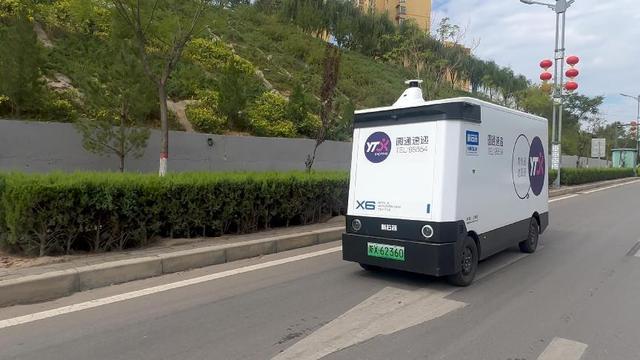
Core Viewpoint - The introduction of autonomous delivery vehicles in Shenmu City marks a significant step towards the intelligent transformation of the logistics industry, enhancing efficiency and service quality in package delivery. Group 1: Autonomous Delivery Vehicles - Autonomous delivery vehicles are now operating in Shenmu City, capable of navigating streets without human drivers and delivering packages to various points [1][3]. - These vehicles have a cargo capacity of 6 cubic meters, allowing them to carry 600 to 700 packages at once, equivalent to the load of three traditional delivery tricycles [3]. Group 2: Operational Efficiency - Zhongtong Express has implemented two autonomous delivery vehicles, which deliver over 2,000 packages daily to three locations, significantly reducing delivery time and costs compared to manual delivery [5][6]. - YTO Express has also deployed an autonomous delivery vehicle for specific cargo transfers, currently in trial operation, with a maximum daily transport capacity of 700 packages [8][10]. Group 3: Technology and Monitoring - The autonomous delivery vehicles are equipped with multiple high-definition cameras and millimeter-wave radar, enabling 360-degree environmental awareness and precise recognition of pedestrians, vehicles, and traffic signals [8]. - The vehicles can travel up to 150 kilometers on a single charge, sufficient for two days of operations, and are monitored in real-time by staff to ensure safety [8]. Group 4: Impact on Logistics - The arrival of autonomous delivery vehicles has streamlined operations at delivery stations, improving package transfer efficiency and enhancing the overall delivery experience for residents [10]. - The integration of these vehicles addresses challenges such as the difficulty in hiring truck drivers, while also providing a more efficient service to the community [10].

国海快递:快递“反内卷”逐步落地 期待8月行业价格修复
智通财经网· 2025-08-22 03:12
智通财经APP获悉,国海快递发布研报称,7月快递业务量增速与实物网上零售额增速形成剪刀差, 2025年快递小件化趋势延续,催化快递包裹同比快速增长。行业价格战7月仍延续,但8月反内卷背景 下,单票价格或有所修复。鉴于快递行业多条主线均存在布局的机会,维持快递行业"推荐"评级。加盟 快递在反内卷背景下,业绩有望修复,关注申通快递(002468.SZ)、韵达股份(002120.SZ)、圆通速递 (600233.SH)、中通快递-W(02057)。重点关注价值股顺丰控股(002352.SZ)。 ①量,2025年7月,一类地区/二类地区/三类地区快递业务量同比增速分别为+14.2%/+16.8%/+28.0%, 非产粮区业务量同比增速高于产粮区。②价,2025年7月,一类地区/二类地区/三类地区快递单票收入 同比增速分别为-4.7%/-7.2%/-12.1%。价格竞争主战场有向非产粮区转移趋势:1)非产粮区业务量增速 高于产粮区;2)产粮区多年竞争,价格与利润空间已近极限;3)非产粮区件量提升有望改善公司回程装载 率,有利于全网成本节降。 ①量,2025年7月,快递行业业务量同比增速(15.1%)>实物网上零售额同比 ...