
传音控股

Search documents
OpenAI联手开发AI硬件!立讯精密高开10%,消费电子ETF开盘涨2.24%
Mei Ri Jing Ji Xin Wen· 2025-09-22 02:14
Core Viewpoint - The A-share market opened positively on September 22, with the Shanghai Composite Index rising by 0.05%, driven by gains in sectors such as precious metals, electronic components, and basic metals, while paper and tourism sectors faced declines [1] Group 1: Market Performance - The consumer electronics sector showed strong performance, with the Consumer Electronics ETF (159732) increasing by 2.24% at the opening [1] - Key stocks in the consumer electronics sector, including Luxshare Precision, Heertai, GoerTek, and Lens Technology, saw significant gains, with Luxshare Precision and Heertai both opening up by 10%, GoerTek rising by 4.20%, Lens Technology by 3.57%, and Transsion Holdings by 3.04% [1] Group 2: Strategic Developments - OpenAI has reportedly formed a strategic partnership with Luxshare Precision to jointly develop a revolutionary AI device aimed at consumers [1] - OpenAI is also rumored to be in discussions with GoerTek, indicating a broader interest in collaboration within the consumer electronics sector [1] Group 3: Industry Trends - According to Guoda Securities, the consumer electronics industry is entering an AI-driven innovation cycle, with Luxshare Precision making significant advancements in AI-related fields [1] - The accelerated adoption of AI PCs, AI smartphones, smart acoustics, and smart wearables, along with ongoing enhancements in spatial computing device experiences, are expected to drive continuous innovation in the consumer electronics industry [1] Group 4: ETF Information - The Consumer Electronics ETF (159732) tracks the Guozheng Consumer Electronics Index, primarily investing in 50 A-share listed companies involved in the consumer electronics industry, with a focus on electronic manufacturing and optical optoelectronics [1] - The ETF has associated off-market connection funds, with Class A being 018300 and Class C being 018301 [1]

短期震荡不改长期慢牛趋势,上证180ETF指数基金(530280)近2周涨幅同类第1
Xin Lang Cai Jing· 2025-09-22 02:06
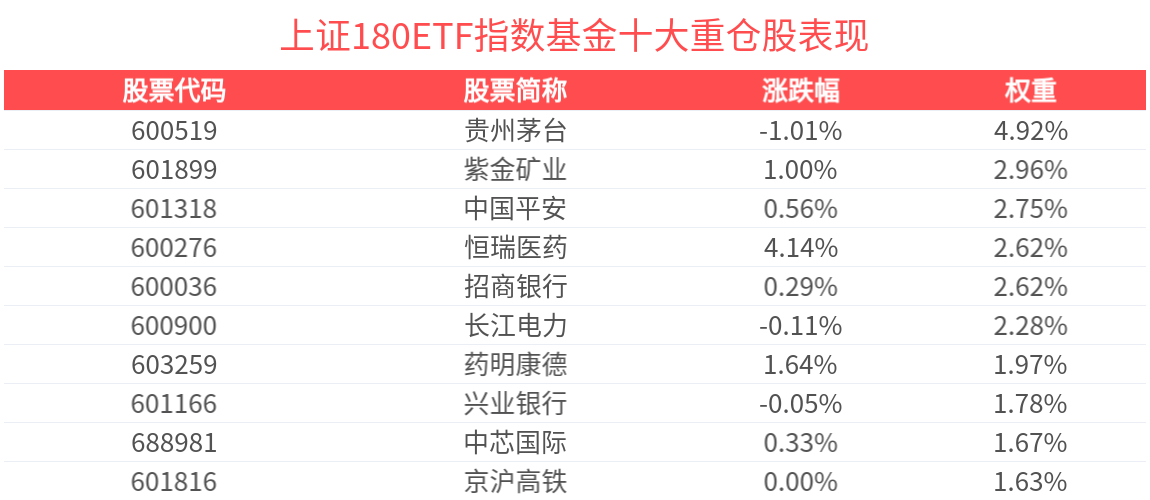
Group 1 - The market is experiencing short-term fluctuations, but the long-term trend remains a slow bull market. Dividend and technology assets are expected to yield excess returns in the long run, with a barbell strategy gaining attention [1] - The Shanghai Stock Exchange 180 Index (000010) is structured with 90% dividend and 10% technology assets, making it a good choice for equity market allocation. This index benefits from both dividend stability and the growth potential of technology [1] - As of September 22, 2025, the Shanghai 180 Index rose by 0.19%, with notable increases in stocks such as Transsion Holdings (688036) up 6.25% and Zhongjin Gold (600489) up 4.38%. The Shanghai 180 ETF Index Fund (530280) decreased by 0.34% [1] Group 2 - The Shanghai 180 ETF Index Fund closely tracks the Shanghai 180 Index, which selects 180 securities from the Shanghai market based on market capitalization and liquidity, reflecting the overall performance of core listed companies [2] - As of August 29, 2025, the top ten weighted stocks in the Shanghai 180 Index include Kweichow Moutai (600519) and Zijin Mining (601899), with the top ten stocks accounting for 26.25% of the index [2] - The weight and performance of key stocks in the index are detailed, with Kweichow Moutai showing a decline of 1.01% and holding a weight of 4.92% [4]

市场销量实现快速增长 中国品牌手机日益走俏拉美市场
Ren Min Ri Bao· 2025-09-22 02:04
Core Insights - Chinese smartphone brands are increasingly popular in the Latin American market, with significant growth in sales and market share [1][2][3][4][5][6]. Market Performance - Overall smartphone sales in Latin America are projected to grow by approximately 2% in Q2 2025, reaching 34.3 million units [1]. - In Brazil, Motorola holds about 24% of the smartphone market share, while Xiaomi and Realme account for 17% and 6%, respectively [2]. - In Mexico, Chinese brands have captured around 43% of the smartphone market share, a significant increase from nearly zero in 2019 [3]. - In Peru, Xiaomi and Honor led smartphone imports with 890,000 and 830,000 units, reflecting quarter-on-quarter growth of 11.2% and 25.7% [3]. Consumer Preferences - Over 60% of Brazilian respondents prefer Chinese smartphones, with 67% believing China has a technological innovation advantage [2]. - In Ecuador, most of the 3.2 million smartphones imported in 2024 were Chinese brands, favored for their performance and value [4]. Innovation and Localization Strategy - Chinese smartphone brands are focusing on localization strategies, adapting products to meet local consumer preferences, which has helped build a loyal customer base [5][6]. - The introduction of AI features and high-quality designs in smartphones has positioned Chinese brands as leaders in innovation [6]. - Companies are increasingly investing in local production and supply chains in Latin America, enhancing manufacturing capabilities [7][8]. Industry Collaboration - Chinese smartphone manufacturers are establishing local production lines and partnerships in Latin America, contributing to job creation and technological skill development [7][8]. - Collaborative efforts in the smartphone industry are expected to improve understanding of local consumer needs and enhance regional industrialization [8].

中国品牌手机日益走俏拉美市场(国际视点)
Ren Min Ri Bao· 2025-09-21 22:41
Core Insights - The Latin American smartphone market is projected to see a 2% increase in overall sales by Q2 2025, reaching 34.3 million units, with Chinese brands gaining significant market share [1] - Xiaomi, Motorola, Honor, and Transsion are among the top five smartphone brands in the region, with Xiaomi achieving a record sales increase of 8% to 6.7 million units [1] Market Growth - Brazil is the largest smartphone market in Latin America, with Motorola capturing 24% of the market share, followed by Xiaomi at 17% and Realme at 6% [2] - Over 60% of Brazilian respondents prefer Chinese smartphones, with 67% believing China has a technological innovation advantage [2] Brand Performance - In Mexico, Chinese smartphone brands hold approximately 43% market share, with significant growth from near-zero in 2019 [3] - Honor launched the Honor 400 series in Peru, achieving notable import figures of 890,000 units for Xiaomi and 830,000 units for Honor, reflecting growth rates of 11.2% and 25.7% respectively [3] Consumer Preferences - Ecuador's smartphone imports in 2024 are expected to exceed 3.2 million units, predominantly from Chinese brands, which are favored for their performance and design [4] - In Venezuela, Transsion and Xiaomi have rapidly increased their market share, accounting for 50.6% of smartphone sales [4] Innovation and Localization Strategy - Chinese smartphone brands are successful in Latin America due to their localization strategies, adapting products to meet local preferences and expanding their loyal customer base [5] - The focus on technology democratization and high cost-performance ratio has been a key factor in the success of Chinese brands [5] Competitive Landscape - The competitive landscape in Latin America is expected to evolve, requiring brands to adopt diversified and personalized operational models to enhance brand trust and achieve scalable growth [6][7] Local Production and Collaboration - Increasing numbers of Chinese smartphone manufacturers are establishing local production lines in Latin America, enhancing local manufacturing capabilities and supply chains [8] - Collaborations with local companies are seen as strategic moves to better understand consumer needs and improve product offerings [9]
2025年第二季度销量排名前五的智能手机品牌中 中国品牌占据四席 中国品牌手机日益走俏拉美市场(国际视点)
Ren Min Ri Bao· 2025-09-21 22:21
Market Growth - The overall smartphone sales in the Latin American region are projected to grow by approximately 2% in Q2 2025, reaching 34.3 million units [2] - Xiaomi's smartphone sales increased by 8%, achieving a record of 6.7 million units in the same period [2] - In Brazil, Motorola accounted for about 24% of the smartphone market share, while Xiaomi and Realme held 17% and 6% respectively [3] Brand Performance - Chinese smartphone brands dominate the top five positions in the Latin American market, with Xiaomi, Motorola, Honor, and Transsion leading [2] - In Mexico, Chinese brands hold approximately 43% of the smartphone market share, a significant increase from nearly zero in 2019 [4] - In Peru, Xiaomi and Honor were the top two imported smartphone brands, with imports of 890,000 and 830,000 units respectively, showing quarter-on-quarter growth of 11.2% and 25.7% [4] Consumer Preferences - Over 60% of Brazilian respondents prefer Chinese smartphones, with 67% believing that China has a technological innovation advantage [3] - Consumers in Ecuador prioritize cost-effectiveness, speed, storage, camera quality, and screen design, favoring Chinese brands for their competitive advantages [5] Innovation and Localization Strategy - Chinese smartphone brands are successful in Latin America due to their focus on localization strategies, adapting product features and marketing to local preferences [6] - The introduction of advanced technologies such as artificial intelligence and foldable screens by Chinese brands is attracting consumers [6] - Industry experts emphasize the need for diversified and personalized operational models to maintain long-term competitiveness in the market [7] Local Production and Collaboration - Chinese smartphone manufacturers are increasingly establishing local production lines or collaborating with local companies in Latin America [9] - The establishment of local manufacturing capabilities is seen as a strategic long-term decision to better understand consumer needs and enhance supply chain efficiency [9] - Strengthening the smartphone industry chain cooperation between China and Latin America is expected to improve local manufacturing capabilities and contribute to regional industrialization [9]
全球手机品牌销量十强深度评测:2025年消费市场格局与选购指南
Sou Hu Cai Jing· 2025-09-21 18:17
Global Sales Landscape - The global smartphone sales landscape for Q2 2025 shows a "2+8" structure, with Samsung and Apple leading at 19% and 16% market shares respectively, while Chinese brands occupy eight positions, collectively surpassing 58% market share, an increase of 12 percentage points from 2023 [1][2] - Samsung's advantage is driven by the Galaxy A and S series, with the Galaxy A16 5G achieving over 8 million units shipped in a single quarter in India and Southeast Asia, and the Galaxy S25 Ultra capturing 23% of the high-end market [1] - Apple's iPhone 16 series, particularly the Pro Max version, dominates the high-end market with a 68% share in the over $1000 segment [1] Differentiated Growth of Chinese Brands - Xiaomi's "smartphone × AIoT" strategy has led to a 30% annual growth in markets like India and Latin America [2] - Transsion's TECNO Camon 30 has achieved over 55% market share in Africa, leveraging its 64MP night photography capabilities [2] - Huawei's Mate 70 series, featuring the Kirin 9020 chip and satellite communication, has significantly increased its market share in the high-end segment in China [2] High-End Market Competition - In the high-end market (over $800), Apple holds a 62% market share, but faces increasing competition from Huawei and Samsung [4] - The iPhone 16 Pro Max features the A18 chip with a 40% GPU performance improvement, while Samsung's Galaxy S25 Ultra boasts a peak brightness of 2600 nits and advanced camera capabilities [4] - Huawei's Mate 70 Pro+ has seen its market share in the 6000 yuan and above segment rise from 12% to 28% post-launch, directly challenging Apple's position [4] Mid-Range Market Dynamics - The mid-range segment (priced $400-$799) is highly competitive, with Xiaomi, vivo, and OPPO vying for market share [5] - Xiaomi 15 Ultra features advanced cooling technology and gaming performance, while vivo X100s Pro excels in low-light photography [5] - OPPO Reno12 Pro focuses on lightweight design and fast charging capabilities [5] Entry-Level Market Transformation - The entry-level market (under $200) is experiencing a transformation driven by 5G and AI technologies [8] - The Redmi 14C 4G has achieved significant sales in Latin America, while the realme C65 5G has gained popularity for its dual 5G support and efficient power consumption [8] - AI technology is enhancing user experience, with devices like the Infinix HOT 40 Pro offering advanced features tailored to local languages [8] Future Trends and Consumer Choices - The foldable smartphone market is evolving from novelty to practicality, with devices like the Samsung Z Fold7 and Huawei Mate X6 offering enhanced usability [9] - AI smartphones are entering a competitive phase, with Google's Pixel 9 series and Apple's A18 chip providing advanced AI functionalities [9] - Consumers are advised to focus on their specific needs, such as gaming performance, photography capabilities, or business requirements, rather than solely on technical specifications [10]


中国制造业500强榜单发布,23家深企上榜
2 1 Shi Ji Jing Ji Bao Dao· 2025-09-21 07:49
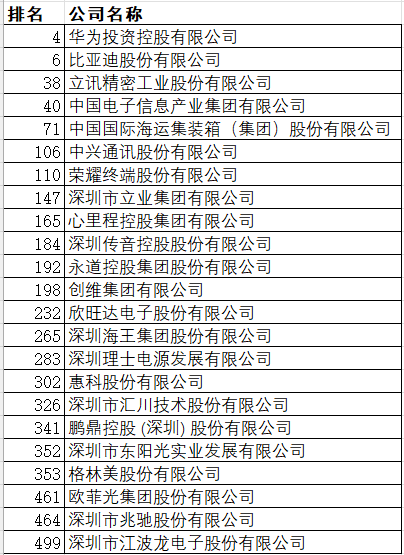
Core Insights - The "2025 China Manufacturing Enterprises Top 500" list was released, highlighting Shenzhen's strength with 23 companies listed, showcasing its status as the "Industrial First City" [1][5] - Huawei and BYD ranked 4th and 6th respectively, with revenues of 862.1 billion and 777.1 billion yuan, indicating strong performance among leading companies [2][3] Company Performance - Shenzhen's top companies include Huawei, BYD, Luxshare Precision, China Electronics Corporation, and ZTE, among others, reflecting a diverse industrial base [2][5] - The overall revenue scale of the top 500 companies remains stable, with R&D investment as a growing focus, reaching a research intensity of 2.45%, up by 0.03 percentage points from the previous year [2][3] R&D and Innovation - Shenzhen companies are characterized by high R&D intensity, with five out of the top ten companies in R&D intensity being from Shenzhen, led by Huawei at 20.84% [3] - The emphasis on R&D is evident as these companies continue to invest significantly in innovation, contributing to their competitive edge [3][5] Global Expansion - Shenzhen companies are increasingly expanding internationally, with notable mentions of Transsion Holdings, Pegatron, and Jiangbolong Electronics, which have high overseas revenue ratios [3] - Transsion Holdings leads with 99.73% of its revenue from overseas markets, particularly in Africa and Southeast Asia, indicating successful global strategies [3] Industry Landscape - The listed Shenzhen companies span multiple strategic industries, including electronics, new energy, high-end equipment manufacturing, and smart terminals, creating a collaborative industrial ecosystem [5] - Shenzhen's commitment to high-end, intelligent, and green manufacturing continues to drive its industrial development, supporting the overall growth of China's manufacturing sector [5]



3万中国人涌入非洲:种菜、做电商,卖期房丨一线
吴晓波频道· 2025-09-20 00:29
Core Viewpoint - Africa is becoming increasingly significant to China's economy, with exports to Africa growing by 25.9% year-on-year, contrasting with a 13.5% decline in exports to the U.S. [3][4] Group 1: Economic Growth in Africa - East Africa is projected to have a real GDP growth rate of 5.3% in 2025 and 6.1% in 2026, leading other regions in Africa [6] - Ethiopia and Rwanda are expected to achieve GDP growth rates of around 7% in 2025, while Kenya, South Sudan, Uganda, and Tanzania are projected to exceed 5% [7] Group 2: Ethiopia's Economic Landscape - Ethiopia, known as the "Roof of Africa," has a population of approximately 120 million and a median age of 19, making it a labor-intensive market [13][19] - The country relies heavily on agriculture, which constitutes 60% of its GDP, leading to high consumer prices that are 3-10 times higher than in China [16] - Despite its rich labor resources, Ethiopia faces high unemployment and a weak industrial base, with most industrial goods imported [19][21] - The Ethiopian government has recently banned the import of fuel vehicles, promoting electric vehicles due to its abundant and cheap electricity [21] Group 3: Kenya's Economic Environment - Kenya, with a population of over 50 million, has a higher GDP per capita compared to Ethiopia and is expected to become East Africa's largest economy by 2025 [29] - The country has a more vibrant commercial atmosphere, with a significant presence of international organizations and a growing tourism sector [29][30] - The real estate market in Nairobi is thriving, with high rental yields and a growing number of Chinese expatriates [31][32] Group 4: Investment Opportunities and Challenges - Both Ethiopia and Kenya face challenges such as reliance on agriculture, weak industrial foundations, and political instability, which may hinder their ability to attract comprehensive supply chains [42][43] - However, Africa presents opportunities for Chinese companies, particularly in labor-intensive industries, as the local market is still developing [43] - The fragmented nature of the African market requires localized operations for successful business ventures [44][46] Group 5: Entrepreneurial Spirit in Africa - Many Chinese entrepreneurs are finding success in Africa by diversifying their business operations beyond their initial ventures [48] - The unique conditions in Africa foster a spirit of innovation and adaptability among entrepreneurs, leading to the establishment of local brands and services [32][39]

背靠非洲人口红利,“非洲纸尿裤大王”乐舒适提交招股书
Guan Cha Zhe Wang· 2025-09-19 09:55
Group 1: Company Overview - Leshu Shih, known as the "King of Diapers in Africa," has submitted its prospectus to the Hong Kong Stock Exchange for the second time after its first submission expired due to not passing the hearing within six months [1] - The company originated from the fast-moving consumer goods division of SenDa Group, which was established in 2000 and expanded into the hygiene products sector in 2009 [2] - Leshu Shih has become a multinational company focusing on emerging markets in Africa, Latin America, and Central Asia, producing baby diapers, pull-ups, sanitary napkins, and wet wipes [2] Group 2: Market Position and Performance - According to Frost & Sullivan, Leshu Shih ranks first in the African baby diaper and sanitary napkin markets with market shares of 20.3% and 15.6%, respectively, based on 2024 sales [2] - The company achieved sales of 4,122.7 million baby diapers and 1,634.3 million sanitary napkins in 2024 [2] - Revenue increased significantly from $320 million in 2022 to $411 million in 2023, but growth is projected to slow to $454 million in 2024, reflecting a 10.5% increase [3] Group 3: Profitability and Margins - Net profit surged from $18 million in 2022 to $65 million in 2023, but the growth rate is expected to decline to 47% in 2024, reaching $95 million [3] - The gross profit margin has shown a downward trend, with margins of 23.0%, 34.9%, 35.2%, and 33.6% for the years 2022, 2023, 2024, and the first four months of 2025, respectively [3][4] Group 4: Strategic Insights - Leshu Shih's pricing power is influenced by brand recognition and market acceptance, allowing it to maintain or increase prices despite competition [4] - The company benefits from a strong supply chain network and local experience accumulated by SenDa Group over decades in Africa [4] - The ongoing population growth and rapid consumption upgrades in Africa are seen as significant growth drivers for the company [6][7] Group 5: Industry Trends - The African population is projected to grow from 1.45 billion in 2022 to 1.55 billion by 2024, creating a substantial demand market for companies [6] - The median age in Africa is 19.3 years, contributing to a youthful consumer base that drives demand for digital services and new consumption patterns [8] - Despite the opportunities, challenges such as weak infrastructure, policy fluctuations, and local competition remain significant hurdles for companies operating in Africa [8]

传音控股(688036) - 传音控股关于召开2025年半年度业绩说明会的公告
2025-09-19 08:00
证券代码:688036 证券简称:传音控股 公告编号:2025-032 深圳传音控股股份有限公司 关于召开 2025 年半年度业绩说明会的公告 本公司董事会及全体董事保证本公告内容不存在任何虚假记载、误导性陈述 或者重大遗漏,并对其内容的真实性、准确性和完整性依法承担法律责任。 重要内容提示: 投资者可于 2025 年 09 月 23 日(星期二)至 09 月 29 日(星期一)16:00 前登 录 上 证 路 演 中 心 网 站 首 页 点 击 " 提 问 预 征 集 " 栏 目 或 通 过 公 司 邮 箱 investor@transsion.com 进行提问。公司将在业绩说明会上对投资者普遍关注的问 题进行回答。 深圳传音控股股份有限公司(以下简称"公司")已于 2025 年 8 月 28 日在 上海证券交易所网站披露了公司《2025 年半年度报告》及其摘要,为便于广大 投资者更全面深入地了解公司经营成果、财务状况等,公司计划于 2025 年 09 月 30 日(星期二)15:00-16:00 举行 2025 年半年度业绩说明会,就投资者关心 的问题进行交流。 一、 说明会类型 本次业绩说明会以网络互动 ...