红旗连锁

Search documents
风浪中出海 中企全球化上半年盘点
3 6 Ke· 2025-08-19 00:31
回顾上半年,压力与机会交织,让企业出海的故事比以往更复杂,也更值得关注。 一边是全球经济放缓、地缘政治和关税政策的过山车,给企业海外布局带来变量和压力;另一边,出口 仍是经济增长的重要动力之一,新兴市场需求增长、能源与科技出海、跨境投融资推进,为企业开拓海 外增量提供了机会。 在这样的背景下,2025上半年,中国企业的全球化动作呈现出几个趋势: 出口同比保持增长,区域和品类结构动态调整; 赴港上市成为热潮,港股市场表现亮眼; 新能源、汽车、消费等赛道仍是出海核心引擎。 以宏观数据、市场热点为线索,本文汇总盘点了这半年来中国企业出海的风景与波澜。 宏观数据 出口同比增长,结构动态调整 整体来看,上半年货物贸易出口同比仍保持正增长。据海关统计,今年上半年,我国货物贸易进出口 21.79万亿元,同比增长2.9%,增速较前5个月加快0.4个百分点。其中,出口规模历史同期首破13万亿 元,同比实现7.2%的较快增长。 出口结构更加多元,新兴市场贡献增量。上半年我国对190多个国家和地区进出口实现增长,贸易规模 超过500亿元的伙伴数量达到61个,比去年同期增加了5个;对共建"一带一路"国家进出口11.29万亿 元,增长 ...
我国新茶饮走好出海路
Zhong Guo Chan Ye Jing Ji Xin Xi Wang· 2025-08-19 00:10
Core Insights - The rapid development of new tea beverages in China has created a consumption boom domestically and positioned it as an emerging force in the global beverage market [1] - The expansion of Chinese new tea beverage brands globally has shifted from a trial phase to a strategic upgrade, focusing on Southeast Asia and beyond [1] Market Expansion - Chinese new tea beverage brands began international expansion in 2010, with significant growth noted between 2018 and 2019, marking 2018 as the year of overseas expansion [1] - Southeast Asia has emerged as the primary target market due to its youthful population, cultural compatibility with Chinese tea, and enhanced trade liberalization under the RCEP framework [1] Product Trends - Green tea has gained a competitive edge in the new tea beverage sector due to its scalable supply and compatibility with other ingredients, driving cross-border trade [2] - In Indonesia, the number of stores for brands like Mixue Ice City has surged, with Chinese green tea exports to Indonesia increasing by 67.8% and 77.2% in 2022 and 2023 respectively [2] Challenges - The supply chain for Chinese new tea beverages remains fragile, heavily reliant on imports for key materials, leading to high costs and instability [2] - Compliance costs are rising in target markets, with new regulations on packaging and agricultural standards increasing operational expenses [2][3] Cultural Adaptation and Competition - There are significant cultural differences in consumer preferences across regions, with Western markets favoring organic health products while Southeast Asia prefers sweeter flavors [3] - The brand recognition and acceptance of Chinese new tea beverages in international markets require time and effort to build [3] Strategic Recommendations - To enhance supply chain resilience, companies should establish local production bases and regional supply chain centers to reduce dependency on imports [3] - Emphasizing cultural integration through localized product development and hosting cultural events can help break down barriers in international markets [3] - Government support in compliance services and regulatory tracking is essential to mitigate trade barriers and reduce certification costs for companies [3] Future Outlook - The deepening of RCEP economic integration and the Belt and Road Initiative may allow Chinese new tea beverages to expand beyond mere store openings to include raw material trade, technology transfer, and cultural licensing [4] - The vision is to create a global community around tea that blends Eastern wisdom with global flavors, fostering connections between different cultures [4]

胖东来等商超发力自有品牌谋突围
Zheng Quan Ri Bao· 2025-08-18 16:10
Group 1 - The retail industry consensus is to break through with private labels, as seen in various companies like Budonglai and Hema Fresh [1] - Companies like Bubu Gao reported a net profit of 201 million yuan in the first half of the year, turning losses into profits by implementing a private label strategy [1] - Hongqi Chain achieved a net profit of 281 million yuan, a year-on-year increase of 5.33%, by diversifying its product matrix and expanding its private label offerings [1] Group 2 - Baoyuezhong from Baum Consulting emphasized that developing private labels helps retailers form differentiated competitive advantages and transition from price competition to value competition [2] - Zhongbai Holdings introduced over 300 new private label products, while Chongqing Department Store's private label "Baoyuantong" generated 15 million yuan in sales from four stores [2] - Xinhua Department Store is expanding its private label range to reduce costs and improve sales margins through direct sourcing and joint farming [2] Group 3 - The development of private labels is seen as beneficial for the overall growth of the retail industry, enhancing profit margins and supply chain efficiency [2] - However, challenges such as product homogeneity, quality issues, and lack of innovation have emerged, impacting consumer experience and industry health [2] - Baoyuezhong advised that retailers should avoid blindly following trends and instead focus on positioning and developing a systematic approach to private label creation [3]


餐饮月度专题:茶饮扩张强劲,西式快餐扩张活跃,客单价环比企稳-20250818
ZHESHANG SECURITIES· 2025-08-18 13:05
Investment Rating - The industry investment rating is "Positive" [4] Core Insights - The report highlights strong expansion in tea beverage brands and active growth in Western fast food, with average transaction prices stabilizing month-on-month [5][8][10] Summary by Sections Western Fast Food - The expansion of Western fast food is active, with average transaction prices remaining stable, indicating market resilience [8] - Notable trends in net store openings for major brands include: - KFC: -0.4% in August 2024 - McDonald's: 0.2% in August 2024 - Pizza Hut: -1.8% in August 2024 - Domino's: 0.0% in August 2024 [8] Tea Beverage - Leading brands in the tea beverage sector are expanding significantly, while overall average transaction prices are fluctuating as they seek balance [10] - Key trends in net store openings for major tea brands include: - Mixue Ice Cream: -2.3% in August 2024 - Heytea: -1.1% in August 2024 - Naixue's Tea: -0.3% in August 2024 [10] Coffee & Hot Pot - The coffee segment shows strong expansion momentum, with notable net store openings: - Luckin Coffee: 1,812 new stores, 8% increase - Kudi Coffee: 2,495 new stores, 25% increase [12] - The hot pot industry is facing adjustments, with several brands showing negative net openings [14] Other Food Segments - The overall opening of stores in segments like pickled fish, snacks, and small pubs is cautious, with average transaction prices stabilizing [15] - Key trends in net store openings for snack brands include: - Zuiyan Zhiwei Chicken: -463 stores, 8% decrease - Juewei Duck Neck: -1,127 stores, 9% decrease [17]
王炸水果出炉,单品卖980万杯,半个饮品圈都在推
3 6 Ke· 2025-08-18 01:50
Core Insights - Apple beverages have surged in popularity, with numerous brands launching new products, including Bawang Tea, Mixue Ice City, and Tea Hundred Road, leading to significant sales figures [1][2][4] - The previously underestimated apple has become a sales driver, with the Jasmine Milk White's "Needle King Apple" selling 9.8 million cups since its launch in August 2024 [8][10] Industry Trends - Various tea and coffee brands are creatively incorporating apples into their offerings, such as Bawang Tea's "Chuan Shang Xing Ge" and Pi Ye Coffee's "Sweetheart Apple Latte" [2][4] - The introduction of new apple beverages is frequent, with nearly 10 new products appearing monthly, indicating a strong trend in the beverage industry [6] Consumer Behavior - Social media discussions around apple beverages have gained traction, with the topic "Apple is not a boring fruit" reaching 150 million views [8] - Promotions, such as Mixue Ice City's offer for customers who shout "You are my little apple," have successfully driven sales of apple drinks [4] Product Development - The use of advanced preservation technologies and improved supply chain logistics has enhanced the flavor and freshness of apple beverages, addressing previous concerns about oxidation and taste [11][13] - The health benefits of apples, including dietary fiber and vitamins, align with consumer preferences for low-sugar and natural ingredients, contributing to the rise of apple drinks [15][17] Marketing Strategies - Seasonal marketing strategies leverage the apple's association with autumn and its symbolic meanings, creating a strong consumer connection [17][21] - The versatility of apples allows for innovative combinations with spices and lesser-known fruits, expanding the potential for new product development [21][23]


产业带向高端化、智能化、绿色化跃升 郑州与漯河共同打造“舌尖双城”
Zhong Guo Chan Ye Jing Ji Xin Xi Wang· 2025-08-18 00:44
Core Insights - The article highlights the collaboration between Zhengzhou and Lingying, two cities in Henan Province, focusing on their food industry strengths and the integration into the Zhengzhou metropolitan area [1][8]. Transportation and Infrastructure - Zhengzhou and Lingying are connected by major transportation routes, including high-speed rail and highways, reducing travel time to 40 minutes [2]. - The completion of the Xuyin Expressway and the new construction of National Highway 107 will enhance Lingying's connectivity to Zhengzhou, facilitating a one-hour commuting circle [2]. - Lingying's strategic location near Xinzheng Airport and the revival of water transport through the Luhe River will further support logistics and trade [2]. Industry Collaboration - Zhengzhou is a leader in frozen food production, contributing over 60% of the nation's output, while Lingying specializes in leisure snacks, creating a complementary industrial relationship [4][6]. - The Zheng-Ling modern food industry belt aims to integrate various cities along the Jing-Guang railway, focusing on food production and logistics [4][7]. - Lingying has established a health industry park with an investment of 10 billion yuan, focusing on health products and aiming for significant output by 2025 [5]. Research and Development - The establishment of the Central Plains Food Laboratory in Lingying, involving multiple universities, aims to drive innovation in the food sector and enhance the competitiveness of the Zheng-Ling food industry [6]. Economic Goals - Lingying aims to develop a modern food city with a food industry chain worth over 300 billion yuan and a green food ecosystem exceeding 500 billion yuan [7]. - The county is positioned as a "bridgehead" for integrating into the Zhengzhou metropolitan area, focusing on industrial cooperation and ecological development [7].
历史性突破!香港市场单只ETF首次突破100亿份
Zhong Guo Ji Jin Bao· 2025-08-18 00:20
Group 1 - The Hong Kong ETF market has seen significant growth, with the Southern Eastern Hong Kong Hang Seng Technology Index ETF reaching 10.219 billion shares, making it the first ETF in Hong Kong to exceed 10 billion shares issued [1][2] - The popularity of ETFs among mainland Chinese investors has increased, driven by the "Northbound capital" flow, making ETFs a favored tool for investment in the Hong Kong market [2][3] - Various ETFs and leveraged products have surpassed 1 billion shares, including the Yingfu Fund at 6.138 billion shares and the Southern Eastern Hang Seng Technology Index Daily Inverse (-2x) product at 3.541 billion shares [2] Group 2 - Hong Kong is actively introducing high-quality products from other markets, such as the Hang Seng Morgan U.S. Equity High Income Active ETF, which is the first actively managed ETF focused on U.S. stock income in Hong Kong [3] - The demand for defensive investments has increased due to economic uncertainties, prompting the launch of more diversified investment options like high-yield U.S. dollar assets [3] - Analysts predict a continued bullish trend in the Hong Kong stock market, supported by strong liquidity and potential interest rate cuts by the Federal Reserve [3][4] Group 3 - The Asia-Pacific ETF market is rapidly developing, with China expected to surpass Japan as the largest ETF market in the region by the end of the year [6] - As of mid-August 2025, the number of stock ETFs in mainland China reached 1,173, with a total scale of 3.87 trillion yuan [6] - The Hong Kong market has seen the launch of its first ETF exceeding 10 billion shares, while over 40 stock ETFs in mainland China have also surpassed this threshold [6] Group 4 - The overall market conditions are favorable for ETF growth, with domestic policies supporting capital markets and a stable economic recovery [7] - The Japanese ETF market has shown resilience and growth, with total assets under management increasing by 13.2% from the previous year [7] - In Taiwan, the active ETF market is expanding rapidly, with several issuers launching new products this year [7] Group 5 - Global ETF development is characterized by three major trends: the expansion of actively managed ETFs, the introduction of digital asset strategies, and regulatory changes encouraging ETF adoption [8] - There are currently 68 investment managers applying to launch actively managed ETFs in the U.S., indicating strong interest in this segment [8] - The Bitcoin ETF by BlackRock has attracted significant investment, with its latest scale exceeding 80 billion dollars [8]
南下资金爆买港股创历史新高
Shen Zhen Shang Bao· 2025-08-17 22:42
Group 1 - The core viewpoint is that southbound capital has accelerated its net buying of Hong Kong stocks, reaching a historical high of 938.92 billion HKD from January 1 to August 15, 2025, surpassing the total for the entire year of 2024 [1][2] - On August 15, despite a 0.98% drop in the Hang Seng Index, southbound capital recorded a net purchase of 35.88 billion HKD, setting a new single-day record [1] - The net buying pace of southbound capital increased significantly, with a total net inflow of 36.20 billion HKD from August 1 to August 14, and a record high of 35.88 billion HKD on August 15 alone [1] Group 2 - The top three net bought stocks by southbound capital in the past month were the Tracker Fund of Hong Kong, Alibaba, and Xiaomi, with net purchases ranging from 11.25 billion HKD to 2.96 billion HKD [2] - As of August 15, Tencent Holdings had the highest holding value among southbound capital at 582.50 billion HKD, followed by China Mobile and China Construction Bank with holdings of 268.36 billion HKD and 267.79 billion HKD, respectively [2] - The main reason for the accelerated inflow of southbound capital is the undervaluation of Hong Kong stocks, with many companies maintaining good growth despite significant price declines over the past six years [2]

历史性突破!香港市场单只ETF,首次突破100亿份
中国基金报· 2025-08-17 13:52
Core Viewpoint - The Hong Kong market has achieved a historic milestone with the first ETF surpassing 10 billion shares, specifically the Southern Eastern's Hang Seng Tech Index ETF, which reached 10.219 billion shares [2][4]. Group 1: ETF Market Growth - The Hong Kong ETF market has developed a comprehensive ecosystem, with various leveraged and inverse ETFs gaining popularity among investors [2][4]. - As of August 15, multiple ETFs and leveraged products in Hong Kong have exceeded 1 billion shares, including the Tracker Fund of Hong Kong with 6.138 billion shares and the Southern Eastern Hang Seng Tech Index Daily Inverse (-2x) product with 3.541 billion shares [4]. - The Asian market has seen a surge in ETF investments, with Hong Kong's market being unique due to its diverse product offerings, including leveraged, inverse, and actively managed ETFs [4]. Group 2: Investment Trends and Market Dynamics - The influx of mainland Chinese investors ("Northbound funds") has significantly contributed to the growth of Hong Kong ETFs, making them a favored choice for investment in the region [4][5]. - Notable sectors in the Hong Kong stock market, such as semiconductors and new consumption concepts, have shown strong performance, further driving interest in ETFs [6]. - Economic factors, including anticipated interest rate cuts by the Federal Reserve, are expected to enhance liquidity in the Hong Kong market, encouraging continued investment [5][6]. Group 3: Future Outlook for ETFs - The report indicates that by the end of 2025, China is expected to surpass Japan as the largest ETF market in the Asia-Pacific region, with a total of 1,173 stock ETFs and a total scale of 3.87 trillion yuan [8]. - The growth of the ETF market is supported by a favorable market outlook, with institutions expressing optimism about the domestic stock market's performance [9]. - Global trends indicate a strong future for ETFs, with increasing interest in actively managed ETFs and digital asset strategies [10].

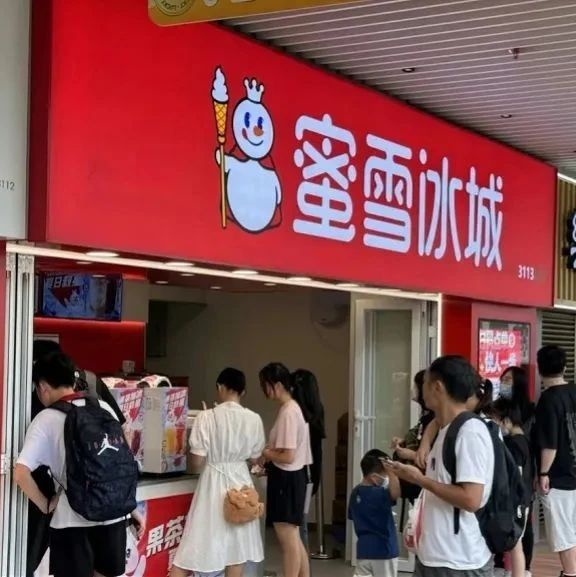
蜜雪冰城被曝光,负责人回应
中国基金报· 2025-08-16 16:12
Core Viewpoint - The article highlights ongoing food safety issues faced by the company, Mixue Ice City, particularly a recent incident involving a cockroach found in a sealed drink, which has led to public outcry and discussions about consumer rights and compensation [2][6][12]. Group 1: Recent Incident - A consumer reported finding a cockroach in a sealed cup of jasmine milk green tea purchased from a Mixue Ice City store in Ganzhou, leading to a refund request and a demand for additional compensation of 1,000 yuan based on food safety laws [2][12]. - The regional manager of Mixue Ice City stated that they are reviewing surveillance footage to determine how the cockroach entered the drink [5]. Group 2: Historical Food Safety Issues - Mixue Ice City has a history of food safety problems, including an incident where an employee was filmed using their foot to operate a drinking water dispenser, raising concerns about hygiene [8]. - Other reported issues include the use of overnight lemons and oranges in drinks and the use of expired coffee powder in milk tea, leading to fines and product confiscation by regulatory authorities [10]. Group 3: Consumer Rights and Compensation - The article discusses the legality of the consumer's demand for 1,000 yuan compensation, referencing a similar case where a consumer found a fly in their drink and successfully claimed compensation through legal channels [15]. - Consumers are advised to retain purchase records and evidence of food quality issues, and if necessary, escalate complaints to consumer protection agencies or pursue legal action [17].