饿了么

Search documents
鼓励群防群治确保跑腿订单安全 饿了么升级AI风控审核+骑手举报制度双保险
Sou Hu Cai Jing· 2025-05-27 06:31
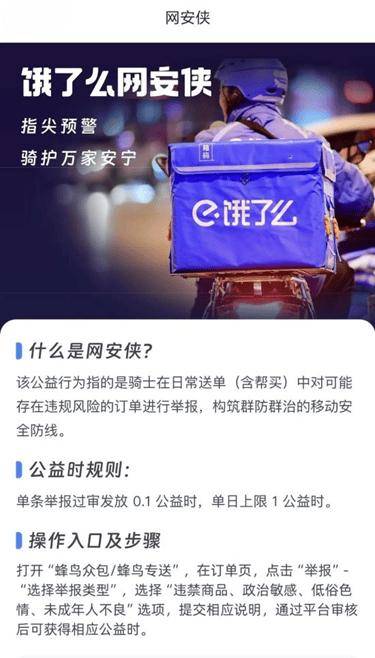
Core Viewpoint - Ele.me has upgraded its "Mingjing AI" intelligent risk control review platform and introduced a public reward mechanism for blue knights to enhance the safety and efficiency of its "errand" services [1][4][5] Group 1: Platform Upgrades - The "Mingjing AI" platform integrates rapid access, large model machine review, tagging, quality inspection, and training, addressing compliance review needs for qualifications, products, and content [4] - Since the integration of the Tongyi Qianwen large model in 2024, "Mingjing AI" has developed nearly a hundred safety identification capabilities, processing over one million data points related to false advertising, illegal traffic, and vulgar content [5] Group 2: Blue Knights Incentive Mechanism - The new "Blue Knights Supplementary Interception Public Welfare Reward Mechanism" allows blue knights to report high-risk errand orders, which, upon platform review, can accumulate public service hours for rewards such as equipment and daily necessities [1][5] - Since the launch of the "Net Security Knight" mechanism in 2021, nearly 10,000 orders have been intercepted through blue knights reporting [5] Group 3: Safety and Community Engagement - The dual upgrade of "Mingjing AI" and the rider incentive system aims to strengthen the safety net for errand services, creating a more robust mobile security defense through community engagement [5] - The company encourages collective prevention and control to ensure the safety of every order processed on the platform [5]

美团闪购、淘宝闪购同日交战报:非餐品类争夺凶猛 即时零售“三国杀”不能只靠补贴了
Mei Ri Jing Ji Xin Wen· 2025-05-26 13:57
每经记者|陈婷 赵雯琪 每经实习编辑|余婷婷 淘宝闪购"攻势"正猛。 5月26日,淘宝闪购联合饿了么官方宣布,日订单数已超4000万单。数据显示,淘宝闪购非茶饮订单占比达75%,非餐品类订单增长远超预期,订单准 时率达97%。 同日,美团在最新发布的2025年一季报中提及,截至3月底,美团闪购累计交易用户数超5亿,以90后的年轻消费者为主。当前,美团非餐饮品类即时 零售日单量已突破1800万单。 淘宝闪购自5月2日全量上线,联动饿了么的供给和履约能力,形成了阿里即时零售一张大网。此前,《每日经济新闻》记者获悉,截至5月5日20时28 分,淘宝闪购当日订单已突破1000万单。 与此同时,京东外卖也在"极速前进"之中。此前京东披露的官方数据显示,京东外卖上线75天后,日订单量在5月14日突破了2000万单。值得一提的 是,京东一季报显示,包含达达、外卖业务、京喜等在内的新业务成为了京东一季度增长最快的分部业务,同比增长达18.1%。 从各方数据来看,这场最早由"外卖大战"引发的"三国杀",正式升级为即时零售"三国杀",非餐品类已经成为了争夺战的新焦点。 "中国外卖行业已经进入新的发展阶段",5月26日晚,在美团财 ...


美团高管解读Q1财报:外卖非理性竞争不可持续 将不惜一切赢得竞争
Xin Lang Ke Ji· 2025-05-26 12:44
Core Viewpoint - Meituan reported a revenue of 86.6 billion yuan for Q1 2025, representing an 18.1% year-on-year growth, with a net profit of 10.1 billion yuan compared to 5.4 billion yuan in the same period of 2024 [1][2]. Financial Performance - Revenue for Q1 2025 was 86.6 billion yuan, up 18.1% year-on-year [1]. - Net profit reached 10.1 billion yuan, significantly higher than 5.4 billion yuan in Q1 2024 [1]. - Adjusted net profit was 10.9 billion yuan, compared to 7.5 billion yuan in the previous year [1]. Competitive Landscape - The CEO acknowledged the competitive pressure from JD.com and Ele.me, both of which have announced substantial subsidies for their delivery services [3]. - Meituan aims to maintain its market leadership by leveraging its established position and extensive experience in the food delivery sector [3][4]. - The company views the influx of new competitors as a sign of the growth potential in the food delivery and instant retail markets [4]. Market Strategy - Meituan plans to respond to the competitive environment by investing in maintaining its market share and enhancing service quality [5][7]. - The company emphasizes the importance of returning to sustainable growth driven by quality service rather than irrational subsidy competition [6][8]. - Meituan is committed to supporting small and medium-sized businesses on its platform, enhancing their revenue and operational efficiency [5][6]. Future Outlook - The company anticipates fluctuations in financial performance due to ongoing competitive pressures and high subsidy levels from other platforms [7]. - Meituan expects the food delivery industry to transition to a more rational and sustainable growth phase, which will improve the overall ecosystem [8]. - The management believes that regulatory bodies will play a role in curbing unhealthy competition, allowing Meituan to focus on winning in a fair competitive landscape [8].
51岁刘强东,又干了3000亿
创业家· 2025-05-26 10:10
Core Viewpoint - JD Group reported a strong Q1 2025 financial performance with revenue of 301.1 billion yuan, a year-on-year increase of 15.8% [3][4]. Group 1: JD's Take on Food Delivery Business - JD's food delivery service generated revenue of 5.753 billion yuan in Q1, with daily order volume expected to exceed 20 million [4][6]. - The rapid growth of JD's food delivery service is notable, achieving 10 million daily orders in just 42 days, compared to Meituan's 3 years and Ele.me's nearly 10 years to reach the same milestone [6][9]. - However, the surge in orders has led to system and operational challenges, including service outages during peak times, prompting JD to implement compensation measures for affected users [10][14]. Group 2: Competitive Landscape - The competition in the food delivery market is intense, with JD positioning itself as a quality-focused service, contrasting with Meituan's scale and Ele.me's aggressive subsidies [27][28]. - JD's founder, Liu Qiangdong, has taken a hands-on approach to the food delivery business, actively engaging with riders and promoting the service [22][26]. - The ongoing "food delivery war" is characterized by a struggle for market share, with companies competing on subsidies and service quality [27][41]. Group 3: Financial Performance and Challenges - JD's core retail business generated 263.845 billion yuan in revenue, a year-on-year increase of 16.3%, driven by high-end appliance sales and promotional activities [29][32]. - The logistics segment also showed growth, with revenue of 49.667 billion yuan, up 12.5% year-on-year, although rising operational costs have impacted profit margins [32][35]. - New business segments, including food delivery and industrial internet, reported a combined loss of 1.33 billion yuan, highlighting the challenges of balancing market expansion with profitability [35][39].

长风亿元楼占比超三成,普陀区楼宇经济与文旅商体展深度融合
Guo Ji Jin Rong Bao· 2025-05-26 09:37
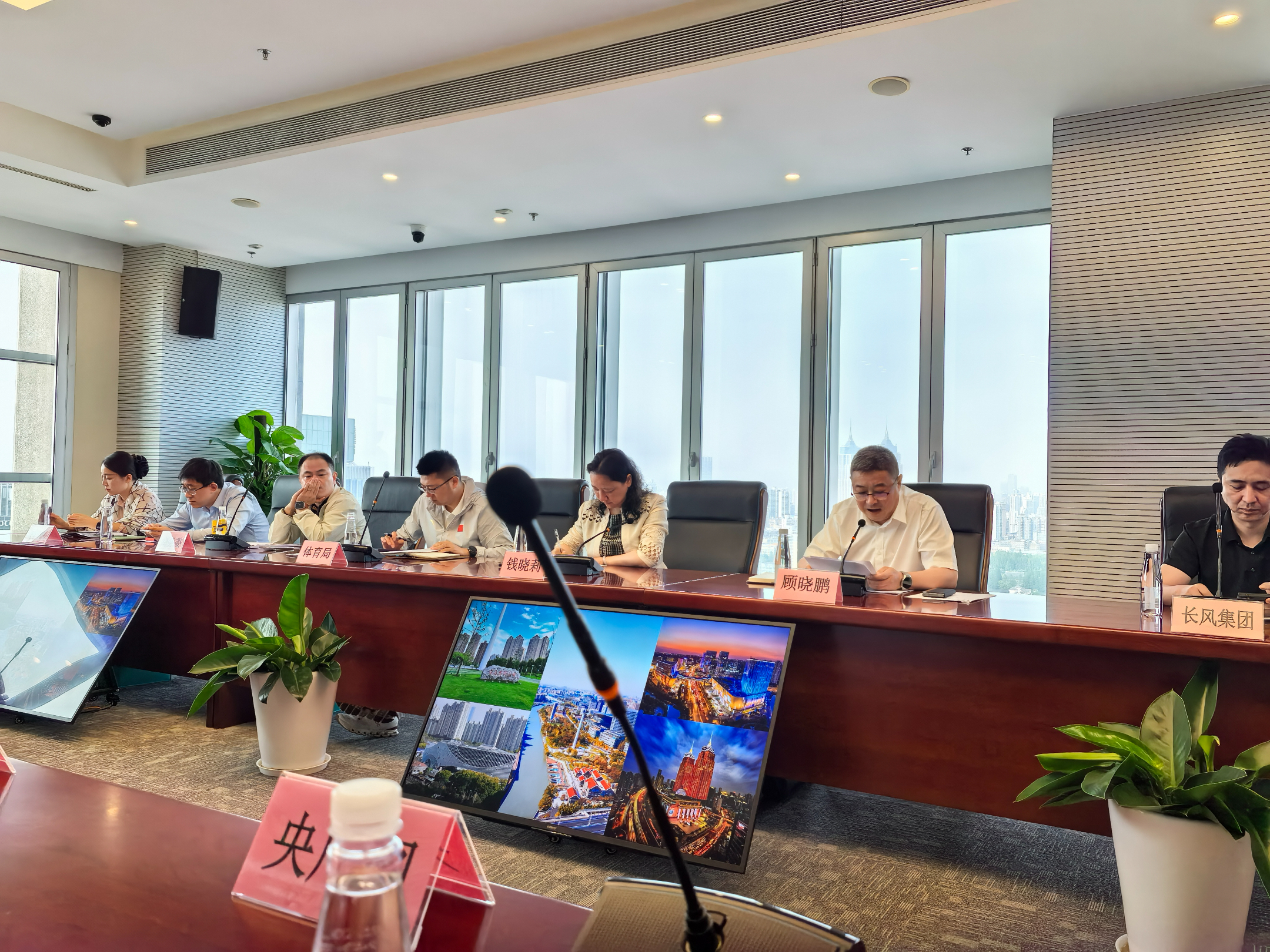
Core Insights - The Longfeng area is accelerating the development of the building economy, with 98 completed commercial buildings totaling 2.32 million square meters and attracting approximately 5,000 enterprises [1][3]. Group 1: Economic Development - Longfeng is home to the Shanghai Science and Technology Financial Industry Cluster, which includes key research institutions like the Shanghai Chemical Research Institute, and has the highest economic output in the Putuo District [3][4]. - The area focuses on innovation-driven development, emphasizing four key industries: smart software, research and development services, technology finance, and life health [3][4]. - Longfeng has attracted notable companies such as China Energy Group, 360, and Alibaba Local Life, with 29 key buildings accounting for one-third of the district's key commercial buildings [3][4]. Group 2: Building Economy - The building economy is characterized as a modern, highly concentrated economic development model with high efficiency and economic value per unit output [3][4]. - Longfeng currently has 13 billion-yuan buildings, representing 34% of the total in the Putuo District [3][4]. Group 3: Infrastructure and Projects - Longfeng Group is focused on developing a network security industry park, which includes a headquarters building and an incubator for cybersecurity startups [4][5]. - The Longfeng Science and Technology Valley project is set to open soon, integrating office space, commercial facilities, and hotels, aimed at attracting tech companies [5]. Group 4: Cultural and Sports Events - Longfeng Group collaborates with local cultural and sports departments to host various events along the Suhe River, enhancing community engagement and urban vitality [6][8]. - The 21st Shanghai Suzhou River Dragon Boat Invitation Race will feature 58 teams, marking the largest participation in nearly a decade, and aims to integrate cultural tourism with commercial activities [8][9].
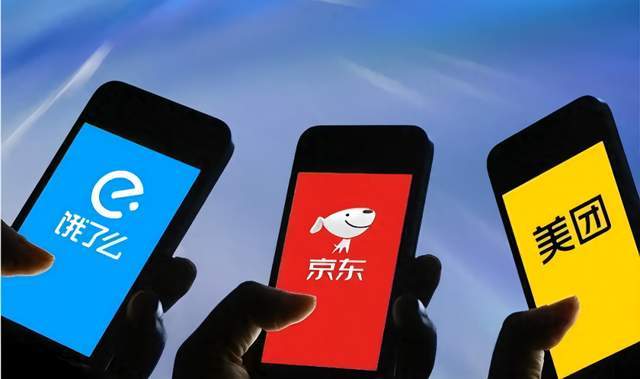
美团 京东 饿了么外卖大战全解析:商业博弈 行业震荡与未来格局
Sou Hu Cai Jing· 2025-05-26 08:49
Core Insights - The Chinese food delivery market is undergoing a significant transformation in 2025, with major players Meituan, JD.com, and Ele.me competing over rider rights, merchant resources, and user subsidies, marking a shift from "wild growth" to a "sustainable ecosystem" in the internet platform economy [1] Industry Landscape Evolution - Since its inception in 2010, the food delivery market has experienced multiple reshuffles, with Meituan expanding from group buying to a comprehensive ecosystem including delivery, hotels, and tourism. Ele.me started in the campus market and became a duopoly with Meituan through technological optimization and capital support from Tencent and Alibaba. JD.com's entry in 2025 disrupted this balance by leveraging its instant retail infrastructure and supply chain advantages [3][4] JD.com's Strategic Entry - JD.com's food delivery business is a continuation of its 2015 "JD Daojia" initiative, integrating Dada Group's resources. In 2024, JD.com merged its "hourly delivery" and "JD Daojia" into a "Dada Seconds" channel, officially entering the food delivery market in 2025 with a zero-commission policy [4][7] Key Events Timeline - JD.com launched its food delivery service in February 2025, announcing a zero-commission policy to attract merchants and focusing on high-end dining brands. It also became the first platform to provide social insurance for full-time riders [7][8] Meituan's Defensive Strategies - In response to JD.com's entry, Meituan upgraded its instant retail brand and introduced a rider rights protection plan, investing 140 billion yuan to improve rider equipment [8][9] Ele.me's Market Strategy - Ele.me initiated a subsidy program exceeding 10 billion yuan and upgraded its instant retail services, attempting to leverage Alibaba's resources to enhance its market position [10][15] Rider Rights and Competition - JD.com announced comprehensive social insurance for full-time riders, directly addressing industry pain points. Meituan followed suit but only partially covered pension insurance, leading to disputes over rider treatment and competition practices [11][20] Merchant Resource Competition - JD.com focused on high-end merchants with its zero-commission strategy, while Meituan utilized its extensive rider and merchant network to create synergies across various local services [14][23] User Subsidies and Market Penetration - JD.com quickly gained traction with over 1 million daily orders within 40 days of launch, implementing a "free delivery" policy for late orders. Ele.me countered with significant subsidies to attract price-sensitive users [16][19] Competitive Landscape Evolution - The entry of JD.com is expected to accelerate market consolidation, potentially leading to a "Meituan + JD.com" duopoly, while Ele.me may struggle due to insufficient merchant resources [25][29] Profitability and Innovation - The food delivery industry currently faces low profit margins, with platforms needing to explore new business models and technological advancements to enhance profitability [27][28] Conclusion - The ongoing competition among Meituan, JD.com, and Ele.me reflects a broader shift in the local service market, emphasizing the need for platforms to balance commercial interests with social responsibilities, ultimately benefiting consumers through improved services and safety [30][31]
外卖平台收费,将迎来重大变化!
Sou Hu Cai Jing· 2025-05-26 06:25
Core Viewpoint - The State Administration for Market Regulation has released a draft guideline for the compliance of charging behaviors on online transaction platforms, particularly targeting the food delivery industry, aiming to rectify the industry ecosystem and ensure fair practices [2][12]. Summary by Relevant Sections Guideline Principles - The guideline emphasizes that platform charges must adhere to principles of fairness, legality, and good faith, considering service agreements, transaction rules, and the operating conditions of platform operators [3]. - It encourages platforms to reduce the burden on operators, especially small and medium-sized businesses, by adopting flexible pricing strategies and providing support [3]. Compliance and Self-Regulation - Platforms are required to implement compliance management responsibilities, establish compliance management organizations, and enhance their capacity for compliance management regarding charging behaviors [4][5]. - The guideline specifies eight types of unreasonable charging behaviors, including duplicate charges, charging without providing services, and price discrimination among operators [4][6]. Supervision and Implementation - Platforms must promptly address charging concerns from operators, cooperate with supervision, and engage in fair market competition [4]. - The guideline mandates that platforms must establish mechanisms for identifying and assessing risks related to unreasonable charges [5][6]. Transparency and Fairness - The guideline highlights the importance of transparency, requiring platforms to publicly disclose charging items, rules, and standards prominently on their homepage [7][10]. - It also states that operators can opt out of the platform if they do not accept changes to charging rules, ensuring a principle of voluntary participation [7][8]. Specific Charging Regulations - The guideline outlines that charging items must correspond to service content, and the rules should be clear and easy to understand [10]. - It also addresses the collection of deposits, stating that platforms must carefully assess the necessity of such charges and ensure proper management of these funds [11]. Industry Context - The release of this guideline follows increased regulatory scrutiny of major food delivery platforms like Meituan and JD, indicating a shift towards stronger regulation in the food delivery sector [12].
繁荣外卖市场重在规范有序
Jing Ji Ri Bao· 2025-05-25 22:05
Core Viewpoint - The rapid expansion of the food delivery market in China necessitates compliance and orderly competition among platform companies to ensure sustainable growth and protect the interests of consumers, operators, and delivery riders [1][2]. Group 1: Market Dynamics - The online food delivery user base in China has surpassed 545 million, accounting for approximately 50% of the total internet users [2]. - The market has evolved from merely delivering food to offering a wide range of products, driven by the preferences of the younger generation who favor instant delivery services [2]. - The competition among major platforms like JD, Meituan, and Ele.me has intensified since JD entered the market, leading to promotional strategies such as zero commission and substantial subsidies [1][2]. Group 2: Regulatory Environment - The State Administration for Market Regulation has held discussions with major food delivery platforms to address competitive issues and emphasize the importance of lawful and fair operations [1][2]. - The focus is on maintaining consumer safety and ensuring that the rights of all stakeholders, including platform operators and delivery riders, are protected [1][2]. Group 3: Delivery Riders' Role - There are over 10 million food delivery riders in China, whose labor rights and protections are crucial for the industry's sustainable development [3]. - Recent initiatives by platforms to enhance riders' rights include providing social insurance and implementing measures to prevent overwork, which can improve service quality and efficiency [3]. Group 4: Future Outlook - To achieve long-term success, platform companies must shift from competing for existing market share to creating new growth opportunities, focusing on digital transformation and operational efficiency [3]. - Collaborating with restaurant partners to enhance product offerings and ensuring food safety are essential for maintaining a competitive edge in the market [3].

要求高管午休时间集体跑腿接单? UU跑腿创始人乔松涛独家回应:我个人也接了4000多块钱
Mei Ri Jing Ji Xin Wen· 2025-05-24 02:07
Core Viewpoint - UU Delivery has maintained a policy of requiring all employees, including management, to participate in delivery tasks since its establishment in 2015, aiming to foster a deeper understanding of the operational challenges faced by frontline workers [1][2]. Group 1: Company Operations - The founder of UU Delivery, Qiao Songtao, stated that the company has always required all staff to take on delivery tasks, with a recent initiative mandating executives to complete 50 delivery orders during peak times to enhance empathy towards frontline operations [1]. - UU Delivery has a unique business strategy that focuses on lower-tier cities and offers "low-frequency, high-emotional-value" services that larger competitors tend to overlook, allowing it to carve out a niche in the competitive instant delivery market [1][2]. Group 2: Market Environment - The instant delivery market is highly competitive, with major players like Meituan, Dada, and Ele.me dominating the landscape, making it challenging for independent companies like UU Delivery to gain a foothold [2]. - UU Delivery has completed six rounds of financing over its ten-year history, with the latest round being a B++ financing in June 2023, indicating ongoing investor interest despite the competitive pressures [2].
新消费,三大巨变
混沌学园· 2025-05-23 12:55
Core Viewpoint - AI is recognized as a revolutionary technology that is significantly transforming consumer behavior, particularly in the entertainment industry [1][2] Group 1: Changes in the Consumer Industry - The consumer industry is evolving from traditional retail to an experience economy, emphasizing user co-creation and emotional value [7] - All consumer industries are becoming service industries, media industries, and entertainment industries [7] Group 2: Consumer Industry as a Service Industry - The service industry is becoming a core competitive advantage, as exemplified by Haidilao, which focuses on service rather than just food quality [8] - Companies like Luckin Coffee and Starbucks are innovating service delivery to enhance consumer experience and emotional value [9] Group 3: Consumer Industry as a Media Industry - Products are becoming content carriers, with brands like Pop Mart leveraging social media for user engagement and expression [10] - The transformation into a media industry allows products to have inherent viral potential, as seen with brands like Yuanqi Forest [10] Group 4: Consumer Industry as an Entertainment Industry - Starbucks and Pinduoduo are integrating entertainment elements into their offerings, turning transactions into engaging experiences [11] - The entertainment aspect of consumption fosters community and shared experiences among consumers [11] Group 5: Implications for the Consumer Industry - The consumer industry should learn from the entertainment industry to better understand human emotions and relationships [12] - The integration of entertainment into consumption creates a more engaging and meaningful experience for consumers [13] Group 6: Causes of New Consumer Changes - Technological factors, particularly AI, are reshaping consumer behavior and content creation [14] - Economic factors, such as GDP growth, are leading to a cultural consumption boom, enhancing consumer expectations [15] - Social factors, including a philosophical awakening, are influencing how consumers perceive reality and engage with products [16][17]