
中国联通

Search documents
eSIM解禁一月真实体验:移动高冷、联通亲切,线下都很拉胯?
3 6 Ke· 2025-12-05 11:20
Core Insights - The introduction of eSIM technology in China marks a significant shift in the telecommunications industry, allowing for a "slot-free" mobile experience that has been long awaited [1][4][5] - The delay in eSIM adoption was primarily due to security concerns related to telecom fraud, which have now been addressed through advancements in identity verification technology [5][8] - The market demand for eSIM-compatible devices, such as the new iPhone Air, has pressured telecom operators to expedite the rollout of eSIM services [8] Industry Overview - eSIM, or embedded SIM, integrates the SIM card directly into the device, eliminating the need for a physical card slot [4] - The technology has been available in devices like smartwatches and tablets for years, but its implementation in smartphones has faced regulatory delays [4][5] - The recent approval from the Ministry of Industry and Information Technology (MIIT) allows major telecom operators in China to begin commercial trials of eSIM [1] Operator Experience - The user experience for eSIM activation varies significantly among the three major telecom operators: China Mobile, China Unicom, and China Telecom [9][12] - China Mobile's app is less user-friendly, requiring mandatory login and making it difficult for new users to access eSIM services [13][15] - In contrast, China Unicom offers a more accessible app experience, allowing users to find nearby service points without logging in [16][18] - China Telecom's app is somewhat balanced, providing visibility for eSIM services but still requiring login for full access [20][22] Activation Process - The eSIM activation process involves several steps, including scanning the device's IMEI code and downloading configuration files via Wi-Fi [29] - The overall time taken for activation ranges from 15 to 20 minutes, depending on the operator and the staff's familiarity with the eSIM process [31] - Users must visit physical stores to activate eSIM, which contradicts the technology's digital nature and highlights the current limitations in service delivery [45][50] Future Outlook - eSIM technology is expected to enhance device design by saving space, allowing for larger batteries or improved cooling systems in smartphones [46] - However, the current eSIM experience in China is still evolving, with significant room for improvement in terms of convenience and efficiency [48][50] - As technology and policies continue to develop, a more streamlined eSIM activation process is anticipated, aligning with global standards [51]




通信行业资金流入榜:实达集团、永鼎股份等净流入资金居前
Zheng Quan Shi Bao Wang· 2025-12-05 09:07
Market Overview - The Shanghai Composite Index rose by 0.70% on December 5, with 29 out of the 31 sectors in the Shenwan classification experiencing gains, led by non-bank financials and non-ferrous metals, which increased by 3.50% and 2.84% respectively [1] - The communication sector also saw an increase of 1.23% [1] - The banking sector was the only one to decline, with a drop of 0.58% [1] Capital Flow - The net inflow of capital in the two markets reached 16.316 billion yuan, with 20 sectors experiencing net inflows [1] - The non-bank financial sector had the highest net inflow of 4.487 billion yuan, followed by the non-ferrous metals sector with a net inflow of 3.781 billion yuan [1] - Conversely, 11 sectors experienced net outflows, with the household appliances sector leading with a net outflow of 1.202 billion yuan, followed by the media sector with a net outflow of 1.04 billion yuan [1] Communication Sector Performance - The communication sector had a net inflow of 2.729 billion yuan, with 106 out of 124 stocks in the sector rising, including 3 stocks hitting the daily limit [2] - The top three stocks with the highest net inflow were Shida Group (1.135 billion yuan), Yongding Co. (962 million yuan), and Taicheng Light (553 million yuan) [2] - Eight stocks in the communication sector experienced net outflows exceeding 100 million yuan, with ZTE Corporation leading at 955 million yuan [3] Communication Sector Capital Inflow - The top stocks in the communication sector by capital inflow included: - Shida Group: +9.93%, turnover rate 36.14%, inflow 1.134 billion yuan - Yongding Co.: +10.03%, turnover rate 13.55%, inflow 962 million yuan - Taicheng Light: +9.25%, turnover rate 21.27%, inflow 553 million yuan [2] Communication Sector Capital Outflow - The top stocks in the communication sector by capital outflow included: - ZTE Corporation: -2.26%, turnover rate 4.12%, outflow 954.91 million yuan - Zhongji Xuchuang: +0.29%, turnover rate 2.56%, outflow 567.94 million yuan - Xinyi Sheng: +0.87%, turnover rate 4.00%, outflow 407.15 million yuan [3]





中国联通(600050) - 中国联合网络通信股份有限公司关于召开2025年度三季度业绩说明会的公告
2025-12-05 08:45
证券代码:600050 证券简称:中国联通 公告编号:2025-056 中国联合网络通信股份有限公司 关于召开 2025 年度三季度业绩说明会的公告 本公司董事会及全体董事保证本公告内容不存在任何虚假记载、误导性陈述 或者重大遗漏,并对其内容的真实性、准确性和完整性承担法律责任。 重要内容提示: 投资者可于即日起至 2025 年 12 月 11 日(星期四)16:00 前登录 上证路演中心网站首页,点击"提问预征集"栏目(http://roadsh ow.sseinfo.com/questionCollection.do),根据活动时间,选中本 次活动或通过公司邮箱 ir@chinaunicom.cn 向公司提问。公司将在说 明会上对投资者普遍关注的问题进行回答。 中国联合网络通信股份有限公司(以下简称"公司")已于 2025 年 10 月 23 日发布公司 2025 年第三季度报告,为便于广大投资者更 全面深入地了解公司 2025 年前三季度业绩及近期经营情况,公司计 划于 2025 年 12 月 12 日 16:30-17:30 举行 2025 年度三季度业绩说明 1 会议召开时间:2025 年 12 月 ...
江苏省新一代电子政务外网主体工程建成启用
Zhong Guo Fa Zhan Wang· 2025-12-05 03:39
Core Insights - The new generation of electronic government extranet in Jiangsu Province has been officially completed, marking a significant advancement in the province's digital governance infrastructure [1] - The new "one network" will serve as a major information infrastructure, enhancing the efficiency of government operations and supporting the development of a digital government [1] Group 1 - The new electronic government extranet connects the provincial level, 13 municipal districts, and 109 counties, forming a dual-star network architecture with enhanced core interconnection bandwidth [2] - The network's carrying capacity has significantly improved, with core interconnection bandwidth reaching 100,000 Mbps and municipal access bandwidth reaching 10,000 Mbps [2] - The new network enables unified management across different vendors and levels, achieving a goal of comprehensive network management [2] Group 2 - The new network supports up to 10,000 mobile terminals simultaneously, with the capability to expand to 40,000 terminals, ensuring flexible and secure access for diverse needs [2] - A unified intelligent management model has been established, reducing network configuration time from several days to under 5 minutes and fault detection time from several minutes to 10 seconds [2] - Future plans include enhancing the network's capabilities, accelerating departmental access, and refining management standards to better support digital government initiatives [3]
高盛:中国运营商资本开支转向AI,2025年电信网络支出将减少
傅里叶的猫· 2025-12-04 13:36
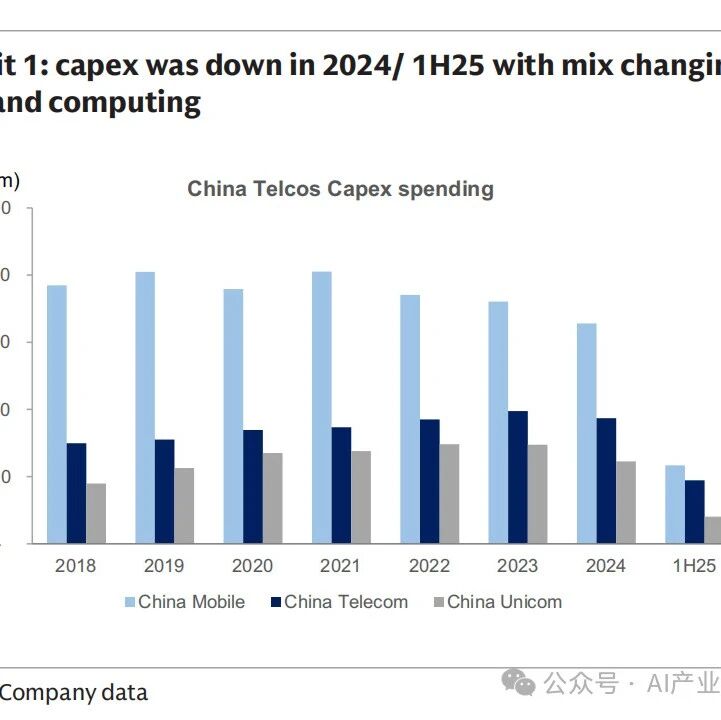
Core Insights - The report highlights a shift in capital expenditure by telecom operators towards computing infrastructure, driven by a reduction in traditional telecom network spending and an increasing demand for AI capabilities [3][4]. Capital Expenditure Trends - In 2024 and the first half of 2025, capital expenditure by Chinese telecom operators is expected to decline, primarily due to reduced spending on traditional telecom networks like 5G. However, there is a notable increase in investments in AI and computing infrastructure to meet growing market demands [4][8]. - Goldman Sachs projects that despite a further decrease in telecom network spending in 2025, the growth in capital expenditure related to intelligent computing capabilities will partially offset this decline, leading to an overall decrease in annual capital expenditure [8]. Specific Operator Projections - China Telecom is expected to have a capital expenditure of 84 billion RMB in 2025, down from 94 billion RMB in 2024, with an increase in investments related to computing platforms [8]. - China Unicom's capital expenditure is projected to be 55 billion RMB in 2025, down from 61 billion RMB in 2024, primarily due to reduced 5G-related capital expenditure, but with a simultaneous increase in AI infrastructure investments [8]. Competitive Advantage - Telecom operators possess their own Internet Data Center (IDC) resources, which reduces reliance on external IDC suppliers and helps lower overall operational costs [7].
打造算力服务新标杆——山东联通与并行科技青岛智算中心正式上线
Xin Lang Cai Jing· 2025-12-04 08:15
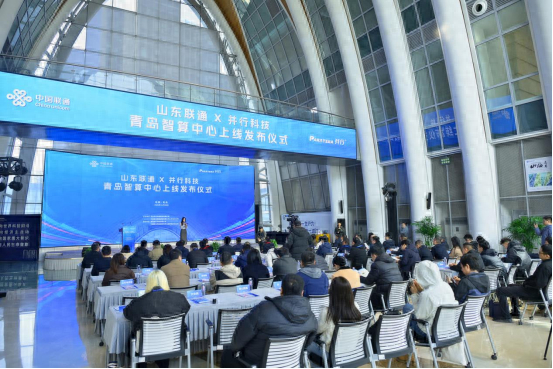
Core Insights - The Qingdao Intelligent Computing Center was launched in a significant event held in Qingdao, showcasing collaboration among government, enterprises, and academia in the field of computing power services [2][4] - The center is positioned as a strategic-level artificial intelligence infrastructure aimed at fostering a model of cooperation between government and enterprises, injecting new momentum into the regional digital economy [4] Group 1 - The center features a "3000-card high-performance GPU computing resource pool," providing robust computing support for research and enterprise development, with a technical advantage of 1ms ultra-low latency in the Jiaodong Peninsula [6] - The launch event included a demonstration of the computing resource pool and discussions on local enterprise computing power incentives and government subsidy policies [6] - Qingdao Unicom and Parallel Technology have jointly donated computing power to Ocean University of China for marine observation data processing and climate model development, supporting marine research and talent cultivation [6] Group 2 - The successful launch of the event not only showcased the service capabilities of Qingdao Intelligent Computing Center but also established a solid bridge for collaboration among government, enterprises, and academia [8] - Qingdao Unicom and Parallel Technology plan to continue enhancing the local computing infrastructure network, providing better networks, more efficient computing power, and attentive services to drive industrial digital transformation in Qingdao and the province [8]
港股通数据统计周报-20251204
Zhe Shang Guo Ji Jin Rong Kong Gu· 2025-12-04 05:23
Group 1: Top Net Buy/Sell Companies - Alibaba-W (9988.HK) had a net buy amount of 13.054 billion CNY, with a holding change of 86,161,822 shares[8] - WanGuo Gold Group (2979.HK) saw a net buy of 3.994 billion CNY, with a holding change of 501,802,800 shares[8] - Kuaishou-W (1024.HK) recorded a net buy of 2.185 billion CNY, with a holding change of 32,228,490 shares[8] - SMIC (0981.HK) was the top net sell company with a net sell amount of -1.720 billion CNY, with a holding change of -24,994,033 shares[9] - Huahong Semiconductor (1347.HK) had a net sell of -726 million CNY, with a holding change of -9,743,244 shares[9] Group 2: Industry Distribution of Net Buy/Sell - Financial sector had a net buy of 1.843 billion CNY, indicating strong investor interest[13] - Energy sector recorded a net sell of -9.89 billion CNY, reflecting a decrease in investor confidence[13] - Information Technology sector had a net buy of 1.85 billion CNY, showing continued investment in tech companies[13] Group 3: Active Stocks - Alibaba-W (9988.HK) was the most active stock with a total trading volume of 44.08 billion CNY and a net buy of 8.00 billion CNY on November 28[18] - Tencent Holdings (0700.HK) had a trading volume of 15.28 billion CNY with a net sell of -1.72 billion CNY on the same day[18] - Pop Mart (9992.HK) recorded a trading volume of 13.05 billion CNY with a net buy of 2.08 billion CNY[18]
2026年宏观与政策展望—万里豁晴川(PPT)
2025-12-04 04:47
Summary of Key Points from the Conference Call Industry and Company Overview - The conference call primarily discusses the macroeconomic outlook for 2026, focusing on the implications of U.S.-China relations, domestic consumption, and the modernization of the industrial system in China. Core Insights and Arguments U.S.-China Relations - U.S.-China relations are expected to maintain a phase of "controlled conflict" in 2026, with potential for multiple high-level meetings throughout the year, which may lead to a muted market reaction [5][7][8] - The U.S. midterm elections in November 2026 will significantly influence Trump's foreign policy focus, with potential disturbances in the first and fourth quarters of 2026, while the second and third quarters may see a calmer external environment [7][8] Economic and Policy Outlook - The macroeconomic outlook for 2026 anticipates a stable economic growth rate, with a focus on expanding service consumption and effective investment strategies [59][61] - The "15th Five-Year Plan" emphasizes the need to maintain a reasonable proportion of manufacturing in GDP, as the share has been declining over the past two decades [27][30] - The modernization of the industrial system is aimed at enhancing investment in emerging industries, with a notable increase in the share of advanced manufacturing sectors by 2024 [62][67] Domestic Consumption - The report highlights the low consumer spending rate in China compared to other countries, indicating significant potential for growth in service consumption [60][72] - Policies are expected to shift from focusing on supply-side measures to emphasizing demand-side strategies, particularly in boosting household consumption rates [61][70] Investment Trends - There is a notable increase in overseas revenue for Chinese companies, with a growth rate of 11.24% in the first half of 2025, significantly outpacing overall revenue growth [23] - The report suggests that the trend of Chinese companies expanding internationally is a strategic response to rising global trade protectionism [23] Currency and Financial Markets - The internationalization of the Renminbi (RMB) is projected to accelerate, driven by increased cross-border trade and financing activities [24][25] - The RMB has become the third-largest payment currency globally, with significant growth in its use for international transactions [25] Other Important but Potentially Overlooked Content - The report discusses the implications of the U.S. Supreme Court's decisions on tariffs, which could reshape negotiation dynamics between the U.S. and other countries [14] - The "destructive reconstruction" of global order under Trump's administration is expected to lead to significant shifts in international relations and economic policies [15][19] - The need for a balanced approach in domestic policies, including social security reforms and income distribution adjustments, is emphasized as crucial for enhancing consumer confidence and spending [68][70] This summary encapsulates the key points from the conference call, providing insights into the macroeconomic landscape, U.S.-China relations, and the strategic direction for Chinese industries and consumption patterns.
打造央企项目重要承载地 前海瞄准研发、结算中心及总部
2 1 Shi Ji Jing Ji Bao Dao· 2025-12-04 02:34
今年前三季度,前海实现地区生产总值2250.8亿元、增长5.5%;1-10月实现进出口总额6124.5亿元、增 长4.5%,实际使用外资161亿元、增长27.1%,占深圳市54.2%。当前,前海已吸引超1.2万家外商投资企 业落户、183家世界500强企业投资布局,如西门子、汇丰、IBM、瑞银等。 "前海已经形成香港研发、前海转化、深圳制造的创新链条,这对央企发挥好香港高校创新资源,实现 重大突破及转化,特别是技术研究突破和加速发展具有很好的实操意义。"参会董事代表说。 近年来,央企将目光着重瞄向战略性新兴产业。国务院国资委数据显示,"十四五"以来,中央企业在战 略性新兴产业领域累计投资8.6万亿元,在集成电路、生物技术、新能源汽车等领域发展速度明显加 快。不少中央企业设立了创投基金,目前总规模近千亿元,积极投早、投小、投长期、投硬科技,形成 了产融结合的新模式。 12月3日,中央企业专职外部董事团赴深圳前海开展座谈交流、实地调研。 21世纪经济报道记者了解到,参与此次前海行的央企包括三峡集团、航空工业集团、中远海运等绿色能 源、先进制造、海洋经济龙头企业,中旅集团、南光集团等在香港、澳门的央企,以及中国国新 ...


中国联通欧洲技术支撑中心在匈牙利揭牌
人民网-国际频道 原创稿· 2025-12-04 01:52
Core Insights - China Unicom (Europe) has established a significant milestone with the unveiling of its European Technology Support Center in Budapest, Hungary, marking its first large-scale regional technical support platform overseas [1][2] - The center aims to leverage China Unicom Group's strengths in computing power, cloud networks, data, and AI engineering to enhance network and localized service capabilities in Hungary and Central Eastern Europe [1] - The initiative is part of a broader strategy to support Chinese enterprises operating in Europe and contribute to the high-quality development of the Belt and Road Initiative and China-Europe connectivity [1] Group 1 - The European Technology Support Center will facilitate open cooperation with local operators, industry partners, and business associations, providing intelligent solutions for Chinese enterprises and local clients [1] - China Unicom is actively introducing technologies such as artificial intelligence and industrial internet into Europe, aiming to create AI-capable smart factories and promote Chinese manufacturing overseas [1] - Hungary is identified as a strategic hub for high-end manufacturing for Chinese enterprises, with the center serving as a strategic bridge for integrated pre-sales, delivery, and operation services [1] Group 2 - The Deputy General Manager of Bank of China Hungary Branch highlighted that Central Eastern Europe is becoming a key area for Chinese enterprises' investments, with increasing demands for communication connectivity, data processing, and information security [2] - The establishment of the technology support center is seen as a practical measure to enhance the service system in Europe and support the real economy, particularly benefiting sectors like manufacturing, energy, transportation, cross-border e-commerce, and financial services [2] - Presentations at the event showcased comprehensive information service capabilities tailored for high-end manufacturing, smart parks, smart logistics, digital finance, and research education, fostering in-depth exchanges with attendees [2]