
今世缘

Search documents
白酒筑底回升,或进入中周期买点
Mei Ri Jing Ji Xin Wen· 2025-06-26 06:05
Group 1 - The current demand for the liquor industry is at a historical low, with a five-year demand index at 28%, indicating limited downside risk [1] - The supportive policies are expected to provide a foundation for consumer recovery, with economic data from January to March showing positive signs, and more supportive policies anticipated to boost liquor demand [1] - Liquor demand is expected to gradually recover at a slow rate, with short-term rigid demand and potential improvement in banquet demand due to a low base in the same period [1] Group 2 - The liquor industry is projected to experience a "valuation-performance" double bottom by 2025, entering a mid-cycle buying point [1] - The dividend yield of the sector is high compared to the ten-year government bond yield, indicating attractive investment value [1] - Despite ongoing downward adjustments in profit forecasts, valuations are at historical lows, suggesting that stock prices may stabilize before earnings do [1] - Recommended stocks include Shanxi Fenjiu, Jinshiyuan, Gujing Gongjiu, Kweichow Moutai, Luzhou Laojiao, and Wuliangye, which are expected to show strong profitability stability [1] Group 3 - The Food and Beverage ETF tracks the China Securities Index for the food and beverage sector, focusing on high-barrier and resilient segments like liquor and dairy products [2] - The top ten constituent stocks include major liquor brands, providing investors with a convenient way to invest in core assets of the "food and beverage" sector [2] - The ETF offers a low investment threshold compared to individual stocks, making it accessible for small investors [2]





破界之后,长三角酒业如何协同共生?
Sou Hu Cai Jing· 2025-06-25 07:12
Core Insights - The competitiveness of the Yangtze River Delta wine industry is fundamentally driven by the release of policy dividends, activation of geographical endowments, and the reconstruction of the industrial chain [12] Economic Overview - In 2024, the GDP of the Yangtze River Delta is projected to exceed 33 trillion yuan, contributing 25% of the national economic total with only 4% of the land [3] - The region accounts for approximately 17% of the national population and contributes about 30% to national economic growth [3] - In the first quarter of 2025, the GDP surpassed 8 trillion yuan, maintaining a strong position in the national economic landscape [3] Industry Performance - Anhui's liquor industry reported significant growth in 2024, with revenue from large enterprises reaching 37.58 billion yuan, a year-on-year increase of 9.2%, and total profits of 12.77 billion yuan, up 13.2% [4] - Jiangsu faced challenges with a 9.83% decline in liquor production and a 16.69% drop in profits, contrasting with the expansion of production capacity by major brands [4] - Zhejiang's yellow wine industry, which holds 57.02% of national production, has seen leading companies achieve growth through structural upgrades and market expansion [4] Challenges Faced - Shanghai's local brands are struggling, with Jin Feng Wine achieving a revenue of 578 million yuan, a mere 0.87% increase, while its net profit plummeted by 94.49% [5] - Shanghai Gui Jiu experienced an 82.54% revenue drop to 285 million yuan, resulting in a net loss of 217 million yuan due to issues like related party transactions and funding chain disruptions [5] - The overall industry faces challenges such as aging consumers in Zhejiang and insufficient penetration into younger markets [6] Strategic Insights - The integration strategy of the Yangtze River Delta aims to break down administrative barriers and inject new momentum into the wine industry [8] - The region's economic foundation and scale have fostered the rise of Su and Hui wines, with leading companies capturing over 60% of their respective provincial markets [7] - Experts suggest that the wine industry must shift from provincial strategies to a more integrated approach, leveraging the strengths of the entire region [10] Future Opportunities - The Yangtze River Delta's one-integration strategy presents a historic opportunity for the wine industry, emphasizing the need for collaboration and resource sharing among provinces [9] - Initiatives include establishing a smart brewing innovation chain, promoting integrated cultural tourism, and developing new green consumption scenarios [9] - The region's unique economic and demographic characteristics create a fertile ground for high-end consumption, with significant potential for growth in premium wine markets [8]






2025第十五届中国(南京)国际糖酒食品交易会圆满闭幕!
Qi Lu Wan Bao· 2025-06-23 00:47
Core Insights - The 15th China (Nanjing) International Sugar and Wine Food Fair successfully concluded, serving as a high-quality platform for the food and beverage industry to exchange and showcase products and trends [2][21] - The event featured thousands of premium wine and food products, highlighting the value of the fair as a trade platform for the industry [3][16] - Key representatives from major liquor-producing regions, including Jiangsu, Anhui, and Guizhou, showcased their products, emphasizing the high-quality development of the liquor industry [5][10][12] Industry Highlights - Jiangsu province, a major producer of both white and yellow wines, had significant representation at the fair, with local brands like Yanghe and Jinshiyuan showcasing their offerings [5][7] - The fair included a variety of activities, such as the "Su-Wan Family" Huang-Huai River liquor industry exchange meeting, aimed at fostering collaboration between Jiangsu and Anhui liquor enterprises [27] - The event also featured a forum on high-quality development in the liquor industry, where industry leaders discussed current challenges and future trends [24][26] Market Opportunities - The fair provided a critical opportunity for distributors to select products ahead of the peak sales seasons for the Mid-Autumn Festival and National Day, with over ten thousand products on display [13] - Various regional product exhibitions and international delegations added diversity to the fair, showcasing unique local flavors and innovations in the food sector [14][16] Future Prospects - The successful hosting of the fair is expected to boost confidence in the liquor and food industry, facilitating efficient connections within the industry chain [21][22] - The fair is positioned as a vital platform for promoting brand image, innovative ideas, and market expansion, especially in the context of industry adjustments [18][19]
苏超,彻底暴露了江苏的家底
36氪· 2025-06-22 23:52
Core Viewpoint - The Jiangsu Provincial Urban Football League (referred to as "Su Chao") has gained significant popularity and sponsorship interest, showcasing its remarkable ability to attract both local and national sponsors, including international brands like Heineken [4][5][12]. Sponsorship Growth - The number of sponsors for Su Chao has surged from 6 to 19, with the official sponsorship seat price rising to 3 million yuan, indicating high demand [3][12]. - Major sponsors include Jiangsu Bank, JD.com, KFC, and Heineken, reflecting a mix of local and national brands [11][12][17]. - The total market capitalization of the listed companies among the sponsors exceeds 4 trillion yuan, highlighting the financial strength behind the league [19][21]. Economic Impact - The league has stimulated local tourism and consumption, with a reported increase of over 48% in visitor numbers to host cities and a 15% rise in tourism spending [29]. - The attendance for matches has set records, with one game attracting over 30,000 spectators, surpassing the average attendance of top-tier leagues [30][31]. Regional Economic Strength - Jiangsu's GDP surpassed 13 trillion yuan in 2024, with all 13 cities in the province ranking among the top 100 in the country, showcasing the region's economic prowess [34][36]. - The economic diversity within Jiangsu, with multiple cities achieving significant GDP milestones, contributes to the league's attractiveness to sponsors [34][35]. Cultural Dynamics - The league reflects the competitive spirit among Jiangsu's cities, with local rivalries and humor contributing to its popularity [8][34]. - The phrase "scattered Jiangsu" encapsulates the regional pride and competitive nature that fuels the league's success [37].


周观点:啤酒旺季重视成长,白酒企业持续变革-20250622
GOLDEN SUN SECURITIES· 2025-06-22 06:54
Investment Rating - The report maintains an "Increase" rating for the food and beverage industry, indicating a positive outlook for growth in the sector [4]. Core Insights - The report emphasizes the importance of growth in the beer sector during the peak season and highlights the ongoing transformation within the liquor industry, particularly in the Chinese baijiu market [1][2]. - It identifies three main investment themes in the baijiu sector: leading brands, high-certainty regional brands, and flexible stocks benefiting from recovery and increased risk appetite [1]. - The report notes that the beer production in China reached 3.584 million kiloliters in May, showing a year-on-year increase of 1.3%, indicating stable growth as the peak season approaches [3]. Summary by Sections Baijiu Sector - The report discusses the cyclical adjustments in the baijiu industry, with companies like Wuliangye and Shui Jing Fang acknowledging the current deep adjustment phase and focusing on brand and product enhancement [2]. - It highlights Wuliangye's commitment to shareholder returns, promising a dividend payout ratio of no less than 70% from 2024 to 2026, with a total dividend amount of at least 20 billion [2]. Beer and Beverage Sector - The report mentions the leadership change at Zhujiang Beer and the completion of a significant milestone by Bai Run's Laizhou distillery, indicating a strong competitive position in the whiskey market [3]. - It also notes the upcoming listing of IFBH Limited on the Hong Kong Stock Exchange, which is expected to strengthen its market position in the coconut water segment, holding a 33.9% market share in mainland China [6]. Consumer Goods - The report highlights the significant growth in e-commerce sales during the 618 shopping festival, with a 10% year-on-year increase in GMV, indicating a robust recovery in consumer spending [7]. - It points out the competitive landscape in the snack food sector, with Three Squirrels leading sales across major platforms, while also noting the challenges for new entrants in the market [7].


一场比赛近65万人抢票!苏超多队迎来冠名
第一财经· 2025-06-20 10:07
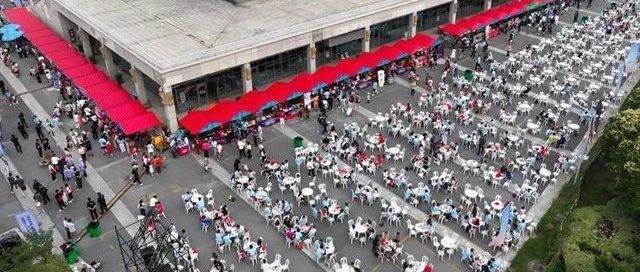
Core Viewpoint - The popularity of the "Su Super" league is rapidly increasing, with ticket demand significantly outpacing supply, leading to a surge in sponsorships and commercial interest in the league [1][2][3]. Ticket Demand and Supply - Upcoming matches in the "Su Super" league are experiencing ticket demand-to-supply ratios exceeding 10:1 and even 30:1 in some cases [1]. - For the match between Changzhou and Nanjing on June 21, the ticket reservation reached 760,000, resulting in a success rate of less than 1% due to the venue's capacity of 41,000 seats, creating a demand-to-supply ratio of over 18:1 [1]. - The match on June 29 between Nantong and Suqian saw a reservation of 220,000 tickets, with actual participation reaching 649,000, indicating a similar low success rate [2]. Sponsorship Growth - The number of sponsors for the "Su Super" league has significantly increased, with strategic partners rising from 1 to 7, including major companies like JD.com and Ideal [2]. - Official sponsors have expanded from 1 to 5, with new additions such as Nubia and Yili, while official suppliers and partners have also seen growth [2][3]. Team Sponsorships - Various teams within the league are attracting sponsorships, with notable examples including Yanghe Co. sponsoring Suqian team and local enterprises sponsoring teams in other cities [3]. - The increase in sponsorships is expected to enhance the quality of venues and maintenance, contributing to the overall development of the league [3][4]. Market Impact and Future Prospects - The rising popularity of the "Su Super" league is creating a positive feedback loop, attracting more sponsors and improving facilities, which in turn enhances the spectator experience and competitive level [4]. - Other provinces are looking to replicate the success of the "Su Super" league, indicating its potential as a model for regional sports development [4].
近65万人抢苏超南通VS宿迁球票,苏超多队迎来冠名
Di Yi Cai Jing· 2025-06-20 09:21
Core Insights - The popularity of the "Su Super" league is significantly increasing, with ticket demand exceeding supply ratios of over 10:1 and even 30:1 for some matches [1][2] - The number of sponsors for the "Su Super" league has surged, with strategic partners increasing from 1 to 7 and official sponsors from 1 to 5, including notable companies like JD.com and Yili [3] Ticket Demand and Supply - For the match between Nanjing and Changzhou on June 21, ticket demand reached 760,000, leading to a success rate of less than 1% for buyers, as the venue can only accommodate 41,000 spectators, resulting in a demand-to-supply ratio of over 18:1 [1] - In the match between Nantong and Suqian on June 29, the ticket reservation reached 220,000, with actual participation hitting 649,000, indicating a demand-to-supply ratio exceeding 30:1, as the venue's capacity is being expanded from 11,000 to 20,000 [2] Sponsorship Growth - The total number of sponsors for the "Su Super" league has increased significantly, with new partnerships formed, including 6 new strategic partners and 4 new official sponsors [3] - Various teams within the league are also attracting sponsorships, with local companies actively engaging in naming rights and promotional activities [3] Industry Impact and Future Prospects - The increase in sponsorships is expected to enhance the league's development, improving venue conditions and overall match experiences, creating a positive feedback loop for the league's growth [4] - The success of the "Su Super" league has prompted other provinces, such as Shaanxi, to consider replicating its model, indicating a potential trend towards localized football leagues across China [5]
闪崩!价格暴跌50%,黄牛跌哭了!3000亿泡泡玛特股价再度重挫,白酒却大涨!新旧消费要切换了?
雪球· 2025-06-20 07:40
Group 1: Bubble Mart's Decline - Bubble Mart's stock price has dropped by nearly 18% from its historical high of 283 HKD, resulting in a market capitalization loss of over 60 billion HKD [2][6] - The recent release of the Labubu series blind boxes has led to a significant decrease in secondary market prices, with prices dropping approximately 50% [8][9] - The company has increased the supply of Labubu products to improve consumer purchasing experiences, which has negatively impacted scalpers who previously profited from reselling [5][8] Group 2: Traditional Liquor Sector Recovery - The traditional liquor sector, particularly Baijiu, has seen a rebound with the sector rising over 2%, making it the top-performing industry on that day [10][11] - Companies like Huangtai Liquor and Jingjia Gongjiu have experienced significant stock price increases, with some stocks rising over 5% [11] - The market is shifting towards high-cost performance products as younger consumers drive demand, leading to a downward adjustment in product pricing strategies [13] Group 3: New vs. Old Consumption Trends - Discussions on social platforms highlight the contrasting narratives of new consumption, represented by Bubble Mart, and traditional consumption, represented by Baijiu [14][15] - Analysts suggest that while Bubble Mart has a strong growth trajectory, its reliance on single IPs may pose risks, as competitors can easily replicate its business model [15][16] - The transition in consumer behavior from functional needs to emotional value is noted, with traditional liquor companies needing to adapt to policy changes and economic recovery for sustained growth [18]

饮料板块活跃,主要消费ETF(159672)涨超1%,燕京啤酒、古井贡酒涨超4%
Sou Hu Cai Jing· 2025-06-20 02:38
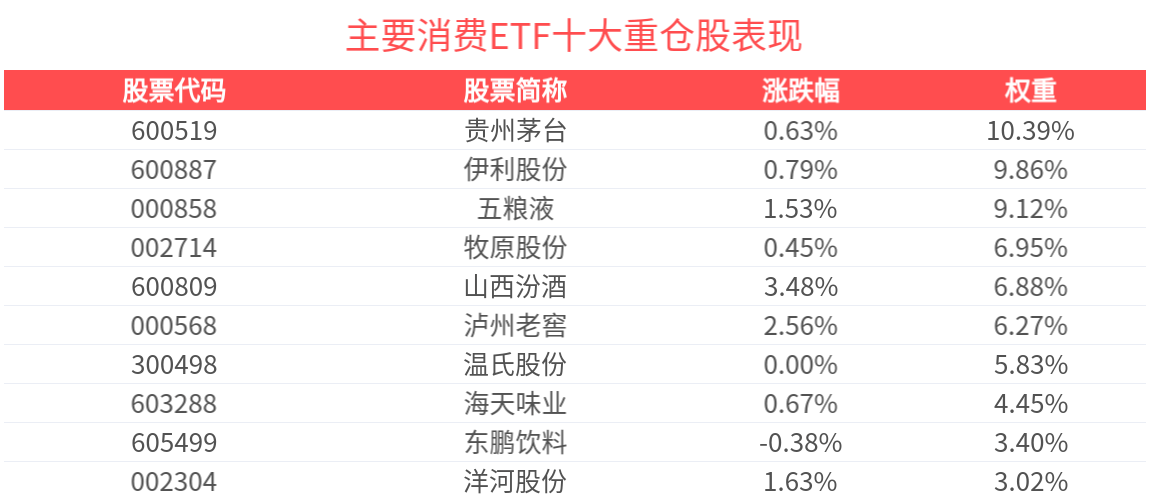
Group 1 - The main consumption index (000932) has shown a strong increase of 1.02%, with significant gains in stocks such as Yanjing Beer (000729) up 4.72% and Gujing Gongjiu (000596) up 4.11% [1] - Recent policies are expected to have a temporary impact on liquor consumption, leading to a forecasted slowdown in recovery for Q2, with the liquor sector still in a bottoming phase [1] - Since 2016, the primary consumption scenario for liquor has shifted from government consumption to business consumption, suggesting that the overall impact may be limited [1] Group 2 - The major consumption ETF (159672) has achieved a maximum monthly return of 24.35% since its inception, with an average monthly return of 4.87% [1][2] - As of June 19, 2025, the major consumption ETF has experienced a maximum drawdown of 6.66% this year, with a management fee of 0.50% and a custody fee of 0.10%, making it one of the lowest in its category [2] - The latest price-to-earnings ratio (PE-TTM) for the major consumption index is 18.72, indicating it is at a historical low, below 99.6% of the time over the past year [2] Group 3 - The top ten weighted stocks in the major consumption index account for 67.15%, with key players including Yili Group (600887) and Kweichow Moutai (600519) [2] - The weightings of the top stocks are as follows: Kweichow Moutai at 10.39%, Yili Group at 9.86%, and Wuliangye (000858) at 9.12% [4] - The data indicates a diverse representation of sectors within the major consumption index, reflecting the overall performance of the consumer market [2][4]


基金经理焦巍、萧楠仍在等待白酒抬头
2 1 Shi Ji Jing Ji Bao Dao· 2025-06-19 10:45
Core Viewpoint - The traditional liquor sector, particularly the baijiu industry, has experienced a continuous decline over the past four years, reaching a five-year low, while some investors are beginning to show interest in bottom-fishing opportunities as valuations approach historical lows [1][2][4]. Industry Performance - The Wande Baijiu Index has dropped 15.21% year-to-date as of June 18, with all 19 A-share listed baijiu stocks recording declines between -2% and -28% [2]. - Notably, eight baijiu stocks have seen declines exceeding 20%, with Yingjia Gongjiu experiencing the largest drop of 27.81% [2]. - Major baijiu stocks held by public funds, including Kweichow Moutai and Wuliangye, have all seen price declines, with Kweichow Moutai down 6.50% and Wuliangye down 13.80% year-to-date [2][3]. Investment Trends - Since mid-May, there has been a notable increase in the willingness of funds to buy into baijiu stocks, with the LOF baijiu fund increasing by 300 million shares and the Penghua Zhongzheng Liquor ETF increasing by 4.5 billion shares [1][5]. - Some institutional investors believe that the current low valuations of baijiu stocks may signal a turning point in the next six months to a year, with potential for both performance and valuation improvements [1][6]. Institutional Sentiment - There is a divide among institutional investors regarding baijiu investments, with some funds increasing their positions while others are reducing their exposure [6][7]. - Despite some funds showing interest, many institutions remain cautious, preferring to invest in sectors like insurance and home appliances instead of baijiu [7][8]. Valuation and Dividend Yield - The TTM price-to-earnings ratio for the Wande Baijiu Index is currently at 17.78, which is considered low historically, and the average dividend yield for baijiu stocks has reached 4.37% [9][10]. - Leading companies like Kweichow Moutai and Shanxi Fenjiu have TTM P/E ratios around 20 and 17.14, respectively, indicating that many baijiu stocks are trading at historically low valuations [10]. Future Outlook - Some analysts predict that the baijiu sector may experience a recovery in valuations before actual performance improvements, with a potential cycle lasting three to five years [9][10]. - The current market conditions suggest that while there are opportunities for investment in leading baijiu brands, caution is advised due to ongoing inventory pressures and weak demand [11].