
小米汽车

Search documents
4月乘用车市场销量稳中有升 自主品牌持续扩大优势
Zhong Guo Zhi Liang Xin Wen Wang· 2025-05-21 09:03
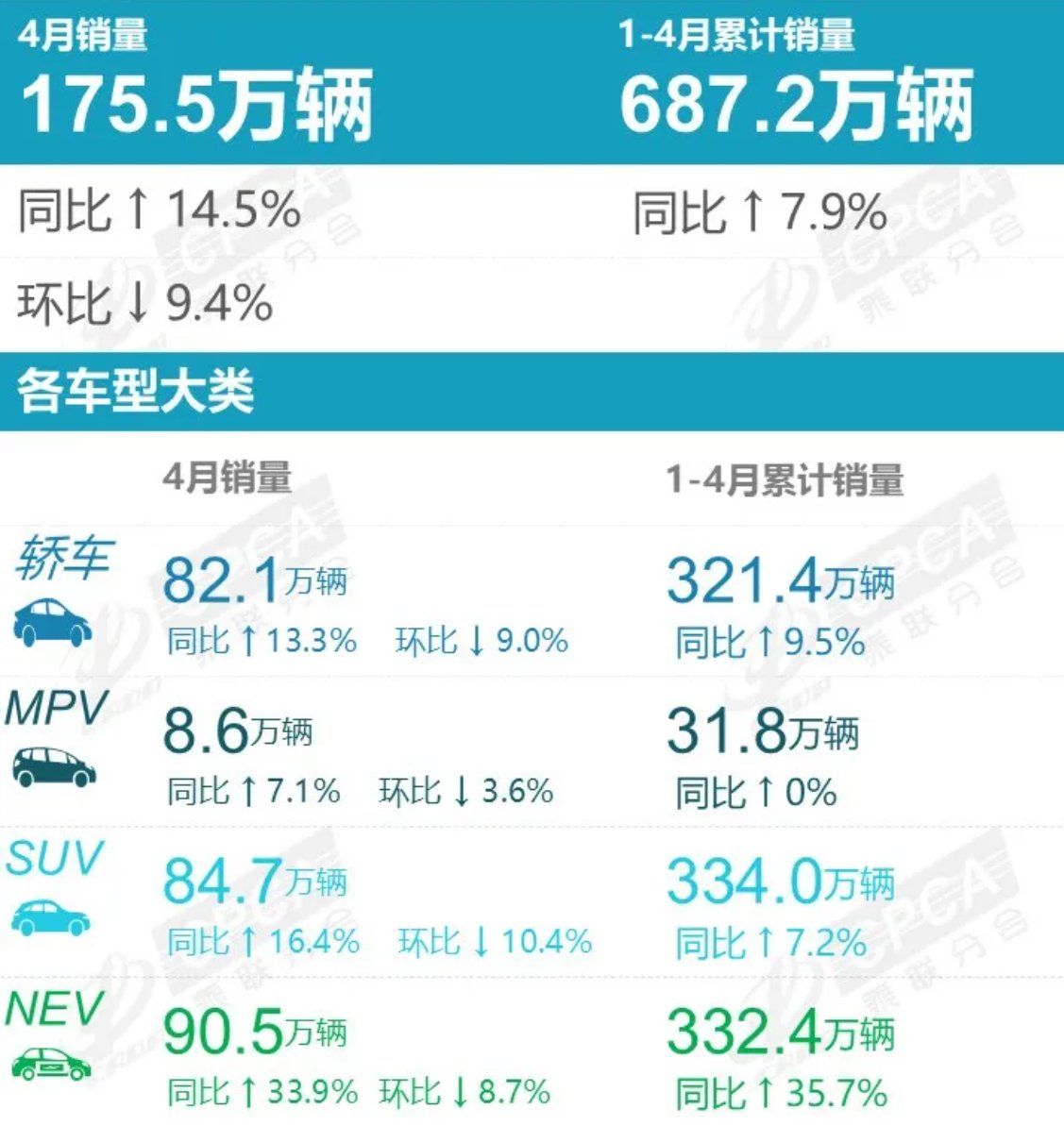
Core Viewpoint - The domestic narrow passenger car market in April saw retail sales reach 1.755 million units, marking a year-on-year increase of 14.5%, although it experienced a month-on-month decline of 9.4%. This growth rate is the highest for April in nearly a decade, indicating a reduction in the quarterly cyclical fluctuations of the automotive market [1]. Group 1: Sales Performance - In April, retail sales for sedans reached 821,000 units, up 13.3% year-on-year but down 9.0% month-on-month. Cumulative sales from January to April totaled 3.214 million units, reflecting a year-on-year increase of 19.5% [3]. - SUV sales were 847,000 units in April, showing a year-on-year increase of 16.4% and a month-on-month decline of 10.4%. Cumulative sales for the first four months reached 3.340 million units, with a year-on-year increase of 7.2% [3]. - New energy vehicles (NEVs) led the sales growth in April, with 905,000 units sold, representing a year-on-year increase of 33.9% [3]. Group 2: Brand Performance - Domestic brands performed strongly in the NEV and export markets, achieving retail sales of 1.15 million units in April, a year-on-year increase of 31%. Their market share rose to 65.5%, an increase of 8 percentage points year-on-year [4]. - BYD emerged as the sales champion in April with 268,778 units sold, a year-on-year increase of 5.8%, capturing a market share of 15.3% [5]. - Geely Automotive followed with retail sales of 209,979 units, marking a significant year-on-year increase of 81.4%, boosting its market share from 10.1% to 12.0% [5]. - FAW-Volkswagen was the only major automaker to experience a decline in sales, with 110,506 units sold, down 7.2% year-on-year [7]. Group 3: NEV Market Dynamics - In the NEV segment, BYD maintained its lead with sales of 268,778 units, up 5.8% year-on-year. Geely ranked second with 118,813 units sold, a remarkable year-on-year increase of 141.7% [15][16]. - The third to fifth positions in NEV sales were held by Changan Automobile, SAIC-GM Wuling, and Chery Automobile, with sales of 60,606, 51,828, and 36,977 units respectively [16]. - New entrants like Xiaomi and Leap Motor also showed impressive growth, with Xiaomi's sales increasing by 305% to 28,585 units and Leap Motor's sales rising by 88.7% to 28,317 units [20].



一季报成绩单陆续亮相 造车新势力分化加剧
Zhong Guo Zheng Quan Bao· 2025-05-20 20:32
Core Insights - The Chinese electric vehicle (EV) industry is experiencing increased differentiation among leading players, with varying strategic outcomes reflected in their financial results [1] Group 1: Company Performance - Xiaopeng Motors achieved the highest delivery volume among new forces with 94,000 units, projecting revenue between 15.19 billion to 15.7 billion yuan, a year-on-year increase of 132% to 139.8% [1] - Li Auto delivered 92,900 vehicles, a 15.5% year-on-year increase, but expects revenue to decline by 3.5% to 8.7%, totaling between 23.4 billion to 24.7 billion yuan [1][5] - Leap Motor reported a delivery volume of 87,552 units, a 162% increase, with revenue of 10.02 billion yuan, up 187.1%, and a gross margin of 14.9% [2] - NIO's main brand delivered only 27,300 units, with projected revenue between 12.367 billion to 12.859 billion yuan, reflecting a year-on-year growth of 24.8% to 29.8% [4] Group 2: Market Reactions - Xiaopeng's stock price surged by 66.2% since the beginning of 2025, reaching a market capitalization of 147.6 billion HKD [1] - Li Auto's stock increased by 18.1%, while NIO's stock fell by 12.2%, with its market capitalization dropping below 70 billion HKD [1] Group 3: Industry Trends - The EV industry is undergoing a transformation driven by capital and technology, leading to a restructured competitive landscape where leading companies are consolidating resources and innovating [6] - Traditional automakers are leveraging their advantages to incubate new forces, with companies like Zhiji and Zeekr focusing on advanced technologies and cost efficiencies [7] - The industry is shifting from scale expansion to efficiency competition, with a focus on resource concentration and capital flowing towards companies with technological depth and cost control capabilities [7]
福建首富,缔造万亿资本帝国
阿尔法工场研究院· 2025-05-20 12:44
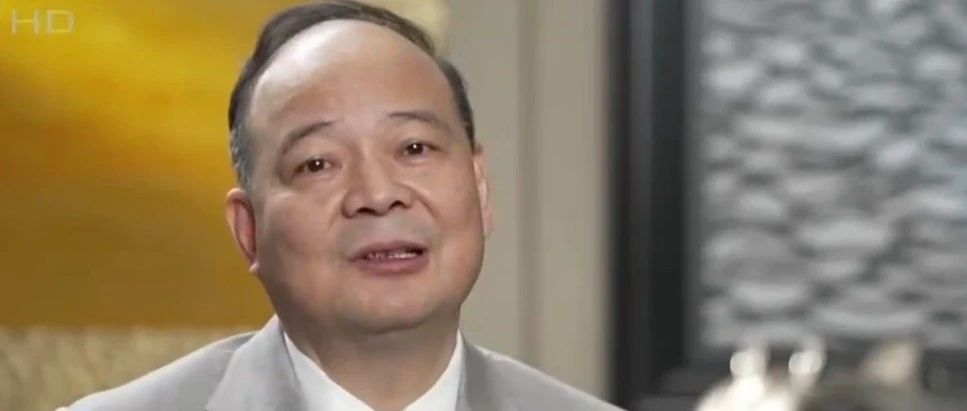
Core Viewpoint - CATL's IPO in Hong Kong marks the largest IPO globally this year, with a total market value of HKD 1.34 trillion, showcasing the company's significant growth and influence in the battery industry [2][3]. Group 1: IPO Details - CATL officially listed on the Hong Kong Stock Exchange on May 20, with an opening price of HKD 296 per share, reflecting a 12.55% increase on the first day [2]. - The IPO is expected to raise approximately HKD 30.718 billion, with cornerstone investors committing to purchase around USD 2.628 billion (approximately HKD 20.371 billion) worth of shares [2]. Group 2: Company Growth and Leadership - Founded by Zeng Yuqun, CATL has evolved from a small company to a trillion-dollar enterprise, expanding its investment footprint across various sectors including lithium batteries, energy storage, and electric vehicle manufacturing [3][5]. - Zeng Yuqun's journey from a modest background to becoming a billionaire reflects the company's rapid ascent in the battery industry, with his net worth reaching approximately CNY 200 billion [9]. Group 3: Investment Strategy - CATL's investment strategy includes direct investments and participation as a limited partner (LP) in various funds, focusing on sectors related to new energy and battery technology [12][15]. - The company has established partnerships with major automotive manufacturers and has invested in numerous startups and projects within the new energy sector, enhancing its market position [12][14]. Group 4: Regional Impact - CATL's growth has significantly transformed Ningde's industrial landscape, establishing it as a hub for the lithium battery industry, with a complete supply chain from materials to recycling [18]. - The local government has actively supported CATL's initiatives, leading to the establishment of over 200 related enterprises in the region, contributing to job creation and economic growth [18][20].

在50%渗透率浪潮中“捞金”,吉利汽车仍是一个不错的确定性投资选择?
3 6 Ke· 2025-05-20 11:12
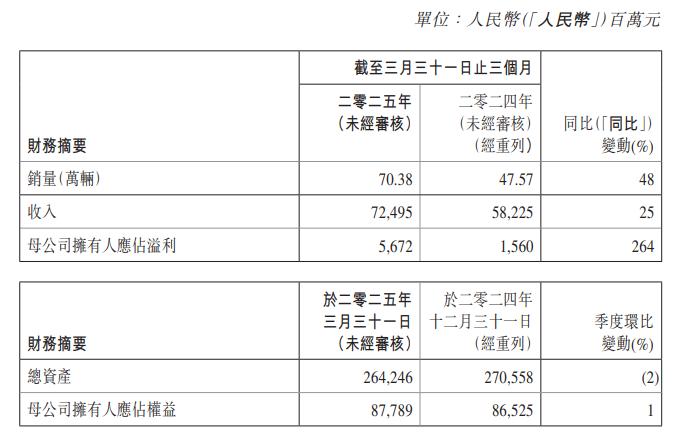
Core Viewpoint - Geely Auto is highlighted as a successful case of transformation among traditional car manufacturers during the current automotive industry shift, achieving significant sales growth and profitability [1][2]. Sales Performance - In April, Geely Auto achieved a 53% year-on-year sales growth, selling 230,000 vehicles, and a 0.8% increase from the previous month, ranking second among traditional car manufacturers [1]. - In Q1 2025, Geely's total sales reached a record high of 704,000 units, with a 48% year-on-year increase, and 48% of these were new energy vehicles [3][4]. Financial Performance - Geely's revenue for Q1 2025 grew by 24.5% to 72.495 billion yuan, while net profit attributable to shareholders surged by 263.6% to 5.672 billion yuan [4][5]. - The gross profit margin improved by 0.2 percentage points to 15.8%, indicating effective cost management despite rising sales [8]. Brand Strategy - The launch of the "Geely Galaxy" brand has significantly contributed to sales, with nearly 260,000 units sold in the quarter, marking a 214% increase [5][6]. - The integration of the Lynk & Co brand into Zeekr has enhanced brand premium capabilities, with Zeekr's total sales increasing by 21.1% to 114,000 units in Q1 [6][9]. Market Position - Geely is positioned as a leading player in the new energy vehicle market, with a domestic penetration rate exceeding 50% [3][12]. - The company is focusing on a unified brand strategy to enhance competitiveness and operational efficiency in a challenging market environment [9][19]. Future Outlook - Geely plans to continue investing in smart driving technologies and aims to expand its global presence, although its export growth has been slower than expected [15][16][17]. - The company is expected to maintain its profitability and growth trajectory by leveraging its multi-brand strategy and enhancing operational synergies [11][18].
零跑汽车董事长朱江明辟谣去世传闻;小米汽车二期工厂已处于收尾状态,工作人员称YU7发布会后展车到店丨汽车交通日报
创业邦· 2025-05-20 10:20
Group 1 - The chairman of Leap Motor, Zhu Jiangming, refuted rumors about his death, stating that the company achieved better-than-expected results in their Q1 2025 financial report [1] - Xiaomi's second-phase factory is nearing completion, with the first-phase factory already operational and preparing for the launch of the new model, Xiaomi YU7, on May 22 [1][2] - The top ten car manufacturers in China sold a total of 2.502 million vehicles from January to April 2025, accounting for 68.7% of total car sales, with BYD, Geely, SAIC-GM-Wuling, and FAW showing varying degrees of sales growth [1][3] Group 2 - BYD has been ranked among the top ten global automotive brands for three consecutive years, with a brand value of $14.4 billion, marking a 43.6% year-on-year increase, making it one of the fastest-growing brands in the automotive industry [1][4]
飞龙股份(002536) - 002536飞龙股份投资者关系管理信息20250520
2025-05-20 08:54
Group 1: Company Overview - Feilong Automotive Parts Co., Ltd. has over 70 years of development history, established in 1952, focusing on thermal management system solutions [1] - The company has two main development phases: before 2017 focused on automotive thermal management components, and from 2017 onwards, expanding into non-automotive sectors [1] - Key products include mechanical water pumps, exhaust manifolds, turbocharger housings, electronic pumps, temperature control valves, and thermal management modules, with significant achievements in overseas markets [1][2] Group 2: Product Development and Market Reach - Each new energy vehicle typically requires 2-5 electronic water pumps, primarily used in motors, controls, and batteries [2] - The company serves over 200 domestic and international clients, with products exported to the Americas, Europe, and Southeast Asia, supporting more than 300 factory bases globally [2] - Current clients for new energy thermal management integrated modules include Chery, Li Auto, SAIC, and Lantu, with some projects already in mass production [2] Group 3: Strategic Responses and Competitive Advantages - The company has a 10% revenue exposure to the U.S. market, with minimal impact from recent tariff changes, and is actively relocating production to Thailand to mitigate risks [2] - Competitive advantages in the civilian sector include nearly 10 years of experience, a strong client base of over 70 companies, and diverse application scenarios across various industries [3] - Ongoing projects in the civilian sector exceed 100, with some already in mass production, showcasing the company's robust technological foundation [3]

极氪不到一年拟退市,吉利要下盘大棋
3 6 Ke· 2025-05-20 00:55
Group 1 - Zeekr has initiated the process of privatization following a proposal from its controlling shareholder, Geely Automobile, marking its return to the Geely system [1] - Geely currently holds 65.7% of Zeekr's shares, and if the acquisition of the remaining shares is completed, Zeekr will become a wholly-owned subsidiary and delist from the stock market [1][4] - The return of Zeekr aligns with Geely's historical strategic logic, as the company previously unified its sub-brands to enhance competitiveness [1][4] Group 2 - Zeekr's sales performance has been declining, with the flagship model Zeekr 001's sales dropping from 4,359 units in January to 2,976 units in March 2024 [3] - In April 2024, Zeekr's total deliveries fell to 13,727 units, a year-on-year decrease of 15% and a month-on-month decrease of 11% [3] - The company aims to achieve a sales target of 320,000 units for the year but has only completed 17.22% of this target by April [3] Group 3 - Following its listing on the New York Stock Exchange, Zeekr's stock price fluctuated between $20 and $30, with a low of $13 per share, resulting in a market capitalization of $3.3 billion [4] - The company has faced significant net losses from 2021 to 2024, totaling over 26 billion yuan, which has led to a cycle of financial constraints [5] - Geely's cash flow was reported at 43.6 billion yuan by the end of 2024, indicating its capacity to finance the acquisition of Zeekr [6] Group 4 - The integration of Zeekr and Lynk & Co has led to a reduction in product offerings by 20% and aims to streamline operations and reduce costs [10] - The first quarter of 2025 saw Zeekr's costs decrease to 17.8 billion yuan, down 2.4% year-on-year and 38.6% quarter-on-quarter [11] - The merger is seen as a critical step for Geely to enhance its competitiveness in the rapidly evolving electric vehicle market [12]
无锡振华拟募投不超5.2亿扩产 发展势能充沛5年研发费2.79亿
Chang Jiang Shang Bao· 2025-05-19 23:28
Core Viewpoint - Wuxi Zhenhua (605319.SH) accelerates its production expansion by issuing convertible bonds to raise up to 520 million yuan for automotive parts projects and working capital [1][2] Group 1: Company Overview - Wuxi Zhenhua, established in 1989, specializes in the design, research and development, manufacturing, and sales of automotive stamping and welding parts, as well as related molds and assembly processing services [2] - The company has established nine production bases, forming a multi-location production layout across Wuxi, Shanghai, Zhengzhou, Ningde, Wuhan, and Langfang [1][3] Group 2: Financial Performance - In 2024, Wuxi Zhenhua achieved revenue of 2.531 billion yuan, a year-on-year increase of 9.23%, and a net profit of 378 million yuan, up 36.30% [4] - In Q1 2025, the company reported revenue of 600 million yuan, a 22.5% increase year-on-year, and a net profit of 94.54 million yuan, up 22.2% [4] Group 3: Investment and Expansion Plans - The company plans to use 1 billion yuan of the raised funds to supplement working capital, while the remaining will be allocated to the Langfang Zhenhua automotive parts project [2] - The project is expected to have a post-tax internal rate of return of 12.78% and a payback period of 7.74 years, with an anticipated production capacity of 500,000 sets of automotive parts annually [3] Group 4: R&D and Technological Advancements - Wuxi Zhenhua has seen a consistent increase in R&D expenses from 47.886 million yuan in 2020 to 62.817 million yuan in 2024, totaling 279 million yuan over five years [5] - The company holds 148 patents, including 19 invention patents, showcasing its strong market competitiveness [5]

穿过“人机共驾”定责迷宫“智驾险”离真保险还有多远
Zhong Guo Zheng Quan Bao· 2025-05-19 21:23
Group 1 - The core concept of "Intelligent Driving Insurance" (智驾险) is emerging as a response to the growing concerns of car owners regarding liability in accidents involving advanced driver-assistance systems (ADAS) [1][3][4] - Several electric vehicle manufacturers, such as Xpeng Motors and Xiaomi, are offering "Intelligent Driving Insurance" as a supplementary service, which provides compensation in case of accidents while using their autonomous driving features [2][4][5] - The current state of autonomous driving technology is primarily at Level 2 (L2), with Level 3 (L3) still under development, leading to complex liability issues that require further legal and policy refinement [1][7][8] Group 2 - The "Intelligent Driving Insurance" is not classified as a true insurance product, as it is not officially registered with regulatory bodies and is primarily a liability coverage option provided by car manufacturers [3][4][5] - Car manufacturers are responsible for compensation under these plans, which often require customers to first purchase traditional insurance products before being eligible for the supplementary coverage [4][6] - The insurance companies involved are primarily providing data and risk assessment support, rather than directly handling claims, which raises questions about the transparency and regulatory compliance of these offerings [6][8][9] Group 3 - The development of "Intelligent Driving Insurance" is seen as a potential catalyst for enhancing consumer trust in autonomous driving technologies and promoting their adoption [5][8] - Industry experts highlight the need for clearer regulations and standards to define the boundaries and relationships between "Intelligent Driving Insurance" and existing insurance products to avoid overlaps and disputes [8][9] - Future developments may see the emergence of dedicated insurance products for intelligent driving, particularly from manufacturers with their own insurance subsidiaries, as the technology and regulatory landscape evolves [9]

“以旧换新”政策显效 新能源车置换热潮涌动
Zhong Guo Zheng Quan Bao· 2025-05-19 20:42
Core Insights - The "trade-in for new" policy in China is significantly boosting the automotive market, with a reported 10 million applications for subsidies, indicating strong consumer interest and activity in the sector [1][4]. Group 1: Policy Impact - The "trade-in for new" policy has led to a notable increase in consumer activity, with the Ministry of Commerce reporting over 10 million applications for subsidies, including 3.225 million applications in 2025 alone [4]. - The policy has effectively stimulated consumption growth, green transformation, and resource recycling, with over 53% of trade-ins involving new energy vehicles [4]. Group 2: Consumer Behavior - Many consumers are opting to trade in their old vehicles for new energy vehicles, with a significant number of trade-ins coming from brands like Mercedes-Benz, BMW, and Audi [3]. - Discounts and subsidies are making new energy vehicles more attractive, with some consumers reporting total savings of up to 34,000 yuan when trading in for models like the Li Auto L6Pro [2]. Group 3: Company Performance - Companies like Li Auto have seen a substantial increase in trade-in orders, with over 10,000 orders reported as of May 18, and the Li L6 model being particularly popular [5]. - Xiaopeng Motors and Leap Motor have also experienced rapid sales growth, with Xiaopeng breaking traditional seasonal sales patterns and Leap Motor increasing monthly sales from 10,000 to 40,000 units since the policy's implementation [6]. Group 4: New Product Launches - The automotive industry is actively launching new models to attract consumers, with companies like Xiaomi, Great Wall, and NIO introducing new vehicles to enhance market offerings [7]. - NIO plans to release nine new models this year, with significant promotional offers for early reservations, indicating a competitive push in the market [7].