
巨子生物

Search documents
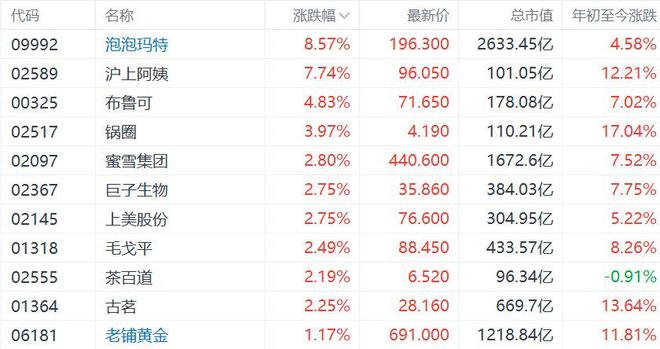
港股异动丨新消费概念集体走强,泡泡玛特涨超8%,布鲁可涨超4%
Ge Long Hui· 2026-01-20 02:37
Group 1 - The core viewpoint of the news is that Pop Mart has conducted its first share buyback in nearly two years, leading to a significant increase in its stock price and positively impacting the Hong Kong market for new consumer stocks [1] - Pop Mart repurchased 1.4 million shares at a price range of HKD 177.7 to HKD 181.2, totaling over HKD 250 million, marking the company's first buyback in two years [1] - The collaboration between Pop Mart and Honor to launch the "Trendy Toy Phone" has been announced, with the limited edition Honor 500 Pro Molly priced at RMB 4,499, and a promotional price of RMB 3,999 [1] Group 2 - Morgan Stanley noted that Pop Mart's share buyback is expected to attract more investor attention, particularly from those looking for stock price catalysts [1] - The firm highlighted that Pop Mart is experiencing strong growth with clear driving factors and a solid long-term outlook, projecting a net profit of RMB 12.6 billion by 2025 [1] - As of the end of last year, Pop Mart had RMB 20 billion in net cash, indicating ample financial resources to provide returns to shareholders [1]


国补高基数下12月社零同增0.9%
HTSC· 2026-01-20 02:02
Investment Rating - The report maintains a "Buy" rating for the consumer discretionary sector, highlighting structural investment opportunities [5][10]. Core Insights - The report indicates that in December, the total retail sales of consumer goods increased by 0.9% year-on-year to 4.5 trillion yuan, with a month-on-month decline of 0.4 percentage points, primarily due to high base effects from durable goods like automobiles and home appliances [7][9]. - The report emphasizes the importance of the new round of trade-in policies for 2026, which focus on core home appliance categories and expand into new categories like smart glasses and products for the elderly, supporting demand in these segments [7]. - The report suggests that consumer sentiment remains strong, particularly in sectors like emotional consumption, technology consumption, and undervalued high-dividend stocks, recommending a focus on domestic brands and global brand expansion [10]. Summary by Sections Retail Sales Performance - In December, retail sales of food and beverages grew by 2.2% and 0.7% respectively, with urban and rural retail sales increasing by 0.7% and 1.7% year-on-year [8]. - Online retail sales of physical goods in December increased by 0.8% year-on-year, with a total annual growth of 5.2%, accounting for 26.1% of total retail sales [8]. Consumer Categories - The report notes a structural differentiation in consumer categories, with home appliances, building materials, and furniture experiencing declines of 18.7%, 11.8%, and 2.2% respectively due to high base effects and trade-in policy impacts [9]. - Conversely, communication equipment saw a significant increase of 20.9% year-on-year, while emotional and self-care products like sports and entertainment goods and cosmetics grew by 9.0% and 8.8% respectively [9]. Investment Recommendations - The report identifies four main investment themes: 1. Rise of domestic brands and global brand expansion, recommending companies like Pop Mart, Shangmei, and Anta Sports [10]. 2. Technology consumption empowered by AI, recommending companies like Midea Group and Haier Smart Home [10]. 3. Emotional consumption, recommending companies like Gu Ming and Yum China [10]. 4. Undervalued high-dividend blue-chip leaders, recommending companies like Li Ning and Shenzhou International [10]. Company-Specific Insights - For Smoore International (6969 HK), the report forecasts a revenue of 10.21 billion yuan for Q1-3 2025, with a year-on-year growth of 21.8%, and maintains a "Buy" rating with a target price of 27.00 HKD [48]. - For Juzhibio (2367 HK), the report highlights the approval of a new collagen product, projecting significant sales potential and maintaining a "Buy" rating with a target price of 85.00 HKD [49]. - For Pop Mart (9992 HK), the report notes a revenue increase of 245-250% in Q3 2025, driven by strong performance in both domestic and international markets, maintaining a "Buy" rating with an updated target price of 410 HKD [51].




化妆品“唯成分论”乱象 检测屡陷“罗生门”
经济观察报· 2026-01-19 07:22
Core Viewpoint - The ongoing disputes regarding cosmetic ingredient content reflect a marketing battle driven by single-ingredient concept marketing [5] Group 1: Disputes and Detection Challenges - Recent controversies have arisen over the ingredient content in cosmetics, with brands like Han Shu and Ke Fu Mei facing scrutiny in 2025 due to differing detection results from various institutions [2] - The complexity of cosmetic formulations leads to varying detection results, influenced by the matrix of ingredients and the methods used for testing [6] - The lack of standardized testing methods contributes to discrepancies in results, with some institutions using inappropriate methods that amplify result deviations [6] Group 2: Consumer Trust and Understanding - Consumers are left confused by conflicting information, raising questions about the precision of ingredient content detection and the significance of small variations in ingredient amounts [3][11] - The rise of ingredient-conscious consumers has prompted brands to disclose more product information, making detection results a key factor in assessing product value [12][13] Group 3: Scientific and Regulatory Insights - The detection of active ingredients like peptides and proteins faces challenges due to their low concentrations and susceptibility to degradation during testing [7] - Current effective detection technologies, such as LC-MS/MS, provide high sensitivity and specificity, enabling accurate measurement of active ingredients [9] - The establishment of credible group standards requires a diverse range of stakeholders, including hospitals, research institutions, and regulatory bodies, to ensure transparency and inclusivity [16] Group 4: Recommendations for Industry Development - The industry should shift towards a foundation of skin science and evidence-based medicine, moving away from a focus solely on ingredient content [17] - Collaboration among regulatory bodies, research institutions, and companies is essential to integrate evidence-based logic into industry standards and practices [17]

休闲旅游需求持续释放叠加体验式消费需求兴起,聚焦消费板块布局机遇
Mei Ri Jing Ji Xin Wen· 2026-01-19 06:39
Group 1 - The Hong Kong consumer sector is experiencing slight fluctuations, with the Hong Kong Stock Connect Consumer ETF (Hua Xia, 513230) rising approximately 0.2% [1] - Notable gainers in the holdings include TCL Electronics, KANAT Optical, Lao Pu Gold, Mengniu Dairy, and Li Ning, while major decliners include China Resources Beer, Jiuxing Holdings, Giant Bio, Yum China, and Blucor [1] - According to the National Bureau of Statistics, service retail sales are projected to grow by 5.5% in 2025, outpacing goods retail sales growth by 1.7 percentage points, indicating an increasing share of service retail in overall retail [1] Group 2 - The tourism market is expected to grow by over 10% in 2025, driven by sustained demand for leisure travel and experiential consumption, supported by government initiatives to boost domestic demand and service consumption [2] - The fourth quarter of 2025 is anticipated to see continued high growth rates of 15% to 20% for brands like Guming and Shanghai Auntie, despite a slight decrease in delivery subsidies [2] - The travel sector, including OTA, hotels, and scenic spots, is likely to benefit from favorable policies aimed at enhancing service consumption [2] Group 3 - Relevant ETFs include the Tourism ETF (562510) benefiting from holiday catalysts and the ice and snow economy, and the Food and Beverage ETF (515170) focusing on boosting domestic demand in undervalued sectors [3] - The Hong Kong Stock Connect Consumer ETF (Hua Xia, 513230) is highlighted for its focus on e-commerce leaders and new consumption trends [3]
化妆品“唯成分论”乱象 检测屡陷“罗生门”
Jing Ji Guan Cha Wang· 2026-01-19 05:52
Core Viewpoint - The ongoing disputes regarding cosmetic ingredient content highlight the complexities of ingredient testing and the challenges consumers face in discerning accurate information [1][2][3] Group 1: Disputes and Testing Challenges - Different testing institutions yield varying results for the same cosmetic ingredient, leading to consumer confusion and mistrust [2][4] - The complexity of cosmetic formulations, which often contain numerous ingredients, complicates the accuracy of testing results [4][5] - The lack of standardized testing methods contributes to discrepancies in results, as different institutions may use varying techniques and protocols [4][5][6] Group 2: Consumer Guidance and Industry Practices - Consumers are advised to prioritize testing institutions with recognized qualifications, such as CMA and CNAS, and to be cautious of unqualified third-party tests [7] - The impact of ingredient content variations can be significant, especially for active ingredients present in low concentrations, where small differences can affect efficacy [8][9] - The rise of ingredient-focused consumers has prompted brands to disclose more product information, making testing results a critical factor in product valuation [9][10] Group 3: Industry Development and Recommendations - The cosmetic industry is encouraged to adopt a foundation based on skin science and evidence-based practices to address the ongoing disputes and improve consumer communication [11][12][13] - Establishing a unified standard for ingredient testing that incorporates evidence-based data and involves diverse stakeholders is essential for enhancing credibility [12][13] - The industry must shift focus from mere ingredient content to the actual effects of ingredients on skin, ensuring that product efficacy and safety are prioritized [13]
大股东股权被冻结!又一美妆企业IPO失败
Sou Hu Cai Jing· 2026-01-19 02:40
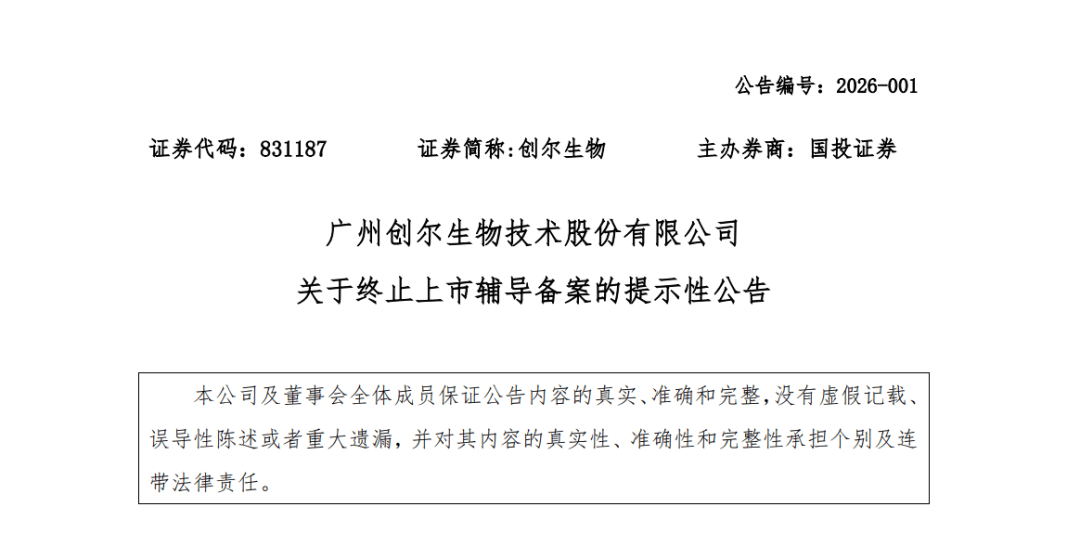
Core Viewpoint - The cosmetic industry faces its first IPO termination case in 2026, as Chuang'er Bio announces the cessation of its listing guidance due to unresolved shareholder equity freeze issues, marking its second failed IPO attempt [1][3][11]. Group 1: IPO Termination Reasons - The termination of the IPO guidance is attributed to the long-term unresolved issue of shareholder equity freeze, particularly involving the second-largest shareholder Ding Yumei, whose shares are frozen due to legal actions related to Evergrande's debt crisis [3][5][8]. - The company had previously attempted to go public, facing setbacks including two failed applications to the Sci-Tech Innovation Board and a subsequent shift to the Beijing Stock Exchange, which also did not yield results [10][11]. Group 2: Financial Performance and Challenges - Chuang'er Bio has struggled with fluctuating financial performance, with revenue consistently hovering between 240 million and 400 million RMB over the past six years, indicating a clear growth ceiling [12][14]. - The company's revenue for 2025 was reported at 214 million RMB for the first half, reflecting a year-on-year increase of 16.98%, but net profit plummeted by 55.99% to 13.21 million RMB, highlighting a trend of "increased revenue without increased profit" [13][14]. Group 3: Industry Context and Competitive Landscape - The collagen market is projected to surpass hyaluronic acid, becoming the leading ingredient in skincare by 2025, with a forecasted market size of 108.3 billion RMB by 2027, growing at a compound annual growth rate of 42.4% [16]. - Competitors like Juzhi Bio and Jinbo Bio have significantly outpaced Chuang'er Bio in both revenue and profitability, with Juzhi Bio's revenue soaring from 2.36 billion RMB in 2022 to 5.54 billion RMB in 2024, while Chuang'er Bio's growth remains stagnant [17][20]. Group 4: Regulatory and Technological Challenges - Regulatory tightening and the decline of the "medical device" business model have adversely affected Chuang'er Bio, which previously relied on its medical dressing products for competitive advantage [18]. - The shift in technology from animal-derived collagen to recombinant collagen has created a gap, with competitors advancing in this area while Chuang'er Bio remains focused on traditional collagen products [19][20]. Group 5: Future Outlook - The termination of the IPO is seen as a culmination of long-standing issues in industry competition, technological positioning, and capital utilization, suggesting that Chuang'er Bio must find a sustainable growth engine and differentiate itself in a competitive landscape to consider future IPO attempts [21].
44家港股公司回购 小米集团-W回购2.19亿港元
Zheng Quan Shi Bao Wang· 2026-01-19 01:37
Summary of Key Points Core Viewpoint - On January 16, 44 Hong Kong-listed companies conducted share buybacks, totaling 31.23 million shares and an aggregate amount of HKD 426 million [1]. Group 1: Buyback Details - Xiaomi Group-W repurchased 5.90 million shares for HKD 219.14 million, with a highest price of HKD 37.200 and a lowest price of HKD 37.080, bringing its year-to-date buyback total to HKD 1.45972 billion [2]. - Sunny Optical Technology repurchased 1.13 million shares for HKD 74.89 million, with a highest price of HKD 66.600 and a lowest price of HKD 65.900, accumulating a year-to-date buyback total of HKD 457.32 million [2]. - Xiansheng Pharmaceutical repurchased 4.43 million shares for HKD 51.63 million, with a highest price of HKD 11.773 and a lowest price of HKD 11.520, totaling HKD 93.58 million in year-to-date buybacks [2]. Group 2: Ranking by Buyback Amount - The highest buyback amount on January 16 was from Xiaomi Group-W at HKD 219.14 million, followed by Sunny Optical Technology at HKD 74.89 million [1]. - Other notable buybacks included Xiansheng Pharmaceutical and Juzhibio, with significant amounts as well [1]. Group 3: Ranking by Buyback Volume - Xiaomi Group-W led in buyback volume with 5.90 million shares, followed by Dingdang Health with 5.21 million shares and Xiansheng Pharmaceutical with 4.43 million shares [1].
智通港股回购统计|1月19日



智通财经网· 2026-01-19 01:13
Group 1 - The article reports on stock buybacks conducted by various companies on January 16, 2026, with Xiaomi Group-W (01810) having the largest buyback amount of 219 million yuan for 5.90 million shares [1][2] - Other notable buybacks include Sunyu Optical Technology (02382) with 1.13 million shares repurchased for approximately 74.9 million yuan and Xiansheng Pharmaceutical (02096) with 4.43 million shares for about 51.6 million yuan [1][2] - The total number of shares repurchased by Xiaomi Group-W represents 0.71% of its total share capital, while Sunyu Optical Technology's buyback accounts for 0.64% of its total share capital [2][3] Group 2 - The buyback activity reflects a trend among companies to return capital to shareholders, with several companies like Country Garden Services (06098) and Baidu-W (02423) also engaging in significant buybacks [1][2] - The buyback amounts and share counts vary significantly across companies, with some like Weigao Group (01066) and Yunda Automotive (03669) showing higher percentages of total share capital repurchased, at 6.68% and 1.27% respectively [2][3] - The data indicates a diverse range of industries participating in buybacks, including technology, healthcare, and consumer services, suggesting a broad interest in enhancing shareholder value across sectors [1][2]
行业周报:赤子城科技Dramabite成短剧黑马,关注AKK菌布局企业-20260118
KAIYUAN SECURITIES· 2026-01-18 14:44
Investment Rating - Investment rating: Positive (maintained) [1] Core Insights - The luxury goods retail revenue in China is showing signs of recovery, with high-end brands like LVMH, Hermès, and Prada experiencing positive growth since Q2 2025 [15][16] - The global network literature market is witnessing rapid growth, particularly in Latin America, with WebNovel reaching nearly 400 million cumulative users by October 2025 [34][35] - The micro-drama and comic-drama market in China is projected to exceed 100 billion yuan in 2025, significantly surpassing the film box office revenue [37][38] - The probiotic market is expanding, with a focus on next-generation probiotics (NGPs) like AKK bacteria, which show significant potential in health applications [55][63] Summary by Sections 1. Duty-Free Shopping - Post-New Year duty-free shopping in Hainan shows strong growth, with sales reaching 3.89 billion yuan and a 49.6% year-on-year increase in shopping amount [31][33] - The high net worth individuals are expected to drive luxury consumption, with a notable increase in spending on preservation-type luxury goods [15][16] 2. Network Literature - The Chinese network literature market reached 49.55 billion yuan in 2024, with a 29.37% year-on-year growth, while the overseas market grew by 10.68% [34] - WebNovel has cultivated nearly 530,000 authors and over 820,000 original works, with a significant increase in user engagement [34][35] 3. Micro-Drama - The micro-drama and comic-drama market in China is expected to reach 100 billion yuan in 2025, with a 98% year-on-year growth [37][38] - The user base for micro-dramas is approaching 700 million, with a strong preference among female viewers [40][42] 4. Probiotics - The global probiotic market is projected to grow at a CAGR of 8.7%, reaching 93.49 billion USD by 2028, with China's market expected to reach 134.89 billion yuan by 2024 [55][63] - Next-generation probiotics like AKK bacteria are gaining traction, with significant potential in health management and consumer interest [55][63]




可选消费W03周度趋势解析:美联储独立性和未来货币政策稳定性的担忧和要求设置信用卡利率上限,本周海外消费集体下挫-20260118
Haitong Securities International· 2026-01-18 14:35
Investment Rating - The report assigns an "Outperform" rating to multiple companies including Nike, Midea Group, JD Group, and Anta Sports, among others [1]. Core Insights - Concerns regarding the independence of the Federal Reserve and future monetary policy stability have led to a collective decline in overseas consumer sectors [4][11]. - The snack sector has shown resilience, outperforming the MSCI China index, while other sectors such as luxury goods and overseas sportswear have faced significant declines [4][11]. - The report highlights that most sectors are currently undervalued compared to their historical averages, indicating potential investment opportunities [9][15]. Sector Performance Summary - **Snack Sector**: Increased by 1.7%, with Wei Long's revenue guidance for 2026 projected to grow over 15% due to innovative products and channel expansion [6][14]. - **Jewelry Sector**: Rose by 1.6%, driven by Chow Tai Fook's strong operational performance expectations for FY26Q3 [6][14]. - **Overseas Cosmetics**: Gained 1.1%, with E.L.F Beauty's sales growth exceeding previous guidance [6][14]. - **Domestic Sportswear**: Increased by 1.5%, with Li Ning's revenue meeting expectations and a positive outlook for net profit margins [8][14]. - **Pet Sector**: Grew by 0.3%, with strong annual growth despite a slight decline in December [8][14]. - **Gambling Sector**: Slight decline of 0.1%, with Galaxy Entertainment showing resilience as a preferred investment choice [8][14]. - **Domestic Cosmetics**: Decreased by 0.3%, with expectations for recovery in 2026 [8][14]. - **Retail Sector**: Fell by 1.5%, with Target's positive leadership changes noted [8][14]. - **Luxury Goods**: Declined by 2.9%, impacted by market concerns over credit risks following Saks Global's bankruptcy [8][14]. - **Overseas Sportswear**: Experienced a significant drop of 4.0%, with major brands like Nike and Adidas facing declines [8][14]. - **Credit Card Sector**: Decreased by 5.1%, influenced by proposed caps on credit card interest rates [8][14]. Valuation Analysis - The report indicates that the expected PE ratios for various sectors in 2025 are below their historical averages, suggesting potential undervaluation: - Overseas Sportswear: 30.4x (57% of historical average) - Domestic Sportswear: 13.5x (71% of historical average) - Jewelry: 22.8x (43% of historical average) - Luxury Goods: 27.4x (49% of historical average) - Gambling: 16.2x (26% of historical average) - Overseas Cosmetics: 41.0x (61% of historical average) - Domestic Cosmetics: 27.3x (51% of historical average) - Pet Sector: 36.9x (50% of historical average) - Snack Sector: 29.8x (72% of historical average) - Retail: 29.9x (54% of historical average) - US Hotels: 34.8x (21% of historical average) - Credit Cards: 28.3x (54% of historical average) [9][15].