瑞幸咖啡

Search documents
创业直播间,戳中打工人
创业邦· 2026-02-17 03:42
Core Viewpoint - The rise of live-streaming entrepreneurship consultations, particularly in the food and beverage sector, has transformed niche content into a mainstream phenomenon, driven by outrageous stories from participants that attract significant viewer engagement [5][10]. Group 1: Popularity of Live-Streaming Entrepreneurship - The concept of "live-streaming entrepreneurship" has gained traction, with hosts like "Yong Ge" amassing millions of followers across platforms such as Douyin and Kuaishou, turning their sessions into entertainment due to the bizarre stories shared by participants [5][8]. - Yong Ge's live-streaming sessions, originally focused on paid consultations for restaurant operations, have evolved into a source of entertainment, with a notable video compilation reaching over 1.06 million views [7]. - The engagement on platforms like Zhihu and Bilibili indicates a growing interest in entrepreneurial stories, with discussions and video compilations achieving millions of views [7][12]. Group 2: Entrepreneurial Challenges and Failures - Many entrepreneurs are drawn to the low barriers of entry in the food and beverage industry, leading to a surge in failed ventures that are now highlighted through live-streaming, showcasing the harsh realities of entrepreneurship [10][20]. - The phenomenon of "fast recruitment" companies, which mislead aspiring entrepreneurs with false promises, has been identified as a significant issue, with many participants in live-streams sharing similar stories of being scammed [20][21]. - The case of the "Two Rivers Governor," a participant who lost significant investments in a failed tea shop venture, exemplifies the pitfalls faced by many in the industry, leading to widespread discussion and analysis online [12][14]. Group 3: Monetization and Business Models - The live-streaming entrepreneurship model has created a dual benefit: hosts earn income through consultation fees while entrepreneurs gain exposure and advice, potentially increasing their business visibility [27]. - Successful hosts have diversified their revenue streams, offering paid courses and private consultations, with some generating substantial income from these services [27][28]. - The competitive landscape of the food and beverage industry has intensified, with a significant increase in store closures, yet new entrants continue to emerge, indicating a dynamic and rapidly evolving market [30].


海外社交媒体出现“极致中国化”热潮,网民纷纷争当“新晋中国人”
Xin Lang Cai Jing· 2026-02-15 05:20
Core Viewpoint - The rise of "Chinamaxxing" reflects a growing trend among Western youth to embrace Chinese culture and lifestyle, driven by disillusionment with their own societal conditions and a fascination with China's rapid development [1][2][10]. Group 1: Cultural Trends - "Chinamaxxing" has gained popularity on platforms like TikTok, where users share experiences and practices associated with Chinese culture, such as traditional health methods and lifestyle choices [1][5]. - The trend signifies a shift in perception, where previously dismissed Chinese cultural elements are now celebrated and adopted by Western audiences [5][12]. - Young people are increasingly purchasing Chinese-inspired products and engaging with Chinese media, indicating a broader cultural exchange [2][8]. Group 2: Societal Context - The emergence of "Chinamaxxing" coincides with a perceived decline in the American Dream, as many young Americans face stagnant economic prospects and societal challenges [10][11]. - Observers note that this trend may represent a search for new cultural identities and alternatives to Western norms, as young people look to China as a model of progress [12][14]. - The trend is seen as a response to geopolitical tensions, with some young people seeking to distance themselves from the negative narratives surrounding China [14][15]. Group 3: Media Response - Western media, including the BBC, have acknowledged the trend while expressing skepticism about its implications, often framing it within a narrative of cultural appropriation or misunderstanding [2][6][14]. - Despite the media's critical stance, the popularity of "Chinamaxxing" suggests a significant shift in cultural dynamics, with young people increasingly drawn to Chinese culture [5][12]. - The trend has sparked discussions about the evolving global landscape, where cultural influence is no longer solely dominated by Western ideals [14][15].

“Ni hao,我们现在都是中国人了”
Guan Cha Zhe Wang· 2026-02-15 04:39
Core Viewpoint - The rise of "Chinamaxxing" reflects a growing trend among Western youth to embrace Chinese culture and practices, driven by disillusionment with their own societal conditions and a fascination with China's rapid development [1][2][3]. Group 1: Cultural Trends - "Chinamaxxing" has gained popularity on platforms like TikTok, where users share videos about adopting Chinese lifestyle habits, indicating a shift in cultural perception [1][10]. - The trend is characterized by a blend of traditional Chinese practices, such as health remedies and cultural attire, which were previously viewed as outdated but are now celebrated [2][3][6]. - Influencers like Sherry Zhu are pivotal in promoting this trend, encouraging followers to embrace Chinese culture and practices [3][6]. Group 2: Global Perception of China - The increasing interest in Chinese culture coincides with a decline in the perception of the "American Dream," as many young Americans feel stagnant while observing China's rapid urban and technological advancements [8][9]. - The trend signifies a potential shift in global cultural dynamics, where younger generations are looking beyond traditional Western influences for inspiration [12][13]. - Despite ongoing geopolitical tensions, the trend suggests a growing appreciation for Chinese culture among Western youth, indicating a possible cultural rapprochement [12][13]. Group 3: Economic and Social Implications - The popularity of Chinese brands and cultural products, such as Laobubu dolls and Chinese tea drinks, highlights the expanding influence of Chinese soft power globally [2][4]. - The trend may also reflect a broader acceptance of Chinese standards and infrastructure, as Western societies increasingly interact with Chinese innovations [2][4]. - The phenomenon of "Chinamaxxing" could lead to a re-evaluation of cultural and economic relationships between China and the West, as younger generations seek new cultural narratives [12][13].

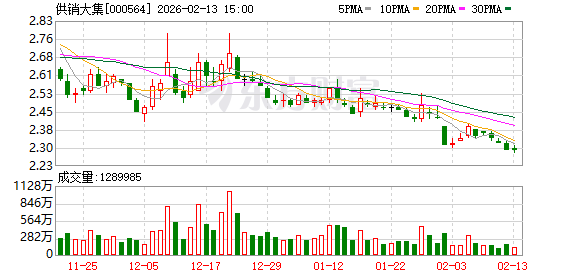
溢价“赎身”、”牵手“瑞幸”,供销大集能否出清换挡?
2 1 Shi Ji Jing Ji Bao Dao· 2026-02-14 07:07
Core Viewpoint - The company has successfully resolved a significant legal dispute involving a guarantee amounting to 1.176 billion yuan, marking a pivotal moment in its financial restructuring and credit rehabilitation efforts [1][5]. Group 1: Legal Resolution and Financial Impact - The company announced a settlement with Shengjing Bank, confirming a debt of 581 million yuan and a compensation responsibility of 447 million yuan, including the transfer of 103 million shares at a price of 4 yuan per share for debt repayment [1][3]. - The settlement represents a conversion of rigid debt into flexible capital, allowing the company to alleviate historical financial pressures through a "debt soft landing" strategy [3][4]. - The long repayment period until 2031, with only 5% of the debt due in the first four years, provides the company with a strategic buffer to manage its financial obligations [3][4]. Group 2: Business Transformation and Strategic Focus - The company is undergoing a significant transformation, shifting its business focus and organizational structure after a series of critical events, including management changes and capital injections [1][5]. - A strategic shift towards southern regions has been initiated, with the establishment of a new district in Hainan, aiming to leverage policy benefits and create a triangular strategic layout for cross-border trade and logistics [6][7]. - The company is actively integrating online and offline operations, with notable growth in its e-commerce business, achieving a peak of 43,000 single-item orders in one day [7][8]. Group 3: Future Outlook and Challenges - Despite the positive developments, the company anticipates a net profit loss of 1.3 to 1.9 billion yuan for 2025, indicating ongoing challenges in transitioning from traditional retail to new business models [8]. - The company is focusing on revitalizing its supply chain and enhancing its market position, with strategic partnerships aimed at transforming its retail approach to meet evolving consumer demands [8].


溢价“赎身”、“牵手”瑞幸“,供销大集能否出清换挡?
2 1 Shi Ji Jing Ji Bao Dao· 2026-02-14 07:03
Core Viewpoint - The legal resolution of a 1.176 billion yuan guarantee dispute marks a significant turning point for Gongxiao Daji, allowing the company to transition from a state of financial distress to a more stable operational framework [2][3]. Legal Resolution and Financial Impact - The Supreme Court's mediation led to a settlement with Shengjing Bank, confirming a 581 million yuan debt and 447 million yuan compensation, including the delivery of 103 million shares at a price of 4 yuan per share for debt repayment [2][4]. - This "debt-for-equity" approach helps the company reduce its financial burden while preserving cash flow, avoiding operational losses from forced asset execution [4]. - The extended repayment period until 2031, with only 5% repayment in the first four years, transforms short-term liquidity pressure into long-term capital costs, facilitating future asset integration and business expansion [5]. Strategic Business Transformation - Following a change in control and management, Gongxiao Daji is shifting from "debt management" to "business development," focusing on financial cleanup and operational renewal [6]. - The company is relocating its strategic focus southward, establishing a new Hainan region by July 2025, aiming to leverage policy benefits and create a "fresh produce direct procurement + instant retail" ecosystem [6]. - The transformation includes a shift from traditional retail to a more dynamic operational model, with significant online and offline integration, as evidenced by a peak of 43,000 daily orders for agricultural products in the first half of 2025 [6][7]. Future Growth and Challenges - The partnership with platforms like Meituan and Ele.me is transforming 61 supermarket locations into instant retail fulfillment nodes, while a strategic collaboration with Luckin Coffee aims to penetrate county-level markets [7]. - Despite the anticipated net profit loss of 1.3 to 1.9 billion yuan for 2025, the company is focusing on reshaping the value of its supply chain and positioning itself within the rural supply network [7].
雀巢全球召回奶粉并裁员,大中华区业绩持续承压
Jing Ji Guan Cha Wang· 2026-02-13 19:20
Recent Events - On January 6, 2026, Nestlé announced a precautionary recall of certain infant formula products in 31 countries due to potential contamination with Bacillus cereus from a supplier's arachidonic acid oil. This recall affects 30 batches of products in the Chinese market, including brands like "力多精" and "铂初能恩." The potential impact on brand trust and supplier relationships warrants ongoing attention [2]. Strategic Initiatives - In October 2025, Nestlé announced plans to lay off approximately 16,000 employees globally (6% of total workforce) over the next two years, focusing on optimizing white-collar and marketing positions. The goal is to achieve annual cost savings of 1 billion Swiss francs by 2027. The Chinese market is included in this restructuring framework. Starting January 1, 2026, Nestlé will merge its infant nutrition business with Wyeth Nutrition to form the "Nestlé Nutrition Business," led by谢国耀. Additionally, the CEO of the China region, 马凯思, is driving a shift from a "channel-driven" to a "demand-driven" approach, integrating e-commerce teams to enhance efficiency [3]. Performance Overview - For the first three quarters of 2025, Nestlé's organic growth rate in the Greater China region was -6.1%, with the third quarter dropping to -10.4%. The pricing contribution rate remained negative at -3.2%, indicating that price reductions did not effectively boost sales. Global sales amounted to 65.9 billion Swiss francs, reflecting a year-on-year decline of 1.9% [4]. Stock Performance - On January 6, 2026, Nestlé's U.S. stock trading volume surged by 88.91%, with the stock price declining by 1.22% to $95.55. Over the past 60 days, the cumulative increase was 3.21%, but there was a cumulative decline of 3.27% from the beginning of the year to January 6 [5]. Industry Environment - The competitive landscape in the Chinese market is intensifying, with domestic brands such as 飞鹤 and 君乐宝 increasing their market share in the infant formula sector. Brands like 瑞幸 and Manner are also diverting coffee consumption demand. Additionally, historical food safety issues, such as the 2023 recall incident in Canada, combined with the recent recall, may prolong the brand trust recovery period [6].

6天亏光90万,我劝普通人别做梦
创业家· 2026-02-13 10:10
Core Viewpoint - The article discusses the pitfalls and challenges faced by ordinary entrepreneurs in the food and beverage industry, highlighting the disparity between perceived opportunities and actual business viability [5][6][8]. Group 1: Entrepreneurial Challenges - Many entrepreneurs are drawn into the food and beverage sector by the allure of quick profits, but often find themselves in financially unsustainable situations [7][19]. - Examples include a young man who invested 1 million in a tea building but only made 800 yuan daily, leading to significant losses [19][24]. - A bakery owner in Shandong spent 20 million on equipment and renovations but only achieved a daily revenue of 1,000 yuan, resulting in substantial debt [22][24]. Group 2: Misleading Business Models - The article highlights the prevalence of "fast recruitment companies" that exploit aspiring entrepreneurs by promoting seemingly lucrative franchise opportunities without proper vetting [47][49]. - Many individuals fall victim to scams, believing in low investment and high returns, only to face financial ruin [61][49]. - The narrative includes a case where a woman lost 90 million after being misled into opening a franchise without any operational support from the headquarters [43][46]. Group 3: Cultural and Market Misalignment - The article emphasizes the disconnect between cultural aspirations and market realities, as seen in the case of a restaurant owner who focused on brand culture rather than product viability [11][13]. - Entrepreneurs often overlook essential business metrics such as gross margin and customer traffic, leading to poor decision-making [41][57]. - The rise of social media and influencer culture has exacerbated unrealistic expectations among aspiring business owners, pushing them towards high-risk ventures [61][53].

——海外消费周报(20260206-20260212):海外教育:职教培训景气上行,运营效率持续提升,关注职教标的中国东方教育-20260213
Shenwan Hongyuan Securities· 2026-02-13 06:50
Investment Rating - The report recommends focusing on the vocational education company China Oriental Education (00667.HK) due to its strong growth prospects and operational adjustments [12]. Core Insights - The vocational training sector is experiencing an upward trend, driven by an increase in the number of high school graduates who are not entering university, leading to a growing demand for vocational skills training [2][7]. - China Oriental Education has forecasted a significant increase in adjusted net profit for 2025, with a growth rate between 46% and 51%, translating to a profit range of 767 million to 793 million RMB [6][12]. - The company is implementing refined management strategies to enhance operational efficiency, which is expected to result in a gross margin increase of 5.2 percentage points to 56.5% in 2025 [8]. Summary by Sections Market Overview - The education index fell by 3.2% in the week of February 6-12, underperforming the Hang Seng Index by 4.1 percentage points, but has shown a year-to-date increase of 12.86% [5]. Company Updates - China Oriental Education's new training participants are expected to grow by 6% in 2025, contributing to a revenue increase of 12% to 4.61 billion RMB [6][12]. - The company is targeting high school graduates who did not enter university, with a significant increase in the number of such graduates from 119,000 in 2021 to 386,000 in 2024 [7]. Operational Efficiency - The company is focusing on optimizing marketing expenditures and improving school capacity utilization, which is projected to lower the marketing expense ratio by 2.5 percentage points to 21.2% in 2025 [8]. - Management efficiency is also expected to improve, with a projected management expense ratio of 11.2%, down by 1.1 percentage points [8]. Capital Expenditure and Dividends - Capital expenditures are anticipated to decrease by 33.6% to approximately 660 million RMB in 2025, with a high dividend payout ratio expected to yield a dividend yield of 5.6% [9][10]. Investment Recommendations - The report suggests a focus on vocational education companies, particularly China Oriental Education, due to its strong performance forecasts and strategic adjustments to meet the growing demand for vocational training [12].
海外消费周报:海外教育:职教培训景气上行,运营效率持续提升,关注职教标的中国东方教育-20260213
Shenwan Hongyuan Securities· 2026-02-13 06:31
Investment Rating - The report maintains a "Buy" rating on the overseas education sector, specifically highlighting China Oriental Education as a key investment target [1]. Core Insights - The report indicates a positive outlook for vocational education training, with operational efficiency continuously improving. China Oriental Education is expected to achieve a net profit growth of 46% to 51% in 2025, with adjusted net profit projected between 767 million to 793 million RMB [1][7]. - The vocational training market is anticipated to benefit from an increase in high school graduates who do not enter university, leading to a significant rise in demand for vocational skills training [2][8]. - The company is implementing refined management strategies to enhance operational efficiency, expecting a gross margin increase of 5.2 percentage points to 56.5% in 2025 [3][9]. - Capital expenditures are projected to decline, with a forecast of approximately 660 million RMB in 2025, a decrease of 33.6% year-on-year, while maintaining a high dividend payout ratio [4][10]. Summary by Sections Market Overview - The education index fell by 3.2% in the week of February 6-12, underperforming the Hang Seng Index by 4.1 percentage points. Year-to-date, the education index has risen by 12.86%, outperforming the Hang Seng Index by 9.93 percentage points [6]. Company Updates - China Oriental Education has released a positive profit forecast for 2025, with an expected net profit growth of 46% to 51%, translating to an adjusted net profit of 767 million to 793 million RMB. The company anticipates a 6% increase in new training participants, driving revenue growth to between 12% and 46.1 billion RMB [7][8]. Vocational Training Demand - The vocational training sector is set to experience growth due to a mismatch in university enrollment rates and an increase in high school graduates. The number of high school graduates has risen by 2.6 million from 2021 to 2024, while university enrollment has only increased by 320,000 during the same period [2][8]. Operational Efficiency - The company is expected to continue its lean management approach from 2024, coordinating recruitment across schools to improve capacity utilization. The marketing expense ratio is projected to decrease by 2.5 percentage points to 21.2% in 2025, contributing to a net profit margin increase of 4.4 percentage points to 17.2% [3][9]. Capital Expenditure and Dividends - The company has initiated a vocational education center construction plan, with five out of six centers expected to be completed between 2023 and 2025. The capital expenditure for 2025 is estimated at 660 million RMB, with a high dividend payout ratio suggesting a dividend yield of 5.6% [4][10]. Investment Recommendations - The report recommends focusing on Hong Kong-listed vocational education companies, particularly China Oriental Education, due to its strong growth prospects and operational adjustments aimed at capturing the vocational training demand from high school graduates [13].
Puma to metals, China snapping up overseas assets again
The Economic Times· 2026-02-13 03:58
Core Insights - The volume of outbound mergers and acquisitions (M&A) from Greater China reached approximately $12 billion in January, marking the highest figure for the first month of a year since 2017 [1] - The increase in outbound M&A activity is attributed to heightened competition, fewer domestic opportunities, and renewed confidence among local brands, supported by Beijing's approval for strategic asset acquisitions [1][12] - Chinese companies are particularly interested in markets with lower regulatory hurdles, including consumer and retail sectors, as well as critical metals and technology [1][8][12] Outbound M&A Activity - Notable acquisitions include Luckin Coffee's potential bids for Blue Bottle Coffee and Costa Coffee, and HSG's interest in Leica Camera AG [5][11] - The Aluminum Corporation of China is acquiring a controlling interest in Cia. Brasileira de Alumínio, while CMOC Group and Jiangxi Copper Co. are making significant acquisitions in Brazil [8][11] - The strong performance of stock markets, such as Hong Kong's Hang Seng Index, has bolstered corporate confidence, facilitating increased M&A activity [6][11] Market Dynamics - The competitive landscape in China is driving innovation and positioning companies favorably for international expansion, particularly in Europe and Southeast Asia [9][12] - Private companies in China are often sector leaders, having developed the necessary scale and capabilities to compete globally [12] - The fast-growing data center sector is attracting investment, with companies like DayOne Data Centers planning expansions and IPOs [10][12] Strategic Considerations - The appetite for overseas expansion includes sensitive sectors, which may lead to complications in negotiations, as seen in the case of CK Hutchison Holdings Ltd. [7][11] - Companies are proactively advancing strategic priorities in a constructive M&A environment, supported by a dynamic global backdrop [11]