Codelco

Search documents
近期宏观降息预期持续提升 铜价短期内或偏强震荡
Jin Tou Wang· 2025-11-28 08:49
Core Insights - The current spot price for 1 electrolytic copper in Shanghai is reported at 87,400 CNY per ton, showing a discount of 30 CNY per ton compared to the futures main price of 87,430 CNY per ton [1] - The futures market closed with the main contract for copper at 87,430 CNY per ton, reflecting a daily increase of 0.41%, with a trading volume of 94,508 lots [2] - The LME executive indicated that due to uncertainties surrounding U.S. copper tariffs, COMEX copper prices are expected to maintain a premium over LME prices for the next 18 months [3] Market Overview - The Shanghai Futures Exchange recorded a decrease in copper futures warehouse receipts, down by 3,952 tons to 35,873 tons on November 27, with a cumulative decline of 19,110 tons over the past week, representing a 34.76% drop [3] - In terms of industrial performance, profits for large-scale industrial enterprises in China fell by 5.5% year-on-year in October [4] - Freeport's report suggests that copper mine production is expected to remain stable next year, aligning with market expectations, while smelting output is anticipated to decline [4] Consumption and Pricing Dynamics - Recent feedback from downstream sectors indicates that after a drop in copper prices, consumption has shown some improvement, although the extent and sustainability of this recovery remain uncertain [4] - The domestic market has not yet shown significant inventory depletion, and there are expectations of continued export arrangements [4] - The recent macroeconomic environment has led to rising expectations for interest rate cuts, which may influence copper pricing dynamics in the near term [4]
白银期货创新高,中国库存位于近十年低位
Hua Er Jie Jian Wen· 2025-11-28 06:11
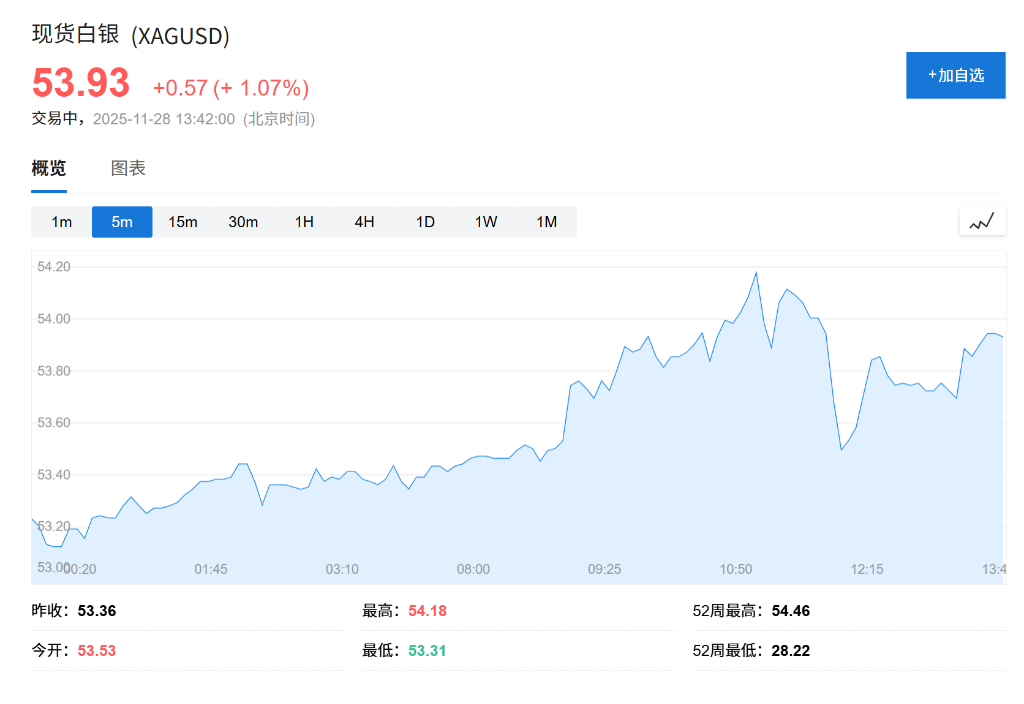
Core Viewpoint - Silver is becoming a new focus in the commodity market, with futures prices reaching new highs due to tightening supply signals [1][4]. Supply Concerns - The direct cause of the price increase is heightened market concerns over supply, with silver inventory on the Shanghai Gold Exchange dropping by 58.83 tons to 715.875 tons, the lowest since July 3, 2016 [4]. - Although there was a slight increase of 21.3 tons in inventory on November 25, it remains at a near ten-year low [4]. - China's silver exports surged to over 660 tons in October, marking a historical high, which is directly linked to the rapid consumption of domestic silver inventory [5][6]. Cross-Border Trade Dynamics - Due to concerns over tariffs affecting cross-border shipping costs, commodities like gold, silver, and copper have seen a phenomenon of "cross-border migration" arbitrage ahead of tax implementation [4][6]. - The price of New York commodities often exceeds that of London and other regions due to statistical tax premiums, creating arbitrage opportunities that prompt traders to transport goods to U.S. warehouses [6]. Macroeconomic Support - The entire precious metals market is supported by macroeconomic conditions, with traders betting on a potential interest rate cut by the Federal Reserve in December, enhancing the appeal of non-yielding assets like silver [4][7]. - Fed officials' dovish comments have reinforced expectations for a rate cut, further supporting precious metal prices [7]. Industrial Metal Market - The theme of supply tightness is also emerging in the industrial metals market, particularly copper, with predictions of a supply gap expanding to 316,000 tons next year [8]. - Demand for copper is driven by ongoing investments in data centers and power grids, while supply growth is hindered by production disruptions and declining ore grades [8].

沪铜 将再度挑战前高
Qi Huo Ri Bao· 2025-11-28 00:34
Core Viewpoint - The copper market has experienced a significant price increase, driven by tight supply of copper concentrate, rising expectations for interest rate cuts by the Federal Reserve, and positive signals from US-China trade negotiations [1][4]. Group 1: Copper Price Movement - From September 24 to October 30, the main copper contract rose nearly 12%, surpassing 89,000 yuan/ton, reaching a historical high [1]. - Following a hawkish stance from Powell and increasing internal disagreements within the Federal Reserve regarding rate cuts, copper prices have fluctuated between 85,000 and 88,000 yuan/ton since November [1][2]. Group 2: Federal Reserve and Economic Data - The US government faced a historic shutdown due to the failure to pass the 2026 fiscal budget, delaying the release of key labor market data [2]. - The Federal Reserve implemented a "blind cut" in October without supporting data, and subsequent hawkish comments from Powell diminished expectations for a December rate cut [2][3]. - The end of the government shutdown in mid-November allowed the Labor Statistics Bureau to report a significant increase in September's non-farm employment, but the October report was not released, leading to uncertainty about the Fed's December decisions [2][3]. Group 3: Supply and Demand Dynamics - The tight supply of copper concentrate has worsened this year, with the treatment charge (TC) dropping from around $6 per dry ton at the beginning of the year to approximately -$42 per dry ton [4]. - Several mines have faced production disruptions, including a 25% year-on-year decline in output from Chile's Codelco and significant impacts from natural disasters and social unrest in Indonesia and Peru [4]. - The price difference between refined copper and scrap copper has strengthened, currently running between 7,500 and 8,500 yuan/ton, which has suppressed demand for refined copper products [4]. Group 4: Future Outlook - The probability of continued interest rate cuts by the Federal Reserve remains high, contributing to a more relaxed global liquidity environment [5]. - The ongoing tight supply of copper concentrate is expected to persist, potentially leading to coordinated production cuts by smelters to pressure mines to increase TC [5]. - While demand has weakened this year, the energy storage sector in 2026 is anticipated to boost demand for refined copper, suggesting a future supply-demand imbalance may widen [5].
沪铜将再度挑战前高
Qi Huo Ri Bao· 2025-11-28 00:22
Group 1 - The core driver of the recent copper price surge includes tight copper concentrate supply, rising expectations for interest rate cuts by the Federal Reserve, and positive signals from US-China trade negotiations [1] - From September 24 to October 30, the main copper futures contract increased by nearly 12%, breaking through the 89,000 yuan/ton mark, reaching a historical high [1] - Following the Federal Reserve's hawkish stance and internal disagreements regarding rate cuts in December, copper prices have been fluctuating between 85,000 and 88,000 yuan/ton [1][2] Group 2 - The US government faced a historic shutdown due to the failure to pass the 2026 fiscal budget, delaying the release of key labor market data [2] - The Federal Reserve implemented a rate cut without data support, leading to uncertainty about future rate cuts, which contributed to copper price volatility [2] - After the government shutdown ended, significant labor market data was released, but the Federal Reserve's stance on December rate cuts remained cautious [2] Group 3 - The copper concentrate supply tightness has worsened this year, with the treatment charge (TC) dropping from around $6 per dry ton at the beginning of the year to approximately -$42 per dry ton [4] - Several mining disruptions have occurred, including a 25% year-on-year production drop at Chile's Codelco and a complete shutdown at Indonesia's Grasberg mine due to landslides [4] - The Chinese Copper Smelters' Joint Negotiation Group (CSPT) has called for domestic smelters to reduce production in response to low processing fees [4] Group 4 - Since August, the price spread between refined copper and scrap copper has strengthened, currently operating in the range of 7,500 to 8,500 yuan/ton, which has suppressed the demand for refined copper [5] - The utilization rates of downstream products such as copper pipes, rods, and foils are running weak, with real estate adjustments contributing to a marginal decline in refined copper demand [5] - Despite the weak demand outlook for the year, the energy storage sector in 2026 is expected to boost refined copper demand [5]
2026-27 年基础金属与贵金属展望:再创新高-Base & Precious Metals Outlook 2026_27_ Even greater heights. Thu Nov 20 2025
2025-11-27 05:43
Summary of J.P. Morgan's Base & Precious Metals Outlook 2026/27 Industry Overview - **Industry Focus**: Base and Precious Metals - **Key Analysts**: Gregory C. Shearer, Ali A. Ibrahim, Ananyashree Gupta, Ladislav Jankovic Core Points and Arguments Base Metals Outlook - **Copper**: - Bullish outlook with prices expected to rise towards $12,500/mt in 1H26 and average $12,075/mt for 2026 due to acute supply disruptions and a forecasted ~330 kmt deficit in the refined copper market [3][14][16] - Chinese demand growth is projected to slow to 2.5% yoy in 2026, but the ability to wait out higher prices is limited, leading to a bullish backdrop for LME copper prices [16][39] - **Aluminum**: - Prices forecasted to reach $3,000/mt in 1H26, driven by higher copper prices and a balanced market, but expected supply growth from Indonesia may weigh on prices later in 2026 [3][9] - **Zinc**: - Anticipated to struggle with prices falling towards $2,650/mt by 4Q26 due to a growing oversupply and stagnant global demand growth of 1% yoy [3][9] - **Nickel**: - Expected to remain rangebound amid a multi-year surplus, with prices likely below $15,000/mt unless significant policy changes in Indonesia occur [3][9] Precious Metals Outlook - **Gold**: - Long-term bullish outlook remains unchanged, with prices projected to reach $5,000/oz by 4Q26, supported by robust demand from official reserves and investor diversification [3][12] - **Silver**: - Prices expected to rise towards $58/oz by 4Q26, despite weakening industrial demand, with tariff uncertainties posing risks for volatility [3][12] - **Platinum**: - Prices forecasted to average $1,670/oz in 2026, with a deficit market expected to support prices before supply rebalancing occurs [3][12] - **Palladium**: - Short-term price support due to tariff risks, but longer-term prices expected to decline as demand rolls over [3][12] Volatility and Trading Strategies - **Precious Metals Volatility**: - Elevated volatility in precious metals, with proposed trading structures to capture gold upside while minimizing capital deployment [3][12] Additional Important Insights - **Data Center Demand**: - Significant upside risk to copper demand from data center growth, with projections of 122 GW of global capacity installations from 2026-2030, translating to approximately 475 kmt of copper demand in 2026 [43][50] - **Supply Disruptions**: - Ongoing supply disruptions from various mines are expected to tighten the copper market, with a forecasted mine supply growth of only 1.4% in 2026 [20][26] - **Global Inventory Dynamics**: - Dislocated global inventory and supply disruptions are key factors driving the bullish outlook for copper prices, with significant inventory build-up in the US impacting market dynamics [15][37] This comprehensive outlook provides a detailed analysis of the base and precious metals markets, highlighting key trends, forecasts, and potential investment opportunities.
X @Bloomberg
Bloomberg· 2025-11-26 04:01
Copper rose as Chilean producer Codelco pushed for a huge hike in its annual premium and a weaker dollar made metals more attractive https://t.co/Xaa5DJTqa8 ...
印度Kutch铜业公司赶上全球矿石短缺,原材料供应不足
Wen Hua Cai Jing· 2025-11-25 12:38
Core Insights - Gautam Adani's Kutch Copper has invested $1.2 billion in a copper smelting plant in Gujarat, but is facing significant raw material supply challenges, receiving only a small fraction of the required ore for full capacity operation [1] - The plant requires approximately 1.6 million tons of copper concentrate to operate at full capacity, yet has imported only about 147,000 tons in the past ten months, compared to over 1 million tons by competitor Hindalco Industries [1] - Global copper smelting operations have been disrupted due to supply interruptions from major producers, leading to historically low processing fees, indicating smelters are accepting lower margins to secure raw materials [1] Industry Challenges - New entrants like Kutch Copper face higher maintenance costs and longer timelines for capacity expansion due to supply constraints [2] - Kutch Copper plans to double its annual capacity to 1 million tons within four years, but may incur short-term losses as it ramps up production [2] - India's increasing demand in infrastructure, power, and construction sectors is outpacing its limited processing capacity, highlighting challenges in achieving self-sufficiency in metal production [2]
X @Bloomberg
Bloomberg· 2025-11-25 10:13
Chilean copper producer Codelco is pushing for a massive hike in annual premiums for refined metal supplies to its Chinese customers https://t.co/y19StK7cQU ...
Adani’s giant copper smelter caught up in global ore shortage
BusinessLine· 2025-11-25 04:23
Core Insights - Gautam Adani's $1.2 billion copper smelter in Gujarat is operating at significantly reduced capacity due to a global supply squeeze affecting ore availability [1][2] - Kutch Copper Ltd. has imported only about 147,000 tons of copper concentrate, which is less than 10% of the 1.6 million tons required for full operation [2] - The copper supply chain is facing disruptions from major producers, impacting smelters globally and leading to record low treatment and refining charges [3][4] Company-Specific Insights - Kutch Copper Ltd. began processing metal in June but is struggling with raw material supply, which could lead to higher operational costs and extended ramp-up times [2][4] - The smelter's slow start highlights the challenges in India's ambition to enhance metals self-reliance amid rising demand from various sectors [6] - BHP Group has supplied a small quantity of 4,700 tons to the smelter, with additional shipments from Glencore Plc and Hudbay [5] Industry Insights - The global copper supply has been affected by mine disruptions from major companies, including Freeport-McMoRan and Codelco, exacerbating the supply squeeze [3] - China's expansion of smelting capacity has pressured profit margins, forcing some international producers to reduce output or shut down [3] - The current market conditions may lead to short-term losses for new entrants like Kutch Copper, but potential government tariffs could provide long-term benefits [5]

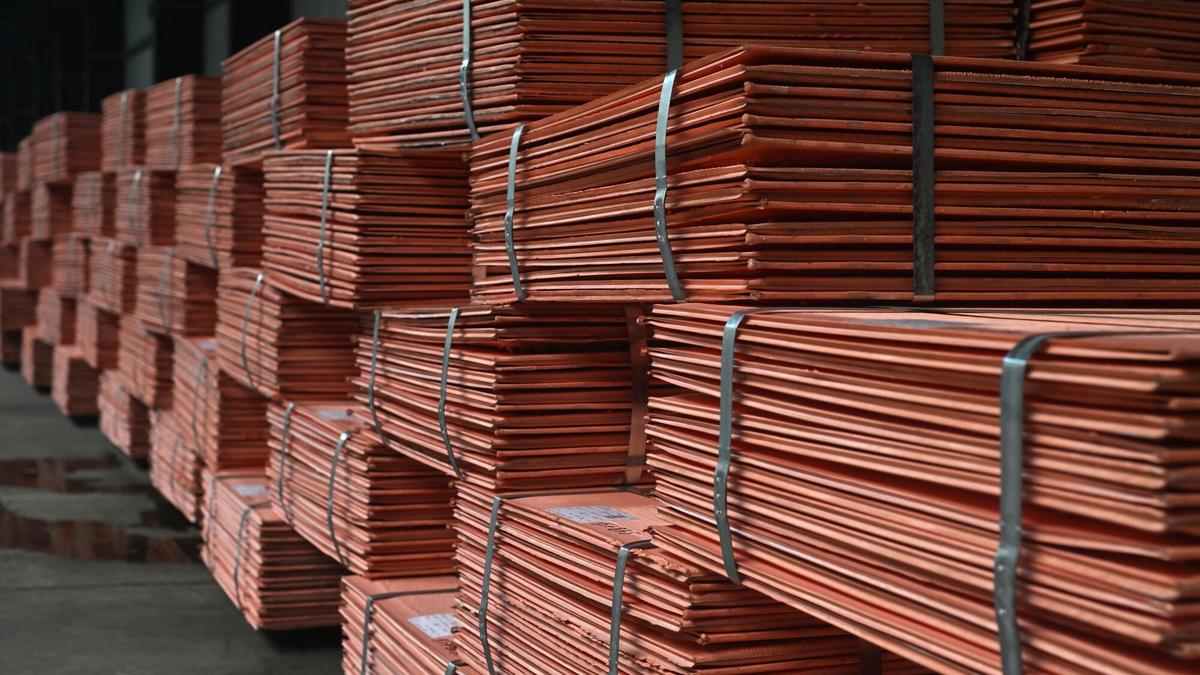
Adani’s $1.2 billion copper smelter caught up in global ore shortage
The Economic Times· 2025-11-25 01:37
Core Insights - Kutch Copper Ltd.'s copper smelter in Gujarat, which has a capacity of 500,000 tons per year, is currently operating at a fraction of its required raw material, importing only about 147,000 tons of copper concentrate in the 10 months to October, significantly below the 1.6 million tons needed for full operation [1][8] - The global supply squeeze has been exacerbated by mine disruptions at major producers, leading to record low treatment and refining charges, indicating that smelters are accepting tighter margins to secure material [6][8] - The slow start of Kutch Copper highlights the challenges India faces in increasing its metals self-reliance, as demand from infrastructure, power, and construction sectors outpaces processing capacity and domestic ore reserves [8] Company-Specific Insights - Kutch Copper plans to double its annual capacity to 1 million tons within four years, but tight supply conditions are expected to increase operational expenses and prolong the ramp-up process [6][8] - Adani's smelter is anticipated to be more efficient than many competitors, but it may operate at a loss in the short term as it ramps up production [7][8] - BHP Group has supplied 4,700 tons to the smelter, with additional shipments from Glencore Plc and Hudbay, indicating reliance on external suppliers for raw materials [7][8]