圆通速递

Search documents
各级工会推进平台算法和劳动规则协商 多家平台算法协议逐步取消“超时扣款”
Ren Min Ri Bao· 2025-09-14 22:01
Group 1 - The core viewpoint of the articles highlights the proactive measures taken by labor unions in China to promote algorithm negotiations within platform companies, aiming to cover over 20 million new employment form workers this year [2][3] - The national labor union has initiated a concentrated action for collective negotiations in 2025, focusing on algorithm negotiations with major platform companies, with 15 leading companies already included in the initiative [2] - Seven companies, including T3 Travel, Jitu, and Didi, have successfully signed special agreements on algorithms and labor rules, with all remaining companies expected to complete negotiations by the end of September [2] Group 2 - The algorithm negotiations focus on workers' rights related to labor remuneration, rest periods, labor safety, and transparency in algorithmic processes, leading to clearer understanding of earnings for workers [3] - In the ride-hailing industry, there are agreements to publicly disclose pricing rules and reduce commission rates, alongside enhancements to fatigue prevention measures and features for intercepting abnormal orders [3] - Several platforms have established regular negotiation systems with labor unions and workers, committing to hold periodic algorithm negotiation meetings and provide advance notice of algorithm changes [3]

严制裁的油轮和全面涨价的快递弹性测算
Changjiang Securities· 2025-09-14 14:13
Investment Rating - The report maintains a "Positive" investment rating for the transportation industry [11]. Core Insights - VLCC freight rates have reached a new high since March 2023, driven by limited supply and OPEC's production increase, indicating a tight oil tanker supply-demand situation [6][20]. - The express delivery sector is experiencing a nationwide price increase trend, with a significant recovery in profitability expected in Q4 2025 [7][39]. Summary by Sections Oil Tankers - VLCC freight rates have surged, with a notable increase of 39.3% to 78k USD/day, reflecting a tight supply situation due to limited new ship deliveries and stringent sanctions [9][20]. - The correlation between VLCC freight rates and annual profits of Zhongyuan Shipping indicates potential for price recovery in the sector [6][36]. - OPEC's production policy shift has led to increased exports, further supporting oil transportation demand [28][32]. Express Delivery - The regulatory stance against "involution" in the express delivery sector has strengthened, leading to a nationwide price increase that began as regional trials [51][52]. - The average price across the country has risen by 0.23 RMB since July, with potential net profit increases for major companies like Zhongtong and Yunda expected in Q4 2025 [7][53]. - The report highlights a significant recovery in profitability for major express delivery companies, with projected net profit increases of 7.8 billion RMB for Zhongtong and 5.3 billion RMB for Yunda by Q4 2025 [7][56]. Passenger Transport - Domestic passenger transport volume has shown improvement, with a 8% year-on-year increase in domestic passenger volume and a 14% increase in international passenger volume [61]. - The average domestic passenger load factor has improved by 3.2 percentage points, while international load factors have increased by 4.0 percentage points [67]. - Despite a slight decline in ticket prices, the overall market is expected to see marginal improvements in revenue as demand continues to recover [67][75].


交通运输行业周报:快递提价弹性有望验证,油运运价持续上涨-20250914
Hua Yuan Zheng Quan· 2025-09-14 11:10
Investment Rating - The investment rating for the transportation industry is "Positive" (maintained) [4] Core Views - The express logistics sector is expected to see price increases due to a "de-involution" initiative in Anhui Province, which aims to combat unhealthy price competition and promote high-quality industry development. Starting September 15, 2025, express prices in Anhui will rise by no less than 0.2 yuan per ticket, which is anticipated to help stabilize prices in the central and eastern regions of China [4][3] - The shipping sector is experiencing a significant increase in freight rates, with VLCC TD3c TCE rising to $82,674 per day, a 34.13% increase from the previous week. This surge is attributed to the seasonal release of cargo volumes and geopolitical factors affecting oil exports [6][7] - The aviation sector is witnessing a recovery in ticket prices, with a positive year-on-year growth trend observed since August 13, 2025. This is driven by a rebound in business travel and inbound tourism, suggesting a potential for continued price increases [8][9] Summary by Sections Express Logistics - The express logistics industry is showing resilience in demand, with a focus on reducing unhealthy competition. Companies like YTO Express, Shentong Express, and SF Express are expected to benefit from this trend, with potential for improved profitability and valuation [11] Shipping - The oil transportation market is expected to benefit from OPEC+ production increases and a favorable economic environment. Companies such as China Merchants Energy and COSCO Shipping Energy are recommended for investment [11] - The dry bulk shipping market is also anticipated to recover, driven by environmental regulations and increased demand for commodities. Companies like China Merchants Industry Holdings and Haitong Development are highlighted as potential investment opportunities [11] Aviation - The aviation industry is projected to experience long-term growth due to low supply growth and improving demand. Key companies to watch include China Southern Airlines and China Eastern Airlines, which are expected to benefit from this trend [11] Supply Chain Logistics - Companies like Shenzhen International and Debon Logistics are positioned well for growth due to industry dynamics and strategic transformations [11] Ports - The port sector is seen as stable with strong cash flows, and companies like China Merchants Port and Tangshan Port are recommended for their growth potential [11]
2023年7月以来,国家发展改革委坚持常态化召开民营企业座谈会—— 政企座谈会,给民企带来什么
Ren Min Ri Bao· 2025-09-13 22:25
Core Insights - The Chinese government is focusing on implementing policies to promote the development of the private economy, as emphasized by General Secretary Xi Jinping [1] - The National Development and Reform Commission (NDRC) has been actively engaging with private enterprises through regular meetings to address their concerns and suggestions [1][2] Group 1: Legislative Changes - The National People's Congress has amended the Food Safety Law to include "liquid infant formula" under registration management, responding to industry demands for clearer regulations [3] - The amendment was influenced by discussions at the NDRC's meetings, where companies like Feihe Dairy expressed the need for regulatory clarity to produce liquid infant formula [3][4] - The revised Food Safety Law will take effect on December 1, 2025, allowing companies to prepare for market entry and expansion [4] Group 2: Infrastructure Development - YTO Express is advancing its "Oriental Tian Di Port" logistics hub project, which is crucial for its international network strategy [5][6] - The project faced delays but gained momentum after discussions with the NDRC, leading to coordinated support from various government departments [7] - The logistics hub is expected to be completed by the end of this year, enhancing YTO's operational capabilities and confidence in future growth [7] Group 3: Training and Development - Young entrepreneurs are facing challenges in understanding domestic market dynamics, prompting calls for systematic training programs [8][9] - The NDRC has responded by organizing training sessions for young private enterprise leaders, focusing on economic analysis, policy interpretation, and national education [9] - Over 410 young entrepreneurs have participated in these training programs, which have been well-received and are fostering a sense of community among participants [9][10]
“85后”老板从普通工人做到亿万富豪,名下公司冲刺上市,夫妻俩已分红和套现超2亿元!公司签了对赌协议,业绩却突然变脸
Mei Ri Jing Ji Xin Wen· 2025-09-13 15:09
Core Viewpoint - The article highlights the journey of the entrepreneur Shang Jitong, who has led Suzhou Shuangqi Automation Equipment Co., Ltd. to the brink of entering the capital market, while also noting the company's recent financial struggles and high customer concentration risks [1][4][7]. Company Overview - Suzhou Shuangqi is a supplier of intelligent logistics equipment, focusing on smart unloading equipment as its core product [4]. - The company has experienced continuous revenue growth from 2022 to 2024, with revenues of 3.58 billion, 4.00 billion, and 4.09 billion respectively, and net profits of 304 million, 409 million, and 456 million [7]. Financial Performance - Despite revenue growth, the company faced a significant decline in net profit in the first half of 2025, dropping over 30% [3][7]. - In the first half of 2024, the company reported a revenue of 1.35 billion, a year-on-year increase of 23.16%, but net profit fell by 34.58% to 831.49 million [8]. - The gross margin decreased to 22.23% in the first half of 2024, down from 27.74% in the previous year, attributed to intensified market competition [8]. Shareholder Actions - In 2021, the company distributed a cash dividend of 1.6 billion to Shang Jitong and his spouse, with a total payout exceeding 2 billion when including stock sales [4][5]. - Shang Jitong has transferred shares to various institutional investors, raising approximately 650 million [5][6]. Customer Concentration Risks - The top five customers accounted for a high percentage of revenue, with figures of 80.74%, 69.88%, and 69.21% over the reporting periods, indicating a risk of dependency on a limited customer base [7]. - Notable clients include JD Logistics and SF Express, but there are concerns about the stability of these partnerships, as evidenced by fluctuating sales figures [7][8]. Future Outlook and Challenges - The company has signed multiple performance-based agreements with investors, which could trigger buyback clauses if certain financial targets are not met by June 2028 [6]. - Regulatory scrutiny has increased regarding the authenticity and reasonableness of the company's reported growth, raising concerns about potential obstacles to its planned listing on the Beijing Stock Exchange [8].

“85后”老板从工人到身家过亿,苏州双祺冲刺北交所上市,对赌压力下业绩却突然变脸
Mei Ri Jing Ji Xin Wen· 2025-09-13 07:18
Core Insights - The article highlights the journey of Shang Jitong, the actual controller of Suzhou Shuangqi Automation Equipment Co., Ltd., from a frontline worker to a successful entrepreneur, leading the company to the capital market after over 20 years of experience [1][2]. Company Overview - Suzhou Shuangqi specializes in intelligent logistics equipment, particularly smart unloading devices, and has shown continuous revenue growth from 3.58 billion yuan in 2022 to 4.09 billion yuan in 2024 [4]. - The company has a high customer concentration, with the top five customers accounting for approximately 69% to 81% of total revenue during the reporting periods [4][5]. Financial Performance - The net profit of Suzhou Shuangqi has also increased, from 30.4 million yuan in 2022 to 45.68 million yuan in 2024, although there are concerns about the sustainability of this growth due to high customer concentration [4]. - In the first half of 2024, the company reported a revenue of 1.35 billion yuan, a year-on-year increase of 23.16%, but the net profit decreased by 34.58% to 8.31 million yuan [6]. Shareholder Actions - In 2021, the company distributed a cash dividend of 160 million yuan to Shang Jitong and his spouse, with a total cash outflow exceeding 200 million yuan from dividends and share transfers [2][3]. - The company has entered into several performance-based agreements with institutional investors, which could trigger buyback clauses if certain financial targets are not met by June 2028 [3]. Market Challenges - The average selling price of the core product, smart unloading devices, has been declining, from 75,700 yuan per unit in 2022 to 66,200 yuan in 2024, indicating pricing pressure due to increased market competition [5][6]. - The company's gross margin has also decreased significantly, from 27.74% in the previous year to 22.23% in the first half of 2024, attributed to intensified market competition [6].
快递价格战现8角发全国 快递员派12000票才拿9000元 多省启动“反内卷”涨价
Xin Lang Cai Jing· 2025-09-13 03:12
Core Insights - The express delivery industry in China has seen a significant increase in volume, with a total of 956.4 billion packages delivered in the first half of the year, representing a year-on-year growth of 19.3%. However, the average price per package has dropped to 7.5 yuan, leading to extreme low pricing in some regions, such as "0.8 yuan for nationwide delivery" [1][1][1] Industry Overview - Many express delivery companies, including Yunda and YTO, are facing a dilemma of "increased revenue without increased profit," as daily losses in some Shenzhen outlets reach thousands of yuan. This has resulted in a decline in income for delivery personnel despite increased package delivery volume [1][1][1] Price Adjustment Initiatives - Starting in August, over ten provinces, including Guangdong, have initiated price adjustments to combat the "involution" in the industry, leading to a slight increase in delivery fees. This has placed significant pressure on low-cost e-commerce merchants, with some businesses experiencing an increase in operational costs by 1,500 yuan [1][1][1] Shift in Competitive Strategy - The industry is transitioning from a price war to a focus on differentiated services, introducing new offerings such as scheduled deliveries and smart devices. Analysts suggest that the "anti-involution" measures are not about eliminating competition but rather about promoting reasonable price recovery, ensuring the legal rights of delivery personnel, and enhancing delivery quality [1][1][1]
【12日资金路线图】两市主力资金净流出超370亿元 有色金属等行业实现净流入
Zheng Quan Shi Bao· 2025-09-12 13:48
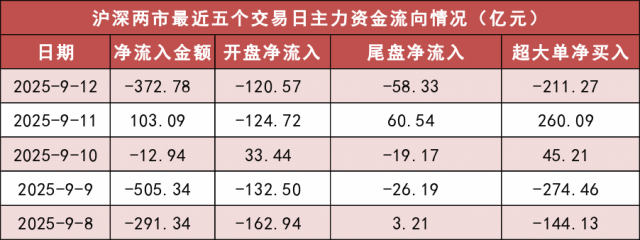
Market Overview - The A-share market showed a mixed performance on September 12, with the Shanghai Composite Index closing at 3870.6 points, down 0.12%, the Shenzhen Component Index at 12924.13 points, down 0.43%, and the ChiNext Index at 3020.42 points, down 1.09% [1] - The total trading volume for both markets reached 25,209.25 billion yuan, an increase of 832.07 billion yuan compared to the previous trading day [1] Capital Flow - The net outflow of main funds from the Shanghai and Shenzhen markets exceeded 370 billion yuan, with a total net outflow of 372.78 billion yuan for the day [2] - The net outflow for the CSI 300 index was 185.06 billion yuan, while the ChiNext saw a net outflow of 189.48 billion yuan [4] Sector Performance - The non-ferrous metals sector experienced a net inflow of 20.57 billion yuan, with a growth of 1.95%, led by Northern Rare Earth [6][7] - Other sectors with net inflows included steel (13.97 billion yuan, up 1.73%), real estate (12.69 billion yuan, up 1.74%), and construction decoration (7.05 billion yuan, up 0.74%) [7] - Conversely, the power equipment sector faced a significant net outflow of 164.52 billion yuan, down 0.53%, followed by the automotive sector with a net outflow of 105.13 billion yuan, also down 0.53% [7] Institutional Activity - The top stocks with net inflows from institutions included Shanzi Gaoke (12,283.85 million yuan), Jinxin Nuo (6,955.87 million yuan), and Demingli (5,587.22 million yuan) [11] - Notable stocks with significant institutional selling included Xinyuan Technology (-89,768.89 million yuan) and Zongtai Automobile (-5,892.67 million yuan) [11] Institutional Focus - Institutions have recently shown interest in stocks such as Hualan Biological (target price 19.45 yuan, current price 16.78 yuan, potential upside 15.91%), and Bairi Tianheng (target price 500.68 yuan, current price 349.79 yuan, potential upside 43.14%) [12]
圆通速递(600233):跟踪分析报告:核心指标追近龙头,看好反内卷下业绩强弹性,上调评级至“强推”
Huachuang Securities· 2025-09-12 07:33
Investment Rating - The report upgrades the investment rating of the company to "Strong Buy" [1] Core Views - The company is expected to benefit from strong elasticity in performance under the "anti-involution" trend in the industry, with key indicators approaching those of industry leaders [1][3] - The market share gap between the company and the leading competitor is gradually narrowing, with the company achieving the second-largest market share in the industry in 2023 [1][10] - The company's single-ticket net profit margin is closing in on that of its main competitor, with a significant reduction in the profit gap [2][15] Summary by Sections Market Position and Performance - The company surpassed Yunda to become the second-largest player in the industry in 2023, maintaining a business volume growth rate higher than the industry average [1][10] - The market share difference between the company and Zhongtong decreased from 6.8 percentage points in 2023 to 3.5 percentage points in Q2 2025 [1][10] - In Q2 2025, the company's e-commerce express business growth rate was 21.8%, outperforming the industry average of 17.3% [1][14] Profitability and Cost Management - The difference in single-ticket net profit (excluding non-recurring items) between the company and Zhongtong has narrowed to less than 0.1 yuan [2][15] - In Q2 2025, the company's single-ticket net profit decreased by 22.8%, the smallest decline among major competitors [16] - The company's cost efficiency has improved, with the single-ticket transportation and sorting costs decreasing significantly over the years [29][31] Industry Trends and Future Outlook - The report highlights the potential for price and profit improvement in the industry, supported by historical trends from 2021 to 2022 [3][40] - The company is projected to achieve a net profit of 43.6 billion yuan in 2025, with a target price of 25.4 yuan, representing a potential upside of approximately 37% from the current price [48] - The report anticipates that the company will benefit from price elasticity as the industry moves away from "involution" competition [48]
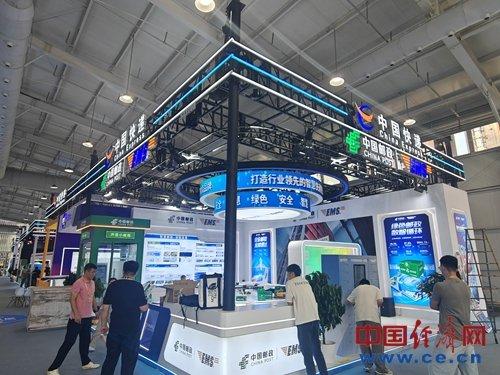
【组图】集结!多款物流无人机、无人车集体亮相服贸会
Zhong Guo Jing Ji Wang· 2025-09-12 03:43
Core Insights - The "China Express" booth at the 2025 Service Trade Fair showcased advanced logistics technologies, including drones and unmanned vehicles, highlighting the industry's shift towards automation and smart logistics solutions [1][3][5]. Group 1: Technology Showcase - Various logistics companies presented their innovations, such as unmanned delivery vehicles, intelligent sorting robots, and blockchain traceability platforms [1]. - The exhibition demonstrated a fully automated "warehouse-distribution" process through the collaboration of drones and Automated Guided Vehicles (AGVs) [1]. Group 2: Industry Future Exploration - The event not only showcased the latest technological breakthroughs in smart transportation and logistics but also explored the limitless possibilities for the future of the industry [1].