
美团

Search documents
恒指站稳27000点盘整向上 短线活跃资金离场观望
Xin Lang Cai Jing· 2026-02-11 13:36
整体上看,恒指站稳27000点关口后再度进入盘整模式。今日全天成交2172.18亿港元,延续缩量态势,临近长假部分资金开始提前离场观望。 沽空方面,今日总沽空金额288.24亿港元,相当于恒指成交额的13.27%,空头继续活跃,但尚未对大市走向产生影响。 智通财经2月11日讯(编辑 冯轶)今日港股延续向上势头,三大指数短线均连续3日收涨。截至收盘,恒生指数、国企指数分别上涨0.31%及0.28%,恒生科 技指数一度冲高至1.3%,最终收涨0.9%。 【恒指站稳27000点盘整向上 节前资金面缩量观望】 盘面上,今日大型科网股进一步回暖,小米盘中一度大涨至5.4%,网易、快手、百度、美团小幅上涨。 | 代码 | 名称 | 最新价 | 涨跌额 | 涨跌幅 | | --- | --- | --- | --- | --- | | 800700 | 恒生科技指数 | 5499.99 | +48.96 | +0.90 | | 09626 | 哔哩哔哩-W | 252.800 | +12.400 | +5.16 | | 01810 | 小米集团-W | 37.100 | +1.520 | +4.27 | | 099999 ...





2025电商十大事件:告别红利,电商开始打硬仗
3 6 Ke· 2026-02-11 13:28
Core Insights - The e-commerce and retail sectors are experiencing significant changes, with the peak of traffic dividends and a shift in consumer behavior being the most critical factors for 2025 [1] - The year 2025 is marked by a decline in e-commerce penetration rate, with online retail sales expected to reach nearly 16 trillion yuan, growing by 8.6% compared to the previous year [1] Group 1: E-commerce Industry Trends - A "de-involution" movement in the e-commerce industry is led by platforms optimizing rules, regulating promotions, and enhancing technology [2] - Major platforms are adjusting controversial rules like "only refunds" and "mandatory shipping insurance" to balance consumer and merchant rights [2] - The introduction of supportive policies for merchants aims to lower costs and optimize traffic distribution, with Douyin e-commerce saving merchants over 32 billion yuan [2] Group 2: Instant Retail Competition - A fierce competition in instant retail has emerged, with major players like JD, Alibaba, and Meituan investing at least 30 billion yuan in marketing during Q2 [4] - The battle for market share in the instant retail sector is expected to reshape competition rules, leading to a stable state where Alibaba and Meituan may become long-term rivals [4] Group 3: Brand and Consumer Dynamics - The disappearance of top influencers has led brands to shift towards self-operated live streaming, with KOCs (Key Opinion Consumers) gaining traction as cost-effective marketing tools [9] - The 2025 Double 11 shopping festival has transformed into a battle of rationality among platforms, merchants, and consumers, with a focus on maintaining the lowest prices [10] Group 4: Regulatory Changes - The implementation of new tax regulations for e-commerce platforms marks the end of the long-standing "tax-free dividend," requiring merchants to report comprehensive income data [16] - The new tax rules are expected to impact how merchants operate, with a focus on compliance becoming essential for survival in the industry [16] Group 5: AI Integration - Major companies are heavily investing in AI, with Alibaba planning to invest over 380 billion yuan in AI and cloud infrastructure over the next three years [17] - The integration of AI tools is changing e-commerce operations, enhancing search capabilities and content conversion efficiency [18]


越来越多年轻人选择异地过年
Xin Lang Cai Jing· 2026-02-11 12:21
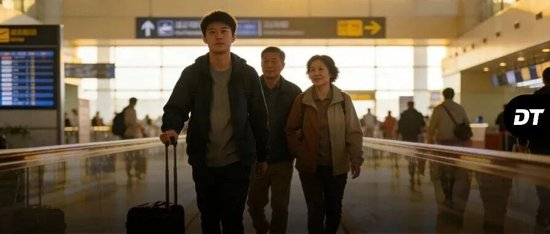
同程旅行《2026年春节旅行趋势报告》显示,春节前夕,一批由中小机场飞往北京、上海、广州、深圳 的"反向"机票预订热度增长显著,热门航线主要包括榆林-上海、衡阳-北京、宜宾-深圳、盐城-广州、 长治-上海等。 美团旅行数据有相似的洞察:2月初至2月中下旬,"反向过年"机票预订量同比去年增长84%。从机票的 预订情况看,"反向过年"Top10热门目的地为北京、上海、成都、重庆、广州、深圳、昆明、西安、杭 州、天津。 来源 | DT商业观察 作者 |张晨阳 编辑 |郑晓慧 设计 | 戚桐珲、郑舒雅 运营 | 苏洪锐 曾经,"有钱没钱,回家过年" 是刻在中国人骨子里的春节执念,被几代人奉为圭臬。 可如今,浩浩荡荡的春运大潮,价格暴涨的机票,以及"在家待3天就被爸妈念叨""逢年过节必被亲戚花 式问候"的经历,让"回家过年",正从理所当然的必选项,变成越来越多人反复权衡的选择题。 《DT商业观察》发现,现如今,一大批人开始放弃"回老家过年",在异地他乡,开启新的过年方式。 避开人潮,"反向过年" 今年春节,很多年轻人调转了回家的方向,从"自己返乡过年"转变为"接父母来大城市过年"。 "买票难"是很多人选择"反向过年"的 ...
北水净买入腾讯超7亿,净卖出阿里巴巴超5亿
Ge Long Hui· 2026-02-11 12:19
Group 1 - Southbound funds net bought Hong Kong stocks worth HKD 4.816 billion on February 11, with notable net purchases in Tencent Holdings (HKD 735 million), Zijin Mining International (HKD 191 million), Meituan-W (HKD 162 million), Pop Mart (HKD 144 million), and China National Offshore Oil Corporation (HKD 122 million) [1] - Significant net sales were observed in Alibaba-W (HKD 520 million), SMIC (HKD 390 million), China Life (HKD 246 million), Yangtze Optical Fibre and Cable (HKD 159 million), and Xiaomi Group-W (HKD 100 million) [1] Group 2 - Meituan announced plans to invest approximately USD 717 million to acquire Dingdong Group's "Dingdong Grocery" business in China, which Morgan Stanley believes will create synergies with Meituan's existing Xiaoxiang Supermarket and strengthen its position in the fresh food delivery market in East China [5] - CNOOC is influenced by geopolitical tensions, particularly regarding U.S.-Iran relations, which may affect short-term oil price volatility [5] Group 3 - Xiaomi is rumored to use the Snapdragon 8 Elite Gen6 for its standard version, with potential costs exceeding USD 300, approximately CNY 2074, amid rising DRAM and NAND prices increasing pressure on smartphone manufacturers [7] Group 4 - Lion Group Holdings is positioned to benefit from Hong Kong's growing status as a global Web3 and cryptocurrency innovation hub, supported by the implementation of the Stablecoin Regulation and the upcoming issuance of licenses for stablecoin issuers [6]
面向产业的算法治理研究(2025年)
Sou Hu Cai Jing· 2026-02-11 12:13
以下为报告节选内容 CAICT 中国信通院 [主员 트题报告 클 面向产业的算法治理研究 构建可信赖的算法治理路径 (2025 年) 今天分享的是:面向产业的算法治理研究(2025年) 报告共计:33页 《面向产业的算法治理研究(2025年)》聚焦算法成为数字经济核心生产要素的背景,针对算法"黑箱"、数据滥用、歧视等 问题,提出构建"合规驱动迈向信任驱动"的可信赖算法治理体系。全球治理呈现差异化特征,我国强调全生命周期监管,美 国侧重创新与个体赋权,欧盟以权利为核心构建强监管框架,均指向规则嵌入、长期治理与重点群体保护趋势。治理体系涵 盖技术、规则、平台三层逻辑,产业自律框架围绕公开透明、信息保护、公平公正、内容保障四大支柱,通过技术可释、数 据安全、算法纠偏、人机协同审查等举措落地。抖音、美团、阿里等企业的实践案例验证了治理成效,未来需强化技术可 控、动态管控与多元共治,推动算法从工具理性向价值理性转变。 支柱,形成技术、规则、平台三位一体的治理体系。 算法治理绝非一日之功,需长期弘扬和践行"算法向善"的理 念。一方面,需依托标准化路径夯实治理根基,以公开透明为核心, 围绕信息保护、公平公正、内容保障三个基 ...

抖音回应上线团购App“抖省省”:未来将进一步融入AI技术,除团购外还将帮助用户探索线下吃喝玩乐场景
新华网财经· 2026-02-11 12:10
Core Viewpoint - Douyin has launched an official group buying app named "Dou Sheng Sheng," focusing on low-cost group purchases for dining and entertainment, now available on both Apple and Android app stores [1]. Group 1: App Features and User Benefits - New users can receive up to 12 yuan in coupons daily during the first week [5]. - The app allows users to search for stores and view ultra-low group prices, supporting price comparisons [5]. - Douyin account login synchronizes group purchase orders and favorite items between the main Douyin app and "Dou Sheng Sheng" [5]. Group 2: Background and Development - "Dou Sheng Sheng" is not a new business for Douyin; the group buying feature was first introduced in March 2020, integrated with short videos and live streaming [12]. - In 2021, Douyin optimized the group buying entry, adding a "city name + dining and entertainment" section on the local page [12]. - By the end of 2022, Douyin piloted group purchase delivery services in major cities, and in late 2024, it launched the "Sui Xin Tuan" service to attract various chain merchants [12]. Group 3: Market Context and Competition - The launch of "Dou Sheng Sheng" represents Douyin's further attempt in the local life group buying sector, competing with Meituan, JD, and Alibaba in the takeaway market [12]. - Douyin and Kuaishou are continuously enhancing their product forms and business structures in the local life segment [12]. Group 4: Future Projections - By 2025, Douyin's total transaction volume in life services is expected to grow by over 59% year-on-year, with active stores reaching approximately 15.2 million and new merchants increasing by 3.99 million [13]. - The number of active consumers is projected to grow by 19%, with total payment orders increasing by 32% [13]. - About 80% of users actively search for services, with search volume growing by 36%, driving a 55% increase in related transaction volume [13].

阿里要继续大投入淘宝闪购,三年不担心亏损
Xin Lang Cai Jing· 2026-02-11 11:57
Core Insights - The new round of instant retail competition has begun, accelerated by the AI assistant battle [3][26] - Alibaba's management encourages bold moves in flash sales, aiming for significant investment in instant retail by 2026 [4][28] - The focus for Taobao Flash Sales includes high-value orders and precise operational improvements in food delivery and instant retail [5][29] Group 1: Market Strategy - Taobao Flash Sales plans to increase its investment in 2026, focusing on instant retail and high-value orders above 30 yuan [4][28] - The strategy includes enhancing delivery efficiency and targeting specific high-demand categories like pharmaceuticals, beverages, and fresh produce [5][29] - The goal is to surpass Meituan's market share by summer 2026, with a focus on high-quality orders [7][31] Group 2: Competitive Landscape - The current market share is approximately 50% for Meituan and 40% for Taobao Flash Sales, with JD.com below 5% [9][34] - Taobao Flash Sales has shifted its focus from order volume growth to increasing the proportion of high-quality orders to 60% [9][34] - Both companies are competing on delivery capabilities, with Taobao Flash Sales aiming to match Meituan's delivery times [10][35] Group 3: Operational Enhancements - Taobao Flash Sales is implementing a "super computing system" to optimize delivery processes and reduce costs [10][35] - The company is expanding its delivery capacity with multiple logistics lines, enhancing its operational efficiency [11][36] - In southern regions, Taobao Flash Sales has improved delivery times, surpassing Meituan in cities like Guangzhou and Shenzhen [12][36] Group 4: Infrastructure Development - Instant retail requires long-term investment and infrastructure development, with a focus on building warehouses for efficient delivery [14][38] - Taobao Flash Sales is currently stabilizing its daily order volume at around 10 million, which is about half of Meituan's [17][41] - Alibaba is constructing dedicated warehouses for instant retail, with plans to expand its logistics network significantly [18][42] Group 5: AI Integration and User Engagement - The competition for AI entry points is intensifying, with significant investments from Alibaba to cultivate consumer habits in AI-assisted shopping [21][45] - The launch of the Qianwen app has led to a surge in user engagement, with daily active users increasing dramatically during promotional events [22][46] - The integration of AI into shopping experiences is seen as a critical area for future growth, despite potential challenges in user retention [23][47]

晚点独家丨阿里要继续大投入淘宝闪购,三年不担心亏损
晚点LatePost· 2026-02-11 11:50
Core Viewpoint - The new round of instant retail competition has been accelerated by the AI assistant battle, with Alibaba's Taobao Flash Purchase aiming to increase its market share significantly in 2026, particularly in the food delivery sector [2][3][5]. Group 1: Strategic Initiatives - Alibaba's core management has encouraged bold investments in flash purchases, with a focus on high-value orders above 30 yuan and improving delivery operations [3][5]. - Taobao Flash Purchase plans to invest over 30 billion yuan in 2026, with a goal to surpass Meituan's market share [5][6]. - The company aims to increase the proportion of high-quality orders (30 yuan and above) to 60% while controlling subsidies to maintain profitability [6][10]. Group 2: Competitive Landscape - The current market share for Meituan and Taobao Flash Purchase stands at over 50% and 40%, respectively, with JD.com below 5% [6]. - Meituan has a competitive advantage in the winter due to its established rider network, while Taobao Flash Purchase is focusing on improving delivery efficiency in southern regions [6][10]. - Both companies are enhancing their delivery capabilities, with Taobao Flash Purchase implementing a more precise rider allocation system and various acceleration products [9][10]. Group 3: Infrastructure Development - Instant retail requires long-term investment, with a focus on building warehouses and optimizing supply chains for categories like pharmaceuticals, alcohol, and fresh produce [11][12]. - Taobao Flash Purchase is expanding its logistics infrastructure, including the establishment of front warehouses and partnerships with various suppliers [12][13]. - The integration of Taobao's main site with instant retail services is underway, aiming to drive traffic and enhance user experience [11][12]. Group 4: AI and User Engagement - The competition for AI entry points is intensifying, with Alibaba investing in its AI assistant, Qianwen, to cultivate consumer habits in online shopping [15][16]. - The rapid growth of Qianwen's daily active users indicates a successful engagement strategy, despite challenges in system capacity during peak times [16][17]. - The potential for AI to reshape consumer behavior raises concerns about the sustainability of traditional business models and competitive advantages [17].

智通港股通活跃成交|2月11日



智通财经网· 2026-02-11 11:06
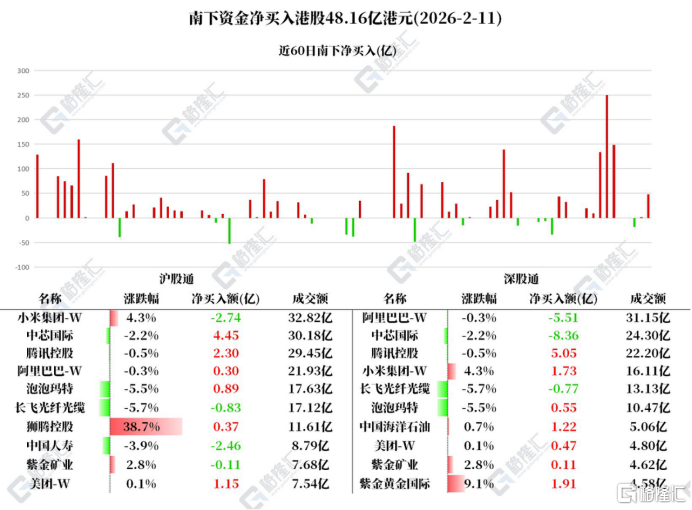
沪港通(南向)十大活跃成交公司 深港通(南向)十大活跃成交公司 智通财经APP获悉,2026年2月11日当天,小米集团-W(01810)、中芯国际(00981)、腾讯控股(00700)位 居沪港通(南向)成交额前3位,成交额分别为32.82 亿元、30.18 亿元、29.45 亿元;阿里巴巴- W(09988)、中芯国际(00981)、腾讯控股(00700) 位居深港通(南向)成交额前3位,成交额分别为31.15 亿元、24.30 亿元、22.20 亿元。 | 公司名称 | 成交金额 | 净买入额 | | --- | --- | --- | | 阿里巴巴-W(09988) | 31.15 亿元 | -5.51 亿元 | | 中芯国际(00981) | 24.30 亿元 | -8.36 亿元 | | 腾讯控股(00700) | 22.20 亿元 | +5.05 亿元 | | 小米集团-W(01810) | 16.11 亿元 | +1.73 亿元 | | 长飞光纤光缆(06869) | 13.13 亿元 | -7716.44 万元 | | 泡泡玛特(09992) | 10.47 亿元 | +5507.12 万元 ...
2月11日南向资金追踪:腾讯控股、紫金黄金国际、美团-W净买入额居前,分别为7.36亿港元、1.91亿港元、1.63亿港元
Jin Rong Jie· 2026-02-11 10:59
Group 1 - The Hang Seng Index rose by 0.31% to close at 27,266.38 points, with a total market turnover of 217.218 billion HKD [1] - Tencent Holdings, Zijin Mining International, and Meituan-W saw net inflows of 736 million HKD, 191 million HKD, and 163 million HKD respectively [1] - Alibaba-W, SMIC, and China Life experienced net outflows of 521 million HKD, 391 million HKD, and 246 million HKD respectively [1] Group 2 - Tencent Holdings had a trading volume of 5.165 billion HKD with a closing price of 548.00 HKD, reflecting a decrease of 0.54% [2] - Zijin Mining International recorded a trading volume of 4.594 billion HKD, with a net inflow of 191 million HKD and a closing price of 228.80 HKD, showing an increase of 9.06% [2] - Meituan-W had a trading volume of 12.35 billion HKD, with a net inflow of 163 million HKD and a closing price of 88.85 HKD, reflecting a slight increase of 0.06% [2] - Alibaba-W had a trading volume of 53.08 billion HKD, with a net outflow of 521 million HKD and a closing price of 160.10 HKD, showing a decrease of 0.25% [2] - China Life had a trading volume of 8.79 billion HKD, with a net outflow of 246 million HKD and a closing price of 34.12 HKD, reflecting a decrease of 3.94% [2]