巨子生物

Search documents
纺织品和服装行业周报:美关税落地提振出口预期;锦波生物HiveCOL胶原发布-20250727
SINOLINK SECURITIES· 2025-07-27 10:15
Investment Rating - The report suggests a positive outlook for the textile manufacturing sector, indicating a potential increase in market sentiment due to recent tariff adjustments by the US [1][12][13]. Core Insights - The textile manufacturing sector has seen a significant recovery in market sentiment, with key companies experiencing notable stock price increases from June 20 to July 26, with cumulative gains of 24.84% for Crystal International, 12.93% for Huayi Group, and 11.24% for Shenzhou International [1][9][10]. - Recent adjustments in US tariffs have reduced uncertainty, with the new rates set between 15% to 50%, which is significantly lower than previously proposed rates [12][13]. - The introduction of HiveCOL collagen by Jinbo Biotech represents a breakthrough in the anti-aging market, utilizing 100% humanized technology to address issues related to animal collagen [14][15]. Industry Data Tracking - In June, clothing retail saw a year-on-year growth of 1.9%, but a month-on-month decline due to factors such as the early 618 shopping festival and adverse weather conditions affecting foot traffic [16][29]. - The prices of raw materials remained stable, with fluctuations in cotton prices and a noted decrease in the price difference between domestic and imported cotton [18][21]. - The cosmetics retail sector experienced a decline of 2.3% year-on-year, while gold and jewelry retail grew by 6.1% year-on-year, indicating differing consumer trends [29]. Investment Recommendations - For clothing brands, Hai Lan Home is recommended for its strong profitability and potential for expansion in the outlet market, while Li Ning is seen as having a potential turning point in its operations [37][39]. - In the beauty sector, Jinbo Biotech is highlighted for its strong data resilience and upcoming product launches, while the gold and jewelry sector remains attractive due to rising gold prices, with recommendations for brands like Laopu Gold [39][40]. Market Review and News - The textile manufacturing sector saw a 2.34% increase in the last week, with notable performances from companies like Tianhong International and Langsha [40][44]. - Recent industry news includes the announcement of the "2024 Industry Top 100" by the China National Garment Association, with a slight decline in overall performance compared to 2023 [49][50].


天雷滚滚,“不自杀声明”刷屏,前高管45万字揭财务造假内幕?3万股民瑟瑟发抖!华熙生物:已报案!此人曾骗取公司900万元
雪球· 2025-07-27 05:49
Core Viewpoint - The article discusses serious allegations against Huaxi Biological, a leading player in the medical aesthetics industry, regarding financial misconduct and governance issues, which have led to significant market concerns and a drastic decline in the company's stock price and market value [1][3][10]. Company Response - Huaxi Biological quickly responded to the allegations, stating that the claims are fabricated and maliciously distorted, and they have reported the matter to law enforcement [2][6][9]. Allegations and Background - The whistleblower, who claims to be a former key capital operator at Huaxi Biological, alleges financial fraud and governance failures, asserting possession of 450,000 words of insider material intended for regulatory submission [1][3][8]. - The whistleblower previously held a position as the marketing director at Huaxi and was involved in a case of embezzlement amounting to 9 million yuan, which led to a police report by the company [8]. Market Impact - Following the allegations, Huaxi Biological's stock price has seen a dramatic decline, from a peak of 314.99 yuan per share in July 2021 to approximately 53.83 yuan per share, representing a drop of over 80% and a market capitalization reduction from over 1,000 billion yuan to 259 billion yuan [11][13]. Financial Performance - The company's financial performance has deteriorated significantly, with a reported revenue of 5.371 billion yuan in 2024, down 11.61% year-on-year, and a net profit of 174 million yuan, down 70.59%, marking the largest annual decline since its listing [13][14]. - In comparison, competitors like Juzhi Biological and Jinbo Biological have shown strong growth, with Juzhi achieving a revenue increase of 57.07% and a net profit growth of 42.06% in 2024 [13][14]. Industry Context - The medical aesthetics industry is undergoing intense competition, with Huaxi Biological facing challenges from competitors like Juzhi Biological, which has seen its market value rise significantly [16][18]. - The article highlights a shift in consumer expectations towards product safety and efficacy, indicating that mere concept marketing is no longer sustainable, and companies must possess genuine technological advantages to succeed [21].



行业点评报告:医美化妆品6月月报:锦波生物发布HiveCOL蜂巢胶原新品,2025H1美妆温和复苏、洗护彩妆亮眼-20250725
KAIYUAN SECURITIES· 2025-07-25 13:45
Investment Rating - The industry investment rating is "Positive" (maintained) [1] Core Viewpoints - The report highlights a moderate recovery in the beauty and cosmetics sector, with a notable performance in hair care and color cosmetics, indicating a stable growth trajectory [7][35] - The medical aesthetics sector is expected to gain momentum from the introduction of innovative products, particularly in the field of collagen and hair loss treatments [30][46] Summary by Sections Market Review - In June, the beauty and personal care index fell by 3.61%, ranking 31st among all primary industries, underperforming the market [14] - The medical aesthetics sector saw significant stock price increases for companies like Meili Tianyuan Medical Health (+64.4%), Yonghe Medical (+50.0%), and Sihuan Pharmaceutical (+13.3%) [20][26] - For the first half of 2025, the medical aesthetics sector recorded substantial gains, with Jinbo Biological (+124.6%), Yonghe Medical (+83.3%), and Meili Tianyuan Medical Health (+69.9%) leading the way [20][26] Medical Aesthetics - Jinbo Biological launched the world's first recombinant type III humanized collagen gel, HiveCOL, which is expected to revolutionize tissue regeneration [30] - Sihuan Pharmaceutical introduced new products targeting skin quality improvement and contour shaping, while Kedi's external finasteride spray received approval, marking a significant advancement in hair loss treatment [31][32] Cosmetics - The retail sales of cosmetics in the first half of 2025 reached 229.1 billion yuan, reflecting a year-on-year growth of 2.9% [35] - Online sales of cosmetics amounted to 267.83 billion yuan, growing by 11.1%, while offline sales decreased by 4.1% to 228.44 billion yuan [36] - The report emphasizes the strong performance of domestic brands in the online market, particularly on platforms like Douyin and Tmall [40][43] Investment Recommendations - The report recommends focusing on leading domestic beauty brands that are expected to gain market share, particularly in high-growth segments [46][47] - Key recommendations include companies like Shangmei Co., Ltd., Maogeping, and Pulaia, which are well-positioned to benefit from the ongoing trends in the beauty market [50]


玻尿酸医美,获客困难下的隐秘乱象
Hu Xiu· 2025-07-25 08:25
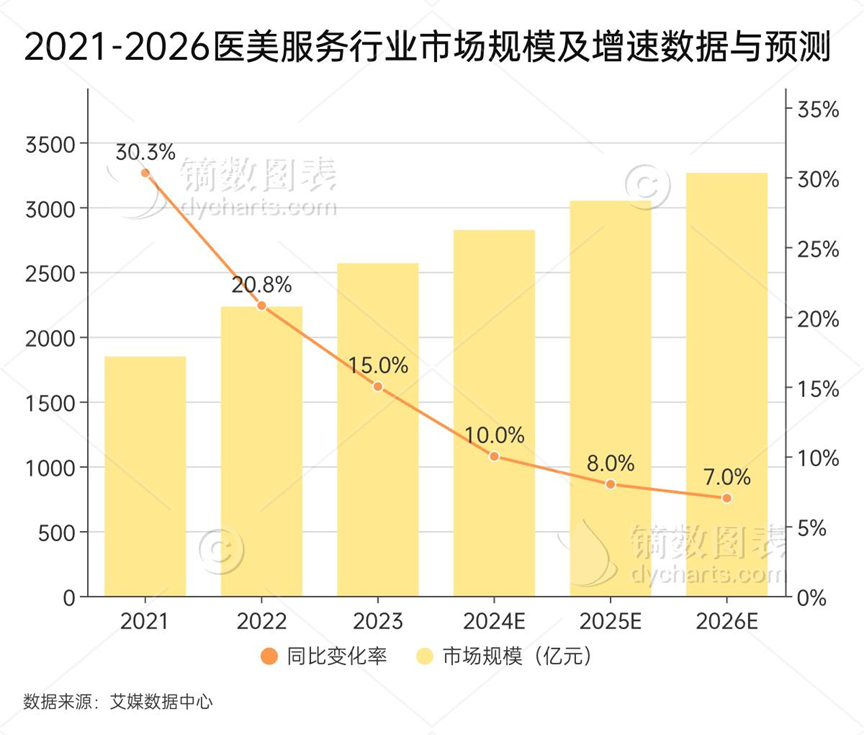
Core Insights - The medical beauty industry in China is experiencing a significant increase in male consumers, with a 27% rise in spending in 2023 compared to the previous year, indicating a growing acceptance of aesthetic procedures among the general public [3] - However, this surge in demand is accompanied by a rise in marketing pitfalls, as many consumers fall into traps set by aggressive sales tactics and misleading information [3][12] Industry Challenges - The medical beauty sector is facing severe challenges, with market growth rates declining from 30% in 2021 to just 15% in 2023 due to increased regulation and scrutiny following past market excesses [4] - The total financing in the medical beauty industry dropped to 10.3 billion yuan in 2023, a 64% decrease from the peak of 28.6 billion yuan in 2021, with the number of financing events falling by 76% [5] - The average price of hyaluronic acid raw materials has decreased by 40.95% from 210 yuan per gram in 2017 to 124 yuan in 2021, while the price of end products has dropped by 28.64% from 1557 yuan per bottle to 1111 yuan during the same period [5] Marketing Trends - The industry is increasingly relying on various marketing strategies, including commission-driven models that incentivize referrals from social influencers and high-pressure sales tactics [13][14] - A notable trend is the emergence of strategic alliances between medical beauty institutions and high-end brands, which allows for resource sharing and targeted marketing to affluent consumers [15] - Online marketing has become a crucial battleground, with 84% of light medical beauty orders being placed online by 2022, up from 62% in 2017 [8][11] Product Shifts - There is a growing preference for composite products containing collagen or regenerative materials over pure hyaluronic acid, as these alternatives are perceived to be more stable and have fewer long-term side effects [6] - The market for regenerative medical beauty injectables is projected to reach 11.52 billion yuan by 2027, with a compound annual growth rate of 54.73% [6] Consumer Concerns - Consumers are increasingly facing privacy risks and lack of transparency regarding the sourcing and quality of self-branded hyaluronic acid products offered by medical beauty institutions [19] - The reliance on aggressive marketing tactics and the potential for misleading information raises concerns about the sustainability of the industry's growth and consumer trust [19][20]
如何看新氧模式对于医美产业链的影响及美护公司月度更新
2025-07-25 00:52
Summary of Key Points from Conference Call Records Industry Overview - The conference call primarily discusses the medical aesthetics (医美) industry and related companies, including New Oxygen (新氧), Love Beauty (爱美客), and others in the beauty and healthcare sectors. Core Insights and Arguments 1. **New Oxygen's Business Model**: New Oxygen is leveraging standardized projects and private traffic to reduce costs and attract price-sensitive consumers. However, the increasing demand for high-end projects may raise costs for doctors, posing a challenge for the company's long-term strategy [8][9][11]. 2. **Impact of Market Sentiment**: Runben's stock price rebounded nearly 30% due to market sentiment influenced by the outbreak of diseases in Foshan, despite limited actual sales impact [1][3]. 3. **Acquisition Benefits for Love Beauty**: Love Beauty's acquisition of Region and obtaining the agency rights for Isophane in China has significantly boosted its stock price, with expected profit contributions of over 450 million yuan in the coming year [1][20]. 4. **Challenges for Juzi Biotechnology**: Juzi's sales have declined due to public sentiment issues, leading to a drop in valuation. The recovery of sales through influencer marketing will be crucial for its stock price rebound [1][4][31]. 5. **LePu Medical's Performance**: LePu's main business is affected by centralized procurement, but its medical aesthetics segment is progressing well, with expected revenue contributions from new products [1][13]. 6. **Market Dynamics**: The medical aesthetics industry is experiencing increased competition and price wars, driven by the entry of new products and the need for traditional institutions to adapt to New Oxygen's model [10][12]. Additional Important Insights 1. **Digital Transformation in Beauty Sector**: Companies like Beautiful Farm are enhancing business uniformity and customer acquisition costs through digital systems and training, positioning themselves for growth [2][17]. 2. **Emerging Trends in Marketing**: The rise of short videos and live-streaming as marketing channels is reshaping how brands engage with younger consumers, necessitating innovative strategies [6][8]. 3. **Regulatory Changes**: New regulations on advertising may impact smaller brands more significantly than larger listed companies, potentially improving the competitive landscape for established players [23]. 4. **Future Outlook for Companies**: Companies like Beautiful Farm and Love Beauty are expected to see significant growth due to strategic acquisitions and market positioning, while others like Juzi may need to recover from recent setbacks [17][20][31]. This summary encapsulates the key points discussed in the conference call, highlighting the dynamics within the medical aesthetics industry and the performance outlook for various companies involved.


华福消费观察:文旅与潮玩受暑期受旺季催化,关注AI教育进展及精细医美格局改善
Huafu Securities· 2025-07-24 13:18
Investment Rating - The report maintains an "Outperform" rating for the industry [7] Core Insights - The report highlights the potential growth in the AI education sector, with companies like DouShen Education and ShengTong launching new AI products that are expected to see significant revenue growth [2][21] - The tourism sector is anticipated to benefit from the summer peak season, with a focus on IP integration in tourism experiences, particularly in regions like Changbai Mountain and Emei Mountain [3][47] - The collectible toy market is projected to see revenue increases due to summer exhibitions and favorable consumer policies, with companies like Pop Mart expected to benefit from new product launches [4] - The medical beauty industry is experiencing optimization through refined operations, with new product launches expected to enhance market share for leading institutions [5] - The beauty and personal care sector is witnessing significant growth, with companies like Ruyuchen and Plant Doctor expected to report strong mid-year results [5] Summary by Sections Education - DouShen Education's new AI product "Super Training Ground" aims to address common writing challenges faced by students, utilizing AI to enhance personalized learning [16] - ShengTong Education has launched a new AI education platform that integrates advanced technologies to improve students' tech literacy [17][23] - The report suggests monitoring the revenue growth potential of AI education products from key players like DouShen Education and ShengTong [21] Tourism - The report notes a slight increase in travel despite adverse weather conditions in Q2, with a focus on summer tourism in regions like Western China and Changbai Mountain [3][47] - The integration of IP with scenic spots is highlighted as a new consumer trend, with recommendations to focus on companies like Emei Mountain A and HaiChang Ocean Park [3][47] Collectible Toys - The report emphasizes the rapid revenue growth of LeZiTianCheng, a leading IP toy company, with a significant increase in overseas market revenue [48] - The company is noted for its diverse product offerings and strong IP strategy, which is expected to drive future growth [49] Medical Beauty - The report indicates that leading medical beauty institutions are likely to capture more market share due to refined operational strategies and new product launches [5] - Companies like Jinbo Bio and SiHuan Pharma are recommended for monitoring in the upcoming quarters [5] Beauty and Personal Care - Ruyuchen is projected to report a significant increase in net profit for the first half of 2025, with growth rates between 61.81% and 100.33% [5] - The Plant Doctor is noted for its unique product offerings and potential to become a leading single-brand beauty stock in the A-share market [5]
20%高增速领跑,上半年洗护市场为什么“爆了”?
FBeauty未来迹· 2025-07-24 12:02
Core Viewpoint - The hair care market is experiencing significant growth, with online transaction value reaching 340.37 billion yuan in the first half of 2025, marking a year-on-year increase of 20.67% [4][5]. Market Performance - The hair care segment outperformed other beauty categories, driven by a 131.5% surge in men's hair care and steady performances from international brands like Kérastase, L'Oréal, and Pantene [2][4]. - The overall beauty market saw a total online transaction value of 3,060.39 billion yuan, with hair care being one of the fastest-growing segments [5]. Segment Breakdown - The hair care subcategories showed robust growth: - Hair cleansing: 179.72 billion yuan, up 21.56% - Hair care: 74.00 billion yuan, up 19.59% - Hair dyeing and perming: 57.44 billion yuan, up 17.20% - Hair styling: 20.76 billion yuan, up 16.64% - Men's hair care: 5.12 billion yuan, up 131.50% [7]. Brand Landscape - The market share of the top five brands (CR5) decreased from 19% in 2024 to 16%, indicating increased competition from emerging domestic brands and private labels [8]. - New domestic brands like Off&Relax and others are gaining traction, with several entering the top 20 rankings [11]. Consumer Trends - There is a shift towards efficacy-driven products, with consumers seeking solutions for specific scalp issues and multi-functional products [14][19]. - The introduction of "face-care level" ingredients in hair care products is becoming a trend, enhancing the overall consumer experience [19][21]. Innovation and New Products - Over 25 brands launched new products in the first half of 2025, with a focus on scalp care and multi-functional benefits [13]. - Brands are emphasizing rapid effectiveness, with products claiming visible results in as little as one to three minutes [17]. Future Outlook - The competition in the hair care market is expected to intensify, particularly in the areas of anti-hair loss and scalp care, with a focus on patented technologies and quick results [26][29]. - The potential for growth in differentiated segments like scalp oils is significant, as brands explore new opportunities [23][26].


大厂抢跑入医美“围城”
Xin Lang Cai Jing· 2025-07-24 10:38
Core Insights - The medical beauty sector is becoming a strategic focus for major companies, driven by the need for medical professionalism, commercial sustainability, and social responsibility [1][3] - JD.com has entered the medical beauty market with its first self-operated clinic opening in Beijing, indicating a competitive landscape with other giants like Alibaba, Meituan, Douyin, and Tencent already involved [2][4] - The competition is centered around high-value users and high-profit scenarios, making differentiation crucial for success [3] JD.com's Strategy - JD.com has adopted a direct approach by opening self-operated clinics and has partnered with New Oxygen, a leading internet medical beauty platform, to enhance its service offerings [5][6] - The company has established direct supply chain collaborations with top manufacturers, creating a short-chain model that reduces costs by eliminating intermediaries [7] Comparison with Competitors - Meituan, while entering the market earlier, has focused on a consulting and intermediary role rather than direct operation, leveraging its local service platform for traffic [8][9] - Alibaba's strategy mirrors Meituan's, acting as an intermediary while integrating medical beauty with its consumer finance services [9][10] - ByteDance has taken a more aggressive approach by acquiring medical institutions and launching its own medical beauty services, albeit entering the market later than others [10][12] Market Dynamics - The medical beauty industry is characterized by high profit margins, with midstream institutions enjoying gross margins of 40%-55% and downstream margins reaching 60%-80% [14] - The market is projected to grow significantly, with estimates suggesting it could reach 399.8 billion yuan by 2026 and 638.2 billion yuan by 2030, reflecting a compound annual growth rate of 12.4% [14] Challenges and Considerations - Major companies face structural challenges and competition for market share, with user engagement and budget constraints becoming critical issues [13][15] - The medical beauty sector is described as a "walled city," indicating intense competition and the need for companies to establish trust and credibility in a market where mistakes can have severe consequences [18][21] - Building a trust barrier through technology and compliance is essential for companies to succeed in the medical beauty space [21][22]

官网6800元,900元竟能买到同款?人气医美产品陷真假迷局
21世纪经济报道· 2025-07-24 07:31
Core Viewpoint - The article highlights the rapid growth of the medical beauty market, particularly focusing on the product "Wei Yi Mei" from Jinbo Biotechnology, while also exposing the rampant issues of counterfeit products and unregulated practices within the industry [3][4][12]. Group 1: Product Overview - "Wei Yi Mei" is a flagship product of Jinbo Biotechnology, leveraging recombinant collagen technology, and has seen significant sales growth from 25,000 bottles in 2021 to 576,000 bottles in 2023, maintaining over 300% growth [3]. - The global sales of the first injectable recombinant humanized collagen freeze-dried fibers have surpassed 2 million units [3]. Group 2: Market Dynamics - The retail market size for recombinant collagen medical beauty injections in China reached 4.3 billion yuan in 2023, accounting for 6.4% of the total medical beauty injection market, with projections to grow to 14.3 billion yuan by 2027 [4]. - The retail market for recombinant collagen medical dressings also reached 11 billion yuan in 2023 [4]. Group 3: Industry Issues - The article reveals that the market is plagued by counterfeit products, with only 35% of medical beauty injectables in circulation being genuine, leading to over 30% of consumer complaints related to product quality [12]. - Numerous unauthorized medical institutions are offering services related to "Wei Yi Mei," often at prices significantly lower than the official retail price, which raises concerns about product authenticity [8][10]. Group 4: Regulatory Concerns - The article emphasizes the need for consumers to recognize "regular doctors, regular institutions, and regular products" as a defense against medical beauty risks [10]. - The rise of "medical beauty fast-track training classes" has contributed to the proliferation of unqualified practitioners, further endangering consumer safety [16][17].

医美并购的“朗姿教训”
阿尔法工场研究院· 2025-07-23 13:47
Core Viewpoint - Langzi Co., Ltd. relies on capital-driven growth and rapid mergers and acquisitions to form a chain scale, neglecting the core of the medical beauty industry, which is "doctors and services" [1][30]. Financial Performance - Langzi Co., Ltd. reported a projected net profit of 220 million to 260 million yuan for the first half of 2025, representing a year-on-year growth of 31.74% to 55.69% [3][4]. - However, after excluding a 160 million yuan investment gain from the sale of Ruoyuchen, the actual operating net profit dropped to 90 million to 130 million yuan, a decline of 35.68% to 7.09% year-on-year [6][4]. - The first quarter of 2025 showed a decline in revenue, net profit, and cash flow from operating activities, indicating a downward trend [6][7]. Medical Aesthetics Business Challenges - The medical aesthetics segment, which was expected to be a new growth engine, has underperformed, with revenue and gross profit decreasing by 9.22% and 8.58% respectively in Q1 2025 [11][8]. - The gross profit margin of the medical aesthetics business is 55.05%, significantly lower than the traditional apparel and children's products segments, which have margins of 64.51% and 62.28% respectively [11][8]. - Among the seven medical aesthetics brands under Langzi, only the Jingfu Medical Beauty brand achieved positive growth in Q1 2025, while the other six brands experienced revenue and profit declines [13][11]. Industry Dynamics - The medical aesthetics industry has a complex value structure, with upstream pharmaceutical and equipment manufacturers capturing 50%-70% of the profits, while downstream service providers only retain 10%-25% [16][15]. - Operating a medical aesthetics institution is capital-intensive, requiring significant investment in equipment and facilities, with depreciation periods of 5-10 years [17][16]. - The industry faces increasing competition, with the number of specialized medical aesthetics institutions in China reaching 21,000 in January 2025, an increase of approximately 2,400 from the previous year [21][20]. Strategic Decisions and Market Trends - Despite the challenges, Langzi continues to invest in medical aesthetics, viewing it as a low-resistance entry point into the sector with high valuation potential [23][22]. - The medical aesthetics market in China has seen a compound annual growth rate of over 20% from 2011 to 2019, attracting significant capital investment [24][23]. - Langzi's strategy of rapid acquisitions in the medical aesthetics sector has not translated into sustainable growth, as the industry is moving towards a more decentralized model focused on individual practitioners and boutique institutions [30][29]. Conclusion - The fundamental conflict between capital-driven expansion and the intrinsic nature of the medical aesthetics industry may be the root cause of Langzi's current challenges [31][30].