华熙生物

Search documents
华熙生物:2025年上半年净利润2.21亿元,同比下降35.38%
Xin Lang Cai Jing· 2025-08-26 11:21
华熙生物公告,2025年上半年营业收入22.61亿元,同比下降19.57%。净利润2.21亿元,同比下降 35.38%。 ...

中国中免公布中期业绩 权益股东应占利润约26.22亿元 同比减少20.68%
Zhi Tong Cai Jing· 2025-08-26 10:55
Core Insights - China Duty Free Group (中国中免) reported a mid-year revenue of RMB 28.151 billion for 2025, a year-on-year decrease of 9.96% [1] - Gross profit was RMB 8.99 billion, down 12.23% year-on-year, with net profit attributable to shareholders at approximately RMB 2.622 billion, a decline of 20.68% [1] - The company aims to deepen its presence in Hainan and create a new consumption pattern that integrates culture and tourism [1] Group 1: Business Development - The company is expanding its "Duty-Free+" boundaries, moving towards a multi-dimensional integration of "culture, commerce, sports, tourism, and health" [1] - It is actively creating diverse cultural and entertainment events and themed marketing IP activities, including star concerts and Disney-themed IPs [1] - The Sanya International Duty-Free City has been officially designated as a national AAAA-level tourist attraction, marking it as the first national-level tourist attraction centered on duty-free commerce [1] Group 2: Market Expansion - The company has successfully secured the operating rights for several duty-free stores at major international airports and border ports, enhancing its channel advantages [2] - New city stores have opened in Qingdao, Xiamen, and Harbin, with plans for six additional city duty-free stores [2] - The company is exploring unique shopping experiences, such as a "whiskey tavern," to create a diversified retail environment [2] Group 3: Product Innovation - The company is actively exploring new airport commercial models, collaborating with Gansu Airport Group to introduce 31 new brands at Lanzhou Zhongchuan International Airport [3] - It has introduced nearly 200 new brands in response to consumer trends, focusing on categories like national trend cosmetics, 3C digital products, and health [3] - The company is developing products and services tailored for the elderly, launching its own brand "China Duty Free Health" with nearly 40 popular health products [3]

【A股收评】三大指数涨跌不一,果链、游戏板块走强!
Sou Hu Cai Jing· 2025-08-26 08:20
Market Performance - The three major indices showed mixed results, with the Shanghai Composite Index down 0.39%, the Shenzhen Component Index up 0.26%, and the ChiNext Index down 0.76% [2] - Over 2,700 stocks rose in the two markets, with a total trading volume of approximately 2.68 trillion yuan [3] Apple Supply Chain Stocks - Apple-related stocks experienced significant movements, with GoerTek (002241.SZ) and Lingyi iTech (002600.SZ) rising by 10%, and Luxshare Precision (002475.SZ) increasing by over 6% [3] - GoerTek, as a leading player in the Apple supply chain, has benefited from the AI wave, achieving six consecutive quarters of year-on-year growth in net profit attributable to shareholders from Q1 2024 to Q2 2024 [3] Consumer Electronics Sector - The high demand in the consumer electronics sector is attributed to both AI stimulation and domestic "national subsidy" policies, which are reviving mid-range consumption and driving structural recovery in mobile phones and tablets [3] Livestock Industry - Livestock stocks showed strong performance, with Xiaoming Co. (300967.SZ) rising over 10% and Muyuan Foods (002714.SZ) increasing by over 7% [3] - The National Development and Reform Commission reported that the average pig-to-grain price ratio fell below 6:1, entering a warning zone, prompting the government to initiate central frozen pork reserves [4] Gaming Sector - The gaming sector saw positive movements, with 37 Interactive Entertainment (002555.SZ) rising by 10% and other companies like Digital Soul (603258.SZ) and Giant Network (002558.SZ) also increasing [4] - A report from Guotai Junan highlighted that the National Press and Publication Administration approved a record 166 domestic online games on August 25, 2025, indicating a stable approval rhythm and a rich supply of gaming products [4] Beauty and Personal Care Sector - The beauty and personal care sector performed well, with Shuiyang Co. (300740.SZ) rising over 10% and other companies like Proya Cosmetics (603605.SH) and Huaxi Biological (688363.SH) also increasing [5] - According to a report from Dongfang Securities, the domestic cosmetics industry is entering a phase of steady and high-quality development, driven by economic growth, demographic shifts, cultural confidence, and the rise of domestic brands [5] Declining Sectors - The banking, securities, and semiconductor sectors faced declines, with companies like Chipone Technology (688521.SH) dropping over 9% and Haiguang Information (688041.SH) down over 6% [5] - The military and rare earth sectors also weakened, with China Rare Earth (000831.SZ) and Northern Rare Earth (600111.SH) falling nearly 7% [5]







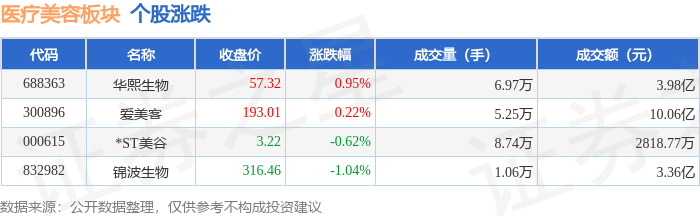
医疗美容板块8月25日涨0.48%,华熙生物领涨,主力资金净流入1124.53万元
Zheng Xing Xing Ye Ri Bao· 2025-08-25 08:53
Group 1 - The medical beauty sector increased by 0.48% on August 25, with Huaxi Biological leading the gains [1] - The Shanghai Composite Index closed at 3883.56, up 1.51%, while the Shenzhen Component Index closed at 12441.07, up 2.26% [1] - The trading volume and turnover for key stocks in the medical beauty sector were reported, with Aimeike and Huaxi Biological showing notable figures [1] Group 2 - The net inflow of main funds in the medical beauty sector was 11.25 million yuan, while retail investors saw a net inflow of 37.19 million yuan [1] - Aimeike had a main fund net inflow of 5.73 million yuan, but a significant outflow from speculative funds of 36.09 million yuan [2] - Huaxi Biological experienced a main fund net inflow of 4.79 million yuan, with a minor outflow from speculative funds [2]

爱美客(300896)2025年半年报业绩点评报告:H1业绩短期承压 产品高毛利与研发储备夯实长期竞争
Xin Lang Cai Jing· 2025-08-25 00:43
Core Viewpoint - Despite short-term performance pressure, high-margin products and increased R&D investment solidify long-term competitiveness [2] Financial Performance - In the first half of 2025, total revenue was 1.299 billion yuan, a year-on-year decrease of 21.59%; net profit attributable to shareholders was 790 million yuan, down 29.57% year-on-year [1] - Operating cash flow net amount decreased by 43.06% year-on-year due to the decline in net profit and changes in working capital [1] - Revenue from core injection products, "solution" and "gel" categories, fell by over 23%, indicating pressure on market demand or sales [2] - Operating costs increased slightly by 1.2%, while gross margin remained above 90%, indicating strong profitability [2] - Financial expenses rose by 121.63%, primarily due to foreign currency investment exchange losses [2] R&D and Product Pipeline - R&D investment in the first half of 2025 was 157 million yuan, accounting for 12.05% of revenue, with 182 authorized patents [3] - The company has successfully commercialized several skin fillers and is advancing the development of recombinant proteins and peptides [3] - The existing product pipeline includes 12 Class III medical devices and ongoing research on products like type A botulinum toxin and semaglutide injection [3] Strategic Initiatives - On March 10, the company announced the acquisition of 85% of Korean REGEN for 190 million USD, enhancing its international presence and resource integration [2] - This acquisition is expected to inject new momentum into the company's performance growth by accelerating internationalization [2] Profit Forecast and Investment Rating - Revenue forecasts for 2025-2027 have been adjusted to 2.723 billion yuan, 3.126 billion yuan, and 3.548 billion yuan, down from previous estimates [4] - Net profit forecasts for the same period are now 1.768 billion yuan, 1.952 billion yuan, and 2.246 billion yuan, also revised down from earlier projections [4] - The company's projected PE ratios for 2025-2027 are 31.0, 28.1, and 24.4 times, respectively [4] - The company maintains a "buy" rating based on steady growth in its main business and ongoing investment in innovative product development [4]
国货美妆上市公司业绩分化,敏感肌市场爆了
2 1 Shi Ji Jing Ji Bao Dao· 2025-08-24 14:53
Core Insights - The domestic beauty industry in China is entering a phase of deeper development, with market competition shifting from channel expansion to R&D innovation and precise positioning [1][3]. Company Performance - In the first half of 2025, domestic beauty companies showed significant performance differentiation. Shanghai Jahwa achieved revenue of 3.48 billion yuan, a year-on-year increase of 4.7%, and a net profit of 270 million yuan, up 11.7% [3]. - Marubi Biotech reported revenue of 1.769 billion yuan, a 30.83% increase, with a net profit of 186 million yuan, up 5.21%. The company focused on a big product strategy [3]. - Up Beauty Holdings projected revenue between 4.09 billion and 4.11 billion yuan, a year-on-year growth of 16.8% to 17.3%, with net profit expected to reach between 540 million and 560 million yuan, up 30.9% to 35.8% [3]. - Beitaini has not yet released its semi-annual report, but its Q1 revenue was 949 million yuan, down 13.51%, with a net profit of 28.34 million yuan, down 83.97% [4]. Market Trends - The market for functional skincare products in China is projected to reach approximately 48.743 billion yuan in 2024, with Beitaini holding an 11.71% market share [5]. - The sensitive skin market is becoming a hot sector, with consumer numbers expected to approach 100 million and a market size of around 45 billion yuan in 2024, reflecting a compound annual growth rate of 21.7% over the past three years [7]. - The demand for sensitive skin care is evolving, with consumers seeking products that offer multiple benefits beyond basic repair, such as whitening and anti-aging [7]. Technological Challenges - The sensitive skin market faces core technological bottlenecks, particularly in the area of whitening products, which often struggle to balance effectiveness and gentleness for sensitive skin [8]. - Companies like Ximu Yuan are focusing on R&D in sensitive skin whitening, with new ingredients aimed at addressing these challenges, although large-scale application remains difficult [8]. Competitive Landscape - The competition in the sensitive skin market has shifted from initial market entry to a deeper technological contest, where brands must address advanced needs like whitening and anti-aging while ensuring scientific validation [9].


国货美妆上市公司业绩分化,敏感肌市场爆了
21世纪经济报道· 2025-08-24 14:48
Core Viewpoint - The domestic beauty industry in China is entering a phase of deeper development, with a shift in competition from channel expansion to R&D innovation and precise positioning [1] Group 1: Industry Performance - In the first half of 2025, domestic beauty companies showed significant performance differentiation, reflecting a competitive landscape that emphasizes R&D and innovation [2][3] - Shanghai Jahwa achieved revenue of 3.48 billion yuan, a year-on-year increase of 4.7%, and a net profit of 270 million yuan, up 11.7% [3] - Marubi Biological reported revenue of 1.769 billion yuan, a year-on-year increase of 30.83%, with a net profit of 186 million yuan, up 5.21% [3] - Up Beauty Holdings expects revenue between 4.09 billion and 4.11 billion yuan, a year-on-year increase of 16.8% to 17.3%, with net profit projected to be between 540 million and 560 million yuan, up 30.9% to 35.8% [3] Group 2: Market Trends - The sensitive skin market is becoming a hot sector, with the consumer base expected to approach 100 million by 2024, and the market size estimated at 45 billion yuan, with a compound annual growth rate of 21.7% over the past three years [6][7] - The sensitive skin market is projected to exceed 200 billion yuan, indicating a broad development prospect [6][7] - Consumers are increasingly seeking multi-functional products that combine repair with whitening, anti-aging, and sun protection [7] Group 3: Competitive Landscape - Brands are focusing on addressing the needs of sensitive skin, with companies like Giant Biological and Shanghai Jahwa targeting deeper skin barrier issues [7][8] - The market is witnessing a shift from generic solutions to more personalized care approaches, although the effectiveness and feasibility of these strategies still require market validation [8] - The sensitive skin whitening segment remains a core technical challenge, as traditional whitening ingredients often irritate sensitive skin, creating a dilemma for consumers [8]

新氧20250822
2025-08-24 14:47
Summary of the Conference Call Industry Overview - The light medical beauty industry is transitioning from reliance on high-priced projects and well-known doctors to standardized, cost-effective services. New Oxygen focuses on dermatology and small store layouts to meet consumer demands for transparency in product ingredients and pricing [2][4][18]. - The competition in the upstream product market for medical beauty is intensifying, with a significant increase in the issuance of three types of certificates in China. It is expected that by 2026, more companies will launch alternative products, breaking the monopoly of a few high-priced products and leading to market scaling [2][6][7]. Company Strategy and Operations - Traditional medical beauty institutions face high marketing costs and limited profit margins. New Oxygen aims to improve profit margins by controlling marketing costs, optimizing the supply chain, and developing proprietary products. The company is also exploring a model of self-operated small clinics [2][8][9]. - The chain rate in the light medical beauty industry is expected to increase, but it requires the provision of standardized treatments and high cost-performance services. New Oxygen implements a hard discount model to maintain profit margins while offering cost-effective services [2][10]. - The operational efficiency of chain clinics is influenced by scale, density, and efficiency. New Oxygen adopts a strategy that balances breadth and depth, focusing on high-density layouts in key cities to highlight chain advantages and improve overall efficiency [2][11]. Market Dynamics - The Chinese medical beauty market has developed rapidly over the past few years, but the industry chain structure still leans towards a seller's market with low chain rates. New Oxygen recognizes the challenges and pain points in the development of medical beauty chains and plans to leverage its advantages to achieve growth [3][8]. - The rise of regenerative products like water light needles and botulinum toxin has increased the proportion of dermatology projects, which are characterized by high frequency, low risk, and suitability for small chain stores [4][5]. Financial Performance and Projections - Traditional medical beauty institutions have low profit margins, with some large institutions only achieving around 3% to 5%. Marketing costs account for 30% to 50%, along with 20% to 30% for product costs. New Oxygen aims to control marketing costs within 10% and reduce product costs through its supply chain [8][9][22]. - Currently, the net profit margin for New Oxygen's stores is approximately 10% to 15%. In the next two to three years, as the proportion of proprietary products increases, the company expects the net profit margin to rise to 15% or even 20% [22]. Customer Retention and Cost Management - New Oxygen's model leans towards benefiting consumers and achieving equity in medical beauty services. The company employs various strategies to enhance customer retention and meet the needs of price-sensitive consumers, including membership operations, promotional activities, and community engagement [18][19]. - The company maintains a cost advantage in customer acquisition primarily through user referrals and private domain operations, which account for nearly 70% of its customer acquisition strategy [21]. Future Outlook - The light medical beauty industry is naturally suited for chain penetration due to its high standardization. New Oxygen plans to expand its presence in key cities with high-density layouts to leverage chain advantages [10][11]. - The company is also testing different site selection strategies for new clinics, focusing on core business districts and popular shopping centers to optimize overall operational effectiveness [14][16]. Conclusion - New Oxygen is strategically positioned to capitalize on the evolving landscape of the light medical beauty industry by focusing on cost-effective services, optimizing supply chains, and enhancing customer engagement. The company's proactive approach to market dynamics and operational efficiency is expected to drive future growth and profitability [2][10][21].

中报发布进行时,珠宝、美护优质品牌验证高景气
KAIYUAN SECURITIES· 2025-08-24 14:42
Investment Rating - The industry investment rating is "Positive" (maintained) [1] Core Views - The retail industry is experiencing a recovery, with high growth in premium and fashionable segments, particularly in gold jewelry and beauty care [23][27] - The report emphasizes the importance of emotional consumption themes driving growth in high-quality companies within the sector [30] Summary by Sections Retail Market Review - The retail industry index rose by 4.21% during the week of August 18-22, 2025, outperforming the Shanghai Composite Index by 2.20 percentage points [12][20] - The internet e-commerce sector showed the highest growth, with a weekly increase of 7.71% [13][17] - Year-to-date, the jewelry sector has led with a 33.74% increase [13][17] Retail Insights: Mid-Year Reports - Gold jewelry companies like Laopuhuang and Chaohongji reported significant revenue growth, with Laopuhuang achieving a revenue of 12.354 billion yuan (+251.0%) and a net profit of 2.268 billion yuan (+285.8%) [23][35] - Beauty care brands such as Shanghai Jahwa and Runben also showed positive performance, with Shanghai Jahwa reporting a net profit of 266 million yuan (+11.7%) [27][38] Focus on High-Quality Companies - Investment focus includes: - Gold jewelry brands with differentiated product offerings, recommending Laopuhuang and Chaohongji [30][32] - Offline retail companies adapting to trends, recommending Yonghui Supermarket and Aiyingshi [30][32] - High-quality domestic beauty brands, recommending Maogeping and Pola [30][32] - Medical beauty product manufacturers, recommending Aimeike and Kedi-B [30][32] Company-Specific Highlights - Laopuhuang: Achieved a revenue of 12.354 billion yuan (+250.9%) and a net profit of 2.268 billion yuan (+285.8%) in H1 2025, with strong brand expansion and channel upgrades [35][36] - Runben: Reported a revenue of 895 million yuan (+20.3%) and a net profit of 188 million yuan (+4.2%) in H1 2025, focusing on expanding its product matrix [38][40] - Aiyingshi: Achieved a revenue of 1.835 billion yuan (+8.3%) and a net profit of 46.74 million yuan (+10.2%) in H1 2025, with steady store expansion [42]


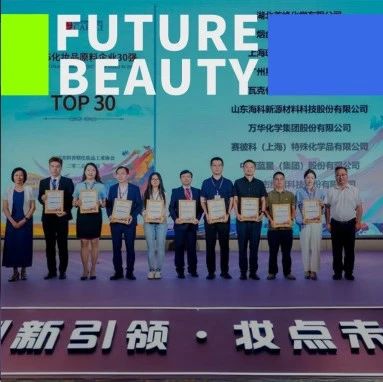
化妆品原料企业30强揭晓,背后的价值逻辑是什么?
FBeauty未来迹· 2025-08-24 13:03
Core Insights - The report released by the China Fragrance and Cosmetic Industry Association highlights the top 30 cosmetic raw material companies for 2024, emphasizing the importance of raw material innovation in the cosmetics industry [2][5][33] Market Overview - The scale of the Chinese cosmetic raw material market is approximately 644.29 billion yuan for 2024, exhibiting high market concentration with the top 5 companies accounting for 23.9% of the total market revenue [7][8] - The revenue of the top 10 companies reaches 240.07 billion yuan, representing 37.26% of the market, while the top 30 companies generate 354.53 billion yuan, which is 55.03% of the total market [8] Competitive Landscape - The average revenue of the top 10 companies is 24.01 billion yuan, while the average revenue for companies ranked 11-30 drops to 5.72 billion yuan, only one-fourth of the top companies [9] - Foreign companies dominate the top market, with foreign firms in the top 30 generating a total revenue of 205.47 billion yuan, accounting for 57.96% of the total revenue of these companies [10] Trends in the Industry - Chinese companies are making breakthroughs in specific segments, with notable examples including Huaxi Biological, Nanjing Kexin, and Guangzhou Tianci, which are leading in their respective fields [13] - High-value active ingredients are becoming the focal point of market competition, as consumers increasingly prioritize the efficacy of cosmetic products [14] - The trend of domestic substitution is becoming irreversible, with Chinese cosmetic raw material companies gradually replacing imported materials [15] Evaluation Methodology - The evaluation system for the market position of cosmetic raw material companies includes three main dimensions: financial performance (50% weight), innovation capability (40% weight), and ESG performance (10% weight) [17][18] - The financial performance metric focuses solely on revenue from cosmetic raw materials, excluding income from other related products [17] - The innovation capability assessment includes R&D investment, patent quantity and quality, and new material development, with a significant emphasis on R&D spending [19][21] Research Process - The research involved extensive data collection from over a hundred companies, ensuring the accuracy and reliability of the results through a four-tier data verification mechanism [29][30] - The initiative aims to promote brand awareness across the entire supply chain, emphasizing the importance of long-term value creation rather than just sales figures [32][33]