供应链脱钩

Search documents
这个重要产业,美国确定对华下手
Sou Hu Cai Jing· 2026-02-13 15:35
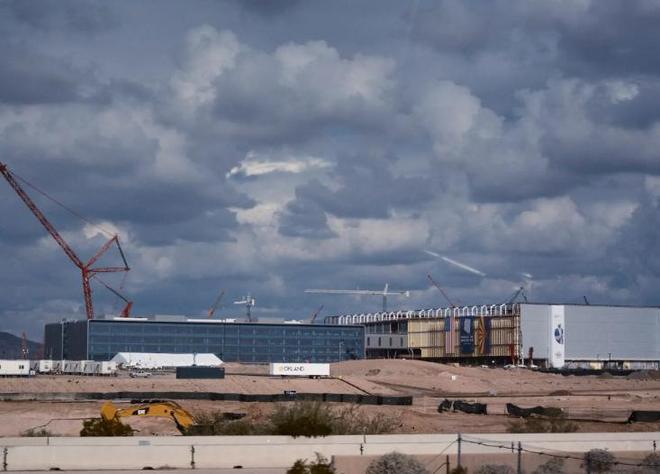
► 文 观察者网 齐倩 声明提到,美国国际贸易委员会(ITC)正在进行"损害认定",预计将于3月就此议题投票。一旦最终确 定,这些关税将影响价值达3.47亿美元(2023年数据)的进口货物。 声明还称,此次双反关税的申诉方是由美国多家活性阳极材料生产商组成的临时请愿联盟。 据《日经亚洲》和加新社消息,联盟成员、美国生产商Novonix首席执行官迈克·奥克朗利对最终决定表 示欢迎。他声称,这代表着"恢复美国市场公平竞争"的关键一步,可以加速美国制造业投资以及增加高 质量就业岗位。他还抹黑中企进行"贸易扭曲"。 该联盟在2024年12月递交申请,要求美国政府调查中国公司,最初希望加税920%。 去年7月,美国商务部初步决定,将对中国石墨加征反倾销税。当时,外交部发言人林剑回应指出,你 提到的具体问题,建议向中方主管部门询问。中美经贸合作的本质是互利共赢,希望美方切实遵守市场 经济规则,维护中美经贸关系健康稳定发展。 当地时间2月11日,美国商务部最终确认,对从中国进口的石墨加征超160%的双反关税,理由是这些关 键电池材料受到所谓"不公平补贴",以及以"低于公平市场价格"在美销售。 据美国商务部下属机构国际贸易管 ...


特朗普下最后通牒,180天内必须击败中国稀土,盟友不帮忙就加税
Sou Hu Cai Jing· 2026-01-17 07:12
Group 1 - The core message of the news is that the Trump administration is taking aggressive steps to reduce U.S. dependence on Chinese rare earth minerals by issuing a 180-day ultimatum for global suppliers to reach agreements with the U.S. or face punitive measures [1][14][18] - The G7 meeting held on January 12 focused on reducing reliance on Chinese rare earths and aimed to create a supply chain alliance based on shared values, inviting countries like India and Mexico to join [5][7] - Despite the enthusiasm at the G7 meeting, no binding agreements were made, and countries like Germany and France expressed concerns about the potential economic impact of reducing dependence on China [9][12] Group 2 - The announcement by Trump is based on the Trade Expansion Act, elevating the issue of critical minerals to a national security concern, and includes strategies for creating alternative supply chains and setting a price floor for rare earths [16][17] - The proposed price floor of $110 per kilogram for rare earths is intended to support U.S. domestic companies but may lead to higher costs for allies, raising political concerns about domestic economic impacts [17][21] - The challenges faced by the U.S. in achieving its goals within the 180-day timeframe include reliance on Chinese processing capabilities and the limited processing capacity of potential partner countries like Australia and Japan [20][21] Group 3 - In contrast to the U.S. approach, China is enhancing its supply chain stability and has implemented a universal licensing system for critical mineral exports starting in 2025, which aims to provide predictability for partners [27][30] - China's comprehensive control over the rare earth supply chain, including processing and manufacturing capabilities, solidifies its dominant position in the global market, making it difficult for the U.S. to find viable alternatives [30][32] - The European response to the U.S. strategy indicates a preference for stable and reliable supply chains over political rhetoric, highlighting the challenges the U.S. faces in persuading allies to decouple from China [33]

华尔街不敢想的结局:中国断链之日,就是美元信誉崩塌之时
Sou Hu Cai Jing· 2026-01-16 05:47
Group 1 - The article discusses the potential consequences for the U.S. economy if China stops supplying goods, emphasizing that American consumers heavily rely on Chinese products for their daily lives [1][3] - It highlights that a sudden halt in Chinese imports could lead to severe price increases and shortages in essential goods, causing a systemic collapse in American consumer markets [3] - The article points out that major U.S. companies like Nvidia, Apple, and Tesla are significantly dependent on the Chinese market for both supply chains and sales, indicating that a disruption could severely impact their operations and stock prices [5] Group 2 - The article notes that by 2025, China's trade surplus with the U.S. will account for only about 2.2% of its GDP, suggesting a diminishing reliance on the U.S. market [7] - It emphasizes that China's economy is increasingly driven by domestic consumption, with over 60% of its economic growth coming from its own consumers, indicating a shift away from dependence on exports [7] - The article concludes that while China may experience some short-term pain from reduced exports to the U.S., it is well-positioned to continue its growth independently, whereas the U.S. could face significant economic challenges [7]



深化新能源汽车全要素出海,筑牢汽车产业全球竞争优势
Di Yi Cai Jing· 2026-01-05 13:17
Core Insights - The Chinese automotive industry is transitioning from a product-centric export model to a comprehensive approach that includes technology, capital, and production capacity as it seeks to compete globally in the context of a green and intelligent automotive transformation [1] Group 1: Export Growth and Challenges - In the first ten months of 2025, China's new energy vehicle exports reached 2.014 million units, marking a year-on-year increase of 90.4% [1] - Despite this growth, the industry faces challenges such as geopolitical tensions, rising trade protectionism, and a rapidly restructuring global supply chain [1] Group 2: Regional Market Dynamics - In Europe, trade protectionism has evolved into comprehensive institutional barriers, with the EU imposing additional tariffs through anti-subsidy investigations and stringent carbon footprint requirements under the New Battery Law and CBAM [2] - In the Americas, the risk of supply chain decoupling has increased due to the U.S. push for de-China-ization, leading to potential exclusion of Chinese suppliers from the North American supply chain [2] - In Southeast Asia, local service ecosystems hinder the upward mobility of Chinese brands, as they struggle with sparse after-sales networks and long parts supply cycles [3] Group 3: Strategic Recommendations - The industry should deepen standard recognition and compliance system construction to gain a proactive voice in global technical standards, including establishing a carbon footprint database covering the entire lifecycle of products [3] - Optimizing global production capacity and supply chain restructuring is essential, with a focus on "chain localization" and "KD dynamic assembly" to meet local compliance requirements and mitigate tariff risks [4] - A multi-faceted ecosystem combining services, finance, and infrastructure should be developed to address local market challenges, such as establishing regional parts centers and promoting integrated energy solutions in areas with weak infrastructure [5] Group 4: Product Strategy - Implementing a differentiated product strategy tailored to specific regional characteristics is crucial, such as focusing on compact cars in Europe and electric pickups in the Americas [6] - The industry should enhance vehicle durability for extreme environments in the Middle East and provide high-reliability solutions for commercial logistics in Africa [6]
全国人大罕见表态:美方已触及大陆底线,若不收手后果自负
Sou Hu Cai Jing· 2025-12-29 04:53
Group 1 - China's National People's Congress Foreign Affairs Committee issued a strong statement to the U.S., indicating a shift from passive defense to active countermeasures in response to external pressures [1][3] - The U.S. has been applying pressure on China through various means, including military sales to Taiwan and the seizure of Chinese vessels, prompting China to formally activate its Anti-Foreign Sanctions Law as a core tool for retaliation [3][4] - The strategic competition between China and the U.S. has entered a new phase, with China adopting systematic and institutionalized countermeasures to ensure compliance with legal procedures [4][8] Group 2 - A U.S. military helicopter forcibly boarded a Chinese oil tanker, highlighting the misuse of judicial power by the U.S. in international waters [6] - China's response to U.S. actions is now characterized by strong legal measures, marking the beginning of a new era of legal countermeasures [8][10] - The cancellation of a 132,000-ton wheat order from U.S. farmers to China signifies a strategic decision to reduce reliance on U.S. agricultural products, despite higher costs from Canadian suppliers [11] Group 3 - The impact of China's countermeasures is felt globally, with U.S. wheat futures dropping 3%, the largest single-day decline in three months, and negative growth in exports to China [12] - U.S. companies, such as synthetic rubber manufacturers, are facing anti-dumping investigations amounting to $780 million, leading to production line shutdown risks [12] - China's countermeasures are targeted, focusing on U.S. political constituencies and industries, indicating that provocations will have domestic political consequences [13] Group 4 - In the technology sector, U.S. bans on DJI drones have backfired, as the company holds a 70% market share globally, complicating the search for alternatives and increasing costs for U.S. emergency services [15] - The semiconductor industry is similarly affected, with U.S. chip manufacturers experiencing a drop in capacity utilization to 20% after losing $15 billion in orders from China [17] - The so-called technology blockade has inadvertently accelerated China's innovation, allowing companies like DJI to strengthen their global leadership [18] Group 5 - China's holdings of U.S. Treasury bonds have fallen to $688.7 billion, the lowest since the 2008 financial crisis, signaling a move away from reliance on U.S. dollar assets [20] - The daily processing volume of China's Cross-Border Interbank Payment System (CIPS) has surpassed 4 trillion yuan, indicating a shift in international trade settlements away from the SWIFT system [20] - The U.S. military aid to Taiwan, while appearing generous, imposes heavy financial burdens on Taiwan, revealing the strategic implications of U.S. support [20]
美国铜期货交易价格屡创新高 机构看好大宗铜趋势走强(附概念股)
Zhi Tong Cai Jing· 2025-12-15 01:31
Group 1 - The article highlights that U.S. copper futures prices are reaching new highs, which may lead to the best annual performance for European copper mining stocks since 2016 [1] - Citigroup analysts favor Glencore Plc as their top stock pick for 2026, expecting a 15% increase in the stock price over the next 12 months due to the company's efforts to boost copper production [1] - Oddo BHF sees Rio Tinto Group as having an attractive development roadmap in its copper business, particularly with the ramp-up of its Simandou project in Guinea, which should help increase iron ore production [1] Group 2 - Oddo mining analyst Maxime Kogge maintains a bullish outlook on mining stocks for next year, but warns that a significant slowdown in the Asian economy could negatively impact market sentiment [2] - Citic Construction's report indicates that gold and silver performed strongly last week, while other risk assets were weaker, suggesting a strong outlook for precious metals in 2025 [2] - The report outlines that the precious metals market in 2025 could be influenced by various factors, including tax changes and global economic concerns, with copper expected to be the next major commodity after gold and silver [2] Group 3 - The article lists several copper mining companies in the Hong Kong stock market, including Luoyang Molybdenum (603993), Zijin Mining (601899), and Jiangxi Copper (600362) [3] - It also mentions companies involved in copper-clad laminates, such as Kintor Group (01888) and Kintor Holdings (00148) [3]
特朗普下手真快:越南、印度、菲律宾都传来消息,对中国十分不利
Sou Hu Cai Jing· 2025-11-05 17:07
Group 1 - Trump targets countries surrounding China with high tariffs to reduce their reliance on Chinese supply chains, impacting Vietnam, India, and the Philippines [2][3][4] - Vietnam's economy, heavily reliant on exports to the U.S. (over 30% of GDP), faces challenges after a 46% tariff was imposed, later negotiated down to 20% with conditions to limit Chinese components [2] - India's situation worsens with a 50% tariff on exports, leading to a 2% increase in manufacturing unemployment and a need to reduce dependence on Chinese imports [3] - The Philippines experiences a tariff increase from 17% to 19%, affecting agricultural exports and leading to delays in goods at ports, with significant investments from China halted [4] Group 2 - Military cooperation between the U.S. and these countries increases, with Vietnam receiving patrol boats and the Philippines establishing a special task force to monitor Chinese activities in the South China Sea [6][8] - The U.S. aims to reduce its dependence on Chinese rare earths, with plans to import from Australia and Canada, potentially undermining China's dominant position in this sector [8] - A trade truce is announced between the U.S. and China in November 2025, leading to a temporary reduction in tariffs, but companies continue to diversify their supply chains to avoid future risks [9]
第一上海美股宏观策略周报:政治周期:美国国内政治转向与全球外交格局变化-20251021
First Shanghai Securities· 2025-10-21 10:30
Political Landscape - The U.S. is undergoing a "rightward shift" politically, reversing trends from the post-Cold War era, with significant ideological debates emerging domestically[3] - The upcoming midterm elections in November 2026 pose a risk for Trump, especially if economic downturns or conflicts arise before then[4] Economic Outlook - Inflation is currently manageable, with the Federal Reserve expected to lower interest rates two more times in 2025, following a recent cut[8] - The U.S. economy shows resilience, with corporate investments increasing as tariff uncertainties diminish, potentially supporting GDP growth over the next three years[9] Trade Relations - The U.S. has reached tariff framework agreements with most countries, with China being a notable exception; a key negotiation window is the APEC summit on October 1, 2025[7] - Recent U.S. sanctions on Chinese companies have escalated trade tensions, with China retaliating by halting soybean purchases from the U.S.[5] Investment Strategies - Investors are advised to diversify portfolios, favoring broad-based ETFs to mitigate risks associated with individual stocks[10] - The recommended asset allocation is 60% in stocks and 40% in bonds, with specific ETFs suggested for exposure to various sectors[10] Sector Analysis - The S&P 500's static P/E ratio is 28, above the historical average of 18, but excluding the M7 tech stocks reveals a more reasonable P/E of 19 for the remaining companies[11] - Financial and healthcare sectors are highlighted as undervalued, with P/E ratios of approximately 17 and 16, respectively, presenting investment opportunities[12] Emerging Trends - The AI sector is poised for significant growth, with major players like OpenAI and Google leading the charge; OpenAI's valuation has surged from under $100 billion to over $500 billion in two years[16] - The demand for gold is expected to rise due to geopolitical tensions, with recommendations for a 10%-20% allocation in investment portfolios[13]




Trump: Without tariffs 'we would have NO DEFENSE' against China
Youtube· 2025-10-16 19:00
Core Points - The article discusses the ongoing trade tensions between the United States and China, highlighting the aggressive stance of both sides and the implications for global supply chains and industries reliant on critical minerals [1][4][5]. Trade Relations - The U.S. is currently engaged in a trade war with China, characterized by high tariffs and accusations of China being a trade aggressor [1][4]. - China's recent threats to impose export controls on critical minerals, essential for U.S. industries, have escalated tensions [3][17]. Supply Chain Concerns - The U.S. is heavily dependent on China for rare earth minerals and pharmaceutical inputs, which poses a significant risk to its economy [8][9]. - There is a call for the U.S. to develop its own capabilities in refining rare earths and to diversify supply chains away from China [20][19]. International Response - A coalition of allied nations, including European countries, Australia, and Canada, is emerging to respond to China's aggressive trade practices [17][18]. - The G7 countries are considering a united front against China's export controls, indicating a shift in international dynamics [17][23]. Strategic Outlook - The article suggests that the U.S. must confront China directly and take proactive measures to reduce dependency on Chinese supply chains [10][12]. - There is a recognition that past environmental policies have contributed to the current reliance on China for critical minerals, and a shift in strategy is necessary [14][15].

果然,台积电也没逃过
Guan Cha Zhe Wang· 2025-09-03 00:03
Core Viewpoint - The U.S. government will revoke TSMC's exemption for shipping critical equipment to its factories in China starting next year, which may weaken TSMC's production capacity and lead to delivery delays [1][3]. Group 1: Impact on TSMC - TSMC announced that it received notification from the U.S. government regarding the revocation of its "Verified End User" (VEU) status for its Nanjing factory, effective December 31, 2025 [1]. - Following the revocation, TSMC will need to apply for export licenses to ship U.S. chip manufacturing tools to its factories in China, which could complicate operations [1][3]. - TSMC is committed to ensuring uninterrupted operations at its Nanjing factory while evaluating the situation and communicating with the U.S. government [1]. Group 2: Broader Industry Implications - The policy change poses risks to the operations of semiconductor giants in China, with potential delays in delivery due to uncertainties surrounding the speed of license approvals [3]. - TSMC's U.S.-listed American Depositary Receipts (ADRs) fell by up to 2.3% following the announcement, indicating market concern [3]. - Major suppliers to TSMC, including Applied Materials, ASML, Tokyo Electron, and KLA, also experienced stock price declines, reflecting broader market impacts from the export restrictions [3]. Group 3: U.S. Export Control Context - The U.S. government previously banned the sale of advanced process chips and manufacturing equipment to China, with exemptions granted to South Korean companies Samsung and SK Hynix, which are now also facing revoked exemptions [4]. - The U.S. Commerce Department plans to issue licenses to allow companies to continue operating existing facilities in China but will not permit capacity expansion or technology upgrades [4]. - The U.S. government's actions are seen as detrimental to the global semiconductor supply chain, with China expressing strong opposition and warning of necessary measures to protect its companies [4]. Group 4: Challenges in U.S. Export Licensing - The U.S. is facing a significant backlog of license requests, with thousands of applications from U.S. companies for global exports, including to China, currently stalled [5]. - Industry leaders are concerned that prolonged delays in license approvals will result in lost market share to competitors, as Chinese clients seek alternative suppliers [5]. - The lack of progress in the licensing process is causing frustration within the industry, with no clear timeline for when licenses will be issued [5].