实用的货币主义

Search documents
贝森特表态,事关美联储缩表→
Jin Rong Shi Bao· 2026-02-11 13:09
Core Viewpoint - The U.S. Treasury Secretary, Becerra, stated that even if Kevin Warsh becomes the Federal Reserve Chairman, the Fed will not rush to reduce its balance sheet, with decisions expected to take up to a year to finalize [1] Group 1: Federal Reserve's Balance Sheet Management - The adjustment of the balance sheet will be decided independently by the Federal Reserve, and if it shifts to a "sufficient reserves" policy, a large balance sheet will need to be maintained [1] - Warsh's nomination is seen as a significant shift in monetary policy direction, aiming to balance the Fed's independence with administrative pressure [1] - Warsh's policy is characterized as a moderate hawkish stance, advocating for a substantial reduction in the balance sheet to create space for lowering the federal funds rate [2] Group 2: Market Reactions and Concerns - The market perceives Warsh's "balance sheet reduction and rate cut" policy as bold but fraught with uncertainties, potentially leading to a sharp rise in overnight financing rates if the Fed aggressively reduces reserves [2] - Experts warn that reducing the balance sheet could raise long-term rates, directly impacting the goal of lowering rates [2] - Citi strategists believe Warsh may adopt a gradual approach to reduce the Fed's approximately $6.6 trillion balance sheet to avoid reigniting tensions in the money market [3] Group 3: Policy Implementation Strategies - Citi suggests that the threshold for restarting quantitative tightening (QT) is very high, with policymakers preferring a more moderate approach to balance sheet management [3] - Under Warsh's leadership, the Fed may have various "de-leveraging" options, with the least resistance path being the rolling over of maturing long-term Treasury bonds into short-term debt [3]
特朗普提名沃什担任下一任美联储主席,黄金价格为何应声下跌?
Sou Hu Cai Jing· 2026-02-04 05:13
Core Viewpoint - The nomination of Waller as the new Federal Reserve Chairman by President Trump has led to a significant drop in precious metal prices, indicating the market's reaction to potential changes in monetary policy [1][8]. Group 1: Nomination Process - Trump officially announced the nomination of Waller on January 30, to succeed Powell, whose term ends in May [1]. - Prior to Waller, several candidates were considered, including Hassett, who was initially favored but lost ground after Trump's meeting with Waller on December 11 [2]. - Following the meeting with Waller, Trump expressed that Waller was the best candidate for the Federal Reserve Chairman position [2]. Group 2: Candidate Background - Waller, aged 55, has a notable family background, being related to Ronald Lauder, a significant donor to the Republican Party and a long-time friend of Trump [4]. - Waller's academic credentials include a bachelor's degree from Stanford and a law degree from Harvard, with a career spanning government, business, and academia [4][5]. - He previously served as a special assistant for economic policy under President George W. Bush and became the youngest Federal Reserve Governor at age 35 [4]. Group 3: Policy Stance - Waller is viewed as a hawkish figure, advocating for both balance sheet reduction and interest rate cuts, arguing that the Federal Reserve must take responsibility for inflation [7]. - His approach contrasts with Hassett's more aggressive stance on rate cuts, which raised concerns about the independence of the Federal Reserve [7]. - Waller's nomination is seen as a potential compromise between Wall Street interests and Trump's economic policies, as he supports rate cuts while also advocating for reducing the Fed's balance sheet to control inflation [7]. Group 4: Market Reaction - Following Waller's nomination, the U.S. dollar strengthened significantly, while gold prices experienced a notable decline [8].

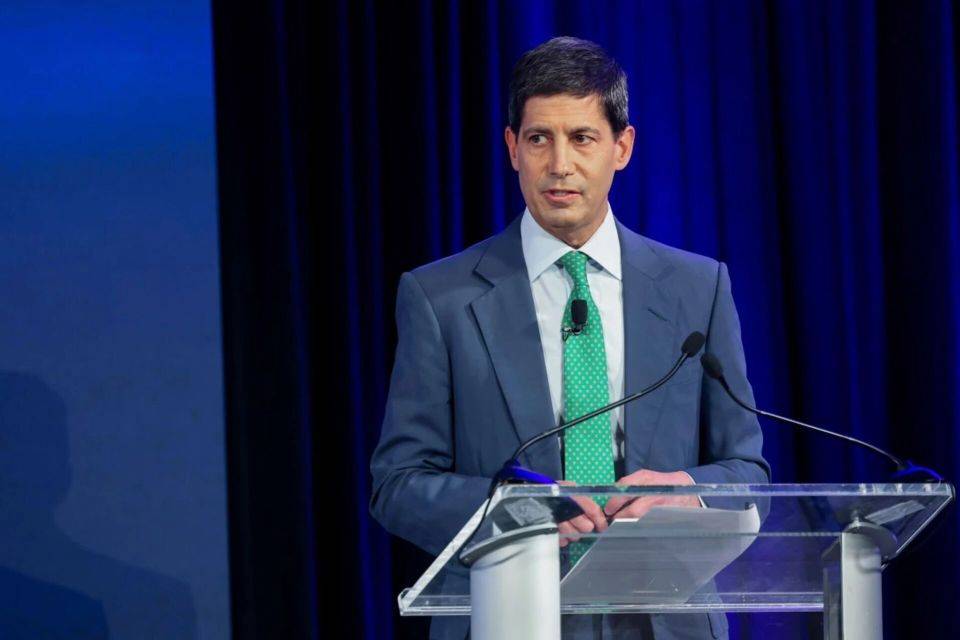
特朗普的“完美人选”颠覆美联储?解码凯文·沃什的“新政构想”:左手放水右手抽水,要靠AI驯服通胀,拒做美债“大买家”
Mei Ri Jing Ji Xin Wen· 2026-02-03 11:15
Core Viewpoint - The unexpected nomination of Kevin Warsh as the new Chairman of the Federal Reserve by President Trump has triggered significant reactions in global financial markets, leading to a sharp decline in gold prices and a rise in the US dollar index [2][10][3]. Policy Dimension - Warsh is recognized as a critic of excessive quantitative easing (QE) and has long advocated for the reduction of the Federal Reserve's large balance sheet [5][12]. - His policy stance includes a combination of interest rate cuts and balance sheet reduction, which is seen as contradictory but is justified by his belief in the need to shrink the Fed's balance sheet while managing liquidity [11][12]. - Historically, Warsh has held a hawkish stance focused on combating inflation, but he has shown flexibility in his approach since Trump's presidency, aligning more with the administration's desire for lower interest rates [7][12]. Market Reaction - Following the announcement of Warsh's nomination, COMEX gold futures experienced an 8.35% drop, marking the largest single-day decline in nearly 40 years, while the US dollar index rose by 1.5% [10][2]. - The market is recalibrating expectations regarding liquidity and interest rates, reflecting concerns about the potential impact of Warsh's policies on the financial environment [10][31]. Economic Implications - Warsh's belief in the role of artificial intelligence (AI) as a deflationary force suggests that he anticipates a long-term reduction in inflation, which could support his low-interest rate policies [12][13]. - The potential shift in the Federal Reserve's role as a major buyer of US Treasury bonds could lead to significant changes in global liquidity dynamics, particularly if Warsh implements his proposed balance sheet reduction [14][19]. Challenges Ahead - Warsh faces significant internal resistance within the Federal Reserve, as the Federal Open Market Committee (FOMC) may not align with his proposed policies, particularly regarding the balance sheet [20][24]. - The historical context indicates that simultaneous interest rate cuts and balance sheet reduction have rarely been achieved, posing a challenge for Warsh's policy framework [17][19]. Divergent Views - Analysts are divided on Warsh's potential stance as Fed Chair, with some predicting a dovish approach focused on interest rate cuts, while others maintain he will retain a hawkish perspective [25][26]. - The balance between maintaining Fed independence and responding to political pressures from the Trump administration will be crucial in shaping Warsh's tenure [27][34].
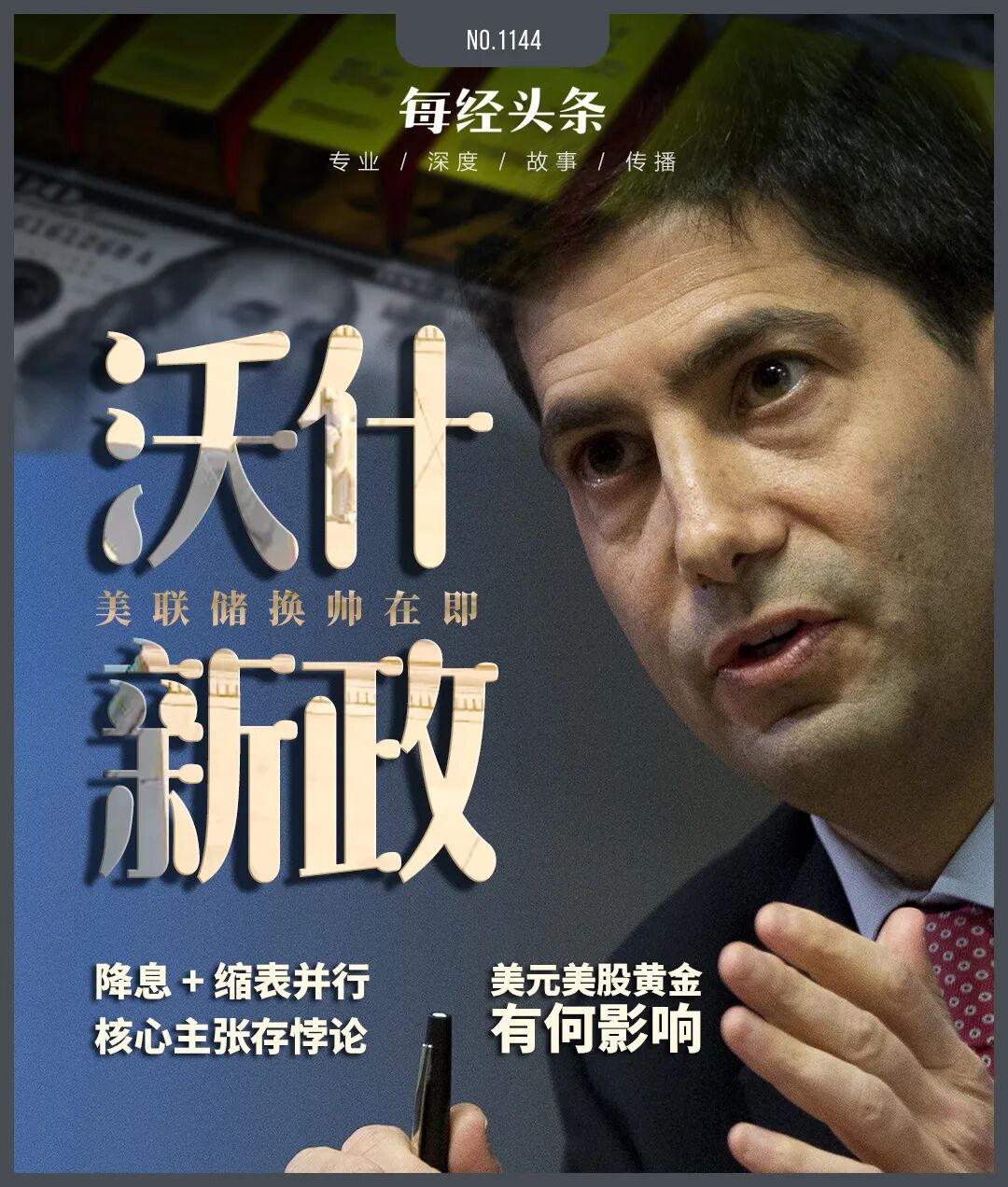
特朗普提名沃什后,黄金为何“史诗级巨震”? | 新京报专栏
Sou Hu Cai Jing· 2026-02-02 15:19
Core Viewpoint - The market's concern regarding the Federal Reserve has shifted from whether interest rates will be cut to whether it has the authority to decide on rate cuts [1][11]. Group 1: Kevin Walsh's Nomination - Kevin Walsh has been nominated by President Trump to replace Jerome Powell as the next Federal Reserve Chair, pending Senate approval [3]. - Walsh has a diverse background in finance, government, and academia, having previously served as a Federal Reserve Governor and played a key role during the 2008 financial crisis [5][8]. - Trump's choice of Walsh is seen as a correction of his previous decision to appoint Powell, reflecting a desire for loyalty and alignment with Trump's economic policies [5][7]. Group 2: Market Reactions - Following Walsh's nomination, there was significant volatility in gold and silver prices, with silver dropping over 10% and gold falling below $4600 [3][10]. - The market's reaction is attributed to broader uncertainties rather than solely Walsh's nomination, indicating a shift from liquidity-driven asset prices to a focus on fundamental factors [10][11]. Group 3: Walsh's Policy Stance - Walsh is viewed as a balanced choice, capable of implementing Trump's low-interest rate agenda while maintaining some independence for the Federal Reserve [8]. - He has previously criticized the Fed's large balance sheet and advocated for a return to market discipline, which aligns with a more pragmatic monetary policy approach [8][10].
特朗普提名沃什后,黄金为何“史诗级巨震”?
Xin Jing Bao· 2026-02-02 14:35
Group 1 - The core viewpoint of the articles revolves around the nomination of Kevin Warsh as the next Chairman of the Federal Reserve by President Trump, which has led to significant market volatility, particularly in gold and silver prices [1][6] - Warsh's extensive background in finance, government, and academia positions him as a well-qualified candidate, having previously served as a Federal Reserve Governor and played a crucial role during the 2008 financial crisis [2][4] - Trump's choice of Warsh is seen as a correction of his previous decision to appoint Powell, reflecting a desire for loyalty and alignment with Trump's economic policies [2][3] Group 2 - Warsh's family connections, particularly through his father-in-law Ronald Lauder, a significant political supporter of Trump, enhance his perceived loyalty and trustworthiness [3] - Warsh's previous hawkish stance on monetary policy has shifted to align more closely with Trump's calls for lower interest rates, indicating a flexible approach that Trump values [3][4] - The proposed strategy of "rate cuts + balance sheet reduction" by Warsh aims to satisfy Trump's demands while maintaining vigilance against inflation, thus balancing political loyalty with market trust [4][5] Group 3 - The market's reaction to Warsh's nomination has been influenced by broader global uncertainties rather than solely his individual policy stance, indicating a shift from liquidity-driven to fundamentals-driven market dynamics [6][7] - Concerns about the independence of the Federal Reserve and its ability to make autonomous decisions on interest rates have intensified, reflecting a significant challenge for Warsh moving forward [7]
特朗普提名沃什后,黄金为何“史诗级巨震”?|新京报专栏
Sou Hu Cai Jing· 2026-02-02 14:33
Core Viewpoint - The nomination of Kevin Warsh as the next Federal Reserve Chairman by President Trump has led to significant market volatility, particularly in gold and silver prices, which experienced sharp declines following the announcement [2][7]. Group 1: Kevin Warsh's Background and Qualifications - Kevin Warsh is not a newcomer; he has extensive experience across finance, government, and academia, having served as a Federal Reserve Governor at a young age and played a crucial role during the 2008 financial crisis [3][4]. - His connections to Trump, including a long-standing family relationship with Trump's political supporter, enhance his perceived loyalty and suitability for the role [4]. - Warsh's previous consideration for the Fed Chair position during Trump's first term indicates a long-standing interest from Trump in his candidacy [3]. Group 2: Policy Stance and Market Implications - Warsh is known for his hawkish stance on inflation and has recently shifted to support Trump's calls for interest rate cuts, making him a more aligned candidate with the current administration [5][6]. - His proposed strategy of combining interest rate cuts with a reduction of the Fed's balance sheet aims to satisfy both Trump's demands and maintain market confidence in the Fed's independence [5][6]. - The market's reaction to Warsh's nomination reflects broader concerns about the Fed's independence and the potential for political influence over monetary policy, which could lead to increased volatility in asset prices [7][8].
长城基金汪立:外部扰动起,关注节前低点布局机会
Xin Lang Cai Jing· 2026-02-02 09:41
Group 1: Market Overview - The A-share market exhibited a structural differentiation pattern last week, with cyclical and financial sectors leading gains while military and power equipment sectors declined [1][7] - Industries such as petroleum, coal, and non-ferrous metals continued to rise on a month-on-month basis, while military, power equipment, automotive, and computer sectors experienced significant declines [1][7] Group 2: Macroeconomic Analysis - In January, the manufacturing PMI in China fell to 49.3%, a decrease of 0.8 percentage points from the previous month, indicating a seasonal decline and below the average level for recent years [2][8] - The price index showed a notable rebound due to rising commodity prices, while the service sector remained stable and the construction industry required policy support [2][8] - The U.S. Federal Reserve's recent decision to pause interest rate cuts aligns with market expectations, but the appointment of Kevin Walsh as the new Fed Chair may introduce uncertainties into monetary policy [3][9] Group 3: Investment Strategy - The current phase of A-share earnings disclosures is expected to reveal a shift towards new economic growth, with a notable rise in the new economy's growth center, particularly in AI and overseas expansion [4][10] - The market is anticipated to stabilize, with a focus on leading companies in specific sectors and the A500 index, as regulatory measures have suppressed short-term speculative trading [4][10] - External disturbances may lead to corrections in previously popular sectors, creating potential opportunities for policy support in heavily pressured indices like the CSI 300 [4][10] Group 4: Investment Directions - Emerging technology remains a primary focus, with value stocks also showing potential; attention should be given to leading companies and the A500 index [5][11] - In the technology growth sector, global demand for AI computing power is driving rapid growth in semiconductor equipment demand, leading to price increases across the entire supply chain [5][11] - In the cyclical sector, low valuations and improving economic conditions suggest opportunities in food, retail, tourism services, and commodities like oil and non-ferrous metals [5][11]
长城宏观:外部扰动起,关注低点布局机会
Sou Hu Cai Jing· 2026-02-02 07:47
Group 1: Market Overview - The A-share market exhibited a structural divergence last week, with cyclical and financial sectors leading gains, while military and power equipment sectors declined [1] - In the industry, oil and petrochemicals, coal, and non-ferrous metals continued to rise month-on-month, while communications showed improvement; military, power equipment, automotive, and computer sectors experienced significant declines [1] Group 2: Macroeconomic Analysis - The manufacturing PMI for January 2026 fell to 49.3%, a decrease of 0.8 percentage points from the previous month, indicating a weaker performance than the average for the same period in recent years [2] - The price index showed a notable rebound due to rising commodity prices, while the service sector remained stable, and the construction industry required policy support for continued activity [2] - The U.S. Federal Reserve's recent decision to maintain interest rates aligns with market expectations, but the change in leadership may introduce uncertainty into monetary policy [3] Group 3: Investment Strategy - The current period is marked by a concentration of earnings disclosures for A-share companies, with signs of economic transformation accelerating in Q4 2025 [4] - New economic growth is expanding beyond AI to include overseas markets, resource products, and service consumption, indicating a shift in economic dynamics [4] - The market is expected to stabilize, with a focus on leading companies in niche sectors and the A500 index, as regulatory measures have dampened short-term speculative sentiment [4] Group 4: Investment Directions - Emerging technology remains a primary focus, with significant demand for global AI computing power driving rapid growth in semiconductor equipment and price increases across the industry [5] - Attention should be given to sectors benefiting from domestic demand policies, including food, retail, tourism services, and cyclical commodities like oil and chemicals [5]
国泰海通晨报-20260202
GUOTAI HAITONG SECURITIES· 2026-02-02 05:20
Macro Research - The core idea of Walsh's "pragmatic monetarism" indicates the Federal Reserve's commitment to controlling inflation while satisfying Trump's interest rate cut demands, aiming to correct market distortions caused by excessive QE and achieve convergence in a "K"-shaped economy [4][26][27] Strategy Research - The downward shift in the risk-free interest rate may accelerate the transformation of residents' asset allocation from "pure fixed income" to "fixed income+", with the stock-bond constant ratio index expected to become a significant benchmark for "fixed income+" products, particularly based on the A500 index, which offers a high risk-return ratio and tactical allocation value [4][32][33] New Stock Research - In Q4 2025, the first-day increase of new stocks reached 176%, with unprofitable new stocks significantly contributing to A1 accounts. The median return for new stock funds was 0.45%, with the most heavily weighted industries being electronics, non-ferrous metals, and power equipment [4][8][11][12]
国泰海通 · 晨报260202|宏观、策略、新股研究
国泰海通证券研究· 2026-02-01 14:04
Group 1: Macro Policy Insights - The core policy proposition of Walsh is "rate cuts + balance sheet reduction," emphasizing the need for the Federal Reserve to take responsibility for inflation, attributing it to prolonged quantitative easing (QE) post-crisis, and advocating for quantitative tightening (QT) to control inflation [6] - Walsh criticizes the Federal Reserve's large balance sheet, arguing that QE distorts market incentives and leads to a decline in banks' willingness to lend to the real economy, thus promoting a transition from a "sufficient reserves" mechanism to a "scarce reserves" mechanism [6] - The policy approach aims to balance the independence of the Federal Reserve with the administration's desire for rate cuts, reflecting a commitment to controlling inflation while addressing the administration's economic goals [6] Group 2: Economic Implications - QT is viewed as "responsible balance sheet management," correcting the idea of unlimited support for demand, while rate cuts are intended to enhance supply capacity from an industrial policy perspective [6] - The implementation of QT has shown effectiveness in controlling inflation, as evidenced by the Consumer Price Index (CPI) dropping from 9% to around 3% following the announcement of passive balance sheet reduction in 2022 [6] - However, the use of QT has limitations, as recent liquidity tensions in the repurchase market have led to a halt in QT, necessitating the initiation of Reserve Management Purchases (RMP) [6] Group 3: Market Dynamics - The transition to a "scarce reserves" mechanism is expected to be challenging, with liquidity issues remaining a constraint on QT implementation until bank reserves return to a relatively sufficient level [6] - Policies aimed at revitalizing manufacturing and the real estate sector under the Trump administration require credit expansion from banks, which is dependent on adequate reserve levels [6] - The shift in policy focus from Wall Street to Main Street is seen as beneficial for addressing the "K"-shaped economic divergence in the U.S., but balancing the conflicts between the upper end (stock market) and lower end (inflation) remains a challenge for Walsh [6]