消费陷阱

Search documents
“免费休息室”真相揭秘:是天堂还是消费陷阱?
Sou Hu Cai Jing· 2026-02-12 07:55
从消费者的角度来看,这种怀疑并非毫无道理。如今,消费市场鱼龙混杂,各种套路层出不穷。据相关 数据显示,有超过六成的消费者在过去一年中遭遇过消费陷阱,这让大家不得不对免费的东西保持高度 警惕。曾经就有新闻报道,一些所谓的免费休息室内,打着免费的幌子,实则诱导消费者购买高价的茶 水、保健品等。消费者在放松警惕的情况下,很容易就掉进了商家设置的隐形消费陷阱。就像一位网友 分享的经历,他在机场看到有免费休息室,想着进去休息一下。结果进去后,工作人员不断推荐各种付 费的服务,让他原本轻松的休息时光变得十分闹心。 在生活中,我们常常会遇到一些看似"天上掉馅饼"的好事,免费休息室就是其中之一。当听到"免费休 息室"这个词时,很多人的第一反应可能就像这句"免费休息室?肯定有隐形消费!"一样,充满了怀疑 和警惕。 ...
春节临近,“抢票神器”背后暗藏消费陷阱
Jing Ji Guan Cha Wang· 2026-02-04 05:42
又是一年春运时,花样迭出的"抢票软件""加速包""VIP通道"瞄准了旅客的钱包。 春节日渐临近,旅客购买火车票又开启"拼手速模式",一些"抢票神器""代抢服务"在互联网平台上也活跃起来。"极速加速包""VIP专属通道""专人一对一抢 票"……"高超"的技术手段、"贴心"的对口服务、"更高成功率"的宣传承诺,诱惑着人们花钱购买。 然而,市场监管部门近日查办的全国首例平台虚假抢票典型案例显示,这些所谓"抢票神器"并无"优先""加速"作用,其行为构成误导,已被处以罚款。消费 者花钱购买的"加速包"等服务实为陷阱,不仅可能白花钱、耽误行程,还存在信息泄露风险。 不法平台诈骗套路多 一是编造"双通道抢票"话术,宣称同时进行"余票监控"与"候补购票"以提高成功率。实际上,铁路12306平台规则明确,存在候补订单时会优先满足候补, 抢票平台不过是利用旅客账号在12306提交候补订单。 二是制造"加速包"高成功率假象。平台声称购买后抢票更快、成功率更高,但火车票售罄后已无票可抢,其提交订单后即不再实施抢票行为。 三是将免费候补包装成"付费特权"。平台以"更快抢到票"等宣传诱导消费者付费,而这些功能在12306平台均为免费的候 ...


春节变美别踩坑!警惕过年“三件套”套路→
Xin Lang Cai Jing· 2026-02-02 09:46
临近春节,焕新造型成为不少消费者的刚需,美发、美甲、美睫等美容服务迎来消费高峰。然而,这份 美丽需求背后却暗藏诸多消费陷阱,预付费跑路、效果与承诺不符、隐性消费等纠纷频发,让不少消费 者的"变美之旅"变成"闹心之旅"。 其中消费者与商家的纠纷主要体现在以下几种情况:一是预付式消费纠纷 【下载黑猫投诉客户端】, 商家以低折扣、充值返现等套路诱导消费者办卡后,可能短期内闭店跑路且拒绝退费;二是服务效果与 宣传不符,消费者提前约定的造型、款式与实际完成效果差异显著,商家却以个人肤质或发质问题拒绝 整改或退款;三是价格不透明,宣传时标注低价基础款,实际消费时却以底胶另算、款式升级、甲片加 价等名义叠加隐性费用;四是产品有卫生隐患,部分商家使用成分不明的美甲胶、睫毛胶,或者工具未 按规定一客一消毒,可能引发皮肤过敏、眼部不适等健康问题。 江苏省消保委认为 商家需坚守诚信底线,违法违规行为应被依法追责。美发、美甲、美睫行业的各类消费陷阱,损害了消 费者的知情权、选择权、公平交易权,违反了《民法典》《消费者权益保护法》等相关法律法规。 转自:江苏省消保委 对消费者: 针对预付式消费纠纷: 商家以低折扣、充值返现等方式吸引消 ...
1500一克的黄金,正在“劝退”中国式婚姻
Xin Lang Cai Jing· 2026-01-28 05:23
Group 1 - The core argument of the article highlights the significant increase in gold prices, which have risen from approximately 600 yuan per gram in 2023 to 1500 yuan per gram in 2026, representing a 2.5 times increase [24][25][26] - The surge in gold prices has also affected silver, which has seen a price increase of over 170%, transforming it from a less desirable asset to one that is nearly on par with gold in terms of price [24][26] - The article discusses the impact of rising gold prices on young couples preparing for marriage, who are now facing financial pressures due to traditional customs that require significant expenditures on gold jewelry [28][31] Group 2 - The article emphasizes that the current financial environment and rising gold prices are not merely market phenomena but are deeply intertwined with global economic instability and traditional cultural expectations [28][29] - It points out that the increase in gold prices is supported by central banks, particularly the Chinese central bank, which has been accumulating gold for 14 consecutive months, indicating a long-term strategic shift in reserves [30][31] - The article critiques the outdated customs surrounding marriage that require substantial financial commitments, suggesting that these traditions are misaligned with the current economic realities faced by young couples [32][38] Group 3 - The article notes that many young couples lack financial literacy regarding gold pricing and investment, making them vulnerable to being misled by sales tactics in jewelry stores [33][34] - It highlights the psychological burden on couples who feel pressured to conform to traditional expectations, leading to financial strain and potential debt before even entering marriage [27][39] - The article calls for a reevaluation of traditional marriage customs in light of modern economic challenges, suggesting that the financial burden of gold should not overshadow the essence of marriage [40][41][42]

中产家庭真正的消费陷阱
首席商业评论· 2026-01-13 04:15
Core Viewpoint - The article discusses the phenomenon of "relative status anxiety" among the middle class in East Asia, where individuals fear falling behind others despite their own progress. This anxiety drives them to make high-risk investments in education and real estate, often under the guise of rational long-term planning, but ultimately leads to a collective self-deception about the uncertainties involved in these decisions [5][6]. Group 1: Consumption and Investment - The line between consumption and investment is becoming increasingly blurred, with individuals paying for "potentially better futures" rather than tangible experiences or products. This new form of consumption is exemplified by the real estate market, where high leverage home purchases are seen as a secure path to upward mobility [7]. - In 2019, housing assets accounted for 59.1% of total assets for urban households in China, significantly higher than the international average of 30%-40%. In major cities, the premium for school district properties can reach 30%-50% [7]. - The shadow education market is projected to exceed 800 billion RMB in 2024, despite recent policy changes aimed at reducing educational burdens. Parents continue to invest heavily in extracurricular education [7][8]. Group 2: Education Investment Paradox - The paradox of educational investment is highlighted by the fact that as more individuals pursue higher education, the signaling function of education diminishes, leading to a "zero-sum game" in social status [8]. - Families are paying significant premiums for school district properties and investing heavily in tutoring, not necessarily for absolute skill enhancement, but to maintain relative standing. This maintenance cost is rising exponentially [8][9]. - The opportunity costs of excessive investment in education can detract from family quality of life and children's holistic development, as not every child is suited for an elite educational path [9]. Group 3: Self-Improvement Economy - The rise of the "self-improvement economy" reflects a market response to the middle class's fear of losing control, offering products that promise personal and professional advancement [10]. - Despite a decline in MBA enrollment over the past three years, tuition fees continue to rise, with top programs costing between 360,000 to 450,000 RMB. Many individuals hope to leverage these degrees for career advancement, overlooking the inherent risks during economic downturns [10][11]. - The narrative around "light asset entrepreneurship" promotes the idea that individuals can easily capitalize on AI and digital platforms, yet the reality shows that only a small fraction of content creators earn substantial income [11]. Group 4: Complexity of Life Choices - The characteristics of middle-class investment illusions include long return cycles, high uncertainty, and the oversimplification of complex social competition into purchasable solutions [12]. - The article emphasizes that there is no "optimal solution" to life's complexities, and those who claim to offer one are often selling cognitive shortcuts that mislead consumers [12][13]. - Acknowledging the uncertainties of the world and preparing for them may be the most valuable investment for middle-class families, which includes maintaining cash reserves and avoiding excessive debt [13].

中产家庭真正的消费陷阱
虎嗅APP· 2026-01-12 13:34
Core Viewpoint - The article discusses the phenomenon of "anxiety of falling behind" among the middle class in East Asia, highlighting how this anxiety drives irrational consumption and investment behaviors, often under the guise of self-improvement and future investment [4][5][6]. Group 1: High-Risk Future Investments - The line between consumption and investment is becoming increasingly blurred, with people paying for "potentially better futures" rather than tangible experiences or products [8]. - Real estate is a prime example, where high leverage home purchases are seen as a secure path to social mobility, with urban households' housing assets constituting 59.1% of total assets, significantly higher than the international average of 30%-40% [8]. - The premium for school district housing can reach 30%-50% in major cities, and families spend 15%-20% of their total expenditures on K12 education, indicating a strong commitment to educational investments [8][9]. - The shadow education market is projected to exceed 800 billion RMB in 2024, despite regulatory changes, reflecting ongoing parental investment in extracurricular education [8]. Group 2: The Paradox of Educational Investment - The inflation of education's signaling function leads to a zero-sum game in social status, where families invest heavily in education not for absolute improvement but to maintain relative standing [9][10]. - Families face increasing costs to maintain their relative positions, with those who invested heavily before policy changes experiencing asset depreciation [11]. - The opportunity costs of excessive investment in education can detract from family quality of life and children's holistic development [11]. Group 3: The Self-Improvement Economy - The rise of the "self-improvement economy" capitalizes on the middle class's fear of losing control, offering products that promise personal and professional advancement [13][14]. - Despite a decline in MBA enrollment, tuition fees continue to rise, with top programs costing between 360,000 to 450,000 RMB, leading many to overlook the inherent risks of such investments [14]. - The narrative around "light asset entrepreneurship" promotes the idea that anyone can succeed in the AI era, yet data shows that only 1.17% of content creators earn over 5,000 RMB monthly, with many abandoning their efforts [15][16]. Group 4: Complexity of Life Choices - Middle-class investment behaviors often exhibit characteristics such as long return cycles, high uncertainty, and the need for continuous investment [19]. - The commodification of solutions to complex life challenges leads to oversimplified decision-making, where families invest in real estate and education to mitigate fears of social decline [19][20]. - There is no "optimal solution" to life's complexities; instead, choices are often constrained by specific circumstances, as highlighted by the recent Nobel Prize in Economic Sciences awarded to Claudia Goldin for her work on labor market gender differences [20]. Group 5: The True Dilemma of the Middle Class - The middle class's real challenge lies not in excessive consumption but in misallocating resources that could enhance self-awareness and family relationships towards uncontrollable external investments [22]. - The most valuable investment for the middle class may be acknowledging the world's uncertainties and preparing accordingly, which requires discipline and courage [24][25].

过年变美“三件套”消费高峰将至,江苏省消保委提醒别踩坑
Xin Lang Cai Jing· 2026-01-11 11:01
Core Viewpoint - The beauty service industry in Jiangsu Province is experiencing a consumption peak as the New Year approaches, prompting the Jiangsu Consumer Protection Committee to warn consumers about potential scams and encourage rational spending and verification of service providers' qualifications [1][7]. Group 1: Consumer Issues - Consumers' "beautification journey" has turned into a "troublesome journey," with disputes arising mainly from four situations: prepaid consumption disputes, service results not matching promotions, price transparency issues, and health hazards from products used [3][4]. - Prepaid consumption disputes occur when businesses lure consumers with discounts and cashback offers, only to close down shortly after and refuse refunds [3][5]. - Service results often differ significantly from what was promised, with businesses blaming individual skin or hair conditions for not rectifying or refunding the service [3][5]. - Price transparency issues arise when businesses advertise low base prices but add hidden fees during the service, violating consumer rights [5][6]. Group 2: Health and Safety Concerns - There are health risks associated with beauty services, as some businesses use unverified products and do not follow proper sanitation protocols, which can lead to skin allergies and other health issues [4][6]. - The beauty service providers have a responsibility to use qualified products and adhere to hygiene standards to protect consumers' health [6]. Group 3: Recommendations for Consumers and Businesses - The Jiangsu Consumer Protection Committee advises consumers to be rational when prepaying for services, favoring small, short-term prepaid cards over large, impulsive payments [7]. - Consumers should confirm service details in writing before proceeding and choose businesses with complete licenses and compliance with health regulations [7]. - Businesses are urged to operate with integrity, avoid false advertising, and clearly communicate service prices and standards to prevent disputes [7].

“啄木鸟消费投诉”【2025年度消费避坑图鉴】发布 九大消费陷阱全景透视
Sou Hu Cai Jing· 2025-12-24 02:23
Core Insights - The China Consumer Association reported over 530,000 consumer complaints in the third quarter, marking a year-on-year increase of 7.9% [1] - The highest proportion of complaints was related to after-sales service, accounting for 29.4% of total complaints [1] - There was an increase in complaints regarding false advertising, safety, and contract issues [1] Complaint Categories - The top five categories of complaints included life and social services, internet services, education and training, cultural and entertainment services, and sales services [1] - The data from the Zhuomuqin consumer complaint platform aligns closely with the trends reported by the China Consumer Association [1] Future Focus - Zhuomuqin's "2025 Consumer Pitfall Guide" will focus on core consumer rights issues such as after-sales service, contracts, and quality, revealing nine major consumer complaint scenarios for the year [1] - The platform plans to delve deeper into specific sectors such as automotive, insurance, and online shopping to help consumers identify pitfalls and effectively protect their rights [1]
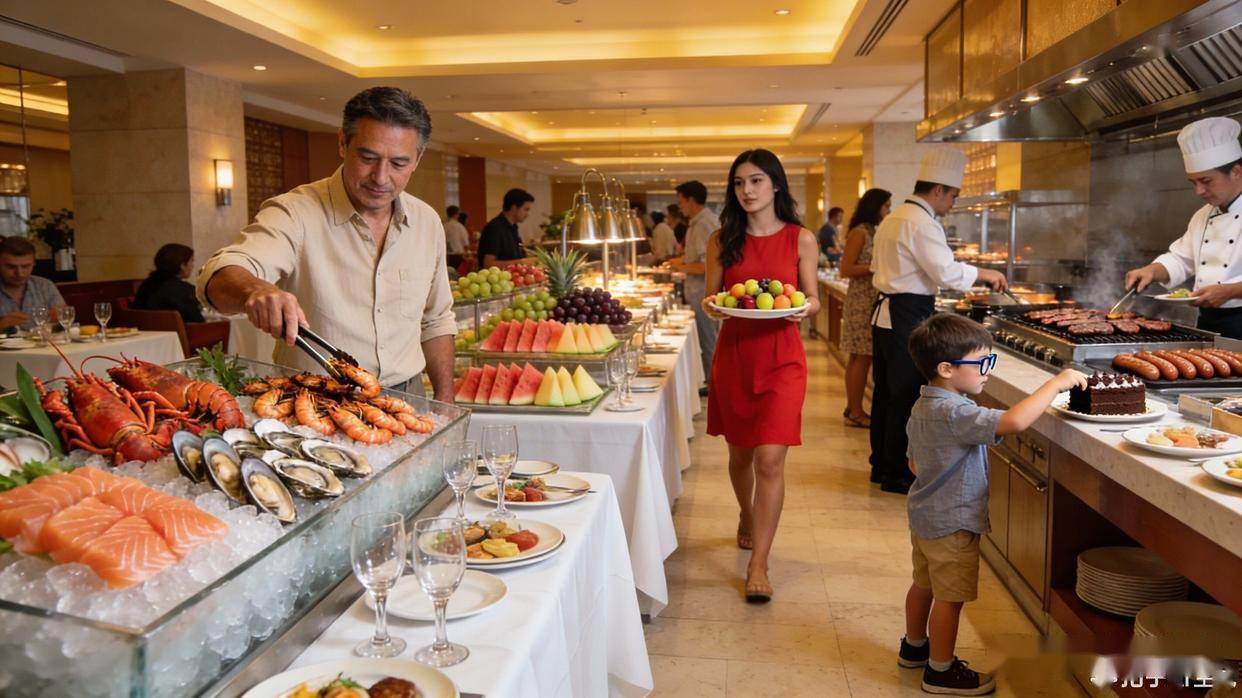
自助餐老板哭了!揭秘3个你吃垮不了的暴利真相,第2个扎心了
Sou Hu Cai Jing· 2025-12-22 15:45
Core Insights - The article reveals the hidden profit mechanisms of buffet restaurants, highlighting how they exploit consumer behavior to maximize earnings while minimizing costs. Group 1: Buffet Pricing and Cost Structure - Buffet pricing appears high, but food costs only account for 35%-40% of the total price, meaning customers often consume less value than they perceive [3] - Customers tend to overestimate their consumption capacity, leading to waste, as they fill up on appetizers before reaching more expensive items [3][6] Group 2: Food Quality and Safety - The quality of food served in buffets is often lower than expected; for example, salmon may be made from trimmings, and shrimp is typically frozen [4] - While the food meets safety standards, it may lack in taste and nutritional value, leading to discomfort after meals [4][6] Group 3: Business Strategies and Profit Maximization - Buffet restaurants leverage social media for marketing, using low introductory prices to attract large crowds and achieve high table turnover rates, which can exceed 300 customers per day [6] - Additional revenue is generated through strategies like time limits and upselling, which encourage customers to spend more [7] Group 4: Consumer Tips for Buffets - To maximize value, consumers are advised to arrive hungry, prioritize high-cost items like seafood, and take smaller portions to avoid waste [7][8] - Choosing reputable restaurants can ensure better food quality and safety, despite potentially higher costs [8]
普通人存钱为何越来越难?消费陷阱太狠 存钱存的是底气与自我价值
Sou Hu Cai Jing· 2025-12-03 11:44
Core Insights - The essence of saving money is not merely about accumulating numbers in a bank account, but rather about gaining the confidence and security to navigate life's uncertainties [1][13][15] Group 1: The Value of Money - Many young individuals find that their savings do not effectively counteract inflation or various life risks [2][4] - Investing in personal development can yield greater returns than simply saving money in a bank, as skills acquired can significantly increase future income [5][15] Group 2: Consumer Behavior and Spending - The modern consumer often falls into traps of impulsive spending, driven by marketing and social influences, leading to financial strain [7][9] - Relationships can complicate financial management, with differing attitudes towards spending and saving impacting overall financial health [9][11] Group 3: Financial Realities - Many individuals, especially recent graduates and the unemployed, struggle to save due to limited financial resources, making discussions about saving strategies less relevant [11][15] - The true purpose of saving is to provide a sense of security and options in times of need, rather than just accumulating wealth for its own sake [13][15]