
脱碳

Search documents
Air Liquide (OTCPK:AIQU.F) Update / briefing Transcript
2026-03-31 14:02
Air Liquide Conference Call Summary Company Overview - **Company**: Air Liquide - **Date**: March 31, 2026 - **Focus**: 2025 sustainability performance and future outlook Key Points Industry Context - The sustainability landscape has evolved significantly over the past five years due to geopolitical events and increased focus on energy security and sovereignty [3][4] - Air Liquide's ADVANCE strategic plan, which integrates financial and non-financial performance, is concluding in 2025 [3] Sustainability Performance - **CO2 Emissions**: - Absolute CO2 emissions reduced by 13% compared to 2020, achieving the first objective one year ahead of schedule [5] - Carbon intensity decreased by 46% compared to 2015, surpassing the 2025 target of -30% [6] - **Water Management**: - Water management plans implemented at all 75 priority sites in high water-stressed areas [6] - **Health Care**: - 64% of 2.3 million home patients benefit from personalized care plans [6] - Access Oxygen program expanded to cover 3.5 million people in low and middle-income countries [7] Social Contributions - Achieved a record low accident frequency rate of 0.4 for employees, a 60% reduction in two years [9] - Increased female representation in management roles to 34%, a 4% increase since 2020 [9] - Common Basis of Care program fully deployed, ensuring social coverage for 65,000 employees [10] Climate Transition Plan - **Decarbonization Roadmap**: Built on three strategic levers: 1. **Low Carbon Energy Sourcing**: 40% of power purchased is low carbon, preventing 2.7 million tons of CO2 emissions annually [11][22] 2. **Asset Management**: Improved energy efficiency and electrification of assets, contributing to a 35% reduction in emissions [11] 3. **Carbon Capture and Storage (CCS)**: First CCS project in Europe underway, expected to capture 2.5 million tons of CO2 annually [15][16] Future Outlook - Air Liquide aims to continue its focus on energy efficiencies, low carbon sourcing, and climate adaptation [17] - Advocacy for low carbon products is essential, especially for hard-to-abate sectors [17] Questions and Clarifications - **Scope 2 Emissions**: Clarified that low carbon power accounts for 40% of total power purchased, while renewable energy is around 14% of total energy consumption [22][24] - **Scope 3 Emissions**: Currently focusing on clarifying Scope 3 emissions without immediate plans for setting targets [39][40] - **Water Management**: Plans to equip all 112 priority sites with water management plans moving forward [42][43] Additional Insights - The company is actively engaging with suppliers to reduce Scope 3 emissions and is tracking customer net zero objectives [74][46] - The Carbon Measures initiative aims to advocate for product-level carbon intensity standards and improve carbon accounting protocols [61][64] Conclusion - Air Liquide has demonstrated strong sustainability performance and resilience despite a complex international context, with a commitment to translating ambitions into concrete impacts for customers, the planet, and society [17]
氢能-从氢到-X-绿氢氨醇的远大前程
2026-03-26 13:20
Summary of Hydrogen Energy Industry Conference Call Industry Overview - The hydrogen energy industry, particularly green hydrogen, is positioned as a key player in the "14th Five-Year Plan" with clear policy support from the Ministry of Industry and Information Technology and other departments [2][4] - The strategic importance of green hydrogen is increasing due to rising traditional energy prices from geopolitical conflicts and the approaching 2030 carbon peak target [2] Key Points and Arguments Green Hydrogen Cost Challenges - The cost reduction of green hydrogen faces a "trilemma" of low electricity costs, low initial investment, and long operational duration being difficult to achieve simultaneously [1][3] - Current theoretical costs for green ammonia are estimated to be 700-1,600 RMB per ton higher than gray ammonia, necessitating subsidies and carbon tax mechanisms to bridge the price gap [1][7] Production and Demand Dynamics - Green methanol's demand is primarily driven by the shipping industry, influenced by new EU emission regulations, making it a preferred decarbonization solution due to its maturity and low conversion costs [1][13] - Green aviation fuel is seen as the only mainstream path for aviation decarbonization, with short-term production relying on fatty acid synthesis and long-term potential in green hydrogen + CO2 synthesis [1][14] Technological Developments - Alkaline electrolyzers dominate due to cost advantages, but the combination of alkaline and PEM electrolyzers is gaining traction for large projects due to better adaptability to power fluctuations [1][5] - Three operational models for green hydrogen projects are identified: full grid balancing, grid-friendly with storage, and pure off-grid, each with distinct cost and investment implications [6][4] Market and Regulatory Challenges - Green methanol production faces stringent EU standards requiring sustainable carbon sources, complicating the reuse of existing coal-based production capacities [12][9] - The transition from gray to green ammonia is hindered by high costs and the need for policy support to cover the price differential [8][13] Investment Focus - Investment should focus on two main areas: electrolyzer manufacturers with high load adjustment capabilities (e.g., Sungrow Power) and project operators with resource coordination abilities (e.g., Jidian Co., China Tianying) [1][17] - The green hydrogen chemical industry is expected to see significant growth, but challenges in energy and material supply must be addressed for successful project implementation [15][16] Conclusion - The green hydrogen industry is poised for growth, driven by technological advancements and regulatory support, but faces significant challenges in cost and market acceptance that require strategic investment and policy backing to overcome [17]
Veolia Environnement (OTCPK:VEOE.F) Update / briefing Transcript
2026-03-23 10:02
Veolia Environnement Update Summary Company Overview - **Company**: Veolia Environnement (OTCPK: VEOE.F) - **Date of Briefing**: March 23, 2026 Key Industry Insights - **Geopolitical Context**: The company operates in a world marked by geopolitical tensions, particularly in the Middle East, which affects global trade and emphasizes the importance of environmental security as a matter of national security and economic sovereignty [2][8]. - **ESG Relevance**: The current instability reinforces the relevance of Environmental, Social, and Governance (ESG) strategies, as environmental challenges are now seen as security imperatives [2]. Financial Performance - **Revenue**: Achieved over EUR 44 billion in revenue, with EBITDA up 6.3%, exceeding guidance [3]. - **Profitability**: Current net income increased by 11.8% on average per year over the past two years, with profitability up 150 basis points [3]. - **Gross Profit Target**: Achieved a gross profit target of 9.4% two years ahead of schedule [4]. - **Leverage Ratio**: Maintained a leverage ratio of 2.79 times, below the 3 times threshold, indicating financial strength [4]. - **International Operations**: EBITDA increased by 9.3% outside Europe, driven by hazardous waste and water technologies [4]. Environmental Performance - **GreenUp Plan**: Two out of three GreenUp objectives achieved two years early, including saving nearly 1.6 billion cubic meters of fresh water and treating 9.2 million tons of hazardous waste [5][24]. - **Decarbonization**: Scope 1 and 2 emissions reduced by 18.6% compared to 2021, with a target to reduce coal-based activity to below 1% by 2030 [10][12]. - **Biodiversity Initiatives**: Aiming to deploy biodiversity action plans on 85% of sensitive sites by 2027, having already reached 80% [26]. Operational Highlights - **Employee Engagement**: Achieved an 85% employee engagement rate, significantly above the utilities benchmark, with a focus on safety and security [31]. - **Safety Improvements**: Workplace accidents down 75% over 15 years, with a 5% reduction this year [32]. - **Employee Shareholding**: Aiming for 10% employee shareholding to enhance trust and ownership among employees [33]. Strategic Initiatives - **Decarbonization Strategy**: Integrated into the business model, focusing on methane capture, energy efficiency, and coal exit plans [10][12]. - **Water Resource Management**: Advanced tools deployed to monitor water distribution, aiming to save 1.5 billion cubic meters of freshwater by 2027 [24]. - **Hazardous Waste Management**: Achieved treatment of 9.2 million tons of hazardous waste, ahead of the 2027 target [25]. Market Opportunities - **AI and Digital Strategy**: AI is central to improving operational efficiency, with a significant increase in efficiency attributed to AI and digital initiatives [42]. - **Recycling and Circular Economy**: The EU's support for recycling aligns with Veolia's strategy to secure supply chains and reduce dependency on imports [51]. Regional Focus - **Middle East Operations**: Revenue from the Middle East is approximately EUR 1 billion, with a focus on essential services like desalination and hazardous waste management [50][46]. - **Coal Exit Plans**: Successful coal exit strategies in Central Eastern Europe are scalable to other regions, with a focus on multi-fuel approaches [54][56]. Conclusion - **Value Proposition**: Veolia's unique value proposition lies in delivering environmental security that creates lasting shareholder value, addressing critical challenges such as water scarcity and pollution [7][8]. - **Future Outlook**: The company is well-positioned to continue its growth trajectory, leveraging its integrated business model that aligns sustainability with profitability [37].
嘉泽新能(601619):——进军绿色燃料打开成长空间,技术优势显著贡献更高盈利:嘉泽新能(601619.SH)
Hua Yuan Zheng Quan· 2026-03-23 08:40
Investment Rating - The report maintains a "Buy" rating for the company, highlighting its entry into green fuels as a growth opportunity and significant technological advantages contributing to higher profitability [5][11]. Core Insights - The company, established in 2010, is a small yet efficient wind power operator originating from Ningxia, focusing on wind and solar energy construction and operation. As of mid-2025, it has a total installed capacity of 2.316 million kilowatts, with wind power accounting for 2.041 million kilowatts (88%) and solar power for 275,000 kilowatts (12%) [6][17]. - The company has a robust pipeline of over 2 GW of wind power projects under construction or planned, primarily located in Heilongjiang and Guangxi, which is expected to support future growth [6][44]. - The global decarbonization trend is anticipated to boost demand for green fuels, particularly in the shipping and aviation sectors, with significant growth expected in green methanol and sustainable aviation fuel (SAF) [7][8]. Summary by Sections Company Overview - The company has a total market capitalization of approximately 16.6 billion yuan and a circulating market value of about 13.9 billion yuan. The debt-to-asset ratio stands at 66.53%, with a net asset value per share of 2.76 yuan [3]. - The major shareholder completed a cash subscription for a private placement, increasing their stake to 44.3%, reflecting confidence in the company's growth prospects [17][18]. Wind Power Operations - The company’s existing wind power projects are primarily located in Ningxia and Shandong, which account for nearly 75% of its electricity generation. The pressure on electricity prices is expected to ease, with stable returns anticipated from existing projects [29][35]. - The company is actively pursuing new wind power projects, with a focus on collaboration with external capital to meet investment needs and reduce costs [44][47]. Green Fuel Initiatives - The company is advancing its green fuel projects, with a total planned capacity of 19,000 tons of green ethanol and 60,000 tons of green methanol. The first phase of the Heilongjiang project is set to begin construction soon [8][45]. - The demand for green fuels is projected to increase significantly due to regulatory pressures in the shipping and aviation industries, positioning the company to benefit from this trend [7][62]. Financial Projections - Revenue forecasts for 2025-2027 are estimated at 2.51 billion, 2.79 billion, and 3.17 billion yuan, with year-on-year growth rates of 3.74%, 10.86%, and 13.85%, respectively. Net profit is projected to be 713 million, 895 million, and 984 million yuan, with growth rates of 13.2%, 25.5%, and 9.94% [9][11]. - The current price-to-earnings (P/E) ratios are 23, 19, and 17 for the respective years, indicating that the company's valuation is below the industry average of 30 times [11].

欧洲风电增长面临多重挑战
中国能源报· 2026-03-17 00:07
Core Viewpoint - The slow approval of wind power projects and insufficient grid investment are significant obstacles hindering the development of the European wind power industry [1][3]. Group 1: Wind Power Capacity and Growth - In 2025, Europe is expected to add 19.1 GW of new wind power capacity, with approximately 90% being onshore wind and only about 2 GW from offshore wind, which is below previous industry expectations [3][5]. - The total installed wind power capacity in Europe is projected to exceed 304 GW by the end of 2025, comprising 265 GW of onshore and 39 GW of offshore wind [5]. - The European wind energy sector is experiencing a growth in onshore wind capacity, with 17.2 GW expected to be added in 2025, marking a 16% increase compared to 2024 [5][6]. Group 2: Investment Trends - The total investment in new wind power projects in Europe for 2025 is estimated at €45 billion, with onshore and offshore wind investments roughly equal [8][9]. - Although this investment figure is below historical highs, it is above the average of the past five years, indicating a recovery in investor confidence [8]. Group 3: Challenges and Recommendations - The European wind energy industry faces challenges such as slow project approvals and varying approval speeds across countries, which create uncertainty for future wind power projects [11][12]. - To achieve established renewable energy goals, European countries are advised to focus on project implementation, enhance grid infrastructure, invest in port facilities, and expedite approval processes [12]. - The offshore wind sector is experiencing a slowdown, and there is a need for European countries to expand supply chain capacities to address supply-demand mismatches [13].

东方海外国际公布2025 年业绩 股东应占溢利约15.13亿美元 同比减少41.28%
Zhi Tong Cai Jing· 2026-03-12 13:38
Core Viewpoint - Orient Overseas International (00316) reported a revenue of approximately $9.7225 billion for 2025, reflecting a year-on-year decrease of 9.15%, while the profit attributable to shareholders was about $1.513 billion, down 41.28% compared to the previous year [1] Group 1: Financial Performance - The company's earnings per share (EPS) stood at $2.29, with a proposed final dividend of $0.42 per ordinary share [1] - The significant decline in profit and revenue indicates challenges faced by the company in the current market environment [1] Group 2: Fleet Expansion and Operational Capacity - In 2025, the company received a total of 9 new container ships, each with a capacity of 16,828 TEU, enhancing its service capabilities on the Pacific route [1] - The addition of new capacity allowed for the indirect restoration of the LL3 service on the Asia-Europe route, which had previously been suspended due to capacity shortages [1] Group 3: Future Developments - In 2026, new vessels will be delivered, including the long-awaited 24,000 TEU methanol dual-fuel container ships and 13,580 TEU traditional fuel container ships leased from a subsidiary of Seaspan Corporation [1] - The introduction of these vessels is expected to upgrade the fleet's scale and performance, contributing to a more efficient, environmentally friendly, and intelligent shipping network [1] - The delivery of dual-fuel vessels marks a new milestone in the company's decarbonization journey [1]

超11亿元!华为、远信储能拿下项目订单
行家说储能· 2026-03-02 11:08
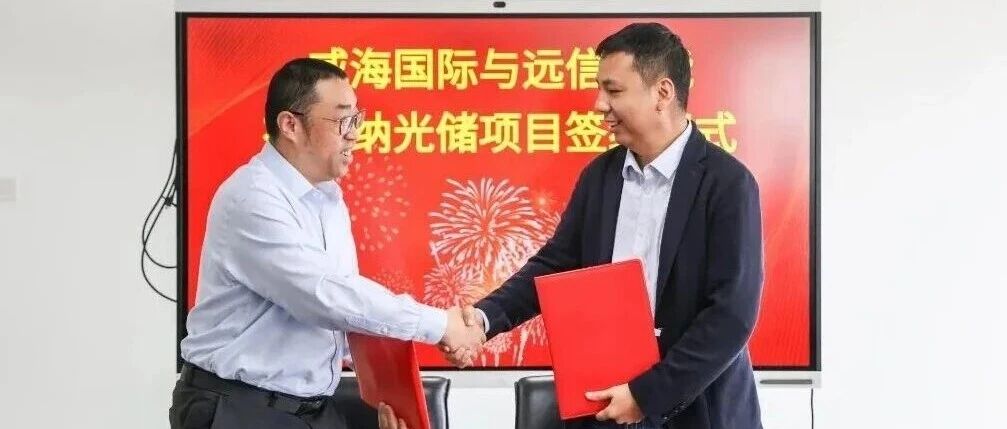
Group 1 - Huawei has secured a significant energy storage order worth over 1.1 billion yuan for the largest energy storage system project in Brazil, expected to be completed in three years [3][4] - The project will utilize Huawei's energy storage products in conjunction with solar power plants in the Amazon region, aiming to diversify energy supply away from polluting thermal power plants [3] - The microgrid project is anticipated to provide energy to 24 communities in the Amazon region, including a major city with a population of approximately 75,000 [3] Group 2 - Yuantong Energy has signed a strategic cooperation agreement with Weihai International Company for a solar-storage project in Burkina Faso, marking a significant step in their African market collaboration [5][7] - The agreement outlines project execution responsibilities, communication mechanisms, and risk management measures to expedite project implementation [7] - Yuantong Energy aims to increase its overseas business revenue share from 1% in 2025 to over 30% by 2026, with contracts established in multiple countries [7]
CEMEX (NYSE:CX) 2026 Investor Day Transcript
2026-02-26 15:02
CEMEX 2026 Investor Day Summary Company Overview - **Company**: CEMEX (NYSE:CX) - **Event**: 2026 Investor Day - **Date**: February 26, 2026 Key Industry Insights - **Geopolitical Disruption**: The global economy is experiencing structural changes due to geopolitical disruptions, moving towards a multipolar and regionally oriented system [2] - **Artificial Intelligence**: Rapid advancements in AI are reshaping productivity and competitiveness, emphasizing the need for robust domestic infrastructure [2] - **Capital Allocation Trends**: Trends in capital allocation, manufacturing investment, and infrastructure spending are key drivers of construction demand [3] Core Company Strategies - **Transformation Plan**: CEMEX is focusing on internal improvements, including strengthening its capital structure and launching a transformation plan aimed at operational excellence and shareholder returns [3][12] - **Geographic Focus**: The company is concentrating its operations in Mexico, the United States, and Europe, which are expected to deliver above-average growth and strong free cash flow [14] - **Market Potential**: Mexico's demographic advantages and the U.S. market's resilience are seen as significant growth opportunities [15][16] Financial Performance and Projections - **Free Cash Flow**: CEMEX has historically delivered strong free cash flow and anticipates recovery in demand, particularly in social housing and infrastructure [15] - **Cost Savings**: The company aims to achieve $400 million in recurring EBITDA savings by 2027 through Project Cutting Edge, with $200 million already secured from overhead reductions [27][63] - **EBITDA Growth Target**: CEMEX targets $3.7 billion in EBITDA by 2027, representing a 10% CAGR from 2025 [39] Capital Allocation Framework - **Shareholder Returns**: CEMEX is committed to returning 40%-50% of free cash flow to shareholders through dividends and share buybacks by 2030 [32][42] - **Investment Strategy**: The company will prioritize margin expansion and profitable decarbonization, with a focus on bolt-on acquisitions primarily in the U.S. [34][42] - **Debt Management**: Continued focus on paying down debt to improve free cash flow and reduce interest expenses [37][42] Operational Excellence Initiatives - **Performance Metrics**: New metrics are being introduced to align with shareholder interests, focusing on EBIT growth, free cash flow conversion, and ROIC over WACC [20][22] - **Business Performance Reviews**: Regular reviews are conducted to identify performance gaps and establish action plans for improvement [54][55] Additional Insights - **Cultural Transformation**: Emphasis on transforming company culture to support operational excellence and agility [24][38] - **Market Adaptation**: CEMEX is adapting to market conditions and is committed to divesting underperforming assets while pursuing strategic growth opportunities [44][58] Conclusion CEMEX is positioning itself for future growth through a comprehensive transformation plan focused on operational excellence, strategic capital allocation, and a commitment to shareholder returns. The company is leveraging its geographic strengths and addressing market challenges to enhance its competitive position in the building materials industry.

英国拟建数据中心致电力需求激增
Guo Ji Jin Rong Bao· 2026-02-24 08:02
Core Insights - The UK is experiencing a surge in electricity demand driven by the artificial intelligence boom, with around 140 proposed data center projects seeking a total power capacity of 50 gigawatts, exceeding the current peak electricity demand of 5 gigawatts [1] - Ofgem has noted a significant increase in grid connection applications from data center projects, which may delay other critical decarbonization and economic growth initiatives [1][2] - Concerns are raised about the feasibility of achieving the UK's goal of a nearly zero-carbon electricity system by 2030 amidst rising electricity demand and costs [1] Group 1: Electricity Demand and Infrastructure - The proposed data centers are described as the "central nervous system" for AI tools, playing a crucial role in training and operating products like ChatGPT and Gemini [1] - Ofgem's consultation document indicates that the number of grid connection applications has surged, surpassing even the most aggressive forecasts [1] - The potential greenhouse gas emissions from a large data center in Lincolnshire are reported to exceed those of five international airports [1] Group 2: Regulatory and Policy Implications - Ofgem highlights that the speed of integrating new clean energy projects into the grid has not kept pace with construction progress, raising concerns about energy supply [2] - There are differing opinions on whether AI can help improve grid efficiency or accelerate zero-carbon technology development, with some arguing that data centers may increase reliance on fossil fuels in the short term [2] - Ofgem proposes stricter financial scrutiny for data center developers applying for grid access to prevent project backlogs and delays for more viable projects [2] - The agency is considering charging data center operators for grid access, potentially through deposits or non-refundable fees, to mitigate the impact of unfeasible projects on the application process [2]
Sasol(SSL) - 2026 Q2 - Earnings Call Transcript
2026-02-23 10:02
Financial Data and Key Metrics Changes - The overall financial performance showed a decline in Adjusted EBITDA year-on-year, reflecting weaker macro conditions, with a positive free cash flow generated despite challenges [9][16][23] - Net debt ended at $3.8 billion, with a focus on cash generation and resilience in the balance sheet [7][22] - Gross margin declined by 6%, impacted by a 17% lower Rand oil price and continued pressure in chemicals pricing [23] Business Line Data and Key Metrics Changes - In the mining segment, EBITDA was lower due to the phaseout of export coal sales, but additional income was realized from leasing coal terminal capacity [26] - Fuels EBITDA increased, supported by higher refining margins and improved operational performance at Secunda and Natref [27] - Chemicals EBITDA generation remains under pressure due to lower prices and soft demand in global markets, with a notable decline in both Africa and America [27] Market Data and Key Metrics Changes - The Brent crude oil price decreased by 14% year-on-year, contributing to a 17% decline in the Rand oil price [16] - The oil market remains in surplus, with supply growth outpacing demand, leading to expected volatility in oil prices [17] - Chemicals faced challenges from global overcapacity and tariff uncertainties, impacting pricing and margins [18] Company Strategy and Development Direction - The company follows a two-pillar strategy: strengthening the foundation business and positioning for long-term growth and transformation [2][4] - Progress in renewable energy includes securing over 1.2 GW in South Africa, with a target of 2 GW by 2030 [30][31] - The focus on decarbonization is pragmatic, aiming to reduce emissions while ensuring energy security and affordability [30][33] Management's Comments on Operating Environment and Future Outlook - The management acknowledged the volatile business environment and emphasized the importance of execution and delivery against commitments [4][5] - There is cautious optimism for recovery in selective end markets, although the pace of decline in chemicals is slowing [18] - The company remains committed to reducing net debt and improving cash generation despite macroeconomic uncertainties [22][28] Other Important Information - The company invested approximately ZAR 200 million in social programs over the past six months, reflecting its commitment to community upliftment [14] - The company has made significant progress in safety measures, with improvements in leading indicators despite a tragic fatality [8] Q&A Session Questions and Answers Question: Synfuels volumes and guidance for the next financial year - Management noted that the annualized run rate in the second quarter was about 7.6 million tons, with maintenance scheduled next year [39][42] Question: Carbon tax suspension proposal - Management emphasized the importance of a carbon tax for protecting South Africa's interests and proposed a recycling mechanism for the tax [40][44] Question: MRG pricing submission and its impact on revenue - Management confirmed that the submitted pricing would be slightly more expensive than current gas, with CapEx included in the overall profile [41][46] Question: De-gearing guidance and CapEx concerns - Management reiterated the commitment to reduce net debt below $3.7 billion by year-end, despite challenges in the second half [55][61] Question: Medium-term notes repayment strategy - Management explained the decision to repay medium-term notes was part of a proactive approach to capital structure management [56][64]
