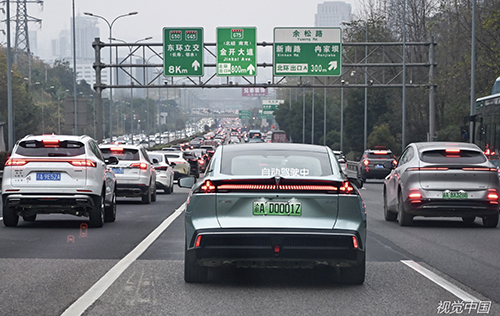
L3级有条件自动驾驶

Search documents
盘点58家财险2025年车均保费:超半数同比下降
Mei Ri Jing Ji Xin Wen· 2026-02-25 01:04
Core Insights - The insurance industry is closely monitoring the trends and developments in auto insurance as companies release their solvency reports for Q4 2025, revealing significant data on average premiums [1][7] - Over 58 insurance companies have disclosed their average auto insurance premiums, with a notable decrease in premium differences compared to previous years [2][8] - More than 50% of the insurance companies reported a decline in average premiums for 2025, indicating a stabilization in the overall premium landscape [3][10] Group 1: Average Premium Data - The average auto insurance premium reported ranges from 841.99 yuan to 5900 yuan, with most companies falling between 1000 yuan and 3000 yuan [2][8] - The disparity in average premiums among insurance companies is decreasing, with all companies previously exceeding 6000 yuan now below that threshold [2][8] - A total of 31 insurance companies experienced a decline in average premiums compared to the previous year, reflecting a trend towards stabilization [3][10] Group 2: New Energy Vehicle Insurance - The market is particularly focused on the trends in new energy vehicle insurance due to previous challenges in pricing and coverage [4][11] - Major insurance companies have begun to achieve profitability in new energy vehicle insurance, indicating a shift in the market dynamics [5][11] - The introduction of L3 conditional autonomous driving vehicles is expected to present new challenges in risk assessment and pricing models for auto insurance [12] Group 3: Future Challenges and Innovations - The transition to L3 autonomous driving will complicate risk evaluation, as new factors such as hardware reliability and software security must be considered [12] - Future pricing for new energy vehicle insurance is anticipated to become more intelligent, allowing for differentiated rates based on various factors [6][12] - Insurance companies are advised to prepare for the upcoming changes by innovating products, enhancing service efficiency, and diversifying collaboration models [6][12]
盘点58家财险2025车均保费:超半数同比下降
Mei Ri Jing Ji Xin Wen· 2026-02-13 12:38
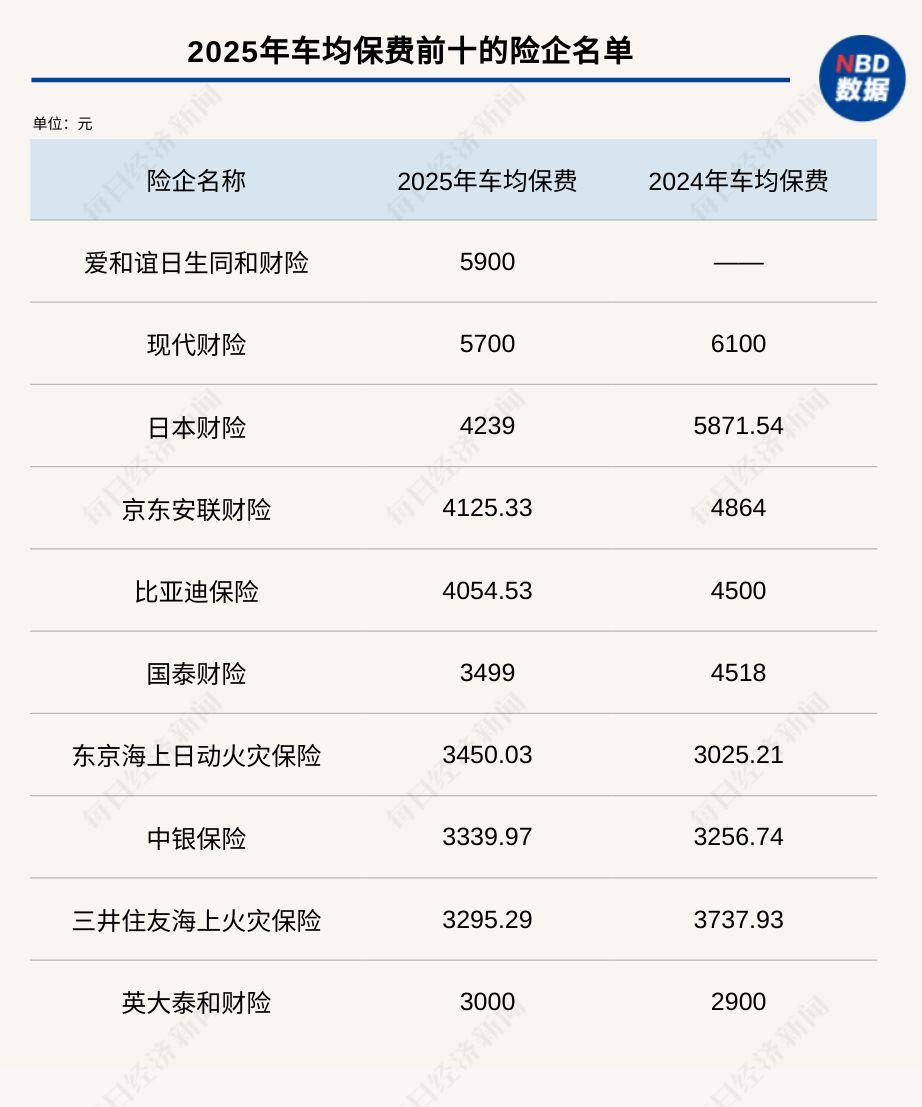
Core Insights - The average car insurance premium for 2025 shows a declining trend for over half of the insurance companies, with the overall premium gap narrowing compared to 2024 [1][2][5] - The average car insurance premium across 58 disclosed companies ranges from 841.99 yuan to 5900 yuan, indicating a concentration of premiums between 1000 yuan and 3000 yuan for most companies [2][4] Group 1: Premium Trends - More than 50% of insurance companies reported a decrease in average car insurance premiums for 2025 compared to the previous year, although the overall decline is not significant [1][5] - The average car insurance premium for 2025 is expected to stabilize due to the structure of existing policies, with a notable impact from the insurance of new energy vehicles [6][7] Group 2: Company Performance - The top ten insurance companies by average car insurance premium for 2025 include: - Ai He Yi Ri Sheng Tong He Insurance: 5900 yuan - Modern Insurance: 5700 yuan (down from 6100 yuan in 2024) - Japan Insurance: 4239 yuan (down from 5871.54 yuan in 2024) [3] - The lowest average premiums are reported by companies such as Xin An Automobile Insurance at 841.99 yuan and Dou Bang Insurance at 870 yuan, with over 70% of companies having premiums between 1000 yuan and 3000 yuan [4][5] Group 3: New Energy Vehicle Insurance - The insurance market is closely monitoring the trends in new energy vehicle insurance, which has previously faced challenges in pricing and coverage [7][8] - As of the end of 2025, the total number of new energy vehicles in China is projected to reach 43.97 million, accounting for 12.01% of the total vehicle population, indicating that nearly 90% of vehicles are still fuel-powered [6] - The profitability of new energy vehicle insurance is improving, with major insurers reporting underwriting profits in this segment [7] Group 4: Future Challenges - The introduction of L3 level conditional autonomous driving vehicles is expected to pose new challenges for car insurance, particularly in risk assessment and pricing models [8] - The complexity of evaluating risks associated with autonomous driving features will require insurance companies to adapt their pricing strategies and product offerings [8]

卢放:在L3领域,岚图是早有准备的长期主义者
Xin Lang Cai Jing· 2026-02-09 01:48
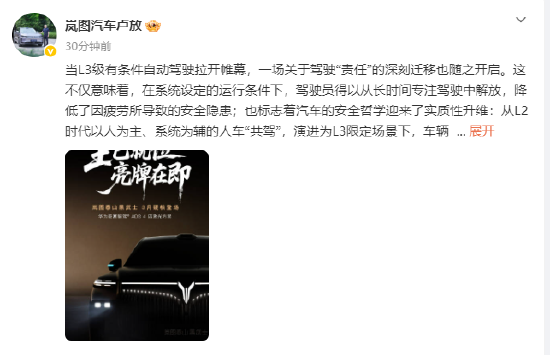
Core Viewpoint - Lantu Automotive is positioned as a long-term player in the L3 conditional autonomous driving sector, with significant advancements and testing completed ahead of the launch of its first mass-produced L3 SUV, the Lantu Taishan Black Warrior, in March 2024 [1][6]. Group 1: L3 Autonomous Driving Development - Lantu has completed a total of 110,000 kilometers of actual road testing and 900,000 kilometers of rigorous simulation testing for its L3 conditional autonomous driving technology by the end of 2025 [1][6]. - The company has obtained official road testing licenses and is entering the real vehicle verification phase [1][6]. Group 2: Safety and Technology Features - The Lantu Taishan Black Warrior is equipped with Huawei's top-tier ADS four-laser solution, enhancing its environmental perception and communication capabilities [4][9]. - The vehicle's design includes a "double safety redundancy" system to ensure safety even in extreme scenarios, such as when a driver becomes incapacitated [10]. Group 3: Philosophical Shift in Driving Responsibility - The introduction of L3 autonomous driving signifies a shift in driving responsibility from the driver to the vehicle, reducing fatigue-related safety risks and evolving the safety philosophy from human-centric to vehicle-centric [3][8]. - A comprehensive safety system based on full redundancy is essential for L3 vehicles, transforming them from passive tools to reliable entities capable of executing minimum safety strategies in extreme conditions [3][8].
岚图卢放:中国首款量产L3级SUV岚图泰山黑武士3月上市
Xin Lang Cai Jing· 2026-02-09 01:43
Core Viewpoint - Lantu Automotive is set to launch China's first mass-produced L3-level conditional autonomous driving SUV, the Lantu Taishan Black Warrior, in March, following extensive testing and the acquisition of official road testing licenses [1][6]. Group 1: Testing and Development - By the end of 2025, Lantu's L3-level conditional autonomous driving technology will have completed a total of 110,000 kilometers of real-world testing and 900,000 kilometers of rigorous simulation testing [1][6]. - The company has been preparing for L3-level conditional autonomous driving since 2024, with the release of the world's first intelligent architecture capable of L3 technology, known as the Lantu Tianyuan Intelligent Architecture, scheduled for April 2025 [3][8]. Group 2: Safety and Responsibility - The transition to L3-level autonomous driving signifies a shift in driving responsibility, allowing drivers to be liberated from prolonged focus on driving, thus reducing safety risks associated with fatigue [3][8]. - Lantu emphasizes the need for a comprehensive safety system based on full redundancy, transforming vehicles from passive transportation tools into reliable entities capable of executing minimum safety strategies even in extreme risk scenarios [3][10]. Group 3: Technological Features - The Lantu Taishan Black Warrior will be equipped with Huawei's top-tier Qian Kun Intelligent Driving ADS four-laser solution, enhancing its environmental perception and communication capabilities [4][9]. - The vehicle's design includes a "double safety redundancy" system that autonomously executes safe maneuvers, such as pulling over and stopping, in case of driver incapacitation [10].
新能源汽车首月“成绩单” 来了
Shang Hai Zheng Quan Bao· 2026-02-01 15:21
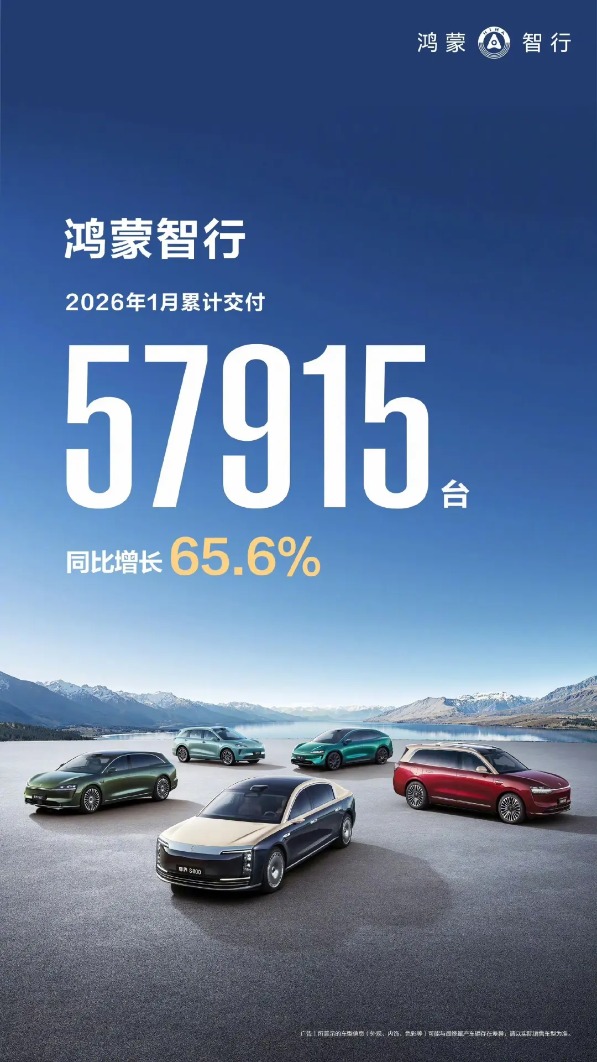
Group 1: Industry Overview - In January 2026, major Chinese electric vehicle manufacturers reported mixed results in new car sales, with some companies showing year-on-year growth while others experienced significant declines compared to December 2025 [1] - BYD's January sales exceeded 210,000 units, marking a year-on-year decrease of 30.11%, while Huawei's HarmonyOS Smart Driving saw a remarkable year-on-year increase of 65.6% in deliveries [1][4] - The China Passenger Car Association (CPCA) maintains an optimistic outlook for 2026, projecting a retail growth rate of approximately 10% for new energy vehicles [1] Group 2: Company Performance - Leap Motor delivered 32,059 electric vehicles in January 2026, a year-on-year increase of 27.37%, but a month-on-month decline of 46.94% [2] - NIO reported January deliveries of 27,182 vehicles, reflecting a year-on-year growth of 96.08% but a month-on-month drop of 43.53% [2] - Li Auto's January deliveries reached 27,668 units, showing a year-on-year increase of 7.55% and a month-on-month decrease of 37.47% [3] - Xpeng Motors delivered 20,011 vehicles in January, a year-on-year decline of 34.07% and a month-on-month decrease of 46.65% [3] Group 3: Future Projections - Leap Motor aims for a sales target of 1 million units in 2026, emphasizing the need for efficiency and cost awareness in a competitive market [2] - NIO's 2026 sales target is set between 456,000 and 489,000 units, with a focus on achieving profitability [2] - Li Auto plans to achieve annual sales of 550,000 units in 2026, with a goal to regain its leading position in extended-range electric vehicles [3] - Xpeng Motors targets annual sales of 550,000 to 600,000 units in 2026, representing a growth of approximately 28% to 40% compared to 2025 [3] Group 4: Market Trends - The total number of new energy vehicles in China reached 43.97 million by the end of 2025, accounting for 12.01% of the total vehicle population [8] - The proportion of pure electric vehicles within the new energy segment stands at 68.74%, with 30.22 million units registered [8] - Experts predict that the ownership of new energy vehicles in China will continue to rise significantly starting in 2026 [8]
新职业新风向|智能网联汽车测试员见证“未来已来”
Zhong Guo Qing Nian Bao· 2026-01-26 03:25
Core Insights - The article discusses the introduction of L3 conditional autonomous driving vehicles in China, highlighting the advancements in technology and the regulatory framework that supports their testing and potential commercialization [1][2]. Group 1: L3 Autonomous Driving Technology - The L3 conditional autonomous driving system, known as TJP, allows vehicles to operate autonomously in traffic congestion, with a maximum speed of 50 km/h, and is currently being tested in designated areas of Chongqing and Beijing [1][2]. - The vehicles equipped with L3 systems, such as those from Changan Automobile and BAIC BluePark Magna, have not yet been commercially launched but are part of a critical transition from technology validation to mass production [2]. Group 2: Market Growth and Industry Trends - According to the China Association of Automobile Manufacturers, the production and sales of new energy vehicles in China are projected to reach 16.626 million and 16.49 million units respectively in 2025, marking a year-on-year growth of 29% and 28.2%, with new energy vehicles accounting for 47.9% of total new car sales [2]. - The development of smart connected new energy vehicles is seen as a significant opportunity, with the emergence of new job roles such as smart connected vehicle testers, which are essential for ensuring the safety and functionality of these vehicles [2]. Group 3: Safety and Testing Protocols - The L3 system features enhanced software architecture and safety measures, including redundancy designs to ensure vehicle safety even in the event of component failure [4]. - During the testing phase, Changan Automobile's TJP system has accumulated over 150,000 kilometers of activation without any accidents or violations, demonstrating the system's reliability [5]. Group 4: Future of Autonomous Driving - The article notes that L4 and L5 levels of autonomous driving are on the horizon, with L4 applications focusing on unmanned taxis and logistics vehicles [5]. - The penetration rate of L2 and above autonomous driving in passenger vehicles is expected to reach 55.7% by 2024, indicating a growing demand for skilled personnel in the automotive industry [5].

智能网联汽车测试员见证“未来已来”
Zhong Guo Qing Nian Bao· 2026-01-24 23:07
Core Insights - The article discusses the advancements in Level 3 (L3) conditional autonomous driving in China, highlighting the introduction of L3 vehicles and their testing in designated areas [2][3][4]. Group 1: L3 Conditional Autonomous Driving - The first L3 conditional autonomous driving vehicles in China have received approval for testing, including models from Changan Automobile and BAIC BluePark Magna [2][3]. - The L3 system allows for automated driving in specific conditions, such as traffic congestion, with a maximum speed of 50 km/h [2][3]. - The transition from L2 to L3 involves significant changes, including the ability for drivers to disengage from active control under certain conditions, shifting responsibility from the driver to the vehicle manufacturer during automated operation [4][5]. Group 2: Industry Growth and Employment - In 2025, China's new energy vehicle production and sales are projected to reach 16.626 million and 16.49 million units, respectively, marking a year-on-year growth of 29% and 28.2% [3]. - The rise of smart connected vehicles is creating new job opportunities, with the role of autonomous vehicle testers being recognized as a new profession [3][6]. - The demand for skilled personnel in the smart connected vehicle sector is expected to exceed 100,000 positions as the industry evolves [5]. Group 3: Safety and Testing - The L3 vehicles are designed with enhanced safety features, including redundancy measures to ensure safety even in case of component failure [5]. - Extensive virtual testing has been conducted, simulating complex driving scenarios to optimize software and algorithms for L3 systems [5]. - As of January 3, the L3 testing by Changan has accumulated over 150,000 kilometers without any significant accidents or violations [5].

北汽蓝谷的“翻身”困局
Hua Er Jie Jian Wen· 2026-01-20 11:43
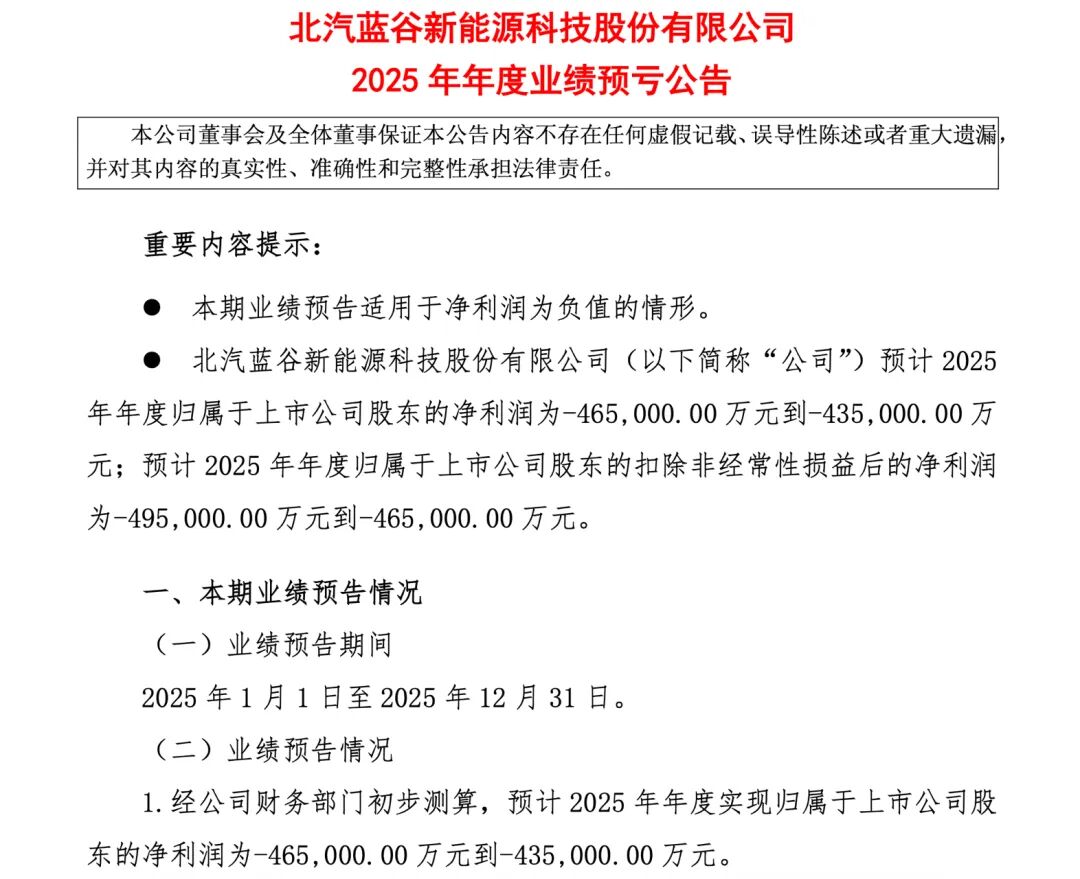
Core Viewpoint - Beiqi Blue Valley's 2025 performance report reveals a complex picture of "growth and losses coexisting," with an expected net loss of 4.35 billion to 4.65 billion yuan, despite a significant reduction from the previous year's loss of 6.948 billion yuan [2] Group 1: Financial Performance - The company's net loss for 2025 is projected to be between 4.35 billion and 4.65 billion yuan, a notable decrease from the 6.948 billion yuan loss in 2024, yet still at a high level [2] - Sales volume reached 209,600 units in 2025, marking an 84.06% year-on-year increase, but this growth has not translated into improved profitability [2][3] - Historical losses from 2020 to 2024 were 6.482 billion yuan, 5.244 billion yuan, 5.465 billion yuan, 5.400 billion yuan, and 6.948 billion yuan respectively, indicating a persistent trend of financial challenges [2] Group 2: Strategic Investments and Challenges - The paradox of increasing sales but ongoing losses stems from substantial strategic investments, particularly in R&D, which rose to 1.573 billion yuan in the first three quarters of 2025, a 43.26% increase from the previous year [3] - The company's traditional B-end market, primarily the EU series, which contributed 70%-80% of sales, is being disrupted, leading to a shift in brand perception [4] - The transition to new high-end brands, such as Arcfox and Xiangjie, is ongoing, but the sales from these new models have not yet compensated for the decline in sales from older models [5] Group 3: Partnerships and Technological Advancements - A significant focus is on the collaboration with Huawei, which has resulted in the high-end brand "Xiangjie" becoming a new growth engine, raising the average selling price by 8,000 yuan [7] - The partnership has evolved into a "strategic community," with plans for a 20 billion yuan investment over three years to establish dedicated departments and supply chains [8] - The company has also achieved a milestone by obtaining the first batch of L3 conditional autonomous driving permits for its Arcfox Alpha S model, positioning itself at the forefront of autonomous driving commercialization in China [10] Group 4: Future Outlook and Market Position - Despite ongoing losses, the increase in sales has instilled some confidence among analysts, with expectations for continued growth in 2026 due to new model launches [13] - The current focus on L3 technology is seen as a long-term investment, requiring sustained R&D and market development, with limited immediate financial impact [12] - The company faces the challenge of transforming its brand perception and market recognition while relying on Huawei's support to establish a solid high-end market presence [13]

北汽蓝谷预告,2025年净亏损超43.5亿元
Guo Ji Jin Rong Bao· 2026-01-19 14:00
Core Viewpoint - The company, Beiqi Blue Valley, is expected to significantly reduce its net profit loss for the year, with projections indicating a loss between 4.35 billion to 4.65 billion yuan, a notable improvement from the previous year's loss of 6.948 billion yuan, representing a reduction of 2.298 billion to 2.598 billion yuan, or a decrease of 33.09% to 37.41% [3] Group 1 - The primary reason for the anticipated loss is the company's commitment to its "three-year leap" strategy, which involves ongoing investments in product development and channel construction, impacting short-term performance [3] - In 2025, the company aims to achieve sales of 209,600 vehicles, reflecting a year-on-year growth of 84.06%, although it remains in a loss phase due to the lack of scale benefits [3] - Beiqi Blue Valley operates three main vehicle brands: Arcfox, Xiangjie, and Beijing Automotive, with Arcfox expected to be the main contributor to sales growth in 2025 [3] Group 2 - Arcfox's total sales reached 160,000 units, accounting for 76% of total sales, with the Arcfox T1 being the best-seller at 56,500 units, representing 35.3% of Arcfox's total sales [3] - The higher-priced Xiangjie brand has not yet achieved scale, with total sales of 35,800 units, and its two models, Xiangjie S9 and S9T, showing similar sales figures [4] - The company has recently gained attention for its advancements in smart technology, with the Arcfox Alpha S receiving L3 conditional autonomous driving approval, making it one of only two companies to achieve this [4]
L3,上路
Jing Ji Wang· 2026-01-18 04:23
Core Insights - The first batch of L3-level conditional autonomous driving vehicles in China officially began road testing in Chongqing on December 26, 2023, following the Ministry of Industry and Information Technology's approval on December 15, 2023 [1][3] Group 1: L3 Autonomous Driving Vehicles - The first two models approved for L3-level conditional autonomous driving are the Deep Blue SL03 from Changan Automobile and the Arcfox Alpha S from BAIC, equipped with their respective intelligent driving systems [3][4] - The L3 autonomous driving function will initially be available on specific roads in Chongqing, with plans for expansion through OTA updates as policies evolve [3][4] - The approval of L3 vehicles marks a significant transition from technical validation to practical application, paving the way for future commercialization [4][9] Group 2: Consumer Access and Market Outlook - Currently, L3 vehicles are not available for consumer purchase, but consumers can experience the autonomous driving features through ride-hailing services [5] - Experts predict that L3-level autonomous driving will gradually achieve mass production in specific scenarios within the next two years, while widespread adoption may take 3 to 5 years or even longer due to technological, regulatory, and cost factors [5][6] - The recent approval is fundamentally different from previous temporary testing licenses, as it signifies that the vehicles have passed rigorous national evaluations and are qualified for legal road use [9] Group 3: Future of Autonomous Driving - L3-level autonomous driving is seen as a transitional phase, with L4-level expected to enable fully autonomous driving in specific environments, allowing drivers to focus on other activities [10] - The implementation of L4-level autonomous driving could revolutionize urban transportation, reducing congestion and accidents while lowering travel costs [10]