
业绩比较基准

Search documents
首批26只新型浮动费率基金获批
Sou Hu Cai Jing· 2025-05-25 23:05
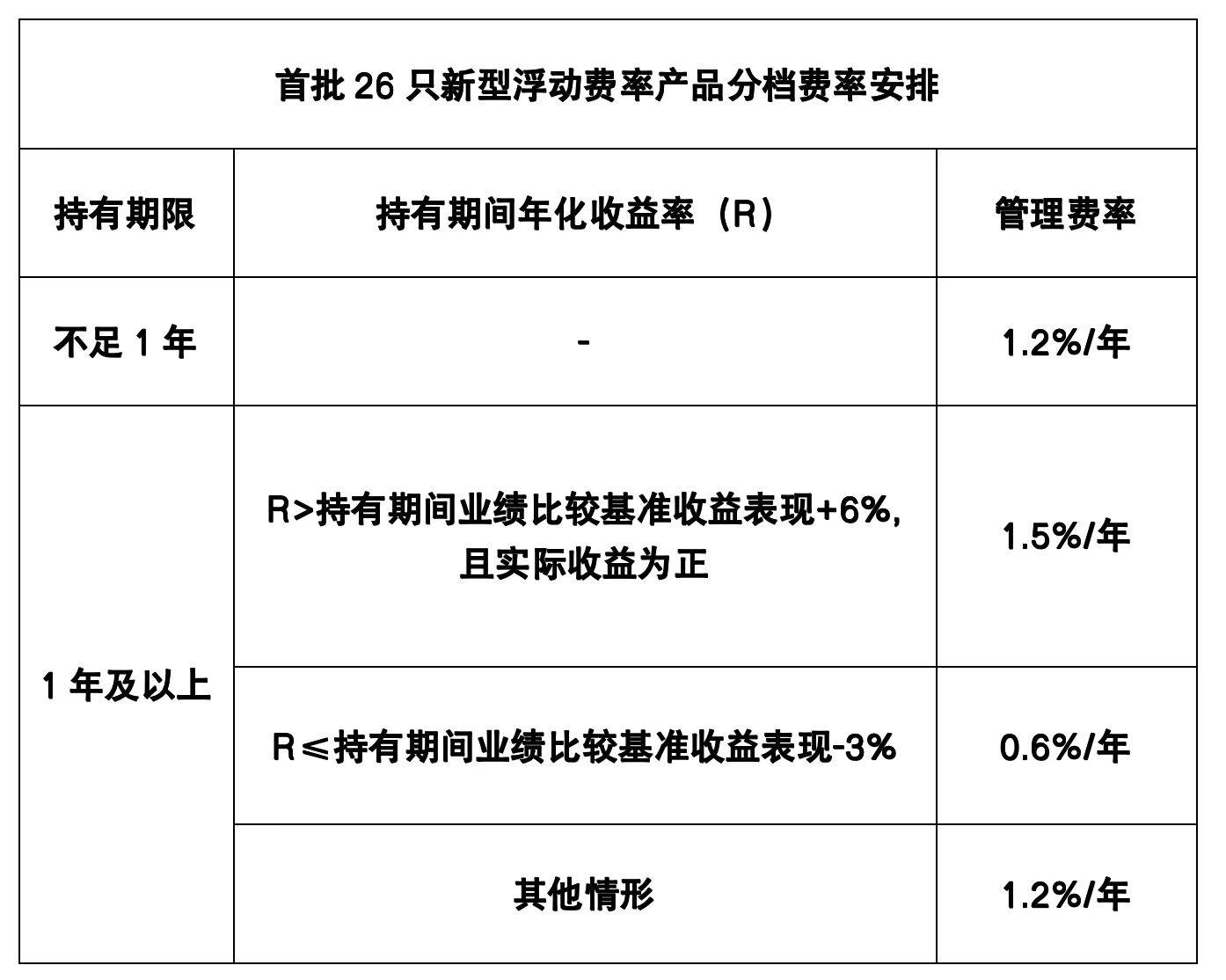
首批26只新型浮动费率基金获批 最近,事关8亿多基民的公募基金改革正在落地。5月23日,首批26只新型浮动费率产品拿到了证监会的 上市"许可证"。这意味着,最快下周就有产品将上架开售。 除了浮动费率,本轮公募基金改革关键点还在于全面升级对基金公司和基金经理的考核"指挥棒",引导 他们真正和基民"同甘共苦"。 浮动费率之后,管理费就要和每个基民的持有期限、持有期间基金有没有跑赢业绩比较基准、有没有给 基民挣到钱挂钩了。比如基民买了"小牛基金",如果拿了不满一年就卖了,管理费还是1.2%。 如果拿满一年想卖,那管理费就要分三种情况了。先假设"小牛基金"锚定的业绩比较基准是沪深300。 情况一:"小牛基金"赚钱了,年化收益率还比沪深300跑赢6%以上,相当于每年帮基民挣到了6%以上 的超额收益。基金公司最多可以收每年1.5%的管理费。 情况二:"小牛基金"年化收益率比沪深300跑输3%或更多,基金公司最多只可以收每年0.6%的管理费。 基金表现明显跑输了市场,业绩差只能少收费。 情况三:除了以上情况,基金仍按每年1.2%收管理费。 在这种浮动费率下,基民同样买1000元基金,表现好的基金每年管理费可以收到15元,表 ...
基金经理考核“指挥棒”重振旗鼓 市场资金短期或偏爱基准成份股
Zheng Quan Shi Bao· 2025-05-25 18:12
Core Viewpoint - The China Securities Regulatory Commission has released an action plan to promote the high-quality development of public funds, emphasizing the establishment of a performance evaluation system centered on fund investment returns, aiming to address the long-standing issue of performance benchmarks being ineffective in the public fund industry [1][5]. Group 1: Performance Benchmark Issues - The performance benchmark is a critical measure for assessing a fund's ability to generate excess returns, yet only 26% of over 3,600 actively managed equity funds outperformed their benchmarks over the last three years [2]. - Some funds have underperformed their benchmarks by over 100 percentage points, highlighting the inadequacy of benchmark settings that do not align with investment strategies and market conditions [2][3]. - The public fund industry has been criticized for a "scale-oriented" approach, where management fees are tied to asset size, leading to a focus on growth rather than performance [3][4]. Group 2: Impact of the New Action Plan - The new action plan is expected to profoundly change the operational logic of actively managed equity products, emphasizing the importance of stable investment returns and value investing [1][5]. - There will be a trend towards aligning fund products with performance benchmarks, potentially leading to structural market fluctuations as funds adjust their portfolios [6]. - The action plan may result in a shift towards passive investment strategies and increased focus on low-volatility, high-dividend products, particularly in the banking sector [6][7]. Group 3: Fund Manager Reactions - Fund managers are now required to pay close attention to performance benchmarks, with significant implications for their compensation based on their funds' performance relative to these benchmarks [9][10]. - Some fund managers express confidence in their ability to outperform benchmarks through stock selection, while others may feel pressured to align their portfolios more closely with benchmarks to secure their positions [10][11]. - The action plan is likely to lead to a decrease in turnover rates among funds, as managers focus on long-term investment value rather than short-term trading [7][8].
【申万宏源策略 | 一周回顾展望】震荡市中的短期调整
申万宏源研究· 2025-05-25 08:13
Core Viewpoint - The market is expected to remain in a high central oscillation phase during Q2, with short-term adjustments anticipated due to increased uncertainty in the U.S. economy and limited expansion space for new consumption [1][2][3]. Group 1: Market Conditions - Q2 is characterized as a high central oscillation market, with short-term adjustments expected [2]. - The upper limit of the oscillation range is supported by a combination of wide monetary policy and external demand improvements, but concerns about economic downturns remain [2][3]. - The lower limit is influenced by the timely implementation of monetary policies and the role of stabilization funds in managing market sentiment [2][3]. Group 2: Sector Analysis - Technology and consumer sectors are currently not positioned to lead market breakthroughs, with technology still in a mid-term adjustment phase [2][4]. - New consumption trends are facing limitations in expanding outward due to reduced internal demand stimulus [2][4]. - The pharmaceutical sector (CXO and innovative drugs) and precious metals are expected to continue their positive trends in the short term [4]. Group 3: Fund Management and Market Dynamics - The recent trend of public funds aligning with performance benchmarks has concluded, with potential for a new round of market dynamics in June [5]. - Fund managers are encouraged to reassess their benchmark choices, as the alignment with performance benchmarks may not be suitable for all [3][4]. - The potential inflow of funds into sectors such as non-banking, banking, construction, public utilities, and coal is noted, although actual inflows remain low relative to market capitalization [3]. Group 4: Profitability and Economic Outlook - A general expectation is that A-shares will struggle to see a significant uptick in profitability until 2025 [2]. - The mid-term outlook for A-shares relies heavily on breakthroughs in the technology sector, particularly in AI, embodied intelligence, and defense industries [4]. - The combination of new merger regulations and venture capital financing is anticipated to contribute positively to high-growth segments of the new economy [4]. Group 5: Market Sentiment Indicators - The market sentiment indicators show varying levels of profitability across sectors, with banking at 97% and consumer sectors like beauty care and pharmaceuticals showing moderate expansion [8]. - Sectors such as public utilities and basic chemicals are experiencing contraction, indicating a need for focused investment strategies [8]. - The overall A-share market sentiment is showing signs of contraction, with only 42% of stocks indicating profitability expansion [8].


财经深一度|除了浮动费率,本轮公募基金改革关键点在这
Sou Hu Cai Jing· 2025-05-24 04:26
Core Viewpoint - The recent reform of public funds in China, affecting over 800 million investors, introduces new floating fee rate products and upgrades the assessment criteria for fund companies and managers, aiming to align their interests with those of investors [1][7]. Floating Fee Rate Structure - The first batch of 26 new floating fee rate products has received approval from the China Securities Regulatory Commission, with products expected to be available for sale soon [1]. - Under the new floating fee structure, management fees will be linked to the fund's performance relative to a benchmark, with fees varying based on the holding period and performance outcomes [2][4]. - For example, if a fund outperforms its benchmark by over 6%, the management fee can be as high as 1.5%, while underperformance by 3% or more can reduce the fee to 0.6% [2][3]. Assessment Criteria Upgrade - The reform includes a comprehensive upgrade of the assessment criteria for all actively managed equity funds, shifting focus from management scale and profit to investment returns [5][6]. - The new assessment framework emphasizes long-term performance, with at least 80% of the evaluation weight on returns over three years [5]. - Fund managers will face stricter penalties for underperformance, with significant reductions in performance-based compensation for those whose funds lag behind benchmarks by over 10 percentage points [5][6]. Industry Trust Restoration - The public fund industry has faced challenges, with actively managed funds underperforming compared to passive index funds, leading to a shift in investor preference [7]. - The reform aims to restore trust by ensuring that fund managers are incentivized to generate excess returns for investors, thereby justifying management fees [7][8]. - The introduction of floating fee rates is seen as a significant innovation in fee structures, allowing for a more personalized fee arrangement based on individual fund performance [8].
26只浮动费率基金快速获批
Huan Qiu Wang· 2025-05-24 01:58
【环球网财经综合报道】继5月16日首批产品申报后,5月23日,26只新型浮动费率基金正式获得证监会注册,公募基金行业收费模式迎来重大变革。此次新 型浮动费率基金的快速获批,体现了监管部门落实公募基金改革方案、加快推出投资者可感可及改革措施、构建基金公司收入报酬与投资者利益回报绑定机 制的高度重视。首批产品预计很快就会向投资者发售。 与传统固定费率模式不同,新型浮动管理费率产品以考察相对收益为基础,即产品业绩是否明显跑赢其业绩比较基准来进行管理费率升降档。首批产品为降 低投资者和销售渠道理解的复杂度,各家管理人均设置了1.2%、1.5%、0.6%的三档费率水平以及年化跑赢6个百分点、年化跑输3个百分点的业绩考察指 标。 除了各家基金管理人,销售机构也都高度重视新型浮动管理费率产品的营销情况。记者从销售机构处了解到,因此次产品设计有一定复杂度,会做好面向投 资者的宣传和答疑解惑工作,以更加通俗易懂、可触达个人投资者的方式进行产品宣传解读,并且不会过于看重募集规模的销售导向,避免"高开低走",后 续将努力提升投资者长期投资体验,做好持续营销。 业内人士指出,业绩比较基准相当于基金投资的"锚"和"尺"。其中,"锚"的 ...

银行保险资管产品信息披露将迎统一监管标准 让产品销售“看得清”、产品风险“厘得清”、产品收益“算得清”
Shang Hai Zheng Quan Bao· 2025-05-23 19:32
Core Viewpoint - The Financial Regulatory Bureau is drafting a management method for information disclosure of asset management products in banking and insurance sectors to establish unified regulatory standards and enhance investor protection [1][2]. Group 1: Information Disclosure Management - The proposed method aims to standardize information disclosure for asset management trust products, wealth management products, and insurance asset management products, addressing the lack of a dedicated disclosure regulation [1][3]. - The method will regulate the entire lifecycle of asset management products, including fundraising, ongoing management, and termination, ensuring clarity in product information [1][2]. Group 2: Specific Requirements - During the fundraising phase, the method will specify requirements for product documentation, including performance benchmarks, to ensure transparency in product sales [2][3]. - In the ongoing management phase, it mandates accurate and comprehensive reporting of past performance and timely disclosure of significant events to clarify product risks [2][3]. - For the termination phase, it requires disclosure of fees and profit distribution in the final announcements and liquidation reports to ensure clarity in product returns [2][3]. Group 3: Performance Benchmark Disclosure - The method allows asset management products to not disclose performance benchmarks, providing flexibility to managers and avoiding unnecessary formalism [2][3]. - For products that do disclose performance benchmarks, strict requirements will be set to ensure that the benchmarks are relevant and accurately reflect the investment strategy and underlying assets [3][4]. Group 4: Regulatory Consistency - The method emphasizes a unified standard for information disclosure across the three types of products, enhancing regulatory consistency while respecting the unique characteristics of each product type [3][4]. - It distinguishes between public and private products, imposing stricter disclosure requirements on public products to enhance transparency for less knowledgeable investors [4][5].
首批获准!26只新型浮动费率基金来了!
证券时报· 2025-05-23 11:13
Core Viewpoint - The article discusses the rapid approval and upcoming launch of new floating fee rate funds in China, highlighting the innovative fee structure designed to align the interests of fund managers and investors [2][3][4]. Group 1: Product Approval and Launch - The first batch of 26 new floating fee rate funds received approval from the China Securities Regulatory Commission (CSRC) on May 23, following their application on May 16, and is expected to be available for subscription soon [1][3]. - The approval process was efficient, reflecting the regulatory body's commitment to implementing reforms in the public fund sector and enhancing investor experience [3][4]. Group 2: Fee Structure and Performance Metrics - The new funds feature a tiered management fee structure with three levels: 1.2% (benchmark), 1.5% (upward adjustment), and 0.6% (downward adjustment), along with performance assessment indicators of outperforming the benchmark by 6 percentage points and underperforming by 3 percentage points [4][5]. - The management fee will be determined based on the investor's holding period and the fund's annualized return relative to its benchmark, promoting a more nuanced approach to fee collection [4][7]. Group 3: Investment Strategy and Market Positioning - The initial products are designed to invest primarily in equities, with performance benchmarks linked to major indices such as the CSI 300 and others, indicating a strong focus on equity investment [9]. - Fund managers are expected to have significant experience, aiming to enhance long-term investment returns and improve investor experience through robust research and ongoing support [9][10]. Group 4: Industry Implications and Future Outlook - The introduction of floating fee rate products is anticipated to become a regular feature in the market, with many fund managers expressing interest in developing similar products [10]. - The emphasis on performance benchmarks is expected to lead to more prudent selection of benchmarks by fund companies, thereby reducing instances of style drift and enhancing investment stability [12][13].

首批创新浮动费率基金,正式获批!
Mei Ri Jing Ji Xin Wen· 2025-05-23 11:04
Core Viewpoint - The first batch of innovative floating rate funds based on performance benchmarks has been officially approved, marking a significant development in the public fund industry aimed at enhancing fund quality and aligning the interests of fund managers and investors [1][2][6]. Group 1: Fund Structure and Mechanism - The newly approved floating rate funds will implement a three-tier fee structure: 1.2% (benchmark tier), 1.5% (upward adjustment), and 0.6% (downward adjustment), with management fees linked to the fund's performance relative to a benchmark [2][3]. - The fee mechanism emphasizes a "single customer, single share" approach, allowing for personalized fee structures based on individual investor performance, thus promoting a tailored investment experience [3][4]. Group 2: Industry Impact and Response - The introduction of these floating rate funds is seen as a positive response to the "Action Plan for Promoting High-Quality Development of Public Funds," reflecting the industry's exploration of diverse fee models [6][7]. - Fund companies are expected to enhance their operational capabilities and investment research systems to meet the new requirements posed by the floating rate mechanism, which aims to improve long-term investment performance [3][5]. Group 3: Investor Benefits and Long-term Focus - The floating rate mechanism is designed to encourage long-term holding by investors, providing benefits to those who maintain their investments for a certain period, thereby reducing irrational trading behaviors [7]. - By linking management fees to excess returns over benchmarks, the new structure aims to enhance the professional investment research capabilities of fund managers, fostering a culture focused on generating alpha returns rather than relying solely on market beta [7].
后明星时代公募基金研究系列之六:主动权益基金应该如何选业绩比较基准?
Shenwan Hongyuan Securities· 2025-05-20 11:11
1. Report Industry Investment Rating - No relevant information provided 2. Core Viewpoints of the Report - The market overestimates the proportion of active equity funds underperforming their benchmarks. Selecting a benchmark that matches the fund manager's style can significantly reduce the proportion of funds with performance 10% lower than the benchmark [3][19] - The S&P 500 is the most widely - chosen benchmark for active equity funds in the US, and Russell style indices are also highly recognized [24][25] - In the short - term, banks, non - banks, and food and beverage are under - allocated industries, while electronics, media, and machinery are over - allocated industries. Active equity funds in Hong Kong still prefer growth - oriented industries [3][38][43] - When selecting a performance comparison benchmark, factors such as index style suitability, market recognition, stability, investment opportunities, and long - term viability should be considered [3] 3. Summary According to the Table of Contents 3.1 Market Overestimates the Proportion of Active Equity Funds Underperforming Their Benchmarks 3.1.1 Problems of Directly Selecting Broad - based Indices as Benchmarks - The two simple calculation methods currently used in the market may not have reference value for the future. The data on the proportion of funds underperforming benchmarks in the past has randomness and cannot reflect the true ability of active equity funds [10][11] - If fund managers choose broad - based indices as benchmarks without changing their investment strategies, the probability of their performance being more than 10% lower than the benchmark in three years is uncontrollable. Selecting a benchmark that matches the investment style is more important [16][19][20] 3.1.2 Benchmarks Used by Overseas Active Equity Funds - In the US, the S&P 500 is the most widely - chosen benchmark, with a scale proportion of over 40% in all active products investing in the US. Russell style indices such as Russell 1000 Growth and Russell 1000 Value are also highly recognized [24][25] - Different types of US active funds have different benchmark selection preferences. For example, the S&P 500 is commonly chosen for large - cap core products, while Russell 2000 is dominant in small - cap core products [26] 3.2 Short - term Market Transaction Expectations 3.2.1 Industry and Stock Dimensions: Under - allocation of Finance and Traditional Consumption, Over - allocation of Technology and Growth - Balanced style funds under - allocate non - banks, banks, and food and beverage, and over - allocate media, automobiles, and machinery. Growth style funds under - allocate food and beverage, transportation, and public utilities, and over - allocate electronics, power equipment, and machinery. Value style funds under - allocate banks, non - banks, and building decoration, and over - allocate power equipment, real estate, and pharmaceutical biology [33][34][35] - Different industry - themed funds also have different over - and under - allocation situations. Overall, banks, non - banks, and food and beverage are industries with large under - allocation amounts, while electronics, media, and machinery are industries with large over - allocation amounts [38] 3.2.2 Hong Kong Stock Allocation: Over - and Under - allocation Relative to the Hang Seng Index - In Hong Kong stocks, under - allocated industries include banks, non - banks, and commerce and retail, while over - allocated industries include pharmaceutical biology, media, and electronics. Active equity funds in Hong Kong still prefer growth - oriented industries [43] 3.3 How to Select Performance Comparison Benchmarks for Active Equity Funds 3.3.1 Indices Currently Issued by Mainstream Index Companies - Active equity funds commonly choose broad - based indices, industry - themed indices, and SmartBeta products as performance comparison benchmarks. The top 5 most - tracked indices are usually broad - based indices such as the CSI 300, CSI 800, Hang Seng Index, CSI 500, and CSI Hong Kong Stock Connect Composite [46] - Mainstream index companies issue three types of indices: broad - based indices, SmartBeta indices, and industry - themed indices, covering multiple markets and strategies [49] 3.3.2 Indices More Likely to Generate Excess Returns - Three factors affect a fund's excess returns: investment ability, investment breadth, and investment opportunities. Indices with wider coverage and more investment opportunities can generate higher excess returns, but their Beta may be weaker [53][57] 3.3.3 How to Select Broad - based Indices - From multiple perspectives such as industry allocation deviation, standard deviation of component stock returns, and stock - selection tolerance, the CSI A500 index is more in line with the investment styles of most fund managers [61]
业绩比较基准连降难抵存款搬家 理财规模年内有望创新高
Zhong Guo Zheng Quan Bao· 2025-05-19 20:42
Core Viewpoint - Financial institutions are adjusting the performance benchmarks of wealth management products in response to the recent interest rate cuts by the People's Bank of China, although the adjustments do not fully reflect the actual decline in underlying asset yields [1][2][3]. Group 1: Adjustments in Performance Benchmarks - Institutions such as Xingyin Wealth Management and Minsheng Wealth Management have lowered the performance benchmarks of several wealth management products, with some upper limits reduced by up to 155 basis points and lower limits by up to 60 basis points [2]. - For instance, Xingyin Wealth Management's product benchmark was adjusted from 2.05%-2.75% to 2.00%-2.70%, effective from May 14 [2]. - Minsheng Wealth Management also reduced its product benchmark from 3.1%-4.0% to 2.6%-3.1%, effective from May 13 [2]. Group 2: Market Response and Asset Allocation - The decline in performance benchmarks is seen as a normal adjustment to align with the downward trend in market interest rates [2][3]. - Financial institutions are encouraged to optimize their asset allocation structures to cope with performance pressures resulting from the declining yields of underlying assets [3][4]. - The supply-demand gap for low-risk, high-yield quality assets may further widen, as banks control deposit rates and guide costs downwards [4]. Group 3: Market Trends and Predictions - The recent interest rate cuts are expected to lead to a new wave of collective rate reductions by banks, potentially increasing the scale of wealth management products to historical highs, possibly exceeding 33 trillion yuan [6]. - In April, the scale of wealth management products increased by 2.1 trillion yuan, reaching 31.3 trillion yuan, surpassing previous levels [6]. - There is a growing preference for "fixed income plus" wealth management products, which are expected to continue expanding in market share due to their risk diversification capabilities [7].