供应链整合

Search documents
200万支绣球背后的盒马生意经
Hua Er Jie Jian Wen· 2025-07-03 12:28
Core Insights - The article highlights the strategic focus of Hema on the flower market, particularly the hydrangea, as it prepares for the peak sales season [1][2] - Hema has established its first hydrangea village in Yunnan, aiming to strengthen its supply chain control and competitive advantage in the flower sector [1][4] - The overall flower retail market in China is projected to reach a total scale of 220 billion yuan in 2024, with online consumption accounting for approximately 120 billion yuan [2] Company Strategy - Hema's business model has transitioned to a positive cycle, achieving its first annual adjusted EBITA profit in the fiscal year from April 2024 to March 2025, with a GMV exceeding 75 billion yuan [1] - The introduction of hydrangeas in 2021 has led to significant sales growth, with over 2 million units sold in a summer season, making it the highest repurchased flower at Hema [2][4] - Hema is continuously innovating its product offerings, introducing seasonal flowers like peach blossoms and tulips to enhance customer experience and drive sales [2][3] Market Dynamics - The flower market in China has seen rapid growth, with over 5 million industry workers and nearly 220,000 seedling flower enterprises, generating an annual output value of over 520 billion yuan [1][2] - Hema faces increasing competition from other platforms like Seven Fresh and Little Elephant Supermarket, prompting the company to innovate its products and business models [2] - The average wholesale price of hydrangeas has significantly decreased due to Hema's direct partnerships with quality cultivation bases, stabilizing market prices [4]
陕品好物数字化运营中心投入运营
Shan Xi Ri Bao· 2025-06-30 22:46
Core Viewpoint - The establishment of the Shaanxi Product Digital Operation Center aims to enhance consumer demand and promote high-quality development of the consumer goods industry in Shaanxi province [1][2] Group 1: Digital Operation Center Overview - The Shaanxi Product Digital Operation Center officially commenced operations on June 26 in Xi'an, focusing on integrating digital platforms and supply chains to promote Shaanxi products nationally and globally [1] - The center employs a "supply chain + base + operation" model to provide online marketing, brand promotion, and supply chain collaboration services for upstream and downstream enterprises [1] Group 2: Product and Market Development - The center has partnered with numerous quality brands to establish permanent display centers for Shaanxi premium products in locations such as Xi'an Aerospace Base and Xi'an Xianyang International Airport, showcasing over 1,000 unique consumer goods [1] - The showcased products include categories like liquor, refined tea, dairy products, selenium-rich products, and traditional crafts, and the center utilizes an "online + offline" integration model to provide direct supply services to consumers in Hainan Free Trade Zone and the Yangtze River Delta [1] Group 3: Future Plans and Goals - The center has launched over 4,000 quality specialty products and promoted more than 500 quality enterprises across 12 key industry sectors [2] - Future efforts will focus on activating consumer market potential, enhancing consumer experiences, and driving economic high-quality development through a more trustworthy and impactful display and sales center for Shaanxi premium products [2]
电子行业观察:荣耀转型AI终端生态建设;立讯精密布局供应链整合
Jin Rong Jie· 2025-06-30 06:33
Group 1 - The consumer electronics industry is undergoing dual transformations of hardware upgrades and ecosystem restructuring driven by rapid advancements in edge AI technology [1] - Honor's recent AI initiatives exemplify a typical transformation path for terminal manufacturers, with a cumulative investment of 10 billion yuan leading to 2,100 AI patents and significant advancements in productivity scenarios [1] - The integration of hardware and systems is crucial for this transformation, as demonstrated by Honor's "end-near-cloud" architecture that overcomes computing power limitations [1] Group 2 - Honor has established a new industrial incubation department and initiated recruitment for robotics algorithm engineers, indicating a strategic intent to extend into embodied intelligence [2] - Leading OEMs are accelerating vertical integration in response to AI-driven hardware upgrade demands, as seen with Luxshare Precision's acquisition of a loss-making photovoltaic subsidiary [2] - The integration of supply chains is a necessary response to the restructured value chain, with synergies emerging from the collaboration between Luxshare Precision and its acquired assets [2] Group 3 - The consolidation actions of core manufacturers reflect a shift in competitive dimensions within the industry, emphasizing the need for cross-domain technology integration capabilities [3] - The transformation in the electronics industry has moved beyond mere technological iteration to a new phase of ecosystem reconstruction and value chain reshaping [3] - Companies must tackle challenges such as deploying large models on edge devices and achieving multi-device collaboration while also building cost advantages through supply chain integration [3]

从世博愿景到商业现实,住友电工如何讲好“中国故事”
Huan Qiu Wang· 2025-06-27 03:15
Group 1 - The core message of the article highlights Sumitomo Electric's strategic focus on the Chinese market as a key battleground for transforming its future vision into commercial reality, particularly during the 2025 Osaka Expo [1][4] - Sumitomo Electric has a rich history of 128 years and is showcasing its technological innovations and market adaptability at the Osaka Expo, emphasizing sustainability and community engagement through initiatives like planting trees [1][3] - The company has established a significant presence in China, with 97 group companies and over 40,000 employees, contributing to 13% of its global sales, reflecting nearly 50 years of deep engagement in the market [4][9] Group 2 - Sumitomo Electric has evolved from manufacturing to creating innovative products, such as high-pressure aluminum wire harnesses tailored for electric vehicles, demonstrating its commitment to technological advancement in response to market demands [5][6] - The company is actively integrating its supply chain in China, with local production facilities that enhance its operational efficiency and product availability, particularly in water treatment and cutting tools [7][8] - For the fiscal year 2024, Sumitomo Electric anticipates sales exceeding 4.6 trillion yen (approximately 234 billion RMB), significantly surpassing its mid-term target for fiscal year 2025, showcasing robust growth across its core business sectors [8]


太平洋证券:全球咖啡豆供需格局生变 云南产区迎精品化转型机遇
智通财经网· 2025-06-26 03:26
Group 1: Market Growth and Trends - The Chinese ready-to-drink coffee market has rapidly expanded from 51.6 billion yuan in 2019 to 172.1 billion yuan in 2023, with a compound annual growth rate of 36.3% [1][3] - Despite a low per capita consumption of 22 cups per year compared to mature markets, the lower-tier markets have become the core of growth, driving the number of stores to exceed 225,000 [3] - The industry is witnessing a dual-track development towards "cost-effective mass-market" and "high-end boutique" coffee due to Yunnan's premiumization policies [1][3] Group 2: Coffee Bean Supply and Production - Yunnan province accounts for over 98% of China's coffee bean production, with major production areas including Pu'er, Baoshan, Lincang, and Dehong [2] - The coffee bean industry in Yunnan faces structural issues such as low profits at the planting end and reliance on international futures pricing [2] - In 2023, Yunnan's coffee production reached 143,000 tons, a slight increase of 0.1% year-on-year, following a recovery from a decline due to global oversupply and quality fluctuations [2] Group 3: Import Dependency and Global Market Dynamics - China relies on imports for approximately 51% of its coffee beans, with Brazil being the largest source, accounting for 39% of import volume and 30% of import value [1] - The global coffee bean market is dominated by Arabica (60%-70% of production) and Robusta (35%), with major producers being Brazil, Vietnam, and Colombia, which together account for about 56% of global production [1]

日本家居界“拼多多”NITORI宜得利,为何在中国不吃香?
3 6 Ke· 2025-06-20 02:32
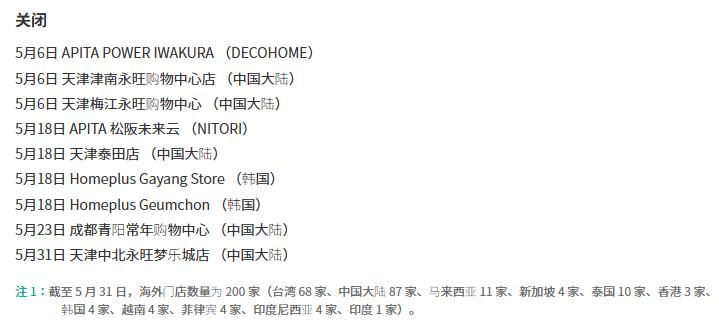
Core Viewpoint - NITORI, Japan's largest home goods retailer, is experiencing a contraction in its Chinese market operations, with a significant reduction in store numbers and declining global revenues, raising questions about its overseas strategy and market fit [1][3][5]. Group 1: Company Background and Expansion - Founded in 1967, NITORI began as a small furniture store and evolved into a retail giant by adopting a low-cost model inspired by U.S. home goods stores [1][2]. - The company expanded rapidly in Japan, achieving significant milestones such as surpassing 1,000 stores globally by March 2024 and setting a goal of 3,000 stores by 2032 [2][3]. Group 2: Challenges in the Chinese Market - NITORI entered the Chinese market in 2014 and saw rapid growth, with store numbers increasing from 46 in February 2022 to 106 by early 2025, but has since faced setbacks [3][4]. - As of May 2025, NITORI's Chinese stores decreased from 106 to 87, indicating a net loss of 19 stores in less than six months [4]. Group 3: Financial Performance - NITORI's global revenue has fluctuated, with figures of 948 billion yen in 2022, 895.7 billion yen in 2023, and 928.9 billion yen in 2024, while net profit dropped from 951 billion yen to 768 billion yen over the same period [5][16]. Group 4: Reasons for Underperformance in China - Price competitiveness is lacking, as NITORI's prices do not significantly undercut those found on platforms like Pinduoduo and Taobao [14]. - The brand's positioning is unclear, lacking the experiential marketing seen with competitors like IKEA and Muji, which diminishes its appeal to Chinese consumers [14][15]. - High operational costs associated with large store formats hinder profitability, especially in areas with insufficient foot traffic [14]. - NITORI's brand recognition is low in China compared to its competitors, impacting its market penetration [14]. - The product design does not resonate with younger consumers, who are a key demographic for home goods [15][16].
丰田章男高票连任丰田会长,集团战略转型引发关注
Xin Lang Cai Jing· 2025-06-16 05:52
Core Viewpoint - Toyota's Chairman Akio Toyoda received high support for his re-election, reflecting the company's strategic ambitions in electric vehicle transformation and supply chain integration despite concerns from overseas investors regarding the acquisition of Toyota Industries [3][4]. Group 1: Shareholder Meeting and Leadership - Akio Toyoda was re-elected as Chairman with a support rate exceeding 96%, a significant recovery from a historical low of 72% in 2024 [3]. - The support from domestic retail shareholders contrasted with overseas investors' skepticism about the ¥4.7 trillion (approximately $33 billion) acquisition plan for Toyota Industries [3][4]. - The backing from advisory firms Glass Lewis and Institutional Shareholder Services (ISS) played a crucial role in Toyoda's re-election after previously opposing him for governance issues [3]. Group 2: Acquisition of Toyota Industries - The acquisition aims to privatize Toyota Industries, which holds a 9.1% stake in Toyota and 5.41% in Denso, to enhance supply chain efficiency and focus on long-term technological investments [4]. - Some overseas shareholders criticized the acquisition price of ¥16,300 per share as undervaluing Toyota Industries and potentially increasing family control over the group [4]. Group 3: Electric Vehicle Strategy - Toyota plans to mass-produce solid-state batteries by 2026, targeting a 10-minute charging time and a range of 1,200 kilometers, marking a significant advancement over current lithium-ion technology [6]. - The company is also advancing in hydrogen fuel cell technology, with the second-generation Mirai set to launch in China in 2025, featuring a range of 850 kilometers [6]. - Toyota aims to establish 1,000 hydrogen refueling stations in China by 2030, collaborating with local enterprises to enhance infrastructure [6]. Group 4: Market Performance and Financials - In the first quarter of 2025, Toyota maintained its position as the top global automaker with sales of 2.063 million vehicles, although it faced a 6.9% decline in sales in China in 2024 [6][7]. - Financially, Toyota reported a 6.5% increase in revenue to ¥48.37 trillion for the fiscal year 2024-2025, while operating profit fell by 10.4% to ¥4.8 trillion and net profit decreased by 3.6% to ¥4.765 trillion [7]. - Despite profit declines, Toyota retains a cash reserve of ¥8.98 trillion, providing a solid foundation for its transformation plans [7].

抖音小店代运营公司十大排名
Sou Hu Cai Jing· 2025-06-08 10:10
Core Insights - Douyin e-commerce ecosystem is experiencing explosive growth, with Douyin Xiaodian becoming a new battleground for brands [1] - The代运营 industry is showing polarization, with leading companies forming barriers through resource integration and data capabilities, while smaller firms are focusing on niche markets [1][12] Industry Overview - The article outlines the top ten代运营 companies, providing a reference for businesses to choose partners based on comprehensive strength, case data, and industry reputation [3] - Businesses should match their specific needs, such as category characteristics, budget scale, and growth stage, when selecting service providers [3] Top Ten代运营 Companies - **1st: Xinxing E-commerce**: Focuses on "data-driven + full-case operation," excels in incubating Douyin Xiaodian from scratch, and has helped a new consumer brand achieve a monthly GMV of 80 million [5] - **2nd: Pairui Weixing**: A marketing giant that leverages cross-platform resource synergy, achieving a 300% year-on-year GMV growth for a 3C brand during Double Eleven [6] - **3rd: Yanyu Xin**: Known as a "content creative factory," it has a team from 4A advertising companies and has created a record of over 20 million in sales from a single video [7] - **4th: Mijing Culture**: Specializes in live e-commerce with over 5,000 signed hosts, helping merchants reduce live broadcast costs by 30% [8] - **5th: Boguan Ruisi**: Emphasizes "full-link digital operation," achieving a 45% increase in customer unit price for a maternal and infant brand [9] - **6th: Feiying Interactive**: Known for "black technology tools," it has improved consultation conversion rates by 30% in the 3C digital field [10] - **7th: Zhaohai Media**: Focuses on supply chain integration, helping a home goods brand improve inventory turnover by 60% [11] - **8th: Jiaoge Friends**: Leverages the influence of IP figures like Luo Yonghao, with high service fees but strong advantages in the 3C and home appliance sectors [12] - **9th: Wuyou Media**: A leading MCN institution that excels in brand exposure through a combination of narrative short videos and live broadcasts [13] - **10th: Yaowang Network**: Features "star live broadcasts" with signed celebrities, suitable for mature brands with sufficient budgets [14] Industry Trends - **Professional Division of Labor**: Full-service providers and vertical experts coexist, requiring businesses to choose based on their needs [12] - **Data-Driven Decision Making**: Leading institutions have adopted AI tools for refined operations from product selection to advertising [12] - **Supply Chain Integration**:代运营 companies are transitioning from "traffic intermediaries" to "industry service providers," with those possessing supply chain capabilities holding more long-term value [12] Recommendations for Businesses - **Case Authenticity**: Businesses should request backend data screenshots instead of relying solely on case presentations [13] - **Service Transparency**: Caution against promises like "guaranteed GMV," preferring performance-based cooperation models [13] - **Resource Matching**: Confirm that the agency's expertise aligns with the business's category [13] Future Outlook - As the Douyin e-commerce closed-loop ecosystem improves, the value of代运营 companies will evolve from "operational agents" to "strategic partners," necessitating a focus on industry insights and resource integration capabilities [12]

2025年中国餐饮连锁化发展白皮书-中国餐饮连锁化率已达23%
Sou Hu Cai Jing· 2025-06-06 01:12
Industry Overview - The Chinese catering market is expected to exceed 5.5 trillion yuan in 2024, with a year-on-year growth of 5.3%, outpacing the growth of retail sales of consumer goods [1][14] - The chain rate has increased to 23%, up from 19% in 2021, indicating a significant rise in the expansion of leading brands [1][14] - The number of brands with 501-1000 stores has grown the fastest at 93.6%, reflecting a shift towards efficiency and quality in the industry [1][14] Category and Business Model Innovation - The chain rate for beverage stores remains stable at 49%, while self-service restaurants and local cuisines are emerging as growth highlights [1][30] - Self-service restaurants are innovating through both low-cost and high-quality offerings, with a 5% increase in chain rate [1][30] - Brands like Laoxiangji and Jiumaojiu are expanding through the "satellite store" model, reducing rental costs by 60% and increasing order volume by 1.74 times [1][30] Regional Market Characteristics - New first-tier cities lead in chain store distribution, with a chain store proportion of 23.4%, while first-tier cities reach 35.1% [2] - The catering consumption in lower-tier markets has increased by 19.6%, with a 32.9% share of new merchants [2] Franchise Model Upgrades and Capital Trends - Major brands like Haidilao and Jiumaojiu are opening up franchises, with over 85% of franchisees possessing cross-industry operational capabilities [6] - In 2024, the number of catering investment and financing cases decreased to 70, with a focus on supply chain and digitalization [6] Consumer Behavior and Product Trends - The average dining price has decreased by 10.2%, but the acceptance rate for high-rated merchants has increased by 13.7% [7] - Breakfast delivery has surged by 118.9%, and nighttime economy is driving growth in categories like barbecue and crayfish [7] Future Trends Outlook - The industry is transitioning from "scale-driven" to "value-driven," with a need for deeper supply chain integration and digital operations [8] - The dual penetration of lower-tier and high-tier cities is expected to continue, with regional specialties breaking through through standardization and cultural tourism integration [8]

青岛零售巨头创始人之女正式接班,80后“创二代”,能否拯救这家日渐衰退的零售帝国?
3 6 Ke· 2025-05-28 05:25
徐恭藻等元老的退出,标志着一个时代的落幕。徐瑞泽治下的 "新利群" 管理团队正式宣告成型。 值得注意的是,新任总裁王本朋的加入,标志着利群首次引入职业经理人参与核心管理,这种 "家族传承 + 专业治理" 的新模式,在零售行业代际更迭案 例中极具研究价值。 这绝非一次仓促的交接,早在 2017 年利群股份上市之时,徐瑞泽便以副董事长的身份参与到公司的核心决策之中。 此后,她更是主导了供应链与物流体系的数字化改革,因其卓越的领导能力和专业素养,被内部尊称为 "物流女王"。 这场酝酿八年之久的权力过渡,不仅关乎利群这个青岛零售龙头企业的未来,更折射出传统零售企业在数字化浪潮中的突围困境与转型决心。 新任管理团队名单透露出强烈的革新信号:从董事层面来看,徐恭藻、戴国强、王文、姜省路、孙建强、丁琳退出董事会,而姜晖、李勇、高伟、李卫 红、王竹泉进入董事会 。 利群二代接班:徐瑞泽出任利群股份董事长 当盒马、山姆等新零售势力加速跑马圈地时,青岛零售传奇利群也迎来标志性时刻 ——43 岁的徐瑞泽正式接过父亲徐恭藻手中的接力棒,出任利群股份 董事长。 此次人事变动,不仅是对徐瑞泽过往成绩的高度认可,更是利群股份对未来战略方向 ...