出海战略

Search documents
伴鱼PalFish登福布斯出海榜
Zhong Guo Jing Ying Bao· 2025-11-11 06:29
Core Insights - Forbes China released the 2025 Globalization TOP 30 list, with PalFish, an international brand under Banyu, being the only education company included, highlighting its successful globalization strategy [1] - PalFish's overseas business has an annual growth rate exceeding 150%, contributing approximately 20% to the company's total revenue, establishing a robust second growth curve [1] Group 1: Business Strategy - PalFish maintains a "high quality, high price" positioning in overseas markets, ensuring a healthy business model and continuous service investment through the establishment of new brands and high pricing standards [1] - The company emphasizes two main barriers to entry: a clear positioning aimed at being the best, which entails higher service costs and better experiences, and a commitment to patience and strategic determination [1] Group 2: Market Expansion - High online customer acquisition costs have driven Banyu to expand into offline markets, with 14 learning centers opened in Southeast Asia since the end of 2023 [1] - Offline stores serve as brand showcases and customer acquisition channels, enhancing local influence through large events and local celebrity endorsements [1] Group 3: Technological Innovation - AI technology is identified as a core engine driving global business efficiency and experience innovation, with the company's self-developed AI teacher, "Keke Teacher," applied in overseas courses for personalized one-on-one teaching [2] - The Forbes list evaluation indicates that the companies included represent "high growth, strong innovation, and accelerated globalization," pushing Chinese enterprises from "scale going global" to "value going global" [2]
国星光电:公司积极推动出海战略,取得了系列显著成果
Zheng Quan Ri Bao Wang· 2025-11-10 08:10
Core Viewpoint - Company has actively promoted its overseas strategy in recent years, achieving significant results in market expansion and brand building [1] Market Expansion - Company products have successfully entered markets in Southeast Asia, the Americas, and Europe, with overseas revenue expected to grow year-on-year in 2024 through exhibitions and channel development [1] - Key overseas customers have seen double-digit sales growth [1] - Participation in major international exhibitions, such as ISE in February and InfoComm in June, has attracted considerable attention from industry experts and overseas clients [1] Brand Building - Company has registered its "NATIONSTAR" trademark in multiple key overseas markets, enhancing its brand presence [1] - High-end custom brand REESTAR has been successfully applied in significant international events, such as the Paris Olympics and Adele's concert in Munich, greatly increasing its international influence [1] Future Strategy - Company plans to increase R&D investment to drive overseas market expansion through a "technology + industry" dual approach, focusing on high-value LED core competitive advantages in RGB display devices, automotive LEDs, consumer electronics, and backlight modules [1] - The establishment of an overseas division will coordinate the company's international business development, conducting in-depth research on market demands, regulations, and cultural differences in various countries [1]

骨科耗材行业及个股2025三季度回顾与展望
Tianfeng Securities· 2025-11-09 14:04
Investment Rating - The industry investment rating is maintained as "Outperform the Market" [2][57]. Core Insights - The orthopedic consumables sector has shown continuous improvement in performance during the first three quarters of 2025, with a positive trend in overseas expansion [3][10]. - The overall revenue of the orthopedic consumables sector increased by 17% year-on-year for Q1-Q3 2025, with net profit attributable to shareholders rising by 81% [5][10]. - The gross profit margin for the sector improved to 66% in Q1-Q3 2025, reflecting effective cost control and optimization [4][10]. - The trend of companies actively pursuing international markets is expected to become a significant growth driver [10][27]. Summary by Sections 1. Orthopedic Consumables Q3 2025 Report Analysis - The orthopedic consumables sector's revenue for Q1-Q3 2025 reached 49.18 billion, with a year-on-year growth of 17% [9]. - The gross profit margin for Q3 2025 was reported at 67%, an increase of 2.06 percentage points compared to the previous year [10]. - The net profit attributable to shareholders for Q3 2025 doubled year-on-year, indicating significant performance improvement [10]. 2. Segment Analysis - The joint business segment has seen stable growth due to the continuation of centralized procurement and an increase in both volume and price for leading companies [19][24]. - The spinal segment is experiencing a steady execution of centralized procurement, with leading domestic brands increasing their market share [25]. - The trend of domestic companies expanding overseas is gaining momentum, with a focus on product innovation and international development [27][29]. 3. Related Company Q3 Report Summary - Major companies in the sector, such as Dabo Medical, Weigao Orthopedics, and Spring Medical, have shown strong revenue growth and profitability improvements in Q3 2025 [12][41][45]. - Dabo Medical reported a revenue of 18.76 billion, up 22.69% year-on-year, with a net profit of 4.25 billion, reflecting a 77.03% increase [45]. - Spring Medical achieved a remarkable revenue growth of 109.5% in Q3 2025, turning a previous loss into a profit of 770.6 million [33].



宇信科技:在欧洲市场 成功中标业内领先银行伦敦分行数据平台一期项目
Xin Lang Cai Jing· 2025-11-09 11:19
Core Insights - The company has achieved initial success in its overseas strategy this year, attracting significant attention from global financial institutions with the support of AI capabilities [1] Group 1: Market Expansion - In the European market, the company successfully won the bid for the first phase of a data platform project for a leading bank's London branch [1] - In the Indonesian market, the company has partnered with a leading digital bank to conduct joint operations, resulting in rapid business growth [1] - In the Hong Kong and Macau markets, the company secured multiple data implementation projects for a commercial bank and formed strategic partnerships with several global fintech companies, leading to an increase in product deployment cases such as corporate online banking, digital wallets, and loyalty platforms [1] Group 2: Brand Recognition - The company is currently in the system testing phase for a new generation core banking system project for a multinational bank's Hong Kong and international branches, which has further enhanced its brand recognition in the local market [1]

居然之家王宁:在“剩者为王”时代以“精耕细作”重塑行业竞争力
Zhong Guo Jin Rong Xin Xi Wang· 2025-11-09 10:04
Core Viewpoint - The company is undergoing significant transformation, focusing on professionalization, risk management, and a shift from rental to retail business, indicating a strong growth potential in the home furnishing industry [1][2]. Industry Outlook - The home furnishing and building materials industry is characterized by a large market size of approximately 5 trillion yuan, yet low market concentration, with leading companies like the company and Red Star Macalline holding less than 20% market share, suggesting substantial growth opportunities for top players [1][2]. - Over 82% of consumers still prefer traditional furniture markets for purchasing furniture and building materials, indicating a strong competitive advantage for offline home furnishing markets [1]. - The industry has low repurchase rates but high cross-selling potential, as consumers often buy multiple related products in a single transaction [1]. Company Strategy and Adjustments - The company is transitioning from a phase of rapid expansion to a focus on refined operations, adapting to a new cycle characterized by "survival of the fittest" [2]. - The company has established a standardized operational system across nearly 400 stores nationwide, enhancing its market presence [2]. - Organizational restructuring has led to the creation of a new retail marketing center, integrating online marketing tools with physical store operations to improve efficiency [2]. Business Segments and Future Plans - As of mid-2025, the company aims for a "retail-led" business structure, with retail revenue of 3.631 billion yuan, accounting for 56.34% of total revenue, reflecting a year-on-year growth of 29.49% [3]. - The company plans to develop 50 lifestyle experience centers in major cities over the next three years, focusing on immersive experiences for home office, pet cohabitation, and family interaction [3]. - The rental business remains a significant revenue source, generating 2.6 billion yuan, or 40.34% of total revenue, with a gross margin of 47.24% [4]. Digital Transformation and Brand Strategy - The company has reverted its name back to "居然之家" to emphasize a return to its core business essence, while integrating digital and intelligent upgrades into its operations [6]. - The company has achieved significant digital integration, with over 19 million registered designers globally and extensive design case studies, enhancing its service offerings [6]. International Expansion Plans - The company plans to integrate supply chains and promote domestic brands internationally, with a focus on Southeast Asia and the Middle East, targeting regions with rising property prices and a young population [7]. - The company aims to diversify its overseas business to include not only home furnishing but also local dining experiences, enhancing its market presence abroad [7]. Financial Management and Future Projections - The company maintains a moderate debt level, primarily for long-term beneficial projects, ensuring short-term repayment pressure is low [8]. - The company anticipates increasing its market share from 12.5% to 15-20% over the next three to five years, particularly in economically strong regions like East China [8].

出海案例分享:瑞幸“杀”入新加坡,但不靠9块9!
首席商业评论· 2025-11-07 04:11
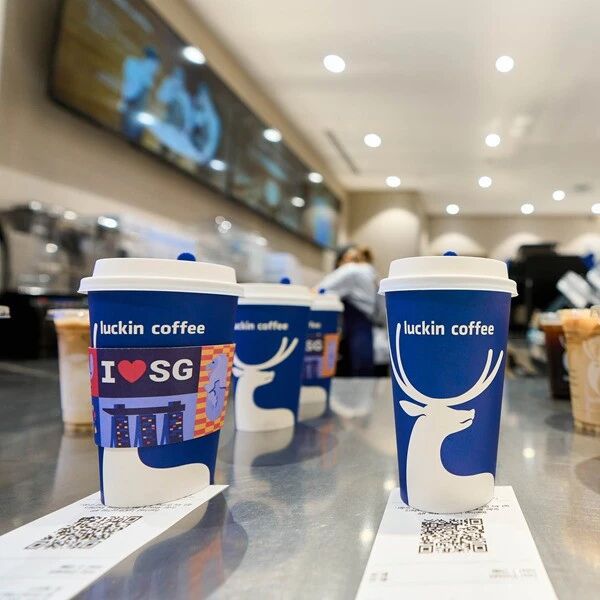
Core Insights - The article discusses Luckin Coffee's strategic expansion into Singapore, highlighting its departure from aggressive pricing strategies used in China to a more refined approach tailored to the new market [2][4]. Group 1: Market Context - In 2023, the Chinese retail and service industry is experiencing a surge in overseas expansion, with brands like Luckin Coffee, Heytea, and others aggressively entering Southeast Asia [4]. - Luckin Coffee holds nearly 40% of China's coffee supply chain, benefiting from significant economies of scale and an efficient supply chain, which provides a competitive cost advantage domestically [4]. Group 2: Strategic Framework - The "Strategic Compass" matrix indicates that when entering a high-attractiveness but high-difficulty market like Singapore, companies must choose between cost leadership and innovation leadership [7][9]. - Luckin Coffee opted for innovation leadership, avoiding a low-cost strategy that could harm its brand in a quality-focused market [7]. Group 3: Innovation Strategies - **Product Innovation**: Luckin introduced unique products like Coconut Latte and Velvet Latte, filling a gap in Singapore's coffee market where such offerings were previously unavailable [11]. - **Pricing Strategy**: The company adopted a smart pricing strategy, positioning its products 10-20% lower than Starbucks for common items while pricing unique offerings 10-20% higher, signaling quality without being perceived as cheap [14]. - **Marketing Approach**: Instead of traditional celebrity endorsements, Luckin leveraged user-generated content (UGC) to engage local consumers, focusing on social media interactions and community events [18][20]. Group 4: Lessons for Other Brands - Luckin's success in Singapore illustrates that domestic advantages can be restructured for higher profit margins abroad rather than relying on low pricing [22]. - The company demonstrates that innovation can create new market segments rather than competing directly with established players [22]. - The shift from expensive marketing strategies to cost-effective UGC approaches can resonate better with local consumers, maximizing impact while minimizing costs [22].


布里“乾坤”大 “国际纺都”绍兴柯桥的“反内卷”观察
Xin Hua Wang· 2025-11-06 02:33
Core Insights - The textile industry in Keqiao, Zhejiang, is recognized as a global textile hub with over 8,000 enterprises and a complete supply chain, covering more than 200 countries and regions [1] - The local textile merchants are facing increasing competition and profit margin pressures, prompting them to seek innovative ways to market their products [1] Group 1: Innovations in Materials - Zhejiang Huixian Textile Technology Co., Ltd. has introduced "Bokang" long silk made from natural needle leaves, which features antibacterial properties and a soft touch, marking a shift towards bio-based green materials [1][2] - The company has over a decade of experience in the domestic application of bio-based materials and has transitioned from product development to creating a collaborative industrial ecosystem centered around new materials [3] Group 2: Market Segmentation and Brand Transformation - Zhejiang Shanggu Textile Co., Ltd. has shifted its focus to niche markets, particularly outdoor functional fabrics, achieving significant growth and brand recognition by creating immersive retail experiences [4][5] - The company has expanded its team and maintained double-digit sales growth over the past two years, exemplifying successful innovation and transformation within the industry [4] Group 3: Digital Transformation and Design Focus - Traditional printing companies in Keqiao are investing in digital printing technology to enhance speed and originality, with some achieving delivery times as short as four days [6][7] - Companies are transitioning from service-oriented to brand-oriented models, emphasizing design as a core competitive advantage, which has led to increased market demand [7] Group 4: International Expansion Strategies - Zhejiang Jinchai Fabric Co., Ltd. has been proactive in exploring international markets, exporting products to over 60 countries and regions, and is now targeting emerging markets in Europe and the Middle East [8] - The establishment of the "Light Textile Digital Trade Port Cross-Border E-Commerce Innovation Center" aims to support local textile enterprises in their international expansion efforts [8]
梅花生物(600873):Q3经营性业绩符合预期,并表协和发酵加速海外布局
Shenwan Hongyuan Securities· 2025-11-06 02:13
Investment Rating - The investment rating for the company is "Outperform" [8] Core Views - The company's Q3 operational performance met expectations, with a revenue of 18.215 billion yuan, a year-on-year decrease of 2%, and a net profit attributable to shareholders of 3.025 billion yuan, a year-on-year increase of 52% [8] - The company is advancing its globalization strategy, having completed the consolidation of assets from a foreign acquisition, marking a new phase in its international expansion [8] - The forecast for the company's net profit attributable to shareholders for 2025 has been raised to 3.628 billion yuan due to the impact of merger gains, while forecasts for 2026 and 2027 have been adjusted downwards [8] Financial Data and Profit Forecast - Total revenue for 2025 is projected at 26.803 billion yuan, with a year-on-year growth rate of 6.9% [7] - The net profit attributable to shareholders for 2025 is estimated at 3.628 billion yuan, reflecting a year-on-year growth of 32.4% [7] - The company's gross margin is expected to be 19.7% in 2025, with a return on equity (ROE) of 22% [7] Market Data - The closing price of the company's stock is 11.28 yuan, with a market capitalization of 31.632 billion yuan [6] - The price-to-earnings (PE) ratio is projected to be 9 for 2025 [7]

骨科耗材行业-2025医药三季报分析电话会
2025-11-03 15:48
Summary of Orthopedic Consumables Industry Conference Call Industry Overview - The orthopedic consumables industry is benefiting from factors such as an aging population, increasing disease incidence, technological applications, and accelerated domestic substitution. Policies implemented across various regions are boosting confidence in the industry. It is expected that the industry will maintain a positive development trend over the next two to three years [1][5][3]. Key Points on Company Performance Spring Medical - Spring Medical's revenue doubled in the first three quarters, with a cumulative growth rate of 49%, and profit growth was even faster. The overseas business accounted for over 40% of total revenue, with domestic and international growth rates exceeding 20%. The company exports to over 50 countries, with ongoing expansion in the European and American markets [1][10]. - In the joint business segment, the company saw a significant increase in knee joint consumable shipments, reaching approximately 40% of total shipments, indicating effective operational management and resource optimization [1][6]. - Spring Medical has obtained registration certificates in over 30 countries, with simultaneous registration for hip, knee, and spine product lines, and is increasing R&D investment [1][9]. Weigao Orthopedics - Weigao Orthopedics reported a 10% revenue growth in the third quarter, despite a 9% year-on-year decline in joint business revenue, although sales volume increased. The company is responding to changes in clinical surgical paradigms by enhancing the development of minimally invasive surgical instruments, which have a higher gross margin [4][11]. - The domestic business structure shows a 60:40 split between procurement and non-procurement products, with non-procurement business revenue exceeding 40%, enhancing the company's risk resistance [4][12]. Sanyou Medical - Sanyou Medical experienced rapid growth in the third quarter, particularly in international markets, with the U.S. market being the largest, showing a 22% year-on-year increase. The overall U.S. market grew by 83%, becoming a key driver of the company's international business [17]. Dabo Medical - Dabo Medical maintained rapid growth in the third quarter, focusing R&D investments on orthopedic and high-value consumables outside orthopedics, including dental, neurosurgery, and minimally invasive surgery [19]. Market Trends and Future Outlook - The orthopedic consumables sector is expected to continue its positive trajectory over the next two to three years, driven by demographic changes, disease prevalence, and technological advancements [3][5]. - The spine business is anticipated to see a renewal of contracts by the end of the year, with domestic leading companies having advantages in volume reporting and policy formulation, while imported brands are adjusting their strategies in the Chinese market [7]. - Companies are actively expanding overseas through registration, strategic promotion, product launches, and localization efforts, with a focus on developed markets like Western Europe and the U.S. [8][9][18]. Additional Insights - The orthopedic consumables sector is experiencing a significant improvement in profit margins, with revenue growth of approximately 17% year-on-year and even faster net profit growth in the first three quarters of 2025 [2]. - The overall inventory levels in both domestic and overseas joint businesses are stable and within a healthy range, indicating effective inventory management [13]. This summary encapsulates the key insights and performance metrics from the orthopedic consumables industry conference call, highlighting the growth trajectories and strategic initiatives of leading companies in the sector.
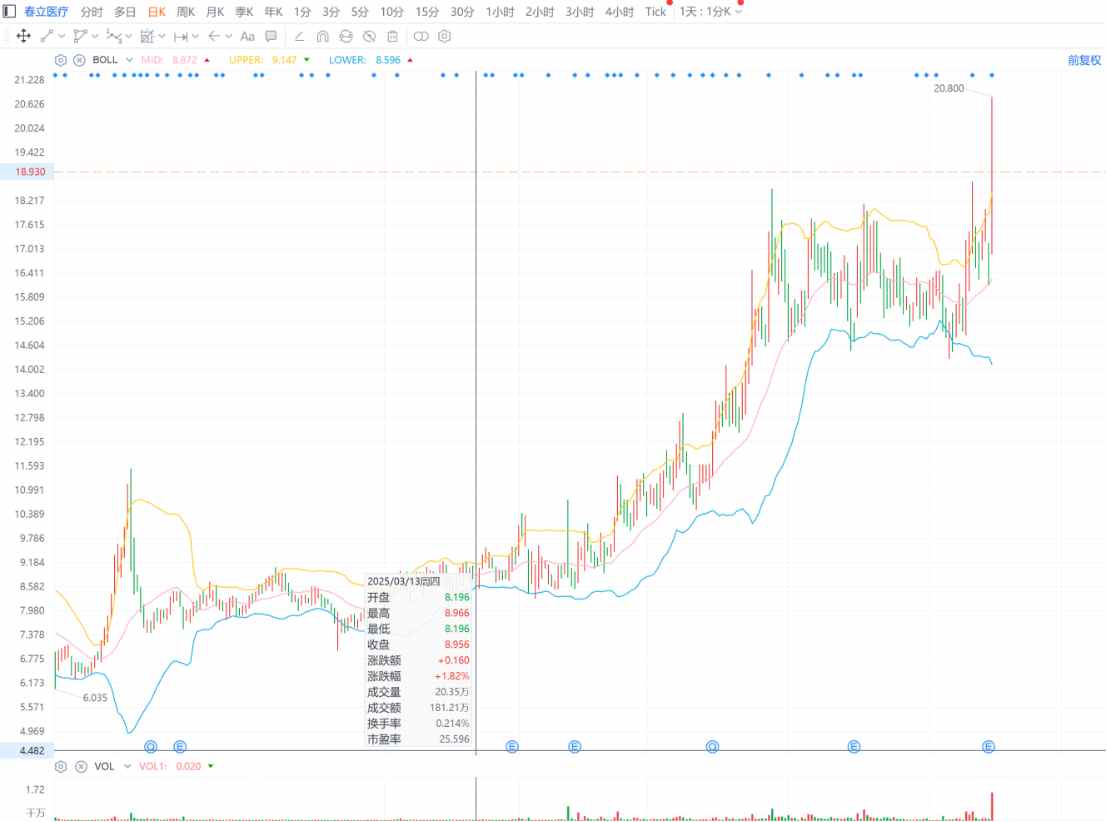
集采影响消散年内股价涨超120%,横盘三个月的春立医疗将走向何方?
Zhi Tong Cai Jing· 2025-11-02 11:16
Core Viewpoint - The performance of Spring Medical has shown significant recovery after the impact of centralized procurement, with notable increases in revenue and net profit in recent quarters [2][3][12]. Financial Performance - In Q3 2024, Spring Medical reported revenue of 756 million yuan, a year-on-year increase of 48.75%, and a net profit of 192 million yuan, up 213.21% year-on-year [2]. - The company's Q3 revenue reached 268 million yuan, marking a 109.51% increase year-on-year, and the net profit turned positive at 77.06 million yuan [2][3]. - In Q1 2023, Spring Medical achieved a revenue of 230 million yuan, a slight increase of 3.6%, and a net profit of 58 million yuan, up 5.2% [3]. Market Trends - The orthopedic consumables industry is experiencing a recovery, with Spring Medical's revenue growth in Q2 2025 reaching 62.85%, outperforming peers [6]. - The global orthopedic medical device market is projected to grow to $62.22 billion in 2024 and exceed $94 billion by 2032, with a stable annual growth rate of 5.3% [12]. Stock Performance - Spring Medical's stock price has increased by 122.13% year-to-date as of October 31, 2024, reflecting renewed market confidence [2]. - The stock experienced a significant rise in May, June, and July 2024, with respective increases of 17.69%, 12.18%, and 29.85% [9]. Strategic Developments - Spring Medical has been actively expanding its international market presence, with overseas revenue accounting for 40% of total revenue in the first half of 2025 [14]. - The company has received multiple regulatory approvals for its products, including the FDA 510(K) approval for its knee prosthesis system, enhancing its competitive edge in international markets [15]. Product Development - Spring Medical has made significant advancements in product development, with 35 new registrations obtained in the first nine months of the year, and R&D investment accounting for 11.44% of revenue [13]. - The company is the first in China to have a chemical vapor deposition manufacturing process for porous tantalum metal implants, breaking foreign monopolies [13].