
利率市场化

Search documents
如何理解LPR和大型商业银行存款挂牌利率同步下降
Jin Rong Shi Bao· 2025-08-08 08:01
Core Viewpoint - The recent decrease in the Loan Prime Rate (LPR) and deposit rates by major commercial banks is aimed at enhancing financial support for the real economy, promoting economic recovery, and optimizing asset allocation for residents [1][2][4]. Group 1: Impact on Financing Costs - The LPR for 1-year and over 5-year loans has decreased by 0.1 percentage points to 3.0% and 3.5% respectively, which is expected to lower financing costs and stimulate credit demand [1]. - The reduction in deposit rates by commercial banks, including a 0.05 percentage point drop in demand deposits and a 0.15 to 0.25 percentage point drop in time deposits, is a strategic move to lower overall financing costs in the economy [1][2]. Group 2: Financial Services and Risk Management - The decline in deposit rates is seen as a necessary step to maintain a reasonable net interest margin for banks, which is crucial for their ability to serve the real economy and manage financial risks effectively [2]. - The banking sector's net interest margin has been decreasing, and the adjustment in deposit rates is intended to enhance the sustainability of financial services provided to the real economy [2]. Group 3: Market Dynamics and Asset Allocation - The simultaneous decrease in LPR and deposit rates indicates an improvement in the market-oriented pricing mechanism for deposits, allowing for differentiated and market-based pricing strategies [3]. - The reduction in deposit rates is expected to encourage residents to optimize their asset allocation, potentially leading to increased investments in the stock and real estate markets, as returns from these investments may surpass those from bank deposits [4].

这次不是大行!四川银行抢得首单商业银行浮息科创债
经济观察报· 2025-08-06 13:25
Core Viewpoint - The article highlights the significant role of small and medium-sized banks, particularly Sichuan Bank, in the issuance of technology innovation bonds (科创债), emphasizing their innovative approaches and contributions to regional technological development [2][9]. Group 1: Issuance of Technology Innovation Bonds - As of July 30, 2025, a total of 33 banks have issued technology innovation bonds, with a total scale of 235.8 billion yuan, where small and medium-sized banks account for over half of the issuances [2]. - Sichuan Bank issued the first floating-rate technology innovation bond by a commercial bank in China, with a scale of 1.1 billion yuan and an interest rate of 1.85% over a 5-year term [2][6]. - The funds raised by Sichuan Bank are planned to be allocated within three months, targeting both small and high-tech enterprises in Sichuan province and supporting state-owned enterprises' bond issuance plans [9]. Group 2: Floating Rate Design Considerations - Sichuan Bank's decision to issue floating-rate bonds is driven by three main considerations: exploring innovative products, reducing financing costs, and mitigating interest rate risks [7]. - The floating-rate bonds are designed to adjust interest rates quarterly based on a benchmark rate, which can help lower interest costs in a declining interest rate environment [6][7]. - The floating-rate mechanism enhances the attractiveness of the bonds to investors and improves liquidity compared to fixed-rate bonds [7]. Group 3: Support for Technology Innovation - Sichuan Bank has established a comprehensive system to support technology finance, combining bond issuance with credit services to promote the growth of technology enterprises [12]. - The bank aims to create a product matrix that covers the entire lifecycle of technology enterprises, including specialized loan products and innovative credit solutions based on intellectual property [13]. - The bank's goal for 2025 includes increasing technology loan amounts by over 2 billion yuan and maintaining a service coverage rate of over 80% for technology innovation bond clients [13]. Group 4: Challenges and Market Position - Despite the opportunities, Sichuan Bank faces challenges in issuing long-term floating-rate technology bonds due to limited market familiarity and competition from larger banks [9][10]. - The bank has supported 13 technology innovation bond issuers in Sichuan, covering over 80% of the province's issuers, with an annual growth rate of over 10% in bond investments [10]. - Sichuan Bank is working on enhancing its risk control capabilities and optimizing post-loan management to better serve technology enterprises [14].

3.3%,社会综合融资成本低位下行
Jing Ji Ri Bao· 2025-07-18 21:59
Group 1 - The People's Bank of China (PBOC) reported that in the first half of this year, RMB loans increased by 12.92 trillion yuan, and the total social financing scale increased by 22.83 trillion yuan, which is 4.74 trillion yuan more than the same period last year [1] - The average interest rate for newly issued corporate loans was approximately 3.3%, down about 45 basis points year-on-year, while the interest rate for new personal housing loans was about 3.1%, down about 60 basis points year-on-year [1] - The PBOC has implemented a series of monetary policy adjustments, including a 0.1 percentage point reduction in policy rates and a 0.25 percentage point reduction in structural monetary policy tool rates, which led to a 0.1 percentage point decrease in the Loan Prime Rate (LPR) [2][3] Group 2 - The recent decline in LPR and deposit rates reflects an enhanced linkage between deposit and loan rates, indicating an increase in the marketization of interest rates [5] - The reduction in the 5-year LPR directly benefits mortgage borrowers, as it lowers their interest burden and enhances their consumption capacity, supporting domestic demand [4] - The PBOC has cumulatively reduced the reserve requirement ratio (RRR) 12 times and policy rates 9 times since 2020, resulting in significant decreases in the 1-year and 5-year LPR by 115 and 130 basis points, respectively [3] Group 3 - The PBOC's monetary policy aims to maintain ample liquidity and relatively low financing costs, which is crucial for stabilizing employment, businesses, and market expectations [2] - The recent financial support measures, including the reduction of housing provident fund loan rates, are seen as effective actions to stimulate consumption [4] - The average interest rates for newly issued inclusive small and micro enterprise loans and privately held enterprise loans were 3.69% and 3.45%, respectively, both down from the previous year [8]
下半年货币政策“适度宽松” 专家解读利率走势
Zhong Guo Jing Ying Bao· 2025-07-14 11:57
Monetary Policy Outlook - The People's Bank of China (PBOC) will further implement a moderately loose monetary policy to enhance financial services for the real economy [1][2] - Predictions indicate potential reductions in the reserve requirement ratio (RRR) and interest rates in the second half of the year, with deposit rates expected to decline further [1][3] Banking Sector Adjustments - Several banks have lowered deposit rates and removed five-year large-denomination certificates of deposit, reflecting a market-driven adjustment influenced by the decline in the one-year Loan Prime Rate (LPR) and government bond yields [1][3] - The net interest margin of commercial banks was reported at 1.43% as of the end of Q1 2025, indicating a historical low [3] Financial Institutions' Strategies - Banks are encouraged to optimize asset structures and increase the proportion of medium- to long-term assets while monitoring deposit interest rates dynamically to manage overall funding costs [1][4] - The trend of deposit long-termization continues, and the reduction in deposit rates is expected to alleviate interest expenses and stabilize funding costs, thereby improving banks' profitability [4][5] Regulatory Environment - The regulatory framework aims to standardize the deposit market and enhance the transmission mechanism of monetary policy, which is expected to lower the overall financing costs in society [4][5] - The supervision of high-interest deposit solicitation practices and the encouragement of banks to optimize deposit term structures are part of the efforts to ensure that interest rates reflect supply and demand dynamics [5]
银行间利率衍生品市场发展回顾与展望
Sou Hu Cai Jing· 2025-07-10 02:31
Overview of the Development of China's Interbank Interest Rate Derivatives Market - The article reviews the development of China's interbank interest rate derivatives market over the past twenty years, highlighting key characteristics such as the diversification of trading varieties, the increasing variety of market participants, the improvement of trading and clearing methods, the expansion of market boundaries, the diversification of application scenarios, steady progress in opening up, and the continuous enhancement of services to the real economy [1][2]. Historical Development of Interest Rate Derivatives Market 1. Initial Exploration Period (2005-2014) - The first RMB interest rate swap transaction occurred in October 2005, marking the official start of the market. By 2014, the trading volume surged from 30 billion yuan to 4 trillion yuan [2][4]. - Market participants were primarily financial institutions, with commercial banks focusing on hedging against interest rate risks [3]. 2. Accelerated Development Period (2014-2019) - In 2014, the Shanghai Clearing House began providing centralized clearing services for RMB interest rate swaps, significantly reducing counterparty credit risk and enhancing market liquidity. The trading volume reached 20 trillion yuan by 2018, five times the volume in 2014 [4][5]. 3. Maturing Period (2019-Present) - The market has seen a diversification of trading varieties and participants, with the introduction of LPR-linked interest rate swaps and standard interest rate swap services. The trading volume has consistently exceeded 30 trillion yuan annually in recent years [5][6][7]. Current Status of the Interest Rate Derivatives Market - The annual trading volume of interest rate derivatives has grown from 30 billion yuan to 30 trillion yuan over the past two decades, indicating high growth rates. However, the overall scale remains small compared to international markets, with significant potential for further development [10][11]. - The number of market participants has increased, but the market structure remains relatively flat, indicating a need for further diversification of participant types [11][12]. Recommendations for Market Development 1. Promote Market Segmentation and Market Maker System - Establishing a market maker system can enhance liquidity and risk management, allowing large financial institutions to act as a buffer during market volatility [13][14]. 2. Increase Market Varieties and Improve Yield Curve - Introducing interest rate futures and enhancing the accuracy of pricing for short-term interest rates can improve the effectiveness of hedging strategies [15]. 3. Improve Exit Mechanisms for Existing Transactions - Developing more flexible exit mechanisms for existing transactions can encourage participation and increase trading volumes [16]. Conclusion - Over the past twenty years, China's interbank interest rate derivatives market has matured significantly, with a diverse range of products and improved liquidity. The market is expected to continue evolving towards greater internationalization, diversification, and specialization, contributing to the overall development of China's financial market [17].

暑期金融争夺战:银行如何抢滩1400亿旅游消费市场
Tai Mei Ti A P P· 2025-07-08 10:46
Core Insights - The banking sector is intensifying competition during the summer season, focusing on credit cards, debit cards, and consumer loans to capture the surge in tourism spending [2][3][10] Group 1: Credit Card Strategies - Banks are enhancing credit card offerings by integrating cultural experiences and local resources, such as issuing themed cards that provide discounts on attractions and experiences [4][5] - There is a significant push for overseas spending benefits, with various banks offering cashback and subsidies to reduce costs for customers traveling abroad, leading to a 60% year-on-year increase in overseas transaction volume for certain banks [4][6] - New customer incentives are being introduced, such as gift packages and discounts for users binding their cards to popular payment platforms [5] Group 2: Debit Card Initiatives - The strategy for debit cards includes expanding payment scenarios and offering investment incentives to encourage users to transition from saving to investing [6] - Banks are promoting first-time binding offers to link debit cards with high-frequency payment scenarios, which has shown to increase transaction volumes [6] - Financial products with reduced management fees and short-term high-yield options are being introduced to attract savings users [6] Group 3: Consumer Loan Developments - Consumer loan interest rates are decreasing, with some banks offering rates as low as 2.78%, supported by government subsidies that can lower effective rates to as low as 1.2% [6][7] - Loan limits are being increased, with banks raising the maximum amounts for personal loans to meet the demand for larger expenditures during the summer [7] - Banks are integrating consumer loans with specific spending scenarios, such as travel and home renovations, to provide tailored financial solutions [7][8] Group 4: Technology and Data Utilization - Banks are leveraging technology to enhance service efficiency, with AI models reducing loan approval times significantly [8] - Data-driven approaches are being employed to personalize services and offers, improving customer engagement and satisfaction [8] - The integration of financial services into the entire consumer experience is being prioritized to enhance user loyalty and streamline processes [8] Group 5: Market Dynamics and Customer Segmentation - The summer season is identified as a critical period for banks to capture high-value customer segments, including families, students, and cross-border travelers [11][12] - Historical data indicates that banks are focusing on long-term customer cultivation while addressing short-term performance pressures during this peak season [11][14] - The competitive landscape is shifting towards building ecosystem barriers rather than merely expanding scale, with banks aiming to provide more precise and integrated services [12][14]

银行深度:历次存款整改和利率下调回顾与复盘
China Post Securities· 2025-07-08 09:44
Industry Investment Rating - The industry investment rating is maintained at "Outperform" [1] Core Insights - The report discusses the impact of deposit rate adjustments on banks, indicating that the adjustments have a limited impact on financial outflows [4][7] - The establishment of a market-oriented deposit rate adjustment mechanism aims to align deposit rates with market rates, thereby reducing banks' funding costs and facilitating lower loan rates [14][17] - The report highlights a significant shift in deposit structures due to regulatory changes, with a notable migration of deposits from large banks to smaller banks and non-bank financial institutions [6][37] Summary by Sections 1. Reasons for Deposit Rate Adjustments - The adjustments are aimed at promoting interest rate marketization and improving policy transmission, breaking the rigid link between deposit rates and benchmark rates [4][14] - The adjustments are expected to lower banks' funding costs, which constitute over 70% of their liabilities, thereby creating room for loan rate reductions [17][18] 2. Review of Past Adjustments - Historical adjustments include the reduction of structured deposits from CNY 15.4 trillion to zero between 2019 and 2020, and the optimization of deposit rate ceilings in June 2021 [5][22] - The establishment of a market-oriented adjustment mechanism in April 2022 has led to multiple rounds of deposit rate reductions, with long-term deposit rates decreasing more than short-term rates [23][24] 3. Market Impact Review - The report notes that during the initial adjustment phases, there was a significant outflow of structured deposits to wealth management and insurance products [6][37] - The adjustments have generally resulted in a shift of deposits from large banks to smaller banks, as well as a migration towards wealth management and insurance products [6][37] 4. Future Outlook and Investment Recommendations - The report anticipates a significant volume of maturing fixed-term deposits in the third quarter, with potential outflows to non-bank institutions [7] - It suggests focusing on banks that may benefit from reduced funding costs and improved net interest margins, highlighting specific banks such as Bank of Communications and Chongqing Bank as potential investment targets [7]



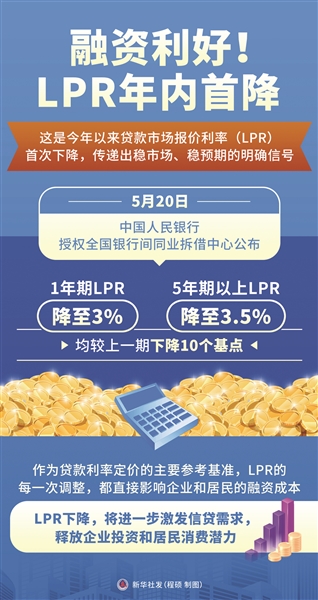
★LPR下调呵护经济回升 部分银行同步调降存款利率
Zheng Quan Shi Bao· 2025-07-03 01:56
Group 1 - The Loan Prime Rate (LPR) and deposit rates of large commercial banks have decreased, leading to a reduction in overall financing costs and improving banks' liability costs [1][2] - The 1-year and 5-year LPR have both dropped by 0.1 percentage points to 3.0% and 3.5% respectively, while deposit rates for demand deposits decreased by 0.05 percentage points and term deposit rates fell by 0.15 to 0.25 percentage points [1] - The decline in LPR is expected to stimulate effective financing demand, stabilize credit levels, and support economic recovery [1][2] Group 2 - The average weighted interest rate for new corporate loans in April was approximately 3.2%, down about 50 basis points year-on-year, while the rate for personal housing loans was around 3.1%, down about 55 basis points [2] - The reduction in the 5-year LPR is anticipated to alleviate the interest burden for mortgage borrowers, thereby promoting consumption [2] - For existing mortgage borrowers, the benefits from the 5-year LPR decrease are expected to be realized on the next loan repricing date, enhancing their consumption capacity [2] Group 3 - The banking sector has experienced a rapid decline in net interest margins, currently at historical lows, due to falling loan rates [3] - The recent decrease in deposit rates is a strategic move by banks to maintain a reasonable net interest margin, which is essential for supporting the real economy [3] - The new round of deposit rate cuts, along with recent reserve requirement ratio reductions, provides banks with more room to adjust LPR pricing and alleviate net interest margin pressures [3]
中长期大额存单为何纷纷退场
Jing Ji Ri Bao· 2025-06-26 22:04
Core Insights - Recent trends show that many medium and large banks, as well as urban commercial banks, are withdrawing five-year large-denomination certificates of deposit (CDs), with three-year CDs also becoming less available, leaving two-year CDs as the most common option [1] - The interest rates for large-denomination CDs have dropped to the "1s," indicating a significant decline in their attractiveness as a savings tool for banks [1] - The narrowing of banks' net interest margins, which fell to 1.43% in Q1 2023, is a key factor driving this trend, as banks seek to lower long-term funding costs to alleviate operational pressures and support the real economy [1][2] Group 1 - The withdrawal of medium and long-term large-denomination CDs will effectively relieve pressure on banks' net interest margins and optimize their financial structures [2] - Banks are expected to adjust their liability structures by increasing short-term deposits, structured deposits, and short-term wealth management products to replace the high-cost long-term CDs [2] - This shift allows banks to allocate more resources to support the real economy, reduce overall operating costs, enhance profitability, and mitigate financial risks [2] Group 2 - In response to market demand, banks are likely to accelerate the development of financial markets and introduce new financial products and services [2] - Customers can diversify their investment portfolios based on their risk tolerance and investment goals, with options such as government bonds for low-risk preferences and cash management products or money market funds for those needing higher liquidity [2] - When building investment portfolios, customers should consider their actual circumstances, including investment experience, expected returns, risk tolerance, and liquidity needs [2]
大额存单进入“1字头”时代—— 银行调整业务应对净息差压力
Jing Ji Ri Bao· 2025-06-24 22:11
Core Viewpoint - The banking industry is facing pressure from narrowing net interest margins, with declining asset yields and relatively high liability costs. Adjustments to large time deposit rates are a necessary response to market changes and an optimization of operational strategies [1][2]. Group 1: Interest Rate Adjustments - Banks have recently lowered the interest rates on large time deposits, with some even suspending the issuance of medium to long-term large time deposit products. For instance, the latest 3-year large time deposit rates from major banks have dropped to 1.55%, while 1-year and 2-year products are at 1.2% [1][2]. - The net interest margin for commercial banks was reported at 1.43% as of the end of Q1 2025, down from 1.52% at the end of Q4 2024, indicating a continued downward trend [2]. Group 2: Market Adaptation Strategies - In response to the declining interest rates, banks are promoting wealth management products and structured deposits as alternatives to traditional deposits. These products typically offer higher yields, catering to customers seeking better returns in a low-interest environment [1][4]. - The shift towards short- to medium-term products is aimed at managing interest rate risks associated with long-term funding, as banks seek to maintain reasonable net interest margins [3]. Group 3: Customer Behavior and Preferences - Customers are increasingly aware of the diminishing returns on large time deposits, leading some to consider alternative low-risk investment products such as money market funds and government bonds, which offer competitive yields and better liquidity [3][4]. - The demand for wealth management products is rising, as they provide banks with a crucial tool for attracting funds while also helping to lower overall liability costs [4].