
固定资产投资

Search documents
中金:经济偏弱运行——12月经济数据前瞻
中金点睛· 2026-01-06 23:47
Core Viewpoint - The economic indicators for December are expected to show a year-on-year decline, with fixed asset investment continuing to decrease, retail sales growth remaining weak, and export growth slightly declining due to base effects. The GDP growth rate for Q4 is projected at 4.6%, with an annual GDP growth rate of 5.0% [2][8]. Group 1: Retail Sales and Consumption - Retail sales are anticipated to continue low growth, with a 30% year-on-year decline in retail sales of four major home appliances in December. The passenger car retail volume is expected to drop by 12.7% year-on-year, a 4.6 percentage point increase in the decline compared to November [3]. - The restaurant industry is experiencing a downturn, with the December restaurant PMI at 42.0%, down 1.8 percentage points from the previous month, which is below the average performance from 2010 to 2024 [3]. Group 2: Fixed Asset Investment - The decline in fixed asset investment growth is expected to continue, with a projected annual decrease of -3.0% for January to December, compared to -2.6% for the first eleven months [3]. - Manufacturing investment is projected to have a cumulative year-on-year growth of 1.6% for the entire year, down from 1.9% in the first eleven months [3]. Group 3: Infrastructure and Real Estate - Infrastructure investment is expected to turn negative, with a cumulative year-on-year decline of -0.4% for the year. Although there are new policies to support investment, the effects may not be fully realized until early 2026 [4]. - Real estate development investment is projected to have a cumulative year-on-year decline of -16.5% for the year, with December sales showing a year-on-year drop of 27.3% [4]. Group 4: Exports and Industrial Production - Export growth is expected to decline due to base effects, with a projected year-on-year growth of 3.0% in December, down from 5.9% in November. Imports are expected to decrease by 2.9% year-on-year [5]. - Industrial production is projected to grow by 6.0% year-on-year in December, influenced by seasonal effects and increased operating rates in major industries [5]. Group 5: Inflation and Price Indices - The Consumer Price Index (CPI) is expected to remain stable at 0.7% year-on-year, with food prices showing slight improvements and energy prices declining [6]. - The Producer Price Index (PPI) is projected to narrow its year-on-year decline to -2.0% in December, with fluctuations in raw material prices impacting the overall index [7]. Group 6: Financial Data - Social financing and monetary growth are expected to decline, with new loans projected to reach 900 billion yuan in December. The net issuance of government bonds is expected to decrease significantly year-on-year [7].


股指注意回调风险,债市或震荡运行
Chang Jiang Qi Huo· 2026-01-05 03:43
Report Industry Investment Rating - Not provided in the content Core Viewpoints of the Report - The market's main line rotates rapidly, and stock index futures may fluctuate. Attention should be paid to the risk of correction. The follow - up trend needs to closely monitor the change in trading volume. If the trading volume remains at the current relatively high level, the index is still expected to continue to expand upward after fully digesting floating chips; otherwise, if the volume significantly shrinks, short - term correction risk should be vigilant. The bond market sentiment has been frustrated, and the future sustainability of the rebound in the manufacturing PMI in December remains to be observed. In 2026, as the starting year of the 14th Five - Year Plan, the pressure and necessity for stable growth are still relatively large, and it is highly likely that policies will be implemented at the beginning of the year to support the economy [9][11] Summary by Relevant Catalogs Financial Futures Strategy Recommendations Stock Index Strategy Recommendations - Stock index trend review: The Shanghai Composite Index rose 0.09% to close at 3968.84 points. For the whole year, the Shanghai Composite Index increased by 18.41% [9] - Core view: The manufacturing PMI in December rebounded to 50.1%, returning above the boom - bust line after 8 months and significantly higher than the consensus expectations of Bloomberg and Reuters. The rebound in the manufacturing PMI in December has strong certainty at the structural level but faces uncertainty at the aggregate level. The market's main line rotates rapidly, and stock index futures may fluctuate. Attention should be paid to the risk of correction [9] - Technical analysis: The MACD indicator shows that the broader market index may fluctuate [9] - Strategy outlook: Range - bound fluctuations [9] Treasury Bond Strategy Recommendations - Treasury bond trend review: The 30 - year main contract fell 0.35%, the 10 - year main contract fell 0.07%, the 5 - year main contract fell 0.04%, and the 2 - year main contract fell 0.03% [11] - Core view: The composite PMI, manufacturing PMI, and non - manufacturing PMI are all above the boom - bust line of 50, and the bond market sentiment has been frustrated. The rebound in the manufacturing PMI in December exceeded expectations, and its future sustainability remains to be observed. In 2026, as the starting year of the 14th Five - Year Plan, the pressure and necessity for stable growth are still relatively large. Whether it is the remaining fiscal resources at the end of the year or the room for monetary easing, it indicates that it is highly likely that policies will be implemented at the beginning of the year to support the economy. Attention should be paid to the stock - bond seesaw, whether the central bank's scale of treasury bond trading will further expand, and the implementation rhythm of monetary policies after the new year [11] - Technical analysis: The MACD indicator shows that the T main contract may fluctuate [11] - Strategy outlook: Fluctuating operation [11] Key Data Tracking PMI - In December, the manufacturing PMI rebounded to 50.1%, returning above the boom - bust line after 8 months [18] - It was significantly stronger than the seasonal trend. In previous Decembers, the manufacturing PMI decreased by an average of 0.3 pct compared with November, while it increased by 0.9 pct this month [18] - The PMI of high - tech manufacturing industries rebounded significantly by 2.4 pct to 52.5%, indicating a good growth trend in the industry [18] - Large and medium - sized enterprises led the improvement. Although the PMI of small enterprises declined, large and medium - sized enterprises' PMIs both rebounded significantly [18] CPI - In November, the year - on - year increase in CPI strengthened, and the month - on - month PPI remained positive, which was the result of the combined effects of seasonal factors, low - base effects, and "anti - involution" [21] - It is worth noting that the year - on - year CPI has fluctuated below 1% for 33 consecutive months, and the year - on - year PPI has been negative for 38 consecutive months, indicating that domestic demand is still relatively weak [21] - At the end of the year and during the Spring Festival, driven by seasonal effects and rising gold prices, the year - on - year CPI is expected to continue to fluctuate upward [21] - Since November 2024, the year - on - year base of PPI has entered a downward range again. Affected by low - base effects and the orderly progress of "anti - involution", the year - on - year PPI is also expected to rebound [21] Import and Export - In November, China's exports were $330.35 billion, imports were $218.67 billion, and the trade surplus was $111.68 billion [23] - In terms of representative export commodities, labor - intensive products, mechanical and electrical products, and high - tech products drove the overall export in November by - 1.33%, 5.81%, and 2.01% respectively, with the driving rates increasing by 1.03 pp, 5.06 pp, and 1.55 pp respectively compared with the previous month [23] - The strengthening of exports to the EU, Africa, and Latin America drove the year - on - year increase in exports this month, showing a relatively strong performance. Since November 9th, the year - on - year growth rates of global and US imports and China's container bookings to the US have continued to decline week by week, indicating a high probability of pressure on exports in December [24] Industrial Added Value - In November, the year - on - year growth rate of industrial added value dropped to 4.8%, and the service industry production index dropped to 4.2%. The production - end data has declined for two consecutive months [25] - There are two reasons for the weakening of industrial added value. First, "anti - involution" has begun to suppress the output of key industries. In November, the year - on - year growth rate of industrial added value in the automobile industry dropped by 4.9 pct to 11.9%, the year - on - year growth rate of industrial added value in the steel industry dropped by 0.5 pct to 0.9%, and the chemical industry dropped by 0.4 pct to 6.7%. In terms of microscopic output, the year - on - year output of automobiles, ethylene, and steel also weakened. Second, after the policy took effect on September 24th last year, the production increase established a relatively high base. From the perspective of the two - year compound growth rate, the year - on - year growth rate of industrial added value in November was basically the same as that in October [28] Fixed - Asset Investment - From January to November, the year - on - year growth rate of fixed - asset investment dropped by 2.6%. It is estimated that the year - on - year growth rate of fixed - asset investment in November was - 11.1%, a slight increase compared with October [31] - By type, the year - on - year growth rate of private investment rebounded to - 12.9%, and the year - on - year growth rate of public investment continued to drop to - 8.9% [31] - By expenditure direction, it is estimated that the year - on - year growth rates of construction and installation projects/equipment and tool purchases in November dropped to - 16.1% and 6.3% respectively, and the year - on - year growth rate of other expenses rebounded slightly to - 13.8% [31] - By the three major categories, the year - on - year growth rates of infrastructure and real estate investment are still declining at a low level, but manufacturing investment has a slight rebound [31] Social Retail - In November, the year - on - year growth rate of social retail sales dropped to 1.3%, lower than market expectations and the weakest since 2023 [34] - There are three factors for the weakening of social retail sales in November. First, after the weakening of national subsidy funds, the weakening of durable - goods consumption is the main drag. In November, the year - on - year growth rate of optional consumption dropped to - 10%, and among them, automobiles and home appliances cumulatively dragged down the year - on - year growth rate of social retail sales in that month by 1.2 pct. Second, the overall weak performance of the "Double Eleven" sales also dragged down the social retail sales for the whole month. In November, the online retail sales of physical goods dropped by 3.3 pct to 1.5%, and the two - year compound year - on - year growth rate turned negative for the first time this year. Third, the consumption in the post - real - estate cycle continued to be weak. Restricted by the long - term weak real - estate sales, the year - on - year growth rates of social retail sales of building materials and furniture both dropped and turned negative [34] Social Financing - In November, the new social financing was 2.5 trillion yuan, a year - on - year increase of 0.2 trillion yuan. Corporate bonds and non - standard financing were the main supports, while government bonds and credit were the main drags [37] - Bills continued to boost the volume, and the year - on - year increase in medium - and long - term loans for residents and enterprises continued to be less than the previous year [37] - In November, the year - on - year growth rate of social financing remained flat at 8.5%, and the growth rate of credit in the social financing caliber remained flat at 6.3% [37] - The growth rates of M1 and M2 declined. Attention should be paid to the process of deposit currentization in the future [37]
12月PMI数据点评:供、需指数共同回暖
Bank of China Securities· 2025-12-31 08:25
Group 1: Manufacturing Sector Insights - December Manufacturing PMI index rose to 50.1%, an increase of 0.9 percentage points from November, indicating a return to expansion territory[2] - New orders index for December was 50.8%, up 1.6 percentage points, with external demand contributing positively[2] - Production index increased to 51.7%, up 1.7 percentage points, reflecting improved manufacturing activity[2] - Supplier delivery time index slightly increased to 50.2%, up 0.1 percentage points, indicating stable supply chain conditions[2] Group 2: Investment and Economic Outlook - Fixed asset investment growth is expected to remain promising at the beginning of 2026, despite some weakness in December[3] - December's main raw material purchase price index was at 53.1%, down 0.5 percentage points, indicating high price levels[9] - The manufacturing profit margin is expanding as factory prices rise while raw material costs slightly decline[9] - Construction sector PMI rose to 52.8%, up 3.2 percentage points, indicating a recovery in construction activity[15] Group 3: Non-Manufacturing Sector Insights - December Non-Manufacturing PMI index rose to 50.2%, an increase of 0.7 percentage points, indicating expansion[11] - New orders index for non-manufacturing was at 47.3%, up 1.6 percentage points, but still below the expansion threshold[11] - Employment index in the non-manufacturing sector was at 46.1%, indicating contraction despite a slight increase of 0.8 percentage points[11]
2025年12月PMI分析:为什么12月PMI开始扩张?
Yin He Zheng Quan· 2025-12-31 06:39
Group 1: PMI Overview - The manufacturing PMI for December 2025 is 50.1%, an increase of 0.9 percentage points from the previous month, indicating expansion[1] - The construction business activity index is at 52.8%, up from 49.6%[1] - The services business activity index is slightly up at 49.7%, compared to 49.5% previously[1] Group 2: Key Drivers of PMI Increase - Policy measures have stimulated investment stabilization, with a central government investment plan of approximately 295 billion yuan announced[2] - New export orders index rose by 1.6 percentage points to 49%, marking the first increase since March 2025[2] - The later timing of the 2026 Spring Festival (February 17) has resulted in less disruption to December's physical workload compared to previous years[2] Group 3: Production and Demand Insights - The production index increased to 51.7% from 50%, while the new orders index rose to 50.8% from 49.2%[3] - Fixed asset investment saw a year-on-year decline of 2.6% from January to November 2025, with manufacturing investment down 0.8 percentage points to 1.9%[3] - The construction sector, including housing and infrastructure, has shown signs of recovery, indicating effective fund allocation[3] Group 4: External Demand and Price Trends - The new export orders index has shown a significant increase, reflecting strong external demand amid global fiscal and monetary easing[4] - The producer price index rose by 0.7 percentage points to 48.9%, while raw material purchase prices decreased by 0.5 percentage points to 53.1%[7] - The gap between raw material prices and producer prices remains significant at 4.2 percentage points[7]
2950亿资金下达,更大力度稳投资
第一财经· 2025-12-31 05:19
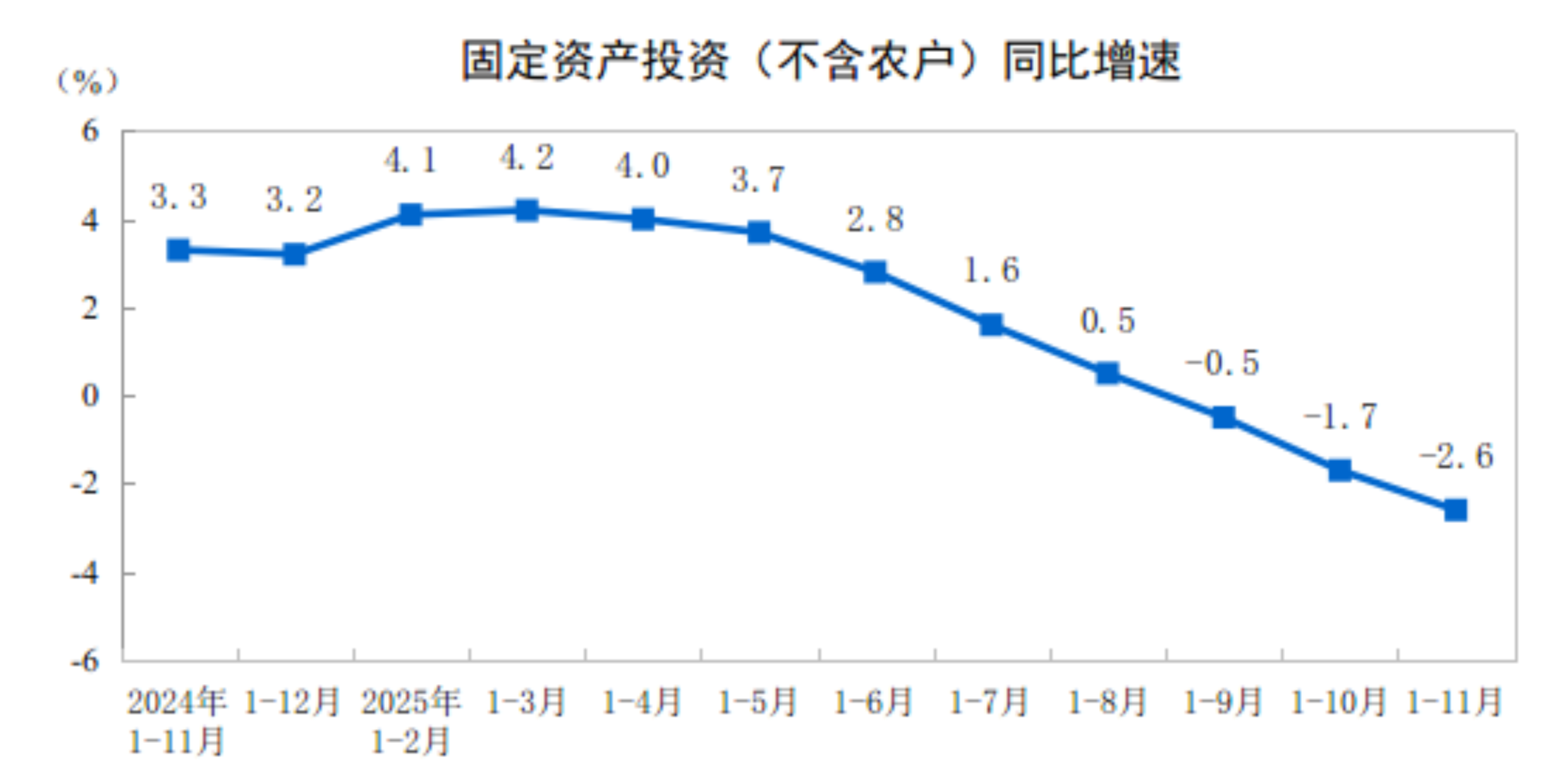
Core Viewpoint - The National Development and Reform Commission (NDRC) has announced a total investment plan of approximately 295 billion yuan for 2026, focusing on "two heavy" construction projects and central budget investments to stimulate effective investment and enhance infrastructure development [3][4]. Group 1: Investment Plans - The NDRC has organized a list of "two heavy" construction projects amounting to about 220 billion yuan, supporting 281 projects in areas such as urban underground pipeline networks, high-standard farmland, and logistics cost reduction [3][4]. - Over 75 billion yuan has been allocated for central budget investments, focusing on public sectors like urban renewal, water conservancy, ecological protection, and pollution control, supporting 673 projects [3][4]. Group 2: Infrastructure Development - Recent approvals for major infrastructure projects include the Guangzhou New Airport and various water resource and energy facilities, with a total investment exceeding 400 billion yuan, aimed at enhancing the modern infrastructure system [4]. - The central economic work conference emphasized the need to maintain domestic demand as the main driver and to stabilize investment, with plans to optimize project implementation and enhance the role of policy financial tools [4]. Group 3: Investment Trends - Fixed asset investment in China has seen a decline of 2.6% year-on-year for the first 11 months of 2025, attributed to factors such as real estate market adjustments and increased competition [5]. - Experts predict a moderate recovery in investment growth to 2% to 3% in 2026, driven by systematic policy measures aimed at optimizing projects and activating market participation [5].
智利央行提高2026年GDP增长预期
Shang Wu Bu Wang Zhan· 2025-12-30 17:25
Core Viewpoint - The Central Bank of Chile has revised its GDP growth forecasts for 2025 and 2026, indicating a positive outlook for the economy driven by increased market demand and investment in fixed assets, particularly in the mining and energy sectors [1] Economic Growth Projections - The GDP growth for 2025 is set at 2.4%, while the forecast for 2026 has been raised from a range of 1.75%-2.75% to 2%-3% [1] - For 2027, the GDP growth is expected to remain in the range of 1.5%-2.5% [1] Investment and Consumption - Fixed asset investment is projected to grow by 7% in 2025, 4.9% in 2026, and 3.1% in 2027, with significant contributions from large mining and energy projects [1] - Private consumption is expected to recover, with growth rates of 2.5% for 2025-2026 and 2% for 2027 [1] Labor Market and Inflation - The labor market shows slight improvement, although the unemployment rate remains above historical averages [1] - Inflation is forecasted to decrease to 3.5% in 2025 and 3.2% in 2026 [1] Monetary Policy - The neutral monetary policy interest rate is set between 3.75% and 4.75%, with a reference midpoint of 4.25% for analysis [1]
11月经济数据解读:延续稳中有进发展态势
East Money Securities· 2025-12-30 09:54
Consumption - In November 2025, the total retail sales of consumer goods reached 43,898 billion yuan, with a year-on-year growth of 1.3%, down 1.6 percentage points from the previous value of 2.9%[12] - Sales of "two new" products and real estate-related consumption continued to decline, with automotive consumption down 8.3% and home appliances down 19.4% year-on-year[12] - Service retail sales grew by 5.4% year-on-year from January to November, indicating a gradual release of service consumption potential[14] Investment - Fixed asset investment continued to decline, with a year-on-year decrease of 2.6% in November, marking three consecutive months of negative growth[23] - Real estate development investment fell by 31.4% year-on-year in November, a significant increase in the decline compared to the previous month's 23.2%[23] - Equipment purchase investment showed a year-on-year growth of 6.3%, contributing 1.8 percentage points to overall investment growth[24] Trade - In November, exports increased by 5.9% year-on-year, rebounding from a previous decline of 1.1%[32] - Exports to the EU saw a significant recovery with a growth rate of 14.8%, while exports to the US decreased by 28.6%[32] - Imports rose slightly by 1.9% year-on-year, with notable increases in the import of integrated circuits and automatic data processing equipment[34]
2026年宏观经济展望:着力扩大内需,宏观政策延续稳增长取向
Dong Fang Jin Cheng· 2025-12-29 23:30
Economic Outlook - The actual GDP growth rate for China in 2026 is projected to be around 4.8%, maintaining a medium-high growth level[2] - Global GDP growth is expected to slow to 3.1% in 2026, down from 3.2% in 2025[4] - China's fixed asset investment growth is forecasted to turn positive at 2.5% in 2026, recovering from a negative growth of -3.0% in 2025[4] Trade and Export Impact - China's export growth is anticipated to decline significantly from approximately 5.0% in 2025 to around 1.0% in 2026 due to increased U.S. tariffs[15] - The average U.S. import tariff rate is projected to rise to 19.5% in 2026, impacting global trade dynamics[8] Policy Measures - The target fiscal deficit rate for 2026 is set to remain at 4.0%, with an increase in new special bond issuance expected to reach 5.0 trillion yuan[41] - A reduction in interest rates by 0.3 percentage points is anticipated in 2026, with a focus on maintaining liquidity in the market[52] Consumer and Investment Trends - Consumer retail sales growth is expected to accelerate to 5.0%-6.0% in 2026, up from 3.9% in 2025, driven by enhanced consumption policies[65] - Infrastructure investment growth is projected to increase to 5.0% in 2026, significantly higher than the previous year's performance[71] Inflation and Price Levels - The Consumer Price Index (CPI) is expected to rise to 0.4% in 2026, indicating a slight improvement in the low inflation environment[76] - The Producer Price Index (PPI) is forecasted to decline by -1.8% in 2026, reflecting ongoing price pressures in the economy[76]
2025年1—11月份全国固定资产投资基本情况 - 国家统计局
Guo Jia Tong Ji Ju· 2025-12-29 09:36
Core Viewpoint - In the first eleven months of 2025, China's fixed asset investment (excluding rural households) reached 444,035 billion yuan, showing a year-on-year decline of 2.6% [1][4]. Investment by Industry - Investment in the primary industry was 8,770 billion yuan, with a year-on-year growth of 2.7% [3][5]. - Investment in the secondary industry totaled 162,243 billion yuan, increasing by 3.9% [3][5]. - Investment in the tertiary industry was 273,022 billion yuan, reflecting a decline of 6.3% [3][5]. - Within the secondary industry, industrial investment grew by 4.0%, with mining investment also increasing by 4.0%, manufacturing investment rising by 1.9%, and investment in electricity, heat, gas, and water production and supply increasing by 10.7% [3][6]. Investment by Region - Eastern region investment decreased by 6.6%, central region investment fell by 1.7%, western region investment declined by 0.2%, and northeastern region investment saw a significant drop of 14.0% [3][6]. Investment by Registration Type - Domestic enterprises' fixed asset investment decreased by 2.6%, investment from Hong Kong, Macau, and Taiwan enterprises fell by 2.2%, while foreign enterprises' investment dropped sharply by 14.1% [3][6]. Detailed Investment Data - The overall fixed asset investment (excluding rural households) showed a decline of 2.6% year-on-year, with state-controlled investment down by 1.1% and private investment down by 5.3% [5][6]. - Specific categories such as construction and installation projects saw a decline of 6.4%, while equipment and tool purchases increased by 12.2% [5][6]. Industry-Specific Performance - In the manufacturing sector, notable growth was observed in the automotive manufacturing industry at 15.3% and in the railway, shipbuilding, aerospace, and other transportation equipment manufacturing at 22.4% [6][7]. - Conversely, the pharmaceutical manufacturing industry experienced a decline of 8.2%, and the chemical raw materials and chemical products manufacturing sector saw a drop of 13.1% [6][7]. Summary of Investment Trends - The overall trend indicates a contraction in fixed asset investment across various sectors, with significant regional disparities and varying performance across industries, highlighting potential areas for investment focus and concern [1][3][4].
南京1—11月经济运行简况发布 我市持续推动经济回升向好
Nan Jing Ri Bao· 2025-12-29 02:48
Economic Overview - Nanjing's economy has shown signs of recovery in 2023, with a focus on implementing central and provincial government policies to stabilize and promote growth [1] Industrial Performance - From January to November, the city's industrial added value increased by 5.8% year-on-year, with state-owned enterprises growing by 7.8%, joint-stock enterprises by 9.3%, and private enterprises by 10.7% [1] - Key sectors such as instrument manufacturing, general equipment manufacturing, and specialized equipment manufacturing saw year-on-year growth of 13.5%, 10.3%, and 10.1% respectively [1] - Notable product outputs included 3D printing equipment (up 21.4%), industrial robots (up 27.3%), new energy vehicles (up 59.1%), and integrated circuit products (up 30.6%) [1] Consumer Market - The total retail sales of consumer goods reached 739.55 billion yuan from January to November, reflecting a year-on-year growth of 3.9% [1] - Essential consumer goods such as grain and oil, and daily necessities showed strong growth, increasing by 11.5% and 4.2% respectively [1] - There was significant growth in discretionary spending categories, with cultural and office supplies up 19.5%, communication equipment up 26.5%, jewelry up 14.1%, and sports and entertainment goods up 3.6% [1] Fixed Asset Investment - Fixed asset investment decreased by 4.2% year-on-year, but the decline was less severe than in the previous months, narrowing by 1.0 percentage point [2] - Infrastructure investment grew by 4.3%, while manufacturing investment increased by 11.9% [2] - High-tech industry investments rose by 9.3%, with aerospace equipment manufacturing, computer and office equipment manufacturing, and medical instruments and equipment manufacturing seeing increases of 45.9%, 21.5%, and 23.7% respectively [2] Consumer Price Index - In November, the consumer price index rose by 0.4% year-on-year, an increase of 0.3 percentage points from the previous month [2] - Price changes varied by category, with food and tobacco prices down 0.8%, clothing prices up 2.1%, and living supplies and services up 1.6% [2] - Overall, the consumer price index decreased by 0.3% from January to November [2]