套利交易

Search documents
黄金交易入门指南:从基础知识到实战技巧
Sou Hu Cai Jing· 2025-07-15 02:03
Group 1 - The core concept of gold trading involves investors buying and selling gold or its derivatives to gain profits, especially during economic instability or inflation [1] - Gold trading serves as a significant asset allocation method suitable for various risk preferences among investors [10] Group 2 - Major forms of gold trading include physical gold, paper gold, gold futures, gold ETFs, and spot gold [6] - Key global gold trading markets are the London Gold Market, COMEX, Shanghai Gold Exchange, and Hong Kong Gold and Silver Exchange [6] Group 3 - Factors influencing gold prices include the US dollar exchange rate, inflation, interest rate policies, geopolitical risks, and supply-demand dynamics [6] - Gold is viewed as a hedge against inflation, with prices typically rising during inflationary periods [7] Group 4 - Basic strategies for gold trading include long-term investment (dollar-cost averaging), short-term trading (technical analysis), and arbitrage trading [4][3][4] - Long-term investment is suitable for conservative investors, while short-term trading is for aggressive investors [4][3] Group 5 - Advantages of gold trading include its hedging function during economic crises, inflation resistance, and high liquidity in global markets [5][7][8] - Disadvantages include significant price volatility, storage costs for physical gold, and leverage risks in futures trading [8][9] Group 6 - To start gold trading, investors should choose a trading platform, complete the account opening process, learn technical analysis, and begin with small amounts [11]
市场风向转变!对冲日本大选风险升温 日元看跌期权交易量翻倍
智通财经网· 2025-07-14 06:02
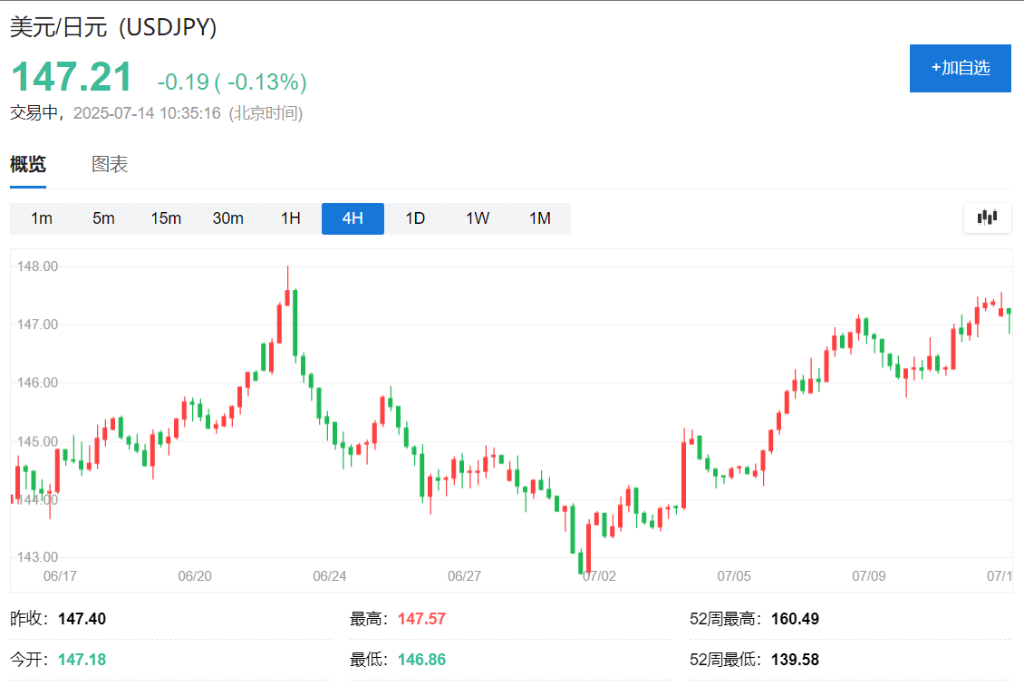
Group 1 - Option traders are adjusting their positions on the Japanese yen, betting on depreciation against the US dollar due to political instability, trade tensions, and changing Federal Reserve policy expectations [1] - On July 11, the trading volume of bullish dollar/yen options exceeded that of bearish options by more than two times, indicating a shift in market sentiment [1] - The current popular trading strategy includes buying knock-out call options, which are more cost-effective than standard call options, as they automatically expire if the exchange rate breaches specific levels [1] Group 2 - Market expectations regarding the election results are paving the way for further fiscal stimulus, which has led to an increase in Japanese long-term government bond yields [2] - There is a positive correlation between dollar/yen and the 30-year Japanese government bond yields, as noted by HSBC strategists [2] - Concerns over the lack of progress in US-Japan trade negotiations, combined with fiscal worries, are undermining market confidence in the yen [2]
日本选举带来不确定性,交易员转向做空日元
Hua Er Jie Jian Wen· 2025-07-14 03:10
Group 1 - Option traders are repositioning their yen positions in anticipation of political shocks and trade tensions, expecting these factors to weaken the yen against the dollar further [1] - The upcoming Japanese Senate elections are a focal point for traders, with interest in one-month call options reflecting the expected uncertainty surrounding the elections [1][2] - Ongoing uncertainty in US-Japan trade negotiations is putting additional pressure on the yen, with tariffs announced by Trump on imports from Japan and other countries [1][9] Group 2 - Market expectations that the election results may pave the way for additional fiscal stimulus have begun to push up Japan's long-term yields [2] - The correlation between USD/JPY and 30-year Japanese government bond yields is noted, indicating a relationship between currency movements and yield curve steepening [3] Group 3 - If the market begins to price in a potential policy shift towards fiscal expansion following the elections, it could lead to higher interest rates [4] - Some funds are increasing their long positions in USD/JPY ahead of the Senate elections, anticipating a weaker yen due to potential election outcomes [4] Group 4 - The trading patterns in the options market are undergoing significant changes, with a notable increase in bullish sentiment towards USD/JPY [5] - Data from the Chicago Mercantile Exchange shows that the trading volume of bullish options for USD/JPY was more than double that of bearish options on July 11 [5] Group 5 - Traders are focusing on options with knockout features, such as reverse knockout calls, which are more cost-effective as they become invalid upon reaching specific price barriers [8] - The latest US non-farm payroll data has further stimulated bullish trading interest in USD/JPY, delaying expectations for a potential Fed rate cut [10]

价格刷新历史高位!50%关税引爆这一市场套利“狂欢”
第一财经· 2025-07-10 14:12
Core Viewpoint - The article discusses the significant impact of the U.S. imposing a 50% tariff on imported copper, leading to volatility in the global copper market and affecting prices on various exchanges [1][2]. Price Movements - As of July 10, COMEX copper futures rose to $5.59 per pound, with a weekly high of $5.89, marking a historical peak [1]. - Conversely, LME copper futures experienced a weekly decline of approximately 1.2%, closing at $9,734 per ton, rebounding from a low of $9,553 [1]. - The main copper contract in Shanghai fell by 0.39%, settling at 78,600 yuan per ton, with a cumulative weekly drop of about 2% [2]. Market Dynamics - The announcement of the 50% tariff by President Trump deviated significantly from market expectations of around 25%, leading to an increase in U.S. refined copper prices [2]. - The price spread between COMEX and LME copper expanded to $2,500 per ton, previously nearing $3,000, far exceeding the average stable spread of $300 [4]. - Traders are engaging in arbitrage by buying spot copper and shorting LME to lock in profits, causing LME and domestic copper prices to decline while COMEX prices continue to rise [4]. Inventory Changes - As of July 7, COMEX copper inventory reached 221,000 tons, up from less than 100,000 tons in February [5]. - LME copper inventory decreased sharply from 270,900 tons in mid-February to 97,400 tons, a reduction of over 64% [5]. - The increase in COMEX inventory is not keeping pace with the decrease in LME inventory, indicating potential supply chain issues [5]. Supply Chain Implications - The U.S. tariff policy may lead to a restructuring of the global copper supply chain, with potential cost increases in sectors like automotive and renewable energy [7]. - It is projected that U.S. copper imports could reach 1.36 million tons this year, significantly higher than last year's 900,000 tons, which may lead to increased inventory levels in COMEX [7]. - The global supply of refined copper is not currently short, with expectations of a weakening supply-demand balance by 2025 due to recovering copper mine supplies [7]. Domestic Market Outlook - If the copper tariff is implemented on August 1, there may be delays in the transportation of spot copper, limiting price support in the domestic market [8]. - The decline in Shanghai copper prices has alleviated some cost pressures on downstream processing companies, but price volatility remains a concern [8]. - Companies are advised to closely monitor the price differences between COMEX, LME, and Shanghai copper, particularly for risk management in trading positions [8].

50%铜关税引爆套利“狂欢”,全球铜市冰火交织
Di Yi Cai Jing· 2025-07-10 13:20
Group 1: Market Reaction to Tariffs - The U.S. has imposed a 50% tariff on imported copper, causing significant volatility in the global copper market [1] - COMEX copper futures have seen a three-day increase, reaching $5.59 per pound, with a weekly high of $5.89 per pound, marking a historical peak [1] - LME copper futures experienced a weekly decline of approximately 1.2%, closing at $9,734 per ton, rebounding from a low of $9,553 per ton [1] Group 2: Arbitrage Opportunities and Risks - The price difference between COMEX and LME has widened to $2,500 per ton, significantly exceeding the average stable price difference of $300 per ton [2] - Traders are engaging in arbitrage by buying physical copper and shorting LME to lock in profits, leading to a divergence in price movements [2] - There is an expectation that the price difference will continue to expand until the tariff policy is fully implemented, with potential for increased market volatility [2] Group 3: Inventory Changes - As of July 7, COMEX copper inventory reached 221,000 tons, a significant increase from under 100,000 tons in February [3] - In contrast, LME copper inventory has sharply decreased from 270,900 tons to 97,400 tons since mid-February, a decline of over 64% [3] - The increase in COMEX inventory is not keeping pace with the reduction in LME inventory, indicating potential supply chain issues [3] Group 4: Industry Impact and Supply Chain Adjustments - The tariff policy is expected to restructure the global copper supply chain, with potential cost increases in sectors like automotive and renewable energy [4] - Major copper exporting countries like Chile may redirect their supplies to Asian and European markets, affecting global supply-demand balance [4] - The U.S. is projected to significantly increase copper imports, with estimates suggesting a rise to 1.36 million tons for the year, compared to 900,000 tons last year [5] Group 5: Long-term Supply and Demand Outlook - The global supply of refined copper is not currently short, but there are concerns about a weakening supply-demand balance by 2025 [5] - The anticipated influx of copper into the U.S. may lead to increased inventory levels at COMEX, exerting downward pressure on prices [5] - Domestic copper prices may face challenges due to shipping delays if tariffs are implemented as scheduled, limiting price support [5]
纽约铜溢价引爆抢运潮!交易商为争朝夕准备“曲线救国”
Jin Shi Shu Ju· 2025-07-10 03:57
Core Viewpoint - The announcement of a 50% tariff on copper by President Trump is expected to disrupt ongoing high-profit arbitrage trading in the copper market, leading to significant changes in supply dynamics and pricing in the U.S. market [2]. Group 1: Market Reactions - Following the tariff announcement, New York copper futures prices surged, with premiums over international benchmark prices reaching approximately 25% [2]. - Traders who can transport copper to the U.S. before the tariff takes effect are positioned to gain substantial profits, while those unable to do so face significant losses [2]. - The U.S. copper inventory is projected to reach 500,000 tons in the coming weeks, with about half stored in New Orleans, a critical storage hub [3]. Group 2: Trading Strategies - Traders are urgently planning to manage shipments already in transit and are considering further transportation arrangements due to the impending tariff [3]. - Some traders have found alternative routes, such as shipping to Hawaii, which takes about ten days, to circumvent the tariff risk [3]. - Chilean mining companies, a major source of U.S. copper supply, are holding urgent meetings to prioritize shipments to U.S. customers before the end of July [3]. Group 3: Uncertainties and Implications - There is uncertainty regarding whether the 50% tariff will broadly apply to refined copper, as previous tariffs had exemptions for goods already in transit [4]. - The price gap between New York and London copper prices remains below 50%, indicating potential complexities in the tariff's application [4].
外资交易台:⾹港Hibor 会涨多少?
2025-07-03 15:28
Summary of Key Points from the Conference Call Industry Overview - The focus is on the Hong Kong financial market, specifically the behavior of the Hong Kong Interbank Offered Rate (HIBOR) and the implications of liquidity management by the Hong Kong Monetary Authority (HKMA) [1][2]. Core Insights and Arguments - HKMA has recently spent US$2.5 billion to maintain the currency peg at 7.85, following a US$1.2 billion expenditure the previous week. This action has reduced the Aggregate Balance (AB) to HKD 144 billion from a peak of HKD 173 billion, indicating that liquidity remains ample despite the decline [1][2]. - The "equilibrium level" for the 1-month HIBOR is estimated to be around 2.3%, suggesting that the 3-month HIBOR may range between 2.5% and 2.6%. This estimation is based on historical spreads of 20-30 basis points between the 1-month and 3-month HIBOR over the past decade [3][5]. - The 1-month HKD-USD rate differential averaged -90 basis points in the first half of 2024, and the USDHKD did not reach 7.85 even in a strong USD environment. The last occurrence of USDHKD touching 7.85 was in the first half of 2023 when the Fed was still increasing rates [3][5]. - The current weaker USD environment suggests that the "equilibrium HK-US rate differential" needed to keep USDHKD below 7.85 is likely wider, estimated at least -130 basis points. This is considered a conservative estimate given the smaller AB in 2024 [3][5]. - With expectations of three 25 basis point cuts by the Fed this year, the effective Fed funds rate is projected to decline from 4.33% to 3.58%, leading to an estimated 1-month HIBOR equilibrium rate of approximately 2.3% [3][5]. Additional Important Insights - The market is currently pricing 3-9 month forwards of 3-month rates at 2.8-3%, which is higher than the estimated equilibrium level of 2.5-2.6% for the 3-month HIBOR. This indicates that the market may be overestimating the potential increase in HIBOR [6][7]. - Historical data shows that when the AB remains above HKD 100 billion, liquidity conditions are generally flush, and the rise in HIBOR due to a decline in AB has been limited. A significant increase in HIBOR typically occurs only when AB falls below HKD 100 billion [6][7]. - The expectation is that it may take 3-6 months for the 1-month HIBOR to reach the equilibrium rate of approximately 2.3% due to the current weak USD environment and anticipated Fed cuts [6][7]. - There is a strong economic linkage between Hong Kong and China, low loan demand, and significant capital inflows (US$93 billion in Southbound equity inflows year-to-date), suggesting that HK rates are likely to remain low for an extended period [8][9]. - The USDHKD carry trade remains attractive, with the >9 month outright USDHKD levels staying below 7.75, which is the lower end of the band. However, recession risks in the US economy could lead to a sharp repricing of front-end US rates [10][11]. Conclusion - The analysis indicates that while liquidity remains ample in Hong Kong, the market may be overpricing future increases in HIBOR. The expected Fed rate cuts and the current economic conditions suggest a prolonged period of low rates in Hong Kong, with potential implications for investment strategies in the region [8][9][10].
全球大量铜被运往美国,这波操作背后到底咋回事?
Sou Hu Cai Jing· 2025-06-29 20:46
Group 1: Market Dynamics - A significant amount of copper is being transported to the United States, driven by expectations of potential tariffs on copper imports, with estimates of around 500,000 tons currently en route, compared to the usual monthly import volume of 70,000 tons [3] - The price disparity between copper futures on the New York Commodity Exchange (COMEX) and the London Metal Exchange (LME) has widened, with COMEX prices exceeding LME prices by over $1,400 per ton, creating lucrative arbitrage opportunities for traders [4] - The U.S. domestic copper production accounts for only 5% of global supply, while demand is increasing at a rate of 6.2%, significantly higher than the global average of 3.8%, necessitating increased imports to meet domestic needs [6] Group 2: Geopolitical and Strategic Factors - Geopolitical tensions are influencing U.S. strategies to reduce reliance on Asian countries for copper supply, aiming to integrate suppliers from the Americas into its supply chain [7] - The U.S. is attempting to secure its resource supply and reshape the global copper market by building inventory through increased imports [7] Group 3: Impact on Futures Market - The influx of copper into the U.S. has led to significant fluctuations in copper prices, with COMEX prices rising sharply while LME prices also show an upward trend, increasing market volatility [9] - The previously stable price difference between COMEX and LME has become highly variable, raising the risks associated with arbitrage trading [10] Group 4: Inventory Changes - COMEX copper inventory surged to 176,000 tons in the first half of 2025, a 120% increase from the beginning of the year, while LME inventory decreased to 114,000 tons, impacting price dynamics in the futures market [12] Group 5: Effects on Traders and Companies - Traders who anticipated tariff expectations and successfully redirected copper shipments to the U.S. stand to gain substantial profits, while those who failed to act in time may face significant risks and potential losses [13] - Copper smelting companies may experience instability in raw material supply due to the altered supply landscape, affecting production schedules and cost management [14] - Downstream processing companies, particularly in sectors like electrical wiring, are facing increased procurement costs due to rising copper prices, which they struggle to pass on to customers, leading to compressed profit margins [16]

金管局半年内双向干预,是何缘故?
Sou Hu Cai Jing· 2025-06-26 11:20
Core Viewpoint - The Hong Kong Monetary Authority (HKMA) intervened in the currency market on June 26, 2023, selling USD and buying HKD to maintain the peg of the Hong Kong dollar to the US dollar, marking the first intervention since May 2023 [2][8]. Group 1: Currency Peg Mechanism - The Hong Kong dollar has been pegged to the US dollar since October 17, 1983, maintaining a stable exchange rate between 7.75 and 7.85 HKD per USD through a currency board system [3]. - The mechanism relies on 100% USD asset backing, meaning for every HKD issued, the HKMA must hold an equivalent of 0.127-0.129 USD in foreign reserves [3][4]. - The issuance and redemption of HKD are linked to the deposits and withdrawals of USD by commercial banks, ensuring that changes in USD assets directly affect the HKD monetary base [4]. Group 2: Maintaining Exchange Rate Stability - The HKMA employs an automatic interest rate adjustment mechanism and official interventions to stabilize the HKD exchange rate [5]. - Market forces determine the exchange rate within the 7.75-7.85 range, with arbitrage activities helping to keep the HKD stable [5][6]. - The HKMA intervenes only when the exchange rate hits the extremes of 7.75 or 7.85, avoiding excessive market distortion while maintaining credibility against speculative attacks [6]. Group 3: Recent Market Dynamics - The recent triggering of the weak-side convertibility guarantee was influenced by unexpected US policies under Trump, leading to a depreciation of the USD and a shift of funds towards emerging markets, including Hong Kong [8]. - The Hong Kong stock market saw a significant increase in daily trading volume, averaging over 200 billion HKD since February 2023, indicating a surge in market liquidity [10]. - The revival of IPO activities in Hong Kong has attracted substantial interest from investors, with several high-profile listings contributing to increased demand for HKD [12]. Group 4: Impact of Previous Interventions - In May 2023, the HKD strengthened to 7.75, prompting the HKMA to buy USD and sell 1,294 billion HKD, resulting in a significant increase in the banking system's HKD surplus [13]. - The interbank borrowing rate (HIBOR) dropped sharply from 4.20% to 0.59% due to increased liquidity, leading to a widening interest rate differential between HKD and USD [13][15]. - Recent arbitrage activities have increased the supply of HKD in the market, putting downward pressure on the HKD/USD exchange rate, which led to the recent intervention by the HKMA [15].

小众“宝藏”策略揭秘!套利、期权、股票多空谁更强?博润银泰、钧富投资等亮相!
私募排排网· 2025-06-25 01:45
Core Viewpoint - The article introduces lesser-known investment strategies such as FOF, long-short equity, arbitrage, and options strategies, highlighting their performance over the past year and providing insights for investors [2]. FOF Strategy - FOF (Fund of Funds) is designed to invest in other investment funds, helping investors navigate the challenge of selecting from thousands of funds [5]. - As of May 31, there are 111 FOF products with an average return of 18.51% over the past year, ranking in the upper-middle tier among secondary strategies [5]. - The top-performing FOF products include "老友天玑一号" from Shanghai Taiying, which achieved significant returns [4][11]. Long-Short Equity Strategy - The long-short equity strategy holds both long and short positions to hedge risks and achieve returns in various market conditions [12]. - There are 65 long-short equity products with an average return of 15.40% over the past year, outperforming major indices like the CSI 300 [12]. - Notable products include "奇点多元策略1号" from 共青城奇点, which has shown rapid growth since the market rally [12][18]. Arbitrage Strategy - Arbitrage strategies exploit price differences across markets for low-risk profits and include various forms such as ETF arbitrage and statistical arbitrage [19]. - There are 83 arbitrage products with an average return of 14.06% over the past year, slightly lower than FOF and long-short strategies [19]. - Top products include "安合融信匠人匠心10号" from 安合融信, which ranks first in returns [21]. Options Strategy - Options strategies utilize options and their combinations to navigate complex market environments [24]. - There are 93 options products with an average return of 9.48% over the past year, ranking lower among secondary strategies [24]. - The leading product is "汇誉欣欣向荣一号A类份额" from 云南汇誉基金, which significantly outperformed others [28].