流动性风险

Search documents
海外利率周报20251019:由于降息预期和信贷风险事件,美债利率继续下行-20251019
Minsheng Securities· 2025-10-19 10:45
Report Industry Investment Rating No relevant information provided. Core View of the Report - Due to expectations of interest rate cuts and credit risk events, US Treasury yields continued to decline, with short - and medium - term yields falling more significantly, and the yield curve steepening, reflecting strengthened market expectations of near - term interest rate cuts and concerns about liquidity risks [2][10]. - The overall economic fundamentals are comparable to those in early September, with employment pressure likely stronger than price pressure. There are no strong signs of general inflation, and the signal of employment pressure is more prominent. The market's probability of predicting a 25 - basis - point interest rate cut by the Fed in October has further increased to 98.98% [3][11][12]. Summary by Directory 1. This Week's Overseas Macroeconomic Interest Rate Review 1.1 Macroeconomic Indicator Review - The Philadelphia Fed Manufacturing Index showed that manufacturing activity slowed in October, reaching its lowest level since April. The index was - 12.8, far lower than the forecast of 8.6 and the previous value of 23.2. The shipment index dropped sharply from 26.1 to 6.0, while the price pressure increased again. However, the new orders index rebounded from 12.4 to 18.2, indicating that the current weakness in manufacturing is likely due to temporary disruptions in production and shipping rather than a systematic weakening of demand [1][9]. - As of the week ending October 10, US EIA crude oil inventories increased by 3.524 million barrels, significantly higher than the market expectation of 300,000 barrels. Refinery maintenance led to a significant decline in the operating rate, reduced processing activities, and passive inventory accumulation. After the EIA report was released, oil prices fell again [1][9]. 1.2 Main Overseas Market Interest Rate Review - **US**: From October 10 to October 17, 2025, US Treasury yields declined, with short - and medium - term yields falling by 5 - 6bp and long - term yields falling relatively moderately by 2 - 3bp. Two US regional banks disclosed suspected loan fraud problems, which, along with government shutdown and trade friction concerns, led to an influx of funds into the bond market, pushing yields down [2][10]. - **Europe and Japan**: Japanese government bond yields declined slightly, and German government bond yields declined overall. Japanese government bond yields were affected by the decline in US Treasury yields and strong demand in Japanese government bond auctions. German 10 - year government bond yields reached a new low since June 25 [15]. 2. Other Major Asset Reviews Equity - Russia and South Korea led the gains, while European financial stocks faced pressure and corrected. Russia's MOEX index rose 5.10%, South Korea's Composite Index rose 3.83%, and the US Nasdaq Composite Index rose 2.14%. European bank stocks were affected by the spill - over risk of US regional banks, and the Chinese A - share and Hong Kong stock markets were under pressure due to Sino - US relations and other factors [16]. Commodities - Precious metals led the gains, while energy and cryptocurrencies were under pressure. London gold rose 6.30% and London silver rose 6.58%. Brent crude oil fell 2.30%, and Bitcoin fell 5.70% [17]. Foreign Exchange - Major non - US currencies generally strengthened, while the RMB weakened slightly. The Swiss franc rose 2.14%, and the US dollar was slightly weak due to trade tensions and market expectations of interest rate cuts [18][19]. 3. Market Tracking - The report provides multiple charts, including the US Treasury auction panel, FED WATCH's latest target interest rate expectations, and trends of major global economic indicators such as stock indices, bond yields, and commodity prices, to track market changes [13][14][24]
亚太市场,集体跳水
Zheng Quan Shi Bao· 2025-10-14 07:04
Group 1 - The A-share market is being dragged down by the Asia-Pacific market, with significant declines observed in major indices such as the Nikkei and the Hang Seng Tech Index, which fell over 3% [1][3][5] - The decline in the markets is attributed to two main factors: ongoing uncertainties related to trade disputes and significant fluctuations in the Japanese market, particularly the appreciation of the yen and the sharp drop in Japanese stocks [1][3] Group 2 - The Korean market also experienced declines, with major indices dropping nearly 1%. Notable stock movements included a 5.8% drop in SoftBank and a 2.8% decline in Samsung Electronics, despite the latter reporting its highest quarterly operating profit in over three years [5] - In Hong Kong, all major indices weakened, with the Hang Seng Tech Index falling over 3% and the Hang Seng Index dropping more than 2%. The A-share market saw the ChiNext Index decline over 4% and the Shenzhen Component Index drop more than 2%, with over 3,500 stocks in the Shanghai and Shenzhen markets declining [5] Group 3 - The cryptocurrency market also faced significant declines, with Bitcoin dropping 2.75% to $112,620.4 and Ethereum falling 5.06% to $4,072.42, influenced by negative sentiment from social media regarding short positions [6] - The market sentiment has been impacted by structural issues, with notable declines in sectors such as semiconductors and battery stocks, leading to a significant contribution to the overall market decline from companies like Industrial Fulian and Zijin Mining [8] Group 4 - Analysts suggest that the current market conditions differ from those in April, with many core asset prices at high levels and financing balances also elevated. The focus should be on maintaining liquidity stability, with undervalued blue-chip stocks potentially becoming the mainstay during downturns [8] - The bond market experienced a rebound, indicating a potential increase in risk appetite and opportunities for returns. Analysts from Guotai Junan believe that external shocks leading to asset declines present a good opportunity to increase holdings in the Chinese market, as the boundaries of trade risks are clearer now compared to previous months [8][9]


刚刚!亚太市场,集体跳水!
券商中国· 2025-10-14 06:52
Market Overview - The A-share market was negatively impacted by the Asia-Pacific market, with significant declines observed in major indices such as the Nikkei, which dropped over 3% [1][3]. - The Korean market also followed suit, with both Kospi indices experiencing nearly 1% declines [5]. - Hong Kong's Hang Seng Technology Index fell by over 3%, contributing to a broader market downturn [5]. Key Factors Influencing Market Movement - The primary reasons for the market sell-off include ongoing uncertainties related to trade disputes and significant fluctuations in the Japanese market, particularly the yen's appreciation and the sharp decline in Japanese stocks [1][3]. - Reports of mysterious accounts shorting virtual currencies have also contributed to market fears, leading to a drop in cryptocurrency prices, including Bitcoin and Ethereum [6]. Sector Performance - In the A-share market, the ChiNext Index saw a decline of over 4%, while the Shenzhen Component Index fell by more than 2% [5]. - Key sectors such as semiconductor chips, consumer electronics, and non-ferrous metals experienced the largest declines, with over 3,500 stocks in the Shanghai and Shenzhen markets falling [5]. - Gold stocks also faced significant sell-offs, with Zijin Mining dropping over 6% after reaching a historical high earlier in the day [5]. Investment Sentiment and Future Outlook - Analysts suggest that the current market sentiment is influenced by structural issues rather than just external shocks, with a notable shift of funds towards undervalued sectors [7][8]. - The market is currently characterized by high valuations of core assets and elevated financing balances, indicating a need to stabilize and avoid liquidity risks [8]. - Despite the recent downturn, some analysts view the external shocks as potential buying opportunities for the Chinese market, given clearer boundaries on trade risks and improved domestic financial stability [8][9]. - The ongoing transformation of the Chinese economy and the demand for quality assets are seen as underlying trends that could support market recovery [9].

收评:沪指午后企稳回升,银行板块拉升,稀土概念再爆发
Zheng Quan Shi Bao Wang· 2025-10-13 07:31
Market Overview - The stock indices of both markets opened significantly lower on the 13th but gradually stopped declining in the afternoon, with the Shanghai Composite Index nearing a positive close and the Sci-Tech 50 Index rising over 1% [1] - By the end of the trading day, the Shanghai Composite Index fell by 0.19% to 3889.5 points, the Shenzhen Component Index dropped by 0.93% to 13231.47 points, and the ChiNext Index decreased by 1.11% to 3078.76 points, while the Sci-Tech 50 Index increased by 1.4% [1] - The total trading volume in the Shanghai and Shenzhen markets reached 23,745 billion yuan [1] Sector Performance - Sectors such as automobiles, media, oil, liquor, pharmaceuticals, and brokerage firms experienced declines, while sectors like non-ferrous metals, semiconductors, and banks saw gains [1] - The rare earth concept stocks surged again, and sectors related to photolithography machines, controllable nuclear fusion, and gold were active [1] Analyst Recommendations - CITIC Securities suggests a neutral approach in response to recent disturbances in the technology sector and Sino-U.S. relations, warning of liquidity risks [1] - If the market opens significantly lower, there may be more opportunities than risks, and investors are advised to seize "golden pit" opportunities [1] - Short-term focus should be increased on non-ferrous metals, banks, steel, and agriculture, while maintaining a long-term focus on technology and gold, with continued recommendations for sectors like batteries, chips, robotics, and innovative pharmaceuticals [1]
基本功 | 债市波动大,为啥会放大流动性风险?
中泰证券资管· 2025-09-25 11:30
Group 1 - The core viewpoint emphasizes the importance of solid foundational knowledge in investment and fund selection to enhance investment success [2] Group 2 - The article discusses the significant volatility in the bond market, which can amplify liquidity risks, potentially triggering a downward spiral in bond funds due to concentrated redemptions by investors seeking to lock in profits or cut losses [3]

债基全解析:从分类到风险,一文读懂“稳健投资”的真相!
Sou Hu Cai Jing· 2025-09-24 02:41
Core Viewpoint - The article addresses the confusion among investors regarding bond funds, which are traditionally seen as stable investments, highlighting the importance of understanding different types of bond funds and the risks associated with them [1] Group 1: Types of Bond Funds - Bond funds can be categorized into three main types based on asset allocation and investment strategy: pure bond funds, mixed bond funds, and bond index funds [2] - Pure bond funds focus entirely on bonds, making them the least risky category, suitable for conservative investors seeking stable returns [3] - Mixed bond funds combine bonds with stocks or convertible bonds to enhance yield while managing risk, with performance closely tied to stock market movements [6] - Bond index funds aim to replicate the performance of specific bond indices, offering low fees and transparency, making them suitable for long-term investors [8] Group 2: Reasons for Decline in Bond Funds - The average decline of 0.3% in bond funds during Q2 2023 can be attributed to four main risks: rising interest rates, credit risk, liquidity crises, and strategic errors [10][11] - Rising interest rates negatively impact bond prices, leading to potential declines in fund net values [11] - Credit risk arises when bond issuers default, directly affecting the net value of bond funds [11] - Liquidity issues can occur during large redemptions, forcing fund managers to sell bonds at lower prices, resulting in net value drops [11] - Strategic errors, such as investing in convertible bonds or using leverage, can amplify risks and lead to greater volatility in fund values [13][15] Group 3: Investment Strategies - Investors are advised to choose bond fund types based on their risk tolerance, focusing on key indicators such as duration, credit rating, and fund size [13][15] - Conservative investors should consider short-term pure bond funds or bond index funds, while more aggressive investors might explore mixed bond funds or convertible bond funds [16] - Timing investments is crucial; for instance, investing in medium to long-term pure bond funds is favorable when long-term interest rates are high [16]
永赢基金|了解固收基金 树立正确投资理念
Xin Lang Ji Jin· 2025-09-19 09:37
Core Insights - The article emphasizes the importance of financial education in safeguarding financial rights and enhancing quality of life, particularly through the actions of the fund industry [1] Fund Performance and Characteristics - Fixed income securities, including government bonds and central bank bills, are the primary investment objects for funds, with a performance of 3.03% and a maximum drawdown of -0.36% for 2024 [5] - Short-term pure bond funds are characterized by low risk, with most funds allocated to short-term bonds with maturities not exceeding 3 years [5] - Long-term pure bond funds have similar investment objects to short-term pure bond funds, with a performance of 4.59% and a maximum drawdown of -0.67% for 2024 [6] Risks Associated with Bond Funds - Credit risk arises when bonds in the fund default, affecting overall returns and potentially leading to losses [8] - Interest rate risk is highlighted as a core concern, where rising market interest rates inversely affect bond prices, potentially leading to losses [7] - Liquidity risk can occur during market tightness, leading to increased short-term bond rates and potential difficulties in buying or selling bonds at favorable prices [8] Investor Considerations - Investors should align their risk tolerance and return objectives with suitable fund types, such as short-term bond funds for lower risk tolerance and longer investment horizons for those with higher risk tolerance [9] - Historical performance metrics, including annualized returns and maximum drawdown, are essential for evaluating fund performance [10] - The Calmar ratio, which measures risk-adjusted returns, is a useful metric for assessing fund performance relative to risk [11] Fund Management and Team - The experience and historical performance of fund managers are critical, with a focus on those with extensive experience and a proven track record [12] - The strength of the research and risk management teams is also important, particularly for large fixed income fund companies with robust systems [12] Fund Holdings and Credit Risk Assessment - Regular reports should be reviewed to assess the top five bond holdings and their credit ratings, prioritizing funds with a high proportion of high-rated bonds to mitigate credit risk [13] Fund Size Considerations - It is advisable to consider funds of moderate size to avoid issues related to small fund sizes, such as the risk of liquidation [14]

*ST天茂信披违规遭立案调查,拟启动主动退市程序
2 1 Shi Ji Jing Ji Bao Dao· 2025-09-11 14:28
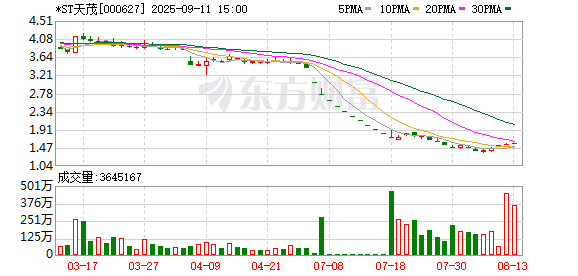
Core Viewpoint - *ST Tianmao has applied for voluntary delisting from the Shenzhen Stock Exchange, indicating significant operational and financial challenges faced by the company [2][5]. Group 1: Delisting Application - On September 11, 2025, *ST Tianmao announced that the Shenzhen Stock Exchange has accepted its application for voluntary delisting [2]. - The application for delisting was submitted on September 4, 2025, and the company received confirmation of acceptance from the exchange on September 10, 2025 [2]. Group 2: Financial Reporting Issues - On April 29, 2025, *ST Tianmao announced a delay in the release of its 2024 annual report and the 2025 Q1 report, citing the need for further information supplementation [3]. - This delay led to a significant market reaction, with the stock experiencing multiple trading halts due to investor concerns over the company's transparency [3]. Group 3: Financial Performance and Liquidity Risks - The company is facing substantial financial pressure, with a projected loss of between 500 million to 750 million yuan for the year 2024, primarily due to increased reserves at its subsidiary, Guohua Life [4]. - Guohua Life reported a high policy surrender amount of 20.6 billion yuan in 2023, with claims rising to 21.822 billion yuan in the first three quarters of 2024, exacerbating liquidity concerns for *ST Tianmao [4]. Group 4: Business Restructuring - On August 14, 2025, *ST Tianmao announced plans to initiate a voluntary delisting process due to significant uncertainties affecting its business structure [5]. - Following the delisting, the company intends to apply for transfer to the National Equities Exchange and Quotations (NEEQ) for trading in the delisted segment [5].

涉诉超亿元! 天宜新材及两子公司成被告
Mei Ri Jing Ji Xin Wen· 2025-09-07 12:01
Core Viewpoint - Tianyi New Materials is involved in a legal dispute with Jiangyou Rural Commercial Bank over a loan agreement, with the lawsuit amounting to 100.02 million yuan, which may have significant implications for the company's financial health [1][2][4]. Group 1: Legal Dispute Details - The lawsuit stems from a financial loan contract dispute, with Tianyi New Materials and its subsidiaries being sued for the repayment of a loan of 100 million yuan, which was issued in August 2023 [2][3]. - The loan was intended for purchasing raw materials and supplementing working capital, with a fixed annual interest rate of 3.08% and a penalty interest rate of 4.62% for overdue payments [2]. - As of the loan's maturity, Tianyi New Materials has an outstanding principal of 99.95 million yuan, along with accrued interest and penalties totaling 68,400 yuan [3]. Group 2: Company Response and Financial Implications - Tianyi New Materials has stated that it is actively responding to the lawsuit and taking measures to protect the interests of the company and its shareholders [4]. - The company acknowledges the potential financial pressure from the lawsuit, particularly regarding the risk of asset liquidation and the implications for its balance sheet and profitability [4][6]. - The company has reported a 17.26% year-on-year decline in revenue for the first half of 2025, although it has managed to reduce losses in profit and improve cash flow through inventory management and extended payment terms [6].

中国太保: 中国太保:太平洋健康保险股份有限公司偿付能力季度报告摘要节录
Zheng Quan Zhi Xing· 2025-08-29 17:12
Core Viewpoint - The report outlines the financial health and operational status of Pacific Health Insurance Co., Ltd., highlighting its solvency, liquidity, and risk management capabilities. Company Overview - Pacific Health Insurance Co., Ltd. was established in December 2014 with a registered capital of 3.6 billion RMB and operates in health and accident insurance across several provinces in China [1]. - The company is wholly owned by China Pacific Insurance (Group) Co., Ltd. [2]. Board and Management - The board of directors has approved the report, ensuring the accuracy and completeness of the information provided [1]. - Key management personnel include Chairman Ma Xin and other experienced executives with backgrounds in finance and insurance [2][3][4][5]. Financial Indicators - As of the end of the reporting period, the company reported total assets of 1,025,746.65 million RMB and net assets of 331,106.76 million RMB [13]. - The insurance business income for the quarter was 215,023.39 million RMB, with a net profit of 2,062.00 million RMB [13]. - The solvency margin was reported at 161,263.96 million RMB, with a core solvency ratio of 179% and a comprehensive solvency ratio of 218% [19]. Risk Management - The company has established a risk limit system covering various risks, including insurance, investment, and operational management [14]. - The latest SARMRA regulatory assessment scored 80.15, indicating a strong risk management framework [15]. - No significant risk events occurred during the reporting period, and the company maintained a high level of liquidity [17]. Liquidity Analysis - The actual net cash flow for the quarter was 19,627.84 million RMB, significantly exceeding the forecast [19]. - The liquidity coverage ratios under various scenarios met regulatory requirements, indicating robust liquidity management [20]. Investment Performance - The average investment return over the past three years was 3.33%, with an average comprehensive investment return of 3.58% [14]. Conclusion - Overall, Pacific Health Insurance Co., Ltd. demonstrates strong financial health, effective risk management, and solid liquidity, positioning itself well for future growth and stability in the insurance market [19][20].