
消费提振

Search documents
专访邢自强:从投资于物到投资于人,持续撬动消费市场
21世纪经济报道· 2025-12-26 04:16
Core Viewpoint - The future of the Chinese economy lies in achieving a dual focus on "starry sea" innovation and "daily necessities" improvement, emphasizing the need for collaboration between technological self-reliance and enhancing people's livelihoods [1][4]. Group 1: Dual-Driven Approach - The "starry sea" represents future-oriented innovation leveraging China's industrial chain, engineer advantages, and market policies, while the "daily necessities" focus on improving livelihoods and boosting domestic demand [4][5]. - The "15th Five-Year Plan" aims to significantly increase the household consumption rate, reflecting the strategic importance of balancing innovation and consumption [5]. Group 2: Capital Market Role - The capital market should support both innovation and consumption, enhancing residents' consumption capacity and promoting a sustainable innovation ecosystem [6][7]. - A robust domestic demand market can provide fertile ground for technological innovation and stable profit sources, fostering a virtuous cycle of investment and returns [7]. Group 3: Market Confidence Recovery - Since September 2024, market confidence has been recovering due to a threefold awakening in policy, enterprise resilience, and capital dynamics [9]. - Policy reforms have included expansionary fiscal measures and support for consumption, signaling a commitment to development alongside security [9][10]. Group 4: Structural Reforms - Key reforms during the "15th Five-Year Plan" include deepening the construction of a unified national market and substantial social security reforms to enhance consumer potential [10][11]. - Increasing the basic pension for farmers and migrant workers could raise household consumption's share of GDP from under 40% to around 45% by 2030, creating a $10 trillion consumption market [11]. Group 5: Fiscal Transformation - The shift from "investment in material" to "investment in people" is crucial for addressing structural issues of high savings and low consumption [13][14]. - The strategy involves increasing the proportion of state-owned capital transferred to social security funds and reallocating fiscal resources from infrastructure to social welfare [14]. Group 6: Real Estate Market Stability - To stabilize the real estate market, strategies include purchasing unsold properties for affordable housing, restructuring debts of key real estate firms, and providing interest subsidies on mortgages to alleviate buyer burdens [15].


2025年终经济观察丨供需两端齐发力 激活消费“主引擎”
Xin Hua Wang· 2025-12-25 14:11
Group 1 - Consumption is the "main engine" of economic growth and a barometer of people's well-being, with policies effectively boosting consumption potential throughout the year [1] - In the first 11 months, the total retail sales of consumer goods increased by 4% year-on-year, surpassing both the same period last year and the total growth for the previous year [1] - The Central Economic Work Conference emphasized the importance of domestic demand and outlined specific measures to stimulate consumption, including the implementation of special actions to boost consumption and the release of service consumption potential [1] Group 2 - Consumer demand has shifted from "availability" to "quality," with high-end products experiencing strong demand, such as the Huawei Mate80 series and popular events [2] - The supply of consumer goods has entered a new phase characterized by high quality and high prices, although structural mismatches in supply and demand still exist in some areas [2] - In the first 11 months, new energy vehicle sales accounted for 53.2% of total new car sales, indicating a significant shift towards greener consumption [2] Group 3 - Large-scale consumption is crucial for solidifying the consumption base, with policies supporting the optimization of the "two new" policy and promoting reforms in the automotive circulation market [3] - Service retail sales increased by 5.4% year-on-year in the first 11 months, indicating a recovery in service consumption, which is essential for driving overall consumption [3] - Various regions are focusing on niche consumer demands and leveraging local resources to enhance service offerings, such as themed trains and tourism initiatives [3] Group 4 - New supply is expected to create new demand, with advancements in technology such as L3-level autonomous driving set to stimulate market growth and innovation [4] - The "first store economy" is gaining traction, with new retail formats attracting significant foot traffic and consumer interest [4] - Policies aimed at enhancing the adaptability of supply and demand in consumer goods are being implemented to foster innovation and growth in the sector [4] Group 5 - China is evolving into a global innovation hub, with various industries accelerating their transformation towards smart, green, and high-end products, thus opening new consumption opportunities [5] - The integration of digital consumption and quality e-commerce is continuously activating new growth points in the consumer market [5] Group 6 - The Sanya International Duty-Free City has seen a surge in customer traffic, with new duty-free products attracting significant consumer interest, reflecting a booming market [6] - High-level openness is enriching the supply of quality products and enhancing the business environment, which in turn promotes innovation and quality improvements in "Made in China" and "China Services" [6] - The focus on consumer experience extends beyond mere purchasing, indicating a systemic reform in the consumption landscape [6] Group 7 - Policies aimed at enhancing public services and increasing disposable income are being implemented to boost consumer spending capacity [7] - Various regions are creating community spaces and optimizing housing policies to enhance consumer experiences and stimulate spending [7] - The "14th Five-Year Plan" emphasizes the integration of consumer promotion and public welfare, highlighting the importance of increasing residents' consumption capacity [7] Group 8 - Multiple initiatives are being launched to promote employment and income growth, with a focus on stabilizing the real estate market and enhancing consumer confidence [8] - Efforts to reduce competition pressures and encourage quality over price are being emphasized to improve the overall consumption environment [8] - A comprehensive approach is being adopted to stimulate consumption through coordinated supply and demand efforts, enhancing consumer confidence and spending power [8]
2025年终经济观察|供需两端齐发力 激活消费“主引擎”
Xin Lang Cai Jing· 2025-12-25 14:10
Core Viewpoint - Consumption is identified as the "main engine" of economic growth and a barometer of public well-being, with policies effectively stimulating consumption potential throughout the year [1][10]. Group 1: Consumption Growth and Policies - In the first eleven months, the total retail sales of consumer goods increased by 4% year-on-year, surpassing both the same period last year and the total growth for the previous year [1][10]. - The Central Economic Work Conference emphasized the importance of domestic demand and outlined specific measures to boost consumption, including the implementation of special actions to stimulate consumption and the release of service consumption potential [1][10]. Group 2: Supply and Demand Dynamics - Local governments are accelerating efforts to stimulate consumption from both supply and demand sides, focusing on enhancing momentum, tapping potential, and increasing resilience [2][11]. - Consumer preferences are shifting towards quality, with high-demand products like the Huawei Mate80 series selling out quickly, indicating a transition from mere availability to quality considerations [3][12]. Group 3: Service Consumption and Market Trends - Service retail sales grew by 5.4% year-on-year in the first eleven months, marking a recovery trend, with basic services like elderly care and childcare becoming essential for many families [4][14]. - Various regions are launching initiatives to enhance service consumption, such as themed trains and tourism measures, reflecting a focus on personalized consumer experiences [4][14]. Group 4: New Supply and Demand Creation - The introduction of L3-level autonomous driving vehicles and the establishment of charging stations are expected to create new market opportunities and drive innovation in the automotive sector [5][15]. - The "first store economy" is gaining traction, with new retail formats attracting significant foot traffic, indicating a shift towards innovative shopping experiences [5][15]. Group 5: Policy Support and Economic Environment - The Hainan Free Trade Port has seen a surge in duty-free shopping, with daily sales exceeding 100 million yuan, driven by favorable policies such as expanded visa-free travel and optimized tax refund processes [8][17]. - The government is implementing measures to enhance consumer confidence and spending power, including extending parental leave and improving public service funding [9][19]. Group 6: Systematic Approach to Consumption - A comprehensive approach is being adopted to boost consumption, focusing on supply-demand coordination, quality improvement, and consumer rights protection [10][20]. - The "14th Five-Year Plan" emphasizes the integration of livelihood improvement and consumption promotion, aiming for a virtuous cycle between consumption and investment [9][18].
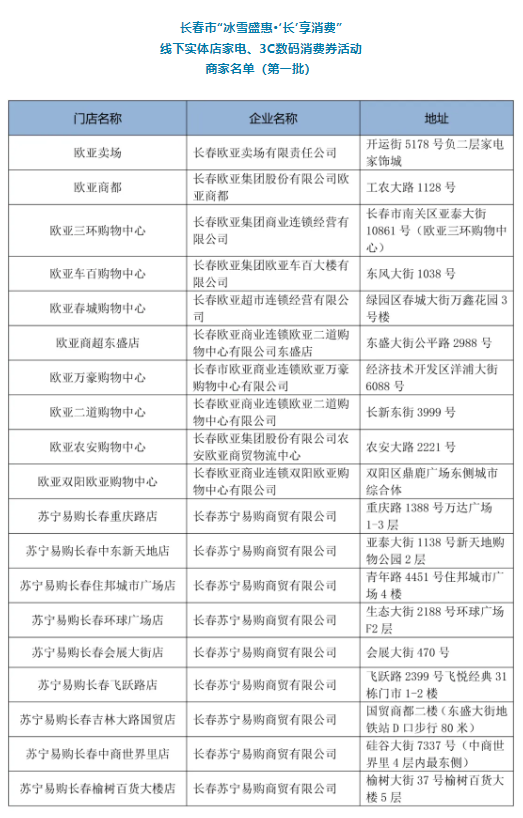
长春发放线下实体店消费券
Xin Lang Cai Jing· 2025-12-25 05:22
Core Viewpoint - Changchun City will launch the "Ice and Snow Carnival: Enjoy Consumption" offline consumption voucher distribution event in December 2025 to stimulate consumer spending and drive economic growth through a "government subsidy + enterprise matching" model [1][13]. Group 1: Distribution Platform and Timing - The consumption vouchers will be distributed through the Cloud Flash Payment APP [2][14]. - The event will take place from December 23, 2025, at 17:00 to January 3, 2026, at 24:00, with the possibility of early termination if funds are exhausted [2][14]. Group 2: Subsidy Targets - Consumers purchasing eligible products from designated merchants will be the recipients of the subsidies [3][15]. - The subsidy covers 11 categories of home appliances, including air conditioners, televisions, refrigerators, washing machines, and more [3][15]. - Additionally, 10 categories of small appliances and 4 categories of 3C digital products, such as smartphones and computers, are included [4][16]. Group 3: Subsidy Standards - For the 11 categories of home appliances, a 20% subsidy is available for products with a 1st-level energy or water efficiency standard, capped at 2000 yuan per item; a 15% subsidy applies to 2nd-level and other standards, capped at 1500 yuan [5][17]. - The 10 categories of small appliances will receive a 15% subsidy, with a maximum of 1500 yuan per item [5][17]. - The 3C digital products will have a 10% subsidy, capped at 1000 yuan per item [5][17]. Group 4: Process and Regulations - Consumers must log in to the Cloud Flash Payment APP to claim the vouchers, which are valid for the day of issuance and expire if not used by midnight [6][18]. - To redeem the vouchers, consumers must provide real-name information and request a real-name invoice from the merchants [19]. - Any fraudulent activities, such as buying or selling vouchers, will result in disqualification from the event [20].
国泰海通: 科技有色景气延续 服务消费需求提升
智通财经网· 2025-12-24 23:56
Group 1 - The core viewpoint indicates that the global AI infrastructure continues to drive demand in the electronic industry, leading to price increases in technology hardware and metals, while domestic consumption shows marginal improvement in service sectors despite ongoing pressure in durable goods [1][2] - The report highlights a significant increase in high-end memory prices, with DRAM prices for DDR4 and DDR5 reaching $56.9 and $26.7 respectively, reflecting a week-on-week increase of 12.1% and 1.8% [3] - The central economic work conference proposed "in-depth implementation of special actions to boost consumption," suggesting potential unexpected policy space for consumption on both supply and demand sides by 2026 [2][3] Group 2 - Service consumption shows improvement, with Shanghai Disneyland's congestion index increasing by 11.2% week-on-week and 56.2% year-on-year, while the Hainan tourism price index rose by 0.9% [3] - The real estate sector remains under pressure, with a 21.5% year-on-year decline in transaction volume across 30 major cities, although the decline in sales is narrowing [3] - International metal prices have significantly increased due to expectations of monetary easing following a lower-than-expected U.S. CPI, while coal prices have sharply declined [4]

保险业如何为消费“撑腰”?
Jin Rong Shi Bao· 2025-12-24 03:00
Core Viewpoint - The recent Central Economic Work Conference emphasizes the need for financial institutions to enhance support for expanding domestic demand, highlighting the unique role of insurance in stabilizing the economy and boosting consumption [1][2]. Group 1: Insurance's Role in Consumption - Insurance helps alleviate "worries" related to various risks such as health issues, accidents, and property loss, thereby supporting consumer spending [1]. - Insurance products like life insurance, which have savings attributes, assist individuals in long-term financial planning and ensure stable income post-retirement, promoting balanced consumption across life cycles [1]. - The aggregation of insurance funds into the real economy strengthens the foundation for economic stability, further activating consumption potential [1]. Group 2: Addressing Supply and Demand Gaps - There is a mismatch between supply and demand in the insurance industry, with effective supply failing to meet the growing demand for insurance services, particularly in areas like health, retirement, and medical care [2]. - As of 2024, China's insurance penetration is projected to be 4.2%, significantly lower than the global average of 7%, indicating substantial growth potential for the industry [2]. - The insurance sector should focus on high-quality supply by optimizing products and services to bridge the gap between supply and demand [2]. Group 3: Enhancing Supply Quality - The insurance industry must enhance its proactive approach by focusing on the needs of the population, particularly in the aging demographic, to extend the elderly care service industry chain [3]. - There is a need to develop personalized insurance products and service packages that address specific demands in health management, rehabilitation, and mental well-being for the elderly [3]. - Insurance services are transitioning from merely existing to being of high quality, necessitating innovation in products and services to meet emerging consumer demands [3]. Group 4: Embracing Consumption Upgrade Trends - To boost consumption, the insurance industry must maintain its core focus on risk protection while also embracing trends in consumption upgrades through product innovation and service enhancement [4]. - The industry should leverage technology to optimize service experiences, utilizing big data and artificial intelligence to accurately identify user needs and simplify insurance processes [3][4]. - There is a focus on developing flexible payment and tailored insurance products for new economy workers and gig economy participants to fill existing coverage gaps [3].
护航“敢消费” 助力“愿消费”
Jin Rong Shi Bao· 2025-12-24 03:00
Group 1 - The core viewpoint of the articles highlights the insurance industry's proactive response to emerging consumer needs and risks associated with new consumption scenarios, particularly in tourism, sports, and healthcare [1][2][3][4][5][6]. Group 2 - The launch of the Hainan island's closure operation has prompted insurance companies to tailor risk protection products for new tourism activities, including yacht outings and rainforest adventures [1]. - The "Soochow Super League" has driven insurance companies to innovate comprehensive coverage products for events, ensuring safety for participants and spectators [2]. - Insurance companies are developing specialized products to address risks in new consumption areas, with a focus on tourism, sports, and entertainment, including a matrix of 35 dedicated insurance products [3]. - The insurance sector is increasingly recognized for its role in stabilizing consumer expectations and enhancing confidence through innovative products like income loss insurance and long-term care insurance [4][5]. - Insurance funds are being utilized to support consumer infrastructure, such as the successful listing of the first agricultural market REIT in China, which promotes local consumption and economic activity [6].


把整改成效转化为治理效能发展动能 龚正主持市政府常务会议
Jie Fang Ri Bao· 2025-12-24 01:42
要紧盯重点领域稳住增长势头,赋能重点区域、重点企业再发力,经济大区继续挑好大梁,市区两 级要全力为企解忧、助企增利。明年一季度经济调度的窗口期短,要先谋快动、靠前发力,稳增长工作 要早部署、早安排,重要政策工具要早储备、早落实,重大项目活动要早谋划、早启动,抢抓一切有利 条件、调动一切积极因素,推动明年经济工作开好局、起好步。同时,要坚决守牢安全底线,确保"十 四五"圆满收官。 会议原则同意《上海市促进服务业提质增效和消费提振扩容联动发展的若干措施》并指出,要统筹 联动服务供给与消费需求,提升服务供给和品质,提振消费意愿和能力。要统筹联动政策支持与环境营 造,清理消费领域不合理限制措施,打造有利于消费持续增长的制度体系和市场环境。 会议原则同意《上海市支持先进制造业转型升级三年行动方案(2026—2028年)》并指出,要注重 提质增效,聚焦主导产业重点企业,加强精准服务,保障产业链、供应链关键环节稳定畅通。要促进转 型升级,以智能化为牵引、绿色化为导向、融合化为支撑,推动"制造+服务""产品+解决方案"转型,培 育全球"链主"企业和"专精特新"企业。要优化发展生态,做好空间提质增效,促进要素成本下降,推动 更 ...
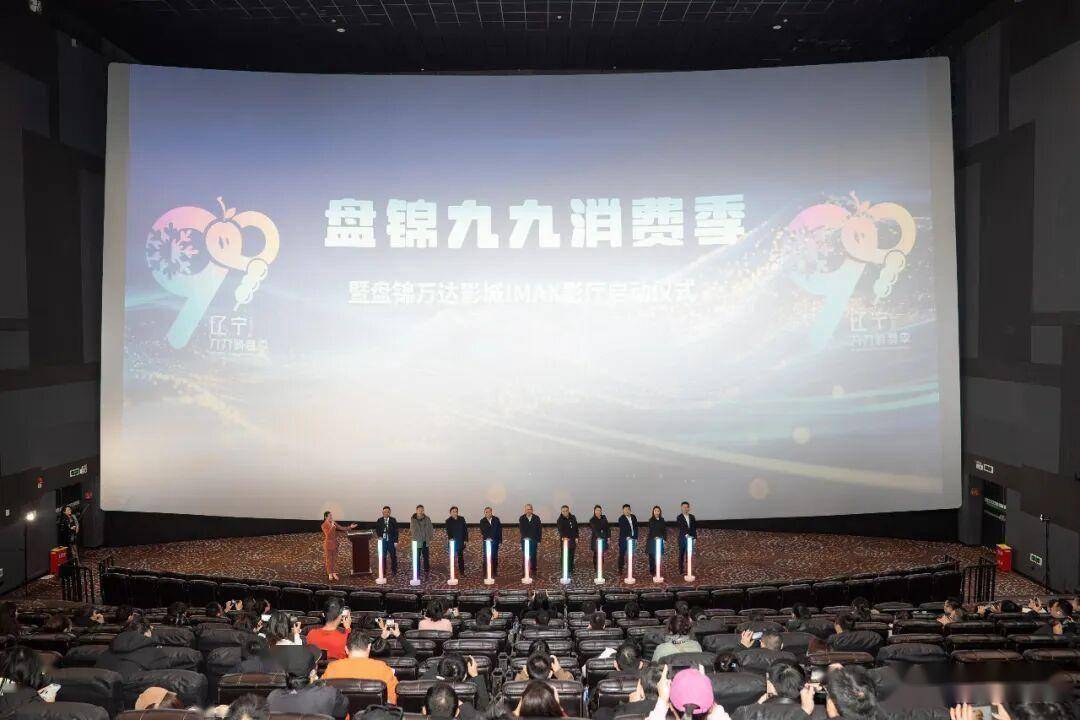
盘锦“九九消费季”惠民消费活动来啦!
Sou Hu Cai Jing· 2025-12-23 03:11
Group 1 - The "99 Consumption Season" in Panjin City aims to stimulate the winter economy and enhance the consumer market through government and enterprise collaboration [1][3] - The event is rooted in traditional customs and focuses on winter consumption, running until March next year, offering a diverse range of activities including culture, shopping, dining, and entertainment [3] - The launch event featured various promotional measures, including discounts and special offers from local businesses, creating a vibrant atmosphere for community engagement [3] Group 2 - The city’s Commerce Bureau plans to implement actions to boost consumption, focusing on the integration of culture, tourism, and commerce to enhance the quality and volume of consumer spending [3] - Efforts will be made to optimize the consumption environment and tap into consumer potential, contributing to the high-quality development of the local economy [3]
前瞻2026:“十五五”开局在即 中国将继续做全球经济的“稳定锚”
Zhong Guo Qing Nian Bao· 2025-12-23 00:22
2025年进入倒计时,2026年作为"十五五"规划开局的关键节点已然临近。当全球地缘政治动荡加剧、风 险成本持续攀升,世界经济在不确定性中艰难"寻路"时,中国"十五五"规划建议勾勒出一份清晰的发展 蓝图,叠加中国综合优势与积极的政策导向,成为变局中的"定盘星"。 "未来,'十五五'规划的实施,必将引领中国继续做全球经济发展的'稳定锚',为全球市场增添更多信心 和力量。"全国政协委员,中国财政科学研究院研究员、原院长刘尚希关注到,"十五五"规划建议提 出"不确定难预料因素增多"的复杂环境,他认为,相较于"十四五"时期,更加强调风险挑战的严峻性。 然而,中国正以高质量发展的确定性应对一切不确定性。 摩根士丹利中国首席经济学家邢自强则对中国创新充满信心,他说:"我对中国经济在未来五年取得星 辰大海(式)的科技自强是深信不疑的,这方面前景广阔。" "安全"成为未来谋划的逻辑起点 当前,大国竞争加剧与地缘政治动荡相互交织,全球发展的底层逻辑正在发生深刻转变,世界主题 从"和平与发展"转变为"安全与发展"。 "'安全'成为未来谋划的逻辑起点。"刘尚希谈到,这一转变直接导致全球风险成本显著上升。中国的战 略机遇其实是蕴藏在 ...