
物理AI

Search documents
SHEIN宣布在广东追加投资超百亿;库克暗示苹果下一个重大突破是视觉AI丨Going Global
创业邦· 2026-03-01 10:35
Core Insights - The article highlights significant developments in the cross-border e-commerce and technology sectors, focusing on major companies' investments and market expansions in Southeast Asia and Europe [2][3]. Group 1: E-commerce Developments - TikTok Shop has launched a special incentive policy for cross-border e-commerce in Southeast Asia, offering up to $500 for key merchants meeting daily GMV targets and additional incentives for other merchants [5]. - SHEIN plans to invest over 10 billion yuan in Guangdong over the next three years to build a smart supply chain, aiming for over 100 billion yuan in export revenue by 2025 [6]. Group 2: Robotics and AI Innovations - Zhiyuan Robotics has officially entered the German market, unveiling a full range of general-purpose robots and signing a strategic cooperation agreement with Minth Group to accelerate local deployment in Europe [10][11]. - Qianwen, an AI assistant under Alibaba, is set to launch various AI hardware products globally, including AI glasses and headphones, enhancing its capabilities beyond mobile applications [14][15]. Group 3: Strategic Partnerships and Collaborations - CATL and BMW have signed a memorandum of understanding to collaborate on battery passport trials and supply chain carbon footprint reduction, marking an expansion of their long-standing partnership [16][17]. - Skyworth will take over Panasonic's TV business in North America and Europe, focusing on leveraging Skyworth's resources for product development while Panasonic retains operations in Japan [18]. Group 4: Major Corporate Moves - Google has integrated its robotics software company Intrinsic into its core business, aiming to enhance its capabilities in physical AI and industrial robotics [21]. - Apple CEO Tim Cook indicated that visual AI will be a key technological breakthrough for the company, potentially impacting future product lines like the iPhone 17 and Vision Pro [22].



如何迎接AI重塑?美的与伊利各有心得
虎嗅APP· 2026-03-01 09:28
Core Insights - The article discusses the transformative impact of generative AI on the manufacturing industry, emphasizing its role in reshaping the value chain from marketing to supply chain management [2][3]. Group 1: AI Implementation in Manufacturing - Since the introduction of generative AI in 2022, companies have moved from initial skepticism to widespread adoption across the entire supply chain, indicating a strong disruptive potential [5]. - AI has significantly improved customer service efficiency by providing 24/7 support and enhancing information accuracy, leading to better user experiences [5]. - Companies like 伊利 and 美的 are leveraging AI for various applications, including product design, customer interaction, and operational efficiency, with a focus on real-time consumer insights [7][9]. Group 2: Value Creation and Efficiency - AI is being utilized to enhance product development by analyzing user feedback and improving responsiveness to market trends, although human involvement remains crucial for testing [9][10]. - The application of AI in predictive maintenance and operational efficiency has shown promising results, particularly in manufacturing settings [9][10]. - Companies measure AI's impact through workforce optimization, investment precision, and cost reduction, particularly in marketing [10][12]. Group 3: Future Trends and Challenges - The year 2025 is anticipated to be a pivotal moment for AI integration, with companies focusing on high-value scenarios and the development of intelligent agents [15][20]. - The emergence of GEO (Generative Engine Optimization) as a new traffic source is prompting brands to rethink their engagement strategies with consumers [16][17]. - Companies are encouraged to focus on high-value areas for AI implementation, especially where resource wastage is significant, to maximize efficiency gains [20][21]. Group 4: AI's Role in Consumer Interaction - The shift from SEO to GEO represents a fundamental change in how brands interact with consumers, with AI-generated content reshaping perceptions of product value [18][19]. - AI's integration into consumer products is enhancing functionality and user experience, leading to increased acceptance among users [19][20]. Group 5: AI Native and Physical AI - The concept of AI native involves integrating AI into business processes, aiming for autonomous decision-making across the value chain [25][28]. - Physical AI, characterized by embodied intelligence, is expected to revolutionize manufacturing processes, with existing products already incorporating AI features [28][29]. - Companies must focus on identifying which AI applications deliver real commercial value, rather than merely increasing the number of intelligent agents [28][29].



日本将设3大支援基地提升AI半导体产业实力
日经中文网· 2026-03-01 00:33
Core Viewpoint - Japan is aiming to revitalize its AI semiconductor industry by establishing three bases to nurture companies in design, production equipment, and materials, in response to the late start in AI semiconductor design and the shrinking market share due to the rise of Chinese companies [1][5]. Group 1: Government Initiatives - The Japanese government plans to set up three bases by 2026 to support semiconductor design, focusing on advanced tools and computing servers for startups and universities [1]. - A base for equipment and materials will be established near the Rapidus factory in Chitose, Hokkaido, with a target launch in 2029, featuring the latest EUV lithography equipment from ASML [3]. - The government has allocated 130.6 billion yen from its budget and additional funds from the National Institute of Advanced Industrial Science and Technology to support these initiatives, allowing companies and research institutions to access equipment at lower costs [5]. Group 2: Industry Challenges and Opportunities - The high costs of cutting-edge semiconductor design tools, ranging from tens of billions to hundreds of billions of yen, make it difficult for companies to bear the investment alone [4][5]. - Japan's semiconductor industry has seen a decline in market share, primarily due to the late entry into AI semiconductor design and increased competition from Chinese firms [5][6]. - The government is actively subsidizing efforts to attract TSMC and support Rapidus, aiming to enhance domestic production capabilities for advanced semiconductors [5]. Group 3: Future Prospects - By establishing these bases, Japan hopes to cultivate local companies that can design AI semiconductors, potentially becoming valuable clients for Rapidus [6]. - The focus on collaboration beyond national borders is seen as essential for enhancing international competitiveness, moving away from the previous self-sufficiency approach that contributed to the industry's decline [6].

凌迪科技携⼿银河通⽤,以⾼保真形变体仿真赋能物理仿真技术
机器人大讲堂· 2026-02-28 04:03
⽚中,轮式双臂机器⼈Galbot G1 展示了包括"叠⾐服"在内的多项贴近真实⽣活的操作能⼒。⾐物作为典型柔 性物体,形变复杂、状态多变,被业内普遍视为检验机器⼈灵巧操作与泛化能⼒的⾼难度任务, 也被称为机 器⼈操作领域的"圣杯"。 《我最难忘的今宵》之银河通用机器人技术揭秘视频-叠衣服|视频来自银河通用 这类能⼒的实现,离不开⼤规模、⾼可信度的柔性物体数据⽀撑。围绕柔性物体操作这⼀⻓期难题,银河通⽤ 通过其自主研发的"⼤脑–⼩脑–神经控制"端到端具身智能大模型"银河星脑"AstraBrain,在仿真环境中⽣成数 以万计的形变数据,让机器⼈得以在虚拟世界中进⾏⾼频、可控的反复训练。 在这⼀过程中, 凌迪科技的⾼保真形变体仿真与⼯业级闭环验证技术,赋能银河的物理仿真技术中对于衣料 的仿真求解, 提升其对衣料的仿真效果,未来也将为银河通⽤提供关键的数据建模与仿真⽀撑,加速具身智 能在复杂操作场景中的落地。 近期,凌迪科技将基于其⾼保真形变体仿真与⼯业级闭环验证技术,与银河通⽤正式达成合作。 作为"2026 年春节联欢晚会指定具身⼤模型机器⼈",银河通⽤通过贺岁微电影《我最难忘的今宵》,集中呈 现了其具身⼤模型在感 ...

原力灵机具身大模型DM0硬核拆解:物理AI如何迎来自己的“原生”时代
AI科技大本营· 2026-02-28 03:27
Core Insights - The article discusses the limitations of current large language models (LLMs) and vision-language models (VLMs) in physical robotics, emphasizing the need for a new approach that integrates physical grounding from the outset [1][2] - The DM0 model, developed by Yuanliang and Jie, is introduced as an embodied-native vision-language-action model that combines various data sources to enhance physical interaction capabilities [3][5] Model Architecture and Training - DM0 employs a multi-source mixed training approach and an embodied spatial scaffolding architecture to harmonize heterogeneous data, including internet corpora, autonomous driving logs, and robotic operation trajectories [5][8] - The model consists of two main components: a VLM backbone for multimodal perception and a flow-matching-based action expert for continuous control [12][13] - The training pipeline is divided into three stages: pre-training with 1.13 trillion tokens, mid-training with 200 million samples, and post-training with 50 million samples, focusing on aligning the model with specific robotic platforms [16][17][18][19] Performance Evaluation - DM0 demonstrated superior performance in the RoboChallenge benchmark, achieving a 62.00% average success rate in single-task evaluations, outperforming larger models like Spirit-v1.5 and GigaBrain-0.1 [24] - In multi-task evaluations, DM0 achieved a 37.3% average success rate and a task score of 49.08, significantly surpassing the previous best model, pi0.5 [27] Future Directions - The authors suggest potential future developments for DM0, including scaling the model to 7B or 30B parameters, integrating multimodal sensory feedback, and enhancing long-term reasoning capabilities [32]

2025年中国企业级AI应用行业研究报告
艾瑞咨询· 2026-02-28 00:06
Core Viewpoint - The enterprise-level AI application industry is transitioning from a technology exploration phase to a large-scale application phase, driven by advancements in large language models and the need for systematic, end-to-end implementation capabilities [1][14]. Application Layer - Agents are becoming the core vehicle for enterprise-level AI applications, facilitating deep integration with business processes through task decomposition and various operational methods [1][29]. - The focus is on enhancing efficiency in processes, amplifying knowledge, and innovating value through AI applications [17][27]. Supporting Layer - A data-centric approach is essential for model selection, emphasizing the construction of a Data+AI foundation and a data security system tailored for AI [1][41]. - High-quality datasets are crucial for AI development, enabling the transformation of business data into unique competitive advantages [42][45]. Infrastructure Layer - AI computing infrastructure is evolving towards a multi-dimensional and heterogeneous model, highlighting the importance of deep collaboration between software and hardware in the context of domestic substitution [1][50][53]. - The dominance of GPU chips in AI applications is solidifying, with domestic manufacturers focusing on optimizing interconnectivity and inference capabilities to achieve differentiation [50][51]. Organizational Layer - The success of AI applications is heavily influenced by top management's commitment and strategic involvement, which is critical for driving AI investment returns [56]. - Employees must transition from being passive users to active collaborators in AI processes, necessitating a shift in organizational roles and capabilities [60]. Vendor Landscape - The enterprise-level AI application market consists of four main categories: application software, technical services and solutions, cloud services, and AI model providers, creating a dynamic competitive landscape [2][65]. - Established companies leverage their industry expertise to extend AI applications, while startups focus on specific scenarios to complement existing systems [65][66]. Development Trends - The evolution of large models is moving from single Transformer architectures to multi-architecture parallel iterations, allowing for flexible and efficient adaptation to various scenarios [2]. - AI is expected to deeply intervene and reconstruct enterprise processes, leading to a transformation in human-machine collaboration models [2][8].

寒武纪、摩尔线程与沐曦同日“快报”年度成绩单,国产算力芯片厂商营收规模普遍实现倍增
Jing Ji Guan Cha Wang· 2026-02-27 14:43
Core Viewpoint - The domestic computing chip industry is experiencing significant revenue growth, with major players like Cambricon, Moore Threads, and Muxi achieving triple-digit increases in their annual revenues for 2025, marking a shift from technology validation to commercial scale replacement in the market [2][10]. Group 1: Cambricon's Performance - Cambricon reported a total revenue of 6.497 billion yuan for 2025, an increase of 4.532 billion yuan year-on-year, representing a growth of 453.21% [3]. - The company achieved a net profit of 2.059 billion yuan, recovering from a loss of 452 million yuan in the previous year [3]. - In Q4 2025, Cambricon's revenue was 1.89 billion yuan, with a quarter-on-quarter growth of 9.4%, although net profit decreased by 19.8% compared to the previous quarter [3][4]. Group 2: Moore Threads' Performance - Moore Threads reported a total revenue of 1.505 billion yuan for 2025, up 243.37% from 438 million yuan in the previous year [6]. - The net loss narrowed to 1.024 billion yuan from a loss of 1.618 billion yuan year-on-year, a reduction of 36.70% [6]. - The MTT S5000 GPU, a key product, has achieved mass production and is designed for high AI computing performance [6][7]. Group 3: Muxi's Performance - Muxi reported a total revenue of 1.644 billion yuan for 2025, an increase of 121.26% from 743 million yuan in the previous year [9]. - The net loss was 781 million yuan, reduced from a loss of 1.409 billion yuan year-on-year, representing a 44.53% improvement [9]. Group 4: Nvidia's Performance - Nvidia's Q4 2026 revenue reached $68.127 billion, a year-on-year increase of 73% and a quarter-on-quarter increase of 20% [11]. - The company's net profit for the same quarter was $42.96 billion, up 94% year-on-year [11]. - Over 90% of Nvidia's revenue comes from its data center business, which saw a 75% year-on-year growth [11][12]. Group 5: Market Trends - The demand for computing power continues to rise, benefiting both domestic chip manufacturers and Nvidia, as global capital expenditures for large-scale data centers remain high [10]. - Nvidia's procurement obligations surged to $95 billion, indicating strong future demand for its products [15]. - The shift in software development towards real-time generation is expected to further drive revenue growth in the AI sector [16].


瑞银财富管理投资总监办公室:人形机器人有望从试点阶段逐步进入制造和物流等实际应用场景
Zheng Quan Ri Bao Wang· 2026-02-27 11:26
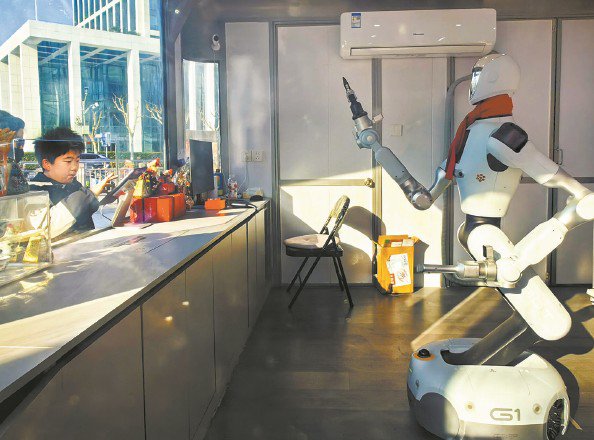
Group 1 - The core viewpoint is that the robotics and automation market is entering a new era, with multiple positive signals indicating growth potential [1] - Breakthroughs in physical AI are accelerating the practical application of robots, enabling them to understand sensory inputs and natural language commands, which allows for the reliable completion of complex tasks [1] - The trend of manufacturing reshoring is driving an increase in demand for automation, with humanoid robots expected to meet the critical needs for flexibility and adaptability in production processes [1] Group 2 - Productivity improvements and enhanced supply chain dynamics are anticipated, with IDC projecting that global shipments of humanoid robots will surge to 18,000 units by 2025, representing a nearly 500% year-on-year growth [1] - Chinese component suppliers are ramping up production, while overseas manufacturers are actively developing new products, indicating a robust expansion in the robotics sector [1] - The UBS Wealth Management CIO Office expresses optimism about vertical applications of embodied AI, including humanoid robots, advanced driver-assistance systems, and industrial automation, highlighting the importance of companies with scalable platforms and strong R&D capabilities [2]

具身智能2026机器人“破壁之年”
Xin Lang Cai Jing· 2026-02-27 07:06
Core Insights - The article discusses the significant advancements in humanoid robotics, highlighting the transition from basic movement capabilities to a deeper understanding of human intentions and environmental contexts, marking a pivotal moment for the industry [2][3] Group 1: Technological Breakthroughs - The evolution of embodied intelligence in robots is expected to reach a critical point by 2026, characterized by a dual-driven model of "brain evolution + body iteration," enabling robots to understand physical world dynamics like humans [2] - The integration of embodied intelligence with large models will lead to a shift from traditional programming to a fully autonomous process of "perception-decision-execution," making task-oriented AI agents the focal point of industry competition [3] Group 2: Application Scenarios - By 2026, the application of embodied intelligence will expand from isolated pilot projects to comprehensive integration across various sectors, including industrial, domestic, commercial, and medical fields, with an anticipated penetration rate in industrial applications exceeding 15% [3] Group 3: Safety and Collaboration Standards - The introduction of international safety standards, such as IEC62849:2025, will address the safety concerns associated with robots in domestic and public environments, while advancements in flexible materials will enhance the safety features of robots [4] Group 4: Energy Efficiency and Endurance - Innovations in solid-state batteries and energy recovery systems are projected to extend the operational time of humanoid robots to over 16 hours, with some models incorporating solar charging capabilities for enhanced efficiency [5] Group 5: Mass Production and Cost Reduction - The humanoid robotics industry is expected to transition from laboratory prototypes to large-scale production by 2026, with an estimated global output of over 50,000 humanoid robots, and a projected cost reduction of 35%-45% compared to 2025 [6] Group 6: Urban Services and Infrastructure - Smart cities like Singapore and Hangzhou are leading the way in deploying robot-friendly infrastructure, facilitating the operation of delivery, inspection, and cleaning robots, thereby improving urban management efficiency [7] Group 7: Trust and Ethical Challenges - The primary challenge for embodied intelligence robots in 2026 will be societal acceptance and trust, particularly concerning privacy and data security, prompting the adoption of edge intelligence paradigms to manage sensitive data locally [8] - The establishment of a layered responsibility system for robots will address liability issues in case of accidents, promoting the development of insurance and ethical standards within the industry [8] Conclusion - The year 2026 is anticipated to be a transformative period for embodied intelligence robots, shifting their role from mere performers to essential participants in daily life, with Chinese companies and research institutions at the forefront of this evolution [9]

未知机构:重点推荐智微智能受益于国内Agent算力需求起量国-20260227
未知机构· 2026-02-27 02:25
Summary of Conference Call Records Company and Industry Overview - The focus is on **Zhiwei Intelligent**, which is expected to benefit from the increasing demand for domestic Agent computing power [1][2] - The domestic cloud computing industry is experiencing an upward trend in computing power demand, referred to as **Beta** [1] Key Points and Arguments - **Agent Computing Power Demand**: Huang Renxun from NV stated that the industry has reached a turning point for Agent computing, with significant increases in OpenClaw and OpenRouter token usage, leading to a surge in computing power demand [1] - **Price Increases**: There has been a notable rise in cloud computing and H200 leasing prices, indicating a tight supply of computing resources [1] - **Expansion Plans**: Zhiwei Intelligent's subsidiary, Tengyun Zhikuan, is focused on providing high-performance AI computing servers, with expectations for rapid growth in 2025 [1][2] - **Strong Order Backlog**: The company has a robust order book, with strong performance anticipated in the computing power business for 2026 [2] - **Channel Advantages**: Zhiwei Intelligent is expected to leverage its channel advantages to accelerate expansion into more computing clients, transitioning further into computing leasing and cloud services [2] Additional Important Insights - **Physical AI Business Growth**: The company is rapidly expanding its physical AI business, which Huang Renxun highlighted as the next wave following intelligent agents [2] - **Partnerships**: Zhiwei Intelligent is an official partner of NVIDIA's Thor chip and has established collaborations with leading companies in the robotics sector, including BYD, Hikvision, Huichuan Technology, and Yunji Robotics [3] - **Comprehensive Solutions**: The company offers integrated solutions covering the entire robotics development process, including training, simulation rendering, and control, aligning with NVIDIA's "three computers" concept [2][3] - **Future Prospects**: There is optimism regarding the release of performance related to embodied intelligence in 2026, as the company continues to build relationships within the robotics supply chain [3]