
绿色低碳转型

Search documents
全国首个生物燃料油混兑调和政策试点落地舟山
Xin Lang Cai Jing· 2026-02-10 11:51
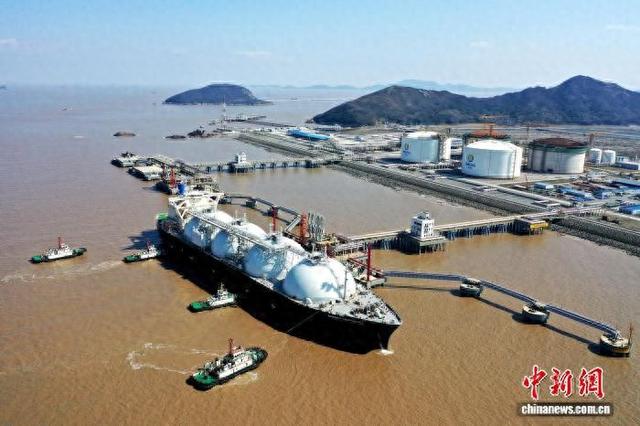
Core Viewpoint - The approval of the biofuel oil blending export business in Zhoushan marks a significant reform achievement in China's green low-carbon shipping fuel sector and is a key step towards establishing Zhoushan as a major biofuel source in Northeast Asia [1][3]. Group 1: Policy and Economic Impact - The new policy allows Zhoushan to shift from relying on imported biofuel oil to achieving self-production and export, responding positively to national strategic goals [3][4]. - The local blending of biofuel oil is estimated to save approximately $80 per ton compared to imports, indicating significant economic benefits [3]. Group 2: Infrastructure and Development - A total investment of 1.7 billion yuan for a 400,000-ton biodiesel processing project has been established in Zhoushan, providing essential raw materials for blending [3]. - The implementation of the policy is expected to enhance the functionality of the Zhejiang Free Trade Zone's resource allocation hub, promoting the development of the biodiesel processing, storage logistics, and quality inspection industries [4]. Group 3: Future Projections - By 2025, the bonded fuel supply in Zhoushan is projected to reach 8.02 million tons, positioning it as the third-largest ship refueling port globally, which supports the construction of a million-ton bonded fuel supply center in Zhejiang [4]. - The local government aims to expedite the first pilot business by the end of February, optimizing processes and regulatory frameworks to facilitate the large-scale development of biofuel oil blending [4].

政策东风来 吉利迎甲醇产业发展新机遇
Zhong Guo Qi Che Bao Wang· 2026-02-10 09:09
在国家政策指引下,地方层面的实践探索同样蹄疾步稳。甘肃、青海、贵州等资源禀赋优越地区纷纷出台专项政策, 在甲醇燃料价格机制、基础设施建设等方面加大投入;黑龙江依托丰富的风光资源优势,与吉利深化合作推广甲醇汽 车;上海提出建设国际航运绿色燃料加注中心,重点推进绿色甲醇在航运领域规模化应用;在香港环境事务政策简报 会上,有议员提出将甲醇汽车纳入发展绿色运输的路线图……多层次、全方位的政策支持,不仅确立了甲醇在新能源 体系中的重要地位,更推动行业发展从试点示范迈向规模化、产业化新阶段,为吉利等企业的深耕布局提供了坚实保 障。 政策东风之下,吉利对甲醇燃料的坚定选择,源于对能源安全、产业优势与技术可行性的深度考量。从国家能源格局 来看,我国"多煤、缺油、少气"的现状,使得能源安全面临严峻挑战。而甲醇的多元制备路径恰好破解这一困境,既 能通过煤炭、天然气等化石能源加工生产,更可依托风光发电电解水制氢、二氧化碳加氢等技术制备零碳甲醇,这与 吉利践行的碳中和理念高度契合。 从技术应用维度看,甲醇燃料的优势在实际场景中得到充分验证。相较于纯电动汽车在北方低温环境下的续驶里程衰 减问题,甲醇燃料冰点低至零下97.6℃,即使在极 ...

能源强国建设“大家谈”︱国家能源集团:坚定不移担当能源强国建设主力军
国家能源局· 2026-02-10 07:05
Core Viewpoint - The article emphasizes the strategic importance of building an energy powerhouse in China, highlighting it as essential for national security, high-quality development, and international competitiveness in the evolving global energy landscape [3][4][6]. Group 1: Importance of Energy Powerhouse - Energy is a crucial material foundation and driving force for economic and social development, recognized as a "national priority" [4]. - The goal of building an energy powerhouse was first proposed in the 2021 Central Economic Work Conference and has since been integrated into national planning, reflecting a deep understanding of energy development dynamics [4][5]. - The construction of an energy powerhouse is seen as a core foundation for national security, aiming to create a self-sufficient and efficient energy supply system to ensure stability in economic and social operations [4][5]. Group 2: Dimensions of Energy Powerhouse Construction - The construction of an energy powerhouse is viewed as a transition from "scale expansion" to "quality and efficiency" in energy development, focusing on a shift from high-carbon to clean and low-carbon energy [5][6]. - It is essential to enhance security capabilities, green development, innovation-driven growth, energy service capabilities, and international influence to effectively respond to global energy challenges [6][7]. Group 3: Role of State-Owned Enterprises - The State Energy Group is committed to leading the construction of an energy powerhouse, aligning with the spirit of the 20th National Congress and subsequent meetings [7][8]. - The company aims to strengthen political leadership, ensure safety in energy supply, and promote green and low-carbon transitions while enhancing innovation and international cooperation [8][9][10]. Group 4: Future Directions and Goals - The company plans to build a modern energy system by 2030, focusing on energy security, green transformation, technological innovation, and institutional reforms [11]. - The commitment to international cooperation and risk management is emphasized, with a focus on enhancing core competitiveness in global energy markets [10][11].

从“深圳智造”到“深圳创造”—数字能源正在重新定义每一度电
Zhong Guo Neng Yuan Wang· 2026-02-10 05:56
Core Insights - The article emphasizes Shenzhen's commitment to becoming a global leader in digital energy, focusing on innovation, application, and international cooperation in the clean energy sector. Group 1: Digital Energy Innovation - Shenzhen has established 196 digital energy technology innovation platforms to enhance foundational research and original innovation capabilities, creating a comprehensive innovation chain from basic research to industrial application [2] - Major companies like China General Nuclear Power Corporation and Shenzhen Energy are leading advancements in hydrogen energy and energy storage technologies, including the development of a 30 MW pure hydrogen gas turbine energy storage demonstration project [2][3] - New energy storage technologies such as supercapacitors, flywheel storage, and various battery types are rapidly evolving, driven by leading firms like Huawei and BYD [2] Group 2: Quality Services and Solutions - Shenzhen is shifting its focus from scale and price competition to quality and efficiency in the digital energy sector, with a notable emphasis on high-performance charging solutions [3] - The introduction of liquid-cooled fast charging technology by Huawei has significantly impacted the global charging market, addressing charging anxiety with innovative service concepts [3] - The development of battery swapping solutions for heavy-duty electric vehicles is expected to halve the initial purchase cost within two years, promoting low-carbon transitions in heavy transportation [3] Group 3: Benchmark Applications - Shenzhen is transforming its energy landscape into a model for other megacities, with significant achievements in charging infrastructure, including 1,098 fast charging stations and 536,000 charging piles [4] - The city has implemented a unified energy management platform, enhancing the reliability and efficiency of energy distribution [4] - The virtual power plant initiative has achieved a resource access capacity of 4.75 million kW, showcasing Shenzhen's capabilities in energy management [4] Group 4: International Cooperation - Shenzhen is positioning itself as a hub for international cooperation in digital energy, hosting the International Digital Energy Expo with participation from nearly 2,000 companies across 52 countries [7] - The city is actively promoting its digital energy products in key international markets, aiming for a 22.6% increase in exports of its "new three samples" products by 2025 [7] - Shenzhen's approach combines technology, finance, and legal frameworks to enhance its attractiveness for international partnerships and collaborations [7]


2026年中国半钢轮胎行业相关政策汇总、产业链图谱、供需现状、产区分布、竞争格局及发展趋势分析:玲珑轮胎表现亮眼[图]
Chan Ye Xin Xi Wang· 2026-02-10 01:23
Overview - The semi-steel tire industry in China is experiencing rapid growth, driven by the continuous prosperity of the passenger car market, with total sales expected to reach 650 million units in 2024, a year-on-year increase of 8.8% [1][7]. - Domestic sales are projected to be 322 million units, accounting for 49.54% of total semi-steel tire sales [1][7]. Market Policies - The Chinese government has issued several policies to support the development of the tire industry, including guidelines for high-quality development in the petrochemical sector and encouragement for foreign investment [5][6]. Industry Chain - The semi-steel tire industry consists of upstream suppliers of raw materials, midstream research and production, and downstream markets focused on passenger vehicles [6][7]. - The automotive industry is a crucial pillar of China's economy, with significant growth expected in passenger car production and sales, projected to reach 30.27 million and 30.10 million units respectively by 2025 [7]. Current Development - The semi-steel tire industry is expanding rapidly, with production expected to reach 661 million units in 2024, a year-on-year increase of 11.8%, representing 55.73% of the total tire production in China [7][8]. - Major production regions include Shandong, Zhejiang, Jiangsu, Liaoning, Guizhou, and Fujian, with Shandong alone accounting for 46% of total production [7][8]. Competitive Landscape - The market concentration of the semi-steel tire industry has significantly increased, with the top 10 companies holding a market share of 56.5% in 2024 [9]. - Linglong Tire leads the domestic market with a sales volume of 35.72 million units, capturing an 11.1% market share [9]. - Other notable companies include Zhongce Rubber and Giti Tire, with market shares of 10.4% and 7.7% respectively [9]. Key Companies - **Linglong Tire**: A comprehensive tire company focusing on design, manufacturing, and sales, with a revenue of 11.81 billion yuan in the first half of 2025, and a significant presence in the new energy vehicle sector [9][10]. - **Zhongce Rubber**: Engaged in the production of various tire types, with a revenue of 39.25 billion yuan in 2024, and a focus on expanding its market presence both domestically and internationally [10]. Development Trends - The industry is moving towards green and low-carbon production, with an emphasis on eliminating high-energy consumption and high-emission capacities [11]. - The rise of electric vehicles is driving innovation in tire technology, focusing on low rolling resistance and smart tire solutions [12]. - Domestic brands are increasingly replacing foreign brands, leading to a more concentrated market with a shift towards technology and brand competition [13].


十部门印发《实施方案》 上海将建绿色燃料加注交易中心 国际航运中心迎“绿色新引擎”
Jie Fang Ri Bao· 2026-02-10 00:57
Core Viewpoint - The implementation plan aims to establish Shanghai as a leading international shipping center with a focus on green fuel supply and trading, marking a significant step towards the low-carbon transition of the global shipping industry [1] Summary by Relevant Sections Overall Goals - By 2030, Shanghai aims to initially establish an international green fuel supply and trading center, with LNG refueling capacity exceeding 1 million cubic meters and methanol and biofuel refueling capacity reaching 1 million tons [1] Green Fuel Supply System - Shanghai will develop a coordinated green fuel supply system that includes LNG, green methanol, and biofuels, transitioning from a single fuel supply to a diversified green service model [1] Strategic Importance - Strengthening the green fuel supply, refueling, and trading services will help Shanghai enhance its high-end shipping service capabilities, improve global resource allocation, and build core competitiveness for China's influence in the global shipping industry's transformation [1]
税务总局:“十四五”期间我国绿色低碳产业发展良好
Zhong Guo Jing Ying Bao· 2026-02-09 16:06
Core Insights - During the "14th Five-Year Plan" period, five high-energy-consuming industries, including petroleum, coal, and other fuel processing, have seen their average annual sales growth rate fall below the industrial average by 1.8 percentage points [1] - The share of these industries in total industrial sales revenue decreased from 27% at the end of the "13th Five-Year Plan" to 24.9% by the end of the "14th Five-Year Plan" [1] - In contrast, key green product manufacturing sectors, such as new energy vehicles, photovoltaic equipment, and lithium-ion batteries, have experienced average annual sales growth rates exceeding 30% [1] - Green technology service industries, including new energy, energy-saving, and environmental protection, reported average annual sales growth rates of 51.1%, 28.5%, and 18.2% respectively [1] - The ecological protection and environmental governance sector achieved an average annual sales growth rate of 13.2%, providing technical support for green transformation [1] Industry Analysis - The robust growth of the green industry and the continuous release of transformation dividends are attributed to the collaboration between policy guidance and business entities [1] - The successful outcomes of China's green transition not only strengthen ecological safety but also promote economic development towards a green and low-carbon model, injecting sustainable momentum into high-quality development [1]
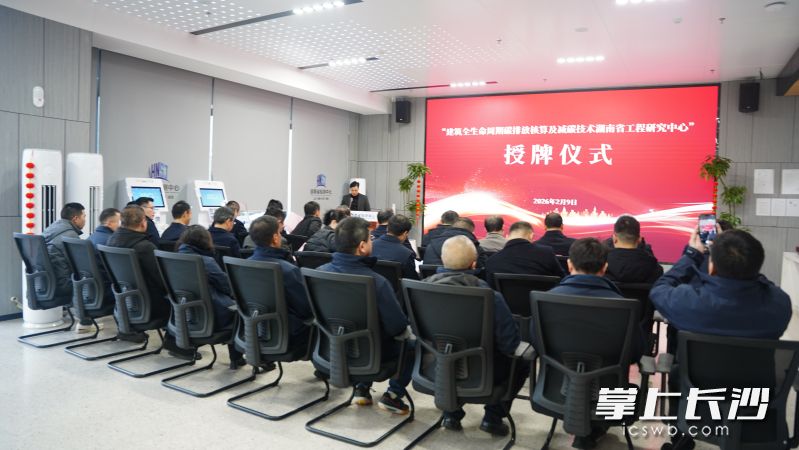
“建筑全生命周期碳排放核算及减碳技术湖南省工程研究中心”正式授牌
Xin Lang Cai Jing· 2026-02-09 13:06
据悉,该中心由湖南省建筑科学研究院有限责任公司牵头,联合湖南省交通科学研究院有限公司、湖南省第六工 程有限公司、湖南建工集团有限公司、中南大学、湖南大学、湘潭大学、湖南城建职业技术学院、长沙市绿色建 筑发展中心等多家企业、高校、科研机构及行业管理部门共同组建,形成了产学研用管深度融合的"创新共同 体"。 湖南省建筑科学研究院党委书记、董事长戴勇军介绍,中心将聚焦"绿色建材、低碳设计、碳计算分析、施工碳 核减、低碳运维、推广孵化"六大研究方向,构建覆盖建筑"研发—设计—计算—施工—运维—推广"全链条的闭环 研究体系,致力于成为连接顶层设计与一线实践的关键桥梁。 长沙晚报掌上长沙2月9日讯(全媒体记者 刘嘉)2月9日,"建筑全生命周期碳排放核算及减碳技术湖南省工程研 究中心"正式授牌成立。记者从参与共建的长沙市绿色建筑发展中心了解到,该中心旨在系统性破解建筑领域碳 减排的关键瓶颈。 该中心是今年1月湖南省发展和改革委员会批复同意设立的46个湖南省工程研究中心之一,标志着湖南省在推动 建筑业绿色低碳转型、服务国家"双碳"战略方面迈出了坚实一步。 长沙市绿色建筑发展中心相关负责人表示,作为该中心的共建单位之一,下一步 ...
中煤4×1000MW煤电项目可行性研究报告评审会召开
Xin Lang Cai Jing· 2026-02-09 10:09
2月3日至6日,中国中煤陇东综合能源化工基地配套煤电项目(庆阳长庆桥2×1000MW煤电项目、平凉 灵台化工园区2×1000MW煤电项目)可行性研究报告评审会在甘肃省庆阳市顺利召开。会议由电力规划 设计总院主持,来自甘肃省工业和信息化厅、生态环境厅、水利厅、庆阳市、平凉市、灵台县、宁县、 长庆桥工业集中区管理委员会等相关政府部门,以及中国中煤能源集团有限公司、中煤电力有限公司、 中国中煤陇东综合能源化工基地工作专班、中煤靖远发电有限公司、西北电力设计院等单位的领导、专 家和代表共计100余人参加会议。此次会议汇聚政、企、研多方力量,为项目科学决策与高效推进奠定 坚实基础,标志着陇东综合能源化工基地配套煤电项目迈入关键实施阶段。 会前,专家组专程赴项目拟选址地——庆阳市宁县长庆桥化工园区与平凉市灵台县化工园区进行实地踏 勘,重点调研厂区规划用地、水源保障、固废综合利用场地、电网接入初步方案及区域交通运输条件等 关键环节,并与地方政府部门、设计单位现场交流,深入了解项目前期工作进展。专家组对两地资源禀 赋、建设条件及前期准备工作给予充分肯定,认为所选厂址具备建设大型煤电项目的良好基础,为可研 报告编制与评审提供了 ...
中国钢铁行业展望:在压力中寻找新平衡
Zhong Cheng Xin Guo Ji· 2026-02-09 08:47
Investment Rating - The report maintains a stable but weakened investment rating for the Chinese steel industry, indicating a neutral overall credit impact despite ongoing challenges [4][6]. Core Insights - The Chinese steel industry is expected to stabilize at the bottom and show signs of fragile recovery in 2026, driven by structural upgrades and cost relief, while facing supply-demand contradictions and price pressures [4][6]. - The overall credit quality of the industry is projected to weaken in the next 12 to 18 months but will remain above a "negative" status level [4][6]. - The competitive landscape of the steel industry has entered a new phase focused on quality improvement and efficiency, with a notable recovery in operational performance since 2025 [6][22]. Industry Fundamentals Analysis - The steel industry is experiencing a mix of factors, including persistent overcapacity, demand pressure, and price suppression, leading to a stabilization at the bottom and a fragile recovery [7][8]. - The real estate sector continues to face challenges, with significant declines in investment and construction metrics, but policy support is expected to mitigate negative impacts on the steel industry [8][15]. - Infrastructure investment is projected to stabilize and support steel demand, with government measures aimed at increasing investment in key areas [8][15]. Industry Credit Analysis - The competitive landscape has shifted towards quality enhancement, with major players like China Baowu Steel Group and Ansteel Group leading consolidation efforts [34][35]. - The industry is characterized by a high level of financial leverage and weak debt repayment indicators, but no significant credit adjustments have been observed [34][39]. - The credit risk landscape is expected to remain controllable, although individual companies with persistent losses and weak financial management may face heightened credit risk exposure [34][39]. Investment Spending Analysis - The steel industry has entered a phase of investment contraction and structural optimization, with a focus on green and low-emission projects [31][32]. - Investment in the industry is expected to remain constrained due to ongoing financial pressures and the need for compliance with environmental regulations [31][32]. - The transition towards high-end product development and technological upgrades is anticipated to dominate capital expenditures in the coming years [31][32].