超级周期

Search documents
“以太坊超级周期”?多头“画大饼”,华尔街存疑
Hua Er Jie Jian Wen· 2025-09-26 12:55
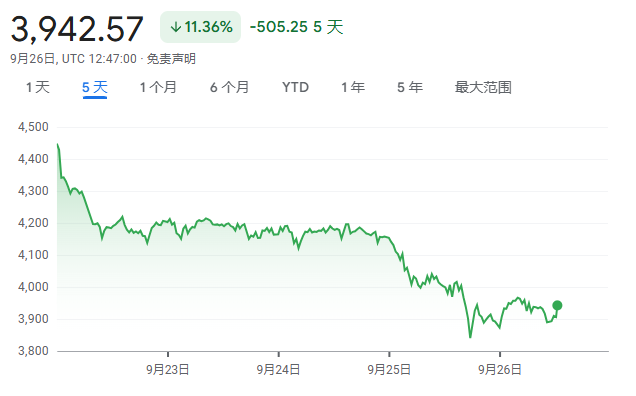
Group 1 - The market's optimistic expectations for a "super cycle" have faced reality, with Ethereum dropping below $4,000, reflecting a disconnect between bullish expectations and market realities [1] - Ethereum's price has seen a significant decline, with a 24-hour drop of over 3% and a weekly decline exceeding 11%, marking a halt to its recent upward momentum [1] - Citigroup has set a year-end target price for Ethereum at $4,300, significantly lower than its historical high of $4,953 reached on August 24, indicating concerns about current valuations being driven by recent buying pressure and excitement over use cases [3] Group 2 - BitMine, as the largest corporate holder of Ethereum, believes that increased institutional capital and the proliferation of Web3 trading products could break the traditional four-year Bitcoin halving cycle, potentially leading to an unprecedented "super cycle" for digital assets [3][4] - There is skepticism among mainstream Wall Street institutions regarding the sustainability of Ethereum's recent price surge, despite a remarkable 87.94% increase in the past six months [4] - The rise of AI agents is viewed as a potential second catalyst for Ethereum's super cycle, with BitMine suggesting that AI agents require neutral platforms like public blockchains, which could enhance Ethereum's application [5] Group 3 - There is a divergence of opinions regarding the role of AI agents in the blockchain space, with some experts cautioning that while many projects are being built on Ethereum, it does not guarantee that Ethereum will be the dominant player in the future [6] - The competitive landscape is intensifying, with projects like Virtuals and others being developed on alternative chains such as Base and Solana, indicating a growing likelihood of cross-chain competition rather than a single chain dominating [6] - Major fintech companies are investing in the AI agent sector, exemplified by PayPal Ventures leading a $18 million Series A funding round for decentralized AI infrastructure provider Kite AI, bringing its total funding to $33 million [6]

存储芯片市场,迎来超级周期?
半导体芯闻· 2025-09-26 10:43
Core Viewpoint - The article highlights the significant surge in the market value of South Korean chip manufacturers, SK Hynix and Samsung Electronics, driven by the increasing demand for high bandwidth memory (HBM) chips essential for AI applications, with expectations for continued growth in this sector [1][2]. Group 1: Market Dynamics - SK Hynix has seen a substantial increase in stock price due to its leading position in the HBM chip market, while investor expectations for Samsung Electronics to accelerate its competitive efforts are also rising [1]. - Analysts have raised the target stock prices for both companies by approximately 30% this quarter, with Morgan Stanley predicting a "super cycle" in the memory chip industry due to potential supply-demand imbalances next year [1][2]. - The demand for AI processors is growing, with companies like Nvidia and AMD increasing their procurement of HBM chips, which is expected to benefit South Korean chip manufacturers [1][2]. Group 2: Traditional Chip Market Recovery - The pessimism surrounding traditional DRAM and NAND chips is gradually dissipating, with expectations of a supply shortage in these areas by 2026, which could support prices [2]. - The Federal Reserve's potential interest rate cuts may stimulate economic growth in the U.S., further boosting chip sales [2]. - Despite a 24% increase in Samsung's stock price this month, its expected price-to-earnings ratio remains at 14 times, while SK Hynix's stock has surged 33% with a P/E ratio of only 7 times, indicating relatively low valuations compared to U.S. peers [2][3]. Group 3: Foreign Investment Trends - Foreign investment in South Korean chip stocks is expected to continue increasing, as these companies are perceived to have lower valuations compared to U.S. firms [2][3]. - Samsung's foreign ownership ratio is still 7 percentage points below its previous peak of 58%, suggesting room for further growth in foreign investment [3]. - Analysts predict that Samsung's stock price could surpass its historical high of 91,000 KRW within the next 12 months, driven by strong AI demand and recovery in traditional storage products [3].

周期&医药&科技专场 - 洞察价值,共创未来——2025研究框架线上培训
2025-09-07 16:19
Summary of Key Points from the Conference Call Industry Overview - The conference call primarily discusses the **coal industry** in China, focusing on supply and demand dynamics, pricing forecasts, and investment strategies related to coal companies. Core Insights and Arguments 1. **Supply and Demand Dynamics**: - In 2025, the coal market is expected to face tight supply with domestic production limited and imports decreasing, leading to an overall supply reduction of 100-150 million tons [1][6][19]. - Domestic coal production is projected to remain stable at approximately 2.35-2.4 billion tons for the year, with a monthly production of 380-400 million tons in the second half [6][19]. 2. **Price Forecasts**: - The average coal price for 2025 is expected to be between 650-680 RMB/ton, with a potential increase of 10-15% in 2026, reaching around 700-720 RMB/ton [1][12][19]. - Coal prices have risen from a low of 620 RMB/ton to approximately 720 RMB/ton, marking a 30% increase [11]. 3. **Investment Strategy Shift**: - The investment logic in the coal sector has shifted from a traditional cyclical approach to a focus on high dividends and stable returns, emphasizing the importance of companies with strong dividend capabilities [1][16][19]. - Recommended companies include China Shenhua and China Coal Energy, which are seen as having robust resource backgrounds and state support [13][15]. 4. **Impact of Weather and Economic Conditions**: - Extreme weather conditions in summer 2025 are expected to drive electricity demand significantly higher than anticipated, with electricity consumption growth exceeding initial forecasts [9][10]. - The overall electricity consumption growth for 2024 is projected at 6.4%, with a notable increase in thermal power generation [5]. 5. **Market Sentiment and Economic Outlook**: - Market sentiment has been pessimistic regarding the medium to long-term economic outlook, contributing to a decline in coal prices [7][8]. - The anticipated warm winter has also led to concerns about reduced electricity demand, further impacting coal prices [7]. 6. **China Shenhua's Acquisition Plans**: - China Shenhua's acquisition of assets from the State Energy Group is expected to enhance its performance by removing underperforming assets and supporting state-owned enterprise reforms [14]. Other Important but Potentially Overlooked Content 1. **Geographical Supply and Demand Disparities**: - Coal production is concentrated in the northwest regions of China, while consumption is primarily in the southeast, leading to significant transportation costs that affect import decisions [2]. 2. **Demand Composition**: - Coal demand is categorized into thermal coal (60%) and coking coal (20%), with the remaining demand coming from construction and chemical industries [3]. 3. **Long-term Trends**: - The coal industry is expected to experience a prolonged period of low supply elasticity, with capacity utilization rates increasing significantly, indicating a potential for sustained price increases in the coming years [19]. 4. **Investment Recommendations**: - Investors are advised to focus on high-stability, high-dividend coal enterprises, particularly those with strong fundamentals and state backing, as these are likely to perform better in the current market environment [13][15][16]. 5. **Future Market Conditions**: - The coal sector is anticipated to enter a new historical configuration phase after a potential second bottoming out, with expectations for a new peak in investment opportunities [19].
看懂周期赚大钱!巴菲特早年靠这波行情封神,普通人也能学
商业洞察· 2025-08-28 10:08
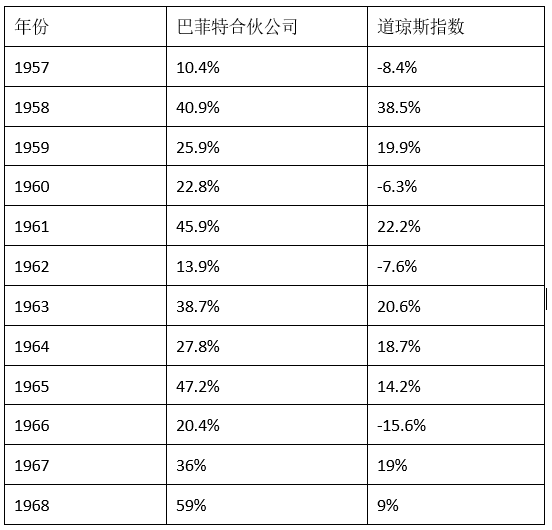
Core Viewpoint - The article discusses the concept of "super cycles" in the context of investment opportunities and historical performance, particularly highlighting Warren Buffett's early investment success and the broader economic cycles that have influenced market returns over time [1][6][9]. Summary by Sections Buffett's Early Investment Performance - Between 1957 and 1968, Buffett's partnership company significantly outperformed the Dow Jones index, with a notable 50-point lead in 1968 [1][2]. - Buffett ceased accepting new investors in 1966, expressing concerns about keeping up with market conditions [1]. Super Cycles - Super cycles are characterized by long-term upward trends that create and consume wealth, with the most significant returns occurring during these periods [2][9]. - The article identifies three major super cycles: 1. 1949-1968: Post-WWII explosive growth driven by the Marshall Plan and the baby boom [6]. 2. 1982-2000: A modern cycle marked by the resolution of inflation issues, leading to a strong economic recovery and significant stock market returns [7]. 3. 2009-2020: A post-financial crisis cycle characterized by quantitative easing and low interest rates, resulting in one of the longest bull markets in history [8]. Characteristics of Super Cycles - Common factors driving super cycles include initial low valuations, declining or low funding costs, and low initial yields [9]. - Economic growth and regulatory reforms have historically reduced market risk premiums, contributing to higher market returns [9]. "Fat and Flat" Periods - The article describes two significant "fat and flat" periods: 1. 1968-1982: High inflation and low returns, with the S&P 500 showing a nominal return of -5% [11]. 2. 2000-2009: A period marked by the bursting of the tech bubble and subsequent low returns, influenced by geopolitical events and economic uncertainty [13]. Current and Future Cycles - The article posits that the market is transitioning into a "post-modern cycle," influenced by macroeconomic and political changes, with new investment paradigms emerging [14][15]. - Factors driving the post-modern cycle include rising funding costs, slowing economic growth, a shift from globalization to regionalization, and increasing labor and commodity costs [17][18]. Investment Opportunities and Risks - The article suggests that the post-modern cycle may present new investment opportunities and challenges, particularly in sectors related to carbon reduction, regional development, and artificial intelligence [16][20].

新周期来了吗?
Sou Hu Cai Jing· 2025-08-06 02:56
Core Insights - Buffett's early investment returns significantly outperformed the Dow Jones index from 1957 to 1968, showcasing his exceptional investment acumen during a "super cycle" in the stock market [1][2] - The "super cycle" periods are characterized by substantial wealth creation, with the most notable returns concentrated in these phases [2][4] Super Cycle Analysis - The first super cycle (1949-1968) was marked by explosive growth post-World War II, driven by the Marshall Plan and a baby boom that boosted demand [4] - The second super cycle (1982-2000) was fueled by the resolution of inflation issues, leading to a strong economic recovery and significant stock market returns, with the Dow Jones Industrial Average achieving an average annual real return of 15% [4] - The third super cycle (2009-2020) followed the global financial crisis, characterized by quantitative easing and zero interest rate policies, resulting in one of the longest bull markets in history [4] Characteristics of Super Cycles - Super cycles are driven by low or declining funding costs, initial low yields, strong economic growth, and regulatory reforms that lower market risk premiums [5][6] - The current economic environment is shifting towards a "post-modern cycle," influenced by geopolitical changes and new investment paradigms [9][10] Current Economic Cycle - The post-modern cycle is characterized by rising funding costs, slowing economic growth, a shift from globalization to regionalization, and increasing labor and commodity costs [11][12] - Geopolitical tensions and a move towards a multipolar world are expected to increase uncertainty and risk premiums in the market [13] Investment Opportunities and Challenges - The evolving economic landscape presents new investment opportunities and challenges, particularly in sectors related to carbon reduction, regional development, and artificial intelligence [9][10][14]
【期货热点追踪】铁矿石产量环比增长近24%,铜二季度产量创2019年同期以来最高!淡水河谷正在悄悄布局下一个\"超级周期\"?3.35亿吨铁矿石年度目标下,未来的增产压力有多大?点击了解。
news flash· 2025-07-23 00:22
Group 1 - The core viewpoint of the article highlights the significant increase in iron ore production, which has grown nearly 24% month-on-month, and the record copper production in the second quarter, marking the highest level since 2019 [1] - Vale is strategically positioning itself for the next "super cycle" in the commodities market, with an annual target of 335 million tons of iron ore [1] - The article raises questions about the future production pressure that Vale may face in achieving its ambitious production goals [1]

【有本好书送给你】下一个超级周期什么时候来?
重阳投资· 2025-07-16 06:29
Core Viewpoint - The article emphasizes the importance of reading as a pathway to growth and understanding, encouraging readers to engage with literature and share their thoughts on the topic of "Wealth and Cycles" [2][3][4]. Group 1: Super Cycles - The article discusses the concept of "Super Cycles," which are long-term upward trends in the market that create and consume wealth, highlighting the significant returns during these periods [12][31]. - Historical examples of Super Cycles include: 1. 1949-1968: Post-WWII explosive growth driven by the Marshall Plan and the baby boom [15]. 2. 1982-2000: A modern cycle characterized by the resolution of inflation issues, leading to a strong economic recovery and high returns [16]. 3. 2009-2020: A post-financial crisis cycle marked by quantitative easing and zero interest rates, resulting in one of the longest bull markets [17][18]. Group 2: Stagnant Periods - The article outlines two major "stagnant" periods: 1. 1968-1982: High inflation and low returns, with the S&P 500's nominal return at -5% [21]. 2. 2000-2009: A period marked by the bursting of the tech bubble and subsequent economic challenges, leading to low overall returns [22]. Group 3: Current Cycle Analysis - The article posits that the current economic and political landscape is shifting towards a new investment paradigm, influenced by factors such as rising interest rates, slowing economic growth, and a move from globalization to regionalization [23][24]. - Key drivers of the post-modern cycle include: 1. Rising costs of capital and inflation [27]. 2. Changes in global trade dynamics and geopolitical tensions [28]. 3. Increased government spending and debt levels [28]. 4. Shifts in labor and commodity markets, leading to tighter conditions [27]. Group 4: Investment Opportunities and Risks - The article suggests that understanding cycles is crucial for identifying wealth opportunities, emphasizing the need to recognize the factors driving these cycles and their implications for financial markets [31].

好书推荐 | 下一个超级周期什么时候来?
点拾投资· 2025-07-08 07:04
Core Viewpoint - The article discusses the concept of "super cycles" in the stock market, highlighting historical periods of significant economic growth and the factors that drive these cycles, as well as the current transition to a "post-modern cycle" characterized by new challenges and opportunities. Group 1: Historical Super Cycles - Buffett's early investment success was significantly higher than the Dow Jones index, particularly from 1957 to 1968, during a post-war bull market [1][2] - The period from 1982 to 2000 saw a modern cycle driven by the resolution of inflation, with the Dow Jones Industrial Average achieving an average annual real return of 15% [8][9] - The post-financial crisis cycle from 2009 to 2020 marked the longest bull market, influenced by quantitative easing and low interest rates, despite a significant drop in the S&P 500 index [10][11] Group 2: Characteristics of Super Cycles - Super cycles are characterized by three main factors: initial low valuations, declining or low funding costs, and low initial yields [11][12] - Strong economic growth and regulatory reforms contribute to reducing the risk premium in the stock market, enhancing market returns [12] Group 3: "Fat and Flat" Periods - The period from 1968 to 1982 experienced high inflation and low returns, with the S&P 500's nominal total return at -5% [15][16] - The 2000 to 2009 period was marked by a tech bubble burst and subsequent bear market, leading to low overall investor returns despite significant volatility [17][18] Group 4: Current and Future Cycles - The current "post-modern cycle" reflects characteristics of both classical and modern cycles, with rising costs of capital and a shift towards regionalization driven by geopolitical tensions [20][23] - Factors driving the post-modern cycle include rising funding costs, slowing economic growth, and increased government spending and debt [23][25][26] - The changing demographic landscape and geopolitical tensions are expected to create new investment opportunities and risks [26][27]

白银走势分析:工业与金融双轮驱动下的投资新机遇
Sou Hu Cai Jing· 2025-07-04 13:46
Core Viewpoint - The silver market is experiencing significant structural opportunities, driven by an expanding supply-demand gap and the restoration of the gold-silver ratio, with silver prices expected to exceed 10,000 RMB/kg (approximately 42 USD/oz) by Q3 2025 [1][3]. Group 1: Supply and Demand Dynamics - Industrial demand, particularly from the photovoltaic sector, is becoming the core engine for silver demand, with an expected annual growth of 5.7% in silver usage for N-type solar cells, leading to a projected demand of 7,560 tons by 2025, accounting for 34% of industrial demand [3]. - The supply side is facing structural shortages due to stagnation in global silver mine production and increasing ESG costs, leading to a continuous supply gap from 2024 to 2025 [3]. - Recent trends show a decrease in COMEX silver inventories while ETF holdings have increased, indicating institutional confidence in silver's long-term value [3]. Group 2: Financial Attributes and Market Conditions - The anticipated onset of a Federal Reserve rate cut cycle is causing the gold-silver ratio to accelerate towards historical averages (40-70:1), with silver being favored for its higher price elasticity compared to gold [4]. - Geopolitical risks and global central bank gold purchases (expected to exceed 900 tons in 2025) are enhancing silver's appeal as a safe-haven asset [4]. - Russia's inclusion of silver in its national reserves as part of a "de-dollarization" strategy may prompt other countries to follow suit, potentially increasing silver demand [4]. Group 3: Trading Strategies and Innovations - Investors are encouraged to build scientific trading frameworks, utilizing platforms like Jinsheng Precious Metals MT5, which offer professional indicators to capture bullish signals in silver [5]. - The platform supports cross-hedging between gold and silver, effectively reducing volatility risks during market fluctuations [5]. - Users have reported significant daily returns through intraday trading strategies during periods of rising silver prices [5]. Group 4: Platform Value and Industry Standards - Jinsheng Precious Metals is addressing industry pain points such as data fraud and slow withdrawals by implementing full transparency in transactions and annual audits by major accounting firms [6]. - The company has optimized costs through a "spread compensation plan," reducing the spread for London gold to 0.15 USD/oz, which can save high-frequency traders thousands of dollars monthly [7]. - The dual-platform support (MT4/MT5) caters to diverse trading needs, with features designed to mitigate potential losses during market downturns [7]. Conclusion - The silver market is undergoing a strategic opportunity phase characterized by industrial demand and financial recovery, with Jinsheng Precious Metals providing robust pathways for investors [8].